
Echinacea
Quick Overview
Common Name: Echinacea, Coneflower, Purple Coneflower
Scientific Name: Echinacea purpurea, Echinacea paradoxa, Echinacea hybrids
Plant Type: Perennial
USDA Zones: 3 to 9
Sun Requirement: Full Sun to Partial Shade
Soil Type: Well-drained, average to moderately fertile
Bloom Season: Midsummer through Early Fall
Height: 24 to 48 inches depending on species and variety
Pollinator Friendly: Yes
Edible: Yes, roots and flowers used in herbal preparations
Medicinal: Yes, widely used in herbal medicine and immune support products
Why Grow Echinacea on a Homestead
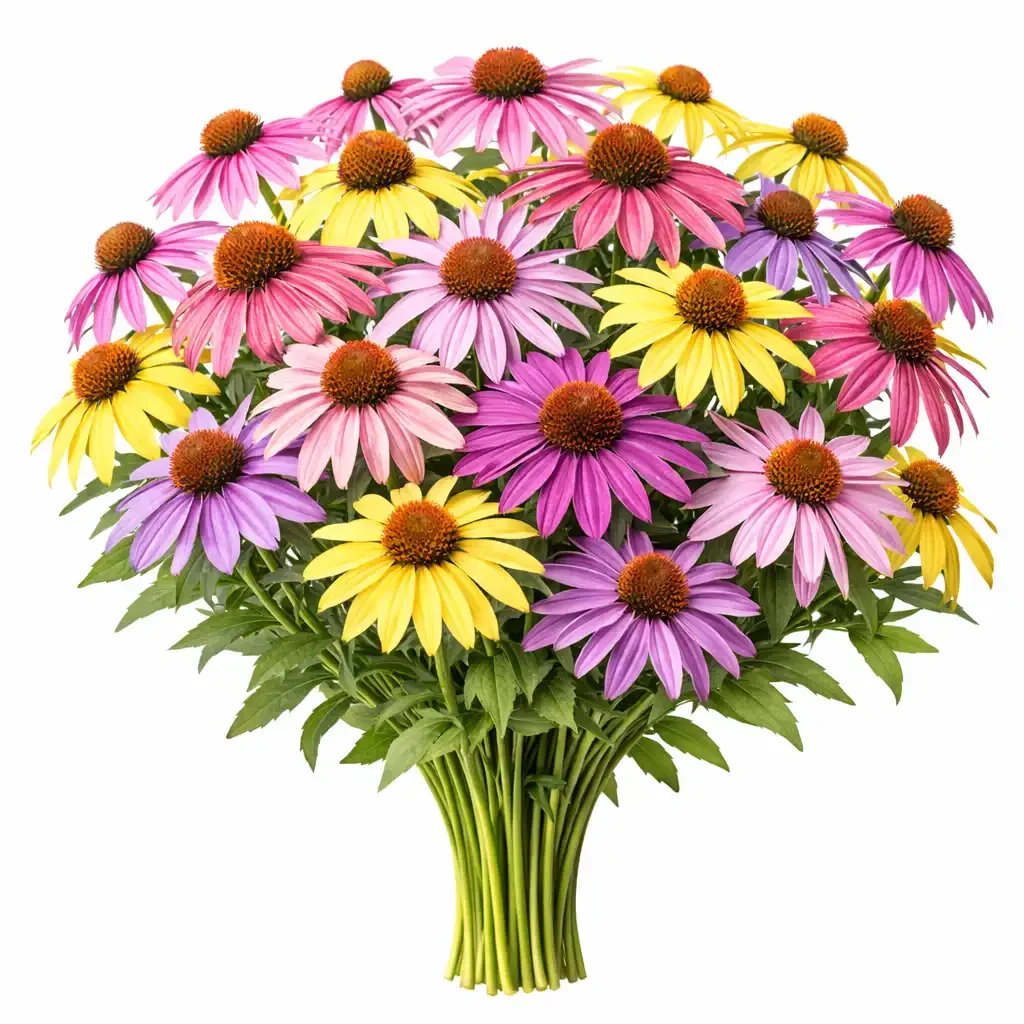
Echinacea is one of the most genuinely multi-dimensional and commercially versatile plants available to homestead growers. Its large, daisy-like blooms with their distinctive, prominent, spiny central cone in shades of classic purple-pink, rich magenta, pure white, warm orange, soft yellow, coral, and deep red create a bold, warm quality in summer arrangements that customers and florists respond to with consistent enthusiasm. But Echinacea offers homestead operations something that most other cut flower crops cannot: a legitimate and growing dual market across both the cut flower and fresh flower world and the medicinal herbal products industry, creating multiple complementary income streams from a single permanent perennial planting.
For homestead growers, Echinacea represents one of the most strategically sound long-term perennial investments available. It is native to North American prairies and is perfectly adapted to the full range of climates found across most of the continental United States. It is cold hardy, moderately drought tolerant, essentially pest-free, and improves in productivity year after year as established clumps expand. It provides harvestable material across multiple commercial channels, from fresh cut flowers for summer markets and florist supply to dried seed heads for the craft and botanical market to fresh and dried herbal roots and flowers for the natural health products market. And as one of the most ecologically important native summer perennials, it supports extraordinary levels of pollinator and beneficial insect activity throughout its long blooming period.
Here is why Echinacea deserves a prominent spot on your homestead:
It provides genuine dual commercial value across both the cut flower and herbal products markets. No other commonly grown homestead cut flower crop provides the same combination of premium cut flower commercial value and genuine, well-documented herbal medicinal value that Echinacea delivers. This dual market capability creates income streams that complement and extend each other throughout the year.
It is one of the most important native summer pollinator plants available. Echinacea is among the most ecologically significant summer perennials for pollinators and beneficial insects. Monarch butterflies, swallowtails, bumblebees, native bees, goldfinches, and beneficial insects visit Echinacea plantings in extraordinary numbers throughout the blooming season.
It is a permanent, low-maintenance perennial that improves with age. Once established, Echinacea returns year after year with minimal care, expanding into large, productive clumps that generate increasing quantities of harvestable stems from a fixed initial investment. The return on investment improves every season.
The color range of modern hybrid Echinacea is extraordinary. Beyond the classic purple-pink of the native species, modern breeding has produced Echinacea varieties in orange, yellow, coral, red, white, and bicolor combinations that command premium prices from florists and customers seeking unusual and distinctive summer colors.
The dried seed head market provides year-round income beyond the fresh flower season. The large, distinctive spiny seed heads of Echinacea dry beautifully and are one of the most popular botanical products at fall and winter craft markets, online shops, and through florists who use them in dried and preserved floral designs.
Growing Conditions
Sunlight
Echinacea performs best in full sun. It needs at least 6 hours of direct sunlight per day for the strongest stems, most abundant flowering, and best color intensity. In partial shade it produces taller, somewhat weaker stems with fewer and smaller blooms. For cut flower production with the longest, strongest stems and the most vivid colors full sun is always the preferred choice. Some afternoon shade in the hottest climates can reduce heat stress during midsummer while still providing adequate light for productive blooming.
Soil
Echinacea is remarkably adaptable to a wide range of soil conditions. As a native prairie plant it performs well in average to moderately fertile, well-drained soil and actually thrives in conditions that would challenge many other perennials. It does not need heavily amended or richly fertile beds and performs better in average to lean conditions than in overly rich soil. Good drainage is more important than fertility. Soil pH between 6.0 and 7.0 is ideal.
Water
Echinacea is moderately drought tolerant once established and performs better in average to slightly dry conditions than in consistently moist soil. It needs regular watering during its first growing season to establish a strong root system but after that requires significantly less supplemental irrigation than most other perennial cut flowers. Water deeply during extended dry periods in summer to maintain stem length and bloom quality but allow the soil to dry somewhat between waterings. Overwatering and consistently wet conditions increase the risk of root rot and reduce overall plant vigor.
Temperature
Echinacea is extremely cold hardy and adaptable, performing reliably across a very wide range of climates within USDA zones 3 to 9. It handles cold winters reliably and emerges dependably each spring. It performs well in both the cool summers of northern climates and the hot, humid summers of the mid-South and Southeast, making it one of the most universally reliable summer perennial cut flower crops available to homestead growers across the full range of continental United States climates. In hot, humid climates consistent moisture and good air circulation are the most important factors for maintaining plant health and productivity.
Planting Guide
Echinacea can be started from seed, planted from nursery transplants, or established from divisions. For cut flower production, nursery transplants of named varieties give the fastest path to productive, commercially valuable plants.
Step 1: Choose a location with full sun and well-drained, average to moderately fertile soil. Echinacea is an excellent choice for areas of the homestead with average soil conditions as it does not require heavily amended beds.
Step 2: Prepare the planting area by loosening the soil to 12 inches. In very poor soils, incorporating a modest amount of compost improves establishment. In average soils no amendment is needed.
Step 3: Plant nursery transplants in spring after the last frost date or in fall in mild climates. Space plants 18 to 24 inches apart for cut flower production. Proper spacing provides adequate air circulation and allows each plant to develop its full productive clump size.
Step 4: Water thoroughly after planting and keep soil consistently moist until plants are well established. After establishment, transition to the deep, infrequent watering schedule appropriate for this moderately drought-tolerant perennial.
Step 5: For seed starting, sow seeds indoors 8 to 10 weeks before the last frost date or direct sow outdoors in early spring. Echinacea seeds may require a cold stratification period for reliable germination. Place seeds in a damp paper towel in the refrigerator for three to four weeks before sowing if indoor germination rates are poor.
Step 6: Note that seed-grown Echinacea takes two to three years to reach full productive maturity. Purchased named variety transplants from specialist growers give the fastest path to premium-quality commercially valuable blooms and are strongly recommended over seed starting for commercial cut flower production.
Seed vs Transplant: Named variety nursery transplants are strongly recommended for commercial cut flower production. Seed-grown plants take longer to bloom, are variable in quality, and may not produce the premium colors available in named varieties. Reserve seed starting for the common species types or when establishing very large plantings economically.
Spacing: 18 to 24 inches apart for cut flower production.
Planting Season: Spring after last frost in most climates. Fall planting works well in mild climates.
Maintenance
Deadheading and Seed Head Management
The most important ongoing management decision with Echinacea is balancing fresh flower production with seed head development for the dried botanical market. For maximum fresh cut flower production throughout the season, deadhead spent blooms promptly by removing the entire flower head and stem back to a lateral shoot. This encourages the development of new flowering stems throughout the blooming season.
For seed head production for the dried botanical market, allow selected blooms to develop into the large, spiny brown seed heads after the petals have fallen. Leave these seed heads on the plants until they are fully mature, then harvest and dry for the botanical craft market.
Dividing
Divide Echinacea clumps every three to four years in early spring when new growth is just emerging or in fall after blooming. Regular division maintains plant vigor, prevents center die-out in older clumps, and provides free new plants to expand the planting. Each divided section should have several healthy crowns with good root systems. Discard the woody central portions of older clumps and replant only the vigorous outer sections.
Fertilizing
Echinacea does not need heavy feeding. A light application of balanced fertilizer or compost top dressing in early spring as new growth emerges is sufficient for most soils. Avoid high-nitrogen fertilizers which promote lush foliage at the expense of flower production.
Pest Control
Echinacea is highly pest resistant. Aphids can occasionally appear on young growth and developing buds but are usually managed naturally by beneficial insects. Eriophyid mites can occasionally cause distorted, stunted growth. Remove and destroy any affected plant material immediately. Japanese beetles can damage flowers in affected regions and should be hand-picked promptly.
Harvesting
When to Harvest Fresh Cut Flowers
Harvest Echinacea stems when the petals have fully reflexed back from the central cone and the cone itself has fully developed and is showing its characteristic color, typically orange-brown to dark brown. The petals should be fully extended and flat rather than still pointing forward around the cone. Stems harvested at this fully open stage have the maximum vase life. Unlike many flowers that benefit from earlier harvesting, Echinacea actually conditions and holds better when harvested at full bloom. Harvest in the early morning when stems are fully hydrated.
How to Cut
Use clean, sharp scissors or pruners. Cut stems as long as possible, ideally 16 to 24 inches. Cut just above a lateral shoot to encourage new stem production. Remove all foliage from the lower half of the stem immediately after cutting. Place stems immediately into a bucket of cool water with a floral preservative.
Conditioning
After cutting, place stems in deep cool water in a cool, dark location for several hours or overnight before sale or arrangement. Echinacea conditions readily and holds up well in arrangements and at market displays when properly conditioned.
Harvesting Seed Heads
For dried seed head production, allow selected blooms to fully develop past the fresh flower stage. After the petals have fallen and the seed head has fully developed, hardened, and turned its characteristic dark spiny brown, cut stems at the base and hang upside down in a warm, dry, well-ventilated location to complete drying. The distinctive spiny seed heads dry beautifully and retain their architectural form for years in dried arrangements.
Harvesting Roots for Herbal Use
In established plantings that are being divided for garden management, the divided root sections provide raw material for herbal Echinacea products. Roots of three to four year old plants are considered optimal for herbal use. Wash roots thoroughly, chop or slice, and dry in a food dehydrator or warm oven at low temperature until completely dry. Store in sealed containers in a cool, dark location.
How Often to Harvest
During peak bloom from midsummer through early fall, harvest every two to three days as new stems reach the correct stage. Regular cutting encourages the plant to produce new lateral flowering shoots continuously throughout the blooming season.
Vase Life
Echinacea typically lasts 7 to 14 days as a fresh cut flower with proper conditioning and care. Strip all foliage below the waterline, recut stems at an angle, and place in fresh water with a floral preservative. Change water every two to three days to maximize longevity.
Uses on a Homestead
Cut Flower Use
Echinacea is primarily grown as a fresh cut flower with bold, warm-toned blooms that add a distinctive native prairie quality to mixed summer and fall bouquets and arrangements. It pairs beautifully with rudbeckia, heliopsis, liatris, ornamental grasses, zinnias, and dahlias in bold, warm-toned late summer arrangements that capture the beauty and abundance of the late season garden. The classic purple-pink species type pairs particularly beautifully with white, yellow, and orange complementary flowers in naturalistic mixed bouquets that are consistently popular at summer farmers markets.
Dried Seed Heads
The distinctive spiny brown seed heads of Echinacea are among the most popular and recognizable botanical craft products available. They sell consistently well at fall and winter craft markets, through online shops, and to florists who use them in dried and preserved floral designs. Their strong architectural form, interesting spiny texture, and long shelf life make them ideal products for the botanical craft market throughout the fall and winter selling season.
Herbal Products
Echinacea has one of the most extensively documented herbal medicine traditions of any North American native plant. The roots and flowers are widely used in immune support preparations including herbal teas, tinctures, capsules, and other natural health products. Selling fresh or dried Echinacea roots and flowers to herbal product producers, herbalists, natural food stores, and direct consumers provides a significant additional income stream from the established planting. Always consult current regulations regarding the sale of medicinal herbs in your specific jurisdiction before selling herbal products.
Wedding and Event Flowers
Echinacea is a sought-after specialty flower for wildflower, garden-style, and naturalistic wedding designs. Its warm, native-prairie quality adds an authentically seasonal and regional character to late summer and fall wedding arrangements that sophisticated clients and florists deeply appreciate.
Pollinator Garden Experience
A productive Echinacea planting in full midsummer bloom is one of the most spectacular and ecologically rich pollinator habitat displays available to any homestead. Monarch butterflies, swallowtails, bumblebees, native bees, and goldfinches visiting a mass Echinacea planting create a living display of extraordinary ecological richness that generates powerful social media content, attracts visitors, and establishes the homestead's identity as an ecologically responsible and nature-connected operation.
Can You Make Money With Echinacea
Yes, Echinacea is one of the most financially rewarding perennial crops available to homestead growers because of its genuine dual commercial value across both the premium cut flower market and the growing natural health products market, combined with near-zero ongoing input costs as a drought-tolerant native perennial.
Genuine dual market capability is commercially unique. No other commonly grown homestead cut flower provides the same combination of premium cut flower income and genuine medicinal herbal product income that Echinacea delivers. This dual market creates revenue diversification that protects against single-market dependence.
Permanent perennial with dramatically improving returns. Once established, Echinacea returns year after year with minimal care, forming expanding clumps that generate more harvestable material each season. The combined cut flower, seed head, and herbal product income from a mature Echinacea planting is exceptional relative to the initial investment.
Premium hybrid varieties command significant price premiums. The modern orange, yellow, coral, and red Echinacea hybrid varieties are genuinely unusual at most farmers markets and are not available through commercial wholesale channels. These specialty colors justify premium pricing that standard purple-pink varieties cannot command.
Growing demand for locally grown medicinal herbs. Consumer interest in locally grown, organically produced medicinal herbs continues to grow strongly. Locally grown Echinacea positioned as a premium herbal product commands prices that commercially grown imported Echinacea cannot match.
Farmers Market: Fresh Echinacea bundles sell for 7 to 12 dollars per bunch for standard purple-pink varieties. Premium hybrid varieties in orange, yellow, and coral sell for 10 to 18 dollars per bunch. Dried seed head bundles sell for 8 to 15 dollars per bunch at fall and winter markets.
Florists and Wedding Designers: Echinacea is in consistent demand from florists working with naturalistic, garden-style, and wildflower design aesthetics. Specialty hybrid colors command premium wholesale pricing.
Herbal Products: Fresh and dried Echinacea roots and flowers sell to herbal product producers, herbalists, and direct consumers at prices that reflect the growing premium market for locally grown medicinal herbs.
CSA Flower Subscriptions: Echinacea is one of the most reliable and visually distinctive additions to late summer and fall flower subscription boxes. Its warm colors, prominent central cones, and genuine herbal significance create a compelling product story that subscribers find immediately interesting and meaningful.
Companion Plants
Echinacea grows beautifully alongside many other summer and fall perennials and native plants with similar growing requirements and complementary bloom times.
Rudbeckia: Both are North American native perennials that bloom at overlapping times in midsummer through fall, share similar lean-soil preferences, and create beautiful warm-toned naturalistic combinations in mixed bouquets and cutting garden beds.
Liatris: Both are native North American perennials that bloom at overlapping times. The tall purple spikes of Liatris provide beautiful vertical contrast to the round horizontal form of Echinacea blooms in mixed naturalistic arrangements.
Heliopsis: Both are native or naturalized North American perennials with similar lean-soil preferences that complement each other beautifully in warm-toned wildflower bouquets and share similar important pollinator habitat qualities.
Monarda: Both are native North American perennials that bloom at similar times and create beautiful pollinator-rich combinations in the cutting garden and in mixed naturalistic bouquets.
Ornamental Grasses: Native grasses pair beautifully with Echinacea in naturalistic arrangements and in the landscape, adding movement and a prairie quality that complements the bold, stationary form of Echinacea blooms.
Agastache: Both are drought-tolerant summer perennials that attract similar pollinator communities and complement each other in naturalistic mixed arrangements with vertical and horizontal flowering forms.
Common Problems
Eriophyid Mite Damage
Can cause distorted, stunted, or abnormally proliferated growth called aster yellows-like symptoms, though the actual cause is the microscopic mite rather than a virus in some cases. Remove and destroy all affected plant material immediately to prevent spread. There is no effective treatment for heavily affected plants.
Aster Yellows Disease
A bacterial disease spread by leafhoppers that causes distorted, abnormal growth including green, leaf-like petals, stunted central cones, and general plant decline. Affected plants must be removed and destroyed immediately as there is no treatment. Manage leafhopper populations to reduce disease transmission risk.
Root Rot
Can occur in poorly drained or consistently wet soil, particularly during the summer growing season. Echinacea has very low tolerance for waterlogged conditions. Ensure excellent drainage and avoid overwatering. Root rot is more common in heavy clay soils and in climates with heavy summer rainfall.
Powdery Mildew
Can appear on foliage late in the season in conditions of poor air circulation, particularly in hot, humid climates. Choose mildew-resistant varieties, space plants properly at 18 to 24 inches for good air circulation, and avoid overhead watering. Late-season mildew rarely significantly affects overall productivity.
Center Die-Out
Common in Echinacea clumps after four to five years as the central portion becomes woody and unproductive. Divide regularly every three to four years in early spring, discarding the woody central portion and replanting only the vigorous outer sections at appropriate spacing.
Varieties to Consider
Classic Species
Echinacea purpurea Magnus: The classic large-flowered purple-pink Echinacea variety and one of the most widely grown for cut flower production. Large, flat-petaled blooms with prominent dark orange central cones on strong stems. One of the most reliable and commercially important Echinacea varieties available.
Echinacea purpurea White Swan: A classic pure white variety with the characteristic prominent orange-brown central cone. One of the most widely grown white Echinacea varieties. Very popular with florists for its clean white color and reliable performance.
Echinacea purpurea Kim's Knee High: A compact variety reaching 18 to 24 inches with vivid purple-pink blooms. Excellent for cut flower production where compact, strong-stemmed plants are preferred.
Echinacea paradoxa (Yellow Coneflower): The native yellow species with clear yellow petals surrounding a prominent dark central cone. One of the parents of many modern hybrid varieties and commercially valuable as a genuine yellow species Echinacea. Hardy in USDA zones 4 to 8.
Premium Hybrid Varieties
Echinacea Cheyenne Spirit: An award-winning seed-grown variety that produces a mix of orange, yellow, coral, red, purple, and white blooms from seed, making it one of the most economical ways to establish a diverse, colorful Echinacea planting. Variable but generally good commercial quality.
Echinacea Hot Papaya: A dramatic double-flowered variety with fully double, pompom-like deep orange blooms that are genuinely unlike any standard Echinacea form. Commands significant premium pricing for its unusual double orange form. Very popular with florists and customers seeking something extraordinary.
Echinacea Marmalade: Warm orange single blooms with prominent dark central cones on strong stems. Very popular at farmers markets for its vivid warm orange color that is genuinely unusual in the summer perennial cut flower market.
Echinacea Sunrise: Soft yellow to cream blooms with a warm, honey-like tone. Very popular with florists working with soft, warm color palettes. One of the most reliable and commercially important yellow hybrid Echinacea varieties.
Echinacea Tomato Soup: Deep, vivid coral-red blooms that are among the most dramatically colored Echinacea varieties available. Very popular at farmers markets and with florists for its vivid color intensity. Commands premium prices for its unusual deep red-orange tone.
Echinacea Magnus Superior: An improved selection of Magnus with even larger, more perfectly flat blooms and stronger stems. Very popular in the commercial cut flower trade for its superior flower quality and reliable stem strength.
Echinacea Prairie Splendor: A compact, early-flowering series available in a range of colors that has been specifically developed for cut flower production and container use. Excellent first-year blooming from transplants.
Final Thoughts
Echinacea is one of the most genuinely multi-dimensional and strategically valuable permanent plantings available to any homestead flower operation. Its combination of premium cut flower income from fresh blooms and specialty hybrid varieties, year-round dried seed head income from the botanical craft market, and growing herbal product income from roots and flowers creates a revenue profile that no other single cut flower crop can match. As a native prairie perennial that requires minimal ongoing input, improves in productivity year after year, supports extraordinary levels of ecological activity, and provides genuine dual commercial value across the cut flower and natural health products markets simultaneously, Echinacea delivers the kind of enduring, multi-dimensional commercial and ecological value that justifies its permanent place in any diversified homestead flower operation. Plant named variety transplants in full sun with well-drained average soil, divide every three to four years to maintain vigor, balance fresh flower harvesting with seed head development for maximum multi-channel income, and Echinacea will reward your homestead with decades of warm, bold blooms, extraordinary pollinator activity, and one of the most commercially versatile and personally satisfying permanent plantings available from any summer native perennial.
FAQ
What is the medicinal value of Echinacea and can I sell it as a health product? Echinacea purpurea has one of the most extensively documented herbal medicine traditions of any North American native plant, with significant clinical research supporting its use for immune system support, particularly for reducing the duration and severity of common colds and upper respiratory infections. The roots, leaves, and flowers of several Echinacea species are all used in various herbal preparations. Regulations regarding the sale of medicinal herbs and herbal health products vary significantly between jurisdictions. In the United States, herbal products must comply with FDA regulations for dietary supplements, which require specific labeling standards and prohibit certain health claims. Always research current regulations in your specific state and jurisdiction before selling Echinacea or any other plant as a medicinal or health product. Consulting with a regulatory specialist or agricultural extension service is advisable before establishing a commercial herbal product operation.
How do I dry Echinacea seed heads for the craft market? Allow selected Echinacea blooms to fully develop past the fresh flower stage. After the petals have fallen and the seed head has hardened and turned its characteristic dark spiny brown, cut stems at the base of the plant. Gather into loose bundles and hang upside down in a warm, dry, well-ventilated location away from direct sunlight. Drying takes approximately two to three weeks. The distinctive spiny seed heads retain their architectural form and dark color exceptionally well when dried. Properly dried seed heads can last for years in dried arrangements and botanical products. Harvest before goldfinches discover the seed heads as they are strongly attracted to ripe Echinacea seed.
Are hybrid Echinacea varieties as hardy and reliable as the native species? The hardiness and reliability of hybrid Echinacea varieties varies significantly between varieties and breeding programs. Many of the most popular modern hybrids, particularly the orange, yellow, and coral varieties bred from crosses with Echinacea paradoxa and other species, can be somewhat shorter-lived and less reliably cold hardy than the native Echinacea purpurea in the coldest climates. In USDA zones 3 to 5, sticking primarily with Echinacea purpurea varieties for the backbone of the cut flower planting and supplementing with hybrids in the most protected and well-drained positions gives the most reliable long-term results. In USDA zones 6 to 9, most hybrid varieties perform reliably. Selecting varieties from reputable specialist nurseries that provide honest zone hardiness information for specific varieties is the most reliable approach.
How long does it take for Echinacea to reach full productive maturity? Echinacea plants typically begin producing harvestable stems in their first season from nursery transplants, though first-season plants are smaller and produce fewer stems than established plants. Meaningful commercial production develops in the second and third seasons as plants establish strong root systems and develop into productive clumps. Full productive maturity where plants are generating maximum stem yield, seed head production, and harvestable root material typically arrives in the third to fourth season. From that point, established clumps continue to expand and improve in productivity until they become overcrowded after four to five years and benefit from division to maintain peak productivity.
Can Echinacea be grown in hot, humid climates? Yes, Echinacea purpurea performs well in hot, humid climates within its hardiness range of USDA zones 3 to 9. In hot, humid climates proper spacing at 18 to 24 inches for good air circulation, excellent drainage, and mildew-resistant variety selection are the most critical success factors. Echinacea purpurea has better heat and humidity tolerance than most hybrid varieties, making it the most reliable species choice for hot, humid climates in the Southeast and mid-South. Avoiding overhead watering and maintaining appropriate drainage significantly reduces the powdery mildew and root rot pressure that can be problematic in hot, humid conditions.