
Eryngium
Quick Overview
Common Name: Eryngium, Sea Holly, Rattlesnake Master
Scientific Name: Eryngium spp.
Plant Type: Perennial
USDA Zones: 4 to 9 depending on species
Sun Requirement: Full Sun
Soil Type: Well-drained, average to poor fertility
Bloom Season: Midsummer through Early Fall
Height: 18 to 48 inches depending on species and variety
Pollinator Friendly: Yes
Edible: No
Why Grow Eryngium on a Homestead
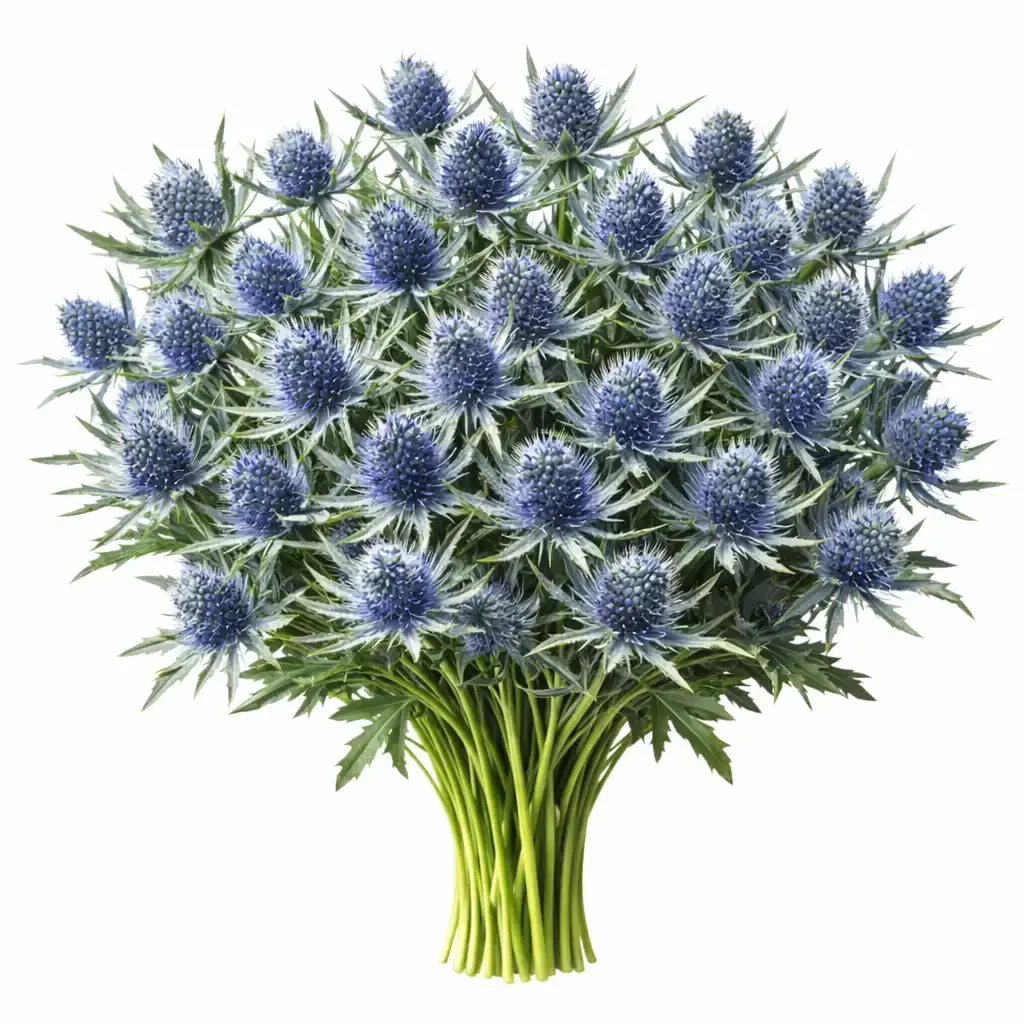
Eryngium is one of the most architecturally extraordinary and commercially distinctive cut flowers available to homestead growers. Its geometric, cone-shaped flower heads surrounded by dramatic, rigid, deeply cut bracts in shades of intense steel blue, silver-blue, deep violet-blue, and silvery white create a bold, otherworldly visual effect in arrangements that is genuinely unlike any other summer cut flower. Florists describe Eryngium as a statement flower with a structural, sculptural quality that adds a distinctive architectural dimension to arrangements that no other commonly grown summer flower can replicate. In the contemporary wedding and specialty floral market, the intense metallic blue tones of Eryngium are among the most sought-after and commercially valuable colors available from any summer perennial.
For homestead growers, Eryngium represents one of the most strategically underutilized specialty cut flower and dried flower opportunities available. Despite its extraordinary commercial value, dramatic visual impact, and consistent florist demand, it remains genuinely rare as a dedicated cut flower crop at most homestead operations, creating an essentially uncontested local market position for growers who develop productive plantings. As a drought-tolerant, lean-soil-adapted perennial that returns year after year with minimal ongoing input, it delivers improving commercial returns each season as established clumps expand and produce an increasing supply of harvestable stems from a fixed initial investment.
Here is why Eryngium deserves a prominent spot on your homestead:
It provides a genuinely irreplaceable color and texture in the summer cut flower market. The intense metallic blue to violet-blue tones of the best Eryngium varieties are among the most sought-after and commercially valuable colors available from any summer perennial. No other commonly grown summer cut flower delivers this specific combination of architectural form and metallic blue color.
It dries magnificently with extraordinary color retention. Eryngium is one of the best summer flowers for the dried flower market, retaining its intense metallic blue color and dramatic architectural form when dried in a way that few other summer flowers can match. This dried flower capability creates year-round income from seasonal fresh harvest.
It is a permanent, low-maintenance perennial with near-zero ongoing input costs. Eryngium is adapted to lean, well-drained conditions and requires virtually no fertilizing, minimal watering once established, and has essentially no pest or disease management requirements. The return on investment per plant is exceptional.
It attracts an extraordinary range of pollinators. Eryngium is one of the most important late summer pollinator plants available. Bees, butterflies, and beneficial insects visit the flowers constantly throughout the blooming period, making it one of the most ecologically valuable summer perennials on any homestead.
The market rarity of locally grown Eryngium creates premium positioning. Despite its strong florist demand, locally grown fresh Eryngium cut flowers are genuinely rare at most farmers markets and in most local florist supply chains, creating a premium market position with minimal competition.
Growing Conditions
Sunlight
Eryngium requires full sun to perform its best. It needs at least 6 to 8 hours of direct sunlight per day for the strongest stems, most vivid metallic blue coloration, and most abundant flowering. In partial shade the characteristic metallic blue color that is its primary commercial asset becomes significantly less vivid, stems become weak and floppy, and flower production decreases substantially. Full sun is the single most important growing requirement for productive Eryngium cut flower production. Maximum sun exposure throughout the day produces the most intensely colored and commercially valuable stems.
Soil
Eryngium strongly prefers well-drained soil with average to poor fertility. It is a Mediterranean-climate plant adapted to lean, dry, rocky conditions and actually performs better in poor soil than in rich, heavily amended beds. Overly fertile soil produces lush, floppy growth, significantly reduces the intensity of the metallic blue coloration that makes Eryngium commercially valuable, and increases susceptibility to root rot. Sandy or gravelly, well-drained soil is ideal. Soil pH between 5.5 and 7.5 is suitable. The lean-soil preference of Eryngium makes it an excellent choice for areas of the homestead with marginal soil conditions that would challenge more demanding crops.
Water
Eryngium is extremely drought tolerant once established and actually thrives in dry conditions that would stress most other cut flower crops. It needs regular watering during its first growing season to establish a strong root system but after that requires very little supplemental irrigation. Overwatering and consistently moist conditions are more damaging to established Eryngium than drought, causing root rot and significantly reducing the vivid metallic coloration that is its primary commercial asset. In climates with regular summer rainfall, established Eryngium often needs no supplemental watering. In very dry climates, occasional deep watering during extended dry periods maintains stem length and bloom quality.
Temperature
Eryngium is a cold-hardy summer perennial that performs reliably across a wide range of climates within USDA zones 4 to 9 depending on species. Most commonly grown Eryngium species including Eryngium planum and Eryngium x zabelii are reliably hardy in USDA zones 4 to 8. Eryngium alpinum and its hybrids perform reliably in USDA zones 5 to 8. The extraordinary drought tolerance and cold hardiness of Eryngium make it one of the most climatically adaptable summer perennial cut flower crops available to homestead growers across the full range of continental climates.
Planting Guide
Eryngium can be started from seed, planted from nursery transplants, or established from divisions. For cut flower production, nursery transplants give the fastest path to productive plants.
Step 1: Choose a planting location with full sun and well-drained, average to lean fertility soil. This is the most critical planting decision. A location in full sun with good drainage is non-negotiable. Any tendency toward waterlogging, excessive fertility, or shade will significantly reduce both plant health and the metallic blue coloration that creates commercial value.
Step 2: Prepare the planting area by loosening the soil to 12 inches. In average to lean soils no amendment is needed. In very heavy clay soils, incorporating coarse sand to improve drainage is beneficial. Do not add compost or fertilizer.
Step 3: Plant nursery transplants in spring after the last frost date in cold winter climates. In mild climates fall planting allows establishment before the summer blooming period. Plant at the same depth as the container, being careful not to disturb the taproot that develops as plants establish.
Step 4: Space plants 18 to 24 inches apart for cut flower production. Proper spacing provides adequate air circulation and allows each plant to develop the strong, bushy form that produces the most harvestable stems per plant.
Step 5: Water thoroughly after planting and keep soil consistently moist until plants are well established. After establishment, transition to the deep, infrequent watering schedule appropriate for this drought-tolerant perennial.
Step 6: Note that Eryngium develops a deep taproot that makes it difficult to transplant once established. Choose the permanent planting location carefully as established plants are best left undisturbed.
Seed vs Transplant: Nursery transplants are strongly recommended for cut flower production. Eryngium grown from seed takes two to three years to reach productive maturity and freshly planted seed from reputable suppliers is necessary as Eryngium seed loses viability quickly. The taproot development that begins from the first season makes early transplanting critical.
Spacing: 18 to 24 inches apart for cut flower production.
Planting Season: Spring after last frost in cold winter climates. Fall or spring in mild climates.
Maintenance
Dividing
Eryngium develops a deep taproot that makes division difficult once plants are well established. Divide only when absolutely necessary, and only in early spring before significant new growth has begun. Each divided section must have both a healthy crown with growth points and an intact portion of taproot. Replant immediately and water thoroughly to support rapid re-establishment. The difficulty of division is one reason to plan the planting carefully from the beginning as established plants are difficult to move or reorganize.
Fertilizing
Eryngium does not need fertilizing. As a plant adapted to lean soil conditions it performs best without supplemental nutrition. Fertilizing, particularly with nitrogen-rich products, produces lush, floppy growth and significantly reduces the intensity of the metallic blue coloration that is its primary commercial asset. Never fertilize established Eryngium plantings.
Pest Control
Eryngium is highly pest resistant. Its spiny, architectural foliage deters most insects. Aphids can occasionally appear on young growth but are usually managed naturally by beneficial insects. The aromatic, slightly resinous quality of Eryngium foliage discourages most insect pests.
Disease Prevention
Root rot caused by poor drainage or consistently moist soil is the most serious disease threat. Prevention through excellent drainage and appropriate watering is the only effective management strategy. Powdery mildew can occasionally affect foliage in humid conditions with poor air circulation. Proper plant spacing and avoiding overhead watering are the most effective preventive measures.
Winter Management
In cold winter climates, leave dead stems and foliage in place through winter as they provide some insulation for the crown. Remove dead stems and tidy the planting in early spring as new growth emerges. In climates at the cold edge of the hardiness range, applying a light protective mulch around the crown after the ground freezes provides additional cold protection.
Harvesting
When to Harvest Fresh Cut Flowers
Harvest Eryngium stems when the cone-shaped flower heads have fully developed and the bracts surrounding them have reached their most intense metallic blue or silver-blue color. This stage typically occurs when the individual tiny flowers within the cone are beginning to open but the overall structure is still firm and well-defined. Stems harvested at this fully colored stage have the maximum vase life and the most vivid color. Stems harvested before the bracts have fully colored are less commercially valuable. Harvest in the early morning when stems are fully hydrated.
How to Cut
Use clean, sharp pruners. Wear gloves as the spiny bracts and stems can be quite sharp. Cut stems as long as possible at the base of the stem near the crown of the plant, ideally 18 to 24 inches. Cut just above a lateral shoot to encourage new stem production from below the cut. Remove any foliage that would be below the waterline. Place stems immediately into a bucket of cool water.
Conditioning
After cutting, place stems in cool water in a cool, dark location for several hours or overnight before sale or arrangement. Eryngium conditions readily and the vividly colored bracts hold their color well throughout the conditioning and vase life period.
When to Harvest for Drying
For dried flower production, harvest at the same stage as for fresh use, when bracts have reached their most vivid color. Eryngium dries with exceptional color retention when harvested at this peak color stage. Harvest for drying in dry weather conditions to prevent moisture from being trapped in the complex structure of the flower heads which can cause mold during drying.
Drying
Hang stems upside down in small loose bundles in a warm, dry, well-ventilated space away from direct sunlight. Good air circulation is particularly important for drying Eryngium due to the complex, moisture-trapping structure of the flower heads. Drying takes approximately two to three weeks. The metallic blue color is retained extraordinarily well in dried Eryngium, making it one of the most visually impressive dried flower products available from any summer perennial.
How Often to Harvest
During peak bloom in midsummer through early fall, harvest every three to four days as new stems reach the correct stage. After the main central stems are harvested, lateral shoots develop and produce secondary flowering stems throughout the season. A single well-established Eryngium clump can produce ten to twenty or more harvestable stems per season.
Vase Life
Eryngium typically lasts 10 to 14 days or more as a fresh cut flower with proper conditioning and care. Strip all foliage below the waterline, recut stems at an angle, and place in fresh water with a floral preservative. Change water every few days to maximize longevity. The long vase life is one of Eryngium's most commercially valuable qualities.
Uses on a Homestead
Cut Flower Use
Eryngium is grown primarily as a distinctive architectural accent flower in mixed summer and early fall bouquets and arrangements. Its geometric, cone-shaped flower heads surrounded by dramatic metallic blue bracts add a sculptural, structural quality to arrangements that no other summer flower can replicate. It pairs magnificently with roses, dahlias, lavender, grasses, and other summer and fall cut flowers in arrangements that benefit from the bold architectural contrast of Eryngium's spiny, metallic form. Even a single Eryngium stem completely transforms the character of any mixed arrangement it appears in.
Dried Flower Use
Dried Eryngium is one of the most commercially valuable and visually extraordinary dried flower products available. The metallic blue color is retained with exceptional fidelity when properly dried, creating premium products with a shelf life of one to two years or more. Dried Eryngium stems and bundles sell consistently well at craft markets, specialty gift shops, and through online shops throughout the year. Their architectural form, vivid metallic color, and long shelf life make them ideal for online sales and year-round craft market applications.
Wedding and Event Flowers
Eryngium is enormously popular in the high-end wedding and event market, particularly for contemporary, boho, wildflower, and garden-style designs. Its intense metallic blue color, dramatic architectural form, and spiny, structural quality create immediate visual impact in bridal bouquets, centerpieces, and large ceremony installations. Wedding florists consistently seek out quality Eryngium stems for blue and silver-blue palette designs and pay premium prices for reliable local supply during the summer season.
Farmers Market
Eryngium is one of the most visually striking and attention-generating summer specialty flowers at any farmers market. Its geometric, metallic-blue flower heads stop customers in their tracks and generate immediate curiosity and enthusiasm from customers who have never encountered this extraordinary flower before. Its rarity at most market stands creates immediate perceived exclusivity that supports premium pricing without resistance.
Pollinator and Wildlife Habitat
Eryngium is one of the most important late summer pollinator plants available to homestead growers. Bees, butterflies including Monarchs and swallowtails, hoverflies, and beneficial insects visit the flowers constantly throughout the blooming period. Goldfinches and other seed-eating birds are attracted to the seed heads in fall, making Eryngium a valuable wildlife habitat plant that provides food and ecological value well beyond the harvest season.
Can You Make Money With Eryngium
Yes, Eryngium is one of the most financially rewarding perennial specialty cut flower and dried flower investments available to homestead growers. Its combination of genuine market rarity, premium per-stem pricing, exceptional dried flower capability, and near-zero ongoing input costs creates a commercial profile that is genuinely exceptional relative to the modest establishment investment required.
Genuine market rarity creates uncontested premium positioning. Locally grown fresh Eryngium cut flowers are genuinely rare at most farmers markets and in most local florist supply chains. Being a reliable local source creates a premium market position with essentially no competition that supports the highest per-stem prices available from any summer architectural accent flower.
Exceptional dried flower capability provides year-round income. Eryngium's outstanding dried color retention and exceptional shelf life create premium dried products that generate consistent income throughout the year from seasonal fresh harvest, dramatically extending the financial return from a single productive season.
Permanent perennial with improving returns. Once established, Eryngium returns year after year with minimal care, forming expanding clumps that produce more harvestable stems each season. The return on investment improves every year as established plants mature and produce maximum stem yield.
Near-zero ongoing input costs. Eryngium requires no fertilizing, minimal watering once established, and has essentially no pest or disease management requirements. The financial return per established plant per year is exceptional given the near-absence of ongoing production costs.
Farmers Market: Fresh Eryngium bundles sell for 8 to 15 dollars per bunch depending on stem count, color intensity, and variety. Single premium stems of the most vivid blue varieties can sell for 2 to 4 dollars each. Dried Eryngium bundles sell for 10 to 18 dollars per bunch at craft and specialty markets.
Florists and Wedding Designers: Eryngium is in consistent demand from florists and wedding designers for blue and architectural accent applications. Local supply is rare and valued. Wholesale pricing reflects the premium specialty positioning of quality locally grown Eryngium.
Dried Flower Market: Dried Eryngium is one of the most commercially compelling dried flower products available. The metallic blue color, architectural form, and exceptional shelf life create premium products that sell consistently through craft markets, gift shops, and online platforms throughout the year.
CSA Flower Subscriptions: Eryngium adds a genuinely extraordinary and architecturally dramatic element to summer flower subscription boxes that subscribers find immediately striking and unlike anything they typically encounter in standard subscription offerings.
Companion Plants
Eryngium grows beautifully alongside other drought-tolerant summer perennials and Mediterranean-climate plants with similar lean-soil preferences.
Lavender: Both prefer well-drained, lean soil and full sun. The soft purple of lavender and the metallic blue of Eryngium create one of the most beautiful and harmonious color combinations available from any two summer perennials in either the garden or arrangements.
Echinacea: Both are drought-tolerant summer perennials with similar lean-soil preferences that complement each other beautifully in naturalistic mixed arrangements and share similar important pollinator habitat qualities.
Rudbeckia: The warm golden yellow of Rudbeckia provides stunning contrast to the cool metallic blue of Eryngium in mixed summer arrangements that capture the full warmth and coolness of the midsummer palette.
Yarrow: Both are drought-tolerant, lean-soil-adapted perennials that bloom at overlapping times and complement each other in mixed naturalistic arrangements with contrasting flat-topped and cone-headed forms.
Ornamental Grasses: Drought-tolerant ornamental grasses provide beautiful movement and a naturalistic quality that complements the bold, static, architectural form of Eryngium in mixed arrangements and in the landscape.
Allium: Both produce architectural, geometric flowering structures that complement each other beautifully in mixed arrangements where their similar structural quality but very different scale creates a compelling visual dialogue.
Common Problems
Loss of Metallic Blue Color
The most common quality disappointment with Eryngium. The characteristic metallic blue color fades to green or becomes washed out in conditions of excessive fertility, poor drainage, insufficient sun, or when plants are grown in overly moist soil. Grow in lean, well-drained soil in full sun without any supplemental fertilization to maintain the most vivid metallic blue coloration. The intensity of the blue color is directly related to the leanness and dryness of the growing conditions.
Root Rot
Caused by poor drainage or overwatering. Eryngium has very low tolerance for consistently moist or waterlogged soil conditions. Plant in the best-drained location available, never add compost or fertilizer that increases soil water retention, and avoid overwatering at all stages of growth. Once root rot is established the plant cannot be saved.
Floppy Stems
Can occur in overly rich soil, insufficient sun, or when plants are growing in sheltered conditions that limit air movement around stems. Grow in lean soil with full sun and avoid fertilizing. In exposed locations natural air movement helps develop stronger, more self-supporting stems. Horizontal support netting can help in locations where floppy stems are a consistent problem.
Difficulty Transplanting Established Plants
The deep taproot that Eryngium develops makes transplanting established plants very difficult and often fatal. Plan the permanent planting location carefully from the beginning as established plants are best left undisturbed. If division or transplanting is absolutely necessary, do it in early spring before significant new growth has begun and ensure that each divided section retains an intact portion of the taproot.
Short Vase Life from Premature Harvest
Eryngium harvested before the bracts have fully developed their metallic blue color has a shorter vase life and significantly reduced commercial value. Always harvest at the correct stage when bracts have reached their most intense color. The patience required to wait for full color development before harvesting is essential for consistently high commercial quality.
Varieties to Consider
Eryngium planum (Flat Sea Holly)
The most widely grown and most reliably productive Eryngium species for cut flower production. Small to medium-sized flower heads in intense steel blue to violet-blue on well-branched stems reaching 24 to 36 inches. Very free-flowering and productive from established plants. Hardy in USDA zones 4 to 8. The standard commercial species for homestead cut flower production.
Eryngium planum Blaukappe: A selected variety with particularly vivid and intense deep blue coloration. Very popular in the commercial cut flower trade for its exceptional color intensity. Strong stems and reliable productivity.
Eryngium planum Blue Glitter: A widely grown commercial variety with good blue coloration and excellent stem length. Very productive and reliable. One of the most commercially important named varieties for cut flower production.
Eryngium planum Blue Hobbit: A compact variety reaching 12 to 18 inches with intense blue coloration. Useful for growers with limited space or for containers. Good cut flower quality despite the compact habit.
Eryngium x zabelii (Zabel's Sea Holly)
Hybrid varieties between Eryngium alpinum and Eryngium bourgatii that produce some of the most intensely colored blue flower heads available in the genus. Hardy in USDA zones 4 to 8.
Eryngium x zabelii Big Blue: Large flower heads with very intense deep blue coloration on strong stems. One of the most commercially valuable Eryngium varieties for premium cut flower production. Commands the highest per-stem prices of any commonly grown Eryngium.
Eryngium x zabelii Jos Eijking: Very vivid blue coloration with well-developed bracts on strong, upright stems. Very popular with florists and wedding designers for its exceptional color intensity and elegant form.
Eryngium alpinum (Alpine Sea Holly)
The most ornate of the commonly grown Eryngium species with very large, intricately dissected, feathery bracts that create a dramatically more elaborate and ruffly appearance than the simpler bracts of E. planum. Intensely blue coloration. Hardy in USDA zones 5 to 8.
Eryngium alpinum Amethyst: Deep amethyst-blue to violet coloration with the characteristic elaborate, feathery bracts. Very popular with florists for the more ornate, complex bract structure. Commands premium prices for its unusually elaborate form.
Eryngium bourgatii (Mediterranean Sea Holly)
A species with attractive silver-veined foliage and blue-gray flower heads. The distinctive foliage provides ornamental interest beyond the flowering period. Hardy in USDA zones 5 to 8.
Eryngium bourgatii Picos Blue: A selected variety with particularly good blue coloration and attractive silver-veined foliage. Popular with florists for both the flower heads and the distinctive ornamental foliage.
Final Thoughts
Eryngium is one of the most genuinely extraordinary and commercially distinctive specialty cut flowers available to homestead growers. Its irreplaceable metallic blue color, dramatic architectural form, exceptional vase life, magnificent dried flower performance, near-zero ongoing input costs as a drought-tolerant lean-soil perennial, and the genuine market rarity that creates an essentially uncontested local market position combine to create a specialty cut flower investment with commercial returns that are truly exceptional relative to the modest establishment investment and ongoing management required. Plant it in full sun with lean, well-drained soil, never fertilize it, harvest at the correct stage when bracts have reached their most vivid metallic color, dry the excess for year-round income, and develop the florist and wedding designer relationships that create consistent demand for this extraordinary flower. Eryngium will reward your homestead with some of the most architecturally dramatic, most vivid metallic blue, and most genuinely sought-after specialty cut flower stems available from any summer perennial planting.
FAQ
What gives Eryngium its distinctive metallic blue color? The metallic blue color of Eryngium flower heads and bracts is produced by structural coloration and the unique chemistry of the cells in the bracts, combined with the specific growing conditions that promote the production of the compounds responsible for the color. Lean, dry, well-drained soil in full sun with no supplemental fertilization produces the most intense metallic blue coloration. Rich soil, excessive moisture, insufficient sun, and supplemental nitrogen all significantly reduce color intensity, causing the characteristic blue to fade toward green or gray. Understanding this relationship between lean growing conditions and intense color is the single most important quality management insight for homestead Eryngium production.
Can Eryngium be grown in humid climates? Yes, Eryngium can be grown in humid climates within its hardiness range of USDA zones 4 to 9, though some attention to drainage and air circulation is particularly important in humid conditions. The most critical success factors in humid climates are excellent drainage to prevent root rot, generous plant spacing of at least 18 to 24 inches for good air circulation to reduce powdery mildew pressure, and lean soil without excessive fertility or moisture retention. Even in humid climates, Eryngium in full sun with lean, well-drained soil typically produces good quality stems with acceptable metallic blue coloration, though the most intensely colored stems are generally produced in drier, continental climates.
How do I dry Eryngium for the best color retention? Harvest stems when the bracts have reached their most vivid metallic blue color and the flower heads are fully developed and firm. Harvest in dry weather conditions when no moisture is trapped in the complex bract structure. Make loose bundles of five to ten stems and hang upside down in a warm location with excellent air circulation and no direct sunlight. The good air circulation is particularly important for Eryngium due to the complex structure that can trap moisture. Drying takes two to three weeks. The metallic blue color of Eryngium is retained exceptionally well when dried, particularly from varieties with the most intense fresh color. Avoid drying in conditions of high humidity or poor air circulation which can cause color fading or mold development.
Is Eryngium the same as Sea Holly? Yes, Sea Holly is the most widely used common name for Eryngium. The name refers to the distinctly holly-like, spiny, sharply toothed foliage and bracts that give the plants their characteristic prickly, architectural appearance. The name Rattlesnake Master is used for some North American native Eryngium species including Eryngium yuccifolium. In the cut flower trade the plant is most commonly sold and marketed under the name Eryngium or Sea Holly. The metallic blue color combined with the spiny, architectural form that is the basis for the Sea Holly common name creates the distinctive visual combination that makes Eryngium so commercially valuable and recognizable in the cut flower market.
How long does it take for Eryngium to reach full productive maturity? Eryngium plants typically begin producing harvestable stems in their first summer after spring planting from nursery transplants, though first-season plants are smaller and produce fewer stems than established plants. Meaningful commercial production develops in the second and third seasons as plants establish their deep taproot systems and develop into large, productive clumps. Full productive maturity where plants are generating maximum stem yield typically arrives in the third to fourth season after planting. From that point, established clumps continue to expand and improve in productivity, potentially producing twenty or more harvestable stems per plant per season from large, well-established specimens.