
Eucalyptus
Quick Overview
Common Name: Eucalyptus, Silver Dollar Tree, Gum Tree
Scientific Name: Eucalyptus spp.
Plant Type: Perennial Tree and Shrub
USDA Zones: 8 to 11 depending on species
Sun Requirement: Full Sun
Soil Type: Well-drained, average to poor fertility
Bloom Season: Foliage harvested year round
Height: 10 to 200 feet depending on species and management
Pollinator Friendly: Yes
Edible: No, essential oils are toxic if ingested in quantity
Why Grow Eucalyptus on a Homestead
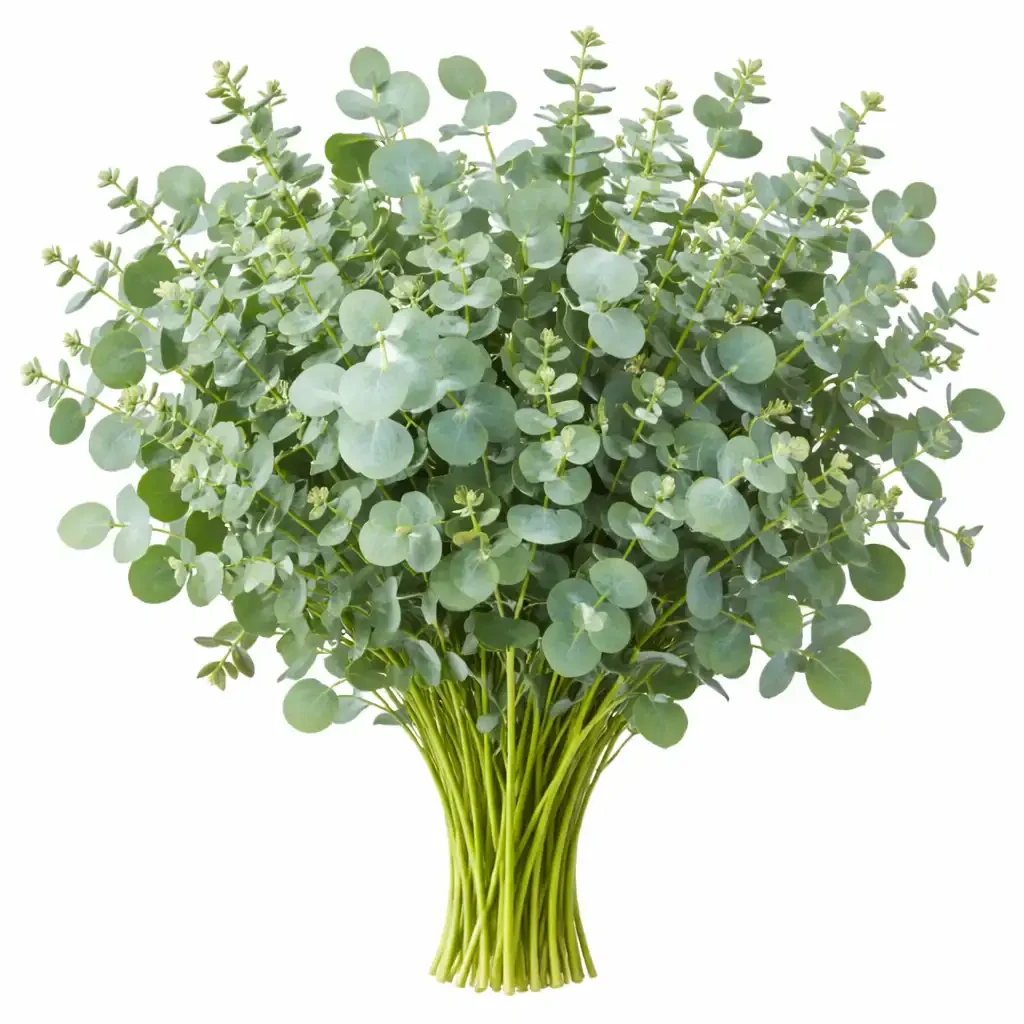
Eucalyptus is one of the most commercially important and strategically valuable cut foliage crops available to homestead growers in appropriate climates. Its extraordinarily distinctive foliage, which ranges from the perfectly round, blue-green silver dollar leaves of young Eucalyptus cinerea growth to the elongated, lance-shaped leaves of Eucalyptus globulus and the aromatic, textured foliage of dozens of other commercially grown species, provides florists and designers with one of the most versatile, fragrant, and visually distinctive foliage materials available from any single plant genus. In the professional cut flower industry Eucalyptus foliage is considered an essential and irreplaceable design element, appearing in mixed arrangements, wedding installations, greenery walls, and dried arrangements in every style from the most traditional to the most contemporary.
For homestead growers in appropriate mild climates, Eucalyptus represents one of the most financially rewarding long-term foliage investments available. Once established, Eucalyptus grows rapidly and produces harvestable foliage in extraordinary abundance from a permanent planting that can remain productive for decades with appropriate management. The key to profitable homestead Eucalyptus production is choosing the right species for the cut foliage market, managing plants for continuous foliage harvest rather than allowing them to grow into unmanageable trees, and developing supply relationships with the florists and wedding designers who consistently use and pay premium prices for quality locally grown Eucalyptus foliage.
Here is why Eucalyptus deserves a prominent spot on your homestead in appropriate climates:
It is one of the most universally used foliage materials in the professional floral industry. Florists use Eucalyptus constantly in mixed arrangements, wedding work, and dried flower designs. Local supply is extremely rare and a reliable local source is among the most valued foliage supplier relationships a florist can have.
It provides harvestable foliage year round from a single permanent planting. Unlike seasonal cut flower crops with defined production windows, Eucalyptus can be harvested throughout the year in appropriate climates, providing consistent year-round income from a single permanent planting.
The fragrance adds a powerful commercial dimension. The distinctive, clean, camphor-like fragrance of Eucalyptus foliage is immediately recognizable and highly appealing to customers. At a farmers market stand Eucalyptus creates a powerful aromatic draw that attracts customers and generates strong impulse purchasing.
It dries magnificently with excellent color and form retention. Eucalyptus is one of the best plants for the dried foliage and dried arrangement market, retaining its distinctive round leaves, attractive color, and characteristic fragrance when dried. This dried market capability creates year-round income from seasonal fresh harvest.
Coppicing management keeps plants at a manageable productive height indefinitely. By cutting Eucalyptus stems regularly at a manageable height, homestead growers prevent the plants from growing into unmanageable trees while simultaneously stimulating the most vigorous and commercially valuable juvenile foliage production.
Growing Conditions
Sunlight
Eucalyptus requires full sun without compromise. It needs at least 6 to 8 hours of direct sunlight per day and performs best with maximum sun exposure throughout the day. In partial shade growth becomes weak and leggy, foliage quality deteriorates, and plants become more susceptible to the fungal diseases that can affect Eucalyptus in poor growing conditions. Full sun is the single most important growing requirement for productive Eucalyptus foliage production.
Soil
Eucalyptus is remarkably tolerant of a wide range of soil conditions but requires excellent drainage above all else. It actually performs better in average to poor soil than in rich, heavily amended beds. Overly fertile soil produces lush, soft, disease-prone growth and significantly reduces the aromatic intensity of the foliage. Sandy or well-drained loam soil with low to moderate fertility is ideal. Soil pH between 6.0 and 7.5 is suitable for most commonly grown Eucalyptus species. The lean-soil preference and extraordinary drought tolerance of established Eucalyptus make it an excellent choice for areas of the homestead with marginal soil conditions that would challenge other crops.
Water
Eucalyptus is remarkably drought tolerant once established and actually performs better in drier conditions than in consistently moist soil. It requires regular watering during its first growing season to establish a strong root system but after that needs only occasional deep watering during extended dry periods. Overwatering established Eucalyptus is more likely to cause problems than drought, as consistently wet conditions promote root rot and reduce the aromatic intensity of the foliage that is its primary commercial asset. In climates with regular rainfall, established Eucalyptus often needs no supplemental irrigation.
Temperature
Eucalyptus hardiness varies enormously between species and selecting the right species for your specific climate is one of the most critical decisions for homestead Eucalyptus production. Most of the commonly grown cut foliage species including Eucalyptus cinerea, Eucalyptus gunnii, and Eucalyptus polyanthemos perform best in USDA zones 8 to 11, tolerating light frost but damaged by hard freezes below approximately 15 to 20 degrees Fahrenheit. Eucalyptus gunnii is one of the hardiest commonly grown species, tolerating temperatures down to approximately 5 to 10 degrees Fahrenheit in USDA zone 7 with some protection. In climates at the cold edge of Eucalyptus hardiness, growing plants against a south-facing wall or in a sheltered microclimate and providing frost cloth protection during unusual cold events significantly extends the range of successful cultivation.
Planting Guide
Eucalyptus is best planted from nursery container plants or from seed for growers who want the most economical path to large-scale establishment. Growing from seed gives access to the widest range of species and the lowest per-plant cost but requires a longer establishment period before the first harvest.
Step 1: Choose a planting location with full sun and excellent drainage. This is the single most critical planting decision for Eucalyptus. Avoid any location where water pools or where soil drainage is poor. South-facing, well-drained sites with some shelter from cold northerly winds are ideal in climates at the cold edge of the hardiness range.
Step 2: Prepare the planting area by loosening the soil. In most average to lean soils, no additional amendment is necessary. In very heavy clay soils, incorporating coarse sand to improve drainage is beneficial. Avoid adding compost or fertilizer which promotes the lush, soft growth that reduces aromatic quality.
Step 3: For nursery container plants, plant at the same depth as the container. Do not plant too deeply as this can cause crown rot. For seed starting, sow in individual pots indoors in late winter to early spring and grow on in a warm, sunny location before transplanting outdoors after the last frost date.
Step 4: Space plants for cut foliage production with coppicing management at 6 to 8 feet apart. This gives enough space for each plant to develop a productive coppiced framework while allowing efficient access for harvesting.
Step 5: Water thoroughly after planting and provide regular irrigation throughout the first growing season. Eucalyptus establishes most rapidly with consistent moisture in its first year even though it becomes highly drought tolerant once established.
Step 6: In the second year after establishment, begin the coppicing program that will maintain plants at a productive and manageable height for cut foliage harvest. Cut the main stems back to 12 to 24 inches above the ground in early spring to stimulate the vigorous new growth that produces the most commercially valuable juvenile foliage.
Seed vs Transplant: Both work well. Nursery transplants give the fastest path to the first harvest. Growing from seed is most economical for large-scale plantings.
Spacing: 6 to 8 feet apart for coppiced cut foliage production.
Planting Season: Spring in most climates. Fall planting works well in mild climates within USDA zones 9 to 11.
Maintenance
Coppicing for Cut Foliage Production
Coppicing is the most important management practice for productive homestead Eucalyptus foliage production. Left unmanaged, Eucalyptus grows into large trees that produce foliage too high to harvest efficiently. Regular coppicing, which involves cutting all stems back to a low framework of permanent branches each year or every two to three years, stimulates the vigorous production of long, harvestable stems carrying the most commercially valuable juvenile foliage.
For cut foliage production, maintain a permanent coppice framework of two to six main stems cut to approximately 12 to 24 inches above the ground. Allow new growth to develop from this framework and harvest stems when they reach 18 to 36 inches in length. After harvesting the first flush of growth, new stems develop from the framework for subsequent harvests throughout the growing season.
This coppice management system keeps plants at a permanently manageable height, maximizes the production of juvenile foliage which is more commercially valuable than mature adult foliage in most Eucalyptus species, and extends the productive life of the planting indefinitely.
Fertilizing
Eucalyptus does not need fertilizing in most average soils. Supplemental fertilization, particularly with nitrogen-rich products, produces lush, soft growth and significantly reduces the aromatic intensity of the foliage. In very poor, sandy soils a very light application of balanced fertilizer in early spring can support productive growth without significantly compromising foliage quality. Avoid phosphorus-rich fertilizers in areas where Proteaceae family plants share the growing space as Eucalyptus is sensitive to high phosphorus levels in a similar way to Protea and Leucadendron.
Pest Control
Eucalyptus is generally pest resistant in appropriate growing conditions. Eucalyptus longhorned beetle is a serious pest in some regions of California and the western United States, causing significant damage to Eucalyptus trees. Monitor plants regularly for signs of beetle activity including sawdust-like frass at the base of stems and weeping sap from bark. Contact your local agricultural extension office for current management recommendations if beetle activity is detected.
Disease Prevention
Root rot caused by Phytophthora can affect Eucalyptus in poorly drained or overwatered conditions. Excellent drainage and appropriate watering are the most effective preventive measures. Botrytis can affect harvested foliage stored in cold, humid conditions. Proper air circulation during storage and maintaining appropriate cold chain temperatures during distribution reduce botrytis pressure on harvested foliage.
Harvesting
When to Harvest
Harvest Eucalyptus stems when they are at the juvenile growth stage, showing the characteristic round, silvery-blue leaves of young growth in Eucalyptus cinerea and similar juvenile-foliage species. This stage produces the most commercially valuable foliage for the cut flower trade. Stems should be firm and well-established, not soft and immature, but still carrying predominantly juvenile leaf forms. Avoid harvesting stems that have transitioned to the more elongated, lance-shaped adult foliage as these are significantly less commercially valuable for most cut foliage applications.
How to Cut
Use clean, sharp pruners. Cut stems at the desired length, typically 18 to 36 inches for most commercial cut foliage applications. Cut just above a node or lateral shoot to encourage new growth from the cut point. Remove any dead or damaged foliage from the lower portion of the stem. For dried foliage production, cut stems at any stage from juvenile to mature as all stages dry well.
Conditioning
After cutting, place stems in deep cool water for several hours or overnight before sale or arrangement. Eucalyptus conditions readily and the aromatic oils that give it its characteristic scent and commercial value are stable and persist well through the conditioning and vase life period. Some growers add a commercial floral preservative to the conditioning water to extend vase life.
Drying
Eucalyptus is one of the best plants for the dried foliage market. It dries beautifully in several ways. Standing stems upright in a container without water and allowing them to dry in place produces the most natural, graceful stem form. Hanging upside down in small bundles in a warm, dry, well-ventilated space produces slightly more uniform drying. Either approach works well and takes approximately two to four weeks to complete. The distinctive round leaves of Eucalyptus cinerea and Eucalyptus polyanthemos retain their form and color exceptionally well when dried and the characteristic aromatic fragrance persists in dried foliage for months or even years.
How Often to Harvest
In mild climates where Eucalyptus grows year round, stems can be harvested throughout the year as new growth reaches the correct juvenile stage. In climates with cold winters that slow or stop growth, the main harvest period is late spring through fall. With coppice management producing multiple flushes of new growth from established frameworks, three to four harvests per year are typical in warm growing climates.
Vase Life
Eucalyptus foliage typically lasts two to three weeks or more as fresh cut foliage with proper conditioning, making it one of the longest-lasting cut materials available. Strip all foliage below the waterline, recut stems at an angle, and place in fresh water. Change water every few days to maximize longevity.
Uses on a Homestead
Cut Foliage Use
Eucalyptus is primarily grown as a premium cut foliage element in mixed arrangements, wedding work, and floral installations. Its distinctive round or lance-shaped leaves, blue-green color, and powerful aromatic fragrance add an immediately recognizable and distinctive quality to every arrangement. It pairs beautifully with virtually every cut flower and is particularly stunning alongside roses, dahlias, peonies, and other round focal flowers where its textural foliage provides a beautiful background and structural framework. Single-variety bundles of pure Eucalyptus foliage are extremely popular at farmers markets where the fragrance alone generates powerful impulse purchasing.
Wedding and Event Flowers
Eucalyptus is the most widely used and most commercially important foliage material in the contemporary wedding flower market. Cascading Eucalyptus garlands, greenery walls, table runners, and loose Eucalyptus foliage incorporated throughout wedding bouquets and arrangements define the most popular and enduring wedding aesthetic of the past decade. Local, freshly cut Eucalyptus foliage is among the most valued specialty foliage materials available to wedding florists and a reliable local source is one of the most sought-after specialty supplier relationships in the wedding flower market.
Dried Foliage and Arrangements
Dried Eucalyptus is one of the most commercially valuable and widely used dried foliage products available. Its excellent dried color retention, long shelf life, persistent aromatic fragrance, and beautiful round or lance-shaped leaves create premium dried products that sell consistently throughout the year at craft markets, gift shops, and through online platforms. Dried Eucalyptus bundles, garlands, and wreaths are among the most popular dried botanical products available.
Fragrance at the Farm Stand
Eucalyptus creates one of the most powerful and immediately appealing fragrance experiences at any farmers market stand. The clean, fresh, distinctive camphor-eucalyptus scent is universally recognized and deeply appealing, drawing customers to the stand before they even see the foliage. A bucket of fresh Eucalyptus at a market display is one of the most effective aromatic marketing tools available to any homestead foliage grower.
Value-Added Products
Fresh and dried Eucalyptus foliage provides raw material for a range of value-added products including shower bundles, where Eucalyptus stems tied with twine and hung in a shower create a spa-like aromatic experience, eucalyptus wreaths and garlands, aromatherapy products, and natural fragrance sachets. The shower bundle market has grown dramatically through social media promotion and represents one of the most premium-priced and margin-rich value-added product opportunities available from Eucalyptus foliage production.
Can You Make Money With Eucalyptus
Yes, Eucalyptus is one of the most financially rewarding long-term foliage investments available to homestead growers in appropriate climates. Its combination of year-round harvest capability, universal florist demand, exceptional vase life, dried foliage market capability, and the value-added product opportunities created by its distinctive fragrance creates an exceptional commercial profile for a permanent foliage planting.
Universal and consistent florist demand. Florists use Eucalyptus constantly throughout the year for mixed arrangements, wedding work, and dried designs. Local supply is extremely rare in most markets and a reliable local source is among the most valued foliage supplier relationships a florist can have. Florists who find a quality local Eucalyptus source become extremely loyal customers.
Year-round harvest provides consistent income. Unlike seasonal cut flower crops, Eucalyptus produces harvestable foliage year round in appropriate climates, providing consistent income that fills the gaps between seasonal flower crops and gives florist supply relationships a year-round dimension that is genuinely rare among homestead foliage operations.
Shower bundle market represents extraordinary value-added premium pricing. Eucalyptus shower bundles, which are simply fresh Eucalyptus stems tied attractively with twine or ribbon, sell for twelve to thirty dollars each through online platforms and at farmers markets. The margin on shower bundles is exceptional relative to the minimal additional labor required to bundle and present the foliage attractively.
Dried foliage provides year-round income from seasonal harvest. Eucalyptus dried during peak production periods provides inventory for year-round sales through online platforms, gift shops, and craft markets, converting seasonal fresh foliage harvest into a continuously generating revenue stream.
Farmers Market: Fresh Eucalyptus bundles sell for 8 to 15 dollars per bunch at retail. Shower bundles sell for 12 to 30 dollars each. Dried Eucalyptus bundles sell for 10 to 20 dollars per bunch at craft and specialty markets.
Florists and Wedding Designers: Eucalyptus is in consistent year-round demand from florists and wedding designers. Wholesale pricing of 1.00 to 2.50 dollars per stem reflects the strong and consistent demand for quality locally grown foliage. Wedding florists in particular are willing to pay premium prices for locally grown Eucalyptus with superior freshness and fragrance compared to imported commercial foliage.
Online Shop: Dried Eucalyptus bundles, shower bundles, and wreaths ship well and command premium prices online. An Etsy shop or direct online store featuring Eucalyptus products can generate meaningful year-round revenue from customers well beyond the local market area.
Companion Plants
Eucalyptus grows well alongside other Mediterranean-climate and drought-tolerant plants that share its growing requirements.
Protea: Both are southern hemisphere plants that share similar growing requirements including excellent drainage, lean soil, and full sun. Protea and Eucalyptus together create the foundation of a South African-inspired cut foliage and cut flower planting.
Leucadendron: Shares similar growing requirements and provides complementary colored foliage that pairs beautifully with Eucalyptus in mixed arrangements and dried designs.
Lavender: Both prefer well-drained, lean soil and full sun. Lavender planted alongside Eucalyptus creates a beautifully fragrant Mediterranean-climate planting that provides complementary aromatic cut materials.
Rosemary: Both are aromatic Mediterranean plants with similar growing requirements. Rosemary provides complementary aromatic foliage material and grows naturally alongside Eucalyptus in well-drained, sunny conditions.
Agapanthus: Grows well in similar Mediterranean-climate conditions and provides complementary blue-purple flowering material alongside the foliage-focused Eucalyptus planting.
Ornamental Grasses: Drought-tolerant ornamental grasses complement Eucalyptus beautifully in arrangements and in the landscape, adding movement and texture.
Common Problems
Cold Damage
The most common cause of Eucalyptus failure in borderline climates. Most commonly grown cut foliage species are damaged or killed by temperatures below 15 to 20 degrees Fahrenheit. Choose the hardiest species appropriate for your climate, plant in sheltered locations protected from cold winds, provide frost cloth protection during unusual cold events, and mulch heavily over the root zone in fall to protect roots from freeze damage. Even if stems are killed by cold, established Eucalyptus often regenerates from the root system in spring.
Root and Crown Rot
Caused by poorly drained or waterlogged soil. Eucalyptus is highly susceptible to Phytophthora and other water mold pathogens when grown in wet conditions. Prevention through excellent drainage and appropriate watering is the only effective management strategy. Remove and replace affected plants immediately.
Eucalyptus Longhorned Beetle
A serious pest in some regions that bores into the trunks and branches of Eucalyptus trees, causing significant structural damage. More problematic in stressed or weakened trees. Maintaining vigorous plant health through appropriate growing conditions is the best preventive measure. Contact local agricultural extension services for current pest management recommendations in affected regions.
Excessive Tree Growth
Without regular coppicing management, Eucalyptus grows into very large trees that produce foliage too high to harvest efficiently and can create problems with neighboring properties, overhead utilities, and shading. Establish a regular coppicing program from the second year of establishment and maintain it consistently throughout the productive life of the planting. Never allow Eucalyptus to develop into unmanaged trees in a homestead cut foliage operation.
Foliage Transition from Juvenile to Adult
Most commonly grown Eucalyptus species naturally transition from producing the round, blue-green juvenile foliage most valued for cut foliage use to producing more elongated adult foliage as the plants mature. Regular coppicing prevents this transition by continuously stimulating the production of juvenile growth from new shoots emerging from the cut framework. Plants that are not coppiced regularly transition to adult foliage that is significantly less commercially valuable for most cut foliage applications.
Varieties to Consider
Primary Cut Foliage Species
Eucalyptus cinerea (Silver Dollar Eucalyptus): The most widely grown and commercially important Eucalyptus species for cut foliage production. Its perfectly round, blue-green, silvery juvenile leaves are the most instantly recognizable and universally sought-after Eucalyptus foliage in the cut flower trade. Excellent for both fresh and dried use. The standard commercial variety for homestead cut foliage production. Hardy in USDA zones 8 to 11.
Eucalyptus polyanthemos (Silver Dollar Gum, Red Box): Similar round juvenile foliage to E. cinerea but with slightly larger leaves and somewhat different color. Very popular in the cut foliage trade as a high-quality alternative to E. cinerea. Slightly more drought tolerant than E. cinerea. Hardy in USDA zones 8 to 11.
Eucalyptus gunnii (Cider Gum): One of the hardiest commonly grown Eucalyptus species, tolerating temperatures down to approximately 5 to 10 degrees Fahrenheit. Round to oval juvenile leaves in a distinctive blue-gray color. Very good cut foliage quality. One of the best choices for growers in USDA zones 7 to 8 where hardier species are needed. Excellent fresh and dried performance.
Eucalyptus globulus (Blue Gum, Tasmanian Blue Gum): The most widely planted Eucalyptus species globally. Large, blue-green juvenile foliage that is very popular in the cut foliage trade for its distinctive color and powerful fragrance. Grows very vigorously and requires aggressive coppicing management to maintain at a harvestable height. Hardy in USDA zones 9 to 11.
Specialty Cut Foliage Species
Eucalyptus parvifolia (Small-Leaved Gum): A species with small, narrow, blue-green leaves on graceful, arching stems. Very popular with florists for its more delicate, refined appearance compared to the bold round leaves of E. cinerea. Excellent for wedding work. Hardy in USDA zones 8 to 11.
Eucalyptus nicholii (Narrow-Leaved Peppermint): A graceful species with fine, narrow, blue-green foliage and a distinctive peppermint fragrance. Very popular with florists for the more delicate, feathery appearance and the pleasant peppermint variation on the standard Eucalyptus scent. Hardy in USDA zones 8 to 11.
Eucalyptus pulverulenta (Baby Blue Spiralis): A spectacular species with distinctive spirally arranged round, blue-green leaves on arching stems. One of the most sought-after specialty Eucalyptus varieties for high-end wedding work and specialty floral design. The spiraling leaf arrangement creates an unusually beautiful and immediately distinctive foliage stem. Hardy in USDA zones 8 to 11.
Eucalyptus stuartiana (Apple-Scented Gum): A species with apple-scented foliage in round to oval blue-green leaves. The distinctive apple fragrance provides a pleasant variation on the standard Eucalyptus camphor scent. Hardy in USDA zones 8 to 10.
Final Thoughts
Eucalyptus is one of the most commercially powerful and strategically important foliage crops available to homestead growers in appropriate mild climates. Its extraordinary combination of universal florist demand, year-round harvest capability in mild climates, exceptional vase life, magnificent dried foliage performance, powerful aromatic fragrance, and the extraordinary value-added product opportunities created by the shower bundle market create a permanent foliage planting with commercial returns that few other single crop investments can match. The critical requirements for successful homestead Eucalyptus production are selecting the right species for your specific climate, establishing a consistent coppicing program from the second year of planting to maintain plants at a productive and manageable height while continuously stimulating the most commercially valuable juvenile foliage growth, and developing the florist and wedding designer relationships that create consistent year-round demand for quality locally grown foliage. Give Eucalyptus those things, plant it in full sun with excellent drainage and lean soil, and it will reward your homestead with decades of the most fragrant, most universally demanded, and most commercially versatile cut foliage available from any single perennial planting in an appropriate climate.
FAQ
Can Eucalyptus be grown in cold climates? Most of the commonly grown cut foliage Eucalyptus species are suited to USDA zones 8 to 11 and are damaged or killed by temperatures below 15 to 20 degrees Fahrenheit. For growers in colder climates, Eucalyptus gunnii is one of the hardiest commonly grown species and can tolerate temperatures down to approximately 5 to 10 degrees Fahrenheit in USDA zone 7 with appropriate site selection and protection. In colder climates beyond zone 7, growing Eucalyptus in large containers that can be moved to frost-free indoor locations in winter allows year-round production and dramatically extends the climate range for homestead Eucalyptus production. Container-grown plants will be smaller and produce fewer stems than ground-planted specimens but can still generate meaningful commercial quantities of cut foliage with appropriate management.
What is coppicing and why is it important for Eucalyptus production? Coppicing is the practice of cutting stems back to a low permanent framework of branches, typically 12 to 24 inches above the ground, to stimulate vigorous new growth from the cut framework. For Eucalyptus cut foliage production, coppicing is essential because it prevents plants from growing into unmanageable trees, stimulates the most vigorous and fastest-growing juvenile shoots that carry the most commercially valuable round blue-green leaves, and dramatically increases the total volume of harvestable stems per plant per year compared to unpruned trees. Without regular coppicing, Eucalyptus plants transition from productive cut foliage shrubs to large, difficult-to-harvest trees that produce predominantly adult foliage, which is significantly less commercially valuable than juvenile foliage for most cut foliage applications.
How do I make Eucalyptus shower bundles? Eucalyptus shower bundles are one of the most profitable value-added products available from homestead Eucalyptus production. Select fresh, fragrant Eucalyptus stems with intact juvenile foliage. Gather stems into loose, attractive bundles of approximately five to fifteen stems depending on the desired bundle size. Trim stem ends to a uniform length. Tie stems securely with natural twine, rubber bands covered with twine or ribbon, or decorative cord approximately one third of the way up from the stem ends. Trim stem ends cleanly. The bundle is hung from the showerhead by the twine where steam from warm showers releases the aromatic eucalyptus oils, creating a spa-like experience. Fresh shower bundles typically remain fragrant for two to four weeks before the foliage dries and the fragrance diminishes. Dried bundles can be refreshed by misting with water.
Which Eucalyptus species is best for cut foliage production? Eucalyptus cinerea, the Silver Dollar Eucalyptus, is the most widely grown and commercially important species for cut foliage production. Its perfectly round, silvery-blue juvenile leaves are the most universally recognized and sought-after Eucalyptus foliage in the cut flower trade and are the standard reference point when florists and customers say Eucalyptus. Eucalyptus polyanthemos is a close second with very similar and equally commercially valuable foliage. For growers in colder climates at the edge of the hardiness range, Eucalyptus gunnii provides a good combination of cold hardiness and acceptable cut foliage quality. For specialty wedding and high-end florist markets, Eucalyptus pulverulenta with its distinctive spiraling leaf arrangement commands the highest per-stem prices of any commonly grown cut foliage Eucalyptus.
How long does Eucalyptus last as a cut foliage material? Fresh Eucalyptus foliage has an exceptional vase life of two to three weeks or more with proper conditioning and care, making it one of the longest-lasting cut materials available. This extraordinary longevity is one of the primary reasons florists value it so highly as a foliage material. The leaves gradually dry and become more papery over time but maintain their attractive appearance and distinctive fragrance throughout this drying process, effectively transitioning from fresh foliage to dried foliage during its extended vase life. Properly dried Eucalyptus foliage retains its color, form, and fragrance for one to two years or more in appropriate storage conditions, making it one of the most commercially durable dried foliage products available.