
Feverfew
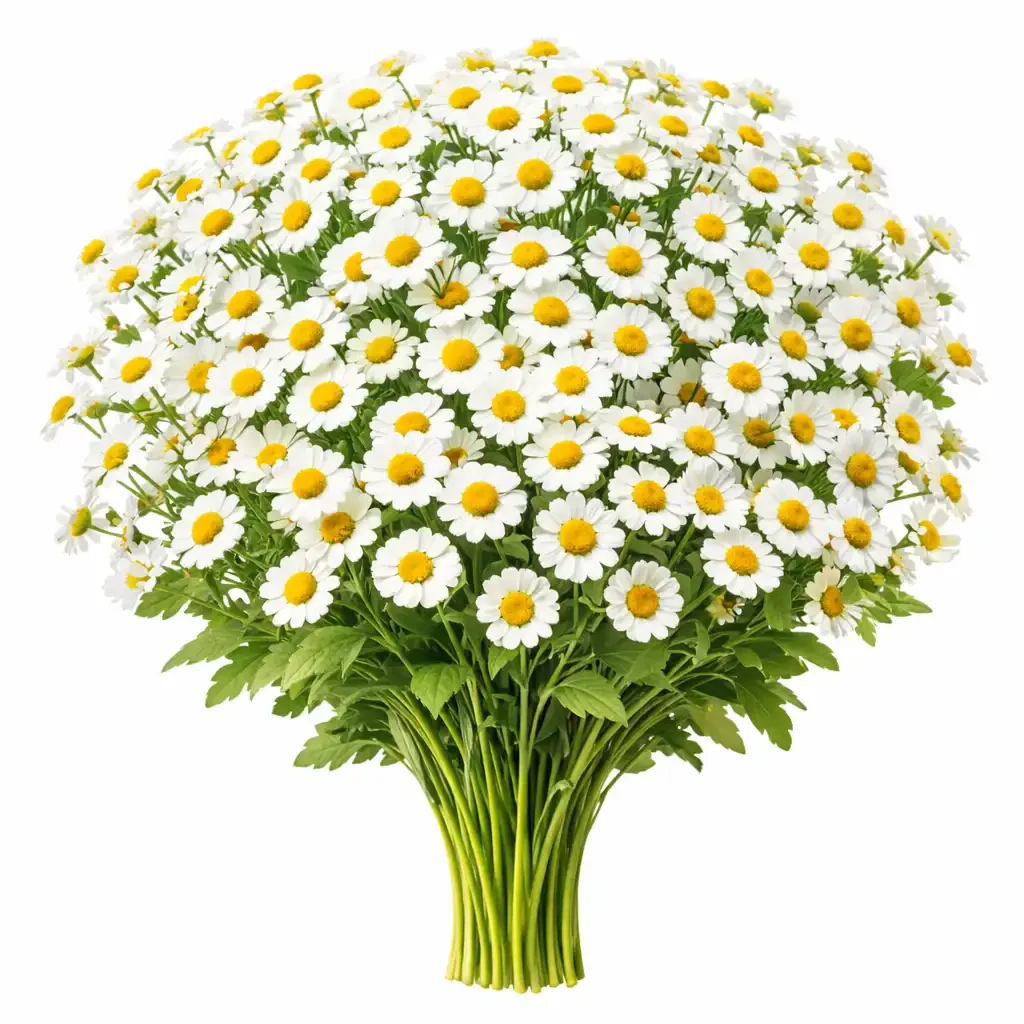
Quick Overview
Common Name: Feverfew, Bachelor's Buttons, Featherfew
Scientific Name: Tanacetum parthenium
Plant Type: Short-lived Perennial
USDA Zones: 5 to 9
Sun Requirement: Full Sun to Partial Shade
Soil Type: Well-drained, average to poor fertility
Bloom Season: Early Summer through Fall
Height: 18 to 36 inches
Pollinator Friendly: Yes
Edible: Yes, leaves used medicinally and in herbal preparations
Note: Distinct from Matricaria, though both are sometimes called Feverfew in the trade
Why Grow Feverfew on a Homestead
Feverfew is one of the most versatile and commercially productive multi-use plants a homestead grower can cultivate. Its abundant clusters of small, bright white daisy flowers with prominent golden-yellow centers create a fresh, clean filler effect in arrangements that florists and customers consistently seek out throughout the long summer and early fall selling season. As a perennial that returns year after year with increasing productivity and minimal ongoing care, it provides a permanent source of professional-quality white filler material that elevates every arrangement it appears in, from the most casual farmers market bouquet to the most refined wedding installation.
What distinguishes Feverfew from most other white filler crops is the combination of its strong perennial habit, its genuinely medicinal herbal tradition that creates additional value-added product opportunities, its remarkable self-seeding generosity that makes it effectively self-renewing in a managed garden, and the distinctive aromatic pungency of its foliage that gives it a sensory character quite different from the more neutral filler quality of Baby's Breath or Matricaria. This distinctive aromatic quality is polarizing in the best commercial sense, creating strong, enthusiastic loyalty among the customers and florists who appreciate it while clearly differentiating it from more generic white filler alternatives.
Here is why Feverfew deserves a prominent spot on your homestead:
It is a permanent, self-seeding perennial filler with near-zero ongoing input costs. Unlike annual filler crops that must be replanted each season, Feverfew is a perennial that returns year after year from established root systems and also self-seeds prolifically, creating an expanding, self-renewing supply of harvestable stems from a minimal initial investment.
It provides abundant white filler over an extraordinarily long blooming season. Feverfew begins blooming in early summer and continues producing new stems through fall with consistent harvest management, providing one of the longest white filler crop production windows of any perennial cut flower.
It has genuine herbal value that creates additional income streams. Feverfew has a long and well-documented history as a medicinal herb, particularly for migraine prevention. Selling fresh or dried Feverfew leaves as an herbal product alongside cut flower sales provides an additional income channel from the same established planting.
It thrives in partial shade and average to lean soil where many other crops struggle. The shade tolerance and lean-soil preference of Feverfew make it an excellent choice for areas of the homestead that are difficult to use productively for more demanding crops.
The aromatic foliage provides a genuine market story and sensory differentiation. The distinctive, pungent, chrysanthemum-like aroma of Feverfew foliage creates a memorable sensory experience at the market stand and a genuine product story that engages customers and differentiates Feverfew from more generic white filler alternatives.
Growing Conditions
Sunlight
Feverfew performs well in full sun to partial shade. It needs at least 4 to 6 hours of direct sunlight per day for the strongest stems and most abundant flowering. In full sun it produces the most compact, well-branched plants with the most abundant blooms. In partial shade stems become somewhat taller and more delicate but still produce good quality filler material. This shade tolerance makes Feverfew more flexible in its placement than many other cut flower crops and an excellent choice for locations with limited full sun availability.
Soil
Feverfew strongly prefers well-drained soil with average to poor fertility. It is adapted to lean conditions and actually performs better in these conditions than in rich, heavily amended beds. Overly fertile soil produces lush, floppy growth at the expense of the compact, well-branched stems most valuable for cut flower production. Sandy or well-drained loam soil is ideal. Soil pH between 6.0 and 7.0 is suitable. This lean-soil preference makes Feverfew an excellent choice for growing in areas of the homestead where soil quality is not sufficient for more demanding crops.
Water
Water consistently during the establishment phase and through dry periods in the growing season. Once established, Feverfew develops good drought tolerance and requires significantly less supplemental irrigation than most other cut flower crops. Water deeply during extended dry periods but allow the soil to dry somewhat between waterings. Overwatering and consistently moist conditions increase the risk of the crown rot and fungal diseases that can affect Feverfew in poorly drained or excessively wet growing conditions.
Temperature
Feverfew is a cool to warm season perennial that performs well across a wide range of temperatures. It tolerates light frost and actually benefits from cool growing conditions for the strongest, most upright stems. It handles the warm temperatures of summer well but may slow production somewhat during the most intense heat of midsummer before resuming full production as temperatures moderate in late summer and early fall. It is cold hardy in USDA zones 5 to 9, returning reliably from established root systems each spring.
Planting Guide
Feverfew can be started from seed indoors, direct sown outdoors, or established from nursery transplants. All three approaches work well and the best choice depends on available time and the scale of the planting.
Step 1: Start seeds indoors 6 to 8 weeks before the last frost date for the earliest possible transplants. Feverfew seeds are very small and need light to germinate. Press seeds onto the surface of moist seed starting mix without covering. Keep seed trays at 65 to 70 degrees Fahrenheit until germination which typically occurs within 7 to 14 days.
Step 2: Alternatively direct sow outdoors after the last frost date when soil has warmed. Sow seeds on the soil surface or cover with only the thinnest dusting of fine soil. Water gently and keep surface moist until germination.
Step 3: Choose a location with full sun to partial shade and well-drained, average to lean fertility soil. Avoid recently heavily amended beds.
Step 4: Once seedlings have developed two to three sets of true leaves, transplant into individual pots and grow on in a cool, bright location until outdoor planting time after the last frost date.
Step 5: Transplant outdoors to the prepared location, spacing plants 12 to 18 inches apart for cut flower production. Water thoroughly after transplanting and keep soil consistently moist until plants are well established.
Step 6: Allow a proportion of plants each season to self-seed naturally. Feverfew self-seeds prolifically and after the first season a well-managed planting will renew itself from self-sown seedlings with minimal additional seed investment. Thin volunteer seedlings to appropriate spacing as they emerge.
Seed vs Transplant: Both work well. Starting from seed is most economical for large plantings. Nursery transplants give faster establishment for smaller initial plantings.
Spacing: 12 to 18 inches apart for cut flower production.
Planting Season: Spring after last frost in most climates. Fall planting works well in mild climates.
Maintenance
Pinching
Pinching the central growing tip when plants reach 6 to 8 inches tall encourages branching and significantly increases the number of flowering stems per plant. This is one of the most important practices for maximizing cut flower yield from Feverfew. Pinching delays the first bloom by approximately one to two weeks but the increase in total stem yield throughout the long season is substantial.
Deadheading and Harvesting
Regular harvesting is both the commercial goal and the most important maintenance practice for keeping Feverfew productive throughout its long blooming season. Feverfew responds strongly to regular cutting by producing new lateral flowering shoots. Remove all spent or declining flower clusters promptly to encourage continued production. Do not allow significant numbers of flower heads to go fully to seed as this can signal plants to slow down production.
Dividing
Divide Feverfew plants every two to three years in early spring to maintain vigor and prevent the center die-out that can develop in older plants. Division provides free new plants to expand the planting. Discard the woody central portion of older plants and replant only the vigorous outer sections at the correct spacing.
Fertilizing
Feverfew does not need fertilizing in average soil. In very poor soil a very light application of balanced fertilizer at planting is the maximum that should be applied. Regular fertilizing, particularly with nitrogen-rich products, produces lush, floppy growth that reduces the market quality of cut stems.
Pest Control
Feverfew is largely pest resistant. Its strongly aromatic foliage deters many insects. Aphids can occasionally appear on new growth and developing flower clusters but are usually managed naturally by the beneficial insects that Feverfew attracts.
Harvesting
When to Harvest
Harvest Feverfew stems when approximately half to three quarters of the individual flower heads in the cluster are open and showing their characteristic white petals and prominent golden-yellow centers. Stems harvested at this stage have the best vase life and continue to develop fully after cutting. Harvest in the early morning when stems are fully hydrated and temperatures are cool.
How to Cut
Use clean, sharp scissors or pruners. Cut stems as long as possible, ideally 14 to 20 inches. Cut just above a set of leaves or a lateral shoot to encourage new stem production. Remove all foliage from the lower half of the stem immediately after cutting. Place stems immediately into a bucket of cool water. Note that the aromatic foliage can cause skin irritation in sensitive individuals. Wearing gloves during harvesting is advisable for people with sensitive skin.
Conditioning
After cutting, place stems in deep cool water in a cool, dark location for several hours or overnight before sale or arrangement. Feverfew conditions readily and holds up well in arrangements and at market displays when properly conditioned.
Drying
To dry Feverfew, gather stems into small loose bundles and hang upside down in a warm, dry, well-ventilated space away from direct sunlight. The small daisy-like flowers retain their form reasonably well when dried and can be used in dried wreaths, arrangements, and botanical craft products. The dried foliage retains some of its aromatic quality.
How Often to Harvest
During peak bloom from early summer through fall, harvest every three to four days as new stems reach the correct stage. Regular cutting encourages the plant to produce new stems continuously throughout the long season.
Vase Life
Feverfew typically lasts 7 to 12 days as a fresh cut flower with proper conditioning and care. Strip all foliage below the waterline, recut stems at an angle, and place in fresh water with a floral preservative. Change water every few days to maximize longevity.
Uses on a Homestead
Cut Flower Use
Feverfew is primarily grown as a white filler flower in mixed bouquets and arrangements. Its abundant clusters of small white daisy flowers with golden centers add a fresh, clean, wildflower-like filler quality to arrangements that complements virtually every other flower. It is particularly beautiful in mixed summer bouquets alongside roses, dahlias, zinnias, and other bold summer flowers where its delicate white clusters provide a clean, bright contrast that enhances the visual quality of the focal flowers. Its distinctive aromatic quality adds a sensory dimension that customers notice and appreciate at the market stand.
Dried Flower Use
Dried Feverfew bundles add a delicate white texture to dried wreaths and arrangements. They pair beautifully with dried lavender, statice, strawflower, and grasses in naturalistic dried designs. The dried flowers retain their characteristic daisy form reasonably well and provide useful white accent material in dried floral products.
Herbal and Medicinal Use
Feverfew has a long and well-documented history as a medicinal herb, particularly associated with migraine prevention in traditional herbal medicine. Fresh and dried Feverfew leaves can be sold as herbal products to customers interested in natural health remedies, incorporated into herbal tea blends, or supplied to herbalists and natural health product producers. Always clearly communicate that Feverfew is a medicinal herb with known interactions and side effects, and advise customers to consult a healthcare provider before using it medicinally. Selling herbal Feverfew provides an additional income stream from the established planting with minimal additional effort.
Pollinator Garden
Feverfew is an excellent pollinator plant. Bees, hoverflies, and beneficial insects visit its blooms constantly throughout the long summer and fall blooming season, contributing to the overall health and productivity of your homestead garden ecosystem.
Can You Make Money With Feverfew
Yes, Feverfew is a profitable low-input filler and herbal crop for homestead flower operations, particularly for growers who value near-zero ongoing input costs, a long blooming season, and the additional income channel provided by its herbal value.
Near-zero ongoing input costs after establishment. As a self-seeding perennial, Feverfew requires essentially no ongoing seed investment after its first season and minimal fertilizing, watering, or pest management. The return on investment per plant is exceptional given the long production season.
Extended summer through fall blooming window. Feverfew begins blooming in early summer and continues producing new stems through fall, one of the longest white filler crop production windows available from any perennial cut flower crop.
Multiple income streams from a single planting. Fresh cut flower stems, dried flower bundles, and fresh or dried herbal leaf products all provide viable income channels from the same established planting.
Strong pollinator and beneficial insect habitat value. The abundant, accessible flowers of Feverfew provide one of the most important summer and fall beneficial insect habitat resources available from any perennial filler crop.
Farmers Market: Fresh Feverfew bundles sell for 5 to 9 dollars per bunch. Mixed bouquets containing Feverfew as a premium white filler command higher prices than those using more common white fillers. Herbal Feverfew bundles of fresh or dried leaves sell for 3 to 7 dollars per bunch.
Florists: Feverfew is a useful and distinctive white filler for florists working with naturalistic, garden-style, and wildflower design aesthetics. Local supply is valued by florists who appreciate its genuine garden quality and aromatic character.
Herbal Products: Dried Feverfew leaves sold to herbal product producers, herbalists, and direct customers interested in natural health products provide an additional premium income stream from the established planting.
CSA Flower Subscriptions: Feverfew is a reliable and distinctive white filler component in summer and fall flower subscription boxes that enhances the professional quality of every bouquet it appears in throughout its long blooming season.
Companion Plants
Feverfew grows beautifully alongside many other summer and fall cut flowers and beneficial insect plants with similar growing preferences.
Roses: Feverfew planted near roses attracts beneficial insects that help manage aphids and other rose pests. In bouquets the clean white clusters of Feverfew complement rose blooms beautifully across every rose color.
Dahlias: Both are summer through fall bloomers that complement each other magnificently in mixed arrangements where Feverfew provides delicate white filler contrast to the bold, saturated colors of dahlias.
Echinacea: Both are summer-blooming perennials with similar lean-soil preferences that complement each other in naturalistic mixed arrangements and share similar beneficial insect attraction qualities.
Lavender: Both prefer well-drained, lean soil and complement each other in fragrant mixed bouquets and in the garden where their contrasting blue-purple and white create a beautiful and classic combination.
Yarrow: Both are low-maintenance perennials that thrive in similar lean conditions and complement each other in naturalistic mixed arrangements.
Zinnias: Both are summer through fall bloomers that complement each other in vibrant mixed arrangements where Feverfew provides clean white contrast to the vivid colors of zinnias.
Common Problems
Powdery Mildew
Can appear on foliage in late summer in conditions of poor air circulation or warm days with cool nights. Space plants properly at 12 to 18 inches, avoid overhead watering, and remove affected foliage promptly. Choose planting locations with good air movement.
Floppy Stems
The most common production challenge with Feverfew. Caused by overly rich soil, insufficient sun, or overcrowded conditions. Grow in average to lean soil with adequate sun and space plants properly. Pinch seedlings early to encourage compact, well-branched growth. Avoid high-nitrogen fertilizers. Horizontal support netting can help in exposed locations.
Crown Rot
Can occur in poorly drained or consistently wet soil. Ensure excellent drainage, avoid overwatering, and never allow water to pool around the base of plants. More common in heavy clay soils or in low-lying areas where water accumulates.
Short-Lived Plant Habit
Feverfew is a short-lived perennial that may decline or die after two to three seasons at a given location. Manage this natural tendency by dividing plants every two to three years to maintain vigor and by allowing self-seeding to ensure a continuous supply of young, vigorous plants alongside older established ones.
Skin Irritation
The aromatic foliage of Feverfew can cause contact dermatitis in sensitive individuals. Wear gloves when harvesting and handling large quantities of plant material. Inform customers who purchase cut stems that the foliage may cause skin irritation if they are sensitive to plants in the chrysanthemum family.
Varieties to Consider
Tanacetum parthenium (Common Feverfew): The standard species with small, single white daisy flowers with prominent yellow centers on branching stems. Very productive and well suited to both cut flower and herbal production. The most widely available form for homestead production.
Tanacetum parthenium Snowball: A double-flowered variety with fully double, pompom-like white flowers that are more substantial and visually impressive than the single-flowered species. Very popular with florists for the more refined double flower form. One of the most widely grown types for commercial cut flower production.
Tanacetum parthenium Aureum (Golden Feverfew): A variety grown for its golden-yellow to chartreuse foliage rather than primarily for its flowers. Produces the same small white daisy blooms but is valued as a foliage filler for its bright, lime-yellow leaves that add unusual color to mixed arrangements. Very popular with florists working with fresh, bright color palettes.
Tanacetum parthenium Vegmo White: A variety selected specifically for commercial cut flower production with strong stems, good stem length, and an excellent double flower percentage. Very reliable performance and consistent quality.
Tanacetum parthenium Tetra White Wonder: A tetraploid variety with larger than standard double white flowers on strong stems. Very popular in the professional cut flower trade for its more substantial flower size compared to standard single-flowered types.
Final Thoughts
Feverfew is one of the most reliably productive, most commercially versatile, and most genuinely multi-functional plants a homestead flower grower can establish. Its combination of long-season white filler production, near-zero ongoing input costs as a self-seeding perennial, genuine herbal value that creates additional income streams, and the distinctive aromatic character that differentiates it from more generic white filler alternatives creates a permanent planting with exceptional long-term commercial and ecological value. It is not a dramatic specialty flower that generates immediate market excitement. It is something more enduring than that: a reliable, professional-quality white filler that florists genuinely need throughout the entire summer and fall season, that self-renews year after year with minimal management, and that provides herbal income on top of cut flower income from the same established plants. Grow it in lean, well-drained soil with adequate sun, pinch seedlings early for maximum branching, harvest consistently throughout its long season, allow sufficient plants to self-seed for ongoing renewal, and Feverfew will become one of the most reliably productive, most financially efficient, and most genuinely useful permanent plants on your entire homestead operation.
FAQ
Is Feverfew the same as Matricaria? Feverfew and Matricaria are closely related plants in the same family that are sometimes confused and occasionally sold under each other's names in the cut flower trade. True Feverfew is Tanacetum parthenium, a short-lived perennial with distinctive, pungently aromatic foliage and white daisy flowers with prominent yellow centers. True Matricaria refers most precisely to Matricaria chamomilla, German Chamomile, which has very similar small white daisy flowers but different foliage and a distinctly different, more pleasant chamomile fragrance. In practice the names are sometimes used interchangeably in the cut flower trade where both plants are grown primarily for similar white filler applications. For homestead growers the important distinction is that Feverfew is a short-lived perennial that self-seeds freely, while German Chamomile is an annual that must be replanted each season. The cultural requirements, growing characteristics, and commercial applications are similar enough that the plants can be used interchangeably as white filler crops in most market situations.
Can Feverfew be used as a medicinal herb? Feverfew has a long history of use in traditional herbal medicine, most notably for migraine prevention. Several clinical studies have examined its effectiveness for this application with mixed but generally supportive results for regular consumption of fresh or dried leaves. However Feverfew also has known contraindications and interactions, including potential interactions with blood-thinning medications and a rebound effect when discontinuing regular use. Always communicate clearly that Feverfew is a potent medicinal herb rather than a simple culinary herb and advise customers to research its use carefully and consult a healthcare provider before using it medicinally. Selling Feverfew as a decorative herbal plant or dried herb for its aromatic and botanical qualities rather than making specific health claims is the safest commercial approach for homestead sales.
How long does Feverfew live as a perennial? Individual Feverfew plants are short-lived perennials that typically decline or die after two to three seasons at a given location. The plant compensates for this short individual lifespan with prolific self-seeding that creates a self-renewing population of young, vigorous plants alongside older established ones in a well-managed garden. Regular division of established plants every two to three years in early spring helps maintain vigor in the permanent planting while self-sown seedlings provide ongoing renewal. A well-managed Feverfew planting effectively becomes permanent through this combination of division and self-seeding even though individual plants are relatively short-lived.
Is Feverfew foliage fragrant or unpleasant? The foliage of Feverfew has a strong, distinctive aromatic scent that is often described as pungent, bitter, or reminiscent of chrysanthemum. It is strongly aromatic rather than pleasantly fragrant in the way that lavender or sweet peas are fragrant. The reaction to Feverfew's aroma varies significantly between individuals: some people find it pleasantly herbal and characteristic, while others find it too strong or bitter. At a farmers market stand the aromatic foliage creates a distinctive and memorable sensory experience that can be a positive differentiator when positioned as a genuine herbal quality. When using Feverfew in arrangements, removing most of the foliage and leaving primarily the flower clusters minimizes the aromatic impact for customers who prefer a less herbaceous scent profile in their arrangements.