
Freesia
Quick Overview
Common Name: Freesia, Common Freesia
Scientific Name: Freesia spp., Freesia x hybrida
Plant Type: Tender Perennial grown from corms
USDA Zones: 9 to 11 as perennial, grown as annual in cooler zones
Sun Requirement: Full Sun to Partial Shade
Soil Type: Well-drained, moderately fertile, sandy
Bloom Season: Spring in mild climates, Summer in cold climates
Height: 12 to 24 inches
Pollinator Friendly: Yes
Edible: No
Why Grow Freesia on a Homestead
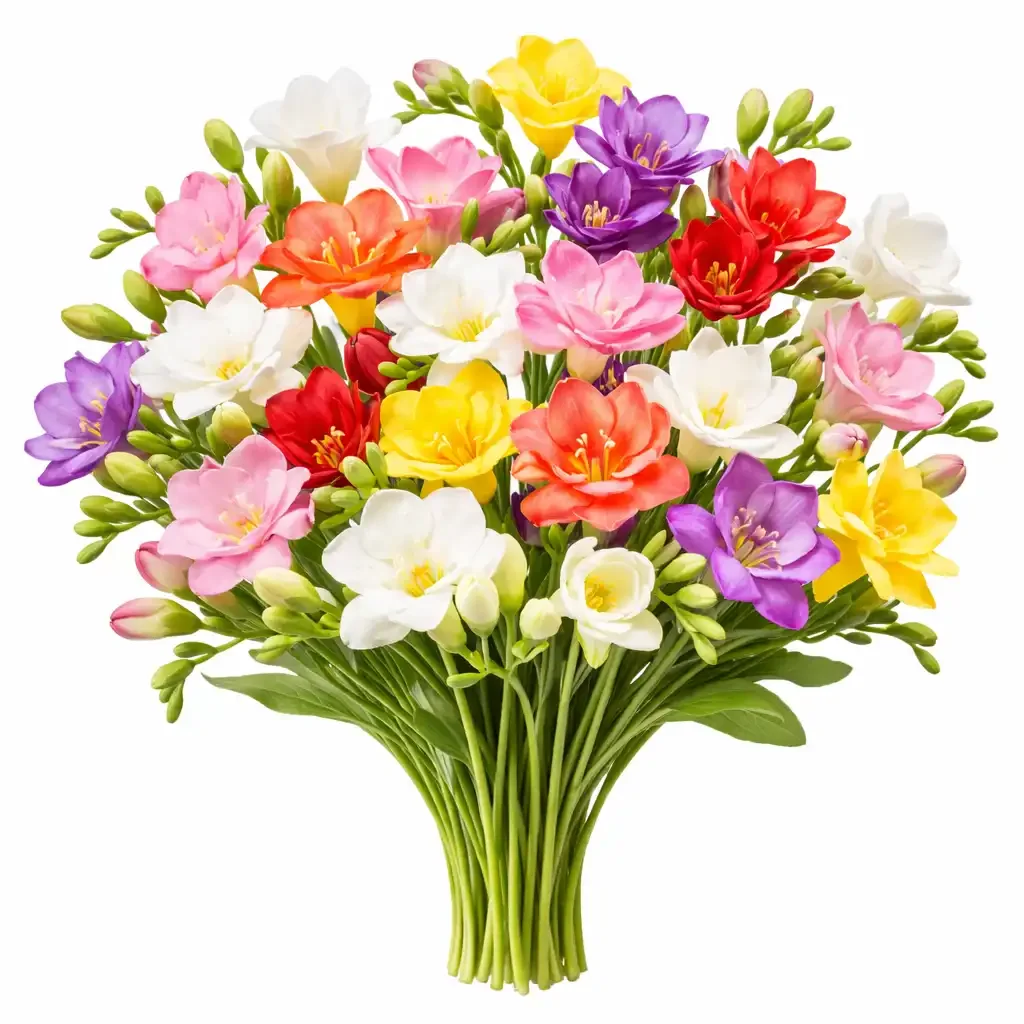
Freesia is one of the most intensely fragrant and commercially coveted cut flowers available to homestead growers. Its delicate, trumpet-shaped blooms arranged in a distinctive one-sided spray along arching stems, in colors ranging from pure white and the softest cream through vivid yellow, orange, coral, pink, red, lavender, and deep purple, carry a rich, sweet, citrusy fragrance that is one of the most instantly recognizable and universally beloved scents in the floral world. In the professional cut flower industry, Freesia fragrance is considered among the finest available from any cultivated flower, and the combination of extraordinary scent, elegant form, and wide color range makes it a consistent staple in high-end bouquets, wedding arrangements, and specialty market offerings around the world.
For homestead growers, Freesia represents one of the most strategically exciting fragrant specialty cut flower opportunities available, particularly for growers in mild winter climates within USDA zones 9 to 11 where it can be grown as a fall-planted cool season crop that blooms through late winter and spring at the peak of the wedding season. The fragrance premium alone creates a commercial advantage that most other spring flowers cannot replicate, and the genuine rarity of locally grown, freshly cut Freesia at most farmers markets and in most local florist supply chains creates a market positioning that commands premium prices without resistance from customers and florists who know exactly what they are getting and how difficult it is to source locally.
Here is why Freesia deserves a prominent spot on your homestead:
It delivers one of the most commercially powerful fragrances available from any cut flower. Freesia fragrance is universally recognized, widely regarded as one of the finest floral scents available, and commands a premium in every market channel from the farm stand to the high-end florist. No other cool season cut flower matches Freesia's fragrance impact.
It blooms during the peak spring wedding season in mild winter climates. In mild winter climates within USDA zones 9 to 11, fall-planted Freesia corms bloom from late winter through spring precisely when the wedding season is at its most active and the demand for fragrant, premium cool season flowers is highest.
It is genuinely rare as a locally grown fresh cut flower. Despite its worldwide commercial importance as an imported cut flower, locally grown fresh Freesia is rare at most farmers markets and virtually unavailable from most local florist supply chains. This genuine local scarcity creates a premium market position with minimal competition.
It is extraordinarily versatile in arrangements. The arching, one-sided spray of Freesia blooms provides a distinctive and elegant form that complements virtually every other cut flower. Individual stems add fragrance and delicate structure to mixed bouquets, and mixed-color Freesia bundles are among the most commercially appealing single-variety bundles available at any spring market.
The corm investment is economical and returns are strong. Freesia corms are relatively inexpensive and the return per corm in cut flower value is excellent, making the financial profile of a well-managed Freesia crop genuinely attractive relative to the investment required.
Growing Conditions
Sunlight
Freesia performs best in full sun to partial shade. It needs at least 4 to 6 hours of direct sunlight per day for the strongest stems and most abundant flowering. In full sun it produces the most upright, strongest stems. In partial shade stems become somewhat longer and more delicate but still produce good quality flowers. The slight shade tolerance of Freesia gives it more flexibility in planting location than many other cut flower bulbs. In hot climates, some afternoon shade can actually improve performance by reducing heat stress during the cool season growing period.
Soil
Freesia requires well-drained, moderately fertile, preferably sandy or sandy loam soil. Excellent drainage is the most critical soil requirement as Freesia corms rot quickly in waterlogged or poorly drained conditions. Sandy soil that drains freely is ideal. In heavier soils, incorporating coarse sand and compost to improve drainage is essential for reliable performance. Soil pH between 6.0 and 7.0 is ideal.
Water
Water consistently during the active growing and blooming season to maintain even soil moisture. Freesia needs regular moisture during its cool season growing period but must never sit in waterlogged soil. Water deeply and allow the top inch of soil to dry slightly between waterings. As the season progresses and foliage begins to die back after blooming, reduce watering significantly. Freesia corms need relatively dry conditions during their summer dormancy to ripen properly and avoid rot.
Temperature
Freesia is a cool season crop that performs best in moderate temperatures between 50 and 65 degrees Fahrenheit. It does not tolerate frost but is damaged by prolonged exposure to temperatures above 75 to 80 degrees Fahrenheit which causes premature decline and reduced bloom quality. In mild winter climates within USDA zones 9 to 11, Freesia is planted in fall and blooms through late winter and spring in the natural cool season conditions that it prefers. In cold winter climates within USDA zones 3 to 8, Freesia can be planted outdoors after the last frost date for summer blooming, or started indoors in late winter for earlier spring blooms. The challenge in cold climates is providing the cool growing conditions that Freesia prefers during what is often a hot, increasingly warm spring season.
Planting Guide
Freesia is grown from small, cone-shaped corms that are planted in fall in mild climates and in spring in cold climates. The planting approach varies significantly between climate types and it is important to follow the appropriate approach for your specific growing conditions.
Mild Winter Climates (USDA Zones 9 to 11)
Step 1: In mild winter climates, plant Freesia corms in fall, typically October through November, for late winter and spring blooming. This timing allows corms to establish through the cool winter months before blooming in late winter and early spring.
Step 2: Choose a location with full sun to partial shade and excellent drainage. Sandy or well-drained loam soil is ideal. Avoid any location where water pools after rain.
Step 3: Plant corms with the pointed end facing up at a depth of 2 inches. Freesia corms are small and should be planted relatively shallowly. Space corms 2 to 3 inches apart for cut flower production.
Step 4: Water gently after planting and keep soil lightly moist until growth emerges. Overwatering before emergence is one of the most common causes of corm rot.
Step 5: As shoots emerge and growth begins in earnest, increase watering to maintain consistent moisture through the growing and blooming season.
Step 6: After blooming as foliage begins to die back in late spring, reduce watering significantly. Allow corms to dry down naturally through the summer dormancy period. Corms can be left in the ground in well-drained locations or lifted and stored dry in a cool location until fall replanting.
Cold Winter Climates (USDA Zones 3 to 8)
Step 1: In cold winter climates, plant Freesia corms outdoors after the last frost date when soil has warmed to approximately 55 degrees Fahrenheit. For earlier blooms, start corms indoors in individual pots 6 to 8 weeks before the last frost date.
Step 2: Choose the sunniest, best-drained location available. In cold climates the goal is to maximize the cool season growing period before summer heat arrives.
Step 3: Plant at the same depth and spacing as for mild climate planting, 2 inches deep and 2 to 3 inches apart.
Step 4: Water consistently through the growing and blooming season, maintaining even soil moisture without waterlogging.
Step 5: In cold climates Freesia typically blooms in summer and early fall. Lift corms after the first frost, allow to dry, and store in a cool, dry location for replanting the following spring.
Seed vs Corm: Always grow Freesia from corms for cut flower production. Growing from seed takes two to three years to produce blooming plants and results are highly variable in fragrance and flower quality.
Spacing: 2 to 3 inches apart for cut flower production.
Planting Season: Fall in mild winter climates within USDA zones 9 to 11. Spring after last frost in cold winter climates.
Maintenance
Staking
Freesia stems are naturally somewhat weak and have a tendency to lean or fall over, particularly as the heavy flower spray develops. Installing horizontal support netting or individual stakes early in the season before stems reach their full height significantly improves stem quality and reduces the number of unmarketable bent stems at harvest. This is one of the most important quality management practices for commercial Freesia cut flower production.
Fertilizing
Apply a balanced fertilizer at planting and a light application every three to four weeks during active growth to support strong stem and flower development. Avoid excessive nitrogen which promotes lush foliage at the expense of the flower stem quality that is critical for cut flower production. A balanced fertilizer with adequate phosphorus and potassium produces the strongest stems and the best flower quality.
Corm Storage
In cold winter climates where corms must be lifted annually, allow foliage to die back completely after blooming before digging. Lift corms carefully, clean off soil, and allow to dry in a warm, well-ventilated location for two to three weeks. Store in mesh bags or shallow trays in a cool, dry location at 55 to 65 degrees Fahrenheit until spring planting time. Do not store at temperatures below 50 degrees Fahrenheit as cold storage can inhibit flowering the following season.
Pest Control
Aphids are the most common pest of Freesia and can appear in large numbers on stems and developing flower buds. Treat promptly with a strong spray of water or neem oil as aphid damage to developing flower buds significantly reduces their fragrance intensity and visual quality. Spider mites can be problematic in hot, dry conditions. Maintain adequate moisture and treat with neem oil if spider mite populations develop.
Disease Prevention
Fusarium corm rot is the most serious disease threat to Freesia and is entirely preventable through purchasing disease-free corms, ensuring excellent drainage, and avoiding waterlogged conditions. Remove and destroy any corms that show signs of rot before planting. Good air circulation around plants and avoiding overhead watering reduce the fungal disease pressure that can affect foliage and flowers in humid conditions.
Harvesting
When to Harvest
Harvest Freesia stems when the lowest one to two florets on the spray are just beginning to open or showing color and beginning to separate from the tight bud stage, with all remaining florets still tightly closed. The remaining florets open progressively after cutting, giving the stem an evolving display of fragrance and color over its vase life. Freesia harvested at this stage has its maximum vase life and its fragrance intensifies progressively as additional florets open after cutting. Harvest in the early morning when fragrance is most intense and stems are fully hydrated.
How to Cut
Use clean, sharp scissors or pruners. Cut stems as long as possible at the base of the stem near the corm. Freesia stems are naturally somewhat short and maximizing available length is important for cut flower value. Remove any foliage that would be below the waterline. Place stems immediately into a bucket of cool water. Do not refrigerate Freesia immediately after harvest if possible as cold temperatures reduce fragrance intensity.
Conditioning
After cutting, place stems in cool water in a cool, dark location at room temperature for several hours before sale or arrangement. Avoid refrigerating Freesia at very cold temperatures as this significantly reduces fragrance, which is the primary commercial value of the flower. If refrigeration is necessary use the warmest available setting and remove from cold storage several hours before sale to allow fragrance to fully develop at room temperature.
How Often to Harvest
During peak bloom, harvest every two to three days as new stems reach the correct stage. Freesia has a defined blooming period of approximately three to four weeks per planting. For a longer overall harvest window in mild climates, succession plant corms every two to three weeks from October through December.
Vase Life
Freesia typically lasts 7 to 10 days as a fresh cut flower with proper care. Strip all foliage below the waterline, recut stems at an angle, and place in fresh water with a floral preservative at room temperature or slightly cool but not cold conditions. Change water every two to three days to maximize longevity.
Uses on a Homestead
Cut Flower Use
Freesia is primarily grown as a fresh cut flower valued primarily for its extraordinary fragrance. Even a few stems of Freesia added to a mixed bouquet completely transform the sensory experience of the arrangement, adding a rich, sweet, citrusy fragrance that customers and recipients notice immediately and respond to with genuine pleasure. It pairs beautifully with ranunculus, sweet peas, roses, tulips, and other cool season flowers in romantic spring bouquets that are among the most commercially powerful offerings available to any homestead flower grower.
Wedding and Event Flowers
Freesia is a wedding florist staple, particularly for spring and early summer weddings where fragrance is a priority. Its elegant arching sprays add a delicate, romantic structure to bridal bouquets and arrangements, and its extraordinary fragrance creates an olfactory dimension that transforms the entire sensory experience of a wedding. Wedding florists who have access to locally grown fresh Freesia treat it as one of their most valuable specialty ingredients and pay premium prices for reliable supply during the spring wedding season.
Fragrance at the Farm Stand
Freesia creates one of the most powerful fragrance experiences at any farmers market stand. The distinctive, sweet, citrusy scent of fresh Freesia carries remarkably well in the open air and draws customers to the stand before they even see the flowers. A bucket of fresh Freesia in full bloom surrounded by opening buds is one of the most effective fragrance marketing tools a homestead fragrant flower grower can have at any spring market.
Pollinator Support
Freesia attracts bees and butterflies during its cool season blooming period, providing a valuable early season nectar source at a time when pollinator food sources are limited.
Can You Make Money With Freesia
Yes, Freesia is a profitable specialty cut flower crop for homestead operations, particularly for growers in mild winter climates who can produce it through the cool season when its fragrance premium and market rarity create exceptional commercial opportunities.
Fragrance premium commands premium pricing. Intensely fragrant flowers consistently command higher prices at every market level. Freesia delivers fragrance at a level that rivals the finest floral scents available and commands a fragrance premium that customers and florists accept without resistance.
Genuine local scarcity creates premium positioning. Locally grown fresh Freesia is genuinely rare at most farmers markets and virtually unavailable from most local florist supply chains. This scarcity creates a premium market position with minimal local competition.
Peak spring wedding season timing in mild climates. In mild winter climates within USDA zones 9 to 11, Freesia blooms through late winter and spring precisely when the wedding season is at its most active, creating a natural alignment with the most commercially valuable period of the spring cut flower calendar.
Economical corm investment with strong financial return. Freesia corms are among the more economical cool season bulb crops and the per-corm return in cut flower value is excellent relative to the initial investment.
Farmers Market: Fresh Freesia bundles sell for 8 to 15 dollars per bunch depending on fragrance intensity, color, and stem quality. Mixed-color bundles in complementary seasonal palettes are particularly popular and command strong prices throughout the spring season.
Florists and Wedding Designers: Freesia is in consistent demand from florists and wedding designers for fragrant spring bouquets and arrangements. Local supply during the spring season is rare and valued. Establishing supply relationships with local florists and wedding designers who prioritize fragrance is one of the most financially rewarding sales channels for homestead Freesia production.
CSA Flower Subscriptions: Including Freesia in a late winter or spring flower subscription box creates an extraordinary sensory experience that subscribers find immediately memorable and distinctive. The fragrance alone dramatically elevates the perceived quality and value of any subscription delivery that includes Freesia stems.
Companion Plants
Freesia grows beautifully alongside other cool season flowers with similar growing requirements and complementary bloom times.
Ranunculus: Both are cool season favorites that bloom at overlapping times and complement each other magnificently in romantic spring arrangements where Freesia provides fragrant arching sprays and ranunculus provides refined, layered focal blooms.
Sweet Peas: Both are intensely fragrant cool season flowers that bloom at overlapping times and create the most powerfully fragrant mixed bouquets available from any spring garden when combined.
Tulips: Both bloom in spring and complement each other beautifully in mixed spring arrangements where the delicate arching sprays of Freesia contrast with the bold, upright form of tulip blooms.
Anemones: Both are cool season bulb crops that bloom at overlapping times and create beautiful spring combinations in mixed arrangements.
Stock: Both are intensely fragrant cool season flowers with overlapping bloom times that pair naturally to create powerfully fragrant mixed spring bouquets.
Narcissus: Both are fragrant spring bulb crops that complement each other in mixed spring arrangements, though the two fragrances should be combined carefully as both are strong and distinctive.
Common Problems
Fusarium Corm Rot
The most serious disease threat to Freesia. Caused by Fusarium oxysporum infecting corms through wounds or poor growing conditions. Affected corms show brown, rotted tissue and fail to produce healthy growth. Prevention through purchasing disease-free corms from reputable suppliers, ensuring excellent drainage, avoiding overwatering, and practicing crop rotation is the only effective management strategy. Inspect all corms before planting and discard any showing signs of discoloration or softness.
Stem Weakness and Leaning
The most common production challenge with Freesia as a cut flower. The naturally somewhat weak stems and the top-heavy weight of the flower spray cause stems to lean and fall without support. Install horizontal support netting at planting to provide stem support as plants develop. Choosing varieties specifically bred for strong, upright stems reduces but does not eliminate the need for support.
Aphids
The most common pest, appearing in large numbers on stems and developing flower buds. Treat promptly with a strong spray of water or neem oil. Aphid damage to developing buds reduces fragrance intensity and visual quality. Monitor regularly and treat early before populations build to damaging levels.
Failure to Bloom
Usually caused by planting at the wrong time for the climate, corms stored at temperatures too cold before planting which inhibits flowering, insufficient cool growing conditions, or corms that have been damaged by disease or improper storage. Ensure corms are stored at 55 to 65 degrees Fahrenheit rather than cold refrigerator temperatures before planting. Plant at the correct time for your climate and ensure consistently cool growing conditions during the active growing period.
Reduced Fragrance
Can occur when Freesia is grown in conditions that are too warm, when flowers are kept in cold refrigerated storage for too long before sale, or when plants are given excessive nitrogen fertilization. Grow in cool conditions between 50 and 65 degrees Fahrenheit for maximum fragrance intensity. Display at room temperature or slightly cool conditions rather than cold refrigeration to allow fragrance to fully develop. Harvest when the lowest florets are just beginning to open for maximum fragrance development over the vase life.
Varieties to Consider
Single-Flowered Varieties
Freesia Royal Mix: A widely available mixed variety collection with strong fragrance and a good range of colors including white, yellow, orange, pink, red, lavender, and purple. The most economical way to establish a diverse, fragrant Freesia planting for homestead cut flower production.
Freesia Alba: Pure white single-flowered variety with exceptional fragrance intensity. One of the most commercially important white Freesia varieties for wedding work and mixed spring arrangements. Clean white color and very strong, sweet fragrance.
Freesia Yellow: Bright, clear yellow single-flowered variety with the sweet citrusy fragrance characteristic of yellow Freesias. Very popular at farmers markets for its vivid color and powerful fragrance. Yellow Freesias are often considered among the most intensely fragrant of all Freesia colors.
Freesia Aurora: Soft yellow to cream blooms with exceptional fragrance. Very popular with wedding florists for its soft, romantic color and extraordinary fragrance.
Freesia Red Lion: Deep red single-flowered variety with good fragrance on strong stems. Very popular at farmers markets for its vivid red color.
Freesia Blue Heaven: Soft lavender to blue-purple blooms. One of the most popular lavender Freesia varieties for cut flower production. Good fragrance and elegant color.
Double-Flowered Varieties
Freesia Double White: Fully double white blooms that look more substantial and luxurious than single forms. Very popular with florists and wedding designers for the more opulent appearance of the double form. Good fragrance.
Freesia Double Pink: Soft pink double blooms with a romantic, old-fashioned quality. Very popular with wedding florists for its delicate color and full, ruffled appearance.
Freesia Oberon: A widely grown double variety with rich yellow blooms and exceptional fragrance intensity. Commands premium prices for the combination of double flower form and very strong fragrance.
Final Thoughts
Freesia is one of the most commercially compelling and personally rewarding fragrant cut flower crops a homestead grower can cultivate in an appropriate climate. Its extraordinary fragrance, elegant arching flower sprays, wide color range, and precise alignment with the peak spring wedding season in mild winter climates create a specialty cut flower crop with a premium market position that few other cool season flowers can match. The combination of genuine local scarcity, universal fragrance recognition, and the spring wedding market timing that delivers the highest per-stem prices available in the cool season cut flower calendar makes Freesia one of the most financially rewarding specialty crops per corm investment available to any homestead cut flower operation. Plant in fall in mild winter climates for the most reliable and commercially valuable production, provide support netting for the naturally weak stems, harvest at the correct early bud stage for maximum fragrance development over the vase life, and never refrigerate at cold temperatures that reduce the fragrance that is Freesia's most compelling commercial asset. Freesia will reward your homestead with some of the most intensely fragrant, most wedding-market-ready, and most commercially distinctive spring cut flowers available from any cool season bulb crop.
FAQ
What makes Freesia smell so distinctive? Freesia fragrance is created by a complex combination of volatile organic compounds including several terpenes and aromatic molecules that together produce the characteristic sweet, citrusy, slightly floral scent that is immediately recognizable and universally beloved. The fragrance composition varies somewhat between flower colors, with yellow and white Freesias generally considered the most intensely fragrant, and is significantly influenced by growing conditions, with cool temperatures and moderate growing conditions producing the most fragrant flowers. The fragrance is released most intensely at moderate temperatures and is significantly reduced by cold refrigeration, which is why Freesia should never be stored in very cold conditions before sale.
How do I get the longest possible Freesia season in mild winter climates? In mild winter climates within USDA zones 9 to 11, succession planting corms every two to three weeks from October through December gives the longest possible harvest window, extending the overall Freesia season from approximately late January or February through May or even into early June depending on your specific climate. Earlier planting in October produces the earliest blooms. Later plantings in November and December produce progressively later blooms that fill in the harvest calendar through spring. Choosing varieties with slightly different natural bloom times also helps extend the overall harvest window from a single planting date.
Can Freesia be grown indoors in pots? Yes, Freesia grows very well in containers and pot culture is an excellent option for growers in cold winter climates who want to produce Freesia year-round or for growers who want to control growing conditions more precisely than outdoor production allows. Plant corms in well-drained potting mix in pots with adequate drainage holes. Grow in a cool, bright location at 50 to 65 degrees Fahrenheit for best fragrance and flower quality. A cool greenhouse or sunroom is ideal. Container-grown Freesia can be moved to sheltered outdoor locations during their blooming period to extend the fragrance experience beyond the indoor growing environment.
Is double Freesia as fragrant as single Freesia? Double Freesias are generally considered slightly less intensely fragrant than the best single varieties, though the difference is not dramatic in most double varieties and the most fragrant double varieties are still genuinely and powerfully fragrant. The slightly reduced fragrance of double forms is considered by most florists and customers to be fully compensated by the more luxurious and opulent visual appearance of the fully double blooms. For maximum fragrance intensity, single yellow and white varieties are generally the most powerfully scented options. For the best balance of visual quality and fragrance, the best double varieties in yellow and white provide an excellent combination of both qualities.
Why do my Freesia corms fail to bloom in cold winter climates? Freesia corm failure to bloom in cold winter climates is usually caused by one of three factors: corms stored at very cold temperatures before planting which inhibits the flowering response, planting too late in the season so that summer heat arrives before plants have time to complete their cool season bloom cycle, or providing insufficient cool growing conditions during the active growing period. Store Freesia corms at 55 to 65 degrees Fahrenheit rather than refrigerator temperatures before spring planting. Plant as early after the last frost date as possible, or start indoors six to eight weeks before the last frost date for the earliest possible outdoor blooming. Provide consistently cool growing conditions and ensure adequate moisture throughout the growing season. In climates where spring heat arrives very early, growing Freesia in containers that can be kept in a cool greenhouse or indoor location may give more reliable results than outdoor production.