
Gerbera Daisy
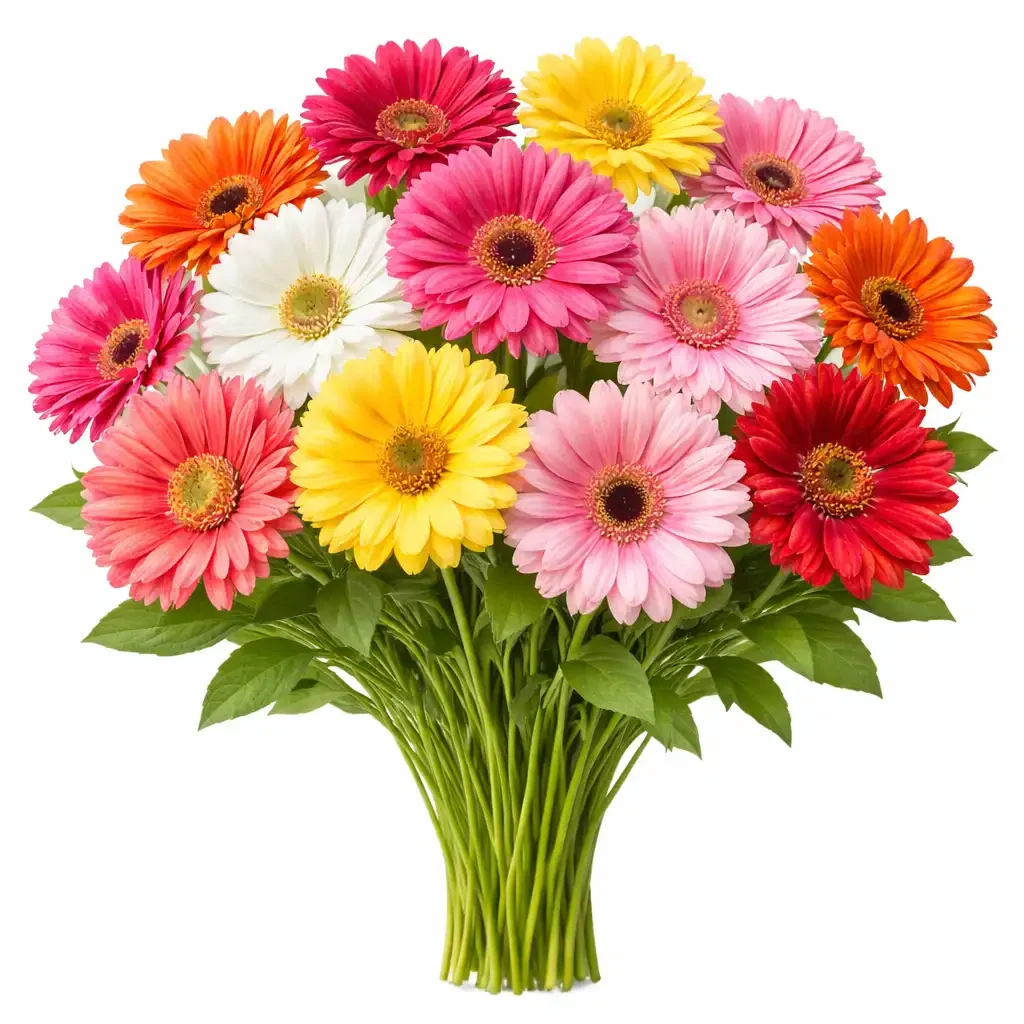
Quick Overview
Common Name: Gerbera Daisy, Transvaal Daisy, Barberton Daisy
Scientific Name: Gerbera jamesonii, Gerbera hybrids
Plant Type: Tender Perennial grown as Annual in cold climates
USDA Zones: 8 to 11 as perennial, grown as annual in cooler zones
Sun Requirement: Full Sun
Soil Type: Well-drained, moderately fertile
Bloom Season: Spring through Fall, nearly year round in mild climates
Height: 18 to 24 inches
Pollinator Friendly: Yes
Edible: No
Why Grow Gerbera Daisy on a Homestead
Gerbera Daisy is one of the most commercially important and universally recognized cut flowers in the world, consistently ranking among the top five most sold cut flower species globally alongside roses, carnations, chrysanthemums, and tulips. Its large, perfectly symmetrical blooms on straight, strong stems in the widest and most vivid color range of any daisy-type flower, spanning pure white, cream, soft yellow, bright orange, coral, salmon, pink, deep red, burgundy, and near-black, create an immediate, cheerful visual impact that customers recognize and respond to enthusiastically across every market demographic. At the farmers market, at the florist, and in the grocery store, Gerbera Daisy is a flower that virtually every customer already knows and loves before they even see it at your stand.
For homestead growers, Gerbera Daisy represents a genuinely exciting specialty production opportunity that is significantly underutilized by most small farm operations despite its extraordinary commercial potential. The challenge with Gerbera Daisy is that it is more demanding to produce successfully than many other cut flower crops, requiring precise attention to drainage, crown positioning, fertilization, and pest management. But for growers who master those requirements, the rewards are exceptional. Locally grown Gerbera Daisies, particularly the specialty double, semi-double, and spider forms available from specialty growers, command premium prices that imported commercial Gerberas cannot match and create a market differentiation that sophisticated florists and customers recognize and value immediately.
Here is why Gerbera Daisy deserves a prominent spot on your homestead:
It is one of the five most commercially important cut flowers in the world. The universal recognition and consistent demand for Gerbera Daisy across every market demographic creates a commercial foundation that few other cut flower crops can match. Every customer who visits your farmers market stand already knows and wants Gerbera Daisy.
Locally grown specialty forms command genuine premium pricing. The specialty double, crested double, and spider Gerbera forms available to small-scale homestead growers are genuinely different from the standard commercial single forms imported through wholesale channels. These specialty forms command premium prices from florists and customers who recognize their superiority.
It blooms over an extraordinarily long season in appropriate climates. In mild climates within USDA zones 8 to 11, Gerbera Daisy blooms nearly continuously from spring through fall and into winter, providing one of the longest harvest windows of any perennial cut flower crop. Even in cold winter climates as an annual it blooms from spring through the first frost.
It is a permanent perennial investment in appropriate climates. In mild winter climates within USDA zones 8 to 11, Gerbera Daisy is a long-lived perennial shrub that returns year after year with increasing productivity as plants establish, delivering improving returns from the same initial investment.
The color range is unmatched by any other daisy-type flower. From pure white through every shade of yellow, orange, coral, pink, red, and burgundy, Gerbera Daisy covers every market color preference and seasonal color trend, making it one of the most versatile single crops for serving a diverse range of florist and customer preferences.
Growing Conditions
Sunlight
Gerbera Daisy requires full sun to perform its best as a cut flower crop. It needs at least 6 to 8 hours of direct sunlight per day for the strongest stems, most abundant flowering, and best disease resistance. In partial shade stems become weak and elongated, bloom size decreases, and plants become significantly more susceptible to the powdery mildew and crown rot that are its most serious disease threats. For cut flower production with the longest, strongest stems and the most abundant, fully developed blooms, full sun is non-negotiable.
Soil
Gerbera Daisy requires well-drained, moderately fertile soil. Excellent drainage is the single most critical soil requirement. Waterlogged soil causes the crown rot that is the most serious and most commonly fatal disease problem with Gerbera Daisy. A loose, well-drained soil with a pH between 5.5 and 6.5 is ideal. Incorporate generous amounts of compost into the planting bed before planting to improve fertility and drainage, but avoid overly rich conditions that promote lush foliage at the expense of flower production. In heavy clay soils, build raised beds with added compost and coarse sand to ensure the excellent drainage that Gerbera Daisy demands.
Water
Gerbera Daisy needs consistent moisture during active growth and blooming but is extremely sensitive to waterlogged conditions and overwatering. Water deeply but allow the top inch of soil to dry slightly between waterings. The critical watering principle for Gerbera Daisy is to water the soil rather than the crown. Water that pools against the crown causes the crown rot that kills more Gerbera plants than any other single factor. Drip irrigation is strongly preferred as it delivers water to the root zone without wetting the foliage or crown. If overhead irrigation is used, water in the morning so that the crown and foliage can dry completely before nightfall.
Temperature
Gerbera Daisy performs best in moderate temperatures between 65 and 80 degrees Fahrenheit. It does not tolerate frost and is damaged by temperatures below 30 degrees Fahrenheit. It also shows reduced production in very high temperatures above 95 degrees Fahrenheit. In mild winter climates within USDA zones 8 to 11 it blooms nearly continuously throughout the year, with its most prolific flowering during the moderate spring and fall seasons. In cold winter climates within USDA zones 3 to 7 it is grown as a warm season annual, transplanted after the last frost date and blooming through the first frost.
Planting Guide
Gerbera Daisy is best planted from nursery transplants for the most reliable and commercially productive results. Growing from seed is possible but slow and produces more variable quality than named variety transplants from specialist suppliers.
Step 1: Start seeds indoors 12 to 16 weeks before the target outdoor transplanting date for the earliest possible blooms. This very long lead time from seed is one of the primary reasons most homestead growers choose to purchase nursery transplants rather than starting from seed.
Step 2: If starting from seed, press seeds onto the surface of moist seed starting mix with the thin, papery tail end of the seed pointing downward into the mix. Keep seed trays at 70 to 75 degrees Fahrenheit in a bright location. Germination typically occurs within 7 to 21 days.
Step 3: Choose a planting location with full sun and excellent drainage. This is the most critical planting decision. Any location with a tendency toward waterlogging or where water pools after rain is entirely unsuitable for Gerbera Daisy without significant bed modification.
Step 4: Plant transplants so that the crown is at or just slightly above the soil surface. This is absolutely critical for Gerbera Daisy. The crown must never be buried below soil level. Even partial burial of the crown dramatically increases the risk of the crown rot that is its most fatal disease problem. The crown should be clearly visible at or just above the soil surface after planting.
Step 5: Space plants 12 to 18 inches apart for cut flower production. Proper spacing provides adequate air circulation around the crown and foliage, which is essential for disease prevention.
Step 6: Water gently after planting, directing water to the soil around the plant rather than onto the crown. Keep the crown dry during establishment and throughout the productive life of the planting.
Seed vs Transplant: Nursery transplants are strongly recommended for homestead cut flower production. The very long seed-to-bloom timeline and the more variable quality of seed-grown plants make named variety transplants from specialist suppliers the more practical and commercially reliable choice.
Spacing: 12 to 18 inches apart for cut flower production.
Planting Season: After last frost when conditions are reliably warm in cold winter climates. Fall or spring in mild winter climates within USDA zones 8 to 11.
Maintenance
Crown Management
Maintaining the correct crown position is the single most important ongoing management task for productive Gerbera Daisy. Over time the crown can become partially buried by soil movement, mulch accumulation, or crown expansion. Check crown positioning regularly and gently remove any soil or mulch that has accumulated against the crown. The crown must remain clearly visible at or just above the soil surface at all times.
Fertilizing
Gerbera Daisy is a moderate to heavy feeder that requires regular fertilization throughout its growing and blooming season. Apply a balanced fertilizer at planting and follow with regular applications every three to four weeks throughout the season. A fertilizer with adequate potassium and calcium supports the strong stem development and disease resistance that are critical for cut flower production. Avoid excessive nitrogen which promotes lush foliage at the expense of flower production and increases disease susceptibility.
Removing Old Leaves
Remove old, yellowing, or damaged leaves regularly to maintain good air circulation around the crown and reduce the fungal disease pressure that thrives in decaying plant material. Regular leaf removal also improves the visual quality of the planting and makes it easier to monitor the crown for signs of rot or pest activity.
Pest Control
Spider mites are the most common and most commercially damaging pest for Gerbera Daisy. They thrive in hot, dry conditions and cause a characteristic stippled, bronzed appearance on foliage and sometimes on flower petals. Monitor regularly and treat with neem oil or insecticidal soap at the first sign of spider mite activity. Maintain adequate moisture and humidity around plants during hot, dry periods to reduce spider mite pressure. Leafminers, thrips, and aphids can also affect Gerbera Daisy and should be managed promptly when detected.
Disease Prevention
Crown rot is the most serious and most commonly fatal disease of Gerbera Daisy. Prevention through correct crown positioning, drip irrigation, avoiding overhead watering especially in the evening, and regular removal of decaying foliage is the only effective management strategy. Once crown rot is established the plant typically cannot be saved. Powdery mildew can affect foliage in conditions of poor air circulation, warm days, and cool nights. Proper plant spacing, good air circulation, and avoiding overhead watering are the most effective preventive measures.
Harvesting
When to Harvest
Harvest Gerbera Daisy stems when the bloom is fully open and showing its most vivid color, with the outer ring of ray petals fully flat and extended and the central disk fully formed. Unlike many flowers that benefit from being harvested in bud, Gerbera Daisy has the best vase life when harvested at full bloom as long as the central disk is firm and pollen has not yet been released. Once pollen is visible and being shed from the central disk, the flower is past its ideal harvest stage and vase life decreases. Harvest in the early morning when stems are fully hydrated and temperatures are cool.
How to Cut
Use clean, sharp scissors or pruners. Cut stems as long as possible at the base of the stem near the crown of the plant. Remove any small leaves that are attached to the stem. Immediately after cutting, recut the stem end under water or make a short split cut at the base of the stem to improve water uptake. Place stems immediately into a bucket of cool water with a floral preservative.
Conditioning
Proper conditioning is critically important for Gerbera Daisy and significantly affects vase life. After cutting and recuting the stem base, place stems in cool water in a cool, dark location for several hours or overnight. Gerbera Daisy stems can be somewhat slow to absorb water initially and benefit from fresh recuting under water before the conditioning period. Some growers use a commercial floral preservative with added hydration agents specifically formulated for Gerbera Daisy.
Preventing Stem Bending
Gerbera Daisy stems can develop a characteristic neck bend below the flower head after cutting, causing the bloom to droop at an angle rather than standing straight. This is caused by inadequate water uptake in the stem immediately after cutting. Prevent neck bend by recuting stems under water immediately after harvest, conditioning in deep water, and keeping stems vertical throughout storage and transport. Wrapping individual stems in paper sleeves before conditioning helps support the stem and prevents neck bend in many cases.
How Often to Harvest
During peak bloom, harvest every three to four days as new stems reach the correct stage. A well-established Gerbera Daisy plant produces a continuous succession of blooms throughout its long blooming season. Regular harvesting encourages the development of new flowering stems and keeps the planting productive throughout the season.
Vase Life
Gerbera Daisy typically lasts 7 to 14 days as a fresh cut flower with proper conditioning and care. Strip all foliage below the waterline, recut stems at an angle, and place in fresh water with a floral preservative. Keep water level low, approximately two to three inches, as deep water can cause the hollow stems to rot. Change water every two to three days and recut stems to maximize longevity.
Uses on a Homestead
Cut Flower Use
Gerbera Daisy is primarily grown as a fresh cut flower. Its large, perfectly symmetrical blooms in vivid, saturated colors make it one of the most immediately appealing and universally purchased flowers at any market. It is used constantly in mixed bouquets, single-variety bundles, and as a focal flower in arrangements of every style from the most casual to the most elegant. It pairs beautifully with roses, snapdragons, lisianthus, and other round or vertical cut flowers in mixed arrangements that balance the bold daisy form of Gerbera with complementary textures and forms.
Wedding and Event Flowers
Gerbera Daisy is a wedding and event floristry staple, particularly for casual, garden-style, and contemporary wedding designs. Its wide color range makes it adaptable to virtually any wedding color palette. The specialty double and spider forms available from small specialty growers are particularly sought after by wedding florists who want something more distinctive than the standard commercial single forms available through wholesale channels.
Farmers Market
Gerbera Daisy is one of the most reliably popular and immediately recognizable flowers at any farmers market. Its universal recognition means that even customers who cannot identify most other specialty flowers know and want Gerbera Daisy. Single-variety bundles in vivid or unusual colors and mixed-color bundles in complementary or seasonal palettes sell consistently and strongly throughout the long blooming season.
Value-Added Products
Dried Gerbera Daisy petals retain their vivid colors reasonably well and can be used in potpourri, paper-making, and botanical craft products. Selling dried Gerbera petals as a value-added product provides an additional income stream from blooms that are not sold as fresh cut flowers.
Can You Make Money With Gerbera Daisy
Yes, Gerbera Daisy is a profitable cut flower crop for homestead operations, particularly for growers who focus on specialty forms and colors that differentiate locally grown Gerberas from commercially imported alternatives.
Universal market recognition drives consistent sales. The universal recognition of Gerbera Daisy means that it sells itself at every market level without the need for customer education or market development. Every customer already knows and wants this flower.
Specialty forms command premium pricing over commercial imports. The double, crested double, and spider Gerbera forms available to specialty homestead growers are genuinely superior to the standard single commercial forms imported through wholesale channels. These specialty forms command premium prices from florists and customers who recognize their superior visual quality.
Long productive season provides extended income. In mild winter climates Gerbera Daisy blooms nearly continuously throughout the year. In cold winter climates as an annual it blooms from spring planting through the first frost, one of the longer annual cut flower production windows available.
Perennial investment in mild climates. In mild winter climates within USDA zones 8 to 11, Gerbera Daisy plants established from quality transplants can remain productive for three to five years or more, delivering improving returns as plants develop strong root systems and reach full productive maturity.
Farmers Market: Fresh Gerbera Daisy bundles sell for 8 to 15 dollars per bunch depending on variety, form, and color. Single premium stems of specialty double and spider varieties can sell for 2 to 4 dollars each. The universal recognition and appeal of Gerbera Daisy makes it one of the most reliable sellers at any summer market.
Florists and Wedding Designers: Specialty Gerbera Daisy forms are in consistent demand from florists who want something different from commercially imported alternatives. Local supply of specialty forms is rare and valued. Establishing supply relationships with local florists is one of the most financially rewarding sales channels for homestead Gerbera production.
CSA Flower Subscriptions: Gerbera Daisy is one of the most universally popular and immediately recognized additions to a summer flower subscription box. Its inclusion generates immediate subscriber enthusiasm and justifies premium subscription pricing.
Companion Plants
Gerbera Daisy grows beautifully alongside other warm season cut flowers with similar growing requirements and complementary bloom times.
Zinnias: Both are heat-loving summer annuals with similar growing conditions and vivid color ranges that complement each other beautifully in bold mixed summer bouquets.
Lisianthus: Both are premium summer cut flowers that complement each other beautifully in high-end mixed arrangements where Gerbera provides bold focal blooms and lisianthus provides refined, ruffled focal interest.
Snapdragons: Both are widely grown cut flowers with complementary vertical and round forms that pair naturally in mixed arrangements across both cool and warm seasons.
Marigolds: Both thrive in full sun with similar soil and water requirements and complement each other in warm-toned summer arrangements.
Celosia: Both are heat-loving summer flowers that complement each other in vibrant mixed arrangements with contrasting round and feathery or crested forms.
Rudbeckia: Both are daisy-family flowers that bloom at overlapping times and complement each other in warm-toned mixed arrangements. The smaller, golden form of Rudbeckia provides a beautiful foil for the larger, bolder blooms of Gerbera.
Common Problems
Crown Rot
The most serious and most commonly fatal disease of Gerbera Daisy. Caused by fungi including Phytophthora and Pythium that thrive in wet conditions around the crown. Once established, crown rot typically cannot be reversed and the plant dies. Prevention through planting with the crown at or just above soil level, using drip irrigation rather than overhead watering, avoiding mulch against the crown, removing decaying foliage regularly, and ensuring excellent soil drainage is the only effective management strategy.
Spider Mites
The most common and most commercially damaging pest of Gerbera Daisy. Thrive in hot, dry conditions and cause stippled, bronzed foliage and sometimes damaged flowers. Monitor with a hand lens and treat with neem oil or insecticidal soap at the first sign of activity. Maintaining adequate moisture and humidity around plants reduces spider mite pressure significantly.
Neck Bend
The characteristic drooping of the stem just below the flower head that can make Gerbera Daisy stems appear wilted or weak after harvest. Caused by inadequate water uptake in the stem immediately after cutting. Prevent by recuting stems under water immediately after harvest, conditioning in cool water overnight, keeping stems vertical throughout storage and transport, and using paper sleeve supports during conditioning.
Powdery Mildew
White powdery coating on leaves in conditions of poor air circulation and warm days with cool nights. Space plants properly at 12 to 18 inches for good air circulation, avoid overhead watering, and choose mildew-resistant varieties. Remove affected foliage promptly and apply preventive organic fungicide in climates where mildew is consistently problematic.
Leafminers
Small, pale larvae that tunnel within Gerbera leaves creating distinctive winding trails visible through the leaf surface. Heavy infestations significantly reduce photosynthesis and plant productivity. Remove and destroy heavily affected leaves. Apply neem oil preventively and use yellow sticky traps to monitor adult fly populations.
Varieties to Consider
Single-Flowered Varieties
Jaguar Series: A widely grown commercial series for cut flower production with large, single blooms in a very wide color range on strong stems. Reliable performance and consistent quality make this series a standard choice for homestead cut flower production. Available in individual colors and mixed collections.
Revolution Series: A series developed specifically for cut flower production with exceptionally strong stems, good vase life, and a wide range of vivid and unusual colors including bicolors and dark-eyed forms. Very reliable performance in both greenhouse and outdoor production.
Garvinea Sweet Series: A series with excellent disease resistance and prolific blooming habit. Very good performance as a perennial in mild winter climates within USDA zones 8 to 11. Popular with homestead growers for its robust health and consistent productivity.
Double and Crested Double Varieties
Gerbera Festival Series: Includes double and semi-double forms with fully packed, dahlia-like flower heads in a range of vivid colors. Commands premium prices for the more substantial, luxurious appearance of the double flower form. Very popular with florists and wedding designers who want something more distinctive than standard single Gerberas.
Gerbera Spider Varieties: Spider Gerberas produce elongated, narrow ray petals that create a distinctive spiky or starburst appearance quite different from the standard round petal form. Extremely popular with florists and customers for their unusual and distinctive appearance. Commands premium prices for the specialty form. Available in a range of colors from specialty suppliers.
Garvinea Double Series: Double-flowered varieties with fully packed, densely petaled blooms in a range of colors. Excellent performance as perennials in mild winter climates with strong disease resistance.
Final Thoughts
Gerbera Daisy is one of the most commercially powerful and universally recognized cut flower crops available to homestead growers, but it is also one of the most demanding in terms of the specific cultural requirements it needs to perform reliably and profitably. The combination of precise crown positioning above the soil surface, excellent drainage, drip irrigation rather than overhead watering, vigilant spider mite management, and regular removal of decaying foliage are not optional refinements but essential requirements that distinguish productive and profitable Gerbera Daisy growing from frustrating and loss-prone attempts. Master those requirements and plant the specialty double, spider, and unusual-color varieties that differentiate locally grown Gerberas from commercially imported alternatives, and Gerbera Daisy will reward your homestead with one of the most universally beloved, most consistently demanded, and most commercially powerful cut flower crops available from any summer perennial planting.
FAQ
Why do my Gerbera Daisy stems bend at the neck after cutting? Neck bend in Gerbera Daisy is caused by inadequate water uptake in the stem immediately after cutting. The hollow stems of Gerbera Daisy are particularly prone to this problem when they are not immediately and properly hydrated after harvest. The most effective solutions are recuting stems under water immediately after harvest to prevent air locks in the stem, conditioning in cool water overnight before sale or arrangement, keeping stems vertical throughout storage and transport, and supporting individual stems in paper sleeves during conditioning. Using a commercial floral preservative with hydration agents specifically formulated for Gerbera Daisy also helps maintain stem turgidity.
Why is my Gerbera Daisy not blooming? The most common causes of reduced or absent blooming in Gerbera Daisy are insufficient sun, crown buried too deeply, excessive nitrogen fertilization, plants that have not yet reached mature production age, or overly high temperatures during the most intense summer heat periods. Ensure at least 6 to 8 hours of direct sun daily, check that the crown is at or just above the soil surface, avoid high-nitrogen fertilizers, allow newly planted transplants adequate time to establish, and ensure adequate moisture during heat waves when reduced blooming is a natural temporary response to thermal stress.
How do I prevent crown rot in Gerbera Daisy? Crown rot prevention requires a consistent combination of practices. Plant with the crown clearly at or just above the soil surface. Use drip irrigation and never direct water onto the crown. Never mulch directly against the crown. Remove decaying or yellowing leaves regularly. Ensure excellent soil drainage by planting in raised beds if your native soil drains poorly. Water in the morning if overhead irrigation is used so the crown can dry completely before nightfall. These practices together prevent the wet crown conditions that cause the fungal diseases responsible for crown rot.
Can Gerbera Daisy be grown as a perennial? Yes, in mild winter climates within USDA zones 8 to 11 Gerbera Daisy is a genuine perennial that returns year after year with appropriate care. Individual plants can remain productive for three to five years or more before performance begins to decline. In cold winter climates it must be grown as an annual, replanted each season after the last frost date. In borderline climates within USDA zone 7, growing Gerbera Daisy in containers that can be moved to a frost-free location in winter allows year-round survival and reduces the annual replanting cost in climates where outdoor overwintering is unreliable.
What makes specialty Gerbera Daisies more valuable than standard commercial forms? Standard commercial Gerbera Daisies available through wholesale flower markets are almost exclusively single-flowered forms in the most commonly demanded colors, grown in industrial greenhouse operations optimized for volume rather than specialty quality. Specialty homestead-grown Gerbera Daisies can offer fully double forms with densely packed petals that look more like small dahlias than classic daisies, spider forms with elongated narrow petals creating a distinctive starburst appearance, unusual and rare colors including near-black and bicolor forms not available commercially, and the freshness advantage of locally grown flowers that arrive at the florist or market within hours of harvest rather than days or weeks after cutting in a distant greenhouse. These genuine quality and distinctiveness advantages justify premium pricing that commercially imported Gerberas simply cannot command.