
Gladiolus
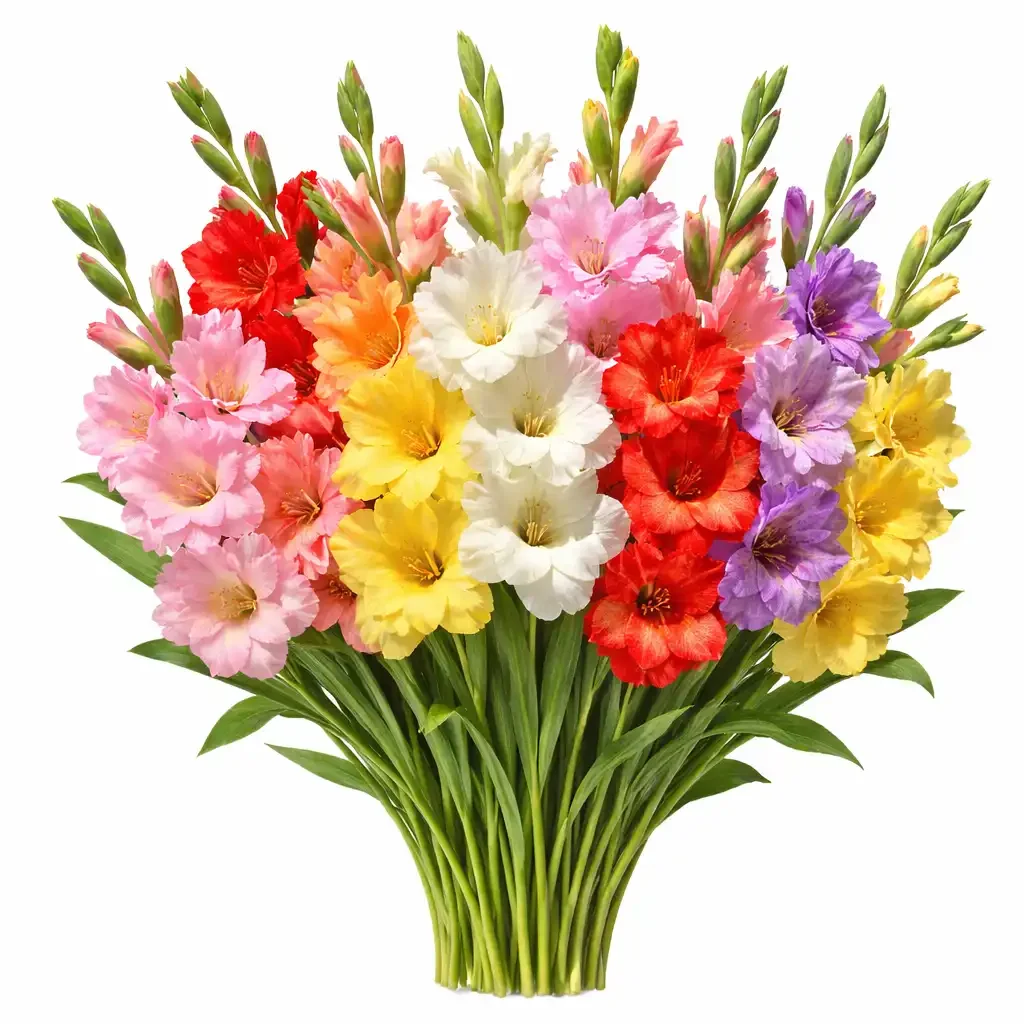
Quick Overview
Common Name: Gladiolus, Glads, Sword Lily
Scientific Name: Gladiolus spp.
Plant Type: Tender Perennial grown from corms
USDA Zones: 7 to 11 as perennial, grown as annual in cooler zones
Sun Requirement: Full Sun
Soil Type: Well-drained, moderately fertile
Bloom Season: Summer through Early Fall
Height: 24 to 60 inches depending on variety
Pollinator Friendly: Yes
Edible: No
Why Grow Gladiolus on a Homestead
Gladiolus is one of the most commercially reliable and visually dramatic summer cut flowers available to homestead growers. Its tall, densely packed spikes of large, ruffled blooms opening progressively from the bottom of the spike upward in every color available in the cut flower world, from pure white and the softest pastels through every vivid primary color to the deepest near-black, create the kind of bold, vertical statement in arrangements that customers and florists seek out specifically and that is genuinely difficult to replicate with any other summer flower. At farmers markets during its peak summer blooming season, a bucket of tall Gladiolus spikes in full color is one of the most visually commanding and commercially powerful displays a homestead flower grower can have.
For homestead growers, Gladiolus represents one of the most strategically straightforward and financially rewarding summer bulb crops available. Corms are inexpensive relative to the value of the cut flowers they produce, successive plantings made every two weeks from spring through early summer provide a continuous supply of harvestable spikes throughout the entire summer and fall season, and the production cycle from corm planting to harvest is reliably predictable at approximately 60 to 90 days depending on variety and climate. Unlike many other premium cut flowers that require complex ongoing management, Gladiolus asks primarily for full sun, well-drained soil, consistent moisture, and support for the tall stems that its dramatic spikes demand.
Here is why Gladiolus deserves a prominent spot on your homestead:
It provides some of the tallest and most dramatically vertical stems available in the summer cut flower market. The tall, densely packed spikes of Gladiolus create a vertical presence in arrangements that few other summer flowers can match. Florists consistently seek Gladiolus for the structural height it provides in large arrangements and event installations.
It covers an extraordinarily wide color range. No other commonly grown cut flower matches the color diversity of Gladiolus. From pure white through every shade of yellow, orange, pink, red, burgundy, purple, lavender, and near-black, with bicolors and picotee edges, the Gladiolus color palette covers every market preference and seasonal color trend.
Succession planting provides continuous harvest throughout the entire summer and fall season. By planting corms every two weeks from the last frost date through early summer, homestead growers can maintain a continuous and reliably predictable supply of harvestable spikes from midsummer through the first frost, covering the entire peak summer and fall market season.
Corms are economical and the return on investment per corm is exceptional. Gladiolus corms are among the most economical bulb crops available relative to the value of the cut flowers they produce. The financial return per corm planted is exceptional compared to most other specialty cut flower crops.
It is universally recognized and consistently popular. Gladiolus is one of the most widely recognized and consistently popular cut flowers at farmers markets across every demographic. Its familiar, dramatic form and bold colors create immediate customer recognition and reliable purchasing throughout the season.
Growing Conditions
Sunlight
Gladiolus requires full sun without compromise. It needs at least 6 to 8 hours of direct sunlight per day for the strongest, straightest stems and the most abundant, fully developed flower spikes. In partial shade stems become weak and lean toward the light, producing crooked, less marketable spikes with fewer and smaller blooms. Full sun combined with adequate moisture produces the ideal conditions for the tall, straight spikes that command premium prices from florists and customers.
Soil
Gladiolus prefers well-drained, moderately fertile soil. Good drainage is the single most critical soil requirement as Gladiolus corms rot quickly in waterlogged or poorly drained conditions. A loose, well-drained soil with a pH between 6.0 and 6.5 is ideal. Incorporate generous amounts of compost into the planting bed before planting to improve fertility, drainage, and soil structure. In heavy clay soils, build raised beds or incorporate significant amounts of coarse sand and compost to ensure the excellent drainage that Gladiolus demands.
Water
Gladiolus needs consistent, generous watering throughout its growing and blooming season. Adequate moisture is particularly critical during the spike development phase when the plant is producing the tall stem and opening the sequence of blooms along the spike. Drought stress during this period causes shortened stems, reduced bloom size, and incomplete spike development. Water deeply two to three times per week during the growing season, more frequently during hot and dry conditions. Drip irrigation is ideal as it delivers water to the root zone without wetting the foliage and flower spikes which can promote botrytis and other fungal diseases.
Temperature
Gladiolus is a warm season crop that performs best in moderate to warm temperatures between 60 and 80 degrees Fahrenheit. It does not tolerate frost and should not be planted until after the last frost date when soil has warmed to at least 55 to 60 degrees Fahrenheit. It grows and blooms vigorously through the warmth of summer and fall and continues producing new spikes from succession plantings until the first frost terminates the season. In cold winter climates within USDA zones 3 to 6 corms must be lifted and stored after the first frost and replanted each spring. In mild winter climates within USDA zones 7 to 11 corms can be left in the ground year round in well-drained locations.
Planting Guide
Gladiolus is grown from corms that are planted after the last frost date and produce harvestable spikes in approximately 60 to 90 days depending on variety, climate, and planting time. Succession planting every two weeks throughout spring and early summer is the key strategy for maintaining a continuous supply of harvestable spikes throughout the entire summer and fall season.
Step 1: Begin planting corms after the last frost date when soil has warmed to at least 55 to 60 degrees Fahrenheit. For the earliest possible harvest, start the first succession planting as soon as conditions allow.
Step 2: Choose a location with full sun and excellent drainage. Prepare the planting bed by incorporating generous amounts of compost and a balanced fertilizer to a depth of at least 12 inches.
Step 3: Plant corms with the pointed end facing up at a depth of 3 to 5 inches. Deeper planting provides more stability for the tall stems and reduces the need for staking, while shallower planting produces slightly earlier blooming. A depth of 4 inches is a good standard depth for cut flower production.
Step 4: Space corms 4 to 6 inches apart in rows for cut flower production. For the most efficient use of bed space, plant in rows 12 to 18 inches apart. Close spacing within rows encourages taller, straighter stems as plants support each other.
Step 5: Install horizontal support netting or stakes at planting time, before stems emerge. Gladiolus stems are top-heavy when the spike is fully developed and will fall over in wind and rain without adequate support. Installing support before planting is much easier than staking after stems have emerged.
Step 6: Water thoroughly after planting and begin regular irrigation as soon as shoots emerge. Maintain consistent moisture throughout the growing season, particularly during spike development and blooming.
Succession Planting: Plant a new batch of corms every two weeks from the last frost date through early July in most climates. Each succession planting produces harvestable spikes approximately 60 to 90 days after planting, creating a continuous rolling harvest throughout the summer and fall season.
Seed vs Corm: Always grow Gladiolus from corms for cut flower production. Growing from seed takes two to three years to produce blooming plants and results are highly variable.
Spacing: 4 to 6 inches apart within rows, 12 to 18 inches between rows for cut flower production.
Planting Season: After last frost when soil has warmed, continuing with succession plantings every two weeks through early July.
Maintenance
Staking and Support
Staking is one of the most important ongoing maintenance tasks for productive Gladiolus cut flower production. The tall, heavily flowered spikes are extremely top-heavy and will fall over in any significant wind or rain without support. Install horizontal support netting at planting time, positioned 12 to 18 inches above the soil surface and raised as stems grow. Alternatively, use bamboo stakes and tie stems individually as they develop. Plants that fall over produce curved, unmarketable spikes that cannot be straightened after the fact.
Corm Management in Cold Winter Climates
In cold winter climates where Gladiolus corms cannot overwinter in the ground, lift corms after the first frost when the foliage has died back. Dig carefully to avoid damaging the corms, shake off excess soil, and allow to dry in a warm, well-ventilated location for two to three weeks. Once fully dry, remove and discard the old dried corm at the base of the new corm, clean off any remaining soil, and store in mesh bags or paper bags in a cool, dry location at 35 to 45 degrees Fahrenheit until spring planting time. Properly stored corms typically perform well in their second season, though many commercial growers choose to plant fresh corms each season for the most uniform and productive results.
Fertilizing
Apply a balanced fertilizer at planting and a light side-dressing of balanced fertilizer when plants are approximately 10 inches tall to support the vigorous growth and spike development that produces the best cut flower quality. Avoid excessive nitrogen which promotes lush foliage at the expense of spike development. A fertilizer with adequate phosphorus and potassium supports strong stem and corm development.
Pest Control
Thrips are the most serious pest problem for Gladiolus cut flower production. These tiny insects feed on developing spikes, causing silvery streaking and distortion of the florets that significantly reduces market value. Monitor with sticky traps and treat with neem oil or spinosad at the first sign of thrip activity. Thrip populations build rapidly in hot, dry conditions so monitoring and preventive treatment are more effective than reactive management.
Disease Prevention
Botrytis blight can affect flower spikes and foliage in cool, humid conditions. Good air circulation, drip irrigation rather than overhead watering, and prompt removal of spent spikes and declining foliage prevent most botrytis problems. Fusarium corm rot is the most serious disease threat and is entirely preventable through purchasing disease-free corms from reputable suppliers, ensuring excellent drainage, and practicing crop rotation.
Harvesting
When to Harvest
Harvest Gladiolus spikes when the lowest one to two florets on the spike are just beginning to show color and open, with all remaining florets still tightly closed. The remaining florets open progressively from the bottom of the spike upward after cutting, giving the stem a long and evolving display in the vase that customers and florists find particularly appealing. Spikes harvested at this stage have the maximum vase life. Spikes harvested when multiple florets are already open have a significantly shorter remaining vase life. Harvest in the early morning when stems are fully hydrated and temperatures are cool.
How to Cut
Use clean, sharp pruners or a sharp knife. Cut the spike as close to the ground as possible to maximize stem length while leaving at least four leaves on the plant to support corm development for storage or re-use. For the longest possible stems cut at the very base of the plant. Cutting stems too short significantly reduces their market value and florist utility. Place cut spikes immediately into deep cool water.
Conditioning
After cutting, place spikes in deep cool water in a cool, dark location for several hours or overnight before sale or arrangement. Gladiolus spikes condition readily and the conditioning period allows the lowest florets to begin opening while remaining buds continue to develop. Keep conditioned spikes stored vertically as they are geotropic and will curve upward at the tips if stored horizontally.
Storing Harvested Spikes
Gladiolus spikes can be held in refrigeration at 34 to 38 degrees Fahrenheit for several days before sale or use. Keep spikes vertical during refrigerated storage to prevent tip curving. Remove from refrigeration several hours before sale to allow flowers to begin opening at market temperature.
How Often to Harvest
With a continuous succession planting program, new spikes reach harvest stage on a rolling basis throughout the summer and fall season. During peak production periods harvest daily or every two days as individual spikes reach the correct stage. A well-managed succession planting program with plantings every two weeks produces a predictable and continuous supply of harvestable spikes throughout the season.
Vase Life
Gladiolus typically lasts 7 to 12 days as a fresh cut flower when harvested at the correct stage and properly conditioned. Strip all foliage below the waterline, recut stems at an angle, and place in fresh water with a floral preservative. Remove spent florets as they fade to maintain the appearance of the spike and extend the effective display period. Change water every two to three days to maximize longevity.
Uses on a Homestead
Cut Flower Use
Gladiolus is primarily grown as a fresh cut flower. Its tall, densely packed spikes add dramatic vertical structure and bold color to mixed summer arrangements and stand magnificently alone in single-variety bundles that showcase the extraordinary color range available. It pairs beautifully with dahlias, zinnias, lisianthus, and other bold summer cut flowers in arrangements that capture the abundance and warmth of the summer season. It is particularly effective in large event installations where its exceptional height and dramatic spike form create visual impact from a distance.
Wedding and Event Flowers
Gladiolus is a staple in summer wedding and event floristry, particularly for large-scale installations, altar arrangements, and ceremony backdrops where height and visual impact are the primary requirements. Its extraordinary color range makes it adaptable to virtually any wedding color palette. Florists who work with large summer events consistently seek reliable local sources of quality Gladiolus spikes and pay premium prices for them during the peak summer wedding season.
Farmers Market
Gladiolus is one of the most visually commanding and commercially reliable summer flowers at any farmers market. Its tall spikes and bold colors create an immediate display presence that draws customers from across the market. Single-color bundles of unusual or specialty varieties and mixed-color bundles of complementary tones sell consistently and strongly throughout the long summer and fall selling season.
Corm Sales
In cold winter climates where corms must be lifted annually, homestead growers can sell excess corms at fall markets, through online platforms, and to other gardeners as an additional income stream. Specialty variety corms in unusual colors command particularly strong prices from home gardeners who cannot easily source them through retail garden centers.
Can You Make Money With Gladiolus
Yes, Gladiolus is one of the most financially straightforward and reliably profitable summer bulb crops available to homestead cut flower growers. Its combination of economical corm costs, predictable production timeline, very wide color range, consistent market demand, and exceptional financial return per corm planted creates an excellent foundation for summer cut flower income.
Exceptional financial return per corm planted. A single Gladiolus corm planted at a cost of twenty-five to fifty cents produces a cut flower spike worth two to four dollars wholesale and three to six dollars retail. This exceptional return on corm investment is one of the most favorable financial profiles available from any cut flower bulb crop.
Succession planting provides predictable, continuous income throughout summer. The precise and predictable 60 to 90 day production timeline of Gladiolus, combined with succession plantings every two weeks, creates a reliable and manageable income flow throughout the entire summer and fall season that is easier to plan and budget around than crops with more variable production timelines.
Extraordinary color range serves every market preference. The unmatched color diversity of Gladiolus means that homestead growers can serve virtually any florist color request, seasonal color trend, or customer preference from a single crop. This versatility increases the range of sales opportunities significantly.
Consistent and universal market demand. Gladiolus is consistently popular across every demographic and every market level from casual farmers market customers to professional florists and wedding designers. This universal appeal creates reliable sales without the need for specialized market cultivation.
Farmers Market: Fresh Gladiolus bundles of three to five spikes sell for 8 to 15 dollars per bunch depending on color, spike length, and quality. Single premium spikes can sell for 2 to 4 dollars each during peak summer season.
Florists and Wedding Designers: Gladiolus is in consistent demand from florists for large arrangements and event installations. Wholesale pricing of 1.50 to 3.00 dollars per spike reflects the strong and consistent market for quality locally grown Gladiolus.
CSA Flower Subscriptions: Gladiolus is one of the most dramatic and visually impactful additions to summer flower subscription boxes. Single spikes in unusual colors create immediate subscriber excitement and the progressive opening of blooms provides a changing display throughout the week.
Companion Plants
Gladiolus grows beautifully alongside other summer cut flowers with similar growing requirements and complementary bloom times.
Dahlias: Both are summer bulb crops that produce dramatic, colorful blooms at overlapping times and complement each other magnificently in mixed summer arrangements where Gladiolus provides tall vertical spikes and dahlias provide large, round focal blooms.
Zinnias: Both are heat-loving summer flowers that grow in similar conditions and complement each other beautifully in bold mixed summer bouquets where Gladiolus provides vertical drama and zinnias provide round, vibrant focal color.
Lisianthus: Both are premium summer cut flowers with similar growing requirements that complement each other beautifully in high-end mixed arrangements where the delicate, ruffled blooms of lisianthus soften the bold vertical form of Gladiolus spikes.
Celosia: Both are heat-loving summer flowers that complement each other in vibrant mixed arrangements with contrasting vertical and feathery forms.
Snapdragons: Both produce vertical flowering spikes that complement each other in mixed arrangements. Snapdragons provide vertical interest at a slightly different scale and seasonal timing that creates a nice transition between cool and warm season production.
Ornamental Grasses: Provide beautiful structural contrast to the bold, upright form of Gladiolus spikes in mixed arrangements and in the landscape.
Common Problems
Thrips
The most commercially damaging pest for Gladiolus cut flower production. Thrips feed on developing spikes and open florets, causing silvery streaking, distortion, and browning of petals that significantly reduces market value. Monitor with yellow or blue sticky traps, inspect developing spikes regularly, and treat with neem oil or spinosad at the first sign of thrip activity. Thrip populations build rapidly in hot, dry conditions so early detection and preventive management are essential. Purchasing and planting clean, disease-free corms from reputable suppliers significantly reduces initial thrip pressure.
Fusarium Corm Rot
A serious fungal disease caused by Fusarium oxysporum that causes corms to rot and plants to wilt and die. Affected corms show brown, rotted tissue when cut open. Prevention through purchasing disease-free corms, ensuring excellent drainage, and practicing strict crop rotation is the only effective management strategy. Do not plant Gladiolus in the same location in consecutive years. Remove and destroy any affected plants immediately to prevent spread.
Botrytis Blight
Can affect flower spikes and foliage in cool, humid conditions. Brown, water-soaked spots appear on florets and foliage and spread rapidly in favorable conditions. Good air circulation, drip irrigation, removing spent spikes promptly, and applying preventive organic fungicide sprays in susceptible climates are the most effective preventive measures.
Falling Over
The most common production frustration with Gladiolus. Tall, heavily flowered spikes are extremely top-heavy and will fall over in any significant wind or rain without adequate support. Prevent by installing horizontal support netting at planting time before stems emerge. Planting in a sheltered location protected from prevailing winds also reduces this problem significantly.
Incomplete Spike Development
Commonly caused by drought stress during spike development, thrip damage, excessive heat, or harvesting too early before the spike has fully developed. Ensure consistent deep watering throughout the growing season, manage thrip populations preventively, and harvest only when the lowest florets are just beginning to open.
Varieties to Consider
Large-Flowered Gladiolus
Large-flowered Gladiolus produces the classic tall, imposing spikes with large, ruffled florets that are the standard for professional cut flower production and florist use.
Priscilla: Soft white blooms with a distinctive pink blush and yellow throat. One of the most widely grown and commercially popular Gladiolus varieties. Exceptional stem length and very good vase life. Very popular with wedding florists for its soft, romantic color.
White Prosperity: Pure, clean white blooms on strong, tall stems. One of the most reliable and widely grown white Gladiolus varieties for cut flower production. Essential for wedding work and mixed white arrangements.
Jessica: Soft salmon-pink blooms with a warm, peachy tone. Very popular at farmers markets for its warm, approachable color. Strong stems and excellent cut flower performance.
Peter Pears: Large, deep salmon-orange blooms on tall stems. A classic and widely grown variety with excellent market recognition. Very popular with customers and florists for its warm, rich color.
Black Jack: Deep, velvety burgundy to near-black blooms on strong stems. Commands premium prices for its unusual dark color that is genuinely rare in the summer cut flower market. Extremely popular with florists working with dramatic, dark color palettes.
Blue Isle: Soft lavender-blue blooms with a white throat. One of the closest to a true blue available in Gladiolus and very popular for this reason. Commands premium prices for its distinctive blue-lavender tone.
Nanus (Small-Flowered) Gladiolus
Nanus Gladiolus produces smaller, more delicate spikes on shorter stems that are particularly popular with florists for wedding work and refined arrangements where a more delicate scale is preferred.
Atom: Vivid red blooms with white edges creating a distinctive picotee effect on compact stems of 18 to 24 inches. Very popular for its distinctive two-toned appearance.
Nymph: Soft white blooms with delicate pink markings on compact, elegant stems. Very popular with wedding florists for its refined, delicate appearance.
Charming Beauty: Soft pink blooms on compact stems. Very popular for its gentle color and manageable stem height.
Butterfly Gladiolus
Butterfly Gladiolus produces medium-height stems with blooms that have distinctive contrasting markings in the throat of each floret, creating a distinctive spotted or blotched appearance that is very popular with specialty florists.
Hunting Song: Coral-red blooms with a distinctive yellow throat marking. Very popular at farmers markets for its unusual and striking bicolor appearance.
Final Thoughts
Gladiolus is one of the most fundamentally reliable and financially rewarding summer cut flower crops available to homestead growers. Its predictable production timeline, extraordinary color range, universal market recognition, economical corm costs, and the dramatic vertical presence that its tall spikes bring to any arrangement create a foundation for summer cut flower income that is difficult to match with any other single crop. Succession plant every two weeks from the last frost date through early July to maintain a continuous rolling harvest throughout the entire summer and fall season. Install support netting at planting to prevent the tall spikes from falling over. Manage thrips preventively through monitoring and early treatment. Harvest at the correct early stage when only the lowest florets are opening. And Gladiolus will reward your homestead with one of the most reliable, most colorful, and most commercially powerful summer cut flower harvests available from any bulb crop.
FAQ
How do I prevent Gladiolus from falling over? Installing horizontal support netting before planting is the most effective and practical strategy for preventing Gladiolus from falling over. Position the netting 12 to 18 inches above the soil surface and raise it as stems grow. The netting supports stems individually without requiring the time-consuming individual staking that is impractical at commercial scale. Planting in a sheltered location protected from strong winds also significantly reduces the risk of falling. Planting at the correct depth of 4 inches and at close spacing of 4 to 6 inches within rows allows plants to support each other somewhat, reducing individual stem vulnerability.
How do I manage succession planting for continuous harvest? The key is maintaining a regular planting schedule every two weeks from the last frost date through early July, with each succession timed to produce mature harvestable spikes when the previous succession's spikes have been harvested. In most climates Gladiolus takes approximately 70 to 80 days from planting to harvest for early summer plantings and somewhat longer for midsummer plantings as the days begin to shorten. Keeping a simple planting record noting planting dates and expected harvest dates allows you to predict your harvest schedule accurately and communicate availability to florist customers in advance.
Can I reuse Gladiolus corms from year to year? Yes, Gladiolus corms can be lifted, stored, and replanted the following season in cold winter climates. After the first frost, dig corms carefully, allow to dry for two to three weeks, remove the old dried corm from the base of the new corm, and store in a cool, dry location at 35 to 45 degrees Fahrenheit. Properly stored corms typically perform reasonably well in their second season. However many commercial cut flower growers choose to plant fresh corms each season for the most uniform, predictable, and high-quality production. Fresh corms from reputable suppliers also reduce the risk of carrying over thrip infestations, Fusarium, and other problems from the previous season.
Why do my Gladiolus spikes have silvery streaking on the florets? Silvery streaking on Gladiolus florets is the most characteristic symptom of thrip damage and is the most common quality problem in Gladiolus cut flower production. Thrips are tiny, fast-moving insects that feed on developing florets by piercing the cells and sucking out the contents, leaving the characteristic silvery appearance. Badly thrip-damaged spikes are significantly reduced in market value or completely unmarketable. Begin monitoring for thrips with sticky traps as soon as shoots emerge and treat preventively with neem oil or spinosad before populations build to damaging levels. Early detection and proactive management are essential as thrip populations can build very rapidly in hot conditions.
What is the difference between large-flowered, nanus, and butterfly Gladiolus? Large-flowered Gladiolus, the most widely grown type for commercial cut flower production, produces tall spikes of 36 to 60 inches with large, ruffled florets arranged closely along the spike. Nanus Gladiolus produces shorter, more compact spikes of 18 to 30 inches with smaller, more delicate florets that are particularly popular with florists for wedding work and refined arrangements. Butterfly Gladiolus produces medium-height spikes with distinctive contrasting color markings in the throat of each floret creating a spotted or blotched appearance very popular with specialty florists. For homestead cut flower production all three types have commercial value and growing a mix of types provides a range of products that serve different market segments simultaneously.