
Godetia
Quick Overview
Common Name: Godetia, Farewell-to-Spring, Satin Flower, Clarkia
Scientific Name: Clarkia amoena, Clarkia unguiculata
Plant Type: Annual
USDA Zones: 2 to 11
Sun Requirement: Full Sun to Partial Shade
Soil Type: Well-drained, average to poor fertility
Bloom Season: Late Spring through Early Summer
Height: 12 to 36 inches depending on variety
Pollinator Friendly: Yes
Edible: No
Why Grow Godetia on a Homestead
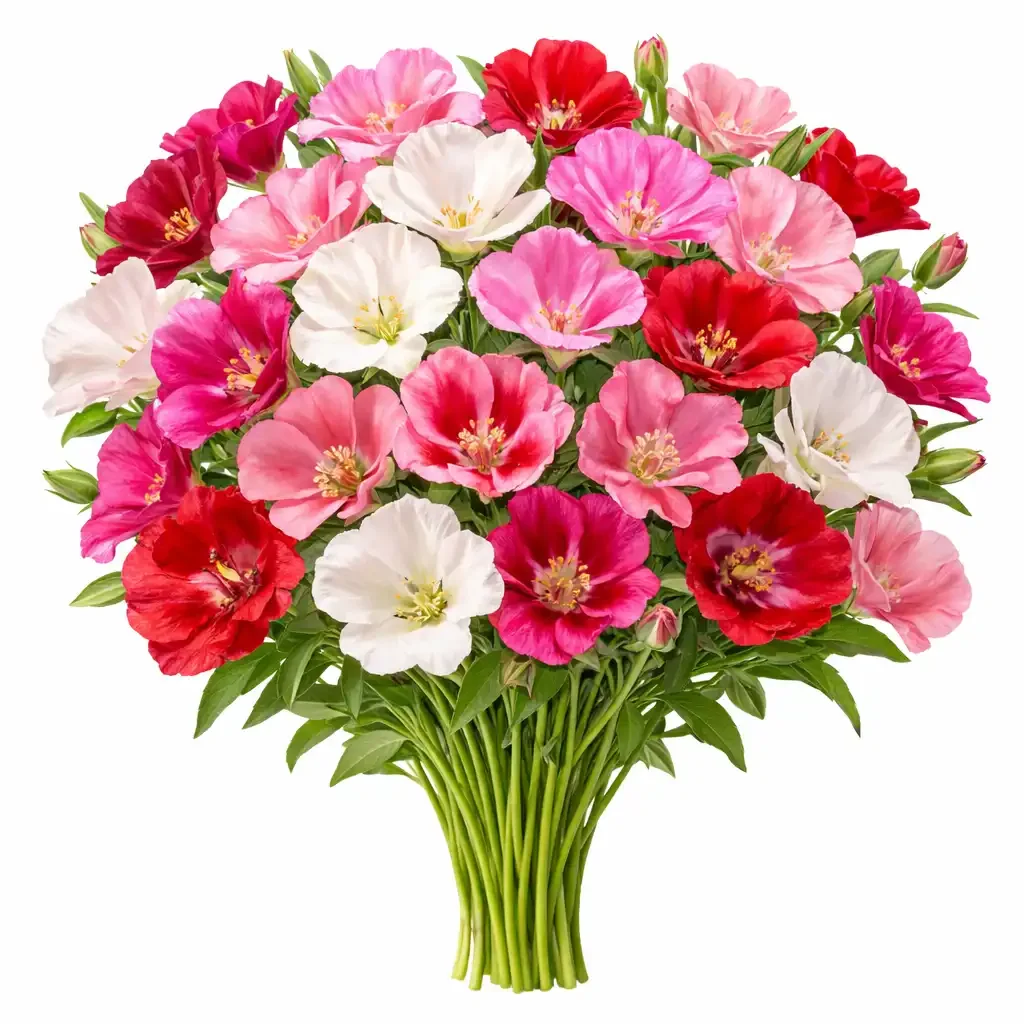
Godetia is one of the most exquisitely beautiful and commercially exciting cool season cut flowers available to homestead growers, yet it remains genuinely underutilized by most small farm operations despite its extraordinary market potential. Its large, silky, cup-shaped blooms in the most delicate and sophisticated range of cool season colors, spanning pure white, soft blush, warm salmon, deep coral, vivid pink, lavender, and rich magenta, often with contrasting central markings or picotee edges, create a quality of refined, translucent beauty that florists and wedding designers actively seek out and that commands some of the highest per-stem prices available in the cool season cut flower market. The petals of Godetia have an almost luminous, tissue-thin quality reminiscent of crepe paper or fine silk that catches light in a way that very few other flowers can replicate.
For homestead growers, Godetia represents one of the most exciting specialty cut flower opportunities in the cool season calendar. It direct sows readily in cool soil, establishes quickly with minimal ongoing care, and blooms prolifically over a generous late spring to early summer period that coincides precisely with the peak spring wedding season. Its extraordinary visual quality, genuine rarity at most farmers markets and in most local florist supply chains, and the premium pricing that this rarity supports create a market position that delivers exceptional financial returns relative to the very modest production investment required.
Here is why Godetia deserves a prominent spot on your homestead:
It is one of the most visually extraordinary cool season cut flowers available. The large, silky, translucent blooms of Godetia have a quality of refined, luminous beauty that florists compare to a more delicate, ethereal version of a rose and that creates immediate, enthusiastic customer response at every market level.
It blooms at the peak of the spring wedding season. Godetia blooms from late spring through early summer precisely when the spring wedding season is at its most active and the demand for premium cool season flowers is highest. This timing creates a natural premium market position during the most commercially valuable period of the spring cut flower calendar.
It is genuinely rare at most local farmers markets and in most florist supply chains. Despite its extraordinary commercial value, Godetia remains significantly underutilized by most homestead cut flower operations. Growers who develop productive Godetia plantings occupy an essentially uncontested local market position for a flower that florists and customers actively seek.
It thrives in lean, well-drained soil with minimal input. Like many California native wildflowers in the Clarkia genus, Godetia performs better in average to lean conditions than in rich, heavily amended beds, making it one of the most economically efficient specialty cut flower crops available.
It is extraordinarily economical to produce. Seeds are inexpensive, the plant needs minimal fertilizing and pest management, and it direct sows readily in cool soil without the need for indoor starting infrastructure.
Growing Conditions
Sunlight
Godetia performs best in full sun to partial shade. It needs at least 4 to 6 hours of direct sunlight per day for the strongest stems and most abundant flowering. In full sun it produces the most compact, well-branched plants with the most abundant blooms. In partial shade stems become somewhat taller and more delicate but still produce good quality cut material. The slight shade tolerance of Godetia makes it more flexible in its placement than many other cool season annuals.
Soil
Godetia strongly prefers well-drained soil with average to poor fertility. As a California native wildflower it is perfectly adapted to lean, somewhat dry conditions and actually performs significantly better in these conditions than in rich, heavily amended beds. Overly fertile soil produces lush, tall, floppy growth and significantly reduces flower production and stem quality. Sandy or well-drained loam soil is ideal. Soil pH between 6.0 and 7.5 is suitable. This lean-soil preference makes Godetia an excellent choice for growing in areas of the homestead where soil quality is not sufficient for more demanding crops.
Water
Water consistently during establishment and through the active growing and blooming season. Godetia needs regular moisture during active growth but does not tolerate waterlogged conditions. Once established it is moderately drought tolerant. Water at the base of plants rather than overhead to reduce the risk of fungal diseases on the delicate foliage and blooms. Reduce watering as temperatures rise in early summer and plants begin to set seed and decline naturally.
Temperature
Godetia is a cool season annual that performs best in moderate temperatures between 50 and 65 degrees Fahrenheit. It tolerates light frost and germinates best in cool soil. It declines and stops blooming reliably when temperatures consistently exceed 75 to 80 degrees Fahrenheit. In cold winter climates within USDA zones 3 to 7, Godetia is grown as an early spring through early summer annual sown as soon as the soil can be worked. In mild winter climates within USDA zones 8 to 11 it can be grown as a fall through spring crop for an exceptionally long blooming period. This cool season adaptation makes Godetia a natural fit for the spring wedding season market window.
Planting Guide
Godetia grows best from direct sowing. It has a delicate root system that makes it difficult to transplant successfully and it establishes most readily when sown directly in the garden at the correct time. Godetia seeds are very small and need to be handled carefully during sowing.
Step 1: In cold winter climates within USDA zones 3 to 7, direct sow Godetia seeds as early as possible in spring while soil is still cool. Godetia germinates best in soil temperatures between 50 and 60 degrees Fahrenheit. Sowing while light frosts are still possible is appropriate as Godetia tolerates light frost at the seedling stage.
Step 2: In mild winter climates within USDA zones 8 to 11, direct sow in fall for winter and spring blooming. Fall sowing takes advantage of the cool growing season and produces the longest possible bloom period before summer heat arrives.
Step 3: Choose a location with full sun and well-drained soil with average to lean fertility. Avoid recently amended beds with heavy compost additions.
Step 4: Prepare a fine, well-drained seedbed. Godetia seeds are very small and need good contact with the soil surface. Sow seeds on the surface or cover with the very thinnest possible dusting of fine soil or vermiculite.
Step 5: Water gently with a fine mist after sowing and keep the soil surface lightly moist until germination, which typically occurs within 7 to 14 days in cool soil.
Step 6: Thin seedlings to 6 to 9 inches apart once they are a few inches tall. Proper thinning is critical for cut flower production as crowded plants produce shorter, weaker stems. Thinning also improves air circulation which reduces the fungal disease pressure that can affect Godetia in humid conditions.
Seed vs Transplant: Direct sowing is strongly required. Godetia does not transplant well due to its delicate root system and germinates much more reliably when sown directly outdoors in cool conditions than when started indoors.
Spacing: 6 to 9 inches apart for cut flower production.
Planting Season: Very early spring in cold winter climates within USDA zones 3 to 7. Fall through early winter in mild winter climates within USDA zones 8 to 11.
Maintenance
Thinning
Proper thinning is one of the most important steps for productive Godetia cut flower production. Crowded plants produce short, weak stems with fewer and smaller blooms. Thin seedlings to 6 to 9 inches apart as soon as they are large enough to handle to ensure each plant has adequate space to develop the tall, well-branched stems that produce the most harvestable material.
Staking
Taller Godetia varieties may benefit from light support in exposed locations to prevent flopping in wind and rain. Install horizontal support netting or low brush stakes early in the season before stems reach their full height. In sheltered locations most varieties produce stems strong enough to stand without support when properly thinned.
Deadheading
Regular deadheading of spent blooms encourages the development of lateral shoots that produce additional blooms and extends the productive life of each plant through the cool season. For cut flower production, regular harvesting replaces deadheading and is the most efficient way to keep plants productive.
Fertilizing
Godetia does not need fertilizing in average soil. In very poor soil a very light application of balanced fertilizer at planting is the maximum that should be applied. Avoid nitrogen-rich fertilizers which produce lush, tall, floppy plants with few flowers.
Pest Control
Godetia is generally pest resistant in cool conditions. Aphids can occasionally appear on stems and developing buds. Treat with a strong spray of water or neem oil if populations become problematic. Slugs and snails can damage young plants in wet conditions. Iron phosphate slug bait provides effective control.
Harvesting
When to Harvest
Harvest Godetia stems when one to two of the individual flowers on the stem cluster are open and the remaining buds are showing color but still tightly closed. The remaining buds continue to open progressively after cutting, giving the stem a long and evolving display in the vase. Stems harvested when too few buds are showing color may not open properly after cutting. Stems harvested when multiple flowers are already fully open have a significantly shorter remaining vase life. Harvest in the early morning when stems are fully hydrated and temperatures are cool.
How to Cut
Use clean, sharp scissors or pruners. Cut stems as long as possible, ideally 14 to 22 inches. Cut just above a set of leaves or a lateral shoot to encourage new stem production. Remove all foliage from the lower half of the stem immediately after cutting. Note that Godetia stems are somewhat delicate and should be handled with care during cutting and conditioning. Place stems immediately into a bucket of cool water with a floral preservative.
Conditioning
After cutting, place stems in deep cool water in a cool, dark location for several hours or overnight before sale or arrangement. Godetia benefits significantly from thorough conditioning before use as the silky petals of the open flowers can be somewhat delicate and benefit from full hydration before handling. Properly conditioned Godetia holds up well in arrangements and at market displays.
How Often to Harvest
During peak bloom, harvest every two to three days as new stems reach the correct stage. After the main central stem is harvested, lateral shoots develop and produce secondary flowering stems that are somewhat smaller but still harvestable and marketable. Regular harvesting extends the productive life of each plant through the cool season.
Vase Life
Godetia typically lasts 7 to 10 days as a fresh cut flower with proper conditioning and care. Strip all foliage below the waterline, recut stems at an angle, and place in fresh water with a floral preservative. Change water every two to three days and keep arrangements cool to maximize vase life.
Uses on a Homestead
Cut Flower Use
Godetia is primarily grown as a premium cool season cut flower. Its large, silky, translucent blooms in soft, sophisticated colors make it one of the most beautiful and versatile spring cut flowers available. It pairs magnificently with ranunculus, sweet peas, peonies, roses, and other premium spring flowers in romantic mixed bouquets that capture the refinement and beauty of the late spring garden. Its extraordinary petal texture, which appears almost luminous in certain light conditions, creates an immediate visual impact that elevates every arrangement it appears in.
Wedding and Event Flowers
Godetia is a wedding florist's dream flower for late spring and early summer weddings. Its silky, translucent blooms, soft color palette, and the delicate, ethereal quality of its petals make it perfectly suited to the romantic and garden-style wedding aesthetics that have dominated the wedding market for the past decade. Wedding florists who discover locally grown Godetia typically return for it season after season and establish the kind of loyal supply relationships that provide reliable income for homestead growers.
Farmers Market
Godetia is one of the most visually extraordinary and commercially exciting specialty flowers a homestead grower can bring to a spring farmers market. Customers who have never seen it stop immediately, drawn by the remarkable translucent beauty of the large, silky blooms. Customers who know it reach for it with immediate enthusiasm. Its genuine rarity at most market stands creates the kind of instant market differentiation that generates premium pricing without resistance.
Can You Make Money With Godetia
Yes, Godetia is one of the most financially rewarding specialty cool season cut flower crops available to homestead growers. Its combination of extraordinary visual quality, genuine market rarity, alignment with the peak spring wedding season, and near-zero production costs creates an exceptionally favorable financial profile.
Genuine market rarity creates premium positioning. Godetia remains significantly underutilized by most homestead operations despite its extraordinary commercial value. Being a reliable local source of quality Godetia stems creates an essentially uncontested market position that supports premium pricing without resistance from florists or customers who are simply grateful to have access to it.
Peak spring wedding season timing maximizes market value. Godetia's natural blooming window coincides precisely with the most commercially active period of the spring wedding season. This timing alignment creates a natural premium market positioning that is very difficult to achieve with summer annual crops that bloom after the peak wedding season.
Extraordinary visual quality justifies premium pricing. The silky, translucent, luminous quality of Godetia blooms places it in an elite visual category that florists and customers recognize immediately as something genuinely special. This visual quality supports per-stem pricing at the highest levels of the cool season cut flower market.
Near-zero ongoing production costs. Seeds are inexpensive, the plant needs no fertilizing in average soil, and direct sowing eliminates the need for indoor starting infrastructure. The return on investment per seed packet is exceptional.
Farmers Market: Fresh Godetia bundles sell for 10 to 18 dollars per bunch depending on color, stem length, and bloom quality. Single premium stems in the most sought-after colors can sell for 2 to 4 dollars each.
Florists and Wedding Designers: Godetia is one of the most sought-after specialty cool season flowers for spring wedding work. Establishing supply relationships with local wedding florists is the most financially rewarding sales channel for homestead Godetia production.
CSA Flower Subscriptions: Including Godetia in a late spring flower subscription box creates an extraordinary and genuinely unexpected experience for subscribers. Its rare, luminous beauty and genuine scarcity generate immediate subscriber enthusiasm and justify premium subscription pricing.
Companion Plants
Godetia grows beautifully alongside other cool season flowers with similar growing requirements and complementary bloom times.
Ranunculus: Both bloom in late spring and complement each other magnificently in romantic mixed bouquets where Godetia provides silky, translucent focal blooms and ranunculus provides refined, layered focal blooms in complementary soft tones.
Sweet Peas: Both are fragrant cool season flowers that bloom at overlapping times and complement each other naturally in the spring cutting garden and in romantic mixed spring bouquets.
Larkspur: Both are cool season annuals with similar lean-soil preferences that complement each other beautifully in romantic mixed spring bouquets where Larkspur provides tall vertical spikes and Godetia provides large, silky focal blooms.
Nigella: Both are delicate, distinctive cool season annuals with similar growing requirements that complement each other in mixed spring bouquets.
Orlaya: Both are cool season annuals with similar lean-soil growing preferences that complement each other in refined mixed spring arrangements where Orlaya provides delicate lacy filler and Godetia provides silky focal interest.
Poppies: Both are delicate, silky cool season flowers that complement each other beautifully in loose, romantic spring and early summer arrangements.
Common Problems
Poor Germination
The most common challenge with Godetia. Seeds are very small and germinate poorly when buried too deeply, when soil is too warm, or when surface soil dries out between waterings during the germination period. Sow on the surface or cover with only the thinnest dusting of fine soil. Maintain consistent light moisture on the soil surface until germination. Always sow in cool conditions when soil temperatures are between 50 and 60 degrees Fahrenheit.
Bolting in Heat
Godetia bolts and declines rapidly when temperatures rise above 75 to 80 degrees Fahrenheit. There is no way to prevent bolting once summer heat arrives. Time plantings carefully to maximize the cool season blooming period and plan for plants to be replaced with heat-tolerant summer crops as they decline.
Floppy Stems
Can occur in overly rich soil, insufficient sun, overcrowded conditions, or in tall varieties in exposed locations. Grow in average to lean soil with full sun, thin properly to 6 to 9 inches, and avoid fertilizing. Horizontal support netting helps in exposed locations.
Downy Mildew
Can affect foliage in cool, humid conditions or when plants are overcrowded. Space plants properly for air circulation, avoid overhead watering, and remove affected foliage promptly. In climates with consistently cool, humid spring weather downy mildew can be a significant problem and preventive spacing and cultural management is essential.
Aphids
Occasionally appear on stems and developing buds. Usually managed naturally by beneficial insects in cool conditions. A strong spray of water or neem oil can be used if populations become problematic.
Varieties to Consider
Clarkia amoena (Godetia, Farewell-to-Spring): The primary species grown for cut flower production. Large, cup-shaped blooms in a wide range of colors including white, pink, salmon, coral, lavender, and deep magenta, often with contrasting centers or picotee edges. Available in single and double-flowered forms. The most widely grown species for homestead cut flower production.
Tall Double Mixed: A tall, double-flowered mixture reaching 24 to 36 inches with fully double, ruffled blooms in a range of soft and vivid colors. Excellent for cut flower production where stem length is important. Very popular with florists and wedding designers for the more substantial, peony-like appearance of the double-flowered forms.
Sybil Sherwood: A classic single-flowered variety with large, salmon-pink blooms edged with white. One of the most commercially recognized and popular individual Godetia colors. Very popular at farmers markets for its beautiful salmon-pink color and delicate white edge.
Grace Series: A series specifically developed for cut flower production with strong stems, uniform plant height, and excellent color range. Available in individual colors and mixed collections. One of the most reliable choices for homestead cut flower production.
Monarch Mixed: A tall, vigorous mixture with large blooms in a wide range of colors including unusual lavender and bicolor combinations. Excellent stem length and strong performance across a range of growing conditions.
Rembrandt: A distinctive variety with deeply ruffled, double blooms in soft pink to salmon tones. Very popular with wedding florists for its unusually ruffled, romantic bloom form.
Clarkia unguiculata (Elegant Clarkia): A related species with smaller, more delicate blooms in pink, lavender, and white on tall, branching stems. Provides a more informal, wildflower aesthetic than the larger-flowered Clarkia amoena and is popular with florists seeking a more naturalistic cool season flower with longer stem length.
Final Thoughts
Godetia is one of the most extraordinary and most commercially exciting specialty cut flowers that a homestead grower can discover. Its luminous, silky blooms, soft and sophisticated color palette, precise alignment with the peak spring wedding season, and the genuine market rarity that makes it so commercially powerful combine to create a specialty cut flower crop with an exceptional financial profile that belies its very modest production requirements. It asks only for cool conditions at sowing, lean well-drained soil, consistent moisture during the cool season, and proper thinning to develop the strong, well-branched stems that produce the most harvestable material. Give it those things and Godetia will reward your homestead with some of the most beautiful, most sought-after, and most financially rewarding stems available from any cool season annual cut flower planting.
FAQ
Is Godetia the same as Clarkia? Yes, Godetia and Clarkia are the same plant. Godetia was once classified as a separate genus but has been reclassified botanically as part of the Clarkia genus. In the cut flower trade both names are used, with Godetia more commonly used for the larger-flowered Clarkia amoena species and Clarkia sometimes used for the related smaller-flowered Clarkia unguiculata species. For practical purposes homestead growers can use the names interchangeably and will find both used in seed catalogs and at plant nurseries. The most important distinction for cut flower production is between the different species and varieties rather than between the two common names.
Why does Godetia decline so quickly in summer heat? Godetia is a California native wildflower that evolved in Mediterranean-climate regions with cool, moist winters and springs followed by hot, dry summers. Its entire life cycle from germination to seed set is timed to complete before the summer heat arrives. When temperatures consistently exceed 75 to 80 degrees Fahrenheit the plant receives a natural signal that summer has arrived and it transitions rapidly from vegetative and flowering growth to seed setting and senescence. This is not a cultural problem but a fundamental characteristic of the plant's evolutionary strategy. The solution is to sow as early as possible to maximize the cool season growing period and to plan for succession with heat-tolerant summer crops as Godetia naturally declines.
How do I get the longest possible Godetia season? In cold winter climates, sow as early as possible in spring while soil is still cool. In mild winter climates, sow in fall for the longest possible cool season growing period. Succession sow every two to three weeks from the first possible sowing date through mid spring in cold winter climates to extend the overall harvest window. Choose taller, later-maturing varieties that take slightly longer to reach bloom to push some of the harvest into the slightly warmer late spring period. Consistent moisture throughout the cool season, deadheading spent blooms promptly, and growing in a location that receives some afternoon shade in late spring all help extend the productive period as long as possible.
Can Godetia self-seed? Yes, Godetia self-seeds readily in appropriate conditions if some seed heads are allowed to mature and disperse naturally. In a managed cutting garden where all stems are harvested before seed set this self-seeding habit will not occur, but in areas where some plants are allowed to complete their natural life cycle Godetia can return from self-sown seed the following season. In cold winter climates self-sown seed typically overwinters in the soil and germinates in early spring. In mild winter climates seed may germinate in fall. Managing a partially self-seeding Godetia population is an economical way to maintain a productive planting with minimal ongoing seed investment after the first season.
What makes Godetia so special as a wedding flower? Several characteristics combine to make Godetia particularly prized for wedding work. Its silky, translucent petals with their almost luminous quality are extraordinarily photogenic and create a softly glowing effect in wedding photography that very few other flowers can replicate. Its soft color palette of blush, salmon, coral, lavender, and deep magenta aligns perfectly with the romantic color palettes most popular in contemporary wedding design. Its large, cup-shaped blooms have a scale and visual impact appropriate for bridal bouquets without being overwhelming. And its genuine rarity in most local markets means that wedding florists who find a reliable local source treat it as a true specialty product that differentiates their work from the commercially sourced flowers that most of their competitors use.