
Gomphrena
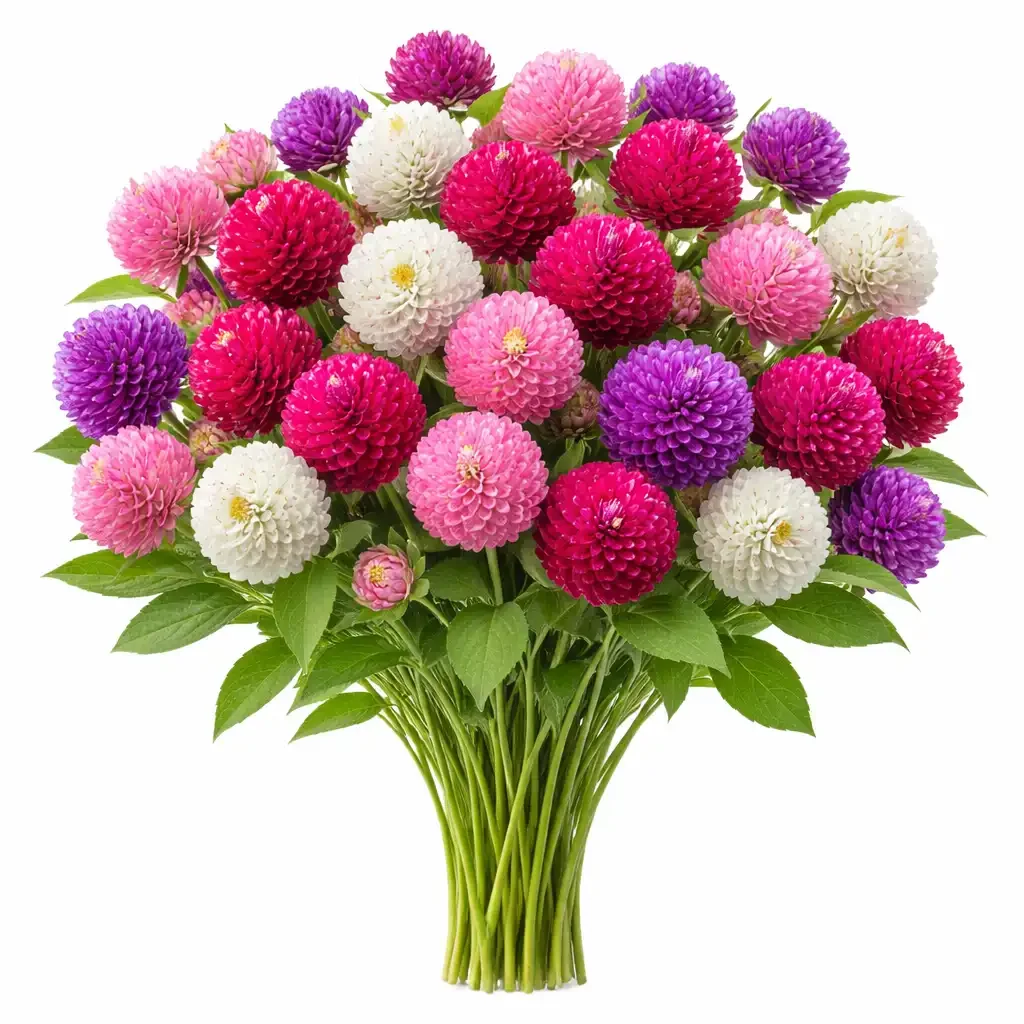
Quick Overview
Common Name: Gomphrena, Globe Amaranth, Bachelor's Button Globe
Scientific Name: Gomphrena globosa, Gomphrena haageana
Plant Type: Annual
USDA Zones: 2 to 11
Sun Requirement: Full Sun
Soil Type: Well-drained, average to poor fertility
Bloom Season: Summer through First Frost
Height: 12 to 30 inches depending on variety
Pollinator Friendly: Yes
Edible: Yes, flowers are edible and used in herbal teas
Why Grow Gomphrena on a Homestead
Gomphrena is one of the most underappreciated and commercially versatile cut flowers available to homestead growers. Its small, perfectly round, clover-like flower heads in the most vivid and heat-resistant colors available from any summer annual, spanning deep magenta, vibrant purple, soft pink, coral, orange, white, and bicolor combinations, create a distinctive, jewel-like quality in arrangements that florists and customers find immediately compelling. But what truly distinguishes Gomphrena from most other summer annual flowers is its extraordinary durability, both in the field where it thrives in heat and drought that would stress most other cut flower crops, and as a cut material where it outlasts virtually every other summer flower both fresh and dried.
For homestead growers, Gomphrena represents one of the most strategically sound summer annual investments available. It is remarkably easy to grow, requiring minimal ongoing care after establishment. It blooms prolifically from early summer all the way to the first hard frost, providing one of the longest selling windows of any annual cut flower crop. It dries beautifully with excellent color retention, creating premium dried products that sell year-round at craft markets, online shops, and through florists. And its distinctive round flower heads provide a genuinely different visual texture in arrangements that no other common summer flower quite replicates, giving homestead growers a true market differentiator at a very low production cost.
Here is why Gomphrena deserves a prominent spot on your homestead:
It provides one of the longest blooming seasons of any annual cut flower. Gomphrena blooms from early summer all the way to the first hard frost with minimal decline in production quality, providing one of the most extended harvesting and selling windows available from any single summer annual crop.
It is extraordinarily heat and drought tolerant. Gomphrena thrives in the hottest, driest summer conditions that challenge or reduce production in most other cut flower crops. Its peak performance actually coincides with midsummer heat rather than declining because of it, making it one of the most reliable production crops during the most commercially active period of the summer season.
It dries perfectly with exceptional color retention. Gomphrena is one of the best summer annuals for the dried flower market. The round flower heads dry with minimal shrinkage, excellent structural integrity, and outstanding color retention, creating premium dried products that sell year-round.
It provides a genuinely distinctive round texture in arrangements. The small, perfectly round flower heads of Gomphrena provide a visual and tactile texture that no other common summer flower replicates. This distinctiveness makes it a useful specialty element in arrangements that florists and customers consistently notice and appreciate.
It is genuinely economical to produce. Seeds are inexpensive, the plant needs minimal fertilizing and pest management, and the return on investment per seed packet is exceptional given the long production season and dual fresh and dried market capability.
Growing Conditions
Sunlight
Gomphrena requires full sun without compromise. It needs at least 6 to 8 hours of direct sunlight per day for the strongest stems, most vibrant color, and most abundant flowering. In partial shade it becomes leggy, produces fewer flowers with less vivid color, and is significantly less productive as a cut flower crop. Full sun is the single most important growing requirement for productive Gomphrena cut flower production. Unlike many summer annuals that appreciate some afternoon shade in the hottest climates, Gomphrena actually performs better with maximum sun exposure throughout the day.
Soil
Gomphrena prefers well-drained, average to poor fertility soil. It is not a demanding feeder and performs better in average conditions than in overly rich, heavily amended beds. Good drainage is important as it does not tolerate waterlogged conditions. Overly fertile soil can produce lush, floppy growth at the expense of the compact, well-branched plants that produce the most harvestable stems per square foot. Soil pH between 5.5 and 7.5 is suitable for most Gomphrena varieties.
Water
Once established, Gomphrena is one of the most drought-tolerant annual cut flower crops available. It needs regular watering during establishment but after that requires significantly less supplemental irrigation than most other summer annuals. Water deeply once or twice a week during extended dry periods. Gomphrena is genuinely one of the few cut flower crops that performs better in somewhat drier conditions than in consistently moist soil. This drought tolerance is one of its most commercially valuable characteristics in hot summer climates where maintaining consistent moisture for other crops is challenging and expensive.
Temperature
Gomphrena loves heat and performs at its absolute best in warm to hot summer conditions. It does not tolerate frost and should not be planted until after the last frost date when soil has warmed reliably. Unlike many summer annuals that show heat stress in midsummer, Gomphrena actually increases its production rate as temperatures rise, continuing to bloom prolifically through the hottest periods of summer that reduce production in less heat-tolerant crops. It thrives across the full range of warm summer climates found in USDA zones 2 to 11 and is one of the most heat-adaptable annual cut flower crops available.
Planting Guide
Gomphrena can be started from seed indoors for the earliest blooms or transplanted from nursery starts. Starting from seed indoors gives the earliest first blooms and the widest access to specialty varieties not available as nursery transplants.
Step 1: Start seeds indoors 6 to 8 weeks before the last frost date. Gomphrena seeds germinate best in warm conditions at 70 to 75 degrees Fahrenheit. Germination typically occurs within 7 to 14 days but can be somewhat erratic. Soaking seeds in warm water for 24 hours before sowing can improve germination rates.
Step 2: Sow seeds on the surface of moist seed starting mix or cover with the thinnest possible dusting of vermiculite. Gomphrena seeds need warmth more than light to germinate so covering very lightly with a thin layer of vermiculite and maintaining warm temperature is more important than providing bright light before germination.
Step 3: Once seedlings have developed two to three sets of true leaves, transplant into individual pots and grow on in a warm, sunny location until outdoor planting time after the last frost date.
Step 4: After the last frost date when conditions are reliably warm, transplant outdoors to a location with full sun and well-drained, average fertility soil. Space plants 9 to 12 inches apart for cut flower production.
Step 5: Water thoroughly after transplanting and keep soil consistently moist until plants are well established. After establishment, reduce watering to deep, infrequent irrigation as appropriate for this drought-tolerant annual.
Step 6: For a continuous harvest throughout the season, succession plant every three to four weeks from the last frost date through early summer. This creates a rolling harvest of fresh stems throughout the entire summer and fall season.
Seed vs Transplant: Both work well. Starting from seed indoors gives the earliest first blooms and access to the widest range of specialty varieties. Nursery transplants are convenient for smaller plantings.
Spacing: 9 to 12 inches apart for cut flower production.
Planting Season: After last frost when soil has reliably warmed. Direct sowing outdoors in warm soil also works well after the last frost date.
Maintenance
Pinching
Pinching the central growing tip when plants reach 4 to 6 inches tall encourages branching and significantly increases the total number of harvestable stems per plant. This is one of the most important practices for maximizing cut flower yield from Gomphrena. Pinching delays the first bloom by approximately one to two weeks but the increase in total seasonal stem yield is substantial.
Deadheading
Regular deadheading of spent flower heads encourages continued stem production throughout the long growing season. For cut flower production, regular harvesting replaces deadheading and is the most efficient way to keep plants continuously productive. Do not allow significant numbers of flower heads to go fully to seed as this can signal plants to slow down production.
Fertilizing
Gomphrena is a light feeder. A light application of balanced fertilizer at planting is sufficient for most soils. Avoid excessive nitrogen which promotes lush foliage at the expense of the compact, branching growth habit and abundant flower production that makes Gomphrena so commercially valuable.
Pest Control
Gomphrena is one of the most pest-resistant summer annuals available. Its slightly rough, textured foliage is unappealing to most insect pests. Aphids can occasionally appear on young plants but are usually managed naturally by beneficial insects. Spider mites can be a problem in very hot, dry conditions. Increase humidity around plants and treat with neem oil if spider mite populations become significant.
Disease Prevention
Gomphrena is generally disease resistant in appropriate growing conditions. Good drainage, proper spacing for air circulation, and avoiding overhead watering prevent most disease problems. Root rot can occur in consistently wet or poorly drained soil. Crown rot can develop when water pools around the base of plants. Both are preventable through excellent drainage and careful watering.
Harvesting
When to Harvest Fresh Cut Flowers
Harvest Gomphrena flower heads when they are fully developed and showing their characteristic vivid color but before the tiny individual florets within the head begin to fade or brown at the edges. The flower head should feel firm and the color should be at maximum saturation. Unlike many flowers that must be harvested in bud, Gomphrena is best harvested when the round flower head is fully formed and showing its characteristic vivid color. Harvest in the early morning when stems are fully hydrated and temperatures are cool.
How to Cut
Use clean, sharp scissors or pruners. Cut stems as long as possible, ideally 12 to 18 inches. Cut just above a set of leaves or a lateral shoot to encourage new stem production from branches below the cut. Remove all foliage from the lower half of the stem immediately after cutting. Place stems immediately into a bucket of cool water with a floral preservative.
When to Harvest for Drying
For dried flower production, harvest Gomphrena flower heads when they are fully developed and at peak color, at the same stage as for fresh use. Gomphrena does not need to be harvested at a specific bud stage for drying as it does for some other flowers. The fully developed flower heads dry beautifully with excellent color retention and minimal shrinkage.
Drying
Gather harvested stems into small bundles of ten to fifteen stems and hang upside down in a warm, dry, well-ventilated space away from direct sunlight. Drying takes approximately two to three weeks. The round flower heads retain their characteristic shape and color exceptionally well when dried and create beautiful material for dried wreaths, arrangements, and botanical products that last for years.
Conditioning
After cutting fresh stems, place in deep cool water in a cool, dark location for several hours or overnight before sale or arrangement. Gomphrena conditions readily and holds up well in arrangements and at market displays when properly conditioned.
How Often to Harvest
During peak bloom throughout summer and into fall, harvest every two to three days as new stems reach the correct stage. Regular harvesting is both a commercial activity and the most important maintenance task for keeping plants continuously productive throughout their long season.
Vase Life
Gomphrena has outstanding vase life for a summer annual, typically lasting 10 to 14 days or more as a fresh cut flower with proper conditioning. This exceptional longevity is one of its most commercially valuable qualities. Strip all foliage below the waterline, recut stems at an angle, and place in fresh water with a floral preservative. Change water every few days to maximize longevity.
Uses on a Homestead
Cut Flower Use
Gomphrena is primarily grown as a fresh cut flower filler and accent in mixed summer and fall bouquets and arrangements. Its small, round flower heads add a distinctive texture and intense color that complements virtually every other summer flower. It is particularly effective in mixed arrangements alongside zinnias, celosia, dahlias, and ornamental grasses where its small round heads provide a visual counterpoint to larger focal flowers. Even a small quantity of Gomphrena stems significantly enhances the overall visual quality of any mixed summer bouquet.
Dried Flower Use
Dried Gomphrena is one of the most commercially valuable and widely used dried flower products available from a summer annual. The round heads dry with perfect structural integrity and outstanding color retention, creating premium dried products in magenta, purple, pink, coral, orange, and white that sell consistently well at craft markets, holiday markets, and through online shops year round. Dried Gomphrena is a standard ingredient in dried wreaths, arrangements, and botanical craft products.
Wedding and Event Flowers
Gomphrena is a sought-after specialty flower for garden-style, boho, and naturalistic wedding designs. Its vivid colors and distinctive round form add a playful, jewel-like quality to bridal bouquets, centerpieces, and installations. The dried flower versions are particularly popular in dried and preserved wedding flower designs that have become increasingly popular as a sustainable and long-lasting alternative to fresh wedding flowers.
Herbal Use
Gomphrena flowers have a long history of use in herbal teas, particularly in Thai and Southeast Asian herbal traditions where they are used as a cooling tea with a mildly sweet, slightly floral flavor. Selling fresh or dried Gomphrena flowers to specialty tea producers or as culinary edible flowers provides an additional premium income stream from the same crop.
Farmers Market
Gomphrena is a reliable and visually striking presence at any summer and fall farmers market. Its vivid, saturated colors and distinctive round form create immediate visual impact in market displays. Its rarity as a specialty cut flower at most markets generates customer curiosity and strong purchasing interest throughout its very long selling season.
Can You Make Money With Gomphrena
Yes, Gomphrena is one of the most financially efficient annual cut flower and dried flower crops available to homestead growers. Its combination of extremely low production costs, very long selling season, dual fresh and dried market capability, and outstanding vase life creates an exceptional return on investment.
One of the longest selling seasons of any annual cut flower. Gomphrena blooms from early summer all the way to the first hard frost, providing a selling window of four to six months that few other annual crops can match. This extended season maximizes the commercial return from a single planting.
Exceptional vase life increases perceived value. At ten to fourteen days or more in the vase, Gomphrena delivers outstanding value per dollar to florists and customers. This exceptional longevity makes premium pricing easy to justify and creates strong repeat purchasing.
Dual fresh and dried market. The same stems that sell as premium fresh cut flowers can be dried and sold as premium dried products, providing year-round income from a single seasonal planting.
Near-zero ongoing input costs. Gomphrena needs minimal fertilizing, very little water once established, and has virtually no pest or disease management requirements. The return on investment per seed packet is exceptional given the very long production season.
Farmers Market: Fresh Gomphrena bundles sell for 6 to 10 dollars per bunch depending on variety, stem length, and color. Dried Gomphrena bundles sell for 7 to 12 dollars per bunch at craft and dried flower markets.
Florists and Wedding Designers: Gomphrena is a consistently sought-after specialty filler for florists working with naturalistic, garden-style, and boho aesthetics. Local supply during the long summer season is valued and supports consistent wholesale relationships.
Dried Flower Market: Dried Gomphrena is one of the most reliably popular dried flower products available. Its vivid color range, perfect round form, and exceptional shelf life make it a consistently strong seller at craft markets and through online shops year round.
CSA Flower Subscriptions: Gomphrena is a reliable and visually distinctive addition to summer and fall flower subscription boxes throughout its very long blooming season. Its vivid colors and distinctive form consistently enhance the visual quality of every mixed bouquet it appears in.
Companion Plants
Gomphrena grows beautifully alongside many other heat-loving summer annuals and perennials with similar growing requirements.
Zinnias: Both are heat-loving summer annuals that grow in similar conditions and complement each other beautifully in bold mixed summer bouquets where Gomphrena provides small round accents and zinnias provide large, bold focal blooms.
Celosia: Both are heat-loving summer annuals with similar growing requirements that complement each other beautifully in vibrant mixed summer arrangements.
Dahlias: Both bloom in summer through fall and complement each other magnificently in high-end mixed arrangements where Gomphrena provides small-scale texture and color and dahlias provide spectacular focal blooms.
Marigolds: Both are heat-tolerant summer annuals that grow well together and complement each other in warm-toned mixed bouquets. The round form of Gomphrena echoes the round form of marigold blooms in arrangements.
Ornamental Grasses: Provide beautiful structural contrast to the small, round form of Gomphrena blooms in mixed arrangements and in the landscape.
Rudbeckia: Both are summer through fall bloomers with warm tones that complement each other in mixed late summer bouquets where Gomphrena provides small vivid accents and rudbeckia provides larger warm yellow focal blooms.
Common Problems
Failure to Germinate
The most common challenge with starting Gomphrena from seed. Seeds germinate poorly in cold soil or cold indoor conditions. Maintain seed trays at 70 to 75 degrees Fahrenheit and soak seeds in warm water for 24 hours before sowing to improve germination rates. Germination can be somewhat slow and erratic even under good conditions. Do not give up on seed trays too quickly as germination can continue for up to three weeks in warm conditions.
Floppy Stems
Can occur in overly rich soil, insufficient sun, or when plants are not pinched early in the season. Grow in average soil with full sun, pinch seedlings at 4 to 6 inches tall to encourage compact branching growth, and avoid high-nitrogen fertilizers. Horizontal support netting can help in exposed locations.
Root and Crown Rot
Can occur in consistently wet or poorly drained soil. Ensure excellent drainage, avoid overwatering, and never allow water to pool around the base of plants. Gomphrena performs significantly better in somewhat drier conditions and poor drainage is far more likely to cause problems than drought.
Spider Mites
Can be a problem in very hot, dry conditions, particularly when plants are under drought stress. Maintain adequate moisture during the hottest periods and treat with neem oil if spider mite populations become visible. Increasing humidity around affected plants helps reduce spider mite pressure.
Color Fading in Intense Heat
Some Gomphrena varieties show slight color fading or bleaching during the most intense heat of midsummer. This is a variety-dependent characteristic rather than a disease or nutritional problem. Choosing heat-tolerant varieties specifically developed for intense color retention in high temperatures reduces this issue. In most cases color intensity recovers as temperatures moderate in late summer.
Varieties to Consider
Tall Varieties for Cut Flower Production
Gomphrena QIS Series: A series specifically developed for cut flower production with tall, uniform stems and vivid color retention. QIS stands for Queue In Stems, referring to the straight, upright stem habit that makes this series ideal for cut flower use. Available in deep magenta, purple, pink, white, and orange. The standard choice for commercial cut flower production.
Gomphrena Fireworks: A dramatically different species type, Gomphrena haageana, with elongated, starburst-shaped flower heads rather than the classic round form. Deep magenta-pink blooms on tall stems reaching 30 to 36 inches. Very popular with florists for its unusual and distinctive flower form that is genuinely different from standard round Gomphrena types.
Gomphrena Las Vegas Series: A tall series reaching 24 to 30 inches with very vivid color intensity and excellent stem length for cut flower production. Available in deep purple, magenta, pink, and white. Excellent performance in hot summer conditions.
Standard Height Varieties
Gomphrena Gnome Series: A compact to medium-height series reaching 12 to 18 inches with abundant round flower heads in a range of colors including magenta, purple, pink, and white. Very productive and useful for smaller growing spaces.
Gomphrena Audray Series: A series with particularly good color range including bicolor and unusual tones. Very popular at farmers markets for the diversity of colors available from a single series.
Gomphrena Strawberry Fields: A Gomphrena haageana variety with vivid strawberry red elongated flower heads on strong stems reaching 24 to 30 inches. Very popular at farmers markets for its unusual elongated form and vivid red color. Commands premium prices for its distinctive appearance.
Gomphrena Ping Pong Mix: A mixed series with very large, perfectly round flower heads significantly larger than standard Gomphrena in a range of vivid colors. Very popular with customers and florists for the impressive size of the round flower heads. Commands premium prices for its unusual large-headed form.
Final Thoughts
Gomphrena is one of the most genuinely underappreciated cut flower and dried flower crops available to homestead growers. Its extraordinary heat tolerance, very long selling season, exceptional vase life, perfect dried flower performance, and near-zero ongoing input costs combine to create a summer annual with commercial value that far exceeds its modest reputation among homestead growers who have not yet discovered its potential. It occupies a visual niche in arrangements, the small, perfectly round jewel-like flower head in vivid saturated color, that no other common summer flower fills, creating a genuine market differentiation that florists and customers consistently notice and appreciate. Grow it in full sun with average soil, pinch seedlings early for maximum branching, harvest regularly throughout its extraordinary long season, and dry the excess for year-round dried flower income. Gomphrena will reward your homestead with one of the most reliable, most heat-tolerant, and most financially efficient summer cut flower and dried flower crops available from any annual planting.
FAQ
Is Gomphrena the same as Bachelor's Button? No, Gomphrena and Bachelor's Button are different plants that are sometimes confused because of overlapping common names. True Bachelor's Button refers to Centaurea cyanus, a cool season annual with fringed, cornflower-type blooms in blue, purple, pink, and white. Gomphrena, also sometimes called Globe Amaranth, is a heat-loving summer annual with distinctive small, perfectly round, clover-like flower heads in vivid magenta, purple, pink, coral, orange, and white. The two plants have completely different growing requirements, bloom at different times of year, and have very different flower forms. Gomphrena is a warm season annual that thrives in heat and blooms from summer through frost. Bachelor's Button is a cool season annual that blooms in spring and early summer and declines in summer heat.
How long does Gomphrena last as a dried flower? Properly dried Gomphrena retains its vivid color and perfect round form for two to three years or more in appropriate storage conditions away from moisture and direct sunlight. This exceptional shelf life is one of the qualities that makes dried Gomphrena so commercially valuable as a dried flower and craft product. The round heads maintain their structural integrity remarkably well when dried and do not shatter or shed the way some other dried flowers do, making them easy to handle and work with in craft and design applications.
Can Gomphrena be direct sown outdoors? Yes, Gomphrena can be direct sown outdoors after the last frost date when soil has warmed to at least 70 degrees Fahrenheit. Direct sowing gives later first blooms than starting indoors but is simpler and works well in climates with long warm growing seasons. Soak seeds in warm water for 24 hours before direct sowing to improve germination rates. Cover seeds with approximately one quarter inch of soil and water gently. Thin seedlings to the correct spacing of 9 to 12 inches once they are a few inches tall. In short-season climates starting indoors is strongly recommended to maximize the length of the productive blooming period before frost.
Why is my Gomphrena producing short stems? Short stems in Gomphrena are usually caused by one of four factors: plants not pinched early to encourage branching, overly crowded spacing that forces plants to compete for light and resources, insufficient sun exposure, or plants that have not yet reached their productive maturity. Pinch plants at 4 to 6 inches tall to encourage compact, branching growth. Space at 9 to 12 inches and ensure full sun exposure of at least 6 to 8 hours daily. Choose tall varieties from the QIS or Las Vegas series that are specifically bred for long cut flower stems. In hot climates consistent moisture during the most intense heat periods also helps maintain stem length throughout the midsummer blooming peak.
Is Gomphrena edible? Yes, Gomphrena flowers are edible and have a long history of use in herbal teas, particularly in Thai and Southeast Asian herbal traditions. The flowers have a mildly sweet, slightly floral flavor and are used both for their taste and their vivid color in herbal tea blends. They can also be used as decorative edible garnishes in culinary applications. Always use flowers grown without any chemical sprays for any culinary or edible use. The edible quality of Gomphrena flowers provides an additional market opportunity for homestead growers who can sell fresh or dried flowers to specialty tea producers, restaurants, and direct customers seeking locally grown edible botanicals.