
Heliopsis
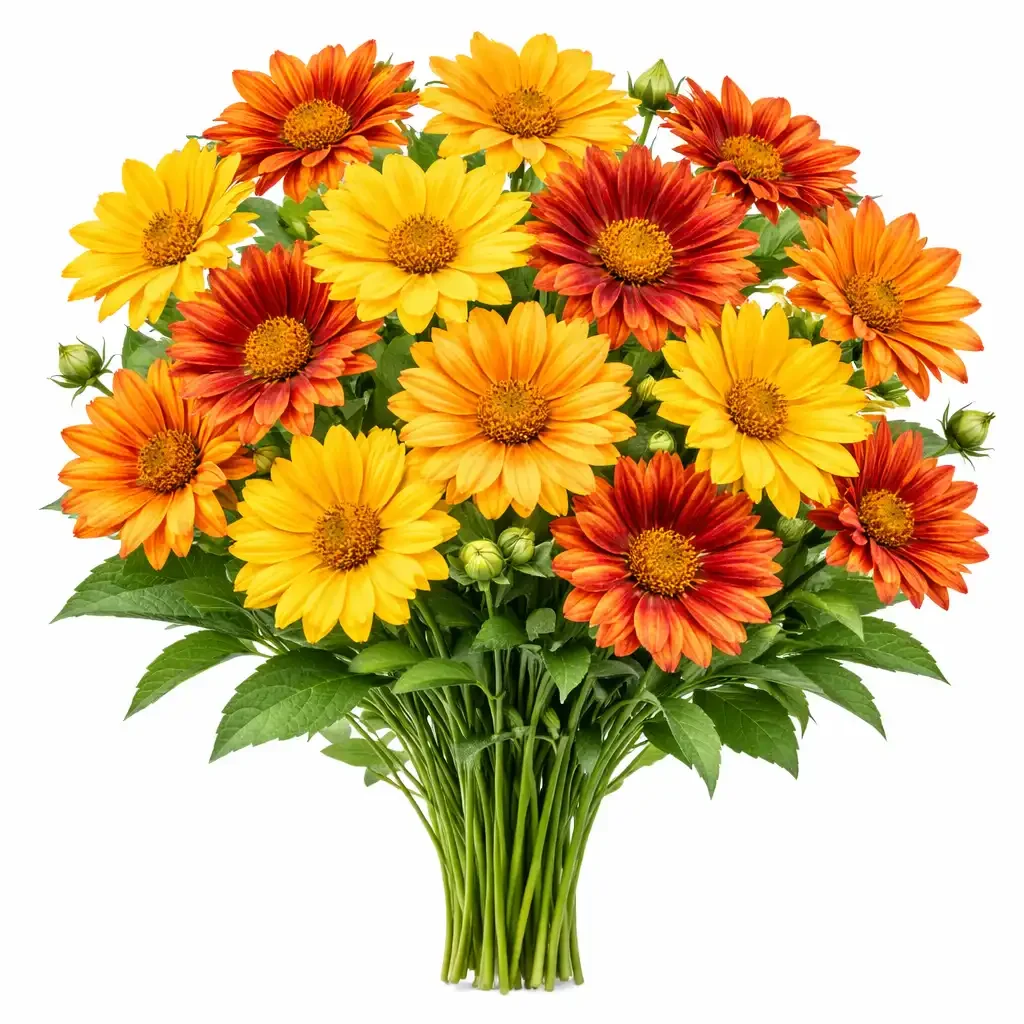
Quick Overview
Common Name: Heliopsis, False Sunflower, Ox Eye, Smooth Oxeye
Scientific Name: Heliopsis helianthoides
Plant Type: Perennial
USDA Zones: 3 to 9
Sun Requirement: Full Sun to Partial Shade
Soil Type: Well-drained, average to moderately fertile
Bloom Season: Midsummer through Early Fall
Height: 24 to 60 inches depending on variety
Pollinator Friendly: Yes
Edible: No
Why Grow Heliopsis on a Homestead
Heliopsis is one of the most reliable, productive, and ecologically valuable perennial cut flowers available to homestead growers. Its cheerful, golden-yellow daisy flowers with their prominent dark or golden centers are the essence of the late summer garden, providing the warm, sun-drenched color that customers reach for most enthusiastically at farmers markets during the peak summer and early fall selling season. In the professional floral industry Heliopsis is valued for the same qualities that make sunflowers so commercially powerful, that immediate, accessible, cheerful beauty that communicates warmth and abundance, but with the additional advantages of a true perennial that returns year after year, produces multiple branching stems rather than single-stemmed plants, and blooms for a significantly longer period than annual sunflowers.
For homestead growers, Heliopsis represents one of the most straightforward and rewarding perennial cut flower investments available. It is native to North American prairies and meadows, which means it is perfectly adapted to the full range of climates found across most of the continental United States, requiring very little supplemental watering once established, no fertilizing in average soil, and minimal pest or disease management throughout its long productive life. It blooms from midsummer through early fall at a time when the cut flower market is at its most active, and it provides the warm golden tones that are the defining colors of the late summer and fall selling seasons. And as a permanent planting that returns year after year with expanding clump size and increasing stem production, it delivers improving returns from a fixed initial investment season after season.
Here is why Heliopsis deserves a prominent spot on your homestead:
It blooms prolifically for an extended midsummer through fall period. Heliopsis produces flowers continuously from midsummer through early fall, providing one of the longest summer blooming windows of any perennial cut flower. This extended production period maximizes the commercial value of a permanent planting.
It is a true cut and come again perennial. Unlike annual sunflowers that produce a single main stem, Heliopsis produces multiple branching stems throughout its blooming season. Regular harvesting encourages the development of new lateral shoots, dramatically increasing total stem yield per plant over the season.
It is one of the most important native pollinator plants available. Heliopsis is native to North American prairies and is among the most important summer pollinator plants available to homestead growers. Monarchs, swallowtails, bumblebees, native bees, goldfinches, and numerous other beneficial insects and birds visit Heliopsis constantly throughout its blooming period.
It thrives in conditions that challenge many other summer perennials. Heliopsis is extremely cold hardy, moderately drought tolerant, and performs well in the full range of summer temperatures and humidity levels found across USDA zones 3 to 9. It is one of the most climatically adaptable summer perennial cut flower crops available.
It provides the warm golden color palette that defines the late summer market. The golden yellow tones of Heliopsis are the signature colors of late summer and early fall arrangements. At a time when customers are reaching for warm, harvest-season colors, Heliopsis provides exactly the palette they are looking for.
Growing Conditions
Sunlight
Heliopsis performs best in full sun. It needs at least 6 hours of direct sunlight per day for the strongest stems, most abundant flowering, and best disease resistance. In partial shade it produces somewhat fewer flowers on slightly weaker stems and becomes more susceptible to powdery mildew. For cut flower production with the longest, strongest stems and the most abundant bloom production, full sun is always the preferred choice. Some afternoon shade in the hottest climates helps prevent heat and drought stress during the most intense summer heat.
Soil
Heliopsis is remarkably adaptable to a wide range of soil conditions. As a native prairie plant it performs well in average to moderately fertile, well-drained soil and actually thrives in conditions that would challenge many other perennials. It does not need heavily amended or richly fertile beds and performs better in average conditions than in overly rich soil that promotes lush, floppy growth. Good drainage is the most important soil requirement. Soil pH between 5.5 and 7.0 is suitable for most Heliopsis varieties.
Water
Once established, Heliopsis is moderately drought tolerant and performs better in average to dry conditions than in consistently moist soil. It needs regular watering during its first growing season to establish a strong root system but after that requires significantly less supplemental irrigation than most other summer perennial cut flowers. Water deeply during extended dry periods in summer to maintain stem length and bloom quality but allow the soil to dry out somewhat between waterings. Overwatering and consistently moist conditions increase the risk of powdery mildew and root rot.
Temperature
Heliopsis is extremely cold hardy and adaptable, thriving across a very wide range of climates within USDA zones 3 to 9. It handles cold winters reliably and emerges dependably in spring. It performs well in both the cool summers of northern climates and the hot, humid summers of the mid-South and Southeast, making it one of the most universally reliable summer perennial cut flower crops available across the full range of continental United States climates. In hot, humid climates consistent moisture and good air circulation are the most important factors for managing powdery mildew.
Planting Guide
Heliopsis can be started from seed, planted from nursery transplants, or established from divisions. For cut flower production, nursery transplants or divisions give the fastest path to productive blooming plants.
Step 1: Choose a location with full sun and well-drained, average to moderately fertile soil. Avoid recently heavily amended beds with excessive compost as Heliopsis performs better in average conditions.
Step 2: Prepare the planting area by loosening the soil to a depth of 12 inches. In very poor, sandy soils a modest amount of compost can be incorporated to improve soil structure. In average garden soil no amendment is typically necessary.
Step 3: Plant nursery transplants in spring after the last frost date when soil has warmed. Space plants 18 to 24 inches apart for cut flower production. Proper spacing is critical for air circulation and powdery mildew prevention.
Step 4: Water thoroughly after planting and keep soil consistently moist until plants are well established, typically four to six weeks. After establishment, transition to the deep, infrequent watering schedule appropriate for this moderately drought-tolerant perennial.
Step 5: For divisions from established plants, divide in early spring when new growth is just emerging or in fall after blooming has finished. Each divided section should have several healthy shoots with good root systems. Replant immediately at the correct spacing and depth.
Step 6: Heliopsis plants typically begin blooming in their first season from nursery transplants, though first-season plants are smaller and produce fewer stems than established plants. Full productive maturity with maximum stem yield arrives in the second and third seasons.
Seed vs Transplant: Both work well. Starting from seed indoors 8 to 10 weeks before the last frost date gives good results and is the most economical option for large plantings. Nursery transplants give faster results and more immediate productivity.
Spacing: 18 to 24 inches apart for cut flower production.
Planting Season: Spring after last frost in most climates. Fall planting works well in mild climates.
Maintenance
Deadheading and Harvesting
Regular harvesting is both the commercial goal and the most important maintenance practice for keeping Heliopsis productive throughout its long blooming season. Heliopsis responds strongly to regular cutting by producing new lateral flowering shoots, dramatically increasing total stem yield over plants that are allowed to set seed. Remove all spent flowers promptly and harvest all stems at the correct stage to maximize production throughout the season. Do not allow significant numbers of flower heads to go to seed as this signals plants to slow down production.
Dividing
Divide Heliopsis clumps every three to four years in early spring when new growth is just emerging. Regular division maintains plant vigor, prevents the center die-out that can develop in older clumps, and provides free new plants to expand the planting. Discard the woody central portion of older clumps and replant only the vigorous outer sections at the correct spacing and depth.
Fertilizing
Heliopsis does not need heavy feeding. As a native prairie plant it is adapted to average to lean soil conditions and performs best without supplemental fertilization in most garden soils. In very poor soils a light application of balanced fertilizer in early spring supports vigorous stem and flower production. Avoid high-nitrogen fertilizers which promote lush, floppy growth and increase powdery mildew susceptibility.
Staking
Tall Heliopsis varieties, particularly those reaching 48 to 60 inches, may benefit from support in exposed locations. Install horizontal support netting or individual stakes early in the season before stems reach their full height. Choosing compact to medium-height varieties selected for strong, self-supporting stems reduces or eliminates the need for staking.
Pest Control
Heliopsis is largely pest resistant. Its strong aromatic foliage deters many insects. Aphids can occasionally appear on new growth but are usually managed naturally by the beneficial insects that Heliopsis attracts in abundance.
Harvesting
When to Harvest
Harvest Heliopsis stems when the flower is fully open and showing its most vivid golden color with the central disk fully formed and firm. Unlike many flowers that are harvested in bud, Heliopsis actually has good vase life when harvested at full bloom as long as the central disk has not yet begun to show pollen. Once pollen is visible on the central disk the flower is past its ideal harvest stage and vase life decreases. Harvest in the early morning when stems are fully hydrated and temperatures are cool.
How to Cut
Use clean, sharp scissors or pruners. Cut stems as long as possible, ideally 16 to 24 inches for tall varieties. Cut just above a set of leaves or a lateral shoot to encourage new stem production from branches below the cut. Remove all foliage from the lower half of the stem immediately after cutting. Place stems immediately into a bucket of cool water with a floral preservative.
Conditioning
After cutting, place stems in deep cool water in a cool, dark location for several hours or overnight before sale or arrangement. Heliopsis conditions readily and holds up well in arrangements and at market displays when properly conditioned. Properly conditioned Heliopsis stems are reliable cut flowers with good vase life.
How Often to Harvest
During peak bloom in midsummer through early fall, harvest every two to three days as new stems reach the correct stage. Regular cutting encourages the plant to produce new lateral shoots continuously throughout the long blooming season. Do not allow flowers to go past their prime on the plant as this signals reduced production.
Vase Life
Heliopsis typically lasts 7 to 12 days as a fresh cut flower with proper conditioning and care. Strip all foliage below the waterline, recut stems at an angle, and place in fresh water with a floral preservative. Change water every two to three days to maximize longevity.
Uses on a Homestead
Cut Flower Use
Heliopsis is primarily grown as a fresh cut flower. Its cheerful golden blooms add warmth, brightness, and a genuine late summer garden quality to mixed bouquets and arrangements. It pairs beautifully with dahlias, zinnias, rudbeckia, celosia, and ornamental grasses in bold late summer bouquets that capture the warmth and abundance of the season. It is particularly effective in mixed arrangements where its golden color provides a warm, unifying palette against which bolder, more saturated colors of other summer flowers are displayed to maximum effect.
Wedding and Event Flowers
Heliopsis is a natural choice for late summer and early fall weddings and events, particularly for garden-style, wildflower, and rustic design aesthetics. Its warm golden color and naturalistic wildflower quality create beautiful arrangements that connect directly with the seasonal landscape. Wedding florists working with late summer and fall color palettes appreciate the consistent local availability of Heliopsis during a period when many summer annuals are beginning to decline.
Farmers Market
Heliopsis is one of the most reliably popular late summer flowers at any farmers market. Its cheerful golden blooms in the warm tones that customers associate with late summer abundance create immediate purchasing enthusiasm. Mixed bouquets featuring Heliopsis alongside dahlias, zinnias, and grasses are among the most commercially successful late summer market offerings available to homestead growers.
Pollinator and Wildlife Habitat
Heliopsis is one of the most ecologically important native summer perennials available to homestead growers. Its golden blooms attract Monarch butterflies, swallowtails, bumblebees, native bees, and goldfinches throughout its long blooming period. Leaving some flower heads to go to seed at the end of the season provides an important late-season food source for seed-eating birds including goldfinches that are strongly attracted to the seed heads.
Can You Make Money With Heliopsis
Yes, Heliopsis is a profitable perennial cut flower crop for homestead operations, particularly for growers who leverage its extended blooming season, cut and come again production habit, and near-zero ongoing input costs after establishment.
Extended summer through fall blooming window. Heliopsis provides a continuous supply of harvestable stems from midsummer through early fall, one of the longest blooming windows of any summer perennial. This extended production window maximizes the commercial value of a permanent planting.
Cut and come again production dramatically increases yield. Unlike single-stemmed annual sunflowers, Heliopsis produces multiple branching stems throughout its season. Regular harvesting encourages new lateral shoot development, providing a continuous rolling harvest that delivers far more total stems per plant than any single-stemmed annual crop.
Permanent perennial with improving returns. Once established, Heliopsis returns year after year with minimal care, forming expanding clumps that produce more harvestable stems each season. The return on investment improves every year as established clumps develop and mature.
Near-zero ongoing input costs. As a native prairie plant, Heliopsis needs no fertilizing, minimal watering once established, and has virtually no pest or disease management requirements in appropriate growing conditions. The return on investment per plant is exceptional.
Farmers Market: Fresh Heliopsis bundles sell for 7 to 12 dollars per bunch depending on stem length, flower count, and presentation. Their warm golden color and cheerful abundance make them reliably strong sellers throughout their long blooming season.
Florists: Heliopsis is a useful and popular warm-toned summer and fall filler and focal flower for florists working with naturalistic, garden-style, and seasonal arrangements. Local supply from small farms is valued.
CSA Flower Subscriptions: Heliopsis is one of the most reliable and visually impactful additions to late summer and fall flower subscription boxes. Its warm golden tones and cheerful abundance create immediately beautiful bouquets that subscribers find consistently satisfying.
Companion Plants
Heliopsis grows beautifully alongside many other summer and fall perennials and native plants with similar growing requirements and complementary bloom times.
Echinacea: Both are native North American perennials that bloom at overlapping times in midsummer, share similar lean-soil preferences, and create beautiful naturalistic combinations in mixed bouquets and cutting garden beds.
Rudbeckia: Both are golden-yellow daisy-family flowers that bloom in summer through fall and complement each other beautifully in warm-toned wildflower bouquets where their similar colors create a unified, abundant impression.
Liatris: The tall purple spikes of Liatris provide beautiful vertical and color contrast to the round golden blooms of Heliopsis in mixed arrangements that capture the essence of the native prairie in late summer.
Monarda: Both are native or naturalized North American perennials that bloom at similar times and create beautiful pollinator-rich combinations in the cutting garden and in mixed naturalistic bouquets.
Ornamental Grasses: Native grasses pair beautifully with Heliopsis in naturalistic arrangements and in the landscape, adding movement and a prairie quality that complements the bold golden form of Heliopsis blooms.
Agastache: Both are drought-tolerant summer perennials that attract similar pollinator communities and complement each other beautifully in naturalistic mixed arrangements with vertical and horizontal flowering forms.
Common Problems
Powdery Mildew
The most common disease problem with Heliopsis. White powdery coating appears on leaves in mid to late summer, particularly in conditions of warm days and cool nights or poor air circulation. Choose mildew-resistant varieties, space plants properly at 18 to 24 inches for good air circulation, avoid overhead watering, and divide clumps regularly to prevent overcrowding. Remove affected foliage promptly. Preventive organic fungicide applications in climates where mildew pressure is consistently high are more effective than reactive treatment.
Floppy Stems
Can occur in overly rich soil, insufficient sun, or in tall varieties in exposed locations. Grow in average to lean soil with full sun and space plants properly. Choose compact to medium-height varieties when floppy stems are a consistent problem. Horizontal support netting installed early in the season helps manage stem uprightness in tall varieties in exposed locations.
Center Die-Out
Established Heliopsis clumps commonly develop dead centers over time as the original planting point becomes woody and unproductive. Divide every three to four years in early spring, discarding the woody central portion and replanting only the vigorous outer sections at the correct spacing and depth.
Aphids
Occasionally appear on new growth in spring. Usually managed naturally by beneficial insects. A strong spray of water or neem oil can be used if populations become problematic before natural predator populations build up.
Short Blooming in First Season
Common in plants that are establishing their root systems in the first season after planting. First-season Heliopsis plants typically produce fewer and somewhat shorter stems than established plants. Full productive stem yield typically arrives in the second and third seasons. Purchasing the largest available nursery transplant size helps maximize first-season production.
Varieties to Consider
Heliopsis helianthoides var. scabra Summer Sun: One of the most widely grown Heliopsis varieties for cut flower production. Large, semi-double golden yellow blooms on strong stems reaching 36 to 48 inches. Excellent stem strength and outstanding vase life. One of the most reliable choices for homestead cut flower production.
Heliopsis helianthoides Loraine Sunshine: A distinctive variety with variegated foliage featuring white and green leaves that provide ornamental interest beyond the flowering period. Golden yellow single blooms on medium-height stems. Very popular at farmers markets for its unusual and attractive foliage in addition to the flowers.
Heliopsis helianthoides Tuscan Sun: A compact variety with large, bright golden blooms on strong stems of 20 to 24 inches. Excellent for smaller spaces and for growers who want a more manageable plant height without sacrificing bloom quality. Very good mildew resistance.
Heliopsis helianthoides Summer Nights: A distinctive variety with dark purple-black stems and foliage that contrasts dramatically with the golden yellow blooms. Very popular with florists for the unusual dark stem and foliage color that creates a distinctive, sophisticated appearance in arrangements.
Heliopsis helianthoides Prima Ballerina: Semi-double blooms with a distinctive pompon-like center in a warm golden tone. Very popular with customers for its more elaborate, double-like flower form. Strong stems and excellent cut flower performance.
Heliopsis helianthoides Venus: Large, fully double blooms in bright golden yellow on strong, upright stems reaching 40 to 48 inches. One of the most impressive double-flowered Heliopsis varieties for cut flower production. Commands premium prices for its fully double form.
Heliopsis helianthoides scabra Bleeding Hearts: A variety with unusually rich, saturated orange-yellow blooms with a dark center that creates a bold, warm color effect at the deeper end of the Heliopsis color range. Very popular at farmers markets for its intense, saturated color.
Final Thoughts
Heliopsis is one of the most quietly undervalued perennial cut flower crops available to homestead growers. Its combination of extended summer through fall blooming, cut and come again productivity, extraordinary climatic adaptability, near-zero ongoing input costs, and the warm golden color that defines the late summer market creates a permanent planting with exceptional long-term commercial and ecological value. In a diversified homestead flower operation where maximizing the income potential of every permanent planting is essential, few summer perennials match Heliopsis for the combination of reliability, productivity, low maintenance, and genuine market appeal that it delivers season after season. Plant it in full sun with average soil, divide it every three to four years to maintain vigor, harvest regularly throughout its long blooming season, and Heliopsis will become one of the most reliably productive, ecologically enriching, and commercially valuable permanent plantings on your entire homestead.
FAQ
Is Heliopsis the same as Rudbeckia or Sunflower? Heliopsis, Rudbeckia, and Sunflower are all members of the daisy family and share the characteristic golden yellow ray petals surrounding a prominent central disk that makes them all look superficially similar. However they are distinct genera with different characteristics. Heliopsis helianthoides is a true perennial native to North American prairies that returns year after year from established root systems. Rudbeckia is also mostly perennial but has a shorter blooming period and somewhat smaller flowers in most commonly grown varieties. Sunflowers, Helianthus annuus, are annuals that must be replanted each season from seed and produce primarily single-stemmed plants rather than the branching, cut and come again growth habit of Heliopsis. For cut flower production Heliopsis offers the best combination of perennial longevity, extended blooming, and cut and come again productivity of the three genera.
Can Heliopsis be grown in hot, humid climates? Yes, Heliopsis performs well in hot, humid climates within its hardiness range of USDA zones 3 to 9. In hot, humid climates good air circulation and mildew-resistant variety selection are the most critical success factors. Space plants generously at 24 inches, avoid overhead watering, and choose varieties with good mildew resistance such as Tuscan Sun. Even in climates with high summer humidity, Heliopsis typically performs well enough for profitable cut flower production with appropriate variety selection and cultural management.
How does Heliopsis compare to annual sunflowers as a cut flower crop? Heliopsis and annual sunflowers both provide golden yellow blooms for the summer market but they offer different production characteristics. Annual sunflowers produce larger, more dramatic individual blooms on single, tall stems and are harvested once per plant per season. Heliopsis produces multiple branching stems per plant and can be harvested repeatedly throughout its long season, providing significantly more total stems per plant per season than single-stemmed sunflowers. Heliopsis also returns as a permanent perennial, eliminating the annual seed cost and establishment labor of sunflowers. For a diversified homestead operation, growing both annual sunflowers for their dramatic large blooms and Heliopsis for its extended, cut and come again production provides the most complete range of golden yellow cut flower material throughout the season.
How long does Heliopsis bloom? A well-established Heliopsis planting typically blooms continuously from midsummer through early fall, a period of approximately eight to twelve weeks depending on climate and variety. In cool summer climates the blooming period may begin slightly later and extend somewhat longer into fall. In hot summer climates blooming may begin earlier in July and extend through September. Regular harvesting that removes all spent and developing blooms consistently throughout the season is the single most effective practice for maximizing the total blooming period and the total number of harvestable stems produced per plant.
Does Heliopsis need to be divided? Yes, dividing Heliopsis every three to four years is important for maintaining vigor and maximum stem production. As clumps mature they develop increasingly woody centers that become less productive while the outer edges of the clump remain vigorous. Dividing in early spring, discarding the woody central portion, and replanting only the vigorous outer sections at appropriate spacing rejuvenates the planting and maintains the strong, upright stem production and abundant flowering that makes Heliopsis commercially valuable. Division also provides free new plants to expand the planting without additional seed or transplant investment.