
Hellebore
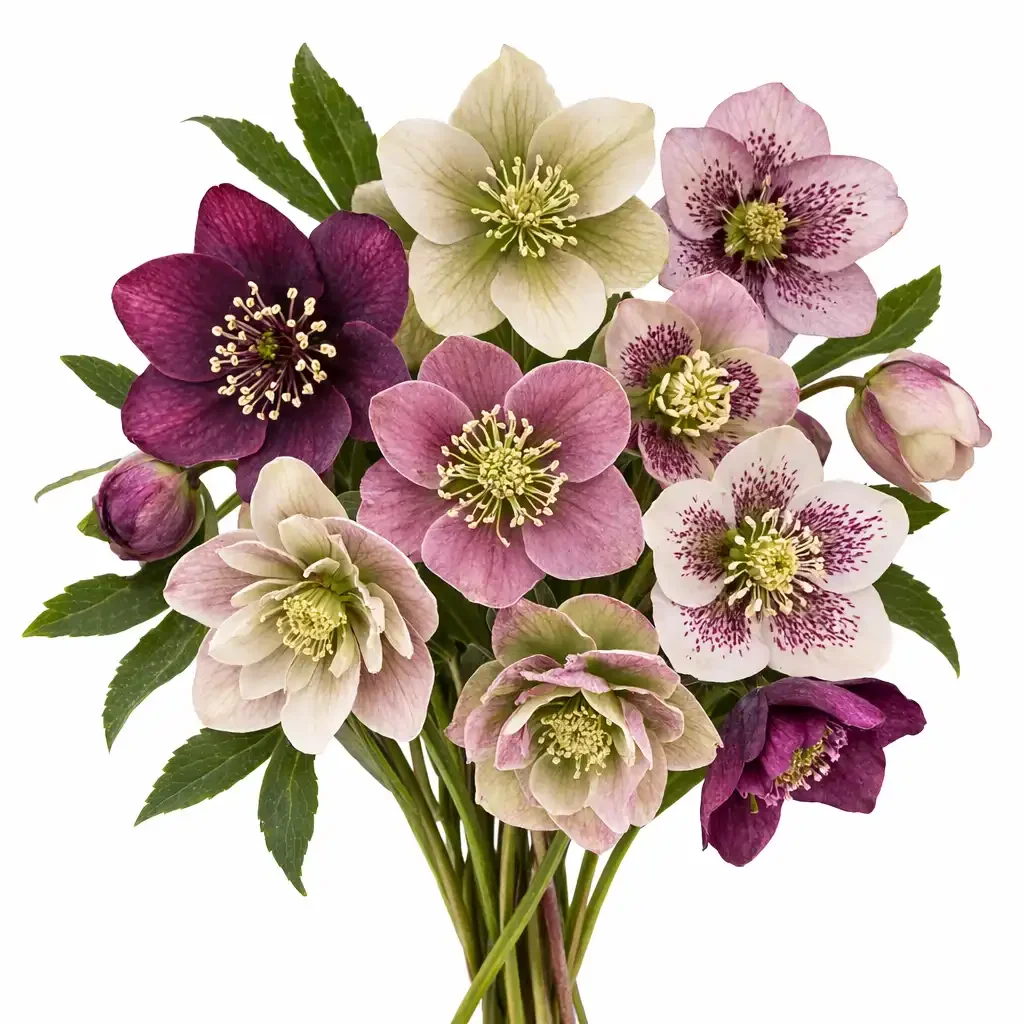
Quick Overview
Common Name: Hellebore, Lenten Rose, Christmas Rose, Winter Rose
Scientific Name: Helleborus spp.
Plant Type: Perennial
USDA Zones: 4 to 9
Sun Requirement: Partial Shade to Full Shade
Soil Type: Well-drained, moderately fertile, humus-rich
Bloom Season: Late Winter through Early Spring
Height: 12 to 24 inches
Pollinator Friendly: Yes
Edible: No, toxic if ingested
Why Grow Hellebores on a Homestead
Hellebores are among the most extraordinary and commercially valuable cut flowers available to homestead growers. Their large, nodding blooms in the most exquisite range of colors available from any winter or early spring flower, spanning pure white and cream through every shade of soft pink, deep rose, slate purple, near-black, spotted, and double forms, create a quality of refined, mysterious beauty that florists and customers find immediately compelling and genuinely unlike anything else available during their blooming season. In the dead of winter when almost nothing else is growing or blooming in most gardens, Hellebores open their extraordinary flowers with a quiet, persistent beauty that makes them one of the most commercially powerful early season specialty flowers available to any homestead operation.
For homestead growers, Hellebores represent one of the most strategically valuable shade-tolerant perennial investments available. They thrive in the partial to full shade conditions that make productive use of most other cut flower crops impossible, turning the shaded areas of a homestead into genuinely productive commercial growing space. They return year after year with minimal care once established, improving in size and bloom production as plants mature. And they bloom at precisely the moment when the cut flower market is most starved for something beautiful, distinctive, and locally grown, creating a premium market position with minimal local competition that is genuinely difficult for other growers to replicate quickly.
Here is why Hellebores deserve a prominent spot on your homestead:
They bloom in late winter and early spring when virtually nothing else is available locally. Hellebores fill the most commercially underserved period of the cut flower year with a product of extraordinary beauty that wedding florists and specialty customers pay premium prices to access. Their winter blooming habit creates a market advantage that is genuinely unique among perennial cut flower crops.
They are one of the most refined and exclusive specialty flowers available. The color range, form complexity, and genuine rarity of quality Hellebore cut flowers in most local markets creates a premium specialty positioning that supports the highest per-stem prices of any winter cut flower.
They thrive in shade where almost nothing else grows commercially. Like Italian Ruscus, Hellebores unlock the productive commercial potential of the shaded areas of most homesteads, converting otherwise difficult-to-use space into premium cut flower production.
They are permanent, long-lived perennials that improve with age. A well-established Hellebore planting can remain productive for twenty to thirty years or more, delivering improving returns as plants mature into large, productive clumps with dozens of harvestable stems per plant.
The double and spotted forms command extraordinary premium pricing. The most sought-after Hellebore forms, including fully double flowers, heavily spotted patterns, and unusual colors like near-black and slate, are genuinely rare and command per-stem prices that rival or exceed the most premium summer cut flowers.
Growing Conditions
Sunlight
Hellebores are adapted to shaded woodland conditions and actually perform best in partial to full shade. They need no more than two to four hours of direct sunlight per day and prefer dappled light under deciduous trees where they receive good light in winter when the tree canopy is bare but are shaded from the hot summer sun. Direct afternoon sun in summer causes leaf scorch and reduces the vigor and longevity of the plants. Morning sun with afternoon shade is acceptable. In cold winter climates the winter sun reaching Hellebores under leafless deciduous trees is actually beneficial and promotes the winter blooming that is their most commercially important characteristic.
Soil
Hellebores prefer well-drained, moderately fertile, humus-rich soil. They perform best in soil that has been generously amended with leaf mold, compost, or well-rotted organic matter to create a rich, woodland-type growing medium. Good drainage is important as Hellebores do not tolerate waterlogged conditions. In heavy clay soils, incorporate generous amounts of coarse organic matter and coarse grit to improve drainage and aeration. Soil pH between 6.0 and 7.5 is suitable with slightly alkaline conditions particularly well suited to Hellebores.
Water
Water consistently during the establishment phase and throughout the active growing season. Once established, Hellebores develop significant drought tolerance but produce the highest quality blooms with consistent moisture during their late winter and early spring flowering period. In shaded growing conditions soil moisture is naturally retained longer between waterings than in exposed positions. Avoid waterlogged conditions particularly during summer dormancy when excessive moisture around the crown can cause the crown rot that is Hellebore's most serious disease problem.
Temperature
Hellebores are cold hardy perennials that perform reliably in USDA zones 4 to 9. They are one of the most cold tolerant of all flowering perennials, blooming reliably in late winter when temperatures can still be well below freezing. Their flowers are remarkably frost tolerant and even open blooms typically survive light freezes without significant damage, though they may droop temporarily during the coldest periods and recover as temperatures rise. In mild winter climates within USDA zones 8 to 9 Hellebores may begin blooming as early as December and continue through March providing an exceptionally long harvest window during the most commercially underserved period of the year.
Planting Guide
Hellebores are best planted from nursery container plants. Growing from seed is very slow, taking two to three years to produce blooming plants, and results are highly variable in terms of flower quality and color. Named variety transplants from specialist nurseries give the fastest and most reliable path to the premium flower quality that commands the highest market prices.
Step 1: Choose a planting location with partial to full shade and well-drained, humus-rich soil. The ideal location receives good light in winter when deciduous tree canopies are bare but is shaded from direct summer afternoon sun. Under established deciduous trees, on north or east-facing slopes, and on the shaded side of buildings or fences all provide appropriate conditions.
Step 2: Prepare the planting area thoroughly by incorporating generous amounts of leaf mold, compost, or well-rotted organic matter into the soil to create the humus-rich growing medium that Hellebores prefer. In heavy soil also incorporate coarse grit to improve drainage.
Step 3: Plant container plants at the same depth they were growing in their containers. Do not plant too deeply as burying the crown increases the risk of crown rot. For most Hellebore species the crown should be at or just at soil level.
Step 4: Space plants 18 to 24 inches apart for cut flower production. This spacing allows adequate room for plants to develop their full size and provide good air circulation while maintaining productive planting density.
Step 5: Water thoroughly after planting and apply a generous layer of organic mulch around the base of plants. Keep mulch a few inches away from the main crown to prevent crown rot. Regular mulching with leaf mold or well-rotted compost each fall is one of the most beneficial ongoing maintenance practices for productive Hellebore cultivation.
Step 6: Be patient during establishment. Hellebores are slow to establish and may produce limited blooms in their first one to two seasons after transplanting as they develop their root systems. Full productive maturity where plants are generating maximum stem yield typically arrives in the third to fourth season.
Seed vs Transplant: Named variety nursery transplants are strongly recommended for commercial cut flower production. Growing from seed produces variable results and takes two to three years to reach blooming age. The investment in quality named transplants pays dividends in premium flower quality and market pricing.
Spacing: 18 to 24 inches apart for cut flower production.
Planting Season: Fall is the preferred planting time in most climates as it allows root establishment before the winter blooming period. Spring planting also works well but plants are less likely to bloom in their first winter after spring planting.
Maintenance
Leaf Removal
One of the most important and commercially significant maintenance tasks for Hellebore cut flower production is removing the old foliage in late fall or early winter, typically November through December. The old leaves of previous seasons can harbor botrytis spores and other fungal pathogens that damage the developing flower buds and emerging new foliage. Removing all old leaves close to the crown before the flower buds emerge from the center of the plant exposes the flowers to maximum light, improves their presentation quality, and significantly reduces disease pressure. The new flowers emerging from a cleared crown are also much more visible and accessible for harvesting.
Dividing
Hellebores are slow-growing perennials that do not need or benefit from frequent division. In fact dividing Hellebores too frequently disrupts their development and reduces blooming for one to two seasons after division. Divide only when clumps have become very large and overcrowded, typically after eight to ten years, or when you specifically want to propagate additional plants. Divide in fall after new growth has begun to emerge, replanting divisions immediately and watering thoroughly.
Fertilizing
Apply a top dressing of well-rotted compost or leaf mold around the base of plants in fall after removing old foliage. This annual organic mulching is the most beneficial fertilization approach for Hellebores and mimics the natural woodland leaf litter conditions in which they thrive. A light application of balanced slow-release fertilizer in early spring can support productive blooming but is secondary to the autumn organic mulch application.
Pest Control
Hellebores are generally pest resistant. Slugs and snails can damage young plants and emerging flower buds, particularly in the damp conditions that Hellebores prefer. Iron phosphate slug bait provides effective control. Aphids can occasionally appear on flower stems and developing buds. Treat promptly with a strong spray of water or neem oil.
Disease Prevention
Botrytis gray mold and black spot are the most common fungal diseases affecting Hellebores. Both are significantly reduced by the annual leaf removal practice described above. Good air circulation through appropriate plant spacing and avoiding overhead watering are additional preventive measures. Remove any affected plant material immediately when spotted. Crown rot caused by poor drainage or excessive moisture around the crown is the most serious and most difficult to recover from. Prevention through excellent drainage and keeping mulch away from the crown is essential.
Harvesting
When to Harvest
Harvesting Hellebores at the correct stage is one of the most critical and most commonly misunderstood aspects of using them as cut flowers. Hellebores harvested too early, when flowers are still fully open but the seed pods inside have not yet begun to develop, wilt very quickly after cutting and are virtually impossible to revive. The correct harvest stage is when the flowers have matured enough for the seed pods inside the flower to be clearly visible and the petals have begun to develop a slightly papery or leathery texture rather than the soft, fresh texture of very recently opened flowers. At this mature stage the flowers have developed the secondary cell wall thickening that allows them to hold water effectively after cutting and last ten to fourteen days or more in a vase.
A reliable way to test harvest readiness is to gently check the back of the flower. When the back of the sepals has developed noticeable veining and slight color change from fresh green to a more mature tone, the flower is typically ready to harvest. This mature harvesting approach requires patience but is absolutely essential for cut flower success.
How to Cut
Use clean, sharp scissors or pruners. Cut stems as long as possible at the base of the stem near the crown of the plant. Remove any foliage attached to the stem. Immediately after cutting, recut the stem under water or make a long vertical split cut up through the base of the stem for two to three inches to maximize water uptake in these notoriously difficult-to-condition stems. Place stems immediately into deep cool water.
Conditioning
Thorough conditioning is absolutely critical for Hellebore cut flowers and makes the difference between stems that last ten to fourteen days and stems that wilt overnight. After cutting and recuting the stem base, submerge the entire flower head and stem in cool water for a minimum of one to two hours and ideally overnight. This full submersion conditioning technique allows the flowers to rehydrate completely through both the stems and the petals and is far more effective than simple stem-in-water conditioning for this species.
After the full submersion period, transfer conditioned stems to deep cool water with a commercial floral preservative and keep in a cool, dark location until sale or arrangement.
How Often to Harvest
During the Hellebore blooming period of late winter through early spring, harvest every three to four days as new stems reach the correct mature harvest stage. A single well-established mature Hellebore plant can produce five to fifteen or more harvestable stems per season. A productive planting of twenty to thirty mature plants can generate meaningful commercial quantities of this premium specialty flower.
Vase Life
Properly harvested and conditioned Hellebores typically last 10 to 14 days or more as fresh cut flowers. The mature harvesting approach and full submersion conditioning are the two practices most responsible for this exceptional vase life. Strip all foliage below the waterline, recut stems at an angle, and place in fresh water with a floral preservative. Change water every two to three days and recut stems to maximize longevity. Keep arrangements in the coolest available location as Hellebores perform significantly better in cool conditions.
Uses on a Homestead
Cut Flower Use
Hellebores are primarily grown as premium specialty cut flowers for the late winter and early spring market. Their extraordinary color range, refined, nodding bloom form, and genuine rarity in most local markets create a product that florists and customers find immediately compelling and that commands premium per-stem prices that rival or exceed the most expensive summer specialty flowers. They pair magnificently with Narcissus, Muscari, Fritillaria, and other early spring bulbs in refined seasonal arrangements that capture the quiet, mysterious beauty of the late winter garden.
Wedding and Event Flowers
Hellebores are among the most sought-after specialty flowers for late winter and early spring weddings. Their extraordinary color range, which includes near-black, deep slate purple, and heavily spotted forms unavailable in any other winter flower, makes them an irreplaceable element for wedding florists working with sophisticated and unusual seasonal color palettes. The nodding, downward-facing bloom habit that makes Hellebores challenging as a cut flower is actually an asset in wedding work where stems are used in cascading bouquets and hanging arrangements where the downward-facing blooms are displayed at their most beautiful.
Farmers Market
Hellebores are one of the most extraordinary and commercially powerful specialty flowers at any late winter or early spring farmers market. Customers who have never seen Hellebore cut flowers stop immediately, drawn by the mysterious beauty of the nodding blooms and the extraordinary range of colors that is genuinely unlike anything else at a winter market. The story of a flower that blooms in winter and thrives in shade adds a compelling narrative dimension that enhances the market experience and justifies premium pricing.
Shade Garden Experience
A mature Hellebore planting in full late winter bloom is one of the most beautiful garden spectacles available to any homestead. The sight of dozens of extraordinary blooms nodding above fresh foliage in the late winter garden creates a powerful agritourism experience and generates compelling social media content that attracts customers and establishes the homestead's reputation for producing something genuinely rare and extraordinary.
Can You Make Money With Hellebores
Yes, Hellebores are one of the most financially rewarding perennial specialty cut flower investments available to homestead growers, particularly for those willing to invest the patience required during the establishment phase and develop the specific harvesting and conditioning skills this crop requires.
Exceptional per-stem pricing for specialty forms. Double-flowered, heavily spotted, near-black, and other premium Hellebore forms command per-stem prices at farmers markets and from florists that rival the most expensive summer specialty flowers. The genuine rarity of quality locally grown Hellebore cut flowers in most markets justifies pricing that would be impossible to achieve with more commonly grown spring flowers.
Blooming in the most commercially underserved period of the year. The late winter blooming window of Hellebores coincides with the period of lowest local cut flower supply and highest florist demand for something distinctive and seasonal. This timing advantage creates a premium market position with essentially no local competition.
Shade tolerance unlocks otherwise unproductive areas. Hellebores are one of the very few commercially productive cut flower crops that thrive in the partial to full shade conditions found in significant areas of most homesteads. Converting shaded areas into productive Hellebore beds represents a meaningful increase in overall homestead commercial productivity.
Long-lived perennials with dramatically improving returns. As Hellebore plants mature into large, productive clumps producing ten to fifteen or more stems per plant, the financial return from an established planting improves dramatically over the first five to ten years. Patience during the establishment phase leads to genuinely exceptional long-term financial performance.
Farmers Market: Fresh Hellebore stems sell for 4 to 8 dollars per stem for standard single forms. Double, near-black, and heavily spotted specialty forms sell for 6 to 15 dollars per stem or more depending on the specific variety and color. Mixed bundles of five stems sell for 20 to 40 dollars during peak season.
Florists and Wedding Designers: Hellebores are among the most sought-after specialty winter cut flowers for florists and wedding designers working with late winter and early spring seasonal designs. Local supply is genuinely rare and commands premium wholesale pricing. Establishing supply relationships with local wedding florists who specialize in seasonal and botanical designs is one of the most financially rewarding sales channels for homestead Hellebore production.
CSA Flower Subscriptions: Including Hellebores in a late winter flower subscription box creates an extraordinary and genuinely unexpected experience for subscribers who rarely if ever encounter these remarkable flowers through conventional channels. Their inclusion in a winter subscription box immediately establishes the subscription's premium specialty positioning.
Companion Plants
Hellebores grow beautifully alongside other shade-tolerant woodland plants with similar growing requirements and complementary bloom times.
Narcissus: Both bloom in late winter and early spring and complement each other beautifully in mixed seasonal arrangements that capture the quiet beauty of the late winter garden.
Muscari: Both bloom in early spring and create beautiful color combinations in mixed spring arrangements where the intense blue of Muscari contrasts with the soft and complex tones of Hellebore blooms.
Ferns: Shade-tolerant ferns grow naturally alongside Hellebores in woodland conditions and provide complementary delicate foliage texture throughout the season when Hellebores are not in bloom.
Italian Ruscus: Both thrive in shade and complement each other beautifully. Italian Ruscus provides deep green foliage backdrop that makes Hellebore blooms particularly beautiful in mixed arrangements.
Snowdrops: The delicate white bells of snowdrops bloom at the same time as early Hellebores and create one of the most beautiful early spring botanical combinations available from any shade garden.
Cyclamen: Hardy cyclamen varieties bloom in fall and winter alongside early Hellebores and create beautiful seasonal combinations in the shade garden and in mixed cool season arrangements.
Common Problems
Wilting After Cutting
The most common frustration with Hellebores as cut flowers and the primary reason many growers give up on them prematurely. Caused almost entirely by harvesting at the wrong stage before the flowers have matured sufficiently, or by inadequate conditioning. Prevention through waiting until flowers have reached the correct mature stage before harvesting and thorough full submersion conditioning overnight before use is the complete solution. Hellebores harvested at the correct mature stage and conditioned properly are genuinely reliable cut flowers with excellent vase life.
Botrytis Gray Mold
The most common disease problem with Hellebores, particularly in cool, humid conditions or when old foliage is allowed to accumulate around the crown. Remove all old foliage in late fall before flower buds emerge, improve air circulation through appropriate plant spacing, and remove affected plant material immediately when spotted.
Black Death
A serious viral disease caused by Helleborus net necrosis virus that causes severe black streaking and distortion of foliage and flowers. There is no cure and affected plants must be removed and destroyed immediately to prevent spread through aphid vectors. Manage aphid populations promptly to reduce virus transmission risk. Purchase plants only from reputable nurseries that test their stock for this disease.
Crown Rot
Caused by poor drainage or excessive moisture accumulating around the crown. Prevention through excellent drainage and keeping mulch and soil away from the crown is essential. Once crown rot is established the plant typically cannot be saved and should be removed to prevent spread.
Failure to Bloom
Usually caused by plants not yet reaching maturity in their first one to two seasons after transplanting, excessive shade beyond their tolerance range, or competition from tree roots. Allow adequate time for establishment, ensure appropriate dappled light rather than complete darkness, and provide supplemental water and nutrition in locations where tree root competition is significant.
Varieties to Consider
Helleborus x hybridus (Orientalis Hybrids)
The most widely grown Hellebore species for cut flower production. An extraordinary range of colors, patterns, and forms is available from specialist breeders. Helleborus x hybridus encompasses the widest color range of any Hellebore species.
Harvington Double Purple: Fully double, rich purple blooms with excellent flower form and strong stems. One of the most commercially valuable double Hellebore varieties. Commands premium prices for its fully double form and rich color.
Harvington Picotee: White or pale pink blooms with a contrasting darker picotee edge on each sepal. Very popular with florists and customers for its distinctive two-toned appearance.
Winter Thrillers Series: A commercially developed seed strain producing a high proportion of double and semi-double flowers in a range of colors including near-black, deep purple, spotted white, and pink. Developed specifically for cut flower production with strong stems and good flower quality. One of the most reliable seed strains for homestead cut flower production.
HGC Maestro: A named variety with large, outward-facing creamy white flowers that do not nod as dramatically as most Hellebores. The more upward-facing bloom habit makes it particularly useful as a cut flower. Strong stems and reliable performance.
Near-Black and Dark Varieties
Ashwood Garden Hybrids Dark Forms: A selection of Helleborus x hybridus plants specifically chosen for the deepest, darkest flower colors ranging from deep burgundy through near-black. These are among the most commercially valuable Hellebore forms and command the highest per-stem prices from florists and specialty customers.
Spotted Varieties
Ashwood Garden Hybrids Spotted Forms: Plants specifically selected for heavy spotting patterns on the petals, creating an intricate, almost painted appearance. Very popular with florists working with botanical and naturalistic design aesthetics.
Species Hellebores
Helleborus niger (Christmas Rose): The earliest blooming species, producing pure white flowers from December through February. Less productive than the orientalis hybrids but highly valued for its extremely early bloom time and pure white color. Reliable in USDA zones 4 to 8.
Helleborus foetidus (Stinking Hellebore): An unusual species with clusters of small, pale green bell-shaped flowers edged in deep purple. Strongly architectural and distinctive. Very popular with florists for its unusual green color and architectural cluster form. Blooms in late winter to early spring. Reliable in USDA zones 5 to 9.
Final Thoughts
Hellebores are one of the most rewarding and most distinctively positioned specialty cut flower crops available to homestead growers. Their extraordinary late winter blooming habit, shade tolerance that unlocks otherwise unproductive homestead space, refined and complex beauty that is genuinely unlike any other winter flower, and the extraordinary premium pricing that rare and high-quality forms command in the market all combine to create a long-term investment with exceptional financial and aesthetic returns. The patience required during the slow establishment phase and the specific harvesting and conditioning skills this crop demands are real challenges that distinguish dedicated homestead Hellebore producers from casual growers. But for homestead growers who make that investment, the rewards are genuinely exceptional. Remove old foliage in late fall to protect developing buds, harvest only at the correct mature stage when the seed pods inside are clearly visible, perform full submersion conditioning overnight before every use, and Hellebores will reward your homestead with the most extraordinary and commercially powerful late winter specialty cut flower available from any shade-tolerant perennial planting.
FAQ
Why do my Hellebore cut flowers wilt immediately after cutting? Wilting after cutting is almost always caused by one of two problems: harvesting too early before the flowers have reached the correct mature stage, or insufficient conditioning after cutting. Hellebores must be harvested when the flowers have matured enough for the seed pods inside to be clearly visible and the petals have developed a slightly leathery texture. Flowers harvested at this mature stage hold water far better than freshly opened flowers. After cutting, all Hellebore stems must be given the full submersion conditioning treatment, where the entire flower head is submerged in cool water for at least one to two hours and ideally overnight, before use in arrangements or sale at market.
How do I know when a Hellebore flower is mature enough to harvest? The most reliable indicators of harvest-ready maturity are the clear visibility of the developing seed pods inside the flower when you look into the center of the bloom, a slight leathery or papery texture to the petals rather than the soft, fresh texture of recently opened flowers, and noticeable veining on the back of the sepals with some color change from fresh green toward a more mature tone. These signs typically appear two to four weeks after the flower first opens, which requires patience but is absolutely essential for reliable cut flower performance.
Can Hellebores be grown in full shade? Hellebores tolerate quite deep shade and can produce commercially acceptable stems in conditions where most other cut flower crops would fail entirely. However the very deepest full shade, such as under dense evergreen canopies, significantly reduces bloom production and stem quality. The ideal is partial shade with dappled light, such as under deciduous trees where the winter sun reaches the plants when they are blooming and the summer canopy provides protection from hot afternoon sun. In conditions of deep full shade, production is reduced but plants typically remain healthy and continue to provide some harvestable stems each season.
How long do Hellebores take to become productive? Hellebores are among the slower-establishing perennial cut flower crops. Plants typically produce limited blooms in their first one to two seasons after transplanting as they develop their root systems. Meaningful commercial production begins in the second to third year and full productive maturity where plants are generating ten to fifteen or more harvestable stems per plant typically arrives in the fourth to fifth year. From that point forward established clumps continue to expand and improve in productivity for many years, with some mature specimens producing twenty or more stems per season. The slow establishment is the primary patience requirement for this crop but the subsequent thirty-year or more productive life of established plants makes the investment genuinely exceptional in long-term financial terms.
Are all Hellebores the same in terms of cut flower quality? No, there is significant variation in cut flower quality between Hellebore species and varieties. For commercial cut flower production, Helleborus x hybridus orientalis hybrids, particularly named varieties and selected seed strains developed specifically for cut flower production, provide the best combination of stem length, bloom quality, and color range. Single-flowered forms generally condition more reliably than doubles for beginning growers. Near-black, double, and heavily spotted forms command the highest prices but may require more experience to condition successfully. Helleborus niger is valued for its extremely early pure white blooms but is less productive than the orientalis hybrids. Helleborus foetidus is valued for its unusual green color and architectural form rather than its individual bloom quality.