
Hydrangeas
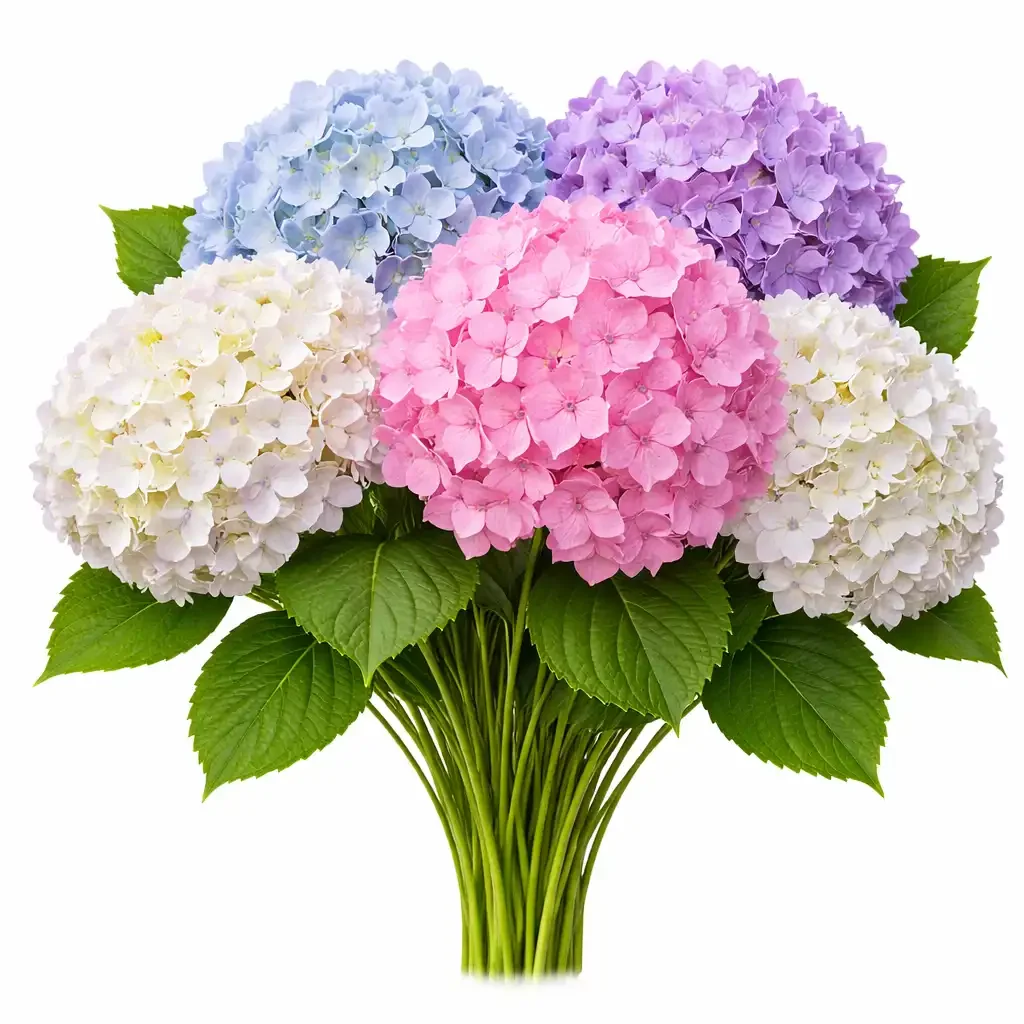
Quick Overview
Common Name: Hydrangea, Bigleaf Hydrangea, Panicle Hydrangea, Smooth Hydrangea
Scientific Name: Hydrangea spp.
Plant Type: Perennial Shrub
USDA Zones: 3 to 9 depending on species and variety
Sun Requirement: Full Sun to Partial Shade
Soil Type: Well-drained, moderately fertile, moisture retentive
Bloom Season: Summer through Fall depending on type
Height: 3 to 15 feet depending on species and variety
Pollinator Friendly: Yes
Edible: No, toxic if ingested
Why Grow Hydrangeas on a Homestead
Hydrangeas are among the most commercially powerful and universally beloved cut flowers available to homestead growers. Their enormous, lush flower heads in shades of white, cream, soft pink, deep rose, lavender, blue, and lime green create an immediate, opulent visual impact in arrangements that customers and florists respond to with consistent enthusiasm across every market channel. At farmers markets, a bucket of freshly cut Hydrangeas in full summer bloom is one of the most powerful selling displays a homestead flower grower can have, drawing customers from across the market with the kind of bold, abundant beauty that is both immediately familiar and consistently thrilling.
For homestead growers, Hydrangeas represent one of the most strategically valuable long-term perennial shrub investments available. As permanent, woody shrubs they return year after year with increasing vigor and expanding bloom capacity, requiring relatively modest ongoing input while producing some of the most commercially desirable blooms available in the summer and fall cut flower market. Their dual capability as both fresh cut flowers and premium dried flower products gives homestead growers maximum flexibility in how they capture value from every bloom produced. And their extraordinary popularity across every demographic, from the most casual farmers market customer to the most demanding wedding florist, creates a market breadth that few other cut flower crops can match.
Here is why Hydrangeas deserve a prominent spot on your homestead:
They are one of the most universally beloved and consistently demanded cut flowers in the world. Hydrangeas are consistently among the top five most requested flowers for weddings and events globally. Their universal recognition and universal appeal create a market breadth that allows homestead growers to sell through virtually every available channel simultaneously.
They provide both fresh and dried market income from the same planting. Fresh Hydrangea blooms command premium prices throughout the summer and fall season. The same blooms, harvested at the right stage and dried correctly, produce premium dried products that sell throughout the year.
They are long-lived perennial shrubs that improve with age. A well-established Hydrangea planting provides increasing bloom production year after year as shrubs mature and expand, delivering improving returns from the same initial investment.
Panicle and Smooth Hydrangeas are among the easiest and most reliable summer flowering shrubs available. These two species thrive across a wide range of climates, bloom reliably on new wood each season, and require minimal ongoing management compared to the more demanding Bigleaf species.
They thrive in partial shade where many other cut flower crops struggle. Several Hydrangea species, particularly Bigleaf and Oakleaf varieties, perform well in partial shade, making them excellent choices for the partially shaded areas of homesteads that are difficult to use productively for sun-demanding crops.
Growing Conditions
Sunlight
Sunlight requirements vary significantly between Hydrangea species. Bigleaf Hydrangeas, Hydrangea macrophylla, perform best in morning sun with afternoon shade in hot climates and tolerate partial shade well, producing excellent cut flower material with as little as four hours of direct sun per day. Panicle Hydrangeas, Hydrangea paniculata, prefer full sun and produce the strongest stems and most abundant blooms with six or more hours of direct sunlight daily. Smooth Hydrangeas, Hydrangea arborescens, are the most shade tolerant of the commonly grown species and produce good blooms in partial to full shade conditions. Oakleaf Hydrangeas, Hydrangea quercifolia, thrive in partial shade and are the most shade-adapted of all commonly grown species.
Soil
Hydrangeas prefer well-drained, moderately fertile soil that retains some moisture without becoming waterlogged. They are heavier feeders than many other perennial crops and benefit from soil that has been generously amended with compost before planting. Consistent soil moisture is one of the most important factors in Hydrangea cut flower production, particularly during hot summer periods when moisture stress causes wilting and reduces stem length and bloom quality. Soil pH has a particularly important effect on Bigleaf Hydrangeas, directly influencing flower color. Acidic soil with a pH below 6.0 produces blue flowers. Alkaline soil with a pH above 7.0 produces pink flowers. Neutral soil produces intermediate purple to lavender tones.
Water
Consistent, generous watering is one of the most critical factors in Hydrangea cut flower production. Hydrangeas have large, soft leaves and enormous flower heads that lose water rapidly in warm conditions and wilt dramatically under drought stress. Water deeply two to three times per week during hot, dry summer periods, or more frequently in very hot conditions. Drip irrigation is ideal as it delivers water directly to the root zone without wetting the foliage and flowers. Mulching generously around the base of plants helps retain soil moisture and keep roots cool during summer heat.
Temperature
Temperature adaptability varies significantly between Hydrangea species. Panicle Hydrangeas are the most cold hardy, performing reliably in USDA zones 3 to 8 and tolerating very cold winters without protection. Smooth Hydrangeas are nearly as cold hardy, performing reliably in USDA zones 3 to 9. Bigleaf Hydrangeas are significantly less cold hardy, performing best in USDA zones 5 to 9, and their flower buds are frequently killed by late spring frosts in the coldest end of their range. Oakleaf Hydrangeas perform reliably in USDA zones 5 to 9. For homestead growers in cold winter climates, Panicle and Smooth Hydrangeas are the most reliable choices for consistent cut flower production. Bigleaf Hydrangeas are the most rewarding in terms of color range and florist value but require more careful site selection and sometimes winter protection in colder climates.
Planting Guide
Hydrangeas are best planted from nursery container plants. Growing from seed is extremely slow and results are variable. Propagation from cuttings is possible and an economical way to expand an existing planting but requires patience during establishment.
Step 1: Choose a planting location appropriate for the specific Hydrangea species. Panicle Hydrangeas need full sun. Bigleaf and Oakleaf Hydrangeas benefit from afternoon shade in hot climates. Smooth Hydrangeas are the most flexible and perform in full sun to partial shade.
Step 2: Prepare the planting hole generously. Dig a hole at least twice as wide as the root ball and incorporate generous amounts of compost into the backfill soil. Good soil preparation before planting supports the entire productive life of the shrub.
Step 3: Plant the shrub at the same depth it was growing in its container. Do not plant too deeply as burying the crown increases the risk of crown rot and can reduce bloom production. Backfill with amended soil, firm gently, and water thoroughly.
Step 4: Apply a generous layer of organic mulch, three to four inches deep, around the base of the plant. Keep mulch a few inches away from the main stem to prevent crown rot. Mulch is particularly important for Hydrangeas as it retains the consistent soil moisture that is critical for bloom quality.
Step 5: Space plants according to the mature size of the species and variety chosen. Most Panicle Hydrangeas need 5 to 8 feet between plants. Most Bigleaf varieties need 4 to 6 feet. Smooth Hydrangeas need 4 to 6 feet. Proper spacing ensures adequate air circulation and prevents the overcrowding that increases disease pressure.
Step 6: Water thoroughly and consistently throughout the first growing season. Hydrangeas establish more slowly than many other perennials and consistent moisture during the establishment phase is essential for strong root development and good performance in subsequent seasons.
Seed vs Transplant: Always use nursery container plants or rooted cuttings. Growing from seed is impractical for homestead cut flower production.
Spacing: 4 to 8 feet apart depending on the species and variety.
Planting Season: Spring after last frost in cold winter climates. Fall or spring in mild winter climates.
Maintenance
Pruning
Pruning requirements vary significantly between Hydrangea species and understanding this difference is essential for avoiding one of the most common and most commercially damaging mistakes in Hydrangea management.
Panicle Hydrangeas, Hydrangea paniculata, bloom on new wood produced in the current season. Prune in late winter or early spring before new growth begins. Cut back by approximately one third of the overall size to encourage vigorous new growth and abundant blooming. Hard annual pruning produces fewer but larger, more spectacular flower heads. Light pruning produces more numerous but somewhat smaller heads.
Smooth Hydrangeas, Hydrangea arborescens, also bloom on new wood. Prune in late winter or early spring, cutting back hard to 12 to 18 inches above the ground. This aggressive pruning produces the strongest new stems and the largest, most impressive flower heads.
Bigleaf Hydrangeas, Hydrangea macrophylla, for traditional varieties bloom primarily on old wood, meaning the flower buds were formed on last season's stems. Pruning these varieties in fall or early spring removes the buds that would have produced the current season's flowers. Prune Bigleaf Hydrangeas only immediately after blooming in summer, removing spent flower heads and any dead or damaged wood. Do not cut back to the ground. Re-blooming Bigleaf varieties bloom on both old and new wood and are more forgiving of pruning.
Oakleaf Hydrangeas bloom on old wood like traditional Bigleaf varieties. Prune only immediately after blooming if shaping is necessary.
Fertilizing
Apply a balanced slow-release fertilizer or compost top dressing in early spring as new growth emerges. For Bigleaf Hydrangeas, the type of fertilizer affects flower color as well as plant nutrition. High-phosphorus fertilizers promote pink coloring in alkaline soils. To maintain or encourage blue coloring in Bigleaf varieties, use fertilizers specifically formulated for acid-loving plants and maintain acidic soil conditions. Avoid excessive nitrogen which promotes lush foliage at the expense of flower production.
Watering
Consistent, deep watering throughout the growing season is the single most important ongoing maintenance practice for productive Hydrangea cut flower production. Never allow Hydrangeas to experience severe wilting stress as this significantly reduces stem length, bloom quality, and vase life. During heat waves, water daily or even twice daily if plants show signs of wilting that do not recover overnight.
Pest Control
Hydrangeas are generally pest resistant. Aphids can appear on new growth in spring. Spider mites can be a problem in hot, dry conditions. Both can be managed with a strong spray of water or neem oil. Japanese beetles can damage foliage and flowers in affected regions. Hand-pick beetles in the early morning and apply neem oil as a deterrent.
Disease Prevention
Powdery mildew is the most common disease problem with Hydrangeas, particularly in climates with warm days and cool nights in late summer. Choose mildew-resistant varieties, space plants properly for good air circulation, and avoid overhead watering. Cercospora leaf spot can cause brown spots on leaves in humid conditions. Remove affected foliage and improve air circulation.
Harvesting
When to Harvest Fresh Cut Flowers
The correct harvest stage varies by Hydrangea species and is critical for maximizing vase life. Hydrangeas harvested too early wilt rapidly and cannot be revived. The key is harvesting when the flower head is fully mature.
For Panicle Hydrangeas, harvest when the flower head is fully formed and the individual florets are fully open and showing their characteristic color.
For Smooth Hydrangeas, harvest when the flower head is fully developed and the lime green color of early development has given way to the characteristic pure white of fully mature flowers.
For Bigleaf Hydrangeas, harvest when the outer florets are fully open and the color is at its most vivid. The flower head should feel firm rather than soft or papery.
A reliable test for harvest readiness is the stem squeeze test. Squeeze the stem gently just below the flower head. If it feels firm and fully developed the flower is ready to harvest. If it feels soft or immature, wait several more days before harvesting.
How to Cut
Use clean, sharp pruners. Cut stems as long as possible. Make a fresh cut at an angle immediately before placing in water. Some growers make a split cut at the base of the stem, cutting up through the woody stem for two to three inches, to increase water absorption in the thick, woody stems of mature Hydrangea shrubs. Remove all foliage from the lower two thirds of the stem immediately after cutting as Hydrangea leaves lose water rapidly and compete with the flower head for hydration.
Conditioning
Proper conditioning is critically important for Hydrangeas and significantly affects vase life. After cutting and stripping lower foliage, immediately place stems in deep cool water. Some growers dip the cut end in alum powder before placing in water, which helps woody stems absorb water more effectively. Condition in a cool, dark location for a minimum of four hours and ideally overnight before sale or arrangement.
Reviving Wilted Stems
Hydrangeas that wilt after cutting can often be revived by recutting the stem under water, making a fresh one inch cut at a sharp angle, and immediately submerging the entire flower head in cool water for one to two hours. This full submersion technique allows the flower head to rehydrate directly through its surface as well as through the stem and is remarkably effective at reviving wilted Hydrangea blooms.
When to Harvest for Drying
For dried Hydrangeas, harvest at a later stage than for fresh use. Allow the flower head to remain on the plant until the petals begin to feel slightly papery and the colors begin to shift from their fresh tones toward the antique tones that characterize dried Hydrangeas. Panicle Hydrangeas develop their most beautiful antique parchment tones in late summer and fall and are best harvested for drying at this stage.
Drying
Hang stems upside down in small bundles in a warm, dry, well-ventilated space away from direct sunlight. Alternatively stand stems upright in a container with a small amount of water and allow the water to evaporate naturally as the flowers dry in place. This second method often produces less color distortion than hanging. Drying takes two to four weeks depending on conditions.
Vase Life
Fresh Hydrangeas typically last 7 to 12 days with proper conditioning and care. Strip all foliage below the waterline, make a fresh angled cut at the base of the stem, and place in deep cool water with a floral preservative. Change water every two to three days and recut stems to maximize longevity. Keep arrangements away from heat and direct sunlight.
Uses on a Homestead
Cut Flower Use
Hydrangeas are primarily grown as premium cut flowers. Their enormous, lush flower heads provide a volume of visual impact that few other single stems can match, making them one of the most valuable focal flowers available for mixed bouquets and large arrangements. They are used constantly in mixed summer bouquets, single-variety bundles, bridal bouquets, and large event installations. Even a single Hydrangea stem transforms the scale and visual impact of any mixed arrangement.
Wedding and Event Flowers
Hydrangeas are among the most requested flowers for weddings globally and have been a wedding florist staple for decades. Their large, lush blooms fill space beautifully in bridal bouquets, create stunning centerpieces with minimal other flowers, and provide a cost-effective way to achieve large-scale floral installations for ceremonies and events. A reliable local source of quality Hydrangeas is among the most valued relationships a wedding florist can have.
Dried Flower Use
Dried Hydrangeas are one of the most commercially valuable dried flower products available. The antique parchment tones that Panicle Hydrangeas develop as they dry, ranging from soft cream and blush through warm caramel and bronze, create premium dried products with extraordinary shelf life and consistent demand from florists, craft markets, gift shops, and online stores throughout the year.
Farmers Market
Hydrangeas are one of the most reliably popular and visually powerful summer and fall flowers at any farmers market. Their bold, voluminous blooms create an immediate display presence that draws customers from across the market. Single-variety buckets of blue, pink, or white Bigleaf Hydrangeas during their peak summer season, and the antique-toned Panicle Hydrangeas through late summer and fall, provide an extended period of market-stopping visual impact.
Can You Make Money With Hydrangeas
Yes, Hydrangeas are one of the most financially rewarding perennial shrub investments available to homestead cut flower growers. Their combination of universal market appeal, premium per-stem pricing, dual fresh and dried market capability, and long productive life creates exceptional long-term financial returns.
Universal market demand across every sales channel. Hydrangeas sell consistently and enthusiastically at farmers markets, to florists and wedding designers, through CSA subscriptions, and online. Their universal recognition and appeal gives homestead growers selling flexibility that more specialized crops cannot match.
Premium per-stem pricing justified by visual impact. A single Hydrangea stem provides a volume of visual impact equivalent to multiple stems of smaller flowers. This exceptional value per stem justifies premium pricing at every market level.
Dual fresh and dried market. The same blooms that sell at premium prices as fresh cut flowers can be dried to create premium dried products that sell throughout the year, providing year-round income from a seasonal harvest.
Long-lived perennial shrubs with improving returns. Well-established Hydrangea shrubs can remain productive for twenty years or more with appropriate care, delivering improving returns year after year as plants mature and expand.
Farmers Market: Fresh Hydrangea stems sell for 5 to 12 dollars per stem or 15 to 25 dollars per bunch depending on species, variety, stem length, and bloom size. Dried Hydrangea bundles sell for 12 to 25 dollars per bunch at craft and specialty markets.
Florists and Wedding Designers: Hydrangeas are in consistent, year-round demand from florists. Local supply is valued and premium pricing is standard for quality locally grown stems. Establishing supply relationships with local wedding florists is one of the most profitable uses of a productive Hydrangea planting.
Dried Flower Market: Dried Panicle Hydrangeas are among the most sought-after dried flower products available. Their antique tones, large scale, and exceptional shelf life make them ideal for online sales and year-round craft and gift market applications.
CSA Flower Subscriptions: Hydrangeas are one of the most eagerly anticipated and commercially powerful additions to a summer flower subscription box. Their inclusion immediately elevates the perceived quality and value of the subscription and generates strong subscriber loyalty.
Companion Plants
Hydrangeas grow beautifully alongside many other summer and fall flowering plants with complementary bloom times and growing requirements.
Roses: Both are iconic summer cut flowers with similar market positioning that complement each other magnificently in mixed summer bouquets and garden plantings.
Echinacea: Both are summer-blooming perennials that complement each other beautifully in naturalistic mixed arrangements and share similar moderate maintenance requirements.
Rudbeckia: Both bloom in summer through fall and complement each other beautifully in warm-toned mixed arrangements where Hydrangeas provide bold focal mass and Rudbeckia provides cheerful color contrast.
Liatris: The tall, purple spikes of Liatris provide beautiful vertical contrast to the round, voluminous form of Hydrangea blooms in mixed summer arrangements.
Ornamental Grasses: Provide beautiful structural contrast to the bold, rounded form of Hydrangea blooms in arrangements and in the landscape, adding movement and a naturalistic quality.
Ferns: Shade-tolerant ferns grow naturally alongside the more shade-adapted Hydrangea species and provide complementary delicate foliage texture in mixed arrangements.
Common Problems
Wilting After Cutting
The most common frustration with Hydrangeas as cut flowers. Caused by inadequate conditioning before use, stems cut at the wrong stage before flowers are fully mature, or insufficient water intake in woody stems. Prevent by harvesting at the correct stage when flowers are fully mature, making a fresh angled cut and immediately placing in deep water, stripping all foliage below the waterline, and conditioning in a cool dark location overnight before use. Revive already wilted stems by recutting under water and submerging the entire flower head in cool water for one to two hours.
Failure to Bloom on Bigleaf Hydrangeas
The most common complaint with Bigleaf Hydrangeas in cold winter climates. Traditional Bigleaf varieties bloom on old wood and their flower buds are frequently killed by late spring frosts or by incorrect pruning. Prevent by choosing reblooming varieties that bloom on both old and new wood, selecting a sheltered planting site, avoiding any fall or spring pruning, and providing frost cloth protection for established buds during late spring frost events.
Powdery Mildew
Can appear on foliage in late summer in conditions of warm days and cool nights or poor air circulation. Choose mildew-resistant varieties, space plants properly, avoid overhead watering, and apply preventive organic fungicide sprays in susceptible climates. Remove affected foliage promptly.
Leaf Scorch
Brown, papery leaf edges caused by excessive sun, heat, or drought stress. Bigleaf Hydrangeas are most susceptible. Provide afternoon shade in hot climates, maintain consistent moisture, and mulch generously to keep roots cool. Once leaves are scorched they cannot recover but plants typically produce healthy new foliage when conditions improve.
Japanese Beetle Damage
Can rapidly skeletonize Hydrangea foliage and damage flowers in affected regions. Hand-pick beetles in the early morning when they are slow. Neem oil provides some deterrent effect. Japanese beetle traps are controversial as they may attract more beetles than they catch.
Varieties to Consider
Panicle Hydrangeas (Hydrangea paniculata)
Limelight: The most widely grown Panicle Hydrangea for cut flower production. Enormous, conical flower heads opening lime green in summer and transitioning to white then pink then antique parchment as the season progresses. Exceptional stem strength and outstanding dried flower performance. The standard commercial variety for homestead Hydrangea production. Reliable performance in USDA zones 3 to 8.
Pinky Winky: Large, conical flower heads with a distinctive two-toned appearance where the lower florets age to deep pink while the upper florets remain white. Very popular at farmers markets and with florists for its unusual and beautiful bicolor effect. Reliable performance in USDA zones 3 to 8.
Little Lime: A compact version of Limelight with the same exceptional bloom quality on a smaller shrub. Ideal for smaller spaces and for growers who want more plants per square foot of growing area.
Vanilla Strawberry: Flower heads that open white and transition through pink to deep strawberry red as the season progresses. Very popular for its dramatic multicolor effect and the extended seasonal interest it provides. Reliable performance in USDA zones 3 to 8.
Smooth Hydrangeas (Hydrangea arborescens)
Annabelle: The classic Smooth Hydrangea with enormous, pure white, rounded flower heads up to 12 inches across on strong stems. One of the most widely grown Hydrangeas for cut flower production. Cold hardy in USDA zones 3 to 9 and extremely reliable. The definitive white Hydrangea for cold winter climates.
Incrediball: An improved Annabelle with even larger flower heads on stronger stems that are less prone to flopping under the weight of the blooms. Very popular for cut flower production where stem strength is critical.
Incrediball Blush: A pink-flowered version of Incrediball with soft blush-pink flower heads on strong stems. Very popular with customers and florists seeking a pink alternative to the standard white Smooth Hydrangea.
Bigleaf Hydrangeas (Hydrangea macrophylla)
Endless Summer: The original reblooming Bigleaf Hydrangea. Blooms on both old and new wood, providing reliable blooms even after winter cold kills the old wood flower buds. Blue in acidic soil, pink in alkaline soil. Reliable performance in USDA zones 4 to 9 with good cold hardiness for a Bigleaf variety.
Blushing Bride: A reblooming white Bigleaf variety with large white mophead flowers that blush softly pink as they age. Very popular with wedding florists for its pure white color and romantic aging effect.
Nikko Blue: A classic Bigleaf variety with large, deep blue mophead blooms in acidic soil. One of the most widely grown blue Hydrangea varieties. Best suited to USDA zones 6 to 9 where winter cold is less likely to kill flower buds.
Oakleaf Hydrangeas (Hydrangea quercifolia)
Snow Queen: Large, elongated white flower heads on strong stems with distinctive oak-shaped leaves that provide beautiful fall color. Very popular with florists for the refined, elegant form of the flower heads. Reliable performance in USDA zones 5 to 9.
Final Thoughts
Hydrangeas are one of the most commercially powerful, most universally beloved, and most financially rewarding permanent plantings available to any homestead flower grower. Their extraordinary combination of universal market appeal, premium fresh cut flower pricing, exceptional dried flower value, long perennial productive life, and adaptability across a wide range of climates and growing conditions makes them one of the most strategically important shrub crops a homestead operation can establish. Choose species appropriate for your specific climate, with Panicle and Smooth Hydrangeas providing the most reliable performance across the widest range of cold winter climates and Bigleaf varieties offering the most premium color range in milder regions. Water consistently and generously throughout the growing season, prune at the correct time for the species you are growing, harvest at full maturity and condition thoroughly overnight before sale, and Hydrangeas will reward your homestead with decades of spectacular blooms, consistent market income, and one of the most universally appreciated cut flower products available to any homestead operation.
FAQ
Why do my Hydrangeas wilt immediately after cutting? Hydrangeas wilt after cutting primarily because their woody stems do not absorb water as readily as the soft stems of annual flowers, and because the enormous leaves and flower heads lose water rapidly. The most effective solutions are harvesting only fully mature flower heads, making a fresh angled cut immediately before placing in deep water, splitting or crushing the bottom two to three inches of the woody stem to increase water absorption, stripping all foliage from the lower two thirds of the stem, and conditioning overnight in a cool dark location before use or sale. For already wilted stems, recut under water and submerge the entire flower head in cool water for one to two hours.
Why did my Bigleaf Hydrangea not bloom this year? The most common cause in cold winter climates is that the flower buds, which form on old wood the previous fall, were killed by late frost, extreme winter cold, or incorrect pruning. Traditional Bigleaf Hydrangeas bloom on old wood and pruning in fall or spring removes the buds for that season's flowers. The most reliable solutions for cold winter climates are switching to reblooming varieties that bloom on both old and new wood, avoiding all fall and spring pruning, and choosing a sheltered planting site protected from late spring frosts.
Can I change the color of my Bigleaf Hydrangea? Yes, the flower color of Bigleaf Hydrangeas is influenced by soil pH and aluminum availability. To achieve blue flowers, maintain acidic soil with a pH below 6.0 and ensure aluminum is available by applying aluminum sulfate to the soil. To achieve pink flowers, maintain alkaline soil with a pH above 7.0 by adding garden lime. White Bigleaf varieties do not change color with soil pH manipulation. Color changes take time and multiple seasons of soil treatment to achieve fully and maintain consistently. Note that soil pH management for color is only possible with Bigleaf Hydrangeas and does not affect other species.
What is the best Hydrangea for cold winter climates? For cold winter climates within USDA zones 3 to 5, Panicle Hydrangeas and Smooth Hydrangeas are the most reliable choices. Limelight and Annabelle are the standard commercial varieties and among the most cold hardy Hydrangeas available. Both bloom on new wood, which means late spring frosts that kill old wood buds do not affect their blooming. For climates within USDA zones 5 to 6, reblooming Bigleaf varieties such as Endless Summer provide more reliable blooming than traditional Bigleaf varieties while still offering the blue and pink color range that makes Bigleaf Hydrangeas so commercially valuable.
How do I dry Hydrangeas successfully? For the best dried results, allow flower heads to remain on the plant until the petals begin to feel slightly papery and the colors begin transitioning toward antique tones. Cut stems with as much length as possible, remove all foliage, and either hang upside down in small bundles in a warm, dry, well-ventilated space away from direct sunlight, or stand upright in a container with a small amount of water and allow the water to evaporate naturally as the flowers dry. The upright water method often produces less color distortion and is particularly recommended for Panicle Hydrangeas harvested in their antique stage. Avoid direct sunlight which bleaches color rapidly. Properly dried Hydrangeas retain their color for one to two years in appropriate storage conditions.