
Iris
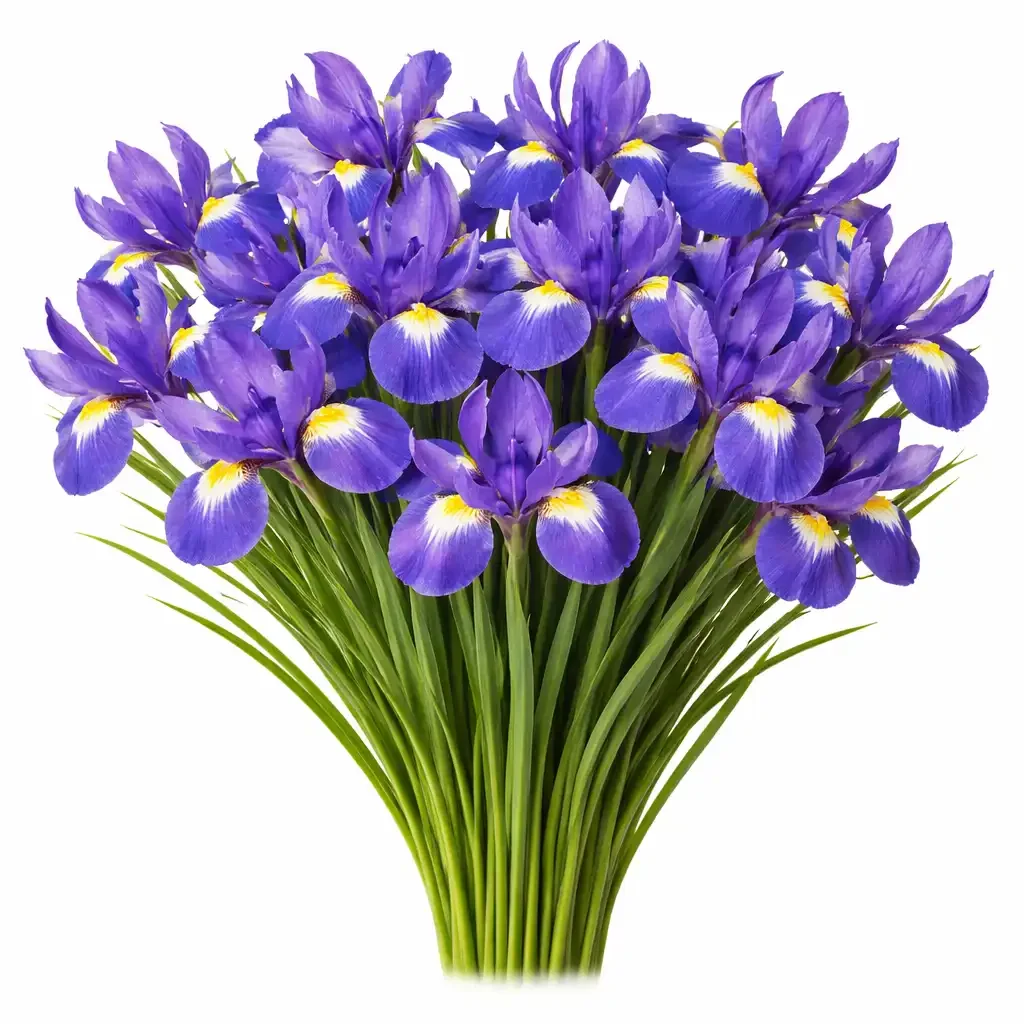
Quick Overview
Common Name: Iris, Bearded Iris, Dutch Iris, Siberian Iris
Scientific Name: Iris spp.
Plant Type: Perennial, grown from rhizomes and bulbs
USDA Zones: 3 to 10 depending on species and variety
Sun Requirement: Full Sun to Partial Shade
Soil Type: Well-drained, average to moderately fertile
Bloom Season: Early Spring through Early Summer depending on type
Height: 12 to 40 inches depending on type and variety
Pollinator Friendly: Yes
Edible: No, toxic if ingested
Why Grow Iris on a Homestead
Iris is one of the most elegant and structurally distinctive cut flowers available to homestead growers. Its uniquely architectural blooms, with their characteristic combination of upright standards and cascading falls in the most extraordinary range of colors from pure white through every shade of yellow, blue, purple, lavender, burgundy, bronze, and near-black create an immediate, unmistakable visual impact in arrangements that few other flowers can replicate. The Iris has been cultivated and prized for thousands of years across every major civilization and that long history of human appreciation reflects a genuine and enduring quality of beauty that continues to drive strong market demand today.
For homestead growers, Iris offers a compelling combination of early season availability, remarkable color diversity, and the kind of permanent perennial productivity that delivers improving returns year after year from a fixed initial investment. Dutch Iris, grown from bulbs, provides an excellent early spring cut flower that bridges the gap between late winter bulb crops and the summer annual season. Bearded Iris, grown from rhizomes, is one of the most spectacular and commercially exciting perennial cut flowers available, producing some of the most dramatic and fragrant spring blooms anywhere in the cutting garden. Siberian Iris provides a longer-blooming, lower-maintenance perennial option that thrives in a wider range of growing conditions than Bearded Iris and delivers consistent, refined blooms throughout late spring and early summer.
Here is why Iris deserves a prominent spot on your homestead:
It provides one of the most architecturally distinctive blooms available in the spring cut flower market. The unique structural form of Iris blooms is genuinely unlike any other spring flower and creates an immediate, recognizable visual impact that customers and florists respond to enthusiastically.
The color range of Bearded Iris is unmatched by any other spring perennial. The extraordinary diversity of Bearded Iris colors, from the subtlest pastels to the darkest near-blacks, with bicolors, plicata patterns, and ruffled edges, gives homestead growers a genuinely distinctive specialty product that no other spring flower can replicate.
Dutch Iris provides one of the most economical and reliable early spring bulb crops available. Dutch Iris bulbs are inexpensive, easy to establish, bloom reliably in their first season, and provide long-stemmed flowers in blue, purple, white, and yellow at a time when the spring cut flower market is most commercially active.
Many Bearded Iris varieties are intensely fragrant. The sweet, distinctive fragrance of the best Bearded Iris varieties is one of the most powerful market draws during the spring selling season, attracting customers at farmers markets before they even see the flowers.
Iris is genuinely unusual as a dedicated cut flower crop at most homestead operations. Despite its commercial value, Iris remains underutilized as a cut flower crop by most small farms. Growers who develop productive Iris plantings occupy a specialty market position that few local competitors can easily replicate.
Growing Conditions
Sunlight
Most Iris types perform best in full sun. Bearded Iris and Dutch Iris require at least 6 hours of direct sunlight per day for strong rhizome and bulb development, abundant blooming, and the richest possible flower colors. Siberian Iris is more shade tolerant and produces acceptable blooms with as little as 4 hours of direct sun per day, though full sun gives the best results for cut flower production. In all cases, more sun generally means more flowers and better stem quality for market use.
Soil
Soil requirements vary significantly between Iris types. Bearded Iris requires exceptionally well-drained, average fertility soil and absolutely cannot tolerate waterlogged conditions. The rhizomes of Bearded Iris must be partially exposed at the soil surface to bake in the sun, which is essential for blooming and disease prevention. Planting Bearded Iris too deeply or in poorly drained soil is the most common cause of failure. Dutch Iris requires well-drained, average fertility soil and performs well in sandy loam. Siberian Iris is more adaptable and tolerates a wider range of soil conditions including slightly moist soils that would rot Bearded Iris rhizomes, though it still requires adequate drainage. All Iris types prefer a soil pH between 6.0 and 7.0.
Water
Water requirements vary by Iris type. Bearded Iris is highly drought tolerant once established and actually performs better with less water. After the blooming season, during summer dormancy, Bearded Iris prefers relatively dry conditions. Overwatering of Bearded Iris, particularly in summer, causes the rhizome rot that is its most serious disease problem. Dutch Iris needs consistent moisture during active growth and blooming but requires dry summer conditions during bulb dormancy. Siberian Iris prefers consistently moist soil and is the most water-tolerant of the commonly grown Iris types, performing well in locations with regular rainfall or consistent irrigation.
Temperature
Iris hardiness varies significantly by type. Bearded Iris is cold hardy in USDA zones 3 to 9 and is one of the most cold-tolerant spring perennials available. Dutch Iris grows from bulbs and is reliably hardy in USDA zones 5 to 9, though in the coldest climates a protective mulch in winter helps ensure reliable bulb survival. Siberian Iris is extremely cold hardy, performing reliably in USDA zones 3 to 9 and tolerating very cold winters without protection. In mild winter climates within USDA zones 8 to 9, choose Iris types appropriate for limited winter chilling as some varieties require a defined cold period to bloom reliably.
Planting Guide
Planting requirements vary significantly between Iris types and it is important to follow the specific requirements of each type for reliable results.
Bearded Iris
Step 1: Plant Bearded Iris rhizomes in late summer to early fall, typically July through September. This timing allows rhizomes to establish before winter and produces the most reliable spring bloom.
Step 2: Choose a location with full sun and excellent drainage. This is the most critical requirement. A location that retains moisture or where water pools after rain is entirely unsuitable for Bearded Iris.
Step 3: Prepare the planting bed by loosening the soil to a depth of 12 inches and incorporating a small amount of balanced fertilizer or bone meal. Do not add excessive compost as overly rich soil promotes foliage at the expense of flowering and increases disease risk.
Step 4: Plant rhizomes at or just below the soil surface with the top of the rhizome exposed or barely covered. This is critical. Bearded Iris rhizomes must receive direct sun to bake the rhizome surface, which triggers blooming and prevents rot. Burying rhizomes too deeply is one of the most common mistakes and almost always results in failure to bloom and rhizome rot.
Step 5: Space rhizomes 12 to 18 inches apart with the fan of leaves pointing in the desired direction of growth.
Step 6: Water after planting to settle the soil but do not mulch over the rhizomes. Keep the rhizome surface exposed to sun.
Dutch Iris
Step 1: Plant Dutch Iris bulbs in fall, typically October through November, for spring blooms. In cold winter climates plant before the ground freezes. In mild winter climates plant as early as possible in fall to allow maximum chilling.
Step 2: Choose a location with full sun and well-drained soil. Dutch Iris bulbs rot quickly in waterlogged soil.
Step 3: Plant bulbs with the pointed end facing up at a depth of 3 to 4 inches, spacing 3 to 4 inches apart for cut flower production.
Step 4: Water thoroughly after planting. In cold climates apply a light mulch over the planting area after the ground freezes for additional winter protection.
Siberian Iris
Step 1: Plant Siberian Iris rhizomes or divisions in early spring or fall. Fall planting gives roots time to establish before winter in most climates.
Step 2: Choose a location with full sun to partial shade and well-drained to moist, moderately fertile soil.
Step 3: Plant at the same depth the plant was growing previously, typically with the crown just at or slightly below the soil surface. Unlike Bearded Iris, Siberian Iris rhizomes should not be exposed at the surface.
Step 4: Space plants 18 to 24 inches apart for cut flower production. Siberian Iris forms expanding clumps over time that should be divided every four to five years.
Seed vs Rhizome or Bulb: Always plant from rhizomes, bulbs, or divisions for cut flower production. Growing Iris from seed takes several years to produce blooming plants and results are highly variable.
Spacing: 12 to 18 inches for Bearded Iris, 3 to 4 inches for Dutch Iris bulbs, 18 to 24 inches for Siberian Iris.
Planting Season: Late summer to early fall for Bearded Iris and Dutch Iris. Spring or fall for Siberian Iris.
Maintenance
Bearded Iris Maintenance
Dividing is the most important ongoing maintenance task for productive Bearded Iris. Clumps become overcrowded every three to four years, resulting in declining bloom quality and quantity. Divide in late summer after blooming by digging the clump, separating healthy outer rhizome sections with at least one strong fan of leaves, trimming leaves to six inches, and replanting at the correct depth. The spent central rhizome can be discarded.
After blooming, allow Bearded Iris foliage to remain in place until it dies back naturally. Do not cut back healthy foliage as it feeds the rhizome and supports blooming the following year. Remove any dead or diseased foliage promptly to prevent disease spread.
Remove any soft, rotting rhizome sections immediately as rot spreads rapidly and can destroy an entire planting if not managed promptly.
Dutch Iris Maintenance
In most climates Dutch Iris bulbs can be left in the ground to naturalize, though in cold climates beyond USDA zone 5 lifting and storing bulbs after the foliage dies back in early summer and replanting in fall gives more reliable results. Allow foliage to die back naturally after blooming to allow the bulb to ripen and store energy for the following season.
Siberian Iris Maintenance
Siberian Iris requires minimal ongoing maintenance. Divide established clumps every four to five years in early spring or fall when the center of the clump begins to die out. Remove spent flower stems after blooming. Allow foliage to remain in place until it dies back naturally in fall to feed the rhizome.
Fertilizing
Apply a balanced fertilizer or bone meal at planting and a light application in early spring as new growth emerges for all Iris types. Avoid excessive nitrogen which promotes lush foliage at the expense of flower production. For Bearded Iris, avoid high-nitrogen fertilizers entirely as they increase disease susceptibility and promote the soft, lush growth that is most prone to rot.
Harvesting
When to Harvest
The ideal harvest stage varies slightly between Iris types but the general principle is to harvest when the first bud on the stem is just beginning to show color and the bud tip is just beginning to swell and separate from its papery sheath, but before the first bud has fully opened. Iris buds continue to open progressively after cutting and stems harvested at this stage produce the longest vase life. For Bearded Iris this typically means harvesting when the first bud is showing full color but has not yet unfurled. For Dutch Iris harvest when the bud is showing color and the first blossom is beginning to open. Harvest in the early morning when stems are fully hydrated and temperatures are cool.
How to Cut
Use clean, sharp scissors or pruners. Cut stems as long as possible. For Bearded Iris cut at the base of the stem near the rhizome. For Dutch Iris and Siberian Iris cut at the base of the stem as close to the ground as possible to maximize stem length. Remove any foliage attached to the cut stem and place stems immediately into a bucket of cool water with a floral preservative.
Conditioning
After cutting, place stems in deep cool water in a cool, dark location for several hours or overnight before sale or arrangement. Iris conditions readily and the remaining buds on the stem will begin to open during the conditioning period, providing a progressive display of blooms over the vase life.
How Often to Harvest
During peak bloom, harvest every one to two days as new buds reach the correct harvest stage. Iris has a defined bloom window of approximately two to three weeks per variety. For a longer overall harvest window plant multiple varieties with different bloom times within the same type.
Vase Life
Iris typically lasts 5 to 7 days as a fresh cut flower with proper conditioning and care. The multiple buds on each stem open progressively over this period, providing a changing and evolving display throughout the vase life. Strip all foliage below the waterline, recut stems at an angle, and place in fresh water with a floral preservative. Change water every two to three days to maximize longevity.
Uses on a Homestead
Cut Flower Use
Iris is primarily grown as a premium cut flower. Bearded Iris provides some of the most spectacular and fragrant spring blooms available, with enormous flowers in an extraordinary color range that is unmatched by any other spring perennial. Dutch Iris provides elegant, long-stemmed flowers in classic blue, purple, white, and yellow that are a spring florist staple. Siberian Iris provides refined, delicate blooms in blue, purple, and white that pair beautifully with other late spring flowers. All three types complement peonies, roses, allium, and other late spring cut flowers in mixed arrangements that capture the spring garden at its most beautiful.
Wedding and Event Flowers
Iris is a natural choice for spring weddings and events. Bearded Iris in particular, with its dramatic blooms and rich fragrance, is one of the most spectacular spring wedding flowers available. Dutch Iris provides the classic elegant purple and blue tones that are consistently popular for spring weddings. Siberian Iris offers a more delicate, naturalistic quality that suits garden-style and wildflower wedding aesthetics particularly well.
Farmers Market
Iris is one of the most visually striking and conversation-generating spring flowers at any farmers market. The architectural form of Iris blooms, the extraordinary color range of Bearded Iris varieties, and the fragrance of the best Bearded Iris types create an immediate, powerful market presence that draws customers. Single-variety bundles of unusual and specialty Bearded Iris colors command premium prices from customers who recognize and appreciate the distinctiveness of these rarely available specialty blooms.
Pollinator Support
Iris is an important spring pollinator plant. Bumblebees and other long-tongued pollinators are attracted to the nectar-rich flowers. Bearded Iris in particular provides an important early season nectar source at a time when many pollinator populations are just beginning to build.
Can You Make Money With Iris
Yes, Iris is a profitable specialty cut flower crop for homestead operations, particularly for growers who develop productive Bearded Iris plantings with specialty colors and fragrances that are genuinely unavailable from commercial wholesale sources.
Specialty Bearded Iris colors command genuine premium pricing. The extraordinary color range of modern Bearded Iris varieties, including near-blacks, rich bronzes, unusual bicolors, and ruffled specialty forms, is simply not available from commercial wholesale flower suppliers. Locally grown specialty Bearded Iris occupies a premium market position with no direct competition from imported commercial flowers.
Dutch Iris provides reliable early season income at very low production cost. Dutch Iris bulbs are among the most economical of all spring bulbs and the long-stemmed, elegant flowers they produce in blue, purple, and white sell reliably at spring markets at good prices relative to their very low cost of production.
Naturalizing bulbs and rhizomes provide increasing returns over time. Both Dutch Iris and Bearded Iris multiply over time, providing an expanding supply of stems and divisions from a fixed initial investment. The return on investment improves every year as established plantings develop.
Fragrance premium from Bearded Iris. The rich, distinctive fragrance of the best Bearded Iris varieties is a powerful market differentiator that customers respond to immediately and that supports premium pricing above unscented alternatives.
Farmers Market: Fresh Bearded Iris bundles sell for 10 to 18 dollars per bunch depending on variety, color, and fragrance. Dutch Iris bundles sell for 6 to 10 dollars per bunch. Single specialty Bearded Iris stems can sell for 2 to 4 dollars each for the most unusual colors and forms.
Florists and Wedding Designers: Bearded Iris in specialty colors is a genuinely sought-after specialty flower for spring wedding work. Dutch Iris is a consistent florist staple for spring arrangements. Both provide reliable wholesale sales channels during their brief spring season.
CSA Flower Subscriptions: Iris is one of the most eagerly anticipated spring additions to a flower subscription box. The dramatic blooms of Bearded Iris and the elegant stems of Dutch Iris signal the peak of the spring season and generate strong subscriber enthusiasm.
Companion Plants
Iris grows beautifully alongside many other spring blooming flowers and perennials with complementary bloom times and growing requirements.
Peonies: Both bloom in late spring and early summer and complement each other magnificently in mixed spring arrangements where Iris provides architectural vertical structure and peonies provide lush focal blooms.
Allium: Both bloom in late spring and complement each other beautifully in mixed spring arrangements where the spherical form of allium contrasts with the architectural form of Iris blooms.
Salvia: Both prefer full sun and well-drained soil and complement each other beautifully in the garden and in mixed summer arrangements where the vertical spikes of salvia echo the upright form of Iris.
Roses: Both are iconic spring and summer flowers that complement each other beautifully in mixed arrangements. Bearded Iris blooms just before most roses and the two overlap at the most commercially active period of the spring season.
Catmint (Nepeta): A classic Iris garden companion that grows beautifully at the base of Bearded Iris, suppresses weeds, attracts pollinators, and provides soft blue-purple filler color in mixed arrangements.
Ornamental Grasses: Provide beautiful structural contrast to the bold, architectural form of Iris blooms in mixed arrangements and in the landscape.
Common Problems
Rhizome Rot (Soft Rot)
The most serious and most common problem with Bearded Iris. Caused by bacterial infection, usually entering through damaged tissue. Affected rhizomes become soft, mushy, and foul-smelling. Remove and destroy affected rhizomes immediately, cutting back to healthy tissue with a sharp, clean knife. Allow cut surfaces to dry in full sun for several hours before replanting. Prevent rot by ensuring excellent drainage, keeping rhizome tops exposed to sun, dividing regularly to prevent overcrowding, and removing dead foliage promptly.
Iris Borer
A serious pest of Bearded Iris in many regions. Moth larvae hatch in spring and bore into Iris leaves and then into rhizomes, creating extensive damage. Look for ragged leaf edges and wilting foliage. Remove and destroy affected plant material. Apply neem oil preventively in spring as eggs hatch. Regular division and removal of dead foliage in fall destroys overwintering eggs and is the most effective long-term management strategy.
Leaf Spot
Fungal leaf spot diseases can cause brown or yellowish spots on Iris foliage in humid conditions. Remove affected foliage promptly and avoid overhead watering. Good air circulation through proper plant spacing helps prevent leaf spot.
Failure to Bloom
The most common complaint with Bearded Iris. Usually caused by rhizomes planted too deeply, insufficient sun, overcrowded clumps that need dividing, plants that have not yet established after division, or varieties that require more chilling than your climate provides. Check rhizome depth first as this is the most common cause. Rhizomes buried more than one inch deep almost never bloom. Ensure at least 6 hours of direct sun daily. Divide overcrowded clumps every three to four years.
Dutch Iris Bulb Rot
Caused by planting in poorly drained or waterlogged soil. Dutch Iris bulbs rot quickly in wet conditions. Plant in well-drained soil and avoid overwatering. In climates with wet winters, lifting and storing bulbs after the foliage dies back provides the most reliable way to prevent bulb losses.
Varieties to Consider
Bearded Iris
Immortality: A re-blooming Bearded Iris that blooms in spring and again in late summer to fall. Pure white blooms with a sweet fragrance. One of the most commercially valuable Bearded Iris varieties for cut flower production due to its extended blooming season that provides two distinct harvest windows per year.
Dusky Challenger: Deep, velvety purple-black blooms that are extraordinarily dramatic and highly sought after by florists and customers seeking unusual dark colors. Commands premium prices for its near-black color that is genuinely rare in the spring cut flower market.
Edith Wolford: A stunning bicolor variety with yellow standards and violet-blue falls. Very popular at farmers markets and with florists for its distinctive two-toned appearance and sweet fragrance.
Victoria Falls: Large, ruffled sky blue to medium blue blooms. One of the most popular blue Bearded Iris varieties for cut flower production. Strong stems and good fragrance.
Batik: A striking variety with white blooms randomly streaked and spotted with deep purple in a pattern reminiscent of batik fabric. Highly distinctive and very popular with customers for its unusual appearance.
Jesse's Song: White blooms with violet plicata edging creating a distinctive lacy border effect on each petal. Very popular with wedding florists for its elegant, refined appearance.
Dutch Iris
Professor Blaauw: The most widely grown Dutch Iris for cut flower production. Deep blue-purple blooms on strong stems. The standard commercial Dutch Iris variety and a reliable choice for homestead production.
White Wedgwood: Large, pure white blooms on strong stems. Very popular with florists and wedding designers. One of the most reliable white Dutch Iris varieties for cut flower production.
Yellow Queen: Bright yellow blooms on strong stems. Very popular at farmers markets for its vivid, cheerful color. One of the most reliable yellow Dutch Iris varieties available.
Blue Magic: Deep indigo-blue blooms with a distinctive orange-yellow blotch on each fall. Very popular at farmers markets and with florists for its rich, saturated color.
Siberian Iris
Caesar's Brother: Deep, velvety blue-purple blooms on strong, elegant stems. One of the most widely grown and commercially reliable Siberian Iris varieties for cut flower production.
White Swirl: Pure white blooms with rounded, overlapping petals creating a full, elegant flower form. Very popular with wedding florists for its clean white color and refined appearance.
Butter and Sugar: Soft yellow standards with white falls. A distinctive and unusual color combination that is very popular at farmers markets for its gentle, warm tones.
Final Thoughts
Iris is one of the most architecturally beautiful, most color-diverse, and most commercially distinctive cut flower crops available to homestead spring growers. The combination of Dutch Iris for early, reliable, economical spring stems, Bearded Iris for the most spectacular and fragrant specialty blooms of the entire spring season, and Siberian Iris for a longer-blooming, lower-maintenance perennial option gives homestead growers a comprehensive Iris program that covers the full range of spring market needs with something genuinely distinctive at every price point. Plant Bearded Iris rhizomes in the sunniest, best-drained beds with rhizome tops exposed to the sun, plant Dutch Iris bulbs in fall for reliable early spring production, give Siberian Iris consistent moisture and division every four to five years, and Iris will reward your homestead with some of the most architecturally striking, most color-diverse, and most genuinely sought-after spring cut flowers available from any homestead operation.
FAQ
Why are my Bearded Iris not blooming? The most common cause of Bearded Iris failure to bloom is rhizomes planted too deeply. Bearded Iris rhizomes must be planted with their tops at or just barely below the soil surface so that the sun can bake the rhizome surface. Rhizomes buried more than one inch deep almost never bloom regardless of other conditions. Other common causes include insufficient sun of less than six hours daily, overcrowded clumps that need dividing, plants that have not yet established after recent division, or varieties that require more winter chilling than your climate provides. Check rhizome depth first and adjust if necessary before investigating other potential causes.
What is the difference between Dutch Iris and Bearded Iris? Dutch Iris and Bearded Iris are both members of the Iris genus but they are fundamentally different plants with different growing methods and very different commercial characteristics. Dutch Iris grows from small bulbs planted in fall, blooms in early to mid spring, and produces elegant, more simply structured flowers in classic blue, purple, white, and yellow on long, straight stems well suited to florist use. Bearded Iris grows from rhizomes that remain in the ground permanently, blooms in late spring, and produces much larger, more elaborate, intensely fragrant flowers in an extraordinary color range including colors and patterns not found in any other spring flower. For cut flower production both are valuable and complementary, with Dutch Iris providing reliable early season stems and Bearded Iris providing premium specialty blooms later in the spring season.
Can Bearded Iris be grown in hot climates? Yes, Bearded Iris performs well in hot climates within USDA zones 7 to 9 and actually requires warm, dry summer conditions for healthy rhizome development. The most important consideration in hot climates is ensuring excellent drainage and avoiding overwatering during the summer dormancy period. In very hot climates with temperatures consistently above 100 degrees Fahrenheit during summer, providing some afternoon shade helps protect the exposed rhizomes from excessive heat. In mild winter climates within USDA zones 8 to 9, choose reblooming varieties or varieties specifically recommended for limited chilling climates to ensure reliable spring blooming.
How do I increase my Bearded Iris collection without buying new plants? Division is the most effective way to expand a Bearded Iris planting for free. Divide established clumps every three to four years in late summer after blooming, typically July through September. Dig the clump carefully, separate healthy outer rhizome sections with at least one strong fan of leaves, trim the leaves to six inches, and replant at the correct depth. Each healthy division will produce blooming plants the following spring. This regular division is both good maintenance practice and the most economical way to expand a productive Bearded Iris cut flower planting over time.
Are Iris flowers fragrant? Fragrance varies significantly between Iris types and varieties. Many Bearded Iris varieties carry a distinctive sweet fragrance ranging from light and floral to rich and intense. The most fragrant Bearded Iris varieties rival roses and sweet peas for fragrance intensity and are among the most powerfully scented spring flowers available. Dutch Iris has minimal fragrance. Siberian Iris has very light to no noticeable fragrance. For maximum fragrance value in the cut flower market focus on selecting Bearded Iris varieties specifically described as highly fragrant such as Immortality, Edith Wolford, and many others in the heritage and specialty Iris catalogs.