
Italian Ruscus
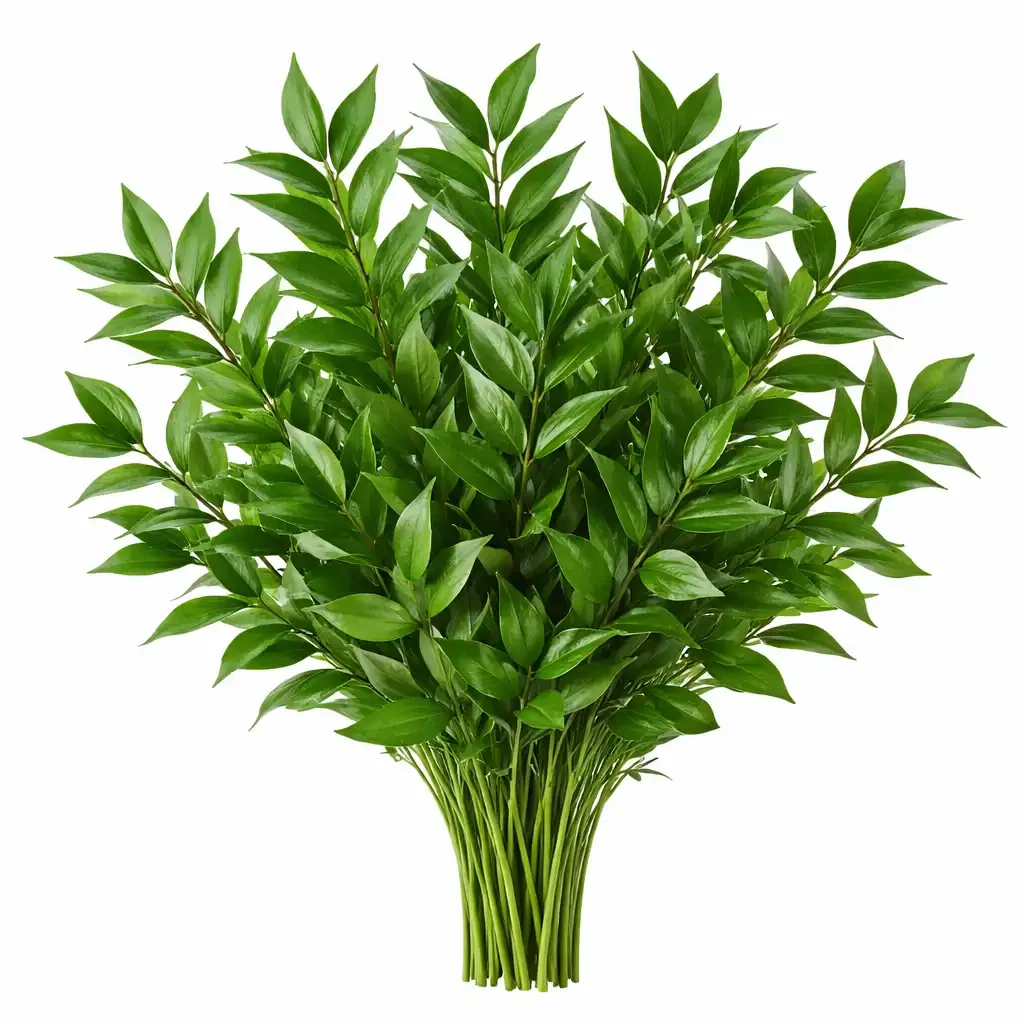
Quick Overview
Common Name: Italian Ruscus, Butcher's Broom, Soft Ruscus
Scientific Name: Ruscus hypophyllum, Ruscus aculeatus
Plant Type: Perennial Shrub
USDA Zones: 7 to 10
Sun Requirement: Partial Shade to Full Shade
Soil Type: Well-drained, average to moderately fertile
Bloom Season: Foliage harvested year round, berries in fall and winter
Height: 12 to 36 inches depending on species
Pollinator Friendly: Minimal
Edible: No, berries are toxic if ingested
Why Grow Italian Ruscus on a Homestead
Italian Ruscus is one of the most commercially important and consistently valuable cut foliage crops available to homestead growers. Its glossy, deep green, oval-shaped cladodes, which are flattened stems that function as leaves, create a dense, refined foliage texture that is a florist industry staple appearing in mixed arrangements, wedding bouquets, and floral installations around the world. Florists describe Italian Ruscus as one of the most indispensable and versatile green foliage available, providing a clean, elegant background that complements virtually every cut flower without competing for attention, and lasting for an extraordinary two to four weeks in a vase without deteriorating.
For homestead growers, Italian Ruscus represents one of the most strategically valuable shade-tolerant perennial foliage crops available. Unlike most cut flower and foliage crops that demand full sun, Italian Ruscus thrives in partial to full shade, making it an ideal productive use for the shaded areas of a homestead that would otherwise be difficult to use for any commercial crop. Once established it requires minimal ongoing input, returns year after year with increasing productivity, and provides a continuous supply of harvestable foliage stems throughout the entire year with no defined off season. In late fall and winter the red berries that develop on female plants add an additional decorative element that commands premium prices during the holiday season.
Here is why Italian Ruscus deserves a prominent spot on your homestead:
It is one of the most universally used and consistently demanded foliage crops in the professional floral industry. Florists use Italian Ruscus constantly as a foundational foliage in mixed arrangements of every style. Local supply from small farms is extremely rare and highly valued.
It thrives in shade where almost nothing else grows commercially. Italian Ruscus is one of the very few commercially viable cut foliage crops that performs in partial to full shade. This shade tolerance makes it uniquely suitable for the underutilized shaded areas of most homesteads.
It has an extraordinary vase life. Italian Ruscus typically lasts two to four weeks as a cut foliage, which is among the longest vase lives of any cut material available. This outstanding longevity is one of the primary reasons florists prize it so highly.
It provides year-round harvest with no seasonal gap. Unlike most cut flower crops with defined seasons, Italian Ruscus can be harvested throughout the year, providing consistent income across all seasons from a permanent planting.
The winter berry crop provides a high-value seasonal premium product. Female Italian Ruscus plants produce ornamental red berries in fall and winter that are extraordinarily popular with florists and customers during the holiday season and command premium prices well above standard foliage pricing.
Growing Conditions
Sunlight
Italian Ruscus is uniquely adapted to shaded conditions and is one of the very few commercially productive cut foliage crops that performs in partial to full shade. It needs no more than two to four hours of indirect light or dappled shade per day for productive growth. Direct hot afternoon sun can scorch the glossy cladodes and reduce the visual quality of the foliage. Morning sun with afternoon shade or consistent dappled light under deciduous trees creates ideal conditions. This shade tolerance is one of Italian Ruscus's most commercially important characteristics as it allows productive use of homestead areas that cannot support sun-demanding crops.
Soil
Italian Ruscus prefers well-drained, average to moderately fertile soil. It performs well in soil amended with compost and tolerates a wide range of soil types from sandy loam to moderate clay as long as drainage is adequate. It does not tolerate waterlogged conditions and is susceptible to root rot in consistently wet soil. Soil pH between 5.5 and 7.0 is suitable. In the shade of established trees where competition from tree roots is significant, incorporating additional compost and ensuring consistent moisture helps Italian Ruscus establish and thrive in competition with tree root systems.
Water
Water consistently during the establishment phase and through the growing season. Once established, Italian Ruscus develops moderate drought tolerance but produces the highest quality foliage with consistent moisture. In shaded growing conditions under tree canopies the soil often remains naturally moist for longer between waterings than in exposed positions, which suits Italian Ruscus well. Avoid waterlogged conditions as root rot is the most common cause of plant failure.
Temperature
Italian Ruscus is reliably hardy in USDA zones 7 to 10. It tolerates light frost and light freezes but is damaged by prolonged hard freezes below approximately 15 to 20 degrees Fahrenheit. In cold winter climates at the edge of its hardiness range within USDA zone 7, providing a protective mulch layer over the root zone in fall helps plants survive unusually cold winters. In mild winter climates within USDA zones 8 to 10 it remains evergreen throughout the year, providing a continuous supply of harvestable foliage stems with no seasonal interruption.
Planting Guide
Italian Ruscus is best planted from nursery container plants or divisions from established plants. Growing from seed is very slow and seed is difficult to source. Nursery container plants give the most reliable path to productive plants within the first two to three seasons.
Step 1: Choose a planting location with partial to full shade and well-drained soil. The ideal location receives morning sun or consistent dappled light but is protected from direct afternoon sun. Under established deciduous trees, on the north or east side of buildings, or in the shade of structures or fences are all appropriate locations.
Step 2: Prepare the planting area by incorporating generous amounts of compost into the soil. In areas where tree root competition is significant, dig planting holes deeper than necessary and fill the bottom with compost-amended soil to give young plants an initial advantage over established tree roots.
Step 3: Plant container plants at the same depth they were growing in their containers. Italian Ruscus has a rhizomatous root system that spreads slowly underground. Do not plant too deeply as this can inhibit the spreading habit that increases plant productivity over time.
Step 4: Space plants 18 to 24 inches apart for cut foliage production. Over time individual plants spread through underground rhizomes to form expanding clumps, so providing adequate spacing allows this natural expansion to occur productively rather than causing overcrowding.
Step 5: For berry production plant both male and female plants as Italian Ruscus is dioecious, meaning individual plants are either male or female. Most commercial nurseries sell female plants specifically for berry production. For reliable berry set plant at least one male plant for every three to five female plants.
Step 6: Water thoroughly after planting and apply a generous layer of organic mulch around the base of plants to retain soil moisture, suppress weeds, and protect the developing root system. Keep mulch a few inches away from the plant crown to prevent crown rot.
Seed vs Transplant: Always use nursery container plants or divisions. Growing from seed is impractical for homestead cut foliage production due to the very slow germination and establishment.
Spacing: 18 to 24 inches apart for cut foliage production.
Planting Season: Spring in most climates. Fall planting works well in mild winter climates within USDA zones 8 to 10 where winter temperatures are mild enough to allow good root establishment.
Maintenance
Harvesting as Maintenance
Regular harvesting is both the commercial goal and one of the most important maintenance practices for productive Italian Ruscus. Cutting mature stems encourages the development of new shoots from the base and the rhizomatous root system, maintaining plant vigor and productivity. A consistently harvested Italian Ruscus planting remains more productive and healthier than one where stems are allowed to age and decline on the plant without harvesting.
Dividing
Divide established Italian Ruscus clumps every five to seven years in early spring or fall to prevent overcrowding and maintain vigor. Division provides free new plants to expand your planting. Each divided section should have several healthy shoots with good root systems. Replant immediately at the correct spacing and water thoroughly to support establishment.
Fertilizing
Apply a balanced fertilizer or compost top dressing in early spring as new growth emerges. A light midseason application supports continued foliage development throughout the growing season. Avoid excessive nitrogen which promotes lush, soft growth more susceptible to disease. In shaded growing conditions under trees where soil fertility may be reduced by tree root competition, regular light fertilization is more important than in open garden beds.
Weed Management
Weeds compete aggressively with Italian Ruscus during the establishment phase when plants are not yet large enough to shade out competing vegetation. Regular hand weeding and a consistent organic mulch layer are the most effective management approaches. Once established, the dense spreading habit of Italian Ruscus provides reasonable weed suppression as the clumps expand to cover the ground.
Pest Control
Italian Ruscus is generally pest resistant. Scale insects can occasionally colonize stems and are best treated with horticultural oil applied in early spring. Root rot caused by poor drainage is the most serious threat but is a management issue rather than a pest problem.
Harvesting
When to Harvest
Harvest Italian Ruscus stems when they are fully mature and showing deep, glossy green color. Immature stems with pale green or yellowish coloration do not hold as well after cutting as fully matured stems with deep, glossy color. For berry stems, harvest when the berries have reached full red color and are firm and glossy. Harvest at any time of year as the foliage is continuously available, though the best quality stems with the deepest color are typically produced during the active growing season.
How to Cut
Use clean, sharp pruners or scissors. Cut stems as long as possible, ideally 16 to 24 inches. Cut at the base of the stem near the crown of the plant to encourage new stem development from the base. Remove any stems that are yellowing, damaged, or past their prime at the same time as harvesting to maintain the productivity and appearance of the planting.
Conditioning
After cutting, place stems in deep cool water in a cool location for several hours or overnight before sale or arrangement. Italian Ruscus conditions readily and the glossy cladodes absorb water well during conditioning. Properly conditioned Italian Ruscus stems hold up exceptionally well in arrangements for two to four weeks, which is one of its most commercially valuable qualities.
How Often to Harvest
Italian Ruscus can be harvested throughout the year as foliage matures continuously from established plants. During the main growing season harvest every two to three weeks as new stems reach full maturity. In winter months harvest frequency typically decreases in cold climates as growth slows, but in mild winter climates within USDA zones 8 to 10 harvest continues at a similar pace year round.
Vase Life
Italian Ruscus has one of the longest vase lives of any cut foliage material, typically lasting two to four weeks with proper care. Strip all cladodes below the waterline, recut stems at an angle, and place in fresh water. Change water every few days to maximize the already exceptional longevity. The extraordinary vase life of Italian Ruscus is one of its most important commercial advantages and a primary reason florists consistently prefer it over shorter-lived foliage alternatives.
Uses on a Homestead
Cut Foliage Use
Italian Ruscus is used primarily as a foundational foliage in mixed bouquets and arrangements. Its glossy, deep green cladodes provide a clean, elegant background that complements virtually every cut flower without competing for visual attention. It is the most versatile and universally flattering foliage background available to homestead growers and appears constantly in mixed arrangements of every style from the most informal farmers market bouquet to the most elaborate wedding installation. Even a few stems of Italian Ruscus transform the professional quality and visual polish of any mixed bouquet.
Wedding and Event Flowers
Italian Ruscus is a wedding florist staple appearing in bouquets, centerpieces, garlands, arches, and large ceremony installations in every style of wedding design. Its clean, refined foliage provides the professional background foundation that makes every other flower look its best. Wedding florists consistently seek out reliable local sources of quality Italian Ruscus and pay premium prices for it during peak wedding seasons.
Holiday and Seasonal Arrangements
The red-berried stems of female Italian Ruscus plants in fall and winter are one of the most sought-after and premium-priced seasonal foliage products available. The combination of deep green foliage and clusters of glossy red berries creates a classic holiday aesthetic that florists and customers seek out for Thanksgiving, Christmas, and winter arrangements. Berried Ruscus commands significantly higher prices than plain foliage stems during the holiday season.
Farmers Market
Italian Ruscus is a distinctive and visually striking foliage product at any farmers market. Its deep, glossy green color and refined appearance immediately communicate quality and professional value. Including Italian Ruscus in mixed market bouquets elevates the overall perceived quality and justifies higher bouquet pricing. Selling individual Ruscus bundles as a specialty foliage product provides additional direct income from growers who have established productive plantings.
Can You Make Money With Italian Ruscus
Yes, Italian Ruscus is one of the most financially rewarding perennial foliage investments available to homestead growers, particularly because of its year-round harvest capability, exceptional vase life, consistent florist demand, and ability to productively utilize shaded growing areas that would otherwise generate no commercial income.
Year-round harvest provides consistent income across all seasons. Unlike most cut flower crops with defined seasons, Italian Ruscus can be harvested throughout the year. This continuous availability provides steady income that fills the gaps between seasonal flower crops and gives florist supply relationships a year-round dimension.
Shade tolerance unlocks otherwise unproductive areas. Italian Ruscus is one of the very few commercially productive crops that thrives in the shaded areas of most homesteads. Converting shaded areas that would otherwise produce nothing commercially into productive Italian Ruscus beds represents a significant increase in overall homestead productivity and income from the same land area.
Exceptional vase life maximizes florist value. At two to four weeks in the vase, Italian Ruscus delivers outstanding value per dollar to florists, creating strong loyalty in florist accounts and willingness to pay premium prices for reliable local supply.
Winter berry premium. Female plants producing ornamental red berries in fall and winter provide a high-value seasonal product during one of the most commercially active periods of the floral year. Berried Ruscus commands two to three times the price of plain foliage stems during the holiday season.
Farmers Market: Fresh Italian Ruscus bundles sell for 6 to 12 dollars per bunch for plain foliage. Berried stems sell for 10 to 20 dollars per bunch during the holiday season.
Florists and Wedding Designers: Italian Ruscus is in consistent year-round demand from florists as a foundational foliage. Wholesale pricing of 0.50 to 1.50 dollars per stem for plain foliage and 1.50 to 3.00 dollars per stem for berried stems reflects the strong and consistent demand for this product.
CSA Flower Subscriptions: Including Italian Ruscus as a foliage component in flower subscription boxes immediately elevates the professional quality and visual polish of every bouquet in the subscription. Its inclusion signals quality and justifies premium subscription pricing.
Companion Plants
Italian Ruscus grows beautifully alongside other shade-tolerant plants that share its growing requirements and complement its deep green foliage in arrangements.
Hellebores: Both thrive in shade and produce beautiful spring flowers alongside the year-round foliage of Italian Ruscus. The combination of Hellebore blooms and Ruscus foliage in mixed arrangements is particularly popular with florists and wedding designers.
Ferns: Shade-tolerant ferns grow naturally alongside Italian Ruscus and provide complementary delicate foliage texture that contrasts beautifully with the bold, glossy cladodes of Ruscus in mixed arrangements.
Hostas: Both thrive in shade with similar moisture and soil requirements. Hosta leaves provide bold, textural foliage contrast to Italian Ruscus in shade garden plantings and in mixed arrangements.
Lily of the Valley: Both thrive in partial to full shade and complement each other beautifully in the garden and in mixed spring arrangements where the fragrant white bells of Lily of the Valley pair with the deep green foliage of Ruscus.
Camellia: Both are shade-tolerant evergreen plants that grow well together. Camellia blooms in winter and spring when Italian Ruscus foliage provides a beautiful backdrop, creating a complementary year-round planting in mild winter climates.
Cyclamen: Hardy cyclamen varieties thrive in the same partial to full shade conditions as Italian Ruscus and provide beautiful winter flowering interest alongside the year-round foliage of the Ruscus.
Common Problems
Root Rot
The most common cause of Italian Ruscus failure. Caused by poorly drained or consistently waterlogged soil. Symptoms include yellowing stems, soft crown tissue, and rapid plant decline. Prevention through excellent drainage, avoiding overwatering, and planting in appropriate well-drained locations is the only effective management strategy. Remove and replace affected plants promptly.
Yellowing Foliage
Can be caused by several factors including overwatering, poor drainage, excessive sun exposure, nutritional deficiency, or natural aging of older stems. Identify the specific cause before treating. For overwatering reduce irrigation frequency. For sun scorch move plants to a more shaded location or provide afternoon shade. For nutritional deficiency apply a light balanced fertilizer. Natural yellowing of old stems at the base of established plants is normal and these stems should be removed promptly during harvesting.
Scale Insects
Can colonize stems and reduce plant vigor over time. Monitor plants regularly and treat with horticultural oil in early spring before new growth begins for the most effective timing. Severe scale infestations on established plants can be managed by cutting affected stems to the ground and treating emerging new growth preventively.
Poor Berry Production
On female plants, poor berry production is usually caused by insufficient pollination from male plants. Ensure at least one male plant is present for every three to five female plants in the planting. If male plants are present but berry production is still poor, check that male and female plants are flowering simultaneously and that insects have access to the flowers to carry pollen between plants.
Slow Establishment
Italian Ruscus is slow to establish, particularly in its first one to two seasons. Plants may show minimal growth and produce few harvestable stems in the first year as they develop their rhizomatous root system. This slow establishment is normal and is not a sign of failure. By the second and third seasons most plants are growing vigorously and producing harvestable stems regularly. Patience during the establishment phase is essential for long-term productivity.
Varieties to Consider
Ruscus hypophyllum (Soft Ruscus, Italian Ruscus): The primary species grown for commercial cut foliage production. Broad, soft, deep glossy green cladodes on arching stems reaching 18 to 24 inches. The most refined and commercially valued Ruscus species for cut flower use. Does not produce berries but provides the highest quality plain foliage of any Ruscus species. Reliable performance in USDA zones 7 to 10.
Ruscus aculeatus (Butcher's Broom, Prickly Ruscus): A hardier species with narrower, stiffer, pointed cladodes on upright stems. Produces ornamental red berries on female plants in fall and winter. The berry-bearing species most important for holiday season sales. More cold hardy than Ruscus hypophyllum, performing reliably in USDA zones 6 to 9. The pointed cladodes are somewhat less refined in appearance than Ruscus hypophyllum but the ornamental berries provide a significant seasonal market advantage.
Ruscus aculeatus Wheeler's Variety: A hermaphroditic selection that produces both male and female flowers on the same plant, allowing reliable berry production without the need for separate male and female plants. Very useful for growers who want berry production without managing separate male and female planting populations.
Danae racemosa (Alexandrian Laurel, Soft Ruscus): A related species with longer, more graceful arching stems and broader, softer cladodes than Ruscus species. Very popular with florists for its elegant, arching form. Does not produce ornamental berries but provides exceptional foliage quality. Hardy in USDA zones 7 to 9. Often sold alongside true Ruscus species in the cut foliage trade.
Final Thoughts
Italian Ruscus is one of the most strategically underappreciated perennial crops available to homestead flower growers. Its extraordinary vase life, year-round harvest capability, consistent florist demand, shade tolerance that unlocks otherwise unproductive homestead areas, and high-value winter berry crop combine to create a permanent planting with exceptional long-term financial and practical value. It is not a dramatic flower that generates immediate excitement at the market stand. It is something more commercially durable than that: a foundational foliage that florists genuinely need every week of every year, that local supply almost never provides, and that once established requires minimal ongoing input while delivering consistent, reliable income season after season. Establish it in the shaded areas of your homestead, give it the patience it needs during its slow establishment phase, and Italian Ruscus will become one of the most quietly profitable and practically valuable permanent plantings on your entire operation.
FAQ
What is the difference between Italian Ruscus and regular Ruscus? The term Italian Ruscus is used in the cut flower trade primarily to refer to Ruscus hypophyllum, which has broader, softer, more refined cladodes than the more common Ruscus aculeatus, known as Butcher's Broom or Prickly Ruscus. Ruscus hypophyllum is the species most preferred by florists for its elegant appearance and soft texture. Ruscus aculeatus has narrower, stiffer, pointed cladodes and is hardier and more widely available but considered somewhat less refined for high-end floral use. However in casual trade usage the name Italian Ruscus is sometimes used for both species and the plants are occasionally sold interchangeably. For the most refined foliage quality, seek out Ruscus hypophyllum specifically.
Why does Italian Ruscus last so long as a cut foliage? Italian Ruscus has an exceptionally long cut vase life because what appear to be its leaves are actually flattened stems called cladodes rather than true leaves. True leaves lose water rapidly through their stomata and wilt relatively quickly after cutting. Cladodes have a much lower rate of water loss than true leaves, which accounts for the extraordinary two to four week vase life that makes Italian Ruscus so commercially valuable to florists. This structural characteristic is also why Italian Ruscus can be harvested and sold without water for short periods, such as at market displays, without significant deterioration.
Do I need both male and female Italian Ruscus plants? For plain foliage production from Ruscus hypophyllum, which does not produce berries, you do not need to consider plant sex as this species is not typically grown for berry production. For berry production from Ruscus aculeatus, both male and female plants are needed as this species is dioecious. Most nurseries sell female plants specifically for berry production. Plant at least one male plant for every three to five female plants for reliable berry set. Alternatively choose the hermaphroditic selection Ruscus aculeatus Wheeler's Variety which produces both male and female flowers on the same plant and does not require separate sexed plants for berry production.
Can Italian Ruscus be grown in deep shade? Yes, Italian Ruscus is one of the most shade-tolerant cut foliage crops available and can produce commercially acceptable stems in surprisingly deep shade. It performs best in partial shade with two to four hours of indirect or dappled light but can produce usable foliage in conditions of near-full shade such as under dense evergreen tree canopies where very few other commercial crops could survive. In very deep shade stem length and overall plant vigor may be somewhat reduced but the foliage quality remains acceptable for cut flower use. This extraordinary shade tolerance is what makes Italian Ruscus such a uniquely valuable crop for homesteads with significant shaded areas.
How long does Italian Ruscus take to become productive? Italian Ruscus is one of the slower-establishing perennial crops. Plants typically produce minimal harvestable stems in their first season as they develop their rhizomatous root system. By the second season most plants are growing more vigorously and beginning to produce harvestable stems on a regular basis. Full productive maturity where plants are generating maximum stem yield typically arrives in the third and fourth seasons as established clumps expand through their spreading rhizomes. The slow establishment is the primary patience requirement for this crop but the subsequent productive life of fifteen to twenty years or more with minimal ongoing input makes the wait well worthwhile.