
Jasmine
Quick Overview
Common Name: Jasmine, Common Jasmine, Star Jasmine, Confederate Jasmine
Scientific Name: Jasminum spp., Trachelospermum jasminoides
Plant Type: Perennial Vine and Shrub
USDA Zones: 7 to 11 depending on species
Sun Requirement: Full Sun to Partial Shade
Soil Type: Well-drained, moderately fertile
Bloom Season: Spring through Summer, varies by species
Height: 3 to 30 feet depending on species and training
Pollinator Friendly: Yes
Edible: Flowers of some species are edible and used in teas
Why Grow Jasmine on a Homestead
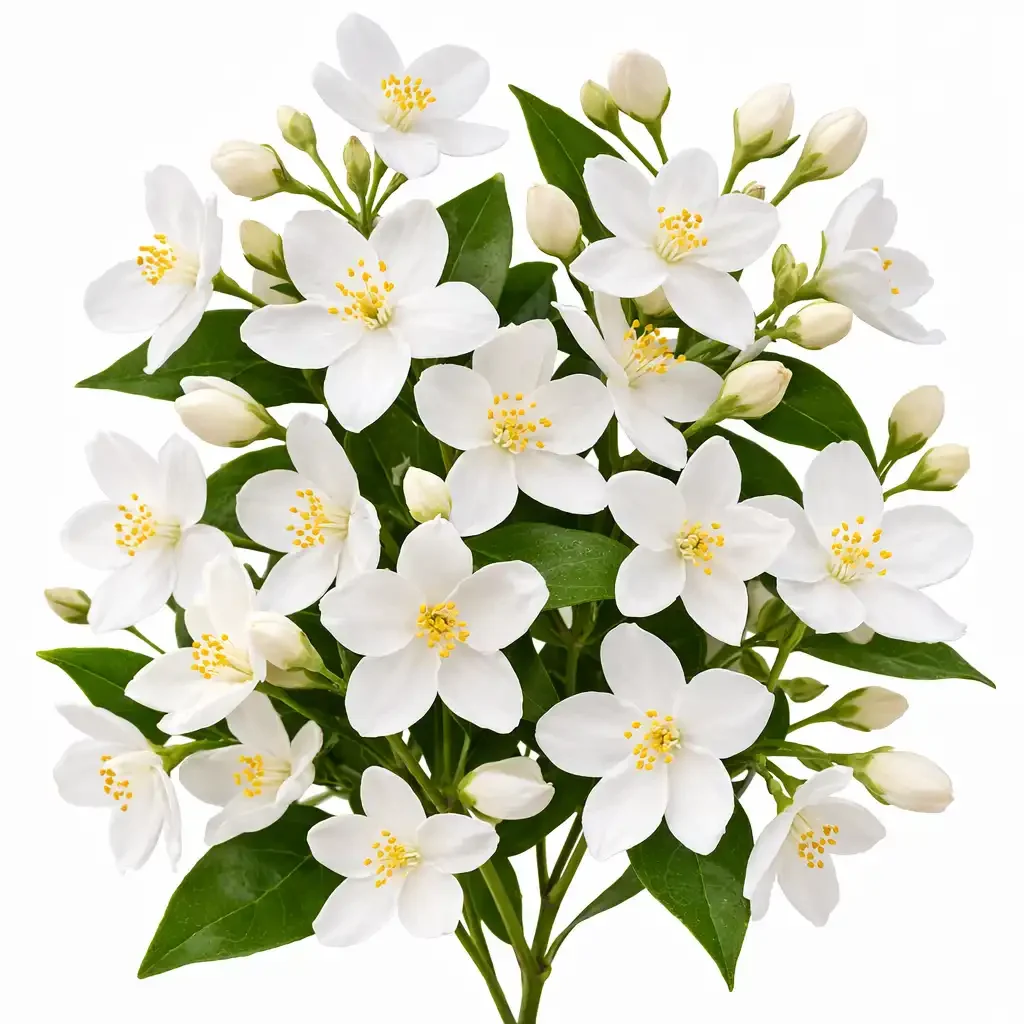
Jasmine is one of the most intensely fragrant and commercially evocative plants a homestead grower can cultivate. Its small, star-shaped white or pale yellow flowers carry a rich, sweet, intoxicating fragrance that is among the most recognized and universally beloved scents in the world. In the cut flower market, fragrance is one of the most powerful purchasing triggers available and few flowers deliver fragrance with the intensity, immediacy, and emotional impact of Jasmine. A single stem of blooming Jasmine vine placed in a market bucket fills the surrounding area with a scent that draws customers from a distance and creates a sensory experience that customers associate immediately with luxury, romance, and natural beauty.
For homestead growers in mild climates within USDA zones 7 to 11, Jasmine represents a genuinely distinctive and underutilized specialty cut flower opportunity. Despite its extraordinary commercial fragrance value and consistent demand from wedding florists and specialty markets, it remains surprisingly rare as a dedicated cut flower and fragrant vine crop at most farmers markets and local flower operations. Growers who develop productive Jasmine plantings occupy a genuinely uncontested local market position for a product that wedding florists, specialty florists, and fragrance-conscious customers actively seek and that is genuinely difficult to source locally in most regions.
Here is why Jasmine deserves a prominent spot on your homestead:
It delivers one of the most powerful and commercially compelling fragrances available from any cut flower crop. Jasmine fragrance is universally recognized, universally beloved, and immediately associated with luxury and romance. At a farmers market a bucket of blooming Jasmine creates an olfactory marketing draw that no other flower can replicate.
It is in consistent and strong demand from wedding florists. Jasmine is a wedding florist staple for romantic and garden-style designs. Trailing Jasmine vines draping from bridal bouquets, cascading from centerpieces, and winding through ceremony installations are among the most requested and most visually and aromatically spectacular wedding flower applications available.
It is a permanent, long-lived perennial investment. Once established, Jasmine returns year after year with increasing vigor and expanding productive coverage, delivering an improving return on investment every season with minimal ongoing input.
It provides fragrant vines and individual stem material for multiple market applications. Jasmine is uniquely versatile as a cut material. Long, trailing vines provide the cascading elements most sought after by wedding florists. Individual stems with clusters of blooms provide fragrant market bouquet material. Both products are commercially valuable and both come from the same permanent planting.
It thrives in warm climates where many other premium cut flowers struggle. Jasmine performs exceptionally well in warm climates within USDA zones 8 to 11 where it can bloom over an extended season and where the warm temperatures that challenge cool season crops are ideal for Jasmine production.
Growing Conditions
Sunlight
Jasmine performs best in full sun to partial shade. Most species need at least 4 to 6 hours of direct sunlight per day for the most abundant flowering and the strongest fragrance intensity. Full sun generally produces the most prolific blooming and the most intensely fragrant flowers. In partial shade plants bloom somewhat less abundantly but still produce quality material for cut flower use. Star Jasmine, Trachelospermum jasminoides, is particularly shade tolerant and produces good cut material in locations with as little as three to four hours of direct sunlight.
Soil
Jasmine prefers well-drained, moderately fertile soil. It performs well in soil amended with compost but does not need overly rich conditions. Good drainage is essential as Jasmine does not tolerate waterlogged conditions and is susceptible to root rot in consistently wet soil. Soil pH between 6.0 and 7.0 is ideal for most Jasmine species.
Water
Water consistently during the establishment phase and throughout the growing and blooming season. Once established, most Jasmine species develop moderate drought tolerance but produce the most abundant blooms and the most intensely fragrant flowers with consistent moisture during the growing season. Water deeply at the base of the plant rather than overhead. Reduce watering somewhat after the main bloom period as plants enter their post-bloom growth phase.
Temperature
Jasmine hardiness varies significantly between species and must be matched carefully to your climate. Common Jasmine, Jasminum officinale, is the hardiest of the widely grown species, performing reliably in USDA zones 7 to 10. Arabian Jasmine, Jasminum sambac, is less cold hardy and performs best in USDA zones 9 to 11. Star Jasmine, Trachelospermum jasminoides, is reliably hardy in USDA zones 8 to 11 and is one of the most cold-tolerant fragrant climbing plants available for mild winter climates. Winter Jasmine, Jasminum nudiflorum, is the hardiest species of all, blooming in late winter on bare stems in USDA zones 6 to 10, though its fragrance is minimal compared to other species.
Planting Guide
Jasmine is best planted from nursery container plants. Growing from seed is slow and results are variable. Container plants from reputable nurseries give the fastest and most reliable path to productive, blooming plants.
Step 1: Choose a planting location with full sun to partial shade and well-drained soil. For climbing species like Common Jasmine and Star Jasmine, choose a location near a sturdy support structure such as a trellis, fence, pergola, or arbor that the vines can climb and be trained along.
Step 2: Prepare the planting hole generously. Dig a hole twice as wide as the root ball and incorporate compost into the backfill soil to improve fertility and drainage. For heavy clay soils, incorporate additional coarse sand to improve drainage before planting.
Step 3: Plant the container plant at the same depth it was growing in its container. Do not plant too deeply as burying the crown increases the risk of crown rot. Backfill with amended soil, firm gently, and water thoroughly.
Step 4: Install or attach support structures before or immediately after planting. For climbing Jasmine species, begin training the vines onto the support structure from the beginning. Jasmine climbs by twining and needs a structure it can wrap around as it grows.
Step 5: Water regularly throughout the first growing season to establish a strong root system. Apply a generous layer of organic mulch around the base of the plant to retain soil moisture and protect the root system during establishment.
Step 6: For cut flower production, plan the support structure to allow easy access to blooming stems for harvesting. A trellis or wire frame that holds vines at a comfortable working height makes harvesting significantly easier than vines allowed to climb very high.
Seed vs Transplant: Always use nursery container plants. Growing Jasmine from seed is impractical for cut flower production due to the slow and variable results.
Spacing: 6 to 10 feet apart depending on the species and the support structure. Jasmine vines expand significantly over time and need adequate space to develop.
Planting Season: Spring in most climates after the last frost date. Fall planting works well in mild winter climates within USDA zones 9 to 11 where winter temperatures are mild enough to allow good root establishment.
Maintenance
Training and Pruning
Training and pruning are the most important ongoing maintenance tasks for productive Jasmine cut flower production. Regular training of new growth onto the support structure keeps plants productive and accessible. Annual pruning after the main bloom period removes spent and overcrowded growth, maintains plant vigor, and ensures that the following season's flowering wood develops strongly. For cut flower production, maintaining vines at a manageable working height through regular training and pruning makes harvest significantly more efficient.
For most Jasmine species, prune immediately after the main bloom period is complete. Remove approximately one quarter to one third of the oldest growth, cutting back to strong lateral shoots lower on the plant. This encourages vigorous new growth that will carry the following season's flowers. Do not prune in fall or winter in cold climates as this removes the hardiest, most established growth at the most vulnerable time of year.
Fertilizing
Apply a balanced fertilizer or compost top dressing in early spring as new growth emerges. A light application of low-nitrogen fertilizer after the main bloom period supports new growth development for the following season. Avoid excessive nitrogen which promotes lush vegetative growth at the expense of flower production. In mild winter climates within USDA zones 9 to 11 where Jasmine grows almost year round, a light year-round fertilization program is appropriate.
Pest Control
Jasmine is generally pest resistant. Aphids can appear on new growth and developing flower buds and should be treated promptly with a strong spray of water or neem oil. Whitefly can be a problem in warm, sheltered locations. Yellow sticky traps help monitor whitefly populations and neem oil provides effective control.
Disease Prevention
Root rot caused by poor drainage or overwatering is the most common disease problem with Jasmine. Ensure excellent drainage and avoid overwatering. Good air circulation around plants by training vines properly and avoiding overcrowding helps prevent the fungal diseases that can affect foliage in humid conditions.
Harvesting
When to Harvest
Harvest Jasmine stems and vines when buds are in various stages of opening, with some buds still tightly closed and others just beginning to open. For maximum fragrance and vase longevity, harvest when approximately one quarter to one third of the buds on each stem are open, with the remaining buds still showing their characteristic rounded closed form. Jasmine buds continue to open after cutting, providing a progressively intensifying fragrance display over the vase life. Harvest in the early morning when fragrance is at its most intense and stems are fully hydrated.
How to Cut
Use clean, sharp scissors or pruners. For trailing vine material used in wedding work, cut long sections of vine with multiple leaf nodes and clusters of buds and blooms. For stem material used in market bouquets, cut individual stems with multiple bud and bloom clusters, ideally 8 to 14 inches long. Remove any damaged or yellowing foliage from the lower portion of cut stems. Place cut material immediately into a bucket of cool water.
Conditioning
After cutting, place stems in cool water in a cool, shaded location for several hours before sale or arrangement. Jasmine conditions readily and the fragrance intensifies as buds continue to open during the conditioning period. Do not refrigerate Jasmine if possible as cold temperatures reduce fragrance intensity. If refrigeration is necessary use the warmest available refrigerator setting.
How Often to Harvest
During peak bloom, harvest every two to three days as new stem material reaches the correct stage. Jasmine typically has a main bloom flush in spring followed by lighter but continuous blooming through summer. In mild winter climates some species bloom nearly continuously. Regular harvesting encourages the development of new flowering shoots throughout the blooming season.
Vase Life
Jasmine typically lasts 5 to 7 days as a fresh cut flower with proper care. Strip all foliage below the waterline, recut stems at an angle, and place in fresh water at room temperature. Keep arrangements away from cold drafts and air conditioning as cold significantly reduces fragrance intensity and can shorten vase life.
Uses on a Homestead
Cut Flower Use
Jasmine is grown primarily for its extraordinary fragrance as a fresh cut flower material. Individual stems with clusters of buds and blooms add a powerful, sweet fragrance to mixed bouquets and arrangements that transforms the entire sensory experience of the arrangement. Even a few stems of Jasmine added to a market bouquet elevate its perceived value dramatically. It pairs beautifully with roses, sweet peas, ranunculus, and other romantic flowers where its fragrance adds a dimension that visual beauty alone cannot provide.
Wedding and Event Flowers
Jasmine is one of the most sought-after wedding flowers available. Long, trailing Jasmine vines draped from bridal bouquets, cascading over centerpieces, and winding through ceremony arbors and installations create an immediately romantic and luxurious aesthetic that is virtually impossible to replicate with any other plant material. The combination of extraordinary fragrance, delicate white blooms, and graceful trailing vines makes Jasmine one of the most requested specialty items from wedding florists who work in romantic and garden-style aesthetics.
Fragrance at the Farm Stand
Jasmine creates one of the most powerful and immediate sensory draws at any farmers market or farm stand. Its rich, sweet fragrance carries remarkably far in warm weather and draws customers to the stand before they even see the flowers. A bucket of freshly cut Jasmine stems in full bloom is one of the most effective marketing tools a homestead fragrant flower grower can have.
Herbal and Culinary Products
The flowers of several Jasmine species, particularly Arabian Jasmine, Jasminum sambac, have a long history of use in herbal teas, culinary preparations, and natural fragrance products. Selling dried Jasmine flowers for tea blending, fresh flower bundles for culinary use, or Jasmine-infused products provides additional income streams beyond cut flower sales.
Pollinator Support
Jasmine attracts bees, butterflies, and moths throughout its blooming period. Night-blooming Jasmine species are particularly important for moths and other nocturnal pollinators.
Can You Make Money With Jasmine
Yes, Jasmine is a profitable specialty cut flower crop for homestead operations in appropriate climates, particularly for growers who leverage its extraordinary fragrance premium, strong wedding market demand, and the genuine rarity of locally grown fresh Jasmine in most markets.
Fragrance premium justifies premium pricing. Intensely fragrant flowers consistently command higher prices than unscented alternatives at every market level. Jasmine delivers fragrance at a level that few other cut flowers can approach, creating a luxury market positioning that supports the highest per-stem and per-vine prices available in the fragrant specialty flower market.
Strong and consistent wedding market demand. Trailing Jasmine vines are among the most requested specialty items from wedding florists. A reliable local source of quality Jasmine vines during the spring and summer wedding season is one of the most valued specialty supplier relationships a wedding florist can have.
Permanent perennial with increasing productivity. Once established, Jasmine returns year after year with minimal care, expanding its coverage and producing more harvestable material each season. The return on investment improves every year as established vines mature.
Genuine local market rarity. Fresh Jasmine as a cut flower and vine crop remains extremely rare at most local farmers markets and in most local florist supply chains. Being a reliable local source creates a premium market position with minimal competition.
Farmers Market: Fresh Jasmine stem bundles sell for 8 to 15 dollars per bunch depending on stem length, bud count, and fragrance intensity. Individual specialty stems can sell for 2 to 4 dollars each. The fragrance premium supports pricing significantly above what unscented flowers of comparable visual appearance would command.
Florists and Wedding Designers: Jasmine vines for wedding work are among the most premium-priced specialty items in the local cut flower market. Trailing vine sections sell for 3 to 8 dollars per foot at wholesale depending on the species and the density of buds and blooms. Establishing supply relationships with local wedding florists is the most profitable sales channel for homestead Jasmine production.
Herbal and Culinary Products: Dried Arabian Jasmine flowers for tea blending and culinary use command strong prices from specialty tea producers, natural food stores, and direct customers.
Companion Plants
Jasmine grows beautifully alongside many other fragrant and climbing plants with similar growing requirements.
Roses: The classic companion for Jasmine. Both are intensely fragrant flowering plants that complement each other beautifully in the garden and in mixed fragrant bouquets. Climbing roses trained alongside Jasmine on a shared support structure create one of the most spectacular and fragrant garden combinations available.
Clematis: Climbing clematis varieties grown alongside Jasmine provide complementary color and extend the flowering season on shared support structures. The combination of Clematis and Jasmine creates a beautiful, layered flowering display.
Wisteria: Both are fragrant climbing plants that bloom in spring and complement each other beautifully in mixed fragrant plantings and in large-scale garden designs.
Lavender: Both are intensely fragrant Mediterranean-climate plants that grow well together in full sun with well-drained soil. Lavender planted at the base of Jasmine creates a layered fragrant planting with complementary bloom times.
Sweet Peas: Both are intensely fragrant cool season flowering plants that complement each other in spring fragrant bouquets and in the garden where their overlapping bloom times create a succession of powerful fragrance.
Common Problems
Failure to Bloom
The most common frustration with Jasmine grown for cut flower production. Usually caused by insufficient sun, over-fertilizing with nitrogen which promotes vegetative growth at the expense of flowering, incorrect pruning that removes flowering wood, or plants that have not yet reached blooming maturity. Ensure full sun, avoid excessive nitrogen, prune correctly immediately after the main bloom period rather than in spring before blooming, and allow adequate time for young plants to reach maturity before expecting peak production.
Root Rot
Caused by poorly drained or waterlogged soil. Jasmine does not tolerate consistently wet conditions and will decline rapidly in waterlogged soil. Ensure excellent drainage before planting, avoid overwatering, and build raised beds if your native soil drains poorly.
Aphids
Can appear in large numbers on new growth and developing flower buds, particularly in spring. Treat promptly with a strong spray of water or neem oil as aphid damage to developing buds can significantly reduce bloom quality and fragrance intensity.
Winter Cold Damage
Can occur when Jasmine is grown at the limits of its cold hardiness or when plants are exposed to severe freezes without adequate protection. Choose species appropriate for your USDA zone, plant in a sheltered location against a south or west-facing wall in the coldest end of the hardiness range, and provide frost cloth protection during unusual cold events.
Overly Vigorous Growth Without Flowering
Can occur in plants that are growing in overly rich soil or receiving excessive fertilization. Jasmine is a vigorous vine that produces abundant vegetative growth when conditions are too fertile. Grow in moderately fertile soil, avoid high-nitrogen fertilizers, and ensure full sun exposure to balance vegetative and flowering growth.
Varieties to Consider
Common Jasmine (Jasminum officinale)
Jasminum officinale (Common White Jasmine): The classic Jasmine of perfumery and cut flower use. Intensely fragrant white blooms in clusters on twining vines reaching 15 to 30 feet. One of the most commercially important Jasmine species for cut flower production. Reliable performance in USDA zones 7 to 10. The standard variety for homestead cut flower production in cold winter climates.
Jasminum officinale Clotted Cream: A soft cream to pale yellow flowered selection of Common Jasmine with the same extraordinary fragrance as the standard white form. Very popular with florists and wedding designers for its slightly warmer, creamier flower color.
Jasminum officinale Fiona Sunrise: A variety with striking golden-yellow foliage that provides ornamental interest beyond the flowering period. White blooms with the characteristic intense fragrance. Very popular for its dual ornamental foliage and fragrant flower value.
Star Jasmine (Trachelospermum jasminoides)
Star Jasmine: One of the most widely grown fragrant climbing plants for mild winter climates within USDA zones 8 to 11. Intensely fragrant white star-shaped blooms in late spring and early summer on evergreen twining vines. Excellent cold tolerance compared to most Jasmine species. Extraordinary cut flower vine material and one of the most popular wedding Jasmine species for trailing vine applications.
Trachelospermum jasminoides Variegatum: A variegated foliage form with cream and green leaves that provides additional ornamental interest beyond the flowering period. The same intensely fragrant white blooms as the standard species. Very popular with florists and wedding designers for its variegated foliage interest.
Arabian Jasmine (Jasminum sambac)
Jasminum sambac Grand Duke of Tuscany: A double-flowered Arabian Jasmine with fully double white blooms that look like tiny gardenia flowers and carry an exceptional, rich fragrance. The most commercially important Arabian Jasmine variety for cut flower and herbal tea production. Best suited to USDA zones 9 to 11.
Jasminum sambac Maid of Orleans: A single-flowered Arabian Jasmine with the classic five-petaled white star blooms and an exceptionally rich fragrance. One of the most important species in the jasmine tea industry. Best suited to USDA zones 9 to 11.
Winter Jasmine (Jasminum nudiflorum)
Jasminum nudiflorum: A cold-hardy Jasmine that blooms on bare stems in late winter before the leaves emerge. Bright yellow blooms with minimal fragrance but extraordinary cold hardiness in USDA zones 6 to 10. Valuable for extending the Jasmine harvest window into the late winter period when no other Jasmine species is blooming. The lack of fragrance is its primary commercial limitation compared to other species.
Final Thoughts
Jasmine is one of the most commercially compelling and personally rewarding fragrant plants a homestead flower grower can establish in an appropriate climate. Its extraordinary fragrance, consistent wedding market demand, permanent perennial productivity, and genuine local market rarity combine to create a specialty crop with a premium market position that is difficult for competitors to replicate quickly or easily. It requires patience during the establishment phase as young plants take one to two seasons to reach full productive potential. It requires thoughtful training and pruning to maintain the accessible, productive vine structure most efficient for cut flower harvesting. And it requires matching the right species to your specific climate to ensure reliable cold hardiness and long-term plant health. Give it those things and Jasmine will reward your homestead with one of the most intensely fragrant, most commercially distinctive, and most personally evocative cut flower crops available to any homestead grower in an appropriate climate.
FAQ
What is the most fragrant Jasmine for cut flower production? Arabian Jasmine, Jasminum sambac, is generally considered the most intensely fragrant of all Jasmine species and is the primary species used in the jasmine tea and jasmine absolute perfume industries. However it is also the least cold hardy, performing reliably only in USDA zones 9 to 11. For growers in cooler climates within USDA zones 7 to 9, Common Jasmine, Jasminum officinale, delivers the best combination of exceptional fragrance intensity and reliable cold hardiness and is the most practical choice for commercial cut flower production across the widest range of climates.
What is the difference between Jasmine and Star Jasmine? True Jasmine refers to plants in the genus Jasminum, which includes Common Jasmine, Arabian Jasmine, and Winter Jasmine among many species. Star Jasmine, Trachelospermum jasminoides, is not a true Jasmine but is so similar in appearance, fragrance, and use that it is widely marketed and sold as Jasmine. Star Jasmine is actually in the Apocynaceae family rather than the Oleaceae family of true Jasmines. For homestead cut flower production the distinction matters primarily in terms of cold hardiness. Star Jasmine is more cold hardy and more reliably evergreen in mild winter climates than most true Jasmine species, making it an excellent choice for growers in USDA zones 8 to 11.
How long does it take for Jasmine to reach full productive maturity? Most Jasmine species begin producing significant quantities of blooms in their second or third year after planting from nursery container plants. Full productive maturity where vines are generating maximum stem and vine yield typically arrives in the third to fourth year. This establishment period is longer than most annual cut flower crops but the subsequent productive life of ten to twenty years or more means the long-term return on investment is exceptional. Purchasing the largest available container size from the nursery, planting in appropriate conditions, and providing a strong support structure from the beginning gives the fastest path to productive plants.
Can Jasmine be grown in containers? Yes, Jasmine can be grown in large containers, which is an excellent option for growers in climates at the cold edge of Jasmine's hardiness range who want to move plants indoors for winter protection. Use containers with excellent drainage holes and a well-draining, moderately fertile potting mix. Provide a sturdy trellis or support structure in the container for the vines to climb. Container-grown Jasmine typically produces somewhat fewer stems than ground-planted vines but can be commercially productive and provides the flexibility of winter protection in borderline climates.
How do I maximize Jasmine fragrance in cut flowers? Jasmine fragrance is strongest in warm temperatures and in the early morning when the flowers have been releasing fragrance through the cool night. Harvest in the early morning for maximum fragrance intensity. Keep cut stems at room temperature rather than refrigerating them as cold dramatically reduces fragrance. Display Jasmine at market in a warm, slightly sheltered location where the fragrance can build around the display area rather than dissipating in a breeze. Avoid conditioning or storing Jasmine in cold rooms if possible. The fragrance of cut Jasmine intensifies as additional buds open after cutting, providing a progressively more powerful fragrance display over the first few days in the vase.