
Johnny Jump-Up
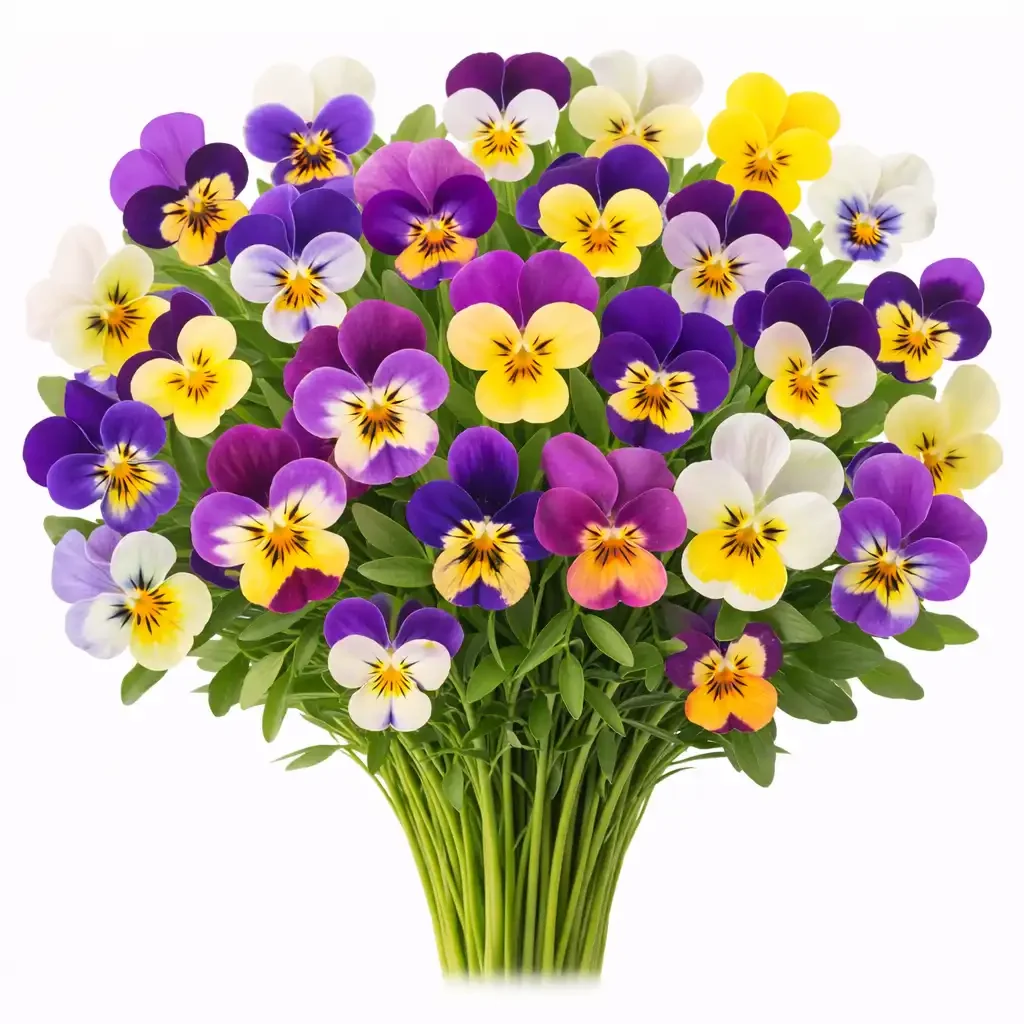
Quick Overview
Common Name: Johnny Jump-Up, Wild Pansy, Heartsease, Miniature Viola
Scientific Name: Viola tricolor, Viola cornuta
Plant Type: Annual, short-lived perennial in mild climates
USDA Zones: 3 to 9
Sun Requirement: Full Sun to Partial Shade
Soil Type: Well-drained, average to moderately fertile
Bloom Season: Early Spring through Early Summer, Fall through Spring in mild climates
Height: 4 to 12 inches
Pollinator Friendly: Yes
Edible: Yes, flowers are edible and widely used as culinary garnishes
Why Grow Johnny Jump-Up on a Homestead
Johnny Jump-Up is one of the most charming, versatile, and commercially underappreciated edible and cut flowers available to homestead growers. Its small, delicate blooms in the most enchanting combinations of deep purple, violet, lavender, yellow, and tricolor patterns create a quality of miniature, jewel-like beauty that no other cool season flower quite replicates. In a mixed bouquet a handful of Johnny Jump-Up blooms scattered through an arrangement adds an immediate, almost magical quality of natural abundance and cottage garden romance that customers and florists find instantly compelling and genuinely distinctive.
For homestead growers, Johnny Jump-Up represents one of the most strategically versatile and economically efficient cool season crops available. It provides not one but three distinct commercial products from a single planting: fresh cut flower material, edible flower garnishes for culinary use, and pressed flower material for botanical crafts and products. It self-seeds prolifically, returning year after year in a managed garden without additional seed investment. And its extremely low input requirements, cold tolerance, and long cool season blooming period make it one of the most straightforward and rewarding additions to any diversified homestead flower operation.
Here is why Johnny Jump-Up deserves a prominent spot on your homestead:
It provides a genuinely magical quality in arrangements that larger flowers cannot replicate. The small, delicate blooms of Johnny Jump-Up add a quality of natural abundance and cottage garden charm to mixed bouquets that is immediately distinctive and that customers and florists consistently respond to with enthusiasm.
It is one of the most widely used and commercially valuable edible flowers available. Johnny Jump-Up flowers are among the most popular edible flower garnishes used by restaurants and food producers. Their striking colors, distinctive face-like markings, and mild flavor make them one of the most sought-after edible flowers in the culinary market.
It is extremely economical to produce. Seeds are inexpensive, the plant needs minimal fertilizing and pest management, and it self-seeds prolifically so that after the first year it returns without additional seed investment. The return on investment per seed packet is exceptional.
It covers an extended cool season harvest window. In cold winter climates Johnny Jump-Up blooms from early spring through early summer. In mild winter climates it can be grown from fall through spring for a very long productive period.
It is genuinely distinctive at most farmers markets. Johnny Jump-Up as a dedicated cut flower and edible flower crop remains underutilized by most homestead operations. Growers who offer it as both a fresh cut flower accent and an edible flower product occupy a specialty niche with minimal local competition.
Growing Conditions
Sunlight
Johnny Jump-Up performs well in full sun to partial shade. It tolerates a wider range of light conditions than most other cut flowers and can produce acceptable blooms with as little as three to four hours of direct sunlight per day. In full sun it produces the most abundant blooms on the strongest stems. In partial shade it produces somewhat fewer blooms on slightly longer, more delicate stems that can actually be advantageous for cut flower use. For edible flower production where individual bloom quality is the priority, full sun to light partial shade gives the best results.
Soil
Johnny Jump-Up prefers well-drained, average to moderately fertile soil. It performs well in average garden soil amended with a modest amount of compost but does not need heavily amended or richly fertile beds. Good drainage is important as it does not tolerate waterlogged conditions. Overly rich soil can produce excessive foliage at the expense of flowers. Soil pH between 6.0 and 7.0 is ideal.
Water
Water consistently throughout the growing season to maintain even soil moisture. Johnny Jump-Up needs regular moisture during active growth and blooming but does not tolerate waterlogged conditions. Water at the base of plants rather than overhead to keep the delicate blooms dry and reduce the risk of fungal diseases on the foliage. Once established it is moderately drought tolerant but produces the most abundant and longest-lasting blooms with consistent moisture.
Temperature
Johnny Jump-Up is a cool season plant that performs best in moderate temperatures between 45 and 65 degrees Fahrenheit. It tolerates light frost readily and actually benefits from cool growing conditions for the most vibrant colors and longest blooming period. It declines and stops blooming reliably when temperatures consistently exceed 75 to 80 degrees Fahrenheit. In cold winter climates within USDA zones 3 to 7, it is grown as an early spring through early summer annual. In mild winter climates within USDA zones 8 to 11 it can be grown from fall through spring for an exceptionally long productive period.
Planting Guide
Johnny Jump-Up can be started from seed indoors, direct sown outdoors in cool conditions, or planted from nursery transplants. All three approaches work well and the best choice depends on your target harvest dates and available time.
Step 1: For the earliest spring blooms in cold winter climates, start seeds indoors 8 to 10 weeks before the last frost date. Johnny Jump-Up seeds germinate best in cool conditions at 65 to 70 degrees Fahrenheit. Some growers refrigerate seeds for a week before sowing to improve germination rates.
Step 2: Sow seeds on the surface of moist seed starting mix or cover very lightly with a thin dusting of vermiculite. Keep seed trays in a cool, bright location until germination, which typically occurs within 10 to 14 days. Unlike many other flowers, Johnny Jump-Up germinates well in cool to moderate temperatures and does not need warmth to establish.
Step 3: Once seedlings have developed two to three sets of true leaves, transplant into individual cells or small pots and grow on in a cool, bright location until outdoor planting time.
Step 4: Transplant outdoors well before the last frost date as Johnny Jump-Up tolerates light frost and actually establishes best in cool conditions. In cold winter climates transplant four to six weeks before the last frost date for the earliest possible bloom. In mild winter climates within USDA zones 8 to 11, transplant in fall for a long season of harvest from fall through spring.
Step 5: Space plants 6 to 9 inches apart for cut flower and edible flower production. Proper spacing allows adequate air circulation and prevents the overcrowding that encourages fungal diseases.
Step 6: For a continuous harvest in cold winter climates, succession plant every three to four weeks from early spring through mid spring. Allow a small proportion of plants to self-seed each season to provide a self-renewing crop of volunteer seedlings for the following year.
Seed vs Transplant: All approaches work well. Starting from seed is most economical for large plantings. Nursery transplants give faster results and are a convenient option for smaller plantings.
Spacing: 6 to 9 inches apart for cut flower and edible flower production.
Planting Season: Early spring, four to six weeks before last frost in cold winter climates. Fall in mild winter climates within USDA zones 8 to 11.
Maintenance
Deadheading
Regular deadheading of spent blooms is essential for keeping Johnny Jump-Up productive throughout its cool season. Plants that are allowed to set seed stop producing new blooms quickly. Remove spent blooms by pinching or cutting the stem back to just above a set of leaves. For self-seeding, allow a small proportion of plants in a designated area to set seed and disperse naturally at the end of the season.
Fertilizing
Johnny Jump-Up is a light to moderate feeder. A light application of balanced fertilizer at planting and a single midseason application is sufficient for most soils. Avoid excessive nitrogen which promotes lush foliage at the expense of flower production.
Pest Control
Johnny Jump-Up is generally pest resistant in cool conditions. Aphids can occasionally appear on stems and developing buds. Treat with a strong spray of water or neem oil if populations become problematic. Slugs and snails can damage young plants and flowers in wet conditions. Iron phosphate slug bait provides effective control.
Disease Prevention
Powdery mildew can appear on foliage late in the season as temperatures rise and humidity increases. Space plants properly for air circulation, avoid overhead watering, and remove affected foliage promptly. Crown rot can occur in poorly drained or consistently wet soil. Ensure excellent drainage and avoid overwatering.
Heat Management
As summer temperatures rise Johnny Jump-Up naturally declines and bolts. There is no way to prevent this decline entirely. In partially shaded locations the productive season extends somewhat longer than in full sun. Plan for plants to decline as summer heat arrives and replace with heat-tolerant summer crops.
Harvesting
When to Harvest Cut Flower Stems
For cut flower use, harvest Johnny Jump-Up stems when multiple blooms along each stem are open and showing their characteristic face-like markings at full color intensity. Unlike single-stemmed flowers, Johnny Jump-Up produces multiple small blooms per branching stem and is most valuable when harvested as complete branching stems rather than individual blooms. Harvest stems of 4 to 8 inches with multiple open blooms for the best cut flower presentation.
When to Harvest Edible Flowers
For edible flower use, harvest individual blooms when they are fully open and showing their most vivid colors. Harvest in the early morning when blooms are freshest and most crisp. Handle with extreme care as the delicate petals bruise easily. Place harvested blooms immediately into a container lined with a damp paper towel and refrigerate until use or sale.
How to Cut
Use clean, sharp scissors. For cut flower stems cut as close to the base of the branching stem as possible to maximize stem length. Remove any foliage that would be below the waterline. Place stems immediately into a bucket of cool water. For edible flower harvest use clean scissors or pinch individual blooms carefully at the base of the flower.
Conditioning
After cutting, place stems in cool water in a cool location for several hours before sale or arrangement. Johnny Jump-Up conditions readily and holds up reasonably well in arrangements when properly hydrated before use.
How Often to Harvest
Harvest every two to three days during peak bloom to keep plants producing new stems continuously. Regular harvesting is both a commercial activity and the most important maintenance task for extending the productive life of each plant through the cool season.
Vase Life
Johnny Jump-Up typically lasts 5 to 7 days as a fresh cut flower with proper care. Strip all foliage below the waterline, recut stems at an angle, and place in fresh water with a floral preservative. Keep arrangements cool and away from heat to maximize vase life. For edible flower use, individual blooms last one to two days refrigerated in a container with a damp paper towel.
Uses on a Homestead
Cut Flower Use
Johnny Jump-Up is used primarily as a delicate filler and accent flower in mixed cool season bouquets and arrangements. Its small, jewel-like blooms scattered through an arrangement add an immediate quality of natural abundance and cottage garden romance that larger flowers cannot replicate. It is particularly beautiful in loose, informal spring bouquets alongside ranunculus, sweet peas, nigella, and other delicate cool season flowers where its small scale provides a charming counterpoint to larger focal blooms.
Edible Flowers
Johnny Jump-Up flowers are among the most widely used and commercially valued edible flower garnishes available to homestead growers. Their striking face-like markings, vivid colors, and mild, slightly sweet flavor make them one of the most sought-after edible flowers for restaurants, bakeries, food producers, and direct customers. Selling fresh edible Johnny Jump-Up flowers to local restaurants and at farmers markets provides a premium income stream that commands significantly higher prices per unit than cut flower use alone.
Wedding and Event Flowers
Johnny Jump-Up is a sought-after specialty flower for garden-style, wildflower, and cottage-aesthetic wedding designs. Its small, charming blooms add a delicate, naturalistic quality to bridal bouquets, centerpieces, and table decorations. They are particularly popular scattered over wedding cakes and dessert displays as edible decorations.
Pressed Flower Products
The small, flat blooms of Johnny Jump-Up press beautifully and retain their vivid colors remarkably well when properly pressed and dried. Pressed Johnny Jump-Up flowers are used in botanical art, greeting cards, resin jewelry, pressed flower frames, and a range of botanical craft products that provide an additional value-added income stream from the same crop.
Pollinator Support
Johnny Jump-Up is an excellent early season pollinator plant. Bees and butterflies visit the blooms throughout the cool season, providing an important early nectar source when few other flowers are available.
Can You Make Money With Johnny Jump-Up
Yes, Johnny Jump-Up is a profitable specialty crop for homestead flower operations, particularly because of its multiple income streams across cut flowers, edible flowers, and botanical craft products from a single extremely low-cost planting.
Multiple premium income streams from one planting. Cut flower stems, edible flower garnishes, and pressed flower material all provide distinct and complementary income channels from the same planting. The total revenue potential from all channels combined makes Johnny Jump-Up one of the most financially efficient cool season crops per square foot available.
Premium edible flower pricing. Edible flowers command significantly higher prices per unit than cut flower stems. Selling Johnny Jump-Up as an edible flower garnish to restaurants, bakeries, and at farmers markets generates premium income that reflects the culinary market's strong demand for quality, locally grown edible flowers.
Near-zero ongoing input costs after the first season. Once established Johnny Jump-Up self-seeds prolifically, providing a self-renewing crop with minimal additional investment in seed or time. The return on investment improves significantly after the first season.
Pressed flower product opportunity. The pressed flower market for botanical art, resin crafts, and decorative products is growing strongly. Johnny Jump-Up's small, flat bloom and exceptional color retention when pressed make it one of the most commercially valuable pressed flower products available.
Farmers Market: Fresh Johnny Jump-Up stem bundles sell for 5 to 9 dollars per bunch. Individual edible flower containers sell for 5 to 12 dollars depending on quantity and presentation. Pressed flower products vary widely in price depending on the application and craft.
Florists and Wedding Designers: Johnny Jump-Up is a sought-after specialty accent flower for florists and wedding designers working in cottage, garden, and romantic aesthetics. Its edible quality adds additional value for wedding cake and dessert table applications.
Restaurants and Bakeries: Selling fresh edible Johnny Jump-Up flowers directly to local restaurants, bakeries, and food producers is one of the most premium-priced and relationship-driven sales channels available to homestead edible flower growers.
CSA Flower Subscriptions: Johnny Jump-Up adds a magical, jewel-like quality to early spring flower subscription boxes that subscribers find immediately charming and distinctive. Its edible quality adds perceived value beyond the visual appeal of the flowers.
Companion Plants
Johnny Jump-Up grows beautifully alongside other cool season flowers and edible plants with similar growing preferences.
Sweet Peas: Both are fragrant cool season flowers that bloom at overlapping times and complement each other naturally in the spring cutting garden and in romantic mixed bouquets.
Ranunculus: Both are cool season favorites that bloom at overlapping times. Johnny Jump-Up provides delicate small-scale accent while ranunculus provides refined focal blooms in romantic spring arrangements.
Nigella: Both are delicate, intricate cool season annuals with similar growing requirements that complement each other beautifully in mixed spring bouquets.
Orlaya: Both are delicate cool season flowers with a naturalistic quality that pair beautifully in romantic mixed spring arrangements.
Pansies: Johnny Jump-Up is closely related to pansies and grows naturally alongside them with identical cultural requirements. Together they provide a range of bloom sizes from the delicate miniature Johnny Jump-Up to the bold, full-sized pansy.
Herbs: Growing Johnny Jump-Up alongside culinary herbs such as thyme, chives, and parsley creates a productive edible garden planting that generates multiple culinary products from the same growing area.
Common Problems
Bolting in Heat
The most inevitable challenge with Johnny Jump-Up. Plants bolt and stop blooming reliably when temperatures rise above 75 to 80 degrees Fahrenheit. There is no way to prevent bolting entirely once summer heat arrives. Grow in partial shade where possible to extend the productive season slightly. Plan for plants to decline as summer temperatures arrive and use the natural end of the season to transition to heat-tolerant summer crops.
Powdery Mildew
Can appear on foliage late in the cool season as temperatures rise and humidity increases. Space plants properly for air circulation, avoid overhead watering, and remove affected foliage promptly. Late-season mildew is more of a cosmetic concern than a production issue as plants are typically approaching the natural end of their productive life when it appears.
Aphids
Occasionally appear on stems and developing buds. Usually managed naturally by beneficial insects in cool conditions. A strong spray of water or neem oil can be used if populations become problematic.
Failure to Self-Seed
Can occur when all plants are harvested or deadheaded before any seeds mature and disperse. Allow a small proportion of plants in a designated area to complete their natural life cycle and set seed. Lightly disturbing the soil surface in that area in early fall in mild winter climates or in very early spring in cold winter climates helps work seeds into contact with the soil for better germination the following season.
Crown Rot
Can occur in poorly drained or consistently wet soil. Ensure excellent drainage, avoid overwatering, and never allow water to pool around the base of plants. In very humid climates raised beds or mounded rows may be necessary for reliable performance.
Varieties to Consider
Viola tricolor (Classic Johnny Jump-Up): The classic species with small tricolor blooms in the characteristic combination of purple, violet, and yellow with distinctive face-like markings. The original Johnny Jump-Up with a long history of cultivation and edible use. Very popular at farmers markets and with restaurant customers for its classic appearance and mild flavor.
Helen Mount: A classic Johnny Jump-Up variety with larger blooms than the standard species in the traditional purple, violet, and yellow tricolor combination. Very popular for both cut flower and edible flower production.
Bowles Black: A distinctive variety with very dark, near-black blooms with a small yellow center. Extremely popular with florists and customers for its unusual and striking dark coloration. Commands premium prices for its distinctive appearance.
Sorbet Series: A series of Viola cornuta varieties with somewhat larger blooms than standard Johnny Jump-Up in a very wide range of colors including solid purple, yellow, white, orange, and bicolors. Very productive and reliable with good heat tolerance compared to most cool season violas. Available in individual colors and mixed collections.
Etain: A soft, cream to pale yellow variety with delicate lavender edges. Very popular with wedding florists for its soft, romantic color that is quite different from the standard bold tricolor. Commands premium prices for its unusual and sophisticated color combination.
King Henry: Deep violet-purple blooms with a small yellow center. Very popular with florists working with rich, jewel-toned color palettes. One of the most commercially striking single-color Johnny Jump-Up varieties available.
Penny Series: A compact, prolific-flowering series with good cold tolerance and a wide range of colors. Excellent for edible flower production where consistent bloom quality and yield are the priority.
Final Thoughts
Johnny Jump-Up is one of those homestead crops that consistently surprises and delights in its commercial potential relative to its modest growing requirements. Its triple value as a cut flower accent, an edible flower garnish, and a pressed flower material, combined with its self-seeding generosity, extraordinary cold tolerance, and the genuinely magical quality it brings to any arrangement or culinary presentation, makes it one of the most strategically rewarding cool season crops a homestead flower grower can cultivate. Sow it early in cool conditions, harvest consistently to keep plants productive, allow a proportion of plants to self-seed for a self-renewing annual resource, and Johnny Jump-Up will reward your homestead with one of the most charming, versatile, and commercially distinctive cool season harvests available to any small farm operation.
FAQ
Is Johnny Jump-Up the same as a pansy? Johnny Jump-Up and pansies are closely related members of the Viola genus but they are distinct plants with different characteristics. Johnny Jump-Up, Viola tricolor, produces small, delicate blooms typically one half to one inch across with the characteristic tricolor face-like markings that give it its charming common name. Pansies, Viola x wittrockiana, are large-flowered hybrids developed through selective breeding that produce much larger blooms up to three to four inches across in a wider range of solid and bicolor combinations. Both are edible, both are cool season plants with similar growing requirements, and both are used in cut flower and edible flower production, but their very different bloom sizes give them distinct applications in arrangements and culinary use.
Are Johnny Jump-Up flowers safe to eat? Yes, Johnny Jump-Up flowers are edible and have a long history of culinary use as garnishes, salad additions, and decorative elements in desserts and beverages. They have a mild, slightly sweet, sometimes slightly grassy flavor that is not overpowering and complements both sweet and savory preparations. Always use flowers grown without any chemical sprays for culinary use. Never consume flowers from plants that have been treated with pesticides, herbicides, or other chemicals. Introduce new edible flowers gradually to assess personal tolerance as some individuals may have sensitivities to members of the Viola genus.
How do I use Johnny Jump-Up commercially as an edible flower? The most common commercial edible flower sales channels for Johnny Jump-Up are direct sales to restaurants and bakeries, farmers market sales in small presentation containers, and CSA or subscription box inclusion. For restaurant sales, approach local chefs directly with samples and price lists. Restaurants typically purchase edible flowers by the container or by the dozen blooms. Packaging edible flowers in small clear clamshell containers with a moisture-retaining paper towel base gives the most professional and longest-lasting presentation. Always label clearly as edible, unsprayed, and food-safe.
How do I press Johnny Jump-Up flowers successfully? Harvest fresh blooms in the early morning when they are fully open and at their most vivid. Place blooms face down on a sheet of absorbent paper such as watercolor paper or blotting paper. Cover with another sheet of paper and place between the pages of a heavy book or in a flower press. Apply firm, even pressure and allow to dry for two to four weeks. Johnny Jump-Up blooms press and dry exceptionally well due to their naturally flat, thin petals and retain their vivid colors much better than many other flowers. Properly pressed blooms retain usable color for one to three years depending on storage conditions.
Does Johnny Jump-Up come back every year? In a managed cutting garden, Johnny Jump-Up behaves as a reliable self-seeding annual. Individual plants are annuals or short-lived perennials that complete their life cycle within one to two seasons. However, the plant self-seeds so prolifically that in a garden where it is allowed to set seed each season it returns reliably year after year from self-sown seedlings without any additional seed investment. In mild winter climates within USDA zones 8 to 9 it may also overwinter as a short-lived perennial, returning for a second season from the same plant. The combination of self-seeding and occasional perennial behavior makes it a reliably returning presence in any garden where it is given a chance to establish.