
Kale (Ornamental)
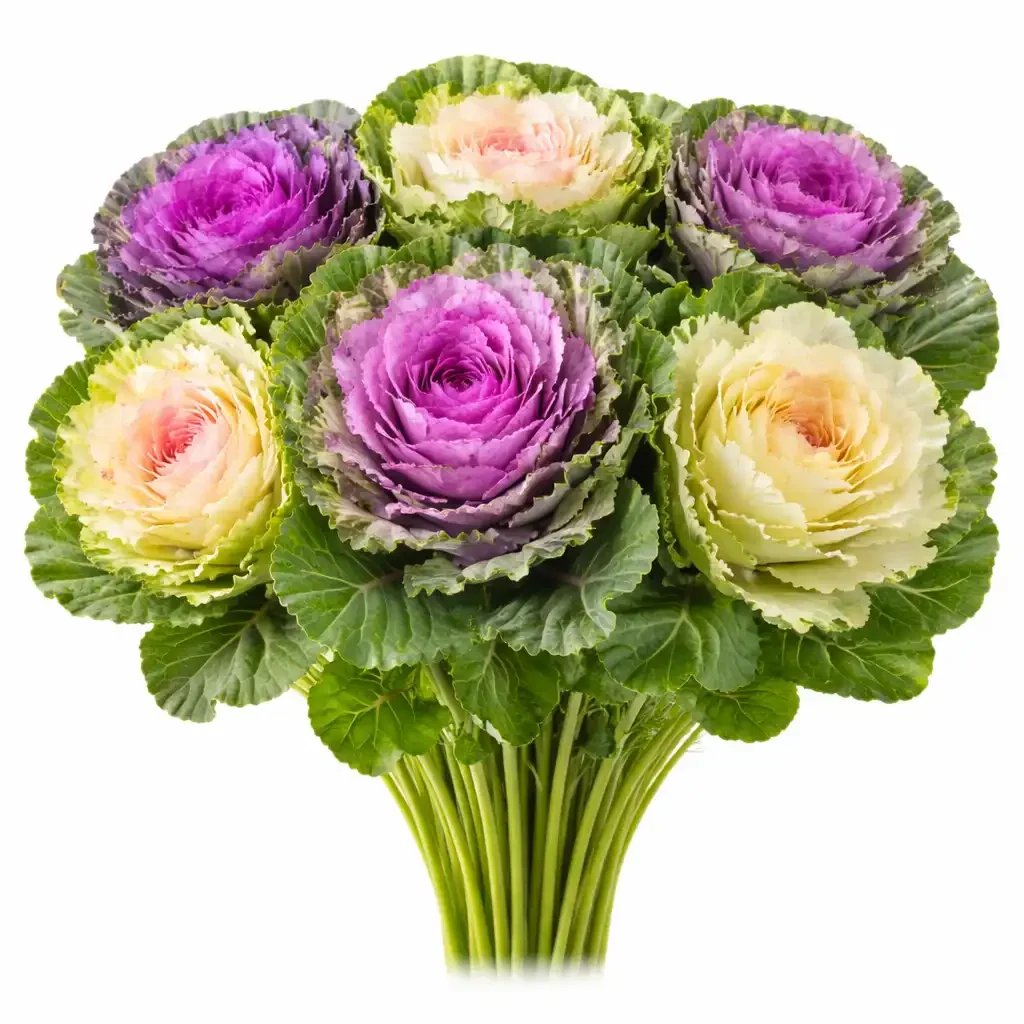
Quick Overview
Common Name: Ornamental Kale, Flowering Kale, Ornamental Cabbage
Scientific Name: Brassica oleracea
Plant Type: Annual, biennial in mild climates
USDA Zones: 2 to 11
Sun Requirement: Full Sun to Partial Shade
Soil Type: Well-drained, moderately fertile
Bloom Season: Fall through Winter, Late Summer through Spring in mild climates
Height: 12 to 24 inches
Pollinator Friendly: No
Edible: Yes, technically edible but very bitter
Why Grow Ornamental Kale on a Homestead
Ornamental Kale is one of the most distinctive and commercially valuable cool season foliage crops available to homestead cut flower growers. Its dramatically ruffled, deeply frilled, or feathery leaves in extraordinary combinations of deep purple, rose pink, soft cream, lime green, and near-white create a bold, architectural foliage element in arrangements that florists describe as irreplaceable during the fall and winter season. Unlike most other cool season crops that deliver flowers, Ornamental Kale delivers structural foliage of exceptional visual impact at precisely the time of year when interesting, dramatic foliage is most difficult to source and most commercially valuable.
For homestead growers, Ornamental Kale fills a genuinely important gap in the fall and early winter market. When the summer annuals are finished and the spring bulbs have not yet arrived, Ornamental Kale provides bold, dramatic stems that hold up exceptionally well in arrangements and that florists and wedding designers working with fall and winter color palettes actively seek out and pay premium prices for. Its cold tolerance is extraordinary, with properly hardened plants tolerating temperatures well below freezing without significant damage, which means it extends the active growing and harvesting season into periods when almost nothing else is available from local homestead operations.
Here is why Ornamental Kale deserves a prominent spot on your homestead:
It provides irreplaceable bold foliage at the most commercially valuable time of year. The fall and early winter period is when interesting, architectural foliage is most scarce and most sought after. Ornamental Kale fills that gap with a product that florists and customers find genuinely compelling and that commands premium prices during its season.
Cold intensifies the color. One of Ornamental Kale's most commercially important qualities is that its colors intensify dramatically as temperatures drop in fall and early winter. Frost does not damage it but instead transforms it, deepening the purples and pinks and brightening the creams and whites to their most vivid intensity. This cold-activated color response creates a unique market advantage.
It is an extremely low-input cool season crop. Ornamental Kale grows readily from transplants, requires modest fertility, tolerates frost and cold, and has minimal pest and disease management requirements in cool conditions. The return on investment per transplant is strong.
It extends the active harvest season into fall and early winter. At a time when most other homestead cut flower crops have finished, Ornamental Kale provides continuing harvest and market income that extends the selling season significantly.
It is genuinely unusual at most farmers markets. Despite its commercial value, Ornamental Kale as a cut flower crop remains underutilized by most homestead operations. Growers who offer it occupy a specialty niche with minimal local competition.
Growing Conditions
Sunlight
Ornamental Kale performs best in full sun but tolerates partial shade reasonably well. It needs at least 4 to 6 hours of direct sunlight per day for the strongest growth, most vivid color development, and most compact, attractive plant form. In deeper shade plants become leggy and the characteristic tight, rosette form that makes Ornamental Kale so visually striking becomes less defined. For cut flower production with the most compact, richly colored foliage full sun is always the preferred choice.
Soil
Ornamental Kale prefers well-drained, moderately fertile soil. It is a heavier feeder than many other cool season flowers and benefits from soil that has been amended with compost before planting. Good drainage is important as Ornamental Kale does not tolerate waterlogged conditions and is susceptible to the root diseases that develop in poorly drained, wet soil. Soil pH between 6.0 and 7.0 is ideal.
Water
Water consistently throughout the growing season to maintain even soil moisture. Ornamental Kale needs regular moisture during active growth but does not tolerate waterlogged conditions. Water deeply at the base of plants rather than overhead to keep the central rosette dry and reduce the risk of fungal diseases that can affect the decorative foliage. Reduce watering somewhat as temperatures drop in fall and the plant's growth rate slows.
Temperature
Ornamental Kale is a cool season crop that actually performs better in cool to cold conditions than in warm weather. It tolerates light frost readily and actually requires exposure to cool temperatures below 50 degrees Fahrenheit to trigger the color development that makes it commercially valuable. Without adequate chilling the foliage remains predominantly green rather than developing its characteristic purples, pinks, and creams. Established plants can tolerate temperatures down to approximately 5 to 10 degrees Fahrenheit with minimal damage, making it one of the most cold-tolerant cool season crops available. In cold winter climates it is grown as a fall annual, transplanted in late summer and harvested through fall and early winter until hard freezes make harvesting impractical. In mild winter climates within USDA zones 8 to 11 it can be grown from fall through early spring for an extended harvest season.
Planting Guide
Ornamental Kale is best started from seed indoors or purchased as nursery transplants. Starting indoors gives precise control over timing and access to the widest range of specialty varieties. Nursery transplants are convenient and give faster results for smaller plantings.
Step 1: For fall harvest in cold winter climates, start seeds indoors 6 to 8 weeks before your target outdoor transplanting date. In most cold winter climates this means starting seeds in late June through July for transplanting in August and September.
Step 2: Sow seeds on the surface of moist seed starting mix or cover very lightly with a thin dusting of vermiculite. Keep seed trays at 65 to 75 degrees Fahrenheit until germination, which typically occurs within 5 to 10 days.
Step 3: Once seedlings have developed two to three sets of true leaves, transplant into individual pots and grow on in a bright, cool location until outdoor planting time.
Step 4: Transplant outdoors to a location with full sun and well-drained, moderately fertile soil. Space plants 12 to 18 inches apart. In cold winter climates transplant in late summer, typically August through September, to allow plants to establish before cold weather arrives.
Step 5: In mild winter climates within USDA zones 8 to 11, transplant in early fall for a long season of harvest from fall through early spring. The cool winter temperatures of these climates provide the chilling needed for vivid color development.
Step 6: Water thoroughly after transplanting and keep soil consistently moist until plants are well established. Apply a light balanced fertilizer at transplanting to support vigorous establishment and strong leaf development.
Seed vs Transplant: Both work well. Starting from seed gives access to the widest range of specialty varieties and lower per-plant cost for large plantings. Nursery transplants are convenient for smaller plantings and give faster establishment.
Spacing: 12 to 18 inches apart for cut flower production.
Planting Season: Late summer in cold winter climates for fall and early winter harvest. Early fall in mild winter climates within USDA zones 8 to 11 for fall through spring harvest.
Maintenance
Fertilizing
Ornamental Kale is a moderate to heavy feeder compared to many other cool season flowers. Apply a balanced fertilizer at transplanting and follow with light applications every three to four weeks throughout the growing season to support strong leaf development and vivid color. Avoid excessive nitrogen in fall as this promotes soft, frost-tender growth at a time when plants should be hardening off for cold weather.
Pest Control
Caterpillars from cabbage white butterflies and cabbage loopers are the most common and most damaging pests of Ornamental Kale. These caterpillars can rapidly skeletonize the decorative foliage and make plants unmarketable. Monitor plants regularly and treat with Bacillus thuringiensis, a safe and effective organic biological control for caterpillar pests, at the first sign of caterpillar activity. Aphids can also colonize stems and leaf undersides. Treat promptly with a strong spray of water or neem oil. In cold weather most insect pest pressure diminishes significantly as temperatures drop.
Disease Prevention
Club root and other brassica diseases can affect Ornamental Kale in acidic or poorly drained soil. Maintain proper soil pH between 6.0 and 7.0, ensure excellent drainage, and practice crop rotation by avoiding planting Ornamental Kale or other brassica crops in the same location in consecutive seasons. Downy mildew can affect foliage in cool, humid conditions. Good air circulation and avoiding overhead watering are the most effective preventive measures.
Hardening Off
For maximum cold tolerance, gradually expose transplants to outdoor conditions over one to two weeks before final outdoor planting. This hardening off process allows plants to develop thicker cell walls and better cold tolerance. Properly hardened Ornamental Kale plants tolerate significantly colder temperatures without damage than plants that have been transplanted directly from a warm greenhouse environment.
Harvesting
When to Harvest
Harvest Ornamental Kale stems when the central rosette has reached its most vivid color development and compact, well-defined form. For most varieties this means harvesting after plants have been exposed to several frosts that have intensified the purple, pink, and cream tones to their maximum intensity. The central rosette should be tightly formed and showing its characteristic colors at their most vivid before harvest. Harvest in the early morning when stems are fully hydrated.
How to Cut
Use clean, sharp pruners or a sharp knife. Cut the entire plant at the base of the stem, leaving as much stem length as possible. For most Ornamental Kale varieties this produces stems of 10 to 16 inches. Remove the lower outer leaves from the stem to expose clean stem length and improve the appearance of the cut stem. Place stems immediately into a bucket of cool water.
Conditioning
After cutting, place stems in deep cool water in a cool location for several hours or overnight before sale or arrangement. Ornamental Kale conditions well and holds up excellently in arrangements due to its naturally tough foliage. Properly conditioned Ornamental Kale stems last remarkably long at market displays and in arrangements.
How Often to Harvest
Ornamental Kale is harvested as a whole plant rather than as cut-and-come-again stems. Once the central rosette is harvested the remaining plant may produce smaller lateral rosettes that can sometimes be harvested as a secondary crop, though these are smaller and less dramatic than the primary central rosette. Plan for a single main harvest from each plant and succession plant to maintain a continuous supply of fresh stems throughout the fall and winter season.
Vase Life
Ornamental Kale has an exceptional vase life as a cut foliage stem, typically lasting two to three weeks or more with proper care. This extraordinary longevity is one of its most commercially valuable qualities and a primary reason florists prize it so highly. Strip all outer leaves below the waterline, recut stems at an angle, and place in fresh water. Change water every few days to maximize longevity.
Uses on a Homestead
Cut Flower and Foliage Use
Ornamental Kale is primarily grown as a dramatic foliage element in fall and winter bouquets and arrangements. Its bold, architectural rosettes add a structural quality and vivid color to arrangements that is genuinely impossible to replicate with any other cool season crop. It pairs beautifully with dahlias, sunflowers, chrysanthemums, and other fall flowers in bold autumnal arrangements, and with evergreen foliage, dried flowers, and seasonal botanicals in winter arrangements. Even a single Ornamental Kale stem transforms the character and visual impact of a fall or winter bouquet.
Wedding and Event Flowers
Ornamental Kale is a sought-after specialty foliage for fall and winter weddings, particularly for rustic, garden-style, and contemporary wedding designs. Its bold rosette form and vivid color combinations create immediate visual impact in bridal bouquets, centerpieces, and large ceremony installations. Wedding florists working with fall and winter color palettes actively seek out local sources of quality Ornamental Kale stems during its season.
Farmers Market
Ornamental Kale is one of the most visually striking and commercially powerful fall and early winter crops at any farmers market. Its bold rosette form, vivid colors intensified by frost, and dramatic architectural quality create an immediate display presence that draws customers who are accustomed to seeing little of visual interest at late season markets. Its novelty as a cut flower crop at most markets generates immediate customer curiosity and strong purchasing interest.
Value-Added Products
Individual Ornamental Kale plants can be sold as living potted plants for autumn container displays as well as as cut stems, providing an additional sales channel. Small Ornamental Kale plants in decorative containers are popular as seasonal home decor items at fall markets.
Can You Make Money With Ornamental Kale
Yes, Ornamental Kale is a profitable specialty foliage crop for homestead flower operations, particularly for growers who leverage its exceptional fall and winter market timing and its genuine rarity as a cut foliage crop in most local markets.
Premium fall and winter market timing. Ornamental Kale is available precisely when the cut flower market is most starved for interesting, dramatic foliage. This timing advantage supports premium pricing and creates strong customer enthusiasm at a time of year when market competition is at its lowest.
Exceptional vase life increases florist value. At two to three weeks or more in the vase, Ornamental Kale delivers outstanding value per dollar to florists and customers, making premium pricing easy to justify and creating strong repeat business.
Genuine market rarity in most regions. Ornamental Kale as a cut foliage crop remains underutilized by most homestead operations. Being a reliable local source creates a specialty market position with minimal competition.
Cold-activated color is a compelling market story. The story of how frost transforms Ornamental Kale from green to vivid purple, pink, and cream is a genuinely compelling market narrative that resonates with customers and generates social media interest.
Farmers Market: Fresh Ornamental Kale stems sell for 4 to 8 dollars per stem or 12 to 20 dollars per bunch depending on variety, color, and presentation. Living potted plants sell for 5 to 12 dollars each at fall markets.
Florists and Wedding Designers: Ornamental Kale is a sought-after specialty foliage for fall and winter floral work. Local supply during the season is rare and valued by florists who typically source it through expensive wholesale channels.
CSA Flower Subscriptions: Ornamental Kale is one of the most distinctive and visually striking additions to a fall flower subscription box. Its inclusion immediately signals the arrival of the autumn season and elevates the perceived quality and seasonal relevance of the subscription.
Companion Plants
Ornamental Kale grows well alongside other cool season crops and fall-blooming flowers with similar growing requirements and complementary seasonal timing.
Chrysanthemums: Both are quintessential fall crops that bloom or color up at the same time and complement each other beautifully in bold autumn arrangements.
Dahlias: Both reach their peak in late summer through fall and complement each other magnificently in arrangements where Ornamental Kale provides bold architectural foliage and dahlias provide spectacular focal blooms.
Snapdragons: A cool season annual that pairs beautifully with Ornamental Kale in fall and early winter arrangements where vertical spikes complement the bold rosette form.
Stock: Both are cool season crops with overlapping harvest windows that complement each other in fall and winter arrangements where Ornamental Kale provides bold structure and Stock provides fragrance and color.
Pansy: A cool season annual that can be grown alongside Ornamental Kale in fall container displays and that provides complementary small-scale color to the bold architectural form of Kale rosettes.
Dusty Miller: A cool season foliage plant with silver-gray foliage that provides beautiful contrast to the vivid purples and pinks of Ornamental Kale in both arrangements and in the garden.
Common Problems
Caterpillar Damage
The most common and most commercially damaging problem with Ornamental Kale. Caterpillars from cabbage white butterflies and cabbage loopers can rapidly consume the decorative foliage and make plants unmarketable. Monitor plants closely and treat immediately with Bacillus thuringiensis at the first sign of caterpillar activity. In cool fall weather caterpillar pressure diminishes significantly but monitoring should continue until consistent frost eliminates the problem.
Insufficient Color Development
The most common disappointment with Ornamental Kale for cut flower production. Color development requires exposure to cool temperatures below 50 degrees Fahrenheit. Plants that have not received adequate chilling remain predominantly green without developing their characteristic purples, pinks, and creams. Ensure plants are transplanted early enough in the season to receive adequate cold exposure before harvest. Do not rush to harvest before color has fully developed.
Club Root
A soil-borne disease caused by Plasmodiophora brassicae that causes distorted, club-shaped root deformations and severely stunted plant growth. Prevalent in acidic, poorly drained soils. Maintain proper soil pH between 6.0 and 7.0, ensure excellent drainage, and practice strict crop rotation by not planting any brassica crops in the same location for at least three to four years after an infection.
Aphids
Can colonize stems and leaf undersides in significant numbers. Treat promptly with a strong spray of water or neem oil. Aphid pressure decreases significantly in cool fall weather. Monitor plants regularly and treat early before populations build to damaging levels.
Leggy, Loose Rosettes
Can occur in insufficient sun, overly warm growing conditions, or when plants are overcrowded. Grow in full sun with proper spacing of 12 to 18 inches. Ensure plants are exposed to adequate cold temperatures for the tight, compact rosette development that makes Ornamental Kale most commercially valuable. Transplant at the correct time to give plants adequate cool season growing time before harvest.
Varieties to Consider
Feather-Leaved Types
Peacock Series: One of the most widely grown Ornamental Kale series for cut flower production. Deeply fringed, feather-like leaves in a range of color combinations including red, white, and pink centers with contrasting outer leaves. Strong stems and excellent visual impact. Available in individual colors and mixed collections.
Crane Series: A tall, strong-stemmed variety specifically developed for cut flower production. Deeply ruffled feathery leaves on stems reaching 18 to 24 inches. Available in red, white, and pink. One of the most reliable choices for homestead cut flower production where stem length is a priority.
Nagoya Series: A widely grown series with very finely fringed, lacey leaves in white, red, and pink combinations. Very popular with florists and wedding designers for its delicate, ornate appearance. Compact plant habit and very vivid color development after cold exposure.
Round-Leaved Types
Osaka Series: A popular round-leaved variety with smooth, overlapping leaves forming tight, compact rosettes. Available in red, white, and pink. Very popular at farmers markets for its classic, clean rosette form that is immediately recognizable as an ornamental kale.
Tokyo Series: A round-leaved series with very tight, compact rosettes and vivid color development. Available in a range of colors including white, pink, and red. Very popular for potted plant production as well as cut stem use.
Dynasty Series: A series with particularly vivid and saturated color development after cold exposure. Available in deep purple-red and bright white. Very popular for high-impact market display and for florists seeking the most vivid color available.
Final Thoughts
Ornamental Kale is one of the most strategically sensible cool season crops a homestead flower grower can add to their fall and early winter operation. Its extraordinary vase life, bold architectural form, cold-activated color transformation, and genuine market rarity during one of the most commercially underserved periods of the cut flower year combine to create a product that delivers premium value at precisely the moment when most homestead operations have little else to offer. Transplant at the right time in late summer, provide adequate fertility and pest management through the warm establishment phase, and allow cold fall temperatures to do the transformative work of intensifying the colors that make Ornamental Kale so commercially compelling. It will extend your selling season, fill a genuine market gap, and bring a bold and unexpected beauty to fall and winter arrangements that customers and florists find genuinely distinctive and consistently rewarding.
FAQ
Is Ornamental Kale the same as Ornamental Cabbage? Ornamental Kale and Ornamental Cabbage are closely related and often grouped together under the same common names but they have distinct visual characteristics. Ornamental Kale tends to have more deeply frilled, ruffled, or feathery leaf edges while Ornamental Cabbage has smoother, more rounded, tightly overlapping leaves forming a compact head. Both are varieties of Brassica oleracea bred for ornamental rather than culinary use. For cut flower production both types are valuable and the choice between them depends on the aesthetic preference of your target market. Florists generally find both useful and the feather-leaved Kale types are particularly popular for their delicate, ornate appearance in arrangements.
Why is my Ornamental Kale not developing its colors? Color development in Ornamental Kale requires exposure to cool temperatures consistently below 50 degrees Fahrenheit. Plants that have not received adequate chilling remain predominantly green regardless of their genetic potential for vivid coloration. The most common cause of poor color development is transplanting too late in the season so that plants do not have adequate time to establish before cold weather arrives, or growing in a climate where fall temperatures do not drop sufficiently to trigger the color response. Ensure transplanting occurs early enough to give plants a full establishment period before cold weather begins and do not harvest before color has fully developed after adequate cold exposure.
Can Ornamental Kale survive hard freezes? Yes, properly hardened Ornamental Kale plants are remarkably cold tolerant and can survive temperatures down to approximately 5 to 10 degrees Fahrenheit with minimal damage. The key is proper hardening off before exposure to severe cold. Plants that have been gradually exposed to increasingly cold temperatures develop significantly better cold tolerance than those that have not been hardened. In the coldest winter climates plants will eventually be killed by prolonged severe freezes but in most USDA zones 6 and above properly established plants provide harvestable stems well into the winter season.
Is Ornamental Kale edible? Yes, Ornamental Kale is technically edible as it is a variety of Brassica oleracea, the same species as common vegetable kale and cabbage. However, it has been bred for ornamental qualities rather than culinary ones and is generally quite bitter and tough compared to culinary kale varieties. It is technically safe to eat but not palatable in the same way as culinary kale. Always disclose to customers that while it is technically edible it is not developed for culinary use and should not be used as a substitute for vegetable kale.
How do I maximize stem length in Ornamental Kale? Choose varieties specifically developed for cut flower production with naturally long stems such as the Crane series. Transplant at proper spacing of 12 to 18 inches to prevent competition that shortens stems. Grow in full sun with adequate fertility to support vigorous growth. Transplant early enough to give plants a long establishment period during which they can develop strong, upright stems before cold weather slows growth. Avoid overcrowding which forces plants to compete and produce shorter, weaker stems.