
Liatris
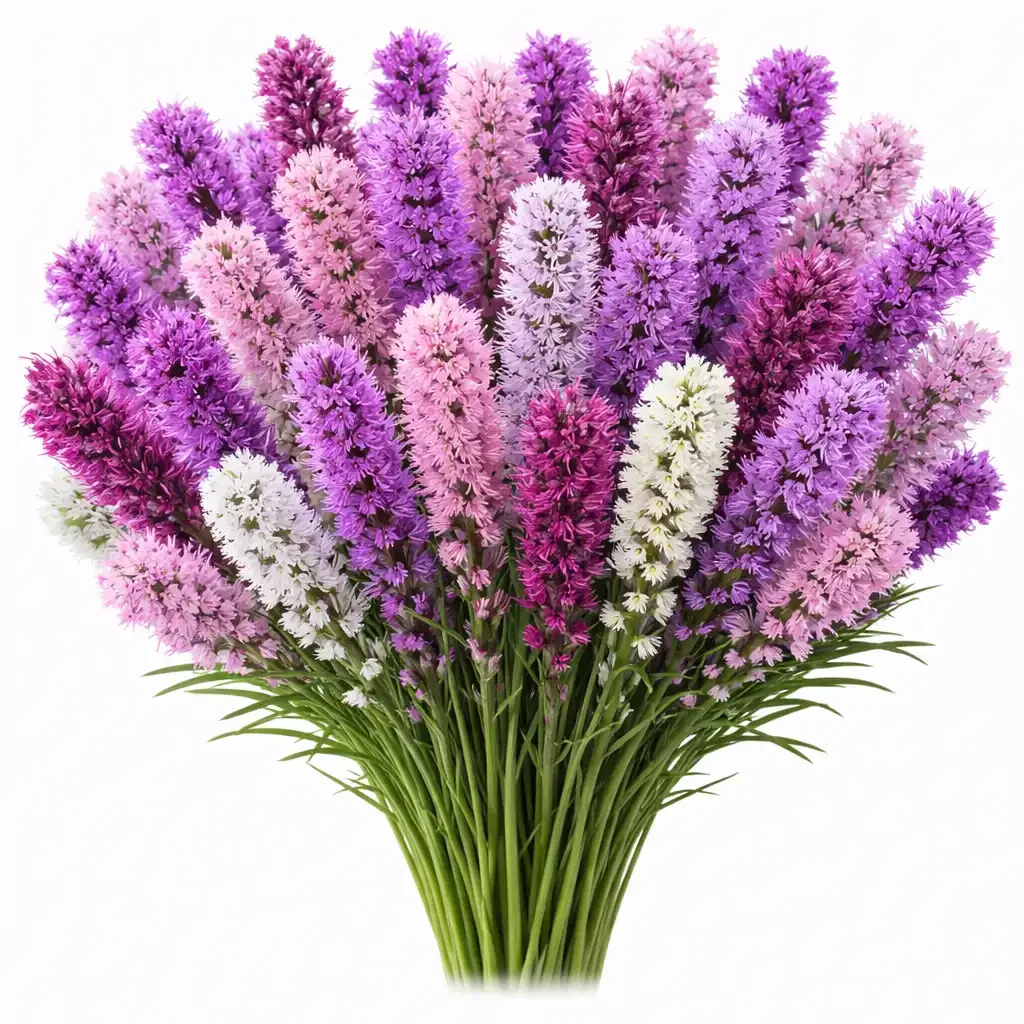
Quick Overview
Common Name: Liatris, Blazing Star, Gayfeather
Scientific Name: Liatris spicata, Liatris scariosa
Plant Type: Perennial grown from corms
USDA Zones: 3 to 9
Sun Requirement: Full Sun
Soil Type: Well-drained, average to poor fertility
Bloom Season: Midsummer through Late Summer
Height: 24 to 48 inches depending on species and variety
Pollinator Friendly: Yes
Edible: No
Why Grow Liatris on a Homestead
Liatris is one of the most distinctive and ecologically valuable cut flowers available to homestead growers. Its tall, densely packed spikes of tiny purple to magenta florets, which open from the top of the spike downward in a pattern that is unique among cut flowers, create a bold, architectural vertical element in arrangements that florists and customers find immediately striking and genuinely different from anything else available in the summer market. It is one of those rare cut flowers that is simultaneously a premium commercial product, an extraordinary pollinator plant, and a remarkably low-maintenance permanent perennial that improves with age.
For homestead growers, Liatris represents one of the most strategically sound long-term perennial investments available. It is native to North American prairies and meadows, which means it is perfectly adapted to the range of climates found across most of the continental United States, requiring very little supplemental watering, no fertilizing, and virtually no pest or disease management once established. It grows from corms that multiply slowly over time, producing an expanding supply of harvestable stems from a modest initial investment. And its dual-market capability as both a premium fresh cut flower and an excellent dried flower gives homestead growers maximum flexibility in how they capture value from every stem produced.
Here is why Liatris deserves a prominent spot on your homestead:
It provides a genuinely distinctive vertical element in summer arrangements. The tall, densely packed spikes of Liatris add a bold architectural quality to mixed summer bouquets that few other flowers can replicate. Florists consistently seek it out as a vertical accent that adds structure and drama to arrangements.
It is extraordinarily attractive to pollinators. Liatris is among the most important late summer pollinator plants available to homestead growers. Monarchs, swallowtails, bumblebees, native bees, and hummingbirds visit Liatris spikes constantly throughout their blooming period, making it one of the most ecologically valuable plants on any homestead.
It thrives in lean, well-drained soil with minimal input. As a native prairie plant, Liatris is perfectly adapted to the kind of average to poor, well-drained conditions that challenge many other cut flower crops. Once established it requires essentially no ongoing care beyond regular harvesting.
It dries beautifully. Liatris dries with excellent color retention and retains its dramatic spike form when dried, making it one of the most commercially valuable dried flower products available from a summer perennial.
It is a permanent, low-maintenance investment. Once established from corms, Liatris returns year after year with minimal care, slowly multiplying to provide an expanding supply of harvestable stems from a fixed initial investment.
Growing Conditions
Sunlight
Liatris requires full sun to perform its best. It needs at least 6 hours of direct sunlight per day for the strongest stems and most abundant flowering. In partial shade stems become weak and floppy and the densely packed spikes that make Liatris so valuable as a cut flower become less impressive. Full sun is the single most important growing requirement for productive Liatris cut flower production.
Soil
Liatris strongly prefers well-drained soil with average to poor fertility. As a native prairie plant it is perfectly adapted to lean, dry conditions and actually performs significantly better in these conditions than in rich, heavily amended beds. Overly fertile soil produces lush, floppy growth and reduces the strong, upright stems most valuable for cut flower use. Sandy or gravelly well-drained soil is ideal. Soil pH between 5.5 and 7.0 is suitable. Good drainage is the single most critical soil requirement as Liatris corms rot quickly in waterlogged conditions.
Water
Once established, Liatris is highly drought tolerant. It needs regular watering during the first growing season to establish a strong root system but after that requires very little supplemental irrigation. In average climates with regular summer rainfall, established Liatris often needs no supplemental watering at all. In very dry climates, occasional deep watering during extended dry periods helps maintain stem length and bloom quality. Overwatering is one of the most common mistakes with Liatris and leads directly to corm rot.
Temperature
Liatris is extremely cold hardy and adaptable, thriving across a very wide range of climates within USDA zones 3 to 9. It handles cold winters reliably and emerges dependably in spring. It performs well in both the cool summers of northern climates and the hot summers of the mid-South and Southeast. Its extraordinary climatic adaptability across such a wide range of growing conditions makes it one of the most universally reliable perennial cut flower crops available to homestead growers anywhere in the continental United States.
Planting Guide
Liatris is grown from small, round corms that are widely available from bulb suppliers in fall and early spring. Corms are the most practical and economical way to establish a productive Liatris planting for cut flower production.
Step 1: Choose a location with full sun and excellent drainage. This is the most critical planting decision for Liatris. A location with any tendency toward waterlogging or poor drainage will cause corm rot and plant failure regardless of other conditions.
Step 2: Prepare the planting area by loosening the soil to a depth of 8 to 10 inches. In heavy clay soils, incorporate coarse sand to improve drainage rather than compost or manure which can be overly rich for Liatris. In average to sandy soil, no amendment is typically needed.
Step 3: Plant corms with the flat side down and the rounded or pointed side facing up, approximately 2 to 3 inches deep. If you cannot determine which side is up, plant corms on their side and they will orient themselves correctly.
Step 4: Space corms 6 to 8 inches apart for cut flower production. Closer spacing encourages taller, straighter stems that are more valuable for cut flower use.
Step 5: Water thoroughly after planting and keep soil lightly moist until new growth emerges, which typically occurs within three to four weeks in warm soil. After establishment, reduce watering significantly.
Step 6: Note that Liatris corms planted in spring typically bloom in their first season, though the first year's stems may be shorter than those of established plants. Full productive maturity where plants are generating maximum stem yield typically arrives in the second and third seasons.
Seed vs Corm: Planting from corms is strongly recommended for cut flower production. Growing from seed is slow and plants typically do not bloom until their second or third year. Corms give a much faster path to productive plants.
Spacing: 6 to 8 inches apart for cut flower production.
Planting Season: Spring after last frost or fall in mild climates. Spring planting gives blooms in the first season in most climates.
Maintenance
Deadheading and Harvesting
Regular harvesting is both a commercial activity and the most important maintenance task for keeping Liatris productive. Harvesting spikes at the correct stage and removing spent spikes promptly encourages the development of basal shoots that may produce additional smaller spikes later in the season. Unlike many perennials that produce multiple flushes of bloom from lateral branches, Liatris produces primarily terminal spikes from each growing point, so harvesting and deadheading management focuses more on maintaining plant health than on stimulating rebloom.
Dividing
Divide Liatris clumps every four to five years in early spring when new growth is just emerging or in fall after foliage has died back. Regular division maintains vigor, prevents overcrowding, and provides free new corms to expand your planting. Each divided section should have at least one healthy growth point. Replant immediately at the correct spacing and depth.
Fertilizing
Liatris does not need fertilizing. As a native prairie plant it is adapted to lean soil conditions and performs best without supplemental nutrition. Adding fertilizer is more likely to produce lush, floppy growth than to improve flower production. In very poor, sandy soils a very light application of balanced fertilizer at planting is the maximum that should be applied.
Pest Control
Liatris is highly pest resistant. Its aromatic foliage deters many insects. Aphids can occasionally appear on developing spikes but are usually managed naturally by the beneficial insects that Liatris attracts in abundance. Root rot caused by poor drainage is the most common problem and is a management issue rather than a pest problem.
Disease Prevention
Good drainage prevents virtually all disease issues with Liatris. Corm and root rot caused by waterlogged soil is the primary disease threat and is entirely preventable with appropriate site selection and planting practices. Powdery mildew can occasionally appear on foliage late in the season in humid conditions but rarely affects cut flower production significantly at that stage.
Harvesting
When to Harvest
Harvest Liatris spikes when approximately one quarter to one third of the florets on the spike are open, starting from the top of the spike downward. This is the opposite opening pattern from most other spike flowers and is one of Liatris's most distinctive characteristics. Spikes harvested at this stage continue to open progressively after cutting and have the maximum vase life. Spikes harvested when already fully open have a significantly shorter remaining vase life. Harvest in the early morning when stems are fully hydrated and temperatures are cool.
How to Cut
Use clean, sharp scissors or pruners. Cut stems as long as possible, ideally 18 to 30 inches. Cut just above the basal foliage at the base of the stem to maximize stem length. Remove the lower foliage from the stem immediately after cutting. Place stems immediately into a bucket of cool water with a floral preservative.
Conditioning
After cutting, place stems in deep cool water in a cool, dark location for several hours or overnight before sale or arrangement. Liatris conditions readily and holds up well in arrangements and at market displays when properly conditioned. Some growers use a commercial floral preservative in the conditioning water to extend vase life.
Drying
Liatris dries beautifully and is one of the most commercially valuable dried flower products available from a summer perennial. To dry Liatris, gather stems into small bundles and hang upside down in a warm, dry, well-ventilated space away from direct sunlight. The spikes retain their distinctive purple color and dramatic form exceptionally well when dried and can last for years in dried arrangements. Harvest for drying at the same stage as for fresh use, when one quarter to one third of florets are open, for the best appearance after drying.
How Often to Harvest
During peak bloom in midsummer, harvest every three to four days as new spikes reach the correct stage. Liatris has a defined blooming period of approximately three to four weeks per planting. For a longer overall harvest window, combine early, mid-season, and late-blooming varieties within the same planting.
Vase Life
Liatris typically lasts 10 to 14 days as a fresh cut flower with proper conditioning and care. Strip all foliage below the waterline, recut stems at an angle, and place in fresh water with a floral preservative. Change water every few days to maximize longevity.
Uses on a Homestead
Cut Flower Use
Liatris is primarily used as a bold vertical accent flower in mixed summer bouquets and arrangements. Its tall, densely packed purple spikes add a dramatic architectural quality that contrasts beautifully with rounder focal flowers like dahlias, zinnias, and sunflowers. It pairs magnificently with rudbeckia, echinacea, yarrow, and ornamental grasses in naturalistic wildflower-style bouquets that are extremely popular at farmers markets. Even a few stems of Liatris transform the structure and drama of any summer arrangement.
Dried Flower Use
Dried Liatris is one of the most commercially valuable dried flower products available from a summer perennial. Its dramatic spikes retain their purple color and bold form when dried, creating a striking element in dried wreaths, arrangements, and botanical craft products. Dried Liatris bundles sell consistently well at craft markets, holiday markets, and through online shops year round and pair beautifully with other dried summer flowers including strawflower, statice, yarrow, and ornamental grasses.
Wedding and Event Flowers
Liatris is a valuable specialty flower for garden-style, wildflower, and naturalistic wedding designs. Its tall, dramatic spikes add bold vertical structure to bridal bouquets, centerpieces, and large ceremony installations. The deep purple color of most varieties is a popular wedding color that complements a wide range of floral palettes.
Pollinator and Wildlife Habitat
Liatris is one of the most ecologically important late summer pollinator plants available to homestead growers. Monarch butterflies are particularly strongly attracted to Liatris during their late summer migration, making a mass planting of Liatris one of the most important Monarch waystation plants you can establish on a homestead. Swallowtails, bumblebees, native bees, and hummingbirds visit Liatris constantly throughout its blooming period.
Can You Make Money With Liatris
Yes, Liatris is a profitable specialty cut flower and dried flower crop for homestead operations, particularly for growers who leverage its distinctive appearance, ecological story, and dual fresh and dried market capability.
Distinctive vertical form commands premium positioning. Liatris occupies a genuinely unique position in the summer cut flower market. Its tall, densely packed purple spikes provide a vertical accent that florists consistently seek and that is not available from any other common summer flower.
Dual fresh and dried market. The same stems that sell as premium fresh cut flowers can be dried and sold as premium dried products, maximizing revenue from every stem produced and providing year-round income from a single seasonal harvest.
Powerful pollinator and ecological story. The Monarch butterfly habitat value of Liatris is a compelling market story that resonates powerfully with environmentally conscious customers at farmers markets. This ecological story adds a dimension of value beyond the flower itself.
Near-zero ongoing input costs. Once established, Liatris requires virtually no ongoing attention. It returns reliably, it multiplies slowly, and it needs no fertilizing, minimal watering, and no pest management in well-drained soil.
Farmers Market: Fresh Liatris bundles sell for 7 to 12 dollars per bunch depending on stem length and spike quality. Dried Liatris bundles sell for 8 to 15 dollars per bunch at craft and dried flower markets.
Florists and Wedding Designers: Liatris is a consistently sought-after specialty vertical accent for florists working with naturalistic, garden-style, and wildflower design aesthetics. Local supply is rare and valued.
Dried Flower Market: Dried Liatris bundles and stems sell well at craft markets, holiday markets, and through online shops year round. Their long shelf life and distinctive appearance make them ideal online products.
CSA Flower Subscriptions: Liatris adds bold vertical structure and a distinctive purple color to summer flower subscription boxes that subscribers find immediately striking and different from standard summer flowers.
Companion Plants
Liatris grows beautifully alongside many other summer perennials and native plants with similar growing requirements and complementary bloom times.
Echinacea: Both are North American native perennials that bloom at overlapping times in midsummer, share similar lean-soil preferences, and create beautiful naturalistic combinations in mixed bouquets and cutting garden beds.
Rudbeckia: Both are summer-blooming perennials with similar cultural requirements that complement each other beautifully in bold warm-toned wildflower bouquets where Liatris provides purple vertical accents and Rudbeckia provides golden horizontal masses.
Yarrow: Both are low-maintenance summer perennials that share similar lean-soil and drought-tolerant characteristics and complement each other beautifully in naturalistic mixed arrangements.
Ornamental Grasses: Native grasses pair beautifully with Liatris in naturalistic arrangements and in the landscape, adding movement and a prairie quality to mixed summer bouquets.
Monarda: Both are native or naturalized North American perennials that bloom at similar times and create beautiful pollinator-rich combinations in the cutting garden and in mixed wildflower bouquets.
Agastache: Both are drought-tolerant summer perennials with vertical flowering spikes that complement each other beautifully in naturalistic mixed arrangements and attract similar pollinator communities.
Common Problems
Corm Rot
The most common and most serious problem with Liatris. Caused entirely by poor drainage or overwatering. Corms sitting in wet conditions rot before they establish or rot in the ground during wet seasons. Excellent drainage is the single most important preventive measure. Choose a well-drained site, build raised beds if necessary, and avoid overwatering at all stages of growth. Once rot sets in it cannot be reversed.
Floppy Stems
Can occur in overly rich soil, insufficient sun, or overcrowded conditions. Grow in average to lean soil with full sun and space plants properly at 6 to 8 inches. Avoid fertilizing. Horizontal support netting can help in exposed locations where stems are prone to flopping in wind or rain.
Powdery Mildew
Can appear on foliage late in the season in humid conditions or when plants are overcrowded. Divide clumps regularly, space plants properly for good air circulation, and avoid overhead watering. Late-season mildew rarely affects cut flower production significantly as the blooming period is typically complete by the time mildew appears.
Failure to Bloom
Usually caused by planting in too much shade, overly rich soil, overcrowded clumps that need dividing, or corms planted too deeply. Ensure full sun, lean to average soil conditions, divide overcrowded clumps every four to five years, and plant corms at the correct depth of 2 to 3 inches.
Short Stems in First Season
Common in newly planted corms that have not yet developed a strong root system. First-season Liatris stems are often shorter than those of established plants. Full productive stem length typically arrives in the second and third seasons as corms develop and multiply. Purchasing the largest available corm size helps maximize first-season stem length.
Varieties to Consider
Liatris spicata Kobold: One of the most widely grown Liatris varieties for cut flower production. Dense, deep purple spikes on strong stems reaching 24 to 30 inches. Compact, uniform growth habit and reliable performance across a wide range of growing conditions. The standard variety for homestead cut flower production.
Liatris spicata Floristan Violet: A taller variety reaching 36 to 48 inches with deep violet-purple spikes on strong stems. Very popular with florists for its exceptional stem length and bold color. One of the best choices for growers targeting the professional florist market where stem length is critical.
Liatris spicata Floristan White: A white-flowered variety with the same tall, strong growth habit as Floristan Violet. Pure white spikes are very popular with florists and wedding designers for their versatility in arrangements with any color palette. Considerably less common than purple varieties giving it a niche market advantage.
Liatris spicata Alba: A white-flowered variety with dense spikes on medium to tall stems. Very popular for wedding work and with customers seeking a classic white vertical accent for mixed bouquets.
Liatris scariosa September Glory: A later-blooming species with large, well-spaced individual florets on tall stems reaching 36 to 48 inches. Blooms in late summer through early fall, extending the harvest window beyond standard spicata varieties. Very popular with florists for its more open, elegant spike form.
Liatris spicata Blue Bird: A mid-height variety with particularly vivid blue-purple spikes. Excellent for cut flower production and one of the most reliable and widely available commercial varieties.
Final Thoughts
Liatris is one of the most ecologically rich, commercially distinctive, and financially rewarding perennial cut flower investments available to homestead growers across the full range of cold winter climates within USDA zones 3 to 9. It asks for almost nothing beyond full sun and well-drained soil and it gives back with dramatic purple spikes that command attention at every market, dried flower products that sell year round, and one of the most extraordinary pollinator habitats available from any single plant. Its Monarch butterfly attraction alone makes it a plant of genuine ecological significance on any homestead and that story resonates powerfully with the environmentally conscious customers who are among the most loyal and highest-spending at farmers markets. Plant it in lean, well-drained soil, harvest at the one quarter open stage, dry the excess for year-round income, and Liatris will become one of the most permanently valuable and ecologically enriching plants on your entire homestead.
FAQ
Why does Liatris bloom from the top of the spike downward? Liatris is one of the very few flowering plants that opens its florets from the top of the spike downward rather than from the bottom upward as most spike flowers do. This unusual characteristic is believed to have evolved as an adaptation to its native prairie environment and its relationship with specific pollinators. For cut flower use this top-down opening pattern means that the spike continues to develop and display new open florets throughout its vase life, providing a progressively changing and long-lasting display that customers and florists find particularly appealing.
Can Liatris be grown in hot, humid climates? Yes, Liatris performs well in hot, humid climates within its hardiness range of USDA zones 3 to 9. In hot, humid climates excellent drainage is even more critical than in drier regions as the combination of heat and moisture creates ideal conditions for the corm and root rot that is Liatris's most serious threat. Choose the most well-drained location available, consider raised beds if drainage is marginal, avoid overwatering, and space plants generously for good air circulation to reduce powdery mildew pressure.
How do I dry Liatris for the dried flower market? Harvest Liatris spikes when one quarter to one third of the florets are open, the same stage used for fresh cut flower harvest. Gather stems into small loose bundles of five to ten stems and secure with a rubber band near the base. Hang bundles upside down in a warm, dry, well-ventilated space away from direct sunlight. Drying typically takes two to three weeks depending on temperature and humidity. The spikes retain their distinctive purple color and dramatic form exceptionally well when dried and can be used in dried wreaths, arrangements, and botanical products for years.
Is Liatris the same as Gayfeather or Blazing Star? Yes, Liatris is known by several common names including Gayfeather, Blazing Star, and Button Snakeroot depending on the region and the specific species. All of these names refer to plants in the genus Liatris. The most commonly grown species for cut flower production are Liatris spicata and Liatris scariosa. In the cut flower trade the plant is most commonly sold and marketed under the name Liatris.
Does Liatris attract Monarch butterflies? Yes, Liatris is one of the most important Monarch butterfly nectar plants available to homestead growers. Monarchs are strongly attracted to Liatris during their late summer and fall migration and will visit a mass planting of Liatris in extraordinary numbers during peak migration periods. Planting Liatris as part of a certified Monarch waystation, which also includes milkweed for Monarch caterpillar habitat, creates a powerful ecological story and marketing narrative that resonates strongly with environmentally conscious farmers market customers.