
Narcissus
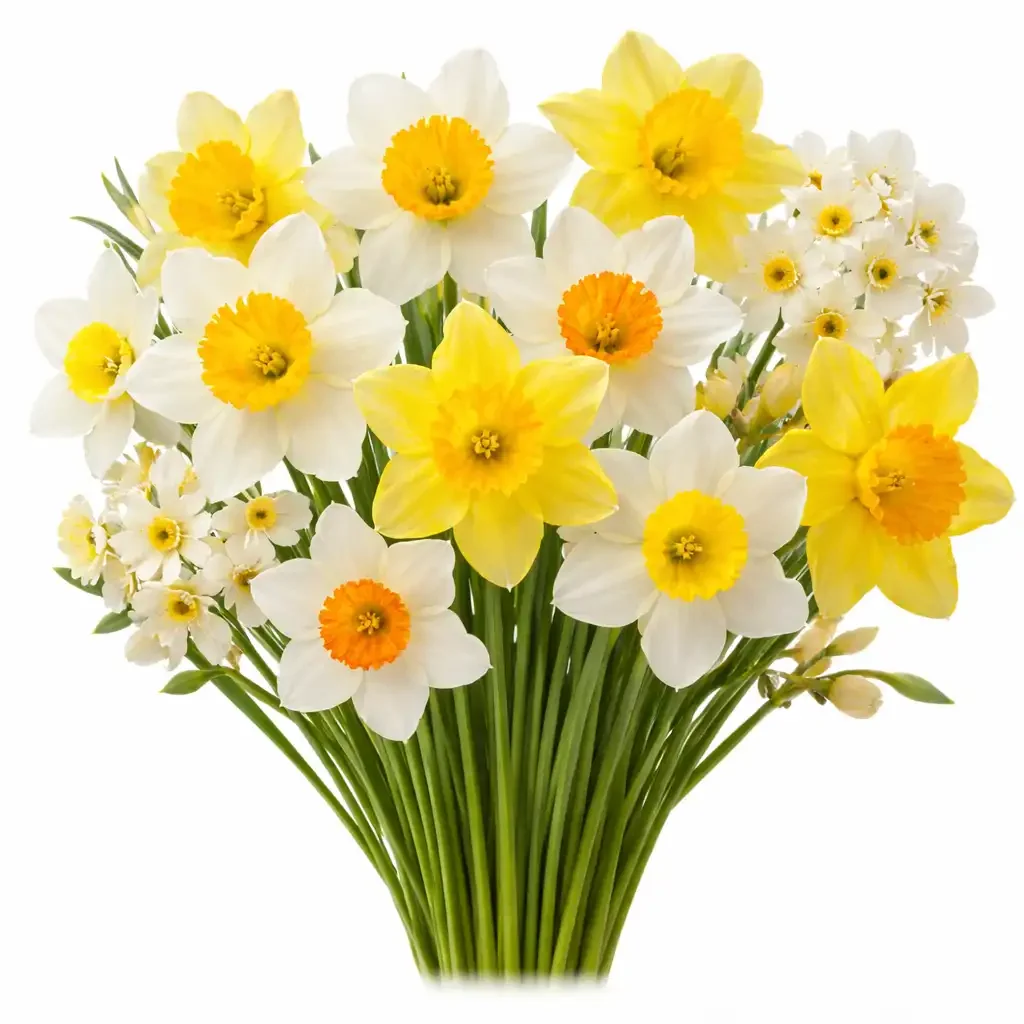
Quick Overview
Common Name: Narcissus, Daffodil, Jonquil
Scientific Name: Narcissus spp.
Plant Type: Perennial Bulb
USDA Zones: 3 to 9 depending on species and variety
Sun Requirement: Full Sun to Partial Shade
Soil Type: Well-drained, average to moderately fertile
Bloom Season: Late Winter through Mid Spring
Height: 6 to 24 inches depending on species and variety
Pollinator Friendly: Yes
Edible: No, toxic if ingested
Why Grow Narcissus on a Homestead
Narcissus is one of the most cheerful and commercially important early season cut flowers available to homestead growers. Its bright, familiar blooms in shades of pure white, cream, yellow, soft orange, and pink arrive in late winter and early spring when very few other cut flowers are available, creating a natural market advantage for growers who can supply fresh, locally grown stems at a time of peak customer demand and minimal competition. At a farmers market in late winter or early spring, a bucket of freshly cut Narcissus is among the most powerful selling tools a homestead flower grower can have.
Beyond its early season market timing, Narcissus is one of the most ecologically sensible and low-maintenance bulb crops available. It is deer and rodent resistant, which is a significant practical advantage over tulips and other bulbs that are frequently targeted by wildlife. Many varieties naturalize readily, spreading slowly over the years to fill in and produce an increasing abundance of stems from a fixed initial investment in bulbs. And its extraordinary range of forms, from the classic large-trumpet daffodil to the delicate multi-headed jonquil to the fragrant double paperwhite, gives homestead growers a tremendous diversity of products to offer across different markets and price points.
Here is why Narcissus deserves a prominent spot on your homestead:
It blooms in late winter and early spring when competition is minimal. Very few locally grown cut flowers are available in late winter and early spring. Narcissus fills that gap with a universally recognized, universally loved flower that sells itself at every market level.
Many varieties naturalize and return with increasing abundance year after year. Unlike tulips that typically need replanting each season in warm climates, many Narcissus varieties naturalize readily in appropriate climates, spreading slowly to produce more stems each year from the same initial bulb investment.
It is deer and rodent resistant. The toxic compounds in Narcissus bulbs make them unpalatable to deer, squirrels, voles, and other animals that commonly destroy tulip and other bulb plantings. This natural protection is a significant practical advantage for homestead growers.
Many varieties are intensely fragrant. Jonquils, paperwhites, and many multi-headed Narcissus varieties carry a rich, sweet fragrance that is one of the most powerful market draws available during the early spring selling season.
It is one of the most versatile and widely available bulb crops. With hundreds of varieties available spanning multiple bloom times from late winter through mid spring, careful variety selection allows homestead growers to extend the Narcissus harvest window significantly and maintain a continuous supply of stems throughout the early spring market.
Growing Conditions
Sunlight
Narcissus performs best in full sun to partial shade. It needs at least 4 to 6 hours of direct sunlight per day for reliable blooming and strong stem production. In deeper shade stems become weak and elongated and blooming decreases over time as bulbs fail to receive adequate light for energy storage after flowering. For cut flower production, full sun gives the best stems and the most reliable performance.
Soil
Narcissus prefers well-drained, average to moderately fertile soil. Good drainage is the single most important soil requirement. Bulbs sitting in waterlogged soil rot quickly and do not bloom reliably. Overly rich soil can produce excessive foliage at the expense of flower stem production. A loose, well-drained soil with a pH between 6.0 and 7.0 is ideal. In heavy clay soils, incorporate coarse sand and compost to improve drainage and aeration before planting.
Water
Water bulbs well at planting to initiate root development. During the growing and blooming season, Narcissus needs consistent moisture but must never sit in waterlogged soil. After blooming, as the foliage begins to yellow and die back, reduce watering significantly. Bulbs need a relatively dry summer dormancy period to ripen and develop the following season's flower buds. In climates with dry summers this happens naturally. In climates with wet summers, excellent drainage is essential to prevent bulb rot during the dormant period.
Temperature
Narcissus is a cold hardy bulb that thrives across a wide range of climates within USDA zones 3 to 9. Most varieties require a period of winter cold to bloom reliably, typically twelve to sixteen weeks of temperatures below 45 degrees Fahrenheit, though this requirement varies by species. In cold winter climates this chilling happens naturally in the ground. In warm winter climates within USDA zones 8 to 9, choose varieties specifically selected for low chilling requirements such as paperwhites, jonquils, and other early-blooming species that naturalize reliably in mild winter conditions.
Planting Guide
Narcissus is planted from bulbs in fall. Fall planting gives bulbs time to establish roots before winter and produces the strongest plants and the most reliable blooms the following spring.
Step 1: Purchase high quality bulbs in fall from a reputable supplier. For cut flower production, choose bulbs specifically labeled for cut flower use or select varieties known for long stems and good vase life. Larger bulbs generally produce stronger stems and more blooms than smaller bulbs.
Step 2: Choose a location with full sun to partial shade and excellent drainage. For naturalizing varieties that will remain in the ground for multiple years, choose a location where summer watering will be minimal and drainage is reliable.
Step 3: Plant bulbs with the pointed end facing up, at a depth of approximately two to three times the diameter of the bulb. For most standard-sized Narcissus bulbs this means planting 4 to 6 inches deep. Deeper planting encourages naturalization and perennial return. Shallower planting can increase stem length in the first season.
Step 4: For cut flower production, space bulbs 4 to 6 inches apart in beds. For naturalizing plantings where bulbs will be left in the ground to multiply, space 6 to 8 inches apart to allow room for clumps to develop over time.
Step 5: Water thoroughly after planting and allow nature to handle irrigation through the fall and winter in most climates.
Step 6: In mild winter climates within USDA zones 8 to 9, choose low-chilling varieties and plant in the coolest part of fall, typically October through November, to maximize whatever chilling the winter provides before spring bloom time.
Seed vs Bulb: Always grow Narcissus from bulbs for cut flower production. Growing from seed takes several years to produce blooming plants and results are highly variable.
Spacing: 4 to 6 inches apart for cut flower production. 6 to 8 inches for naturalizing plantings.
Planting Season: Fall, typically September through November depending on your climate.
Maintenance
Post-Bloom Foliage Management
One of the most important maintenance principles for Narcissus is allowing the foliage to die back completely and naturally after blooming rather than cutting it back prematurely. The foliage continues to photosynthesize and feed the bulb for six weeks or more after blooming, storing energy for the following season's flowers. Cutting back the foliage before it has fully yellowed and died back weakens the bulbs and reduces blooming in subsequent years. Allow foliage to die back naturally even if it looks untidy.
Fertilizing
Apply a balanced bulb fertilizer or bone meal at planting to support root development and bulb establishment. A light application of balanced fertilizer in early spring as shoots emerge helps support stem and flower development. After blooming, a light application of a low nitrogen fertilizer supports bulb ripening and flower bud development for the following season. Avoid high nitrogen fertilizers which promote excessive foliage at the expense of flowers.
Dividing
After several years in the ground, Narcissus clumps can become overcrowded, resulting in declining bloom quality and quantity. Divide overcrowded clumps every four to six years in summer after the foliage has fully died back. Dig the clump carefully, separate individual bulbs, allow them to dry in a well-ventilated location for a few days, and replant at the correct spacing and depth in fall.
Pest and Disease Management
Narcissus is naturally resistant to deer and most rodents due to the toxic compounds in its bulbs. Narcissus bulb fly can damage bulbs by laying eggs near the bulb neck. Narcissus basal rot is a fungal disease that causes bulbs to rot from the base. Both are managed primarily through good planting hygiene, excellent drainage, and discarding any soft or damaged bulbs before planting.
Harvesting
When to Harvest
Harvest Narcissus stems when the bud is showing full color and is at what is known as the gooseneck stage, where the stem has begun to curve upward toward the bud but the bud has not yet begun to open. At this stage the stem is fully hydrated and the bud will open slowly and beautifully after cutting. Narcissus harvested at the gooseneck stage has the longest possible vase life. Stems harvested when already open decline significantly faster.
How to Cut
Use clean, sharp scissors or a sharp knife. Cut stems as close to the base of the plant as possible, ideally at or just below soil level, to maximize stem length. Narcissus stems can be cut or pulled from the bulb. Some growers prefer to pull the entire stem cleanly from the bulb rather than cutting, as this can produce a slightly longer stem. Place cut stems immediately into a bucket of cool water.
Isolating Narcissus from Other Flowers
Narcissus stems exude a slimy sap when cut that is toxic to many other flowers, particularly tulips and other bulb flowers. Always condition Narcissus in its own bucket of water for several hours or overnight before combining with other flowers in mixed arrangements. After conditioning the sap flow diminishes and Narcissus can be combined safely with other flowers. Never put freshly cut Narcissus directly into a mixed arrangement without this isolation period.
How Often to Harvest
During the peak bloom period, harvest every day or two as individual stems reach the correct gooseneck stage. Narcissus have a defined bloom window of approximately two to three weeks per variety. For a longer overall harvest window, plant multiple varieties with different bloom times within the same season.
Vase Life
Narcissus typically lasts 5 to 7 days as a fresh cut flower with proper care. After the isolation conditioning period, strip all foliage below the waterline, recut stems at an angle, and place in fresh water with a floral preservative. Change water every day or two to maximize longevity.
Uses on a Homestead
Cut Flower Use
Narcissus is primarily grown as a fresh cut flower. Its cheerful blooms in bright yellow, white, cream, and soft orange create immediate visual impact in spring bouquets and arrangements. Single-variety bundles of unusual or specialty varieties are particularly popular at farmers markets. Mixed spring bouquets incorporating Narcissus alongside other early season flowers create beautiful seasonal arrangements that capture the spirit of early spring.
Wedding and Event Flowers
Narcissus is a natural choice for early spring weddings and events, particularly for garden-style, wildflower, and rustic design aesthetics. Fragrant varieties including jonquils and certain double-flowered types add an extraordinary sensory dimension to wedding bouquets and event arrangements.
Farmers Market
Narcissus is one of the most reliable and enthusiastically received early season flowers at any farmers market. Their arrival at market signals the beginning of spring to customers and generates immediate excitement and purchasing urgency. Single-variety bundles of unusual forms including double, split-corona, and multi-headed varieties sell at premium prices compared to standard yellow daffodils.
Fragrance
Many Narcissus varieties, particularly jonquils, paperwhites, and certain species types, carry a rich, sweet fragrance that is one of the most powerful market draws during the early spring season. A bucket of fragrant Narcissus at a market stand fills the surrounding area with a distinctive sweet scent that draws customers from a distance.
Can You Make Money With Narcissus
Yes, Narcissus is a profitable early season cut flower crop for homestead operations, particularly for growers who focus on specialty varieties with unusual forms and strong fragrance.
Early season market advantage. Narcissus blooms when very few other locally grown cut flowers are available, giving growers an essentially uncontested early spring market window with strong customer demand and minimal competition.
Naturalizing varieties provide increasing returns over time. Many Narcissus varieties multiply in the ground over the years, producing more stems each season from the same initial bulb investment. The return on investment per bulb improves year after year as naturalized clumps expand.
Deer and rodent resistance reduces crop losses. Unlike tulips and many other bulb crops, Narcissus is naturally protected from deer and rodent damage, significantly reducing the crop losses that can devastate other bulb plantings.
Specialty varieties command premium prices. Double, split-corona, multi-headed, and fragrant jonquil varieties are rarely found at grocery stores or big box retailers. Growing these specialty forms gives homestead growers a genuine market differentiation that supports premium pricing.
Farmers Market: Fresh Narcissus bundles sell for 8 to 15 dollars per bunch depending on variety, form, and fragrance. Specialty double and split-corona varieties command the highest prices.
Florists: Narcissus is a useful and popular early season filler and focal flower for florists working with spring arrangements. Fragrant varieties and specialty forms are particularly valued.
CSA Flower Subscriptions: Narcissus is one of the most eagerly anticipated early season additions to a spring flower subscription box. The arrival of Narcissus in the subscription box signals the true beginning of spring and generates strong subscriber enthusiasm.
Wedding and Event Flowers: Early spring weddings in March and April are a natural market for locally grown Narcissus, particularly fragrant varieties and specialty forms that offer something genuinely different from commercially imported alternatives.
Companion Plants
Narcissus grows beautifully alongside many other spring blooming flowers and bulbs with complementary bloom times and growing requirements.
Tulips: Both are spring bulbs that bloom at overlapping times and create beautiful color combinations when planted together. Note that freshly cut Narcissus must be isolated from cut tulips in water before combining in arrangements. Muscari (Grape Hyacinth): Small, early-blooming bulbs that naturalize readily alongside Narcissus and provide complementary blue-purple tones in spring arrangements. Anemones: Cool season bulbs that bloom alongside Narcissus and create beautiful combinations in early spring arrangements. Fritillaria: A specialty spring bulb that blooms alongside Narcissus and creates striking high-end combinations in spring bouquets and wedding work. Hellebores: Both bloom in early spring and complement each other beautifully in soft, romantic seasonal arrangements. Ranunculus: A cool season bulb crop that blooms alongside later Narcissus varieties and pairs magnificently in romantic spring arrangements.
Common Problems
Failure to Bloom (Blindness)
The most common problem with established Narcissus plantings. Caused by overcrowded clumps that need dividing, bulbs planted too shallowly, foliage cut back prematurely in previous seasons, or insufficient sunlight. Divide overcrowded clumps every four to six years, plant at the correct depth, always allow foliage to die back naturally, and ensure adequate sunlight.
Narcissus Basal Rot
A fungal disease caused by Fusarium oxysporum that causes bulbs to rot from the base. Affected bulbs show brown discoloration at the base and produce stunted, yellowing foliage. There is no cure. Remove and destroy affected bulbs immediately and do not replant Narcissus in the same location. Good drainage and avoiding bulb damage during planting are the most effective preventive measures.
Narcissus Bulb Fly
A pest that lays eggs near the bulb neck. Larvae burrow into bulbs and cause significant damage. Affected bulbs are soft and may show holes or tunneling when dug. Plant bulbs properly at the correct depth, firm soil around bulb necks after planting to discourage egg laying, and discard any soft or damaged bulbs found when dividing established clumps.
Sap Toxicity in Arrangements
Freshly cut Narcissus exudes a slimy, toxic sap that damages other flowers in mixed arrangements. Always condition Narcissus stems in their own bucket for several hours before combining with other flowers. This is one of the most important handling considerations for Narcissus and should never be overlooked.
Short Vase Life in Warm Conditions
Narcissus vase life decreases significantly in warm temperatures. Keep cut stems as cool as possible and display arrangements away from heat sources and direct sunlight to maximize longevity. Harvesting at the gooseneck stage and conditioning properly before sale or arrangement gives the longest possible vase life.
Varieties to Consider
Large-Cup and Trumpet Daffodils
Ice Follies: A classic large-cup daffodil with pure white petals and a wide, flat cream cup edged with yellow. One of the most widely grown Narcissus varieties for cut flower production. Reliable, productive, and extremely popular at farmers markets.
Carlton: A classic all-yellow large-cup variety with strong stems and excellent naturalization ability. One of the most reliably productive and widely available Narcissus varieties for homestead production.
Jetfire: An early-blooming cyclamineus hybrid with swept-back yellow petals and a long orange-yellow trumpet. One of the earliest Narcissus to bloom, making it particularly valuable for generating early season market income before other spring flowers are available.
Double Daffodils
Tahiti: Large, fully double blooms with yellow outer petals and orange inner petaloids. Very popular at farmers markets for its unusual and beautiful form. Commands premium prices.
Bridal Crown: Multi-headed double variety with white outer petals and soft orange inner petaloids. Fragrant and extremely popular with wedding florists. One of the most commercially valuable double Narcissus varieties for cut flower production.
Split-Corona Varieties
Lemon Beauty: Soft yellow outer petals with a dramatically split white corona edged in yellow. Very popular with florists for its unusual and sophisticated appearance.
Palmares: White outer petals with a dramatically ruffled, split pink corona. Extremely popular with wedding florists for its unusual form and soft color. Commands premium prices.
Multi-Headed and Fragrant Varieties
Thalia: A classic multi-headed variety with two to three pure white blooms per stem and a delicate, sweet fragrance. One of the most elegant and commercially popular Narcissus varieties for cut flower production. Very popular with florists and wedding designers.
Cheerfulness: Multi-headed double variety with creamy white and soft yellow fragrant blooms. Very popular at farmers markets for its outstanding fragrance and pretty clustered form.
Minnow: A small, multi-headed species variety with cream and yellow blooms. Very popular at farmers markets and with florists for its delicate, charming appearance and sweet fragrance.
Paperwhites
Paperwhite Ziva: The most widely grown paperwhite. Multi-headed pure white blooms with an intense, distinctive fragrance. Blooms without any cold chilling requirement, making it suitable for mild winter climates. Very popular at winter and early spring markets.
Final Thoughts
Narcissus is one of the most strategically well-positioned cut flower crops available to homestead growers. Its early season bloom time, natural deer and rodent resistance, many years of increasing returns from naturalizing varieties, and universal market appeal combine to create a crop that delivers exceptional commercial value with relatively modest ongoing input. For growers in cold winter climates within USDA zones 3 to 7 where Narcissus naturalizes most reliably, a well-established planting becomes one of the most productive and self-sustaining crops on the entire homestead, improving with age and requiring progressively less input as established clumps expand each season. Choose specialty varieties that offer something genuinely different from grocery store daffodils, harvest at the gooseneck stage, always isolate cut stems before combining with other flowers, and Narcissus will reward your homestead with some of the most cheerful and commercially powerful early spring blooms available to any cut flower grower.
FAQ
Why must Narcissus be kept separate from other flowers when cut? Freshly cut Narcissus stems exude a sticky, toxic sap that damages many other flowers, particularly tulips and other bulb flowers, when placed together in the same water. The sap blocks the water uptake of other flowers and can cause rapid wilting and collapse. Always condition freshly cut Narcissus in its own bucket of water for several hours before combining with other flowers in mixed arrangements. After this conditioning period the sap flow diminishes significantly and Narcissus can be combined safely with other flowers.
Can Narcissus be grown in warm winter climates? Many standard Narcissus varieties require a significant period of winter cold to bloom reliably and are not well suited to warm winter climates within USDA zones 8 and above without supplemental chilling. However, several species and varieties have naturally low chilling requirements and perform well in mild winter climates. Paperwhites require no chilling at all. Jonquils and many tazetta varieties naturalize reliably in USDA zones 8 to 9. Choosing varieties specifically recommended for low-chilling climates gives the best results in warm winter regions.
How do I extend the Narcissus harvest season? The most effective strategy for extending the Narcissus harvest season is planting multiple varieties with different natural bloom times within the same season. Combining early-blooming varieties such as Jetfire that bloom in late winter, mid-season varieties that bloom in early spring, and late-season varieties that bloom in mid spring can extend the total harvest window from four to six weeks to eight to ten weeks or more with careful variety selection.
What is the difference between Narcissus, Daffodil, and Jonquil? All three names refer to plants in the genus Narcissus but they are used with varying levels of precision. Narcissus is the botanical genus name that correctly covers all species and varieties. Daffodil is the common name most widely used in the United States for large-flowered, single-headed varieties with prominent trumpets or cups. Jonquil technically refers specifically to Narcissus jonquilla and its hybrids, which are characterized by multiple small blooms per stem, rush-like foliage, and a strong sweet fragrance. In casual usage the three names are often used interchangeably.
Do Narcissus bulbs multiply on their own? Yes, many Narcissus varieties multiply naturally in the ground through the production of daughter bulbs that develop around the original mother bulb. Over several years a single bulb can develop into a productive clump of multiple bulbs. This naturalization process is one of the most commercially valuable characteristics of Narcissus as a cut flower crop, giving homestead growers an expanding supply of stems each season from a fixed initial investment in bulbs. The rate of multiplication varies by variety. Some varieties naturalize very aggressively while others multiply more slowly.