
Orlaya
Quick Overview
Common Name: Orlaya, White Lace Flower, Minoan Lace
Scientific Name: Orlaya grandiflora
Plant Type: Annual
USDA Zones: 2 to 11
Sun Requirement: Full Sun to Partial Shade
Soil Type: Well-drained, average to poor fertility
Bloom Season: Late Spring through Summer
Height: 18 to 24 inches
Pollinator Friendly: Yes
Edible: No
Why Grow Orlaya on a Homestead
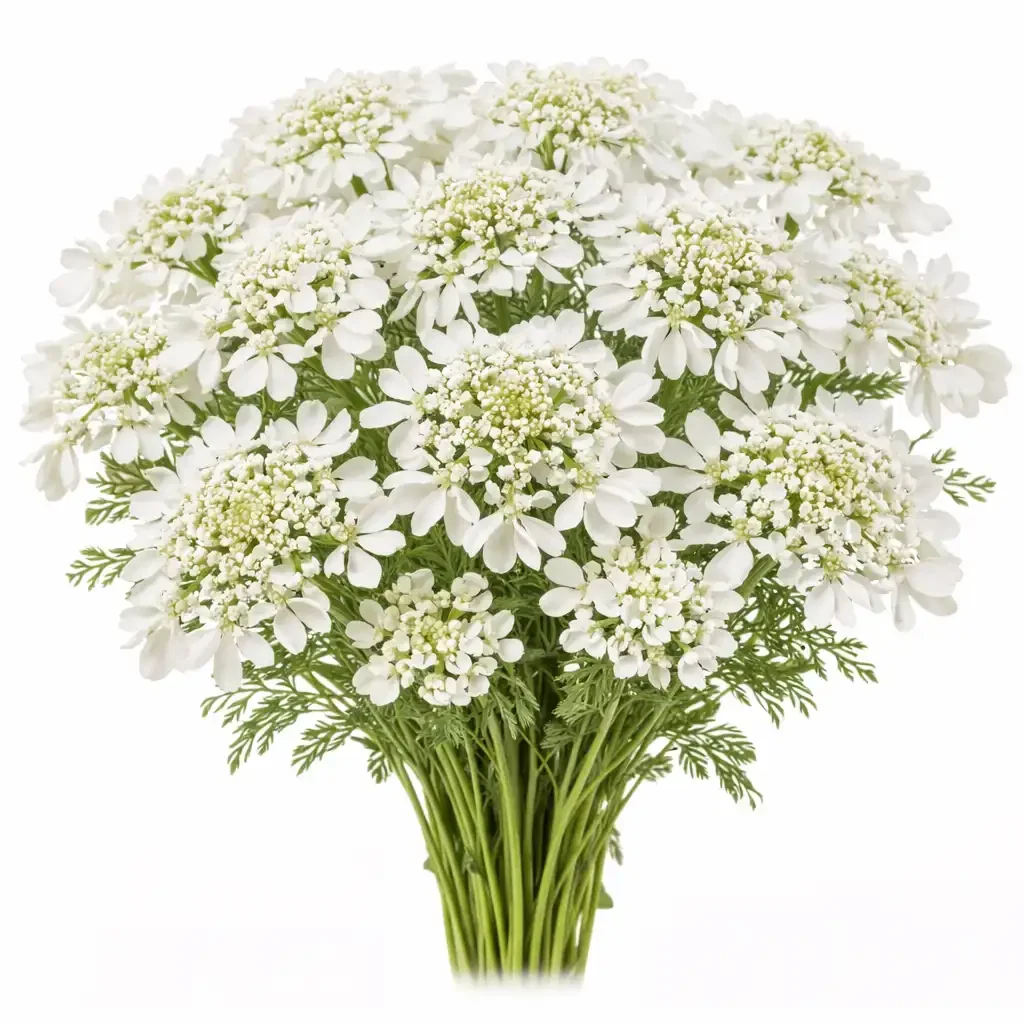
Orlaya is one of the most elegant and refined filler flowers available to homestead cut flower growers. Its large, flat-topped umbels of tiny white flowers, each cluster surrounded by a ring of dramatically larger outer florets, create a lacy, refined effect that is more ornamental and sophisticated than any other white umbellifer in the cutting garden. Florists describe Orlaya as a more elegant alternative to Queen Anne's Lace, sharing the same airy, romantic quality but with a cleaner, more polished appearance that makes it particularly suited to high-end wedding and event work.
For homestead growers, Orlaya represents a specialty filler crop that fills a genuine gap in the market. True white umbellifer fillers that are both beautiful enough for premium wedding work and reliable enough for consistent market production are surprisingly rare. Orlaya fills that gap perfectly. It direct sows readily in cool conditions, thrives in lean, well-drained soil without heavy fertilization, produces an abundance of long-stemmed umbels over a generous cool season blooming period, and is in consistent demand from florists and wedding designers who prize its refined beauty and versatility.
Here is why Orlaya deserves a prominent spot on your homestead:
It is one of the most elegant white filler flowers available. The large outer florets that surround each Orlaya umbel give it a dramatically more refined and ornamental appearance than common white umbellifers. It adds a level of sophistication to arrangements that simpler fillers cannot replicate.
It is highly sought after by wedding florists. Orlaya is a consistently requested specialty filler for high-end wedding and garden-style floral designs. Its refined beauty and clean white color make it ideal for romantic and elegant wedding aesthetics.
It thrives in lean, well-drained soil with minimal input. Like many plants in the carrot family, Orlaya performs better in average to lean conditions than in rich, heavily amended beds. Once established it produces abundantly with minimal ongoing care.
It is a powerful pollinator plant. Orlaya's flat umbels attract an extraordinary range of beneficial insects including parasitic wasps, hoverflies, and native bees that provide natural pest control throughout your homestead.
It has a long cool season blooming period. Orlaya blooms from late spring through summer in most climates and can be grown over an extended cool season period in mild winter climates, providing a generous harvest window.
Growing Conditions
Sunlight
Orlaya performs best in full sun but tolerates partial shade reasonably well. It needs at least 4 to 6 hours of direct sunlight per day for the strongest stems and most abundant flowering. In deeper shade stems become weak and elongated and the umbels become smaller and less impressive. For cut flower production with the longest, strongest stems full sun is the preferred choice.
Soil
Orlaya strongly prefers well-drained soil with average to poor fertility. Like its wild relatives in the carrot family, it thrives in lean, somewhat dry conditions and actually produces better, more upright stems in soil that is not overly rich. Overly fertile soil produces lush, floppy growth at the expense of the tall, straight stems most valuable for cut flower use. Sandy or gravelly well-drained soil is ideal. Soil pH between 6.0 and 7.5 is suitable.
Water
Once established, Orlaya is moderately drought tolerant. It needs regular watering during establishment but after that requires less supplemental irrigation than most other cut flower crops. Water deeply once or twice a week during extended dry periods. Avoid waterlogged conditions as Orlaya does not tolerate wet feet. In hot, humid climates ensure excellent drainage to prevent the fungal diseases that can occur in consistently wet conditions.
Temperature
Orlaya is a cool season annual that performs best in moderate temperatures between 50 and 70 degrees Fahrenheit. It tolerates light frost and actually benefits from cool growing conditions for the strongest stems and most refined umbels. In very hot conditions it tends to bolt and decline quickly. In mild winter climates within USDA zones 8 to 11 it can be grown as a fall through spring crop for an exceptionally long blooming period. In cold winter climates it is grown as an early spring through early summer annual, sown as soon as soil can be worked.
Planting Guide
Orlaya grows best from direct sowing. It has a long taproot that makes it difficult to transplant successfully and it establishes most readily when sown directly in the garden at the correct time.
Step 1: In cold winter climates within USDA zones 3 to 7, direct sow Orlaya in early spring as soon as the soil can be worked. Orlaya tolerates light frost and actually germinates best in cool soil. In mild winter climates within USDA zones 8 to 11, sow in fall for winter and spring blooming.
Step 2: Choose a location with full sun and well-drained soil with average to lean fertility. Avoid recently amended beds with heavy compost additions.
Step 3: Orlaya seeds require a period of cold stratification to germinate reliably. In cold winter climates this happens naturally when seeds are sown in early spring in cool soil. In mild winter climates where fall sowing is used, the cool winter temperatures provide natural stratification. If sowing in warm conditions, refrigerate seeds in a damp paper towel for two to three weeks before sowing.
Step 4: Sow seeds on the soil surface or cover very lightly with no more than a thin dusting of soil. Seeds need light and cool temperatures to germinate. Water gently after sowing and keep the soil surface lightly moist until germination, which typically occurs within 14 to 21 days in cool conditions.
Step 5: Thin seedlings to 6 to 9 inches apart once they are a few inches tall. Tighter spacing encourages taller, straighter stems for cut flower use.
Step 6: For a continuous harvest, succession sow every three to four weeks from early spring through mid spring in cold winter climates. In mild winter climates, a single fall sowing often provides blooms through the entire cool season.
Seed vs Transplant: Direct sowing is strongly preferred. Orlaya has a sensitive taproot and does not transplant well. If transplanting is necessary, use biodegradable pots started very early before the taproot becomes established.
Spacing: 6 to 9 inches apart for cut flower production.
Planting Season: Early spring in cold winter climates within USDA zones 3 to 7. Fall through early spring in mild winter climates within USDA zones 8 to 11.
Maintenance
Thinning
Proper thinning is one of the most important steps for cut flower production. Overcrowded Orlaya plants produce shorter, weaker stems that are less valuable for market. Thin seedlings to 6 to 9 inches apart to ensure each plant has adequate space to develop the tall, strong stems that florists and customers want.
Deadheading
Deadhead spent umbels promptly to encourage new umbel production and extend the blooming season. Orlaya can bolt and go to seed quickly in warm weather. Regular deadheading and harvesting are the most effective ways to extend the productive life of each plant.
Fertilizing
Orlaya does not need fertilizing. It thrives in lean conditions and actually produces better cut flower stems in average to poor soil than in rich, heavily amended beds. Adding fertilizer is more likely to cause problems than to improve performance.
Pest Control
Orlaya is largely pest resistant. Aphids can occasionally appear on stems and umbels but are usually managed naturally by the beneficial insects that Orlaya attracts in abundance. Its flat umbels are a favorite landing platform for parasitic wasps and other beneficial insects that quickly manage aphid populations.
Disease Prevention
Good drainage and air circulation prevent most disease issues. Avoid overhead watering to reduce the risk of fungal diseases on the delicate foliage and umbels. In hot, humid climates space plants properly for good air circulation and ensure excellent soil drainage.
Harvesting
When to Harvest
Harvest Orlaya umbels when approximately three quarters of the tiny individual florets within the umbel are open and the distinctive large outer florets are fully extended and showing their characteristic asymmetric form. Umbels harvested before the outer florets are fully extended may not continue to develop properly after cutting. Harvest in the early morning when stems are fully hydrated and temperatures are cool.
How to Cut
Use clean, sharp scissors or pruners. Cut stems as long as possible, ideally 16 to 22 inches. Cut just above a set of leaves or a branching point to encourage new stem production. Note that Orlaya stems are hollow and somewhat brittle. Handle with care when cutting and conditioning to avoid crushing the hollow stems. Place cut stems immediately into a bucket of cool water with a floral preservative.
Conditioning
Orlaya benefits from thorough conditioning before use in arrangements or sale at market. After cutting, place stems in deep cool water in a cool, dark location for several hours or overnight. Some growers add a commercial floral preservative to the conditioning water to improve vase life. Properly conditioned Orlaya holds up well in arrangements and at market displays.
How Often to Harvest
During peak bloom, harvest every two to three days as new umbels reach the correct stage. Regular cutting encourages the plant to continue producing new stems and prevents premature seed set that signals the plant to slow down production.
Vase Life
Orlaya typically lasts 7 to 10 days as a fresh cut flower with proper conditioning and care. Strip all foliage below the waterline, recut stems at an angle, and place in fresh water with a floral preservative. Change water every two to three days to maximize longevity. Keep arrangements away from heat and direct sunlight.
Uses on a Homestead
Cut Flower Use
Orlaya is primarily used as a premium filler flower in mixed bouquets and arrangements. Its large, refined umbels add a delicate, lacy quality to arrangements that complements virtually every other flower. It is particularly beautiful alongside roses, peonies, sweet peas, and ranunculus in romantic and garden-style arrangements where its refined white lace creates a sophisticated backdrop for bold focal flowers. It is one of the most versatile and universally flattering filler flowers available to homestead growers.
Wedding and Event Flowers
Orlaya is a staple in high-end garden-style and romantic wedding designs. Its refined lacy umbels and clean white color make it a natural choice for bridal bouquets, centerpieces, and ceremony installations where an elegant, naturalistic look is desired. Wedding florists actively seek out local sources of quality Orlaya stems and will pay premium prices for reliable supply during its blooming season.
Pollinator and Beneficial Insect Support
Orlaya is one of the most ecologically important plants a homestead grower can cultivate. Its flat umbels provide a perfect landing platform and accessible nectar source for parasitic wasps, hoverflies, lacewings, native bees, and other beneficial insects that are among the most important natural pest control agents in any garden. Planting Orlaya throughout your homestead creates a powerful beneficial insect corridor that reduces pest pressure on every other crop.
Can You Make Money With Orlaya
Yes, Orlaya is a profitable specialty filler crop for homestead flower operations, particularly for growers targeting the wedding market and high-end florists who value something more refined than common white fillers.
Premium filler positioning. Orlaya occupies a premium position in the filler flower market. Its more refined appearance compared to common white umbellifers like Queen Anne's Lace justifies higher per-stem pricing and makes it a sought-after specialty item rather than a commodity filler.
Strong wedding market demand. Orlaya is consistently sought after by wedding florists working in garden-style and romantic design aesthetics. Local supply is not always easy to find and a reliable source of quality stems is genuinely valued.
Near-zero ongoing input costs. Orlaya thrives in lean soil without fertilizing, needs minimal watering once established, and has virtually no pest or disease management requirements. The return on investment per seed packet is exceptional.
Farmers Market: Fresh Orlaya bundles sell for 7 to 12 dollars per bunch. Mixed bouquets containing Orlaya as a premium filler command higher prices than those using more common white fillers.
Florists and Wedding Designers: Orlaya is in consistent demand from florists as a premium white filler for high-end arrangements. Wholesale pricing of 0.75 to 1.50 dollars per stem reflects its specialty positioning above common filler flowers.
CSA Flower Subscriptions: Orlaya is an exceptional component of spring and early summer flower subscription boxes. Its inclusion elevates the overall quality and perceived value of every bouquet it appears in.
Companion Plants
Orlaya grows well alongside many other cool season flowers and is particularly beneficial as a companion plant due to its ability to attract beneficial insects.
Roses: Orlaya planted near roses attracts beneficial insects that help manage aphids and other rose pests. In bouquets the two flowers complement each other beautifully. Sweet Peas: Both are cool to warm season flowers that complement each other naturally in romantic spring and early summer bouquets. Ranunculus: Both bloom at overlapping times in the cool season and pair magnificently in romantic mixed bouquets. Peonies: Orlaya provides a refined lacy backdrop that complements the lush, full blooms of peonies beautifully in both the garden and in arrangements. Nigella: Both are delicate, distinctive cool to warm season annuals that complement each other beautifully in mixed spring bouquets. Larkspur: Both are cool season annuals with similar growing requirements that pair beautifully in tall, romantic spring and early summer arrangements.
Common Problems
Poor Germination in Warm Soil
Orlaya germinates best in cool soil and requires cold stratification to germinate reliably. Sowing in warm summer soil leads to poor and uneven germination. Always sow in cool conditions in early spring in cold winter climates or in fall in mild winter climates for the best germination rates.
Bolting in Heat
Orlaya bolts and declines quickly when temperatures rise above 75 to 80 degrees Fahrenheit. In warm climates, time plantings carefully to take advantage of cool weather. Regular deadheading extends the productive period as much as possible but there is no way to prevent bolting entirely once summer heat arrives.
Floppy Stems
Can occur in overly rich soil, insufficient sun, or when plants are overcrowded. Grow in lean soil with full sun and thin seedlings properly to ensure adequate spacing. Avoid fertilizing. Horizontal support netting can help in exposed locations.
Aphids
Occasionally appear on stems and umbels. Usually managed quickly by the beneficial insects that Orlaya attracts. A strong spray of water or neem oil can be used if populations become problematic.
Short Season in Hot Climates
In hot climates Orlaya has a naturally short productive season before heat causes bolting and decline. Planning for succession sowings in early spring and combining Orlaya with other cool season crops helps maximize the value of this crop within its natural seasonal window.
Varieties to Consider
Orlaya grandiflora (White Lace Flower): The standard species and the most widely available form. Large, flat umbels with dramatically enlarged outer florets in pure white. The definitive Orlaya for cut flower production. Extremely productive and well suited to both fresh cut flower and dried use.
Orlaya grandiflora Minoan Lace: A selected strain with particularly large and well-formed umbels. Very popular with florists for its more refined and substantial appearance compared to the standard species. Excellent stem length and good performance across a wide range of growing conditions.
Final Thoughts
Orlaya is one of the most genuinely special filler flowers a homestead grower can add to their cutting garden. Its refined lacy umbels, exceptional versatility in arrangements, strong wedding market demand, and near-zero input requirements combine to create a crop that delivers commercial value well above what its simple growing requirements would suggest. It is not as widely known as Queen Anne's Lace but among florists and wedding designers who work with it regularly, Orlaya is considered one of the most beautiful and useful white fillers available anywhere. Grow it in lean, well-drained soil, sow it at the right time for your climate, harvest it regularly, and Orlaya will become one of the most distinctive and valued specialty crops in your homestead flower operation.
FAQ
What is the difference between Orlaya and Queen Anne's Lace? Both Orlaya and Queen Anne's Lace are white umbellifer filler flowers but they are distinct plants with different appearances. Queen Anne's Lace produces flat-topped umbels of uniformly tiny white flowers. Orlaya produces umbels with dramatically larger outer florets surrounding smaller central florets, creating a more refined and ornamental lace-like appearance. Orlaya also has a cleaner, more polished look that makes it particularly suited to high-end wedding and event work. Both are useful cut flowers but Orlaya occupies a more premium market position.
Is Orlaya the same as Ammi? No, Orlaya and Ammi are different plants although they are related and sometimes confused. Both are white umbellifer fillers in the carrot family but Ammi majus produces finer, more delicate umbels of uniformly tiny flowers similar to Queen Anne's Lace. Orlaya grandiflora produces umbels with dramatically enlarged outer florets that give it a more ornamental, lace-like appearance. Both are excellent cut flowers and beneficial insect plants but Orlaya is generally considered the more refined and premium-positioned of the two.
How do I improve germination rates for Orlaya? Orlaya germinates best in cool soil with adequate cold stratification. In cold winter climates, sowing directly in cool spring soil provides natural stratification conditions. In mild winter climates, fall sowing provides natural winter stratification. If germination rates are disappointing, try refrigerating seeds in a damp paper towel for two to three weeks before sowing to simulate cold stratification artificially. Never sow in warm soil as warm conditions significantly reduce germination rates.
Can Orlaya be grown as a long season crop? In mild winter climates within USDA zones 8 to 11, Orlaya can be grown from fall through late spring as a long-season cool weather crop. In cold winter climates within USDA zones 3 to 7 it is grown as a spring through early summer annual with a shorter but still generous harvest window. Succession sowing every three to four weeks from early spring through mid spring in cold winter climates extends the overall harvest period and provides a more continuous supply of stems.
Does Orlaya self-seed? Yes, Orlaya self-seeds readily if seed heads are allowed to mature and disperse. In a managed cutting garden this self-seeding habit can provide free plants each season if selected seed heads are allowed to mature deliberately in a designated area. Harvesting all umbels before they set seed and deadheading promptly throughout the season prevents unwanted self-seeding in areas where it is not desired.