
Aloe Vera
Written By Arthur Simitian
QUICK FACTS
Common Name
Aloe Vera, True Aloe, Barbados Aloe, Burn Plant, First Aid Plant; the common name aloe vera is used both as a common name and as a former scientific name; the plant is correctly identified as Aloe barbadensis Miller in current taxonomy, though Aloe vera remains widely used in commerce and herbal literature; the genus Aloe contains over five hundred species distributed across Africa, the Arabian Peninsula, and Madagascar, most of which have no documented culinary or medicinal use equivalent to Aloe barbadensis Miller; species identity matters when purchasing plants or products
Scientific Name
Aloe barbadensis Miller (synonymous with Aloe vera L. in most herbal and commercial literature); Asphodelaceae family (previously classified in Liliaceae or Xanthorrhoeaceae depending on the taxonomic system); native to the Arabian Peninsula and North Africa; naturalized throughout tropical and subtropical regions worldwide through centuries of cultivation; one of the most widely cultivated medicinal plants on earth, grown commercially in Mexico, the Dominican Republic, the United States, India, and Australia for the cosmetic, pharmaceutical, and food industries
Plant Type
Evergreen perennial succulent; forms a stemless or short-stemmed rosette in younger plants, developing a short woody stem in older specimens; spreads vegetatively by producing offset rosettes called pups or offshoots from the base of the parent plant; these offsets can be separated and replanted to propagate new plants indefinitely; the parent plant in ideal growing conditions reaches maturity in three to five years, at which point it may produce a tall flower spike bearing pendant tubular orange-yellow flowers attractive to hummingbirds
Hardiness Zones
Perennial in zones 9 to 12; in zones 8 and colder, grown as a container plant that overwinters indoors; the frost sensitivity of aloe vera is genuine and absolute; a single hard freeze kills the plant to the ground and often fatally damages the crown; in zone 8 with mild winters it may survive light frost under protective cover, but container cultivation brought indoors before the first frost is the reliable approach for all climates north of the frost-free zone; as a container plant it thrives in nearly any climate provided it has a bright indoor location through the cold months
Height and Form
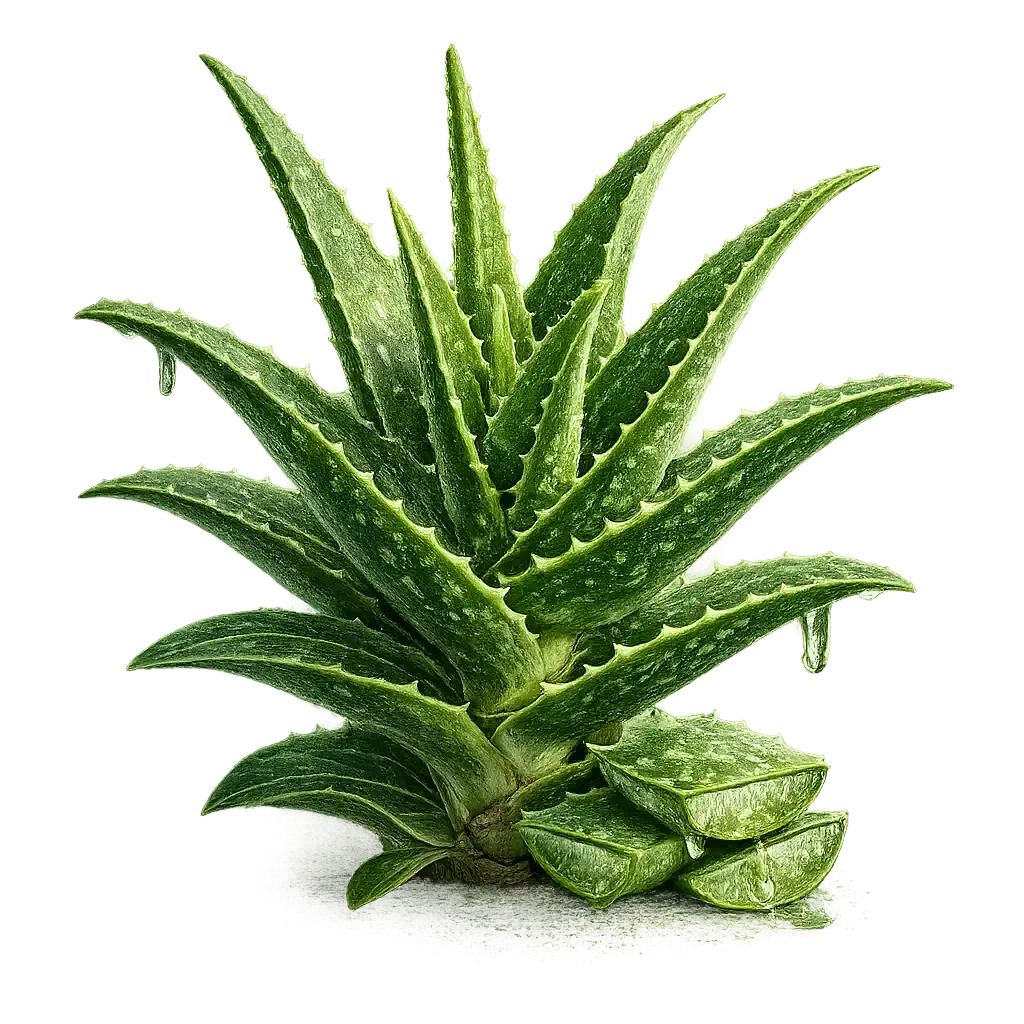
One to two feet tall in typical garden cultivation; older plants in ideal conditions reach three feet; the rosette spreads to two to three feet in diameter; the sculptural architectural quality of the mature rosette, with its thick blue-green to gray-green banded leaves fanning outward from the central growing point, makes aloe vera one of the most visually striking of all container herbs, and it earns its place on a patio or windowsill on ornamental grounds entirely independent of its medicinal value
Leaf Structure
The leaf is the medicine and its three-layer structure is directly relevant to correct use: the outer rind is a thick, tough, green photosynthetic layer; immediately inside the rind is a thin layer of yellow-orange sap called the latex, which contains the anthraquinone compounds aloin and barbaloin; filling the bulk of the leaf interior is the clear, slightly viscous inner gel called the parenchyma or aloe vera gel, which contains the polysaccharide acemannan, glycoproteins, vitamins, minerals, and amino acids; the gel is the primary topical medicine; the latex is a potent laxative with a separate and more restricted use profile; keeping them separated during preparation is the essential practical skill for correct aloe use
Primary Active Compounds
In the gel: acemannan (the primary immunomodulatory and wound-healing polysaccharide; a beta-1,4-linked acetylated mannan unique to aloe; stimulates macrophage activity, promotes fibroblast proliferation, supports re-epithelialization of wounds); aloe emodin and other anthraquinones at trace levels in the gel (anti-inflammatory at topical doses); glycoproteins including aloctins A and B (inhibit histamine release; contribute to anti-inflammatory activity); salicylates (analgesic); sterols including beta-sitosterol and campesterol (anti-inflammatory); vitamins C and E, zinc, and chromium. In the latex: aloin and barbaloin (anthraquinone glycosides; potent stimulant laxatives; the compounds responsible for both the traditional internal laxative use and the internal safety concerns; classified as possible carcinogens at high doses in animal studies; not present at significant levels in properly prepared inner-fillet gel)
Harvest Age
Leaves suitable for gel harvest can be taken from plants as young as two to three years; younger plants do not have leaves large enough or gel-rich enough to make harvest practical; older, well-established plants of four years or more produce the thickest leaves with the most gel; outer leaves are harvested in preference to inner leaves, which are younger and smaller; a well-grown mature plant can yield two to four harvestable outer leaves every two to three months without stressing the plant
Aloe vera is the herb most likely to be already growing on a windowsill when someone first becomes interested in home herb medicine, and there is a reason for that: it is the most immediately useful first-aid plant available for everyday household injuries. A minor burn from the stove or oven, a sunburn, a skin abrasion, a patch of dry cracked skin in winter, an insect bite producing localized inflammation: in each case the response is the same, cut a lower leaf, split it lengthwise, and apply the clear gel directly to the affected area. The relief is fast, the mechanism is well-understood, and the acemannan polysaccharide chemistry behind the wound-healing and anti-inflammatory effects is backed by serious research. The plant earns its position in the medicine cabinet not through tradition alone but through a body of clinical evidence on burn and wound healing that is among the strongest for any topical herb in this series.
Introduction
Aloe barbadensis Miller has been in documented medicinal use for approximately four thousand years. The Ebers Papyrus describes it. Dioscorides, the Greek physician, included it in De Materia Medica in the first century CE, describing both topical applications for wounds and skin conditions and internal use as a laxative. Alexander the Great is said to have conquered the island of Socotra specifically to secure its aloe supply for his armies. This longevity of use across divergent medical traditions, Egyptian, Greek, Roman, Ayurvedic, Chinese, and through the colonial-era herbal traditions of the Caribbean and Americas, reflects a plant whose efficacy was legible enough across cultures to ensure continuous cultivation.
The modern scientific examination of aloe vera is extensive and somewhat uneven. The topical evidence, particularly for burn treatment, wound healing, and radiation dermatitis, is the most robust part of the research record and supports the traditional applications clearly. The internal use evidence, for conditions from irritable bowel syndrome to diabetes to immune modulation, is more variable in quality and more complicated by the latex-gel distinction that makes standardization of internal preparations difficult. The cosmetic industry's enthusiastic adoption of aloe vera has generated a large body of marketing claims that are not well-supported by clinical evidence alongside the legitimate research, creating a noisier literature than most herbs in this series. This entry focuses on the well-supported applications and is candid about the limits of the evidence where they exist.
For the homestead grower in any climate with a windowsill, aloe vera is the single most accessible medicinal plant in this series: it requires no outdoor growing space, no special soil, no particular climate zone, and produces a first-aid medicine on demand from the living plant with nothing more than a knife. The barrier to entry is lower than any other herb discussed across the entire herb series, and the immediate practical value on the day of a kitchen burn is higher than almost any of them.
How to Grow
Container Cultivation
Aloe vera is one of the most forgiving container plants in cultivation provided two conditions are met: the soil drains freely and the plant is not overwatered. The single most common failure mode for aloe vera is root rot from excessive moisture; the succulent adaptation that allows the plant to store water in its thick leaves also makes it susceptible to fungal root disease when the roots sit in continuously moist or waterlogged soil. Use a cactus and succulent potting mix, or amend standard potting soil with fifty percent coarse perlite or coarse sand to create fast drainage. The pot must have drainage holes; a pot without drainage cannot grow a healthy aloe regardless of how carefully it is watered.
Water deeply and then allow the soil to dry completely before watering again; in typical indoor winter conditions this means watering every three to four weeks; in summer or in a hot sunny outdoor position, every one to two weeks. The leaves themselves signal water stress before it becomes damaging: when the leaves begin to thin slightly and the tips curl inward, the plant is approaching drought stress and needs water; when the leaves look soft, translucent, or mushy at the base, overwatering and root rot are the likely problem.
Bright indirect light to direct sun; aloe vera grows best with at least six hours of bright light daily; a south-facing or west-facing windowsill is ideal for indoor cultivation; a sunny patio position works well from late spring through early autumn in all climates; bring indoors before the first frost. Repot when the plant has filled its current container and offset pups are crowding the pot; separate pups with roots attached and pot them individually to expand the planting or share with others.
Outdoor Growing in Zones 9 to 12
In frost-free climates, aloe vera grows in the ground as a perennial with minimal maintenance. Plant in full sun to partial shade in very well-drained soil; raised beds or slopes where water drains away from the crown are ideal; flat, poorly drained sites cause crown rot during wet seasons. Space plants two to three feet apart to allow the mature rosette to develop fully and for offsets to establish around the parent. Once established, aloe vera in suitable climates is extremely drought-tolerant and requires no supplemental irrigation through dry seasons; it manages rainfall efficiently through the leaf water-storage mechanism. In the driest desert climates, occasional deep watering through the hottest summer months prevents excessive leaf thinning.
Harvesting the Gel
Select an outer, mature leaf of at least eight inches in length; younger inner leaves produce little gel and removing them slows the plant's development. Cut the leaf at the base with a clean sharp knife. Stand the cut leaf upright in a glass or jar with the cut end down for ten to fifteen minutes; this allows the yellow latex to drain away from the cut end before preparation, reducing the amount of latex in the finished gel. The latex drainage step is not optional for careful preparation; it significantly reduces the aloin content in the finished gel.
Lay the leaf flat on a cutting board. Slice off the serrated margins on both sides with a single downward cut. Cut off the pointed tip. Slice lengthwise through the leaf to open it fully. Use a spoon to scoop the clear gel from the inner surface; avoid scraping the yellow layer immediately beneath the green outer rind, which contains the highest latex concentration. The clear gel can be used immediately or stored in a sealed glass jar in the refrigerator for up to one week; it does not preserve well at room temperature and oxidizes quickly once exposed to air.
Medicinal Uses and Preparations
Burns and Sunburn
The clinical evidence for aloe vera gel on first and second-degree burns, including thermal burns and sunburn, is the strongest in the aloe research literature. Multiple randomized trials have found that aloe gel applied to superficial burns reduces healing time, reduces pain and inflammation, and improves the cosmetic outcome of healing compared to conventional wound dressings. The mechanism involves several complementary pathways: acemannan promotes fibroblast proliferation and migration into the wound bed, supporting re-epithelialization; salicylates provide mild analgesic and anti-inflammatory activity; glycoproteins inhibit histamine release, reducing the early inflammatory response; and the gel's high water content provides a moist wound healing environment that accelerates epithelial cell migration across the wound surface. The cooling sensation on application is immediate and provides rapid symptomatic relief independent of the longer-term wound healing effects.
For fresh burns, run the affected area under cool water for ten minutes before applying aloe gel; cooling the burn first reduces the tissue temperature and limits the depth of thermal injury before the aloe gel is applied. Apply a generous layer of fresh gel to the cooled burn and allow it to dry; reapply two to three times daily. For sunburn covering large areas, split several leaves and lay the opened leaf halves directly against the affected skin; the direct leaf application delivers more gel than scooping and reapplying.
Wound Healing and Skin Repair
Beyond burns, aloe gel's wound-healing properties apply to minor cuts, abrasions, insect bites, and areas of dry, cracked, or irritated skin. The acemannan polysaccharide's fibroblast-stimulating and macrophage-activating activity supports wound closure and reduces infection risk. Aloe gel applied to minor cuts after cleaning reduces healing time and the likelihood of minor scarring in several small clinical studies. The anti-inflammatory glycoprotein fraction reduces the localized swelling and itching of insect bites effectively and without the skin-sensitizing risk that arnica presents for this application.
Radiation Dermatitis
One of the more specific and well-studied clinical applications for aloe gel is radiation dermatitis, the skin inflammation that develops in the radiation field during cancer radiotherapy. Several trials have examined aloe gel as a topical agent for preventing or reducing radiation dermatitis, with mixed but generally positive results, particularly for mild to moderate reactions. The anti-inflammatory and wound-healing properties of the gel address the underlying inflammation and epithelial damage of radiation-injured skin through the same mechanisms that apply to thermal burns. Patients undergoing radiotherapy who wish to use aloe gel on the radiation field should confirm with their radiation oncology team that topical application is appropriate for their specific treatment protocol before starting.
Aloe gel: daily applications from the living plant
The most practical approach to aloe vera for homestead first aid is to keep one or two mature plants accessible in the kitchen or near the outdoor cooking area where burns are most likely to occur. The medicine is available on demand from the living plant with a thirty-second preparation: cut, drain, open, scoop, apply. No drying, no infusion time, no preparation beyond the knife work. This immediacy is aloe vera's primary advantage over every other herb in this series for acute injury applications.
For minor kitchen burns: cut a lower leaf, stand it upright cut-end down for five minutes to drain some latex, slice it open, and apply the gel directly to the cooled burn. The sensation is immediate. Reapply the same leaf or a fresh piece two to three times over the next day; the leaf can be wrapped in plastic wrap and refrigerated between applications for up to three days.
For dry cracked hands and feet in winter: scoop gel from a leaf into a small jar for daily use as a moisturizing treatment; apply to affected areas at bedtime, allow to dry, and cover with cotton gloves or socks overnight; the acemannan and sterol fractions support the skin barrier function more effectively than petroleum-based moisturizers for chronically dry or damaged skin.
Aloe gel ice cubes: for a storable form of aloe gel that extends the shelf life and provides additional cooling benefit for burns and sunburn, blend fresh gel from two to three large leaves with a small amount of water until smooth, pour into ice cube trays, and freeze; the frozen cubes keep for three to six months; apply a cube directly to a burn or sunburned area for combined cooling and gel application; the cold further reduces inflammation and provides immediate pain relief alongside the acemannan-mediated wound-healing activity. Store frozen cubes in a sealed bag labeled clearly for topical use only.
For scalp and hair: aloe gel applied directly to the scalp and worked through the hair as a pre-shampoo treatment has a long traditional application for scalp inflammation, dandruff, and dry scalp conditions; the anti-inflammatory and antimicrobial activity addresses the seborrheic dermatitis that underlies most dandruff; apply generously, leave for thirty minutes under a shower cap, then shampoo normally; the effect on scalp inflammation is noticeable with consistent weekly use.
Cautions: Aloe vera gel at standard topical use quantities is among the safest herbs in this series; the topical safety record is extensive and serious adverse reactions from properly prepared inner gel are rare. The following distinctions and cautions are important. Gel versus latex: the latex layer immediately beneath the green rind of the leaf contains aloin and barbaloin, anthraquinone glycosides that are potent stimulant laxatives and that have been classified as possible carcinogens in animal studies at high doses; the latex is the yellow-orange layer visible when a leaf is cut; properly prepared inner-fillet gel with the latex drained and the latex layer avoided during scooping contains minimal aloin and is safe for topical use; whole-leaf preparations that include the latex are not equivalent to inner-gel preparations and have a different safety profile. Internal use: the internal use of aloe latex, as a laxative, has a historical tradition but carries genuine risks including severe cramping, electrolyte imbalance, and with prolonged use, potassium depletion that affects cardiac function; in 2002 the FDA required that over-the-counter aloe laxative products be reformulated or removed from the market due to insufficient safety data; internal use of aloe preparations other than specifically decolorized, aloin-removed products should be approached with caution and discussed with a healthcare provider. Internal gel use: inner-fillet aloe gel taken internally at moderate amounts, as in smoothies or juice preparations, has a generally favorable safety profile and is widely practiced; it should still be avoided during pregnancy as it may stimulate uterine contractions; people with inflammatory bowel disease should consult their gastroenterologist before using internal aloe preparations as the evidence on Crohn's disease and ulcerative colitis is mixed. Topical allergy: a small percentage of people develop contact dermatitis from topical aloe gel application; people with known lily family or Asphodelaceae sensitivity may be at higher risk; test a small area on the inner forearm before full application if sensitivity is a concern. Wound healing interactions: aloe gel may delay wound closure in deep wounds by inhibiting collagen cross-linking; it is appropriate for superficial burns, abrasions, and minor cuts but is not recommended for deep wounds, surgical incisions, or wounds being managed under medical supervision without the treating clinician's knowledge. Drug interactions: topical aloe is not known to interact with medications; internal aloe latex preparations interact with digoxin and other cardiac glycosides through the potassium-depletion mechanism, and with diabetes medications by potentially enhancing their glucose-lowering effect; anyone taking these medications should not use internal aloe preparations without medical supervision.
The Windowsill Medicine Cabinet
There is a category of homestead preparedness that does not require a garden bed, a growing season, or a harvest schedule: the living medicine cabinet of a few well-chosen container plants kept accessible in the kitchen and bathroom. Aloe vera is the anchor of that category. It asks for nothing more than a pot, a sunny window, and water every few weeks, and it maintains a continuous ready supply of fresh wound-healing gel for the entire life of the plant, which in good conditions is indefinite. The pups it produces can be potted up and given away, ensuring that the household never runs short and that the medicine propagates itself without effort.
Every homestead this series has been written for has a kitchen, and every kitchen has occasional burns. The ten seconds it takes to cut a lower leaf and apply the gel is faster than finding and opening a commercial burn product. The acemannan in the fresh gel from a plant harvested seconds ago is more potent than the same compound in a commercial gel product that was processed, stabilized, and packaged months earlier. The plant on the windowsill is, in this specific application, genuinely superior to the product in the medicine cabinet. That case is rare enough in the herb world to be worth stating plainly.
Pros and Cons
Advantages
The burn and wound-healing clinical evidence base is among the most robust for any topical herb in this series; multiple randomized controlled trials confirm reduced healing time, reduced pain, and improved cosmetic outcomes for first and second-degree burns; the acemannan mechanism is well-characterized at the molecular level; this is a well-validated medicine, not a folk remedy awaiting evidence
Fresh gel from a living plant is available on demand in thirty seconds; no drying, no infusion, no preparation time; the immediacy of the medicine from the living plant is unmatched by any other herb in this collection and is the primary practical argument for keeping aloe vera as a container plant in the kitchen regardless of growing zone or garden space
Container cultivation succeeds in any climate that has a frost-free indoor space; this is the most climate-accessible herb in the entire series; growers in zone 3 in Minnesota and zone 11 in Hawaii can both maintain a productive aloe vera plant year-round with identical management
The plant propagates itself indefinitely by producing offset pups from the base; a single purchased or gifted plant becomes a multi-plant household supply within two to three years; the pups can be potted and given to neighbors, friends, and family, creating a network of first-aid plants from a single original investment
Ornamental value is genuine and substantial; the architectural succulent rosette with its blue-green banded leaves and, in mature plants, the tall spike of pendant orange-yellow flowers, is one of the most visually striking container plants available; aloe vera earns its space on a patio or windowsill as a decorative element entirely independent of its medicinal use
Limitations
The gel-versus-latex distinction requires careful preparation technique to ensure the finished gel is free of significant aloin content; careless leaf preparation that includes the yellow latex layer in the scooped gel produces a preparation with a different and less safe profile than properly prepared inner-fillet gel; this is not a difficult preparation skill to learn but it requires deliberate attention the first few times
Fresh gel from a harvested leaf oxidizes and loses potency within days even under refrigeration; unlike dried herbs that store for one to two years, the medicine from aloe vera cannot be stockpiled in a form that maintains the full activity of fresh gel; the plant must be alive and accessible to provide the medicine, which means the container plant itself is the essential preparation
The frost sensitivity means that outdoor in-ground cultivation is limited to zones 9 to 12, excluding the majority of North American homesteaders from garden bed growing; container cultivation solves this limitation but requires the ongoing commitment of indoor overwintering and the management of a container plant through the cold months
The internal use picture is complicated by the latex-gel conflation in popular culture, the FDA action on aloe laxative products, and the variable quality of commercial aloe products; the large commercial market for aloe vera juice and supplements has generated both legitimate internal use research and a substantial body of poorly supported health claims; homesteaders who want to use aloe vera internally need to navigate this complicated evidence landscape carefully
Root rot from overwatering is the most common cultivation failure and can kill an established plant quickly; the watering discipline required by succulents is counterintuitive for growers experienced primarily with moisture-loving herbs; the instinct to water more frequently when a plant looks stressed is exactly wrong for aloe vera, where stress from drought is recoverable but stress from overwatering leading to root rot is often fatal
Final Thoughts
Aloe vera asks for a pot with drainage, a bright window, and the patience to let the soil dry out between waterings. In return it provides continuous on-demand first-aid gel for burns, wounds, and skin irritation, backed by four thousand years of documented use and a modern clinical evidence base that validates the traditional applications clearly.
Keep one on the kitchen windowsill. Learn the thirty-second harvest technique. The next time a hand comes off the stove handle the wrong way, the medicine is already there.