
Ashwagandha
Written By Arthur Simitian
QUICK FACTS
Common Name
Ashwagandha, Indian Ginseng, Winter Cherry, Poison Gooseberry; the name ashwagandha derives from the Sanskrit ashwa (horse) and gandha (smell), referring to the characteristic horse-like odor of the fresh root, which comes from the withanolide compounds responsible for most of its pharmacological activity; the Indian Ginseng name reflects its parallel role in Ayurvedic medicine as the preeminent male vitality and adaptogen tonic, analogous to ginseng's role in traditional Chinese medicine
Scientific Name
Withania somnifera; Solanaceae family (nightshade family); the species name somnifera means sleep-inducing, reflecting the traditional use for insomnia and nervous system calming; native to India, North Africa, the Mediterranean, and parts of the Middle East; a member of the nightshade family and therefore related to tomato, potato, eggplant, and pepper, though it shares none of the toxic alkaloids of the most dangerous nightshades
Plant Type
Short-lived perennial in frost-free climates; treated as an annual in zones 7 and colder, where it completes its full root development cycle in a single growing season; unlike astragalus, which requires multiple years for root maturation, ashwagandha root is harvestable in its first autumn, approximately one hundred eighty to two hundred days after sowing; this annual harvest cycle makes it far more accessible to homesteaders in cold climates than other root adaptogens
Hardiness Zones
Perennial in zones 8 to 12; in zones 3 to 7, grown as an annual sown in spring and harvested in autumn; requires warm soil for germination (minimum 70 degrees Fahrenheit) and warm summer temperatures for root development; performs best in hot, dry conditions that approximate its native Indian subcontinent climate; does not tolerate waterlogged soil at any time
Height
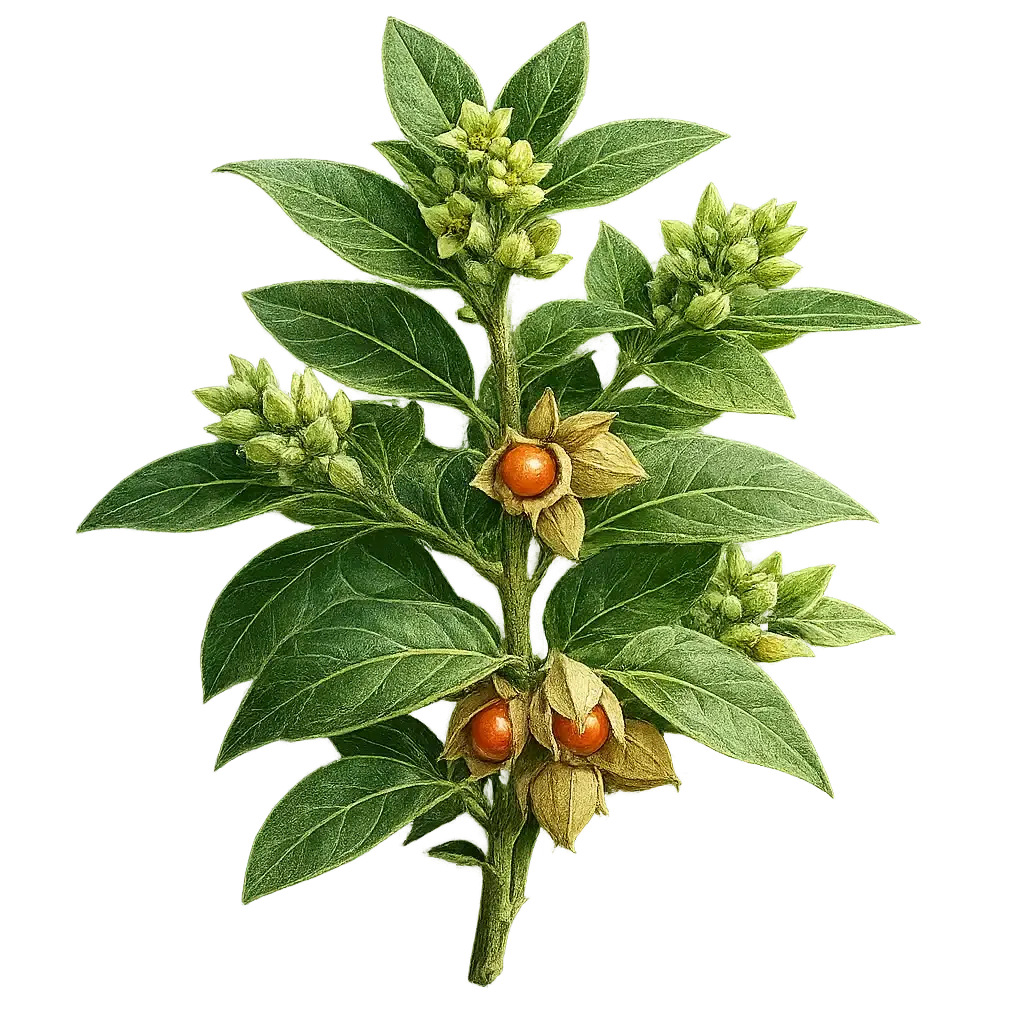
Two to four feet tall; a woody-based, somewhat sprawling shrubby perennial in its native climate; when grown as an annual in temperate gardens it tends toward a more upright two-to-three-foot habit; the overall appearance is of a soft, woolly gray-green plant with the characteristic papery-lantern fruit clusters that are its most visually distinctive feature in autumn
Root Description
The harvested root is a thick, fleshy taproot, whitish-tan in color, with a characteristic strong horse-like smell from the withanolide alkaloids; fresh roots are juicy and dense; dried roots are hard, wrinkled, and pale tan to cream-colored; the flavor is bitter, earthy, and somewhat unpleasant raw, which is why traditional Ayurvedic preparations almost always combine ashwagandha root powder with warm milk and sweetener to render it palatable; roots from plants grown for a full season in good conditions are finger-thick or greater and several inches deep
Primary Active Compounds
Withanolides (steroidal lactones unique to the Withania genus; the primary bioactive compounds; withaferin A and withanolide D are the most studied; anti-inflammatory, immunomodulatory, adaptogenic, and cytotoxic to certain cancer cell lines in laboratory studies); withanosides (glycosides of withanolides; water-soluble forms); alkaloids including somniferine, somnine, and cuscohygrine (contribute to sedative and antispasmodic activity); sitoindosides (adapted polysaccharides); iron; flavonoids; the standardized commercial root extracts are typically assayed for withanolide content at two point five to five percent
Ayurvedic Classification
Classified as a rasayana in Ayurvedic medicine; rasayanas are a category of preparations described in classical Ayurvedic texts as rejuvenating tonics that promote longevity, enhance vitality, and strengthen the body's fundamental tissues; ashwagandha is one of the most important rasayanas alongside amalaki, shatavari, and triphala; the specific use for male reproductive health, physical strength, stress management, and nervous system support in Ayurvedic practice has been continuous for over three thousand years
Clinical Research Status
Among the most clinically researched adaptogens in modern Western pharmacology; multiple randomized controlled trials have demonstrated significant reductions in serum cortisol, perceived stress scale scores, anxiety measures, and insomnia severity in stressed adults; smaller trials have shown improvements in testosterone, sperm quality, muscle strength, and endurance in men; the cortisol reduction finding specifically has been replicated across multiple independent research groups and represents the most robust clinical finding for any adaptogen herb in this series
Ashwagandha is the adaptogen with the most robust clinical evidence base for its primary claimed application. When the randomized controlled trial literature on stress and cortisol is reviewed, one finding stands above the rest: ashwagandha root extract at doses of three hundred to six hundred milligrams of standardized extract daily, in multiple independent trials across different research groups, produces statistically significant reductions in serum cortisol, perceived stress scores, and anxiety measures in stressed adults, with effect sizes that are clinically meaningful. This is not the pattern of a herb where the traditional reputation outpaces the evidence; this is a herb where the evidence has arrived to corroborate a three-thousand-year traditional use record for exactly the application being tested. For the homestead grower in any climate that has a warm summer, ashwagandha is a single-season root crop that requires nothing more complicated than warm soil, a dry site, patience through one growing season, and the willingness to drink the milk preparation that makes the bitter root palatable. The harvest and the medicine are the same day's work.
Introduction
Withania somnifera appears in the Charaka Samhita, one of the foundational texts of Ayurvedic medicine compiled approximately two thousand years ago, as a preeminent rasayana: a preparation capable of promoting longevity, restoring vitality to the debilitated, building physical strength, supporting reproductive health, and calming the agitated nervous system. These applications, accumulated across centuries of clinical observation in the Ayurvedic tradition, have proven remarkably consistent with what modern pharmacology has found when it has examined the herb's chemistry and clinical effects. The withanolides, a class of steroidal lactones unique to the Withania genus and named for the plant, are among the most pharmacologically versatile plant compounds studied in modern adaptogen research.
The Solanaceae family membership is worth noting because it connects ashwagandha to the most important vegetable family in most homestead gardens while also raising immediate questions about the nightshade connection. The nightshade alkaloids responsible for the toxicity of deadly nightshade, henbane, and jimsonweed are not present in Withania somnifera at meaningful concentrations; the plant's alkaloid profile is distinct from the toxic nightshades and does not create the neurological risks associated with those plants. The papery-lanterned fruits, which strongly resemble the Chinese lantern ornamental (Physalis alkekengi, a fellow Solanaceae member) and the edible tomatillo (Physalis ixocarpa), are a visual reminder of the family membership without any corresponding toxicity risk at food and tonic use quantities.
The name Indian Ginseng is a commercial convenience rather than a botanical relationship; ashwagandha and ginseng are unrelated plants from entirely different families and continents whose parallel roles as male vitality and adaptogen tonics in their respective medical traditions reflect convergent functional categories rather than any chemical or taxonomic connection.
How to Grow
Starting from Seed
Ashwagandha grows readily from seed and is most reliably started indoors six to eight weeks before the last frost to give the root the longest possible warm-season growing period. Sow seeds shallowly, about one quarter inch deep, in warm seed-starting mix at a soil temperature of at least 70 degrees Fahrenheit; 75 to 80 degrees produces the fastest and most uniform germination, typically seven to fourteen days. At soil temperatures below 65 degrees, germination is slow and erratic. Bottom heat from a seedling heat mat is the most effective way to maintain the required soil temperature during cool spring indoor conditions.
Transplant outdoors only after both soil and nighttime air temperatures are reliably warm; ashwagandha transplanted into cold spring soil will stall and may not develop sufficient root mass before autumn. In zones 7 and warmer, direct sowing after the last frost is feasible; in zones 6 and colder, the indoor start is essential to obtain a full-season root before the first autumn frost ends the growing period.
Site and Soil
Full sun and well-drained soil are the non-negotiable requirements. Ashwagandha's native Indian subcontinent climate is hot, seasonally dry, and often rocky or sandy; the plant is perfectly adapted to conditions that challenge most garden herbs. In rich, moist, heavily amended beds it produces lush above-ground growth at the expense of root development and is significantly more susceptible to root rot. In lean, sandy, well-drained soil in full sun it produces the dense, withanolide-rich root that is the entire point of growing it.
Raised beds with a sandy loam mix are ideal for gardens with heavy clay soils; a raised bed depth of twelve to fifteen inches allows unrestricted taproot development. Containers of fourteen inches or more in depth and diameter can support a productive ashwagandha plant, provided drainage is excellent and the container is placed in the hottest, sunniest position available.
Space plants eighteen to twenty-four inches apart. Once established, ashwagandha requires minimal watering; in most temperate summer climates, rainfall is sufficient and overwatering is a more common failure mode than drought. Water deeply and infrequently, allowing the soil to dry substantially between waterings. Avoid overhead watering in humid conditions.
Harvest
Harvest the root in autumn after the first light frost, or when the above-ground plant begins to die back naturally, approximately one hundred eighty to two hundred days after sowing. Dig carefully with a long fork, working well to the side of the plant to avoid severing the taproot, which extends deeper than the sprawling above-ground mass suggests. The root at harvest from a well-grown plant in good conditions is a solid finger-thick taproot several inches deep, often with lateral root branches. Shake or brush off loose soil; do not wash until immediately before processing to preserve shelf life.
Wash the harvested roots thoroughly, slice them crosswise into quarter-inch rounds or lengthwise into sticks, and dry on screens at 95 to 105 degrees Fahrenheit until fully dry; overdrying at high temperatures degrades the withanolide content. Alternatively, dry the root slices in a shaded, well-ventilated space at room temperature, which takes longer but preserves more of the volatile components. The dried root can also be powdered in a high-powered blender or spice grinder once fully dry; root powder is the form most commonly used in traditional ashwagandha milk preparations. Store dried root or powder in sealed glass jars away from light and heat; use within one to two years.
Medicinal Uses and Preparations
Stress, Cortisol, and Adaptogenic Activity
The cortisol reduction finding is the most replicated clinical result for ashwagandha and deserves to be understood clearly. Cortisol is the primary adrenal stress hormone; chronically elevated cortisol from ongoing psychological and physiological stress is associated with impaired immune function, disrupted sleep, increased abdominal fat deposition, reduced testosterone, impaired memory consolidation, and accelerated cellular aging. Multiple randomized controlled trials have shown that ashwagandha root extract at doses of three hundred to six hundred milligrams of standardized extract daily, taken for eight to twelve weeks, reduces morning serum cortisol by ten to thirty percent compared to placebo, with corresponding improvements in perceived stress, anxiety measures, sleep quality, and several biomarkers of chronic stress.
The mechanism involves the withanolide fraction's modulation of the hypothalamic-pituitary-adrenal axis, which is the central stress-response regulatory system. Withaferin A specifically has been shown to inhibit the Hsp90 chaperone protein, which regulates cortisol receptor sensitivity; the net effect is a normalization of the stress response rather than a blunting of it, which is the classic adaptogen profile. The plant does not eliminate the stress response, which is necessary for survival; it modulates the chronic over-activation of that response that produces the downstream health consequences listed above.
Sleep and Nervous System
The species name somnifera, sleep-inducing, references one of the oldest documented traditional applications: ashwagandha as a preparation for insomnia and nervous restlessness. The clinical evidence supports this; trials examining ashwagandha's effect on sleep quality have found improvements in sleep onset latency, total sleep time, sleep efficiency, and morning alertness in insomnia patients, with the withanolide and triethylene glycol fractions both appearing to contribute to the sleep-improving effect through separate mechanisms. The calming and sleep-supporting activity is not sedative in the conventional pharmacological sense; it does not produce drowsiness or next-day cognitive impairment at standard doses, but rather supports the nervous system's capacity to transition into rest by reducing the physiological arousal associated with chronic stress.
Physical Performance and Testosterone
A cluster of trials in healthy men and male athletes has found that ashwagandha supplementation improves muscle strength, muscle recovery, cardiorespiratory endurance, and serum testosterone compared to placebo over eight-to-twelve-week intervention periods. The testosterone-supporting effect is thought to involve the withanolide fraction's influence on the hypothalamic-pituitary-gonadal axis, possibly through cortisol reduction (since chronically elevated cortisol suppresses testosterone production), through direct influence on luteinizing hormone, or through the iron and zinc content of the root. Sperm quality improvements, including count, motility, and morphology, have been found in trials with infertile men, with serum antioxidant markers improving alongside the sperm quality measures.
Ashwagandha warm milk: the traditional preparation
The traditional Ayurvedic preparation for ashwagandha root, called ashwagandha ksheerapaka, combines root powder with warm full-fat milk, a fat-soluble vehicle that improves withanolide absorption significantly compared to water-based preparations, and with sweetener and spices that both improve palatability and add complementary medicinal properties. This is not merely a folk convention for making the bitter root drinkable; the fat in the milk genuinely increases the bioavailability of the fat-soluble withanolide fraction. Making the preparation as described below delivers more active compounds per dose than cold capsule preparations or water-based extracts.
Combine one cup of full-fat whole milk (or full-fat coconut milk as a dairy-free alternative) with one teaspoon of ashwagandha root powder in a small saucepan. Add one quarter teaspoon of ground cardamom and a pinch of ground black pepper; the pepper's piperine content further enhances absorption of fat-soluble compounds. Heat over medium-low heat, stirring continuously, until the milk just begins to steam; do not boil. Remove from heat and stir in one teaspoon of raw honey or jaggery to taste. Strain through a fine strainer if the powder has not fully incorporated. Drink warm, ideally in the evening, thirty to sixty minutes before sleep.
For maximum cortisol-reduction benefit, consistency matters more than any single dose; the clinical trials showing significant cortisol reduction used daily supplementation over eight to twelve weeks. A cup of ashwagandha milk every evening through autumn and winter, prepared in the way described, provides approximately three hundred to four hundred milligrams of root powder per serving, which falls within the range used in the more conservative end of the clinical trials. Grind the dried root to powder in batches and store the powder in a sealed jar for daily use; freshly ground powder from homegrown dried root is the highest-quality form available.
Golden milk variation: ashwagandha milk prepared with the addition of one half teaspoon of turmeric, one quarter teaspoon of ground cinnamon, and a small piece of fresh ginger grated in creates the broader anti-inflammatory golden milk preparation, incorporating the curcumin of turmeric and the gingerols of ginger alongside the withanolides. This combination is one of the most nutrient-dense warming evening drinks in the homestead herb repertoire and integrates the harvests of three separate medicinal herb garden plantings.
Tincture and Other Preparations
For those who prefer a concentrated liquid preparation, ashwagandha tinctures are prepared at a one-to-five ratio of dried root to menstruum, using a sixty percent alcohol and forty percent water mix that captures both the water-soluble glycoside fraction and the partly alcohol-soluble withanolide fraction. Standard tincture dosing is two to four milliliters two to three times daily. The tincture is more convenient for travel and consistent daily dosing than the milk preparation, though it delivers the withanolide fraction less effectively than the fat-containing milk vehicle.
Root powder capsules, at three hundred to six hundred milligrams two to three times daily, approximate the doses used in clinical trials and are the form most studied in the modern research. KSM-66 and Sensoril are the two most widely studied proprietary root extracts, both standardized for withanolide content; growers using their own homegrown dried root powder are working with a non-standardized product whose withanolide content varies with growing conditions, harvest timing, and drying method, and should plan for the possibility that higher doses of homegrown root powder may be needed to achieve effects comparable to standardized extracts.
Cautions: Ashwagandha at normal dietary and tonic use quantities has a strong traditional safety record and a favorable short-term clinical safety profile. The following specific points require careful attention. Thyroid interaction: ashwagandha has been shown in both animal studies and human trials to stimulate thyroid hormone production, raising T3 and T4 levels; this is a potential benefit for people with hypothyroidism but a significant concern for people with hyperthyroidism or those taking thyroid medications; people with any thyroid condition or taking thyroid medication should consult their physician before regular ashwagandha use and should monitor thyroid hormone levels if they choose to use it. Autoimmune conditions: the immune-modulating withanolide activity raises the same theoretical concern as astragalus for people with active autoimmune conditions; people with lupus, rheumatoid arthritis, Hashimoto's thyroiditis, or other autoimmune diseases should discuss ashwagandha use with their medical provider. Solanaceae sensitivity: as a nightshade-family plant, ashwagandha may cause reactions in people with nightshade sensitivity; this is distinct from the alkaloid toxicity of the dangerous nightshades but may produce inflammatory or digestive reactions in sensitive individuals, particularly those following autoimmune protocol diets that restrict nightshades. Pregnancy: ashwagandha is traditionally classified as an emmenagogue and abortifacient at high doses and is contraindicated during pregnancy; this is a category of traditional knowledge consistent with the withanolide activity on reproductive hormones; ashwagandha should not be used during pregnancy. Sedative medication interactions: the sleep-supporting and nervine-sedating activity creates a potential additive interaction with prescription sedatives, sleep medications, and anti-anxiety drugs; people taking these medications should discuss ashwagandha use with their prescriber before starting. Liver: isolated case reports of liver injury associated with ashwagandha supplementation have appeared in the literature; while causation is not definitively established in most cases, periodic liver function monitoring is reasonable for people using ashwagandha daily over extended periods. The characteristic horse-like smell and bitter taste of the root are occasionally reported as causing nausea when taken on an empty stomach; the traditional practice of combining it with warm milk and taking it before sleep largely avoids this problem by providing a fat-containing vehicle and by timing the dose for the lowest-food-stress period of the day.
Ashwagandha in Context: The Modern Stress Epidemic
Ashwagandha's current global commercial prominence, which has made it one of the five best-selling herbal supplements in the United States and Europe, reflects a genuine need: the chronic stress-cortisol dysregulation that underlies much of the insomnia, anxiety, fatigue, and immune vulnerability that defines the health pattern of modern working adults in wealthy countries. The herb found its moment because the condition it addresses has become nearly universal.
For the homestead grower, growing ashwagandha is a statement of self-sufficiency that is more achievable in practical terms than almost any other adaptogen in this series. The annual harvest timeline, the heat-loving drought-tolerant growing requirements that suit the same raised beds and sunny positions used for other nightshade-family crops, the simple dried-root-in-milk preparation that requires nothing beyond a saucepan and a grinder, and the genuinely robust clinical evidence base that backs the traditional application: these factors together make ashwagandha one of the most practical high-value medicinal herbs a homesteader can grow.
It is worth being clear about what it is not. It is not a treatment for clinical anxiety disorder or clinical insomnia, which are medical conditions requiring medical management. It is not a substitute for addressing the structural sources of chronic stress in daily life. It is a plant that genuinely supports the physiological stress response system's resilience when that system is under sustained load, and that does so with a safety profile and evidence base that justify regular use as part of a broader approach to managing the baseline stress load of modern life. The Ayurvedic practitioners who prescribed it three thousand years ago understood something real about what this root does, and the clinical pharmacologists who have studied it for the past twenty years have confirmed that understanding in the language of randomized controlled trials.
Pros and Cons
Advantages
The cortisol-reduction and stress-adaptation clinical evidence base is the most robust for any adaptogen in this series; multiple independent randomized controlled trials across different research groups have replicated statistically significant effects on serum cortisol, perceived stress, sleep quality, and anxiety measures; this is not a herb supported only by traditional reputation and laboratory assays but one with genuine human clinical trial evidence for its primary application
The annual harvest timeline, producing a usable root in a single growing season of approximately one hundred eighty to two hundred days, makes ashwagandha far more accessible to homesteaders in cold climates than multi-year root crops like astragalus; a plant started from seed in March can be harvested in October in zone 6; the entire cultivation cycle fits within one calendar year
The heat, drought, and lean soil preferences make ashwagandha a natural companion for the dry, sunny positions in the garden where most Mediterranean herbs thrive but where some other medicinal plants struggle; in a garden where the best positions are reserved for productive culinary herbs, ashwagandha fits alongside them rather than competing for prime moist bed space
The warm milk preparation, while requiring a small daily ritual investment, is one of the most genuinely pleasant medicinal herb preparations in this series; the combination of warm full-fat milk, cardamom, honey, and ashwagandha powder in the evening is an enjoyable drink rather than a medicinal obligation, and the traditional wisdom of combining it with fat and taking it at bedtime reflects real pharmacological reasoning about bioavailability and timing
The papery lantern fruits are genuinely ornamental; the plant in late summer, covered with the tan papery calyxes enclosing their bright orange-red berries, has a distinctive decorative quality that makes it an attractive element in the garden beyond its medicinal value, particularly in a mixed ornamental-medicinal planting where visual interest through the season matters
Limitations
The thyroid hormone stimulation is a genuine clinical concern rather than a theoretical one; ashwagandha demonstrably raises T3 and T4 levels, which is a benefit for some people and a contraindication for others; the people most drawn to an immune-modulating, stress-reducing adaptogen include people with Hashimoto's thyroiditis and autoimmune-driven hypothyroidism, who are exactly the population for whom the autoimmune and thyroid interactions require the most careful consideration and medical supervision
The bitter, horse-smelling root flavor is genuinely challenging for many people without the milk preparation vehicle; growers who dislike dairy or coconut milk, who cannot incorporate a daily warm-drink ritual into their routine, or who prefer capsules and tinctures will find the traditional preparation less accessible; dried-root capsules are a practical alternative but do not deliver the fat-enhanced absorption of the milk preparation
Cold climate annual cycle means that every growing season requires starting over from seed; unlike the perennial herbs in this series that require no replanting once established, ashwagandha in zones 7 and colder must be seeded, transplanted, tended, harvested, and dried every year; the per-season labor is low but the annual cycle commitment does not decrease over time as it does for perennials
The commercial supplement market for ashwagandha is crowded with products of highly variable quality; growers using their own homegrown dried root powder are working with non-standardized material whose withanolide content varies with soil, climate, harvest timing, and drying conditions, and may need to adjust dose upward compared to the standardized extracts used in clinical trials; this variability is the honest trade-off of growing your own versus purchasing standardized commercial extract
The isolated liver injury case reports, while not establishing a clear causal pattern, represent a safety signal that justifies periodic monitoring for daily long-term users; this is a relatively new safety concern emerging from the dramatically increased global consumption of ashwagandha supplements over the past decade and will require more accumulation of post-market surveillance data before the frequency and mechanism of the risk can be fully characterized
Final Thoughts
Ashwagandha asks for heat, a dry site, and one full growing season. It gives back a root with the best clinical evidence for cortisol modulation of any plant in this series, a three-thousand-year track record as the primary adaptogen of one of the world's oldest continuous medical traditions, and a warm-milk evening preparation that is the easiest medicinal herb ritual to sustain through a cold-weather season because it is genuinely pleasant to drink.
Start the seeds in March. Plant into warm soil in June. Harvest in October. Dry the root. Grind it. Put a teaspoon in a cup of warm milk every evening from November through February. That is the full protocol. The three thousand years of Ayurvedic documentation and the randomized controlled trials are both pointing at the same simple thing.