
Astragalus
Written By Arthur Simitian
QUICK FACTS
Common Name
Astragalus, Huang Qi (Yellow Leader in traditional Chinese medicine, referring to the yellow interior of the root and its status as a premier tonic herb), Milk Vetch; the common name milk vetch is shared with many Astragalus species and should not be used to identify plants for medicinal use; always verify the species as Astragalus membranaceus or the closely related Astragalus mongholicus before harvest or purchase
Scientific Name
Astragalus membranaceus (also classified as Astragalus propinquus in some taxonomic systems); Fabaceae family (legume family); native to northern China, Mongolia, and Siberia; one of approximately three thousand species in the genus Astragalus, which is one of the largest plant genera in the world; the vast majority of Astragalus species have no culinary or medicinal value and many North American species are toxic; species identification is the critical first step for anyone wishing to grow or use astragalus medicinally
Plant Type
Hardy perennial; the above-ground plant dies back to the ground in winter and re-emerges from the root crown each spring; the root system, which is the medicinal harvest, grows and develops continuously year after year and becomes increasingly valuable as the plant ages; unlike most herbs in this series where harvest begins in the first season, astragalus root reaches medicinal quality at three to four years minimum, with four to seven years producing the most potent roots
Hardiness Zones
Zones 5 to 9; cold-hardy through significant winters; the native habitat in northern China and Mongolia, which experiences severe cold and continental climates, predicts the cold tolerance well; in zone 5 the roots overwinter without protection; in zones 3 and 4 a mulch layer over the root crown is recommended; the plant is less tolerant of hot, humid climates than of cold ones
Height
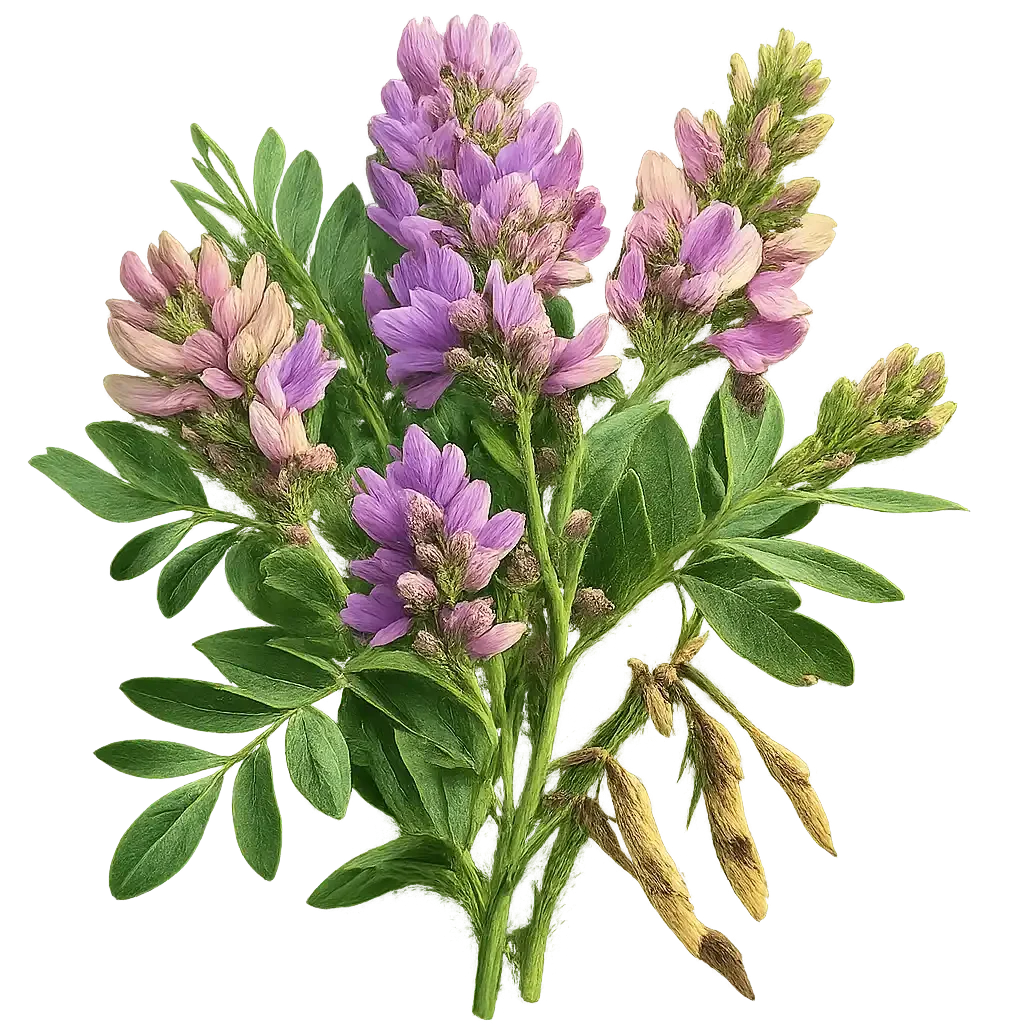
Two to four feet at maturity; the upright, somewhat bushy above-ground growth gives little indication of the substantial root system developing below; the feathery pinnately compound leaves and small pale flowers give the plant a soft, open appearance in the garden
Root Description
The harvested root is a thick taproot, typically pencil-wide to finger-wide in circumference, with tan-brown bark and a pale yellow interior; in commercial Chinese medicine supply, it is sold in tongue-depressor-shaped slices or as long dried sticks two to four inches long; the yellow color of the interior gives the herb its Chinese name huang qi (yellow leader); the flavor is mildly sweet, slightly earthy, and entirely inoffensive, which is one reason it integrates easily into soups and broths without overwhelming other flavors
Primary Active Compounds
Polysaccharides, primarily astragalans (complex sugar chains that stimulate macrophage and natural killer cell activity; the primary immune-modulating compounds responsible for most of the clinical effects observed in research); astragalosides, particularly astragaloside IV (triterpenoid saponins; the most studied of which, astragaloside IV, activates telomerase and has been extensively researched for potential anti-aging and cellular protective effects; the basis for the commercial TA-65 supplement); cycloastragenol (aglycone form of astragaloside IV; more bioavailable); flavonoids including calycosin and formononetin (isoflavones with anti-inflammatory and phytoestrogenic activity); amino acids; trace minerals including selenium and zinc
Traditional Medicine Classification
Adaptogen and superior tonic herb in traditional Chinese medicine; the adaptogen classification, shared with ashwagandha, ginseng, and eleuthero, describes herbs that support the body's capacity to resist physical, chemical, and biological stressors without stimulating or sedating; in TCM theory, huang qi is classified as a qi tonic (energy tonic) that strengthens the wei qi (defensive energy), which maps roughly onto immune function in biomedical terms; it is one of the fifty fundamental herbs of traditional Chinese medicine and has been in continuous documented use for over two thousand years
Critical Species Warning
Approximately twenty-five to thirty North American Astragalus species contain swainsonine, an alkaloid that causes locoism in livestock and is toxic to humans; these are known collectively as locoweeds; additional North American Astragalus species accumulate selenium from soil to toxic levels; Astragalus membranaceus is a Chinese species not native to North America and does not contain swainsonine; growers must purchase verified Astragalus membranaceus seed or plants from reputable suppliers and must not attempt to use any wild-collected North American Astragalus species as a substitute
Astragalus is the medicinal herb that most directly rewards patience, because the root that becomes the medicine requires a minimum of three to four years in the ground before it is worth harvesting, and the most potent roots come from plants that have been growing for five to seven years. It is not a herb for the grower who wants a harvest in the first season; it is a long-term investment in a medicinal root that is simultaneously one of the best-documented immune-modulating botanicals in modern clinical research and one of the most important tonic herbs in the two-thousand-year pharmacopoeia of traditional Chinese medicine. The polysaccharides that stimulate macrophage and natural killer cell activity, the astragalosides that have generated serious interest in cellular aging research, and the flavonoids that contribute anti-inflammatory activity all accumulate in the root progressively with age. Plant it, leave it alone, and let the years build the medicine.
Introduction
Astragalus membranaceus, huang qi, has been used in traditional Chinese medicine for at least two thousand years, with documentation in the Shennong Bencao Jing, the foundational TCM pharmacopoeia compiled approximately two thousand years ago, where it is listed as a superior herb: one that can be taken continuously without toxicity and that builds fundamental vitality rather than treating specific acute disease. This classification as a tonic rather than a therapeutic herb is important context for understanding both its traditional use and its modern research profile. It is not a herb taken for a cold and put away; it is a herb taken daily as part of a long-term health maintenance practice, most classically as a component of soups and broths where the dried root slices are simmered with other tonic herbs and with chicken, pork, or vegetables for several hours and then consumed regularly through the seasonal transitions of autumn and winter when the traditional Chinese understanding of health places the greatest stress on the defensive qi.
Western interest in astragalus developed through the adaptogen research tradition that emerged from Soviet and then Western herbalism in the second half of the twentieth century. The immunological research specifically, examining the polysaccharide fraction's effect on macrophage activation and natural killer cell activity, has produced a body of in vitro and animal model evidence substantial enough to have attracted significant clinical attention, including research in oncology supportive care contexts where astragalus is among the most studied botanical immunomodulators. The astragaloside IV research, following the discovery that this compound activates telomerase in human T-cells and may have implications for cellular aging and immune senescence, generated a wave of commercial interest in the early 2010s and remains an active area of investigation.
For the homestead grower, astragalus occupies an unusual position in this series: it is a medicinal root herb whose primary value lies in a harvest that takes years to develop, grown from the Chinese medicinal tradition rather than the European one, and requiring specific attention to species identification that most other herbs in this series do not. These considerations are all manageable, and the case for growing it is strong for any homestead with a genuine commitment to a long-term medicinal herb garden.
The Species Identification Imperative
Astragalus is one of the largest plant genera in the world, with approximately three thousand species distributed across temperate regions globally. The medicinal species, Astragalus membranaceus and the closely related Astragalus mongholicus, are Chinese species with the specific chemistry described in this entry. They are not native to North America and will not be found growing wild on the continent.
Many North American Astragalus species are toxic. The locoweed group, including Astragalus lentiginosus, Astragalus mollissimus, and others, contain swainsonine, an indolizidine alkaloid that inhibits lysosomal enzyme activity, causes neurological damage in livestock and wildlife, and is toxic to humans. Other North American species accumulate selenium from selenium-rich soils to concentrations that cause selenium toxicity. The plants look, to an untrained eye, similar to the medicinal species: pinnately compound leaves, pea-like flowers, legume pods. They are not the same plant and are not safe to use.
Purchase Astragalus membranaceus seed or transplants from reputable herb nurseries that clearly identify the species. Do not collect wild Astragalus of any species growing in North America for medicinal use. Do not purchase unlabeled dried root from unverified sources. The medicinal dried root in commerce is generally reliable when purchased from established suppliers of Chinese herbs, as Astragalus membranaceus is a major commercial crop in northern China with a well-characterized supply chain.
How to Grow
Starting from Seed
Astragalus membranaceus grows reliably from seed with the legume-family characteristic of a hard seed coat that benefits from scarification before sowing. Nick the seed coat with sandpaper or a nail file, or soak in warm water overnight, before sowing to improve germination rate and speed. Without scarification, germination is uneven and slow; with it, germination occurs in seven to fourteen days at soil temperatures of 65 to 70 degrees Fahrenheit.
Direct sow in spring after the last frost in a permanent location; astragalus develops a deep taproot from the first season and resents transplanting once established. If starting indoors for transplanting, use deep cells or individual pots of at least four inches depth to accommodate the taproot's early development, and transplant while the seedling is still young, before the taproot has reached the container bottom.
Inoculate seed or soil with Rhizobium leguminosarum bacteria appropriate for the Fabaceae family before planting; as a legume, astragalus forms nitrogen-fixing root nodules when the appropriate rhizobium bacteria are present in the soil, providing its own nitrogen nutrition and improving soil fertility. Commercial legume inoculant is available from garden suppliers and ensures the symbiosis is established from planting rather than waiting for natural soil bacteria populations to colonize the roots.
Site, Soil, and Ongoing Care
Full sun to light partial shade; well-drained soil of moderate to low fertility; slightly sandy or loamy soil that accommodates deep root development is ideal. As with most root herbs, the root's physical development is constrained by soil compaction and clay density: loose, deep, well-drained soil produces longer, straighter, more productive roots than heavy clay. If the garden soil is dense clay, amend the planting area deeply with coarse sand and organic matter, or build a raised bed of sufficient depth to allow unrestricted root development.
Once established, astragalus is drought-tolerant and low-maintenance. The nitrogen-fixing symbiosis means it requires no nitrogen fertilizing; moderate phosphorus and potassium support root development in low-fertility soils. Water consistently through the first season while the plant is establishing; reduce supplemental watering in subsequent seasons as the deep root system accesses deeper soil moisture independently.
Mark the planting location permanently and clearly. A root that takes four to seven years to develop is not an herb that the grower can afford to accidentally dig up in year two during garden renovation. Label stakes, garden maps, and any other documentation system in use to ensure the planting is protected for its full maturation period.
The Harvest Decision
The minimum harvest age for medicinal-quality astragalus root is three years; four years is a better minimum; five to seven years produces the most potent roots. Harvest in autumn after the above-ground growth has died back, when the root's stored compound concentration is at its seasonal peak. Dig carefully with a long fork or narrow spade, working well away from the root to avoid severing the taproot, which extends considerably deeper than the above-ground plant suggests.
The decision of whether to harvest the entire root or to divide the plant, replanting a portion while harvesting the rest, is the key management choice. A large, well-developed root from a seven-year plant is a substantial medicinal harvest from a single root; dividing the crown and replanting extends the productive life of the planting. Most homestead growers harvest some roots on a rolling schedule, planting new seedlings each year so that harvesting one mature root leaves the bed continuously stocked with plants at various stages of development.
Wash harvested roots thoroughly, slice them lengthwise into tongue-depressor-shaped pieces, and dry on screens or in a food dehydrator at 100 to 110 degrees Fahrenheit until fully dry. Store in sealed glass jars away from light and heat; properly dried astragalus root keeps for two to three years without significant potency loss.
Medicinal Uses and Preparations
Immune Modulation and Tonic Use
The primary clinical evidence for astragalus focuses on its polysaccharide fraction's effect on innate immune function. Multiple in vitro and animal studies, and a smaller number of human clinical trials primarily in oncology supportive care contexts in China, demonstrate that astragalus polysaccharides stimulate macrophage activation, enhance natural killer cell cytotoxicity, promote the production of interferon and interleukin-2, and support T-cell proliferation. This mechanism profile positions astragalus as an immune tonic rather than an immune stimulant: it does not acutely spike immune activity the way echinacea is thought to during active infection but rather supports and maintains baseline immune surveillance and response capacity over time.
This distinction matters practically. Astragalus is not the herb to reach for at the onset of a cold, in the same way echinacea is used; it is the herb taken daily through autumn and winter to maintain the immune system's baseline fitness entering the cold and flu season. The traditional Chinese practice of consuming astragalus broth regularly through autumn and winter reflects exactly this tonic maintenance model, and the modern clinical evidence broadly supports it.
Adaptogenic Properties
As an adaptogen, astragalus has been studied for its effects on stress response, fatigue, and physical performance. The evidence base here is thinner than the immune evidence and consists largely of animal models and small human trials, but the direction is consistent: astragalus preparations reduce physiological markers of stress response, support adrenal function, and improve physical performance markers in fatigued subjects. The mechanism is not fully characterized but likely involves both the polysaccharide immune-modulating activity and the saponin fraction's effects on cellular energy metabolism.
The Telomerase Connection
Astragaloside IV's activation of telomerase in human immune cells, documented in research published in the early 2000s, generated significant scientific and commercial interest because telomere shortening is closely associated with cellular aging and immune senescence. The hypothesis that activating telomerase could slow aspects of immune aging underpins the commercial supplement market around cycloastragenol and astragaloside IV. The research is genuine and the mechanism is biologically coherent; the clinical translation of this effect into meaningful longevity outcomes in humans remains under investigation and the claims made in the commercial supplement space substantially outrun the current clinical evidence. The homestead grower using their own decoction-grade root should hold this context in mind: the astragaloside fraction is present in the whole root and in standard decoctions, but at concentrations substantially lower than in commercial concentrated extracts.
Astragalus immune tonic broth
This is the most direct and traditional application of dried astragalus root: a long-simmered broth that extracts the water-soluble polysaccharides and astragalosides into a warming daily tonic suitable for regular consumption through autumn and winter. The flavor is mild, slightly sweet, and integrates with almost any savory broth without asserting itself strongly. It is genuinely pleasant and requires no tolerance for medicinal bitterness.
Combine four to six dried astragalus root sticks or slices (approximately thirty to forty grams) with six cups of water in a medium saucepan or slow cooker. For additional immune-tonic depth, add four to six dried shiitake mushroom caps, two or three slices of dried reishi mushroom if available, and a two-inch piece of dried ginger. Bring to a boil, reduce to a very low simmer, cover, and cook for two to four hours. The long simmer time extracts the polysaccharides, which require sustained heat and time to enter solution from the dense root tissue. Strain and discard the solids; the astragalus sticks are too fibrous to eat and are never consumed directly. Season the broth lightly with sea salt.
Drink one to two cups of this broth daily, either as a standalone tonic or as the base for a soup with added vegetables, noodles, or grains. For storage, the prepared broth keeps refrigerated for four to five days or frozen in portions for up to three months. Making a large batch on Sunday for the week ahead is the most practical approach for consistent daily use.
Variation for chicken soup: use this astragalus broth as the liquid base for a conventional chicken soup, simmering a chicken carcass or whole cut-up chicken in the broth with onion, carrot, celery, and additional ginger. The finished soup has the full immune-tonic compound profile of the astragalus combined with the collagen, glycine, and mineral content of long-simmered bone broth; the result is a preparation that supports both immune function and gut integrity, and that tastes like a particularly good chicken soup.
Tincture Preparation
For those who prefer a concentrated liquid preparation to daily broth, an astragalus tincture made with dried root is an effective alternative. Use a one-to-five ratio of dried root to menstruum (one gram of root per five milliliters of liquid); a menstruum of sixty percent alcohol and forty percent water extracts both the polysaccharide fraction (water-soluble) and the saponin fraction including astragalosides (partly alcohol-soluble). Combine chopped or powdered dried root with the menstruum in a sealed glass jar, store in a cool dark location, and shake daily for four to six weeks. Strain through cheesecloth and press the marc to recover the remaining liquid. Dose is typically two to four milliliters two to three times daily in water or juice.
Note that the polysaccharide fraction, which is responsible for the primary immune-modulating activity, is most efficiently extracted by hot water decoction rather than alcohol tincture. A tincture captures the saponin and flavonoid fractions well but extracts polysaccharides less efficiently than a long simmer. For growers who wish to optimize for the immune-tonic polysaccharide fraction specifically, the traditional decoction method is more appropriate than tincturing.
Cautions: Astragalus membranaceus at normal dietary and tonic use quantities has a strong traditional safety record spanning two thousand years with no significant documented toxicity from food and tonic use. The following points require specific attention. Species verification is the most critical safety consideration: never use any Astragalus species of North American origin as a medicinal substitute for Astragalus membranaceus; multiple North American species contain the neurotoxin swainsonine or accumulate toxic selenium concentrations; use only verified Astragalus membranaceus from reputable sources. Autoimmune conditions: the immune-stimulating polysaccharide activity of astragalus raises a theoretical concern for people with active autoimmune disease, where immune activation could theoretically worsen the autoimmune response; the evidence on this concern is mixed, with some research suggesting astragalus may actually regulate rather than simply stimulate the immune system, but people with active autoimmune conditions including lupus, rheumatoid arthritis, and multiple sclerosis should discuss astragalus use with their medical provider before starting regular consumption. Immunosuppressive medications: people taking immunosuppressive medications, including transplant rejection medications and chemotherapy agents, should discuss astragalus use with their oncologist or prescribing physician before starting use; the immune-modulating activity creates a potential pharmacological interaction with drugs designed to suppress immune activity. Pregnancy: insufficient safety data exists for regular therapeutic use of concentrated astragalus preparations during pregnancy; culinary tonic broth use is less of a concern than concentrated supplements. The four-to-seven-year harvest timeline is not a safety consideration but is a practical commitment that should be understood before planting: once planted and established, the plant should not be harvested until it has reached sufficient maturity.
Astragalus and the Long-Term Medicinal Garden
Astragalus occupies a specific and irreplaceable position in a thoughtfully planned homestead medicinal garden because it is the herb whose value most directly compounds with time. A chamomile planting produces a useful harvest in its first year. An echinacea root reaches harvestable quality in three years. An astragalus root is reaching its optimal potency at five to seven years and, if managed as a rolling bed with staggered planting years, provides an ongoing supply of well-aged root indefinitely.
The homestead grower who plants astragalus in year one of establishing a medicinal garden will have a genuinely mature, high-quality root to harvest beginning in year four or five. The grower who plants additional seedlings each year from year one will have established a rolling harvest cycle by year five where roots of various ages are always available, and where harvesting one mature root can be done while younger roots continue to develop. This is the management model that most closely mirrors how astragalus has been cultivated in China for commercial and family medicinal use for centuries.
Combined with the nitrogen-fixing root nodules that improve soil fertility for neighboring plants, the relatively low maintenance requirements once established, and the genuinely attractive above-ground plant with its feathery compound leaves and small flowers, astragalus is worth the garden space and the patience. The medicine it provides cannot be replicated by a quick-harvest annual, and the satisfaction of using a root that the grower planted five or six years earlier, knowing exactly how it was grown and when it was harvested, is one of the cleaner expressions of what a long-term homestead medicinal herb garden is actually for.
Pros and Cons
Advantages
The immune-modulating polysaccharide evidence base for Astragalus membranaceus is among the most substantial for any adaptogen herb in modern research, with a consistent mechanistic profile across in vitro studies, animal models, and clinical trials in oncology supportive care; the traditional two-thousand-year use record for exactly the immune tonic applications that the modern research supports represents one of the most coherent traditional use and modern evidence alignments in this series
As a legume, astragalus fixes atmospheric nitrogen through rhizobial root symbiosis, improving soil fertility for neighboring plants and requiring no nitrogen fertilizing itself; it is one of the few medicinal herbs in this series that actively improves the soil it grows in rather than merely tolerating it
Once established past the first season, astragalus is drought-tolerant, low-maintenance, and reliably perennial through zone 5 winters without protection; the management burden across the multi-year growing period is minimal; the investment is in time and space, not in ongoing labor
The mild, slightly sweet flavor of astragalus root integrates into soups, broths, and slow-cooked preparations without imposing a medicinal taste; it is one of the easiest medicinal herbs to incorporate into daily cooking for people who are not accustomed to drinking medicinal-tasting herbal preparations
The decoction-grade dried root stores for two to three years without significant potency loss, making a good harvest from mature roots a multi-year supply; the dried root is also available commercially at low cost as a reference standard and fallback for years when the garden harvest is insufficient
Limitations
The three-to-seven-year harvest timeline is a genuine commitment that most herbs in this series do not require; a grower who plants astragalus and expects a medicinal harvest within the first or second season will be disappointed; the value proposition requires accepting a delayed return that many annual herb growers find unfamiliar
The species identification and sourcing requirement is more critical for astragalus than for almost any other herb in this series; the existence of toxic North American Astragalus species and the visual similarity between Astragalus membranaceus and various locoweed species means that wild collection is categorically not appropriate, and that careful sourcing from verified suppliers is not optional
The autoimmune and immunosuppressive medication interaction concern requires individual medical consultation for a meaningful subset of the people most likely to want to use an immune-modulating tonic herb; people with autoimmune conditions or on immunosuppressive regimens are precisely the people for whom immune support is most salient, and they are also the people for whom the contraindication is most relevant
The deep taproot and the multi-year establishment mean that astragalus occupies its garden bed space for the entire maturation period without any harvest; in a small garden where every square foot of productive space is allocated carefully, committing a permanent bed position to a four-to-seven-year root crop requires deliberate planning that shorter-harvest herbs do not demand
The telomerase and longevity research context creates significant commercial noise around astragalus that makes it difficult for homestead growers to assess what the whole-root decoction actually provides versus what concentrated astragaloside IV extracts deliver; the marketing claims in the supplement space substantially outrun the clinical evidence base and can make it harder to understand the genuine, well-supported immune-tonic case for the herb at food and traditional use doses
Final Thoughts
Astragalus is the herb that asks the grower to think in years. The seedling going into the ground this spring is not this year's medicine or next year's; it is the medicine of the fourth or fifth autumn from now, when the root has had enough seasons to build the polysaccharide and astragaloside concentration that makes it what the Chinese pharmacopoeia has called a superior herb for two thousand years.
Plant it in verified, well-drained soil. Inoculate with rhizobium. Mark the bed clearly. Simmer the dried slices in broth for two hours. Drink it through October and November. These are the instructions that were effectively the same two thousand years ago when the plant was first documented, and the modern research has not changed them.