
Bay Leaf
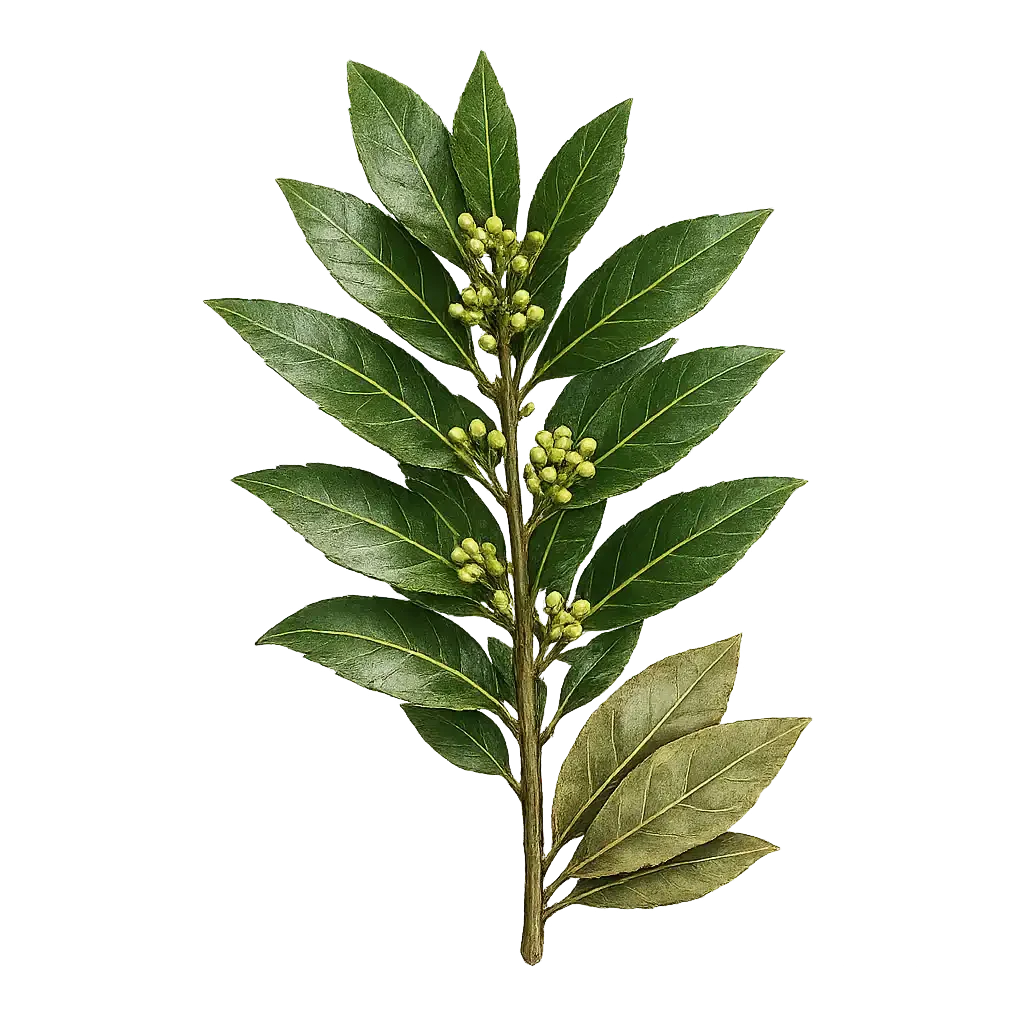
Written By Arthur Simitian
QUICK FACTS
Common Name
Bay Leaf, Bay Laurel, Sweet Bay, True Bay, Greek Laurel; not to be confused with California Bay Laurel (Umbellularia californica), which has a far more pungent, almost medicinal eucalyptus-camphor flavor unsuitable as a culinary substitute in most applications; or with Indian Bay Leaf (Cinnamomum tamala, also called tejpatta), which has a clove-cinnamon flavor profile unrelated to true bay
Scientific Name
Laurus nobilis; Lauraceae family; the species name nobilis means distinguished or noble, reflecting the plant's deep cultural role in Greek and Roman civilization as a symbol of achievement and victory; native to the Mediterranean region and adjacent Asia Minor; cultivated continuously in European gardens from antiquity to the present and naturalized in mild-climate areas of California, Australia, and New Zealand
Plant Type
Evergreen tree or large shrub; grows slowly to fifteen to sixty feet in its native Mediterranean habitat over many decades but is easily maintained at any size by pruning; in containers it grows to three to six feet and can be kept at any desired height indefinitely through annual pruning; fully evergreen, providing green leaves and harvesting opportunities in every month of the year
Hardiness Zones
Zones 8 to 11 in the ground; the plant is damaged at sustained temperatures below about 15 degrees Fahrenheit and killed at sustained temperatures below about 5 degrees Fahrenheit; in zones 6 and 7 it survives most winters in a sheltered position with protection but is killed in severe winters; in zones 5 and colder it must be grown in a container and overwintered indoors; container cultivation at any latitude makes it accessible across all zones
Sun and Soil
Full sun to partial shade; well-drained soil of moderate fertility; drought-tolerant once established; performs poorly in waterlogged soil or in heavy shade; the Mediterranean origin predicts the optimal conditions: sunny, well-drained, lean to moderate fertility, tolerant of alkaline and rocky soils
Flavor Profile
Complex and irreplaceable: warm, slightly floral, lightly camphoraceous, subtly spicy with undertones of clove, pine, and eucalyptus; the flavor is almost entirely in the essential oil, which releases slowly during long cooking; this slow release is the defining culinary characteristic of bay leaf and the reason it is indispensable in braised dishes, stocks, stews, and slow-cooked preparations; fresh bay is substantially more aromatic than dried
Primary Active Compounds
1,8-cineole (eucalyptol; primary essential oil constituent; antimicrobial, anti-inflammatory, expectorant; the same compound found in eucalyptus oil and rosemary; responsible for the camphor-eucalyptus dimension of the flavor); linalool (contributes floral softness to the flavor); eugenol (clove-like aromatic; antimicrobial; found also in cloves, cinnamon, and basil); alpha-pinene and beta-pinene (pine-fresh notes; antimicrobial); methyl eugenol; sesquiterpene lactones; tannins; flavonoids including quercetin and catechins
Cultural and Historical Role
Bay laurel is the plant woven into the victor's crown in Greek and Roman tradition; the laurel wreath awarded to Olympic victors, military generals, and poets laureate; the plant from which the academic title baccalaureate derives, via the medieval baccalaurus (laurel berry bearer); the plant with which the oracle at Delphi was associated; and a continuous kitchen herb from ancient Mediterranean cooking to the present day without interruption, making it one of the longest continuously cultivated culinary herbs in the Western tradition
Yield and Harvest
A mature container-grown bay tree of three to four feet produces one hundred to three hundred leaves per year depending on vigor; a well-established in-ground tree in zones 8 and above produces leaves year-round without limitation; the evergreen character means fresh leaves are available in every month; a single established tree supplies more dried bay than any household could reasonably use, making bay one of the most productive per-square-foot herbs for its culinary value once the initial growing period has passed
Bay leaf is the herb most underestimated from its dried supermarket form and most revelatory when encountered fresh from the tree. The dried bay leaves in the jar on most kitchen shelves have lost the majority of their essential oil content during the eighteen months or more they may have been sitting there; they contribute a shadow of what a fresh or recently dried bay leaf provides, which is why an entire generation of cooks has concluded that bay leaf does not really do much. A fresh bay leaf bruised between the fingers before it goes into the pot releases a wave of warm, complex, slightly camphoraceous aroma that immediately establishes why this herb has been in continuous culinary use across the Mediterranean for three thousand years without interruption. The slow release of that essential oil through long cooking, building the deep background note that professional cooks describe as the foundational herb of classical French and Mediterranean cuisine, is the functional argument for growing your own bay and using it fresh or within six months of drying. Everything else follows from that single demonstration: bruise a fresh leaf, smell it, put it in the braise, taste the difference.
Introduction
Laurus nobilis has been in continuous cultivation across the Mediterranean region since at least the classical Greek period and probably considerably longer, with archaeological evidence of bay laurel use in cooking and ritual contexts from Bronze Age sites in the Aegean. In Greek and Roman culture it was simultaneously a culinary herb, a medicinal plant, a symbol of divine favor and human achievement, and a sacred tree of Apollo. The tradition of the laurel wreath as a symbol of victory persists in the academic title laureate, in the position of poet laureate, and in the French term baccalaurea, from which the English baccalaureate derives.
Bay entered northern European cooking through the Roman influence on Gaul and Britain and through the medieval spice trade, and it became a fundamental ingredient of classical French cuisine through the bouquet garni tradition, which places bay alongside thyme and parsley as the foundational aromatics of French stock, braise, and stew making. The bouquet garni arguably represents the most influential single codification of herb use in Western culinary history, and bay leaf's central position in it reflects a three-thousand-year consensus that this plant's slow-release aromatic chemistry is indispensable to cooked preparations requiring extended time and heat.
The plant's status as a living tree rather than an annual or herbaceous perennial distinguishes it from most entries in this series and raises different cultivation considerations. A bay tree established in the ground in a suitable climate is essentially permanent; a container-grown bay is a multi-decade investment that produces leaves for the kitchen continuously across its entire lifespan.
Why Fresh Bay Outperforms Dried
The culinary chemistry of bay leaf is almost entirely carried by its essential oil, and essential oil is volatile: it evaporates over time, accelerated by light, heat, and low humidity. Commercial dried bay leaves are typically dried at high temperatures, packaged in containers that do not exclude air, and may sit in distribution and retail for a year or more before reaching the kitchen shelf and then sit there for another year. By the time a commercial dried bay leaf goes into the pot, it may retain ten to twenty percent of the essential oil that was present in the fresh leaf.
Home-dried bay from a garden tree, dried at room temperature in good air circulation and away from direct light, then stored in a sealed glass jar in a dark location and used within six months, retains substantially more of the essential oil and produces a noticeably more aromatic and flavorful result than commercial dried bay. This is not a marginal difference; blind tasting comparisons between fresh, recently home-dried, and old commercial dried bay consistently find fresh and recent home-dried superior in both aroma and flavor impact by a wide margin.
Fresh bay, used directly from the tree with the leaf slightly bruised or crushed before adding to the pot, is the most potent form. Bruising breaks the oil glands visible as tiny translucent dots in the leaf surface and initiates the oil release before the leaf enters the cooking liquid. This technique, standard practice in professional kitchens where bay trees are sometimes grown in pots near the kitchen garden, makes a perceptible difference in the aromatics of a long-cooked dish compared to adding an unbruised dry leaf.
How to Grow
In-Ground Growing (Zones 8 and Above)
In suitable climates, bay laurel is among the least demanding trees in cultivation. Plant in a sunny, well-drained position in moderately fertile soil; the Mediterranean origin predicts the requirements accurately. Young trees in their first two winters benefit from a layer of mulch over the root zone and a windbreak from cold drying winds, which cause more damage than frost alone; a sheltered south- or southwest-facing position near a wall provides both reflected warmth and wind protection during the establishment period.
Once established, bay requires no irrigation in climates with moderate summer rainfall, no fertilizing beyond an annual mulch of compost, and no pest management in most climates. Scale insects are the primary pest in some regions; a dormant oil spray in late winter controls scale on established trees. Bay sucker, a psyllid that causes cupped and yellowed leaf margins, is a secondary concern manageable by removing and destroying affected leaves.
Bay can be maintained at any size by pruning; it tolerates hard pruning well and responds by producing dense new growth. An established in-ground bay tree left unpruned in a mild climate will eventually become a substantial tree of fifteen to twenty feet; most kitchen garden situations call for maintaining it at six to ten feet where the lower branches remain accessible for harvest.
Container Growing (All Zones)
Container cultivation is the solution for growing bay in any climate and is the method used by most homesteaders outside zones 8 to 11. A bay tree in a large terra cotta or glazed ceramic pot becomes one of the most handsome and productive container plants available, providing fresh leaves year-round, improving in visual presence as it ages, and lending a permanent Mediterranean character to the patio, doorstep, or kitchen garden entrance where it is placed.
Use a well-drained potting mix with added coarse grit or perlite; bay does not tolerate waterlogged roots in containers any more than in the ground. Choose the largest pot practical for the growing space; a container at least fourteen to eighteen inches in diameter allows a tree of three to four feet without the root restriction that limits leaf production. Water consistently through the growing season, allowing the top inch of the mix to dry between waterings; reduce watering significantly in winter when the tree is not in active growth.
Feed with a balanced slow-release fertilizer in spring and midsummer; container-grown bay is more dependent on supplemental nutrition than in-ground trees because nutrients leach from the container mix with regular watering. Repot every two to three years into the next size container, or root-prune and return to the same container to maintain a consistent size.
Overwintering Indoors
In zones 6 and colder, bring container-grown bay indoors before the first hard frost. Bay needs light but not high temperatures during winter; a cool, bright indoor position such as an unheated sunroom, garage with a south-facing window, or cool spare room at 40 to 50 degrees Fahrenheit is ideal. The goal is to maintain the tree in a semi-dormant state through winter without freezing it; high indoor temperatures combined with low winter light cause weak, drawn growth that makes the tree more vulnerable to pests.
Reduce watering to once every two to three weeks in winter; more frequent watering in cool conditions leads to root rot, which is the primary cause of container bay failure over winter. Watch for scale insect and spider mite infestations in the warm indoor environment; both are manageable with neem oil solution applied every two weeks through the overwintering period if present. Move the tree back outdoors after the last frost when nighttime temperatures are reliably above 40 degrees Fahrenheit.
Harvesting and Drying
Harvest bay leaves as needed from the tree throughout the year; the evergreen character makes fresh leaves available in every season. The leaves are fully aromatic from the first season of growth and improve in essential oil concentration as they mature; leaves that are fully expanded and have darkened to the deep glossy green of mature bay are at peak potency. Young pale green leaves at the growing tips are less potent and better left on the tree to develop.
For drying, harvest individual leaves or short sprigs in late spring through summer when the essential oil content is highest. Spread leaves in a single layer on a clean surface or on drying screens in a warm, shaded, well-ventilated space. Unlike soft herbs that dry in a few days, bay leaves take one to two weeks to fully dry due to their thick, leathery texture. Properly dried leaves should be stiff, not pliable, and should retain the green color; yellowed dried bay has lost most of its essential oil. Store in a sealed glass jar away from light and heat; use within six months for best culinary quality.
Culinary Uses
The Slow-Release Aromatic
Bay leaf's culinary function is distinct from every other herb in this series: it is not a finishing herb added at the end of cooking but a foundational aromatic whose essential oil releases slowly over the course of long cooking, building a deep background note that supports and integrates the other flavors of a braise, stew, stock, or slow sauce. It does not register as a distinct flavor on the palate the way thyme or rosemary does; it contributes to the overall aromatic complexity of the dish in a way that is most clearly perceived by its absence. The classic test is to make the same pot of stock twice, once with bay and once without, and taste both; the stock with bay has a roundness and depth that the stock without does not.
This slow-release character means bay leaf performs best in preparations cooked for thirty minutes or more; it has little impact on quickly cooked dishes. A bay leaf added to a twenty-minute pasta sauce contributes minimally; the same leaf in a two-hour braise contributes substantially. The minimum time for meaningful bay leaf contribution is approximately thirty minutes of simmering; the optimal range is one to three hours; and bay leaf remains productive in preparations cooked for eight or more hours, as in slow-cooker stews and overnight braises, where its essential oil continues to contribute throughout the extended cooking time.
The Bouquet Garni
The bouquet garni, the bundle of fresh herbs tied together or enclosed in cheesecloth and added to a cooking pot then removed before serving, is the classical French vehicle for bay leaf in professional cooking. The standard composition is one or two bay leaves, several sprigs of thyme, and a bundle of parsley stalks tied together with kitchen twine. Variations add rosemary, celery leaf, leek green, or other aromatics appropriate to the specific preparation. The cheesecloth version, sometimes called a sachet d'epices, encloses the herbs and adds peppercorns, cloves, and sometimes a strip of dried orange peel for preparations where a more complex aromatic profile is wanted.
The bouquet garni is appropriate for any long-cooked stock, braise, stew, soup, or sauce where the herbs need to be removable before serving. Bay leaves are not pleasant to eat as they remain leathery and slightly sharp-edged even after long cooking; the always-remove-bay-before-serving instruction that appears in virtually every recipe using it is both a texture and a mild safety consideration.
Beyond Savory: Custards, Rice, and Milk
Bay leaf in sweet preparations is an underused application that reveals the floral and slightly spicy dimensions of its essential oil chemistry particularly well. A bay leaf simmered in the milk or cream base of a custard, panna cotta, or rice pudding for fifteen minutes before the other ingredients are added infuses the dairy with a subtle warmth and complexity that most tasters cannot immediately identify but that makes the finished preparation distinctly more interesting than the same dish made without it. The 1,8-cineole and linalool in the essential oil integrate particularly well with the fat of dairy, producing a flavor note that chefs describe variously as warm, faintly nutty, or slightly floral.
Bay-infused rice, made by adding a fresh bay leaf to the cooking water for white or brown rice, is one of the simplest and most effective applications of this principle: the finished rice has a subtle aromatic quality that elevates it from a plain starch to a flavored accompaniment. Bay-infused simple syrup, made by simmering a fresh bay leaf in equal parts sugar and water for ten minutes, produces a versatile ingredient for cocktails, lemonade, fruit salad dressings, and dessert glazes.
Bay-infused milk for custard and rice pudding
This is the technique that makes the case for bay in sweet applications most directly. The preparation takes ten minutes and the result, once experienced, makes plain custard or rice pudding taste unfinished by comparison.
For a base that yields approximately four servings of custard or rice pudding, combine two cups of whole milk with one fresh bay leaf (or two dried leaves) in a small saucepan. Heat over medium-low heat until the milk just begins to steam and tiny bubbles appear at the edges; do not boil. Remove from heat, cover, and allow to steep for fifteen minutes. Remove and discard the bay leaf. Taste the infused milk: it should have a warm, faintly floral quality distinctly different from plain milk, with no bitterness.
Proceed with the custard or rice pudding recipe using this infused milk in place of plain milk. No adjustment to the other ingredients is necessary; the bay note is a background complexity that does not compete with vanilla, cinnamon, or other primary flavors but deepens and integrates them.
The same infusion technique applies to cream-based sauces for poultry and pork: steep a bay leaf in the cream before adding it to the sauce pan, remove before incorporating, and the finished sauce will have a depth that plain cream does not provide. Bay-infused bechamel, made by infusing the milk with bay and a small piece of onion before incorporating into the roux, is the version found in classical French cooking and is the reason bechamel in a good kitchen is a different sauce from bechamel in a mediocre one.
Medicinal Uses
Digestive and Carminative
The 1,8-cineole content of bay leaf essential oil gives it the same class of digestive antispasmodic activity as eucalyptus and rosemary, both of which share this compound. A bay leaf tea prepared from two to three fresh or recently dried leaves per cup of boiling water, steeped covered for ten minutes, provides a mildly carminative preparation appropriate for gas, bloating, and digestive discomfort after meals. The flavor is distinctive and pleasant: warming, slightly camphoraceous, and herb-forward without the bitterness of many medicinal teas.
The traditional use of bay in cooking, particularly in rich, fatty, long-cooked meat dishes, reflects an understanding of its digestive supportive role that predates the pharmacological characterization of its active compounds: the essential oil that releases slowly into a braise of lamb or beef is simultaneously flavoring the dish and supporting the digestion of its fat content through carminative and antispasmodic activity. This dual culinary and digestive function is one of the cleaner examples of traditional food-medicine integration in the European herbal tradition.
Blood Sugar and Metabolic Research
A series of small clinical trials in the early 2000s, most notably a 2003 study published in Diabetes Care examining the effect of bay leaf on type 2 diabetes, found that bay leaf consumption in capsule form at one to three grams daily significantly improved glucose tolerance, reduced fasting blood glucose, and improved lipid profiles in subjects with type 2 diabetes over a forty-day period. The specific compounds responsible are not fully characterized but are thought to include the polyphenol and flavonoid fraction of the leaf. These findings generated considerable interest but have not been followed up with the scale of clinical trials needed to establish bay leaf as a mainstream diabetes management adjunct. The direction of the evidence is suggestive; the mechanism is plausible given the documented polyphenol content; and at food use quantities the safety profile is excellent, making bay a reasonable addition to a diet designed to support blood sugar management while the clinical evidence base develops.
Respiratory Support
The 1,8-cineole content positions bay leaf as a mild respiratory herb in the same functional category as rosemary and eucalyptus. Bay leaf steam inhalation, prepared by steeping several fresh leaves in just-boiled water and inhaling the steam as described in the wild bergamot entry, delivers 1,8-cineole and alpha-pinene directly to the nasal passages and upper airways, providing mild expectorant and antimicrobial activity appropriate for the nasal congestion and upper respiratory inflammation of a cold. This application is less potent than thyme or wild bergamot steam inhalation due to the lower thymol content but provides a gentler, more accessible alternative for people who find the pungency of the Lamiaceae respiratory herbs too sharp.
Cautions: Bay leaf at normal culinary quantities has an excellent safety record spanning three thousand years of continuous use with no significant documented toxicity. The following specific points apply. Always remove bay leaves from cooked dishes before serving; the dried or cooked leaf remains stiff and leathery and has sharp edges that can cause discomfort or, in rare cases, minor internal abrasion if swallowed whole; this is the reason behind the universal remove-before-serving instruction in recipes. Bay leaf essential oil at concentrated extract levels is an irritant and should not be applied undiluted to skin; this caution applies to concentrated extracts only and not to culinary use or the whole leaf. California Bay Laurel (Umbellularia californica) is not an appropriate substitute for Laurus nobilis in cooking; it contains umbellulone, a compound that causes intense headaches through irritation of the trigeminal nerve; even brief inhalation of the freshly crushed leaf can trigger a severe headache in sensitive individuals; the two plants look somewhat similar but are readily distinguished by the far more intense, almost medicinal camphor-eucalyptus smell of California bay and its larger, more lanceolate leaves; always confirm the species when foraging or purchasing. Indian Bay Leaf (Cinnamomum tamala, tejpatta) is a different species entirely with a clove-cinnamon flavor; it is used in completely different culinary applications and the two species are not interchangeable despite the common English name bay leaf sometimes being applied to both. Pregnancy: bay at culinary food quantities is safe; the essential oil at high medicinal doses has emmenagogue activity in the historical literature and concentrated preparations should be avoided during pregnancy. People with known Lauraceae allergy (which includes avocado, cinnamon, and camphor within the family) should be aware of the potential for cross-reactivity, though bay leaf allergy is uncommon.
Bay in the Kitchen Garden Design
A bay tree in a container is one of the most functionally and aesthetically successful permanent elements available to the kitchen garden. The dark glossy evergreen leaves, the neat architectural habit of a well-pruned specimen, and the classical Mediterranean character of the plant suit it to a range of garden design contexts from formal to relaxed. A matching pair of container bay trees flanking a kitchen door or garden gate is one of the oldest and most enduring garden design conventions, with precedents in European garden history going back to at least the seventeenth century.
Unlike most herbs in this series, bay does not need to be planted in the main herb bed. It functions as a structural element: a container specimen near the kitchen door provides constant visual presence and the convenience of stepping outside to harvest a leaf while cooking; an in-ground specimen in zone 8 and above can anchor a corner of the kitchen garden while growing slowly into a multi-decade feature. The harvest it produces across that entire period, continuously, from a plant that asks almost nothing in return once established, makes it one of the highest lifetime return-on-investment herbs in this entire series.
Pros and Cons
Advantages
Fresh bay leaf is categorically superior to commercial dried bay in culinary applications, and growing your own is the only reliable way to access it; the difference between a fresh bruised bay leaf in a long braise and a commercial dried leaf that has been on the shelf for two years is not subtle; it is the difference between a foundational aromatic contribution and almost nothing
Fully evergreen and harvest-ready in every month of the year; no other culinary herb in this series provides a year-round fresh harvest from a single plant without any seasonal gap; the container-grown bay tree is a permanent kitchen resource rather than a seasonal one
One established tree supplies more dried bay than any household can use in a year, making bay one of the most productive per-square-foot kitchen herbs for culinary value once past the initial establishment period; the ongoing harvest cost after the tree is established approaches zero
The architectural quality of a well-grown bay tree as a container plant is a genuine ornamental asset; it provides permanent structure and a classical Mediterranean presence in the kitchen garden or patio that few annual or herbaceous herbs can offer; a matched pair flanking an entry point is a garden design convention with centuries of precedent for good reason
Three thousand years of continuous culinary use across Mediterranean, French, British, and global cuisines provides an exceptionally well-tested recipe and application repertoire; bay is one of the most universally understood herb flavors in the world and integrates into virtually every culinary tradition that uses long-cooked preparations
Limitations
Cold climate limitation is genuine; outside zones 8 to 11, bay must be grown in containers and overwintered indoors, which requires space, light, and consistent winter management; a bay tree brought inside to a warm, low-light indoor environment without adequate humidity is susceptible to scale, spider mite, and root rot; the overwintering requirement is manageable but is a real ongoing commitment
The first two to three years after planting, whether in a container or in the ground, produce a smaller plant with a limited harvest; bay is a slow-growing tree and patience is required before the tree reaches the size and leaf density that makes it a truly abundant kitchen resource; the investment is in years rather than seasons
The California Bay Laurel and Indian Bay Leaf confusion is a genuine practical hazard; growers who receive unlabeled plants or who forage without confident species identification risk using a plant with entirely different and potentially unpleasant culinary characteristics; buying labeled plants from reputable nurseries or propagating from confirmed Laurus nobilis stock is essential
Bay does not work as a quick-cooking herb; the slow-release essential oil character that makes it invaluable in long braises and stocks is a limitation in fast-cooking applications; cooks who primarily prepare quick weeknight dishes of thirty minutes or less will see less benefit from growing bay than cooks who regularly make stocks, braises, and slow-cooked stews
Container overwintering in cold climates requires meaningful indoor space; a bay tree in a fourteen to eighteen inch pot cannot be tucked into a corner the way a potted herb can; it needs a bright cool location that may compete with other uses of the available indoor space through the four to five months of a cold-climate winter
Final Thoughts
Bay leaf earns its position in the herb series not as an annual or herbaceous perennial that the grower plants and harvests seasonally, but as a permanent kitchen resource that improves every year and asks almost nothing in return for a continuous supply of one of the foundational aromatics in Western cooking. The tree is the investment; the harvest is the return on that investment across the entire lifespan of a plant that can live for decades and eventually generations.
Bruise a fresh leaf before it goes in the pot. Keep the jar sealed and use the dried leaves within six months. Remove the leaf before serving. Make the bechamel with bay-infused milk at least once and understand why it has been done that way in French kitchens for three centuries. These are not complicated instructions; they are the complete practical guide to getting what this plant genuinely offers.