
Bergamot (Wild)
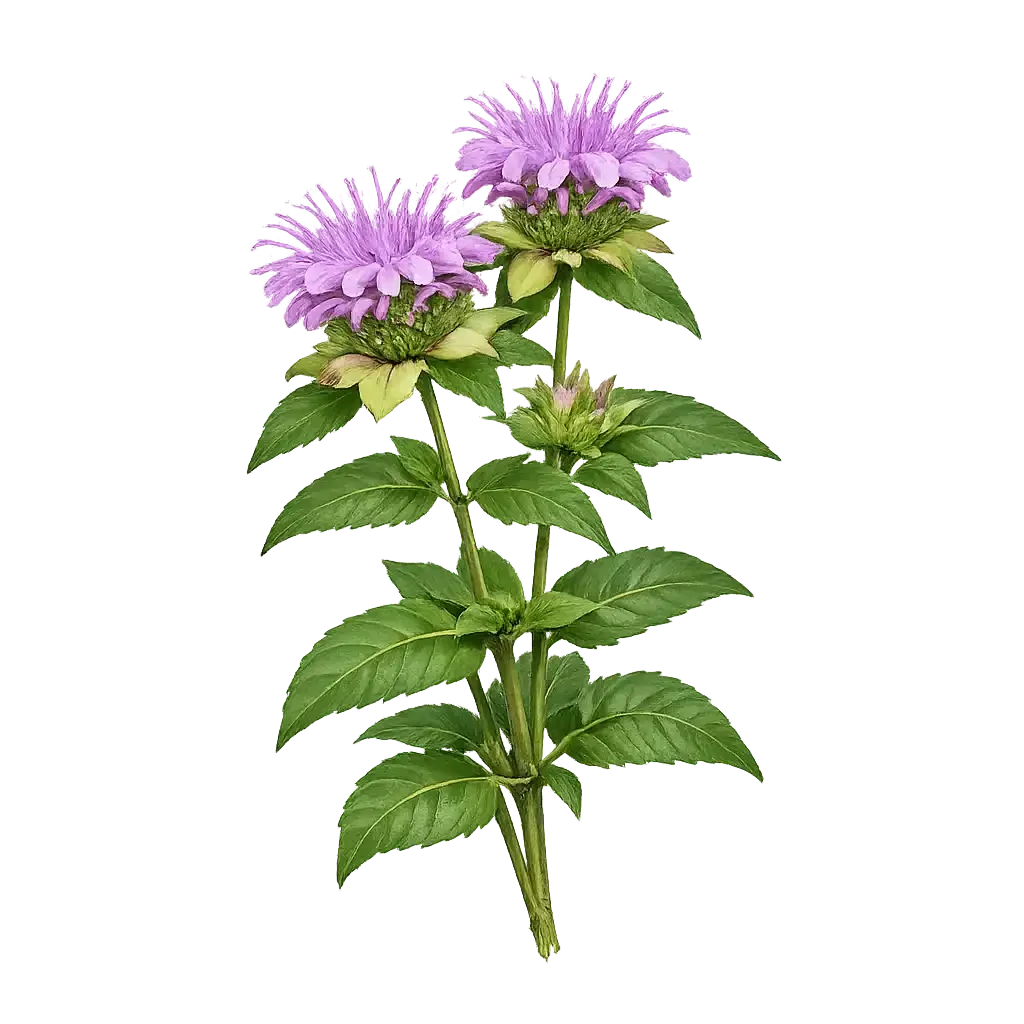
Written By Arthur Simitian
QUICK FACTS
Common Name
Wild Bergamot; the name bergamot is shared with Bee Balm (Monarda didyma) and, confusingly, with the bergamot orange (Citrus bergamia) that flavors Earl Grey tea; these are entirely unrelated plants; the Monarda species smell similar to bergamot orange because they share some of the same volatile aromatic compounds, particularly linalool, but they are in no other way related; wild bergamot is the lavender-flowered species while bee balm is the scarlet-flowered species most familiar from cultivated gardens
Scientific Name
Monarda fistulosa; Lamiaceae family; the genus name honors Spanish physician and botanist Nicolas Monardes, who described New World plants in the sixteenth century; fistulosa from the Latin for hollow tube, referring to the hollow stem; native to a broad range across North America from Quebec to British Columbia and south through the eastern and central United States to Mexico; one of the most widely distributed native Monarda species
Plant Type
Herbaceous perennial; clump-forming; spreads slowly by rhizome to form increasingly large colonies over time; dies back to the ground in winter and re-emerges reliably in spring; fully cold-hardy across most of its native range
Hardiness Zones
Zones 3 to 9; one of the cold-hardiest perennial herbs in this series; native to climates as cold as the Canadian prairie and as warm as the Texas hill country; requires no winter protection across the vast majority of temperate North America and Europe where it is grown in cultivation
Height
Two to four feet tall; upright, square-stemmed clumps that spread gradually to two to three feet wide over three to four seasons; the flower stems are erect and rarely need staking
Flavor and Fragrance
Oregano and thyme with a lavender-floral background and a distinct wild quality that distinguishes it from either cultivated oregano or lavender alone; the flavor is more pungent and complex than commercial oregano; the fragrance is one of the most distinctive in the herb garden; the essential oil chemistry explains the flavor: thymol and carvacrol (the primary active compounds in thyme and oregano) are present alongside linalool and other monoterpenes that create the floral dimension
Primary Active Compounds
Thymol (primary antimicrobial phenol; same compound responsible for thyme's antimicrobial activity; inhibits bacterial cell membrane function; active against Staphylococcus, E. coli, and Candida species in laboratory assays); carvacrol (antimicrobial phenol; same compound found in oregano; synergistic with thymol); linalool (monoterpene alcohol; contributes floral fragrance; anti-anxiety and sedative properties in animal models); rosmarinic acid (anti-inflammatory polyphenol; found across the Lamiaceae family); luteolin and other flavonoids; tannins
Native Habitat
Open prairies, dry rocky hillsides, open woodlands, roadsides, and disturbed ground across a broad range of North America; naturally adapted to lean, well-drained, often alkaline soils with full sun; the native habitat conditions closely predict the optimal garden growing conditions: lean soil, full sun, good drainage, and moderate to dry moisture levels
Pollinator Value
Exceptional; among the highest of any native North American herb for native bee species; the deep tubular flowers are specifically well-suited to bumblebees with long tongues, which are the primary pollinators; also visited by hummingbirds (particularly Monarda didyma), hawkmoths, and butterflies; wild bergamot is one of the recommended plantings in native bee habitat restoration programs across the United States and Canada
Indigenous Use
Extensive; Ojibwe, Menominee, Blackfoot, Lakota, and many other Indigenous nations used Monarda fistulosa for respiratory infections, fevers, digestive complaints, headaches, skin infections, and as a food flavoring; the antimicrobial thymol and carvacrol chemistry provides a pharmacological basis for the respiratory and infection-related traditional applications; the plant was one of the most widely used medicinal herbs across the continent before European contact
Wild bergamot is the native North American herb whose antimicrobial chemistry is essentially identical to that of thyme and oregano, two of the most evidence-backed culinary medicinal herbs in the European tradition, delivered in a plant that is native to the continent, cold-hardy to zone 3, extraordinarily attractive to native bumblebees and pollinators, and produces lavender flower heads of genuine ornamental beauty from midsummer through early autumn. The thymol and carvacrol that give wild bergamot its antimicrobial potency and its oregano-lavender flavor are the same phenolic compounds that make thyme Commission E-approved for respiratory infections and that make oregano oil one of the most commercially significant botanical antimicrobials. In wild bergamot, these compounds are packaged in a drought-tolerant, cold-hardy, self-spreading prairie perennial that asks for a sunny, well-drained position and essentially nothing else. The plant's Indigenous use record across dozens of North American nations for exactly the respiratory, fever, and antimicrobial applications that the thymol chemistry predicts is among the most consistent matches between traditional ethnobotanical knowledge and modern phytochemical analysis in this entire series.
Introduction
Monarda fistulosa is one of approximately twenty species in the genus Monarda, all native to North America and all sharing the characteristic square stems, opposite aromatic leaves, and globular flower heads of the mint family. The genus divides broadly into the red-flowered bee balm species (Monarda didyma, native to the eastern United States) and the lavender-to-pink-flowered wild bergamot species (Monarda fistulosa, with the broadest North American range), with various other species and hybrids occupying intermediate positions. Both species and their numerous cultivated varieties are grown as ornamentals throughout the temperate world; the medicinal use of both species is well-established in Indigenous North American practice, though wild bergamot has the more extensive documented record across the broadest range of Indigenous nations.
The naming confusion around bergamot is worth addressing directly. The bergamot of Earl Grey tea is bergamot orange, Citrus bergamia, a citrus fruit grown in Calabria, Italy, whose peel yields an essential oil used to flavor the tea. The bergamot of the herb garden, both wild bergamot and bee balm, are Monarda species in the mint family with no botanical relationship to the citrus. The shared name reflects a perceived similarity in fragrance: both the citrus and the Monarda species contain linalool and other aromatic compounds that create a convergent floral note in their essential oils, and early European observers applied the bergamot name to the American plants by analogy with the familiar Italian citrus fragrance.
Wild bergamot was introduced to European gardens in the seventeenth century and has been grown as an ornamental and medicinal herb there ever since. It was one of the herbs carried from the colonies to England as part of the general botanical exchange of the period, and it appeared in English kitchen and physic gardens from at least the early eighteenth century.
How to Grow
Establishment
Wild bergamot grows readily from seed, division, or stem cuttings. Direct sow seed in autumn for spring germination, or start indoors eight to ten weeks before the last frost and transplant after the danger of frost has passed. The seeds require a cold stratification period of approximately thirty days before germination; autumn outdoor sowing provides this naturally. Transplants establish readily and first-year plants typically flower in their first summer if started early enough.
Division of established clumps in early spring, before growth is more than a few inches tall, is the fastest way to create new plants from an existing planting. Dig the clump, separate it into sections each containing several stems and a portion of the rhizome, and replant immediately at the same depth. Divisions establish within two to three weeks and flower normally in the same season.
Space plants eighteen to twenty-four inches apart; they spread by rhizome to fill the available space over two to three seasons and a generous initial spacing avoids the need for early division to manage crowding. In rich soil the spread is faster; in lean soil it is slower and more contained.
Growing Conditions
Full sun is the first priority; wild bergamot in shade produces fewer flowers, weaker stems, and is significantly more susceptible to powdery mildew, which is its primary pest concern in cultivation. A minimum of six hours of direct sun per day maintains a healthy, productive planting; eight or more hours produces the most compact, floriferous, and mildew-resistant plants.
Well-drained soil of moderate to low fertility is the second priority. Wild bergamot is a prairie plant adapted to lean, sometimes rocky or sandy soils; in rich, heavily amended beds it produces lush, floppy growth with reduced essential oil concentration and increased powdery mildew susceptibility. The essential oil content of the leaves and flowers, which determines both the flavor intensity and the antimicrobial compound concentration, is higher in plants growing under mild stress on lean soils than in plants on rich amended beds. This is the same principle that applies to most Mediterranean aromatics: modest stress concentrates the oil.
Once established, wild bergamot is drought-tolerant and requires no supplemental irrigation in most temperate climates during the growing season. It is one of the more water-independent perennials in this series after the first establishment season, which is an asset in dry gardens or on slopes where irrigation is impractical.
Powdery Mildew
Powdery mildew on the foliage in late summer is the primary management challenge for wild bergamot and Monarda species generally. The white powdery fungal coating appears on the upper leaf surfaces after flowering in warm, humid conditions, particularly in shade or crowded plantings with poor air circulation. It is aesthetically unpleasant but does not kill the plant and does not affect the quality of flowers harvested before the mildew appears.
The most effective management is preventive: full sun, good air circulation, moderate soil fertility, and selecting mildew-resistant cultivars where ornamental use is the priority. Native species plants are generally more mildew-resistant in conditions that approximate their native habitat than cultivated ornamental varieties, which have sometimes been bred for flower color or size at the expense of disease resistance. Cutting the entire clump to the ground after flowering in late summer removes the mildewed foliage cleanly and stimulates a flush of fresh growth that often remains mildew-free through autumn.
Harvesting
Harvest flower heads when the globular head is fully open and the majority of tubular flowers within the head are extended; this is the peak of both essential oil content and visual appeal. Cut stems with several leaves below the flower head in the morning after dew has dried. The flowers can be used fresh or dried; dried flowers retain their color and fragrance remarkably well compared to many other herb flowers, making wild bergamot one of the more rewarding herb flowers for dried use.
Harvest leaves for tea and culinary use from late spring through midsummer, before the plant puts its energy into flowering; the leaf essential oil content is highest in the pre-flower growth phase. Young leaves at the growing tips have the most concentrated aroma. Dry in small bundles hung upside down in a warm, ventilated, shaded space; the dried leaf retains its oregano-lavender fragrance for twelve to eighteen months in sealed glass storage.
Culinary Uses
Tea
Wild bergamot leaf and flower tea is the most direct culinary and medicinal application of the harvest. One to two teaspoons of dried leaf and flower per cup of just-off-boil water, steeped covered for ten minutes, produces a fragrant tea with an oregano-lavender character that is warming, aromatic, and immediately pleasant to most palates. The thymol and carvacrol that give the tea its antimicrobial properties are volatile and evaporate with steam; covering the cup during steeping is important to retain the full aromatic and active compound content in the cup.
This tea has been made in exactly this way by Indigenous peoples across North America for respiratory infections, fevers, and digestive complaints for centuries before European contact. The evidence that the thymol and carvacrol in the cup have genuine antimicrobial activity against the respiratory pathogens for which the tea was traditionally used is now well-established at the laboratory level; whether the concentrations achievable in tea are clinically significant for systemic infections is less certain, but the combination of pleasant flavor, antispasmodic properties that ease cough and bronchospasm, and the warming diaphoretic action that supports fever management makes wild bergamot tea an entirely rational supportive treatment for colds and respiratory illness.
Culinary Flavoring
The dried leaf of wild bergamot is a direct substitute for dried oregano in any recipe where an oregano-lavender note rather than pure oregano is appropriate. It is particularly well-suited to grilled meats, roasted vegetables, bean dishes, and tomato-based preparations where its complexity adds a dimension that standard oregano does not. The fresh flowers are edible and used as a garnish in salads and drinks in the same way as borage flowers, though with a more assertive peppery-oregano flavor rather than borage's mild cucumber character.
In the Oswego tea tradition of early American colonial cooking, wild bergamot was brewed as a beverage herb by colonists who had encountered it in Indigenous use and who adopted it as a substitute for imported black tea, particularly during the colonial boycott of British tea goods in the period around the Boston Tea Party. The beverage tradition predates the medicinal adoption in European-American culture and reflects the practical culinary value of the plant independent of its pharmacological properties.
Wild bergamot respiratory steam inhalation
Steam inhalation with wild bergamot is among the most direct applications of the thymol and carvacrol chemistry to the respiratory tissues where these compounds are most needed. The volatile antimicrobial phenols are carried on steam directly to the nasal passages, sinuses, and upper airways, where they exert local antimicrobial and antispasmodic activity at concentrations much higher than could be achieved through any oral preparation.
Bring two to three cups of water to a full boil in a medium saucepan. Remove from heat and add two large handfuls of fresh wild bergamot leaf and flower, or three tablespoons of dried herb. Allow to steep for two minutes. Place the saucepan on a stable surface, drape a large towel over your head and the pan to create a steam tent, and inhale the steam through the nose for five to ten minutes, breathing slowly and deeply. Keep eyes closed to avoid irritation from the volatile oils.
The combination of the steam's physical action (loosening mucus, reducing mucosal inflammation) and the thymol and carvacrol concentration in the steam (antimicrobial, antispasmodic, expectorant) provides genuine symptomatic relief for sinus congestion, respiratory infection, and cough. The preparation is appropriate at the first signs of a cold, during active respiratory illness, and for ongoing sinus inflammation. Repeat once or twice daily through the acute phase of illness.
The same tea preparation, drunk warm with honey, provides an internal parallel to the steam inhalation with an added soothing effect on the throat from the honey's demulcent action. Together they constitute a complete home-based respiratory support protocol from a single garden plant.
Medicinal Uses
Respiratory Infections and Colds
The thymol and carvacrol content of wild bergamot positions it as a native North American equivalent of thyme for respiratory applications. Thyme is Commission E-approved for bronchitis, upper respiratory catarrh, and cough, with the clinical evidence specifically supporting the thymol and carvacrol as the active compounds responsible for antispasmodic action on bronchial smooth muscle and antimicrobial activity against respiratory pathogens. Wild bergamot contains the same compounds in a similar profile and traditional Indigenous use across multiple nations supports the same respiratory applications with extraordinary consistency.
The diaphoretic action of hot wild bergamot tea, its ability to promote perspiration and support the body's natural fever response, was one of the primary traditional applications among Indigenous peoples and remains a rational supportive use during febrile illness. This is the same mechanism described for yarrow and elderflower tea in this series: promoting perspiration during the rising phase of a fever supports the body's own thermoregulatory response rather than suppressing it.
Digestive and Carminative Use
The Lamiaceae family membership and the essential oil chemistry of wild bergamot overlap substantially with oregano, thyme, and other mint-family carminatives. Hot wild bergamot tea after meals provides the same antispasmodic relief from gas, bloating, and digestive discomfort that mint, thyme, and oregano tea provide, through the same mechanism of smooth muscle relaxation in the gastrointestinal tract. This is a straightforward application of the aromatic carminative principle that applies consistently across the mint family.
Topical Antimicrobial Use
A strong decoction of wild bergamot leaf and flower applied topically, either as a wash or as a poultice of bruised fresh leaves, delivers thymol and carvacrol directly to skin infections, minor wounds, fungal infections, and insect bites. Indigenous nations used exactly this application for skin infections and wound care with documented consistency. The antimicrobial activity of thymol against Staphylococcus species at the concentrations achievable in a topical herb preparation is sufficient to support this use as a practical first-line homestead wound-care measure for minor infections, consistent with the traditional record.
Cautions: Wild bergamot at normal tea, culinary, and topical use quantities has a long, safe traditional use record with no significant documented toxicity. The following points apply. The essential oil of wild bergamot, like the essential oils of thyme and oregano, is highly concentrated; undiluted essential oil applied directly to skin causes irritation and should not be used neat; this caution applies to concentrated extracts and not to the herb tea or dried herb preparations which are at physiological concentrations. Pregnancy: the thymol content at high medicinal doses has historically placed Monarda in the emmenagogue category in some traditional herbals; culinary tea use at one to two cups daily is not a meaningful concern, but concentrated preparations during pregnancy are not recommended and large habitual doses should be avoided. Thyroid medication interaction: the rosmarinic acid content of Lamiaceae herbs including wild bergamot inhibits the thyroid peroxidase enzyme in laboratory assays; the clinical significance of this interaction at normal tea consumption levels is unclear, but people taking thyroid medications should be aware of it and discuss regular consumption with their prescriber. Lamiaceae family allergy is possible; people with known allergy to other mint-family plants including mint, basil, oregano, or thyme should approach wild bergamot cautiously. The rhizomatous spreading habit can become aggressive in rich, moist garden soils; in formal beds this may require division every two to three years to manage the colony size, though in a natural or prairie-style planting the spread is an asset rather than a management challenge.
Wild Bergamot in the Native Garden
For North American homesteaders, wild bergamot occupies a unique position in this series as one of the few herbs that is simultaneously a proven medicinal plant with well-characterized active compounds, a significant native bee habitat plant whose presence in the garden meaningfully supports local pollinator populations, and a genuinely beautiful ornamental that earns its border position on aesthetic grounds alone. The lavender globe flowers from midsummer through early autumn, the square stems with their architectural upright habit, and the prairie-native character of the plant contribute to a kitchen garden that connects to the regional ecology rather than imposing an entirely imported Mediterranean herb palette.
In a prairie-style or naturalistic garden planting, wild bergamot combines naturally with other native prairie plants including coneflower (Echinacea), black-eyed Susan (Rudbeckia), and goldenrod (Solidago) to create a self-sustaining, pollinator-rich, medicinally productive garden community that requires minimal inputs once established. This native plant community approach, combining medicinal productivity with ecological function and regional authenticity, is among the most compelling models for the homestead herb garden and wild bergamot is an appropriate cornerstone of it.
Pros and Cons
Advantages
The thymol and carvacrol chemistry is among the best-documented antimicrobial profiles in the Lamiaceae family, directly paralleling the Commission E-approved evidence for thyme; the Indigenous use record for respiratory infections, fevers, and wound care across dozens of North American nations represents one of the most consistent traditional use records for any plant in this series, and the chemistry provides a clear mechanistic explanation for that record
Native to a vast range of North America and cold-hardy to zone 3; requires no winter protection across essentially the entire continent and thrives in conditions that mirror its native prairie habitat; this is not an imported Mediterranean herb adapted to conditions outside its native range but a plant perfectly suited to the climate and soils of the garden it is most likely to be grown in
Exceptional pollinator value for native bumblebees and other long-tongued native bee species whose populations are most under pressure from habitat loss; planting wild bergamot is a direct contribution to native bee conservation with a documented and meaningful outcome
Drought tolerance and preference for lean, well-drained soils makes it one of the most low-input perennials in this series after establishment; it asks for no irrigation, no fertilizing, and no significant management beyond dividing the clump when it becomes congested every three to four years
The dried leaf and flower are among the most fragrance-retentive of any herb in this series; properly dried wild bergamot retains its characteristic oregano-lavender fragrance for twelve to eighteen months, making the dried harvest useful throughout the year for tea, culinary use, and potpourri long after the growing season has ended
Limitations
Powdery mildew on the foliage in late summer is essentially universal in humid climates with poor air circulation; while it does not kill the plant or affect the quality of the earlier harvest, it reduces the aesthetic quality of the planting through the second half of the season; full sun and good air circulation mitigate but do not always eliminate the problem
The rhizomatous spreading habit, which is an asset in a naturalistic planting, becomes a management challenge in a formal bed; the colony expands steadily each season and requires division every two to three years to contain it; in a small garden this may limit its appropriate placement to areas where spreading is acceptable
The flavor is more assertive and complex than most growers expect from an oregano relative; the lavender-floral dimension and the distinctly wild character of the flavor require adjustment in recipe applications compared to commercial dried oregano; growers who expect a direct oregano substitute will need to explore the specific flavor profile before integrating it confidently into cooking
First-year plants grown from seed may not flower until late summer of the first season or may defer flowering to the second year depending on sowing date and growing conditions; the full ornamental and harvest potential develops from the second year onward; the initial season requires patience
The naming confusion between wild bergamot, bee balm, and bergamot orange creates persistent identification and sourcing uncertainty; plants sold as bergamot at garden centers may be any Monarda species or hybrid, and the medicinal properties attributed to Monarda fistulosa specifically may not apply equally to all commercial Monarda cultivars, which vary substantially in essential oil chemistry
Final Thoughts
Wild bergamot is the plant that makes the case for looking at what grows natively before reaching for an imported Mediterranean equivalent. The thymol and carvacrol chemistry that makes thyme and oregano the most evidence-backed culinary medicinal herbs in the European tradition is present in wild bergamot at comparable concentrations, in a plant that is native to the continent, cold-hardy through severe winters, drought-tolerant through dry summers, deeply valued by the native bee populations whose presence the homestead garden depends on, and producing lavender flower heads of genuine beauty through the heart of summer.
Give it a sunny, lean, well-drained position. Harvest the flowers at full open. Cover the cup while the tea steeps. Tend the steam inhalation through the next cold. The plant has been doing this work on this continent for ten thousand years before the first herbalist wrote it down.