
Calendula
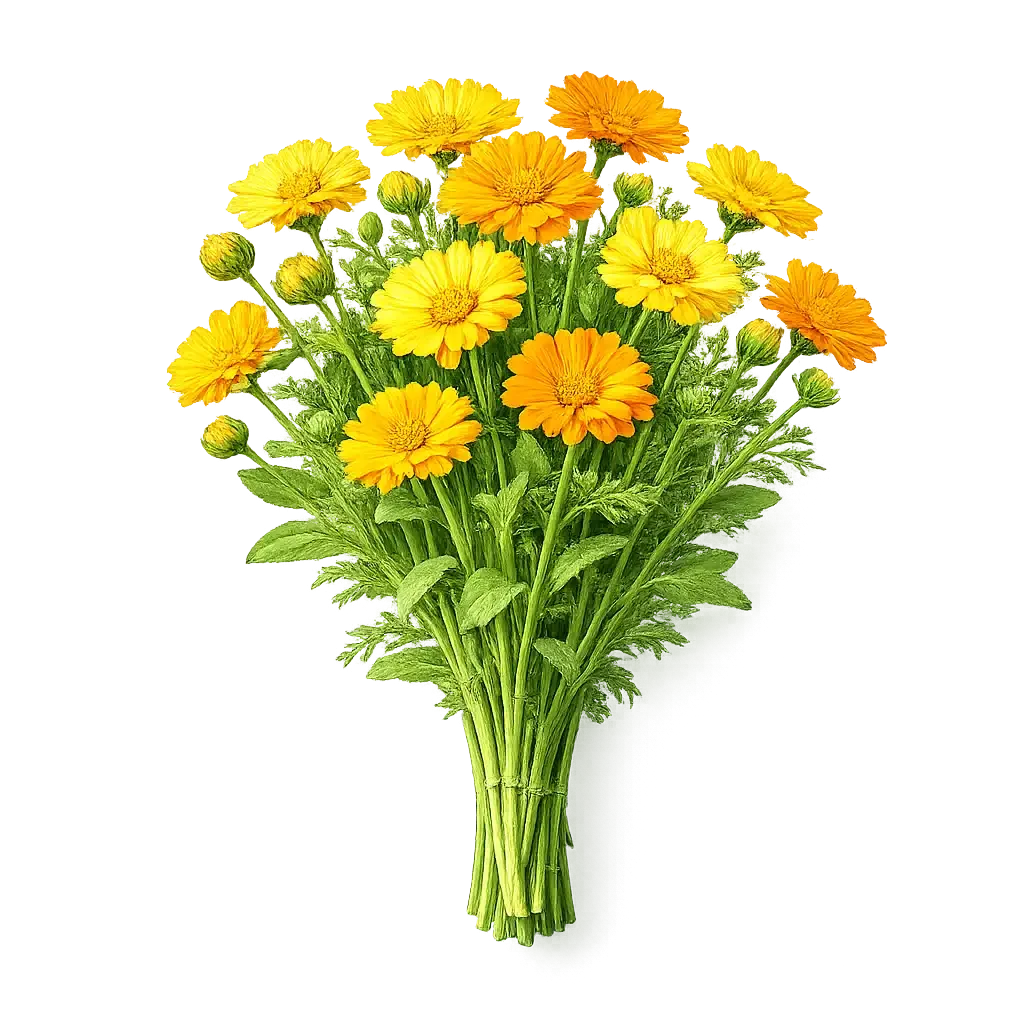
Written By Arthur Simitian
QUICK FACTS
Common Name
Calendula, Pot Marigold; not to be confused with French or African marigold (Tagetes species), which are entirely different plants despite the shared common name in some English-speaking regions; Tagetes and Calendula share the Asteraceae family but differ in chemistry, use, and appearance
Scientific Name
Calendula officinalis; Asteraceae family; the species name officinalis indicates historical official medicinal use; native to the Mediterranean region and southwestern Asia; cultivated in European gardens since at least the twelfth century and naturalized in many temperate regions worldwide
Plant Type
Hardy annual; self-seeds prolifically in hospitable conditions and effectively behaves as a short-lived perennial through self-seeding; germinates in cool to moderate temperatures and performs best in spring and autumn in most climates; dies in hard summer heat or hard frost but returns from self-sown seed
Hardiness
Tolerates light frost; seedlings survive temperatures to approximately 28 degrees Fahrenheit; established plants overwinter in zones 9 and above; in colder climates grows as a cool-season annual; self-seeded autumn plants often overwinter in zones 7 and above under light mulch
Sun Requirements
Full sun preferred; tolerates light partial shade with some reduction in flower production; in hot climates afternoon shade extends the productive season by reducing heat stress
Harvest Parts
Flower heads only: harvested at full open stage with all ray florets fully extended, when the resinous triterpenoid and flavonoid content is at peak concentration; the central disc and the ray florets together are used; the receptacle and bracts can be included or excluded based on preference and application
Primary Active Compounds
Triterpenoid saponins including oleanolic acid glycosides (the primary wound-healing and anti-inflammatory compounds; concentration directly correlated with the degree of orange color in the flowers; deeper orange varieties have higher triterpenoid content); flavonoids including isorhamnetin, quercetin, and narcissin; carotenoids including beta-carotene, lutein, and zeaxanthin (responsible for the orange-yellow color; significant antioxidant activity); polysaccharides (immunomodulatory; wound healing); essential oil including alpha-bisabolol; resins
Commission E Approval
Approved for topical use: inflammation and irritation of skin and mucous membranes; wound healing; Commission E notes that internal use for gastric and duodenal ulcers is also supported by the traditional use and the anti-inflammatory mechanism, though the topical approvals have the strongest clinical basis
Bloom Season
Spring through first hard frost in most climates; deadheading is essential to maintain continuous production; a well-managed calendula planting can produce harvestable flowers for five to six months in temperate climates, making it the longest-producing medicinal flower harvest in the kitchen herb garden
Calendula is the single most productive medicinal flower the kitchen garden produces from a single species, and it earns that position through a combination of qualities that no other herb in this series fully replicates: it blooms prolifically from spring through frost, each deadheaded flower is replaced within days by a new bud, the Commission E-approved wound-healing and anti-inflammatory activity of the triterpenoid compounds has a documented mechanistic basis, the infused oil and salve that the flowers produce are practical and genuinely effective first-response preparations for the homestead medicine cabinet, and the deeper orange varieties are both the most ornamental and the most medicinally potent by triterpenoid concentration. The management system is simple and self-sustaining once understood: harvest every open flower every two to three days, never let spent heads dry on the plant, keep the soil moderately moist, and the plant rewards each harvest with the next flower in a cycle that continues for months. The total dried flower harvest from a well-managed bed of twelve plants through one growing season is enough to produce a year's supply of infused oil and still have surplus petals for culinary use, tea, and natural dyeing. No other plant in the herb garden provides this return on this simple a management input.
Introduction
Calendula officinalis has been used in European medicine and cooking since at least the medieval period, with records of its use in monastery gardens as both a medicinal herb and a culinary coloring agent from the twelfth century onward. The common name pot marigold reflects its traditional use in the cooking pot, where the petals were added to soups, stews, and broths as a saffron substitute for color. The name calendula derives from the Latin calendae, the first day of the month, reflecting the plant's tendency to bloom on the calends across many months of the year.
The plant arrived in North American gardens with early European settlers and has been grown continuously in kitchen and physic gardens ever since, appearing in virtually every traditional European herbal from Gerard and Culpeper forward with consistent descriptions of its wound-healing, anti-inflammatory, and skin-soothing properties. The modern pharmacological research confirming the triterpenoid and flavonoid mechanisms behind these traditional uses represents a case where the folk medicine record was substantially accurate and the chemistry eventually provided the explanation.
The Asteraceae family membership connects calendula to chamomile, echinacea, yarrow, and the other daisy-family medicinal herbs in this series. The family cross-reactivity consideration for Asteraceae-allergic individuals applies here as it does to chamomile, though calendula's specific allergen profile is distinct from ragweed's and the allergy risk is managed through the same caution: test carefully on a small skin area before applying calendula preparations extensively, particularly for individuals with known Asteraceae allergy.
How to Grow
Starting and Establishment
Direct sow calendula seed in early spring as soon as the soil is workable; the large curved hooked seeds germinate readily at cool soil temperatures of 50 to 65 degrees Fahrenheit and seedlings are frost-tolerant once established. Alternatively, start indoors four to six weeks before the last frost date and transplant as the weather allows. Unlike the Apiaceae herbs in this series, calendula transplants without difficulty; the fibrous root system moves well.
Space plants twelve to fifteen inches apart; crowded plants produce fewer flowers and are more susceptible to the powdery mildew that is calendula's primary pest concern in warm humid conditions. Full sun and good air circulation are the primary preventive measures for mildew. The plants grow quickly and begin flowering six to eight weeks after germination.
For a continuous harvest supply, sow a second succession in mid-spring; the first sowing will begin to flag in summer heat in many climates and the second sowing, started later and establishing into summer, carries the harvest into autumn. In mild-winter climates, autumn sowing for a winter and spring harvest is the most productive strategy; the plants established in autumn and carrying through mild winters produce enormous flower harvests in the long cool springs of zones 8 and above.
The Deadheading Cycle
Deadheading, the removal of spent and fully open flower heads before they begin to form seed, is the management practice that determines the quantity of the calendula harvest. A plant allowed to set seed diverts its energy into seed production and dramatically reduces its flower output. A plant harvested at full flower every two to three days without exception continues producing new buds through the entire growing season, effectively operating as a perennial flower machine within the annual growing cycle.
Harvest fully open flowers where all the ray florets are fully extended outward; flowers that have begun to close or whose ray petals are beginning to wilt are past the peak of resinous compound concentration and produce a lower-quality medicinal preparation. The correct harvest stage is when the flower head is fully open, firm, and visibly resinous; the fingers will pick up a sticky amber residue when harvesting at the correct stage, which is the resin fraction containing the highest triterpenoid concentration.
Harvest in the morning after the dew has dried. Spread harvested heads in a single layer on drying screens in a warm, ventilated, dark space. Calendula flowers are one of the more challenging herbs to dry because the dense central disc retains moisture; allow seven to ten days of drying time and check by pressing the disc firmly between the fingers. Properly dry flowers feel papery and crumble rather than flex; any residual moisture in storage leads to mold. Store in sealed glass jars away from light.
Medicinal Uses
Wound Healing and Skin Anti-inflammatory
The triterpenoid saponins of calendula, particularly oleanolic acid and its glycosides, provide the primary wound-healing activity through multiple mechanisms: stimulation of collagen synthesis in dermal fibroblasts, promotion of epithelialization (new skin cell growth across a wound surface), inhibition of inflammatory cytokines at the wound site, and antimicrobial activity against common wound-infecting bacteria including Staphylococcus species. The Commission E approval for wound healing is based on this documented mechanism and the consistent traditional use record across European medical history.
The carotenoid content contributes antioxidant protection to healing tissue and may accelerate the resolution of the inflammatory phase of wound healing. The polysaccharides provide an immunomodulatory effect that supports the tissue repair process. The combined activity of these compound classes on a wound surface makes calendula infused oil or salve a genuinely multi-mechanism topical preparation rather than a single-compound treatment.
Clinical trials of calendula topical preparations for wound healing include a notable 2009 randomized trial published in the Journal of Clinical Oncology comparing calendula cream to trolamine for acute dermatitis in breast cancer patients undergoing radiation therapy; the calendula cream produced significantly greater reduction in acute dermatitis severity. A 2013 Cochrane systematic review of calendula for wound healing found the evidence suggestive but called for higher-quality trials. The direction of the evidence consistently favors calendula for wound healing applications, with the mechanism providing a strong theoretical basis even where the trial evidence is not yet conclusive at the highest evidence levels.
Skin Conditions: Eczema, Psoriasis, and Dry Skin
The anti-inflammatory and emollient combination of calendula infused oil makes it one of the most appropriate topical preparations for chronic dry and inflammatory skin conditions including eczema and psoriasis. The oil infusion extracts the fat-soluble triterpenoids and carotenoids while the carrier oil provides the emollient barrier function that both conditions require. Applied regularly to affected areas, a well-made calendula salve provides an anti-inflammatory, moisture-retaining preparation whose gentleness and safety profile is appropriate for long-term use on sensitive skin, including in infants where pediatric-grade calendula preparations have established commercial use.
Oral Mucosa and Digestive Use
Commission E's support for internal use in gastric and duodenal ulcers reflects the anti-inflammatory and mucosal-healing activity of the triterpenoids applied to the internal mucous membranes of the digestive tract. Calendula tea, prepared from two teaspoons of dried flowers per cup of water steeped covered for fifteen minutes, provides a preparation appropriate for gastric inflammation, mild gastritis, and the kind of chronic low-grade digestive inflammation that responds to soothing, anti-inflammatory botanical preparations. The tea is also used as a gargle and mouth rinse for oral inflammation, gingivitis, and minor mouth wounds.
Making calendula infused oil and salve
Calendula infused oil is the foundation preparation from which all other homestead calendula medicines are made: salves, lip balms, body butters, and skin creams. It is among the simplest medicinal preparations in the herbal tradition, requiring only dried flowers, a carrier oil, time, and clean jars.
Use fully dry flower heads; any residual moisture in the flowers will cause the oil to go rancid within days. Chop or crumble the dried flowers loosely and fill a clean, dry glass jar approximately two-thirds full with the chopped material. Pour olive oil, jojoba oil, or sweet almond oil over the flowers until all material is submerged by at least one inch of oil. Olive oil is the traditional carrier and has its own skin-beneficial fatty acid profile; jojoba is more neutral in scent and longer-lasting; sweet almond oil is lighter and more quickly absorbed.
For the cold infusion method, seal the jar and place it in a warm sunny window or other warm spot for four to six weeks, shaking or turning daily. The oil gradually turns golden-orange as the carotenoids and fat-soluble triterpenoids infuse. Strain through cheesecloth, pressing the spent flowers firmly to extract every drop of oil. Store the finished infused oil in a sealed glass jar away from light; properly made infused oil with fully dry flowers keeps for twelve to eighteen months.
To make a basic salve from the infused oil, gently melt beeswax in a double boiler at a ratio of approximately one ounce of beeswax per eight ounces of infused oil for a medium-firm salve. Remove from heat, stir to combine, and pour immediately into tins or small glass jars before the mixture sets. The salve sets firm at room temperature within thirty minutes. Test firmness; if too soft, return to the double boiler, add a little more melted beeswax, and re-pour. A few drops of lavender essential oil added just before pouring provides additional antimicrobial and skin-soothing activity alongside the calendula.
Culinary Uses and Natural Dye
Edible Petals
The ray florets of calendula are edible with a mildly bitter, slightly peppery, resinous flavor that is distinctly present but not assertive. They are used primarily as a visual garnish rather than as a flavor ingredient, scattered over salads, egg dishes, soups, rice, and grain preparations where the vivid orange-yellow color provides visual impact. The traditional use as a saffron substitute in rice and stew preparations exploits the carotenoid pigments to produce a golden color in cooking liquid, though the flavor profile is quite different from saffron's and the substitution is a color substitute only.
Fresh petals, separated from the green receptacle which is bitter and not generally used in cooking, are the culinary product. The petals can be dried and stored for culinary use, retaining their color and mild flavor; dried petals are used as a spice-style ingredient in butter, cheese, and bread preparations in Central European cooking traditions, particularly in Germany and Austria where they were historically used as a less expensive alternative to saffron.
Natural Dye
Calendula petals produce a range of yellow to orange dyes on natural fibers including wool, cotton, and silk, with the specific color depending on the mordant used, the depth of the dye bath, and the variety of calendula. Alum mordant on wool produces soft golden-yellow tones; iron mordant produces more olive-green shades. The dye is considered a fugitive natural dye rather than a particularly lightfast one, meaning the color fades with exposure to strong sunlight over time, which limits its application to items not subject to heavy light exposure but makes it entirely appropriate for decorative fiber work, naturally dyed napkins and table linens, and artisanal projects where the organic character of a gently fading natural dye is appreciated.
A homestead dye bath from fresh or dried calendula petals is simple: simmer a quantity of petals roughly equal in weight to the dry fiber being dyed in enough water to allow the fiber to move freely, for approximately one hour; add the pre-mordanted wet fiber to the warm dye bath and maintain gentle heat for another hour; allow to cool in the dye bath before rinsing and drying.
Cautions: Calendula at normal culinary and topical use quantities has a long and clean safety record. The following specific points apply. Asteraceae family cross-reactivity: people with documented ragweed, chrysanthemum, or Asteraceae allergy have a risk of cross-reactive contact dermatitis or, more rarely, systemic allergic response to calendula. Test a small skin area with a dilute calendula preparation before extensive topical application; oral consumption should be approached with the same caution as other Asteraceae herbs by allergic individuals. Pregnancy: calendula has historically been classified as an emmenagogue and uterine stimulant at high doses; topical application to intact skin at normal use quantities is not a meaningful pregnancy concern, but internal use at medicinal quantities during pregnancy is not recommended without medical guidance. People taking immunosuppressant medications should be aware of calendula's reported immunomodulatory activity; clinical significance at topical use levels is low, but the interaction is worth noting for immunocompromised individuals. Warfarin interaction: calendula contains coumarin derivatives; people taking warfarin should inform their prescriber of regular internal use. Contact sensitization to the sesquiterpene lactones in calendula resin is possible with repeated occupational exposure over time; commercial growers and intensive harvesters who handle large quantities of fresh flowers regularly should monitor for developing sensitization. At homestead harvest quantities this risk is negligible.
Choosing Varieties for Medicinal Use
The triterpenoid saponin concentration in calendula flowers correlates directly with the intensity of the orange color; deeper orange varieties consistently outperform pale yellow or cream varieties in medicinal preparations. For medicinal growing, select varieties in the deep orange to orange-red range: Resina is the variety most commonly specified in phytochemical research and commercial medicinal production and has the highest documented triterpenoid content; Alpha is another high-resin variety used in European medicinal production. Pacific Beauty Orange and Indian Prince provide a deep orange color and strong resin character appropriate for homestead medicinal use alongside good ornamental performance.
Pale yellow and cream varieties such as Lemon Cream are suitable for culinary use and ornamental planting but produce significantly lower triterpenoid concentrations and are not the appropriate choice for wound-healing or anti-inflammatory preparations where medicinal potency is the goal. The same plant genus, different color, meaningfully different pharmacological output.
Pros and Cons
Advantages
The longest productive harvest season of any medicinal flower in the series; a well-deadheaded planting produces harvestable flowers continuously from spring through first hard frost, providing five to six months of harvest in temperate climates and a total dried flower supply from twelve plants sufficient for a year of salve, oil, and tea without a gap
Commission E approval for topical wound healing, anti-inflammatory skin use, and oral mucosa applications; the triterpenoid mechanism is well-characterized; the infused oil and salve that the homestead harvest produces are genuinely multi-mechanism preparations addressing wound healing, anti-inflammatory activity, and emollient barrier function simultaneously
Self-seeds reliably in hospitable conditions, effectively becoming a self-maintaining planting from the second season forward; the curved hooked seeds fall near the parent plant and germinate the following spring, maintaining the population without deliberate replanting effort
Multiple uses from a single harvest: medicinal infused oil and salve, culinary petals, natural dye material, and ornamental cut flowers; no other single herb in this series offers this breadth of homestead application from the same harvested material
Variety selection for medicinal potency is clear and actionable; the correlation between orange color intensity and triterpenoid concentration means the grower can make a deliberate variety choice that improves medicinal outcome without specialized chemical analysis
Limitations
Deadheading frequency is non-negotiable for maintaining production; the two-to-three-day harvest interval required through the entire season demands consistent engagement that some growers find more demanding than the more forgiving harvest windows of other herbs in the series
Drying difficulty is the highest of any flower in the series; the dense disc makes complete moisture removal slow and failure to fully dry before storage leads to mold; the seven-to-ten-day drying window and the need to check each flower head individually before storage is more labor-intensive than drying leafy herbs
Asteraceae allergy cross-reactivity applies with the same clinical severity as for chamomile; the population with documented Asteraceae allergy cannot use calendula topically without testing and should approach internal use with appropriate caution
Powdery mildew in warm, humid conditions is the primary pest challenge; affected plants produce fewer flowers and the visual quality of the harvest is reduced; adequate spacing, full sun, and good air circulation are essential preventive management but not always achievable in all garden situations
The pale yellow and cream varieties that are most visually distinctive in ornamental planting are the least potent medicinally; growers who prioritize garden aesthetics by choosing mixed-color varieties that include pale forms will have lower medicinal potency per unit of dried flower than a planting of uniform deep-orange medicinal varieties
Final Thoughts
Calendula is the herb that rewards the grower who learns the deadheading rhythm and maintains it without interruption through the growing season. The management relationship between harvest frequency and flower production is more direct than for almost any other plant in this series: harvest every open flower every two to three days and the plants produce continuously; miss a week and the plants shift energy to seed production and the harvest window narrows. This is a responsive plant that reflects exactly the attention it receives.
For the homestead medicine cabinet, a jar of well-made calendula salve from the season's harvest is among the most practically useful preparations the herb garden produces: appropriate for minor cuts and abrasions, for chapped skin and dry hands, for diaper rash and cradle cap, for minor burns, and for the chronic dry and inflammatory skin conditions that require a gentle long-term topical preparation. That range of appropriate uses from a single preparation made from a single plant grown on the homestead is the complete argument for making calendula a permanent fixture in the medicinal garden.