
Catnip
Written By Arthur Simitian
QUICK FACTS
Common Name
Catnip, Catmint (though catmint more correctly refers to the ornamental Nepeta mussinii and related species; Nepeta cataria is the true catnip with the strongest feline response and the primary medicinal species), Catwort, Field Balm
Scientific Name
Nepeta cataria; Lamiaceae family; native to Europe, Central Asia, and parts of the Middle East; naturalized across North America, Australia, and New Zealand; one of approximately 250 species in the genus Nepeta
Plant Type
Herbaceous perennial; returns from the rootstock each spring; dies back to the ground in frost; zones 3 to 9; forms increasingly large clumps over time and can become a substantial landscape plant if left undisturbed
Hardiness Zones
Zones 3 to 9; fully cold-hardy throughout most of North America and Europe; survives temperatures well below zero Fahrenheit when dormant; one of the most cold-tolerant herbs in the Lamiaceae family
Sun and Soil
Full sun to partial shade; well-drained soil; tolerates lean, poor, dry conditions; performs poorly in waterlogged or heavily shaded positions; drought-tolerant once established; essentially a low-maintenance plant once the establishment year is complete
Height
Two to three feet tall and wide at full development; can reach four feet in very favorable conditions with rich moist soil; typically somewhat shorter and more compact in lean dry conditions
Primary Active Compound
Nepetalactone (specifically cis-trans-nepetalactone; the compound responsible for the feline behavioral response; a bicyclic monoterpenoid that mimics the structure of cat pheromones and binds feline olfactory receptors); iridoids; rosmarinic acid; flavonoids; thymol and carvacrol (minor; shared with thyme and oregano); iridoid glycosides
Feline Response
Approximately 50 to 70 percent of domestic cats show a behavioral response to nepetalactone; the response is hereditary and absent in roughly one third of cats; kittens and elderly cats are less responsive; the response lasts five to fifteen minutes and is followed by a refractory period of approximately thirty minutes during which re-exposure produces no effect
Human Uses
Sedative and anxiolytic tea (traditional; the pre-chamomile bedtime herb in European folk medicine); digestive antispasmodic; diaphoretic for fever management; topical insect repellent; mosquito repellent activity demonstrated to exceed DEET in some laboratory studies; traditional remedy for colic in infants (historical use; not recommended as first-line treatment today)
Commission E Status
Not reviewed by Commission E; catnip is not among the approved or disapproved herbs in the German Commission E monographs, placing it outside the reviewed category rather than in the disapproved category
Catnip has two completely separate reputations that almost never appear in the same conversation. In the gardening and pet world it is the feline entertainment herb, the plant that sends some cats into a rolling ecstatic response that lasts ten minutes and leaves them calm and slightly dazed. In the herbal medicine tradition it is the pre-chamomile European sedative and digestive herb, the plant that was brewed as a bedtime tea across England and France before chamomile became widely available, and that shares a similar mild anxiolytic and antispasmodic profile through different chemistry. Both reputations are accurate. The nepetalactone that triggers the feline behavioral response is real and characterized; the sedative and digestive activity in humans is real and traditional even if less thoroughly studied at the clinical trial level than chamomile; and the mosquito repellent activity, while requiring practical translation from laboratory conditions to real-world protection, is among the more interesting findings in recent insect repellent research. For the homestead grower, this is a low-maintenance cold-hardy perennial that requires planting once, returns reliably every spring, and provides something genuinely useful in three separate directions: as a medicinal herb, as an insect repellent resource, and as an enrichment tool for cats whose welfare the grower takes seriously. The main management issue is protecting the plant from the cats themselves until it is established enough to withstand their attention.
Introduction
Nepeta cataria has been cultivated in European kitchen gardens since at least the Roman period and appears in medieval monastery gardens as a medicinal herb for digestive complaints, fever, and sleep difficulties. The common name catnip is North American in origin; the older English name was catmint or nep, from the Latin nepeta. The plant arrived in North America with early European settlers and naturalized extensively across the continent, becoming a common roadside and wasteland weed from the Atlantic coast to the Pacific.
The feline behavioral response to catnip was documented in the scientific literature as early as the eighteenth century but the specific compound responsible, nepetalactone, was isolated and characterized in the 1940s. The response is olfactory rather than gustatory; cats respond to the smell of nepetalactone rather than to tasting the plant, and the behavioral complex of rubbing, rolling, vocalizing, and apparent euphoria followed by a refractory period is now understood to involve the activation of olfactory receptors that communicate with neural pathways associated with pheromone response, particularly those connected to sexual behavior. The response is unrelated to intoxication in the human sense; it is a specific olfactory-neural activation pattern unique to the feline nervous system's interaction with the specific structure of nepetalactone.
The mosquito repellent research emerged from a 2001 Iowa State University study that found nepetalactone repelled mosquitoes at concentrations ten times lower than DEET in laboratory assays. This finding attracted significant media attention and led to further research. The practical translation is more nuanced than the headline suggested, but the finding has proven durable enough to support ongoing research interest in nepetalactone as a base for novel insect repellent formulations.
How to Grow
Establishment
Catnip grows easily from seed started indoors six to eight weeks before the last frost date or direct sown after the last frost. It also propagates readily from stem cuttings taken in spring or early summer, rooting in water or moist potting mix within two to three weeks. Division of established clumps in spring is the fastest way to multiply the planting from an existing plant; the divided sections establish quickly and are typically at full harvestable size by midsummer.
The establishment year requires the most management attention, specifically protection from cats if any are present in the area. Young transplants and newly germinated seedlings are attractive to cats and can be repeatedly flattened, rolled on, and partially destroyed before they are large enough to withstand the attention. Physical barriers, wire cloches, or growing behind temporary fencing until the plants reach twelve inches in height and have developed a substantial root system are the practical solutions. Established second-year plants and older tolerate cat attention considerably better; the larger root system supports regrowth even after significant above-ground damage.
Growing Conditions
Catnip is among the least demanding perennial herbs in the garden once established. It prefers full sun but tolerates partial shade with some reduction in essential oil concentration and therefore nepetalactone content. Well-drained soil is the primary requirement; it performs poorly in wet feet conditions. Lean, somewhat poor soil produces more aromatic foliage than rich, heavily fertilized soil, following the pattern common to most aromatic Lamiaceae herbs.
Cut the plant back by half after the first flowering flush in early summer to promote a second flush of fresh growth and flowers in late summer and autumn. Without cutting back, the plant becomes woody and somewhat untidy after flowering. Cut back again to within a few inches of the ground in late autumn or leave the dried stems standing for winter structure and wildlife value; the hollow stems provide overwintering habitat for small beneficial insects.
Harvesting
Harvest the leafy stem tips, the top six to eight inches of each branch, just as the flower buds are forming and before the flowers open. This is the stage of maximum nepetalactone content; once flowering begins the volatile content begins to decline. Morning harvest after the dew has dried is preferred. Dry in small bundles hung upside down in a warm, ventilated space away from direct sun, or lay flat on drying screens; the goal is rapid drying to preserve volatile content.
Fully dried catnip crumbles easily and has a noticeably minty-earthy aromatic quality. Store in sealed glass jars or resealable bags away from light; the volatile content diminishes over six to twelve months in storage. For cat enrichment purposes, dried catnip stored in sealed containers retains potency for approximately six months before the nepetalactone concentration decreases to below the threshold of reliable feline response.
For human medicinal use as tea, fresh catnip can be used directly or dried material can be used at one to two teaspoons per cup of water, steeped covered for ten minutes. The fresh plant makes a more strongly aromatic tea; the dried material is more convenient for winter use.
Medicinal Uses
Sedative and Anxiolytic Activity
Catnip tea was the primary bedtime sedative herb in the English folk medicine tradition before chamomile's wider cultivation made it more available. The traditional use is consistent with the chemistry: nepetalactone has structural similarities to the valepotriates of valerian, the primary sedative compounds in that better-studied herb, and iridoid compounds in catnip share mechanistic territory with valerian's GABA-modulating activity. The sedative effect of catnip tea is mild and appropriate as a relaxant for sleep preparation rather than as a primary sleep-inducing agent in any clinical sense.
No randomized controlled trials of catnip specifically for anxiety or sleep exist at the level of the chamomile studies, placing the evidence base at the traditional use and mechanistic plausibility level rather than at the clinical demonstration level. For the homestead grower who already finds chamomile effective, catnip provides a complementary or alternative bedtime tea with a different aromatic profile, the minty-earthy character contrasting with chamomile's apple-floral notes, for evenings when variety is preferable or when chamomile is not available.
Digestive Antispasmodic
The antispasmodic activity of catnip on smooth muscle, particularly gastrointestinal smooth muscle, is the basis for its traditional use in colic, stomach cramping, and flatulence. The iridoid compounds and flavonoids provide anti-inflammatory activity alongside the antispasmodic effect. This traditional use as a digestive herb overlaps significantly with chamomile's Commission E-approved indications, and the two herbs were frequently combined in traditional European digestive preparations.
The historical use of catnip tea for infant colic is documented in American folk medicine from the colonial period through the early twentieth century. This application is not recommended in current pediatric practice; modern colic management has evidence-based options, and introducing any herbal preparation to an infant should be discussed with a healthcare provider. The historical use reflects the plant's genuine antispasmodic activity rather than a specific infant-safe recommendation.
Diaphoretic for Fever
Catnip tea has a traditional reputation as a diaphoretic, an herb that promotes sweating, which the pre-antibiotic medical tradition used to support the body's natural fever response and thereby assist recovery from febrile illness. The mechanism involves vasodilation and the promotion of perspiration, which the traditional herbalist understood as the body clearing the illness. This use is consistent with catnip's chemistry and represents a low-risk supportive application for mild febrile illness in adults, though it should not replace appropriate medical assessment for significant fever.
Nepetalactone as a Mosquito Repellent
The Iowa State University finding that nepetalactone repelled mosquitoes in laboratory assays at concentrations lower than DEET requires careful translation to practical outdoor use. Laboratory bioassay conditions measure repellent activity in controlled, enclosed environments where the concentration of repellent compound can be precisely maintained; outdoor conditions involve evaporation, wind, sweat, and variable exposure patterns that reduce the effective field concentration. DEET's practical field effectiveness exceeds its laboratory-to-field translation because it was specifically formulated for skin application with attention to staying power; raw nepetalactone has not been comparably formulated.
Rubbing fresh catnip leaves on exposed skin, the most common folk recommendation derived from the research, produces a brief period of repellent activity as the volatile nepetalactone is released from the crushed leaves onto the skin surface, but the volatile evaporates within minutes, providing practical protection measured in minutes rather than the hours provided by formulated DEET or picaridin products. The practical application is as a short-term casual repellent in low-mosquito-pressure situations rather than as a replacement for formulated repellents in high-pressure conditions.
Research into nepetalactone-based formulated repellents continues, and the compound has genuine potential for development into a botanically derived repellent product with improved staying power. For the homestead grower, maintaining a catnip planting near outdoor sitting areas is a reasonable low-cost approach to reducing mosquito pressure; the plant's volatile emissions contribute to the ambient repellent environment, and fresh leaves are available for application as needed.
Catnip tea: traditional preparation for sleep and digestion
Use one heaped teaspoon of dried catnip leaf and flower material per cup of water, or two teaspoons of freshly bruised leaves. Pour water that has just come off the boil over the herb. Cover the cup or pot during steeping to capture the volatile nepetalactone that would otherwise escape with the steam; uncovered steeping loses a meaningful proportion of the active compound. Steep for ten minutes. Strain and drink while hot, thirty to forty-five minutes before bed for sleep support, or at the onset of digestive discomfort for antispasmodic use.
The flavor is distinctly minty with an earthy, slightly medicinal undertone that is pleasant but different from peppermint or spearmint tea. A small amount of honey softens the flavor without diminishing the activity. Catnip combines well with chamomile in equal parts for a complementary sedative tea blend that layers the apple-floral notes of chamomile with the minty-earthy character of catnip; this combination was used in traditional European herbalism and remains a sensible and pleasant blend for evening use.
For digestive use, drink the tea warm at a comfortable temperature rather than piping hot, which can irritate an already-uncomfortable stomach. The antispasmodic activity typically takes effect within fifteen to thirty minutes of consumption.
Cautions: Catnip at normal culinary and herbal tea doses has a long and clean folk use record in European and American herbal medicine with no significant documented toxicity at reasonable consumption levels. The following specific points apply. Catnip has traditionally been used as a uterine stimulant and emmenagogue; it should not be consumed in medicinal quantities during pregnancy. This caution applies to medicinal-dose tea use rather than incidental flavoring quantities. People taking sedative medications including benzodiazepines, barbiturates, or other CNS depressants should be aware of the potential for additive sedative effects and should discuss regular catnip use with their prescriber. Very large doses of catnip have been reported to cause headache, nausea, and vomiting; this is consistent with the experience of any aromatic herb at excessive quantities and is not a risk at normal tea-dose use. The feline behavioral response is species-specific and is not a model for human intoxication; catnip does not produce euphoria, hallucination, or intoxication in humans at any reported dose. Historical claims of human intoxicant use are not supported by credible evidence. Catnip belongs to the Lamiaceae family and rare contact dermatitis is possible in individuals with Lamiaceae sensitivity; this is uncommon but should be considered by people who react to other Lamiaceae herbs including mint, oregano, or lavender.
Catnip for Cats: Getting It Right
The approximately 50 to 70 percent of cats that respond to nepetalactone do so through a specific olfactory activation cascade that the current research suggests is related to their pheromone-processing neural pathways rather than to a generalized intoxicant response. The behavioral complex of sniffing, licking, rubbing the face and body against the source, rolling, vocalizing, and the subsequent calm refractory period represents a species-appropriate natural behavior that is not harmful to the cat. There is no evidence of addiction or dependence from catnip exposure, and the thirty-minute refractory period the nervous system imposes after each response prevents the kind of compulsive re-exposure that would characterize a dependency.
Fresh catnip produces a stronger response than dried catnip for most cats; the nepetalactone concentration is higher and the volatile is more immediately bioavailable from a freshly bruised leaf than from dried material that has been stored. The practice of offering cats fresh catnip from the garden, either by bringing a cut stem indoors or by allowing supervised outdoor access to the plant, provides a stronger and more authentic experience than commercial dried catnip products that may have lost significant potency in storage and processing.
Kittens under six months and most elderly cats show reduced or absent response; the response appears to develop fully in adolescence and may diminish again in late life. This is not an indication that those cats are from the non-responsive genetic fraction; they may simply be at a life stage where the response is attenuated.
Pros and Cons
Advantages
Cold-hardy perennial that requires planting once and returns reliably each spring for decades; the establishment investment is a single season and the ongoing management requirement is minimal: cut back after flowering and divide every few years when the clump becomes crowded
Provides genuinely useful outputs in three distinct directions from a single low-maintenance planting: mild sedative and digestive tea, a casual natural insect repellent resource, and a source of high-quality enrichment for cats that respond to nepetalactone
The sedative and antispasmodic traditional use has a plausible mechanistic basis through the iridoid compounds and structural similarities to valepotriates; it is the herb most appropriate for blending with chamomile in a complementary evening tea, adding a different aromatic profile alongside similar directional pharmacology
Drought tolerant and performs well in lean soil; does not require the irrigation and soil amendment attention that more demanding perennial herbs require; suitable for low-maintenance areas of the homestead garden where more finicky herbs would struggle
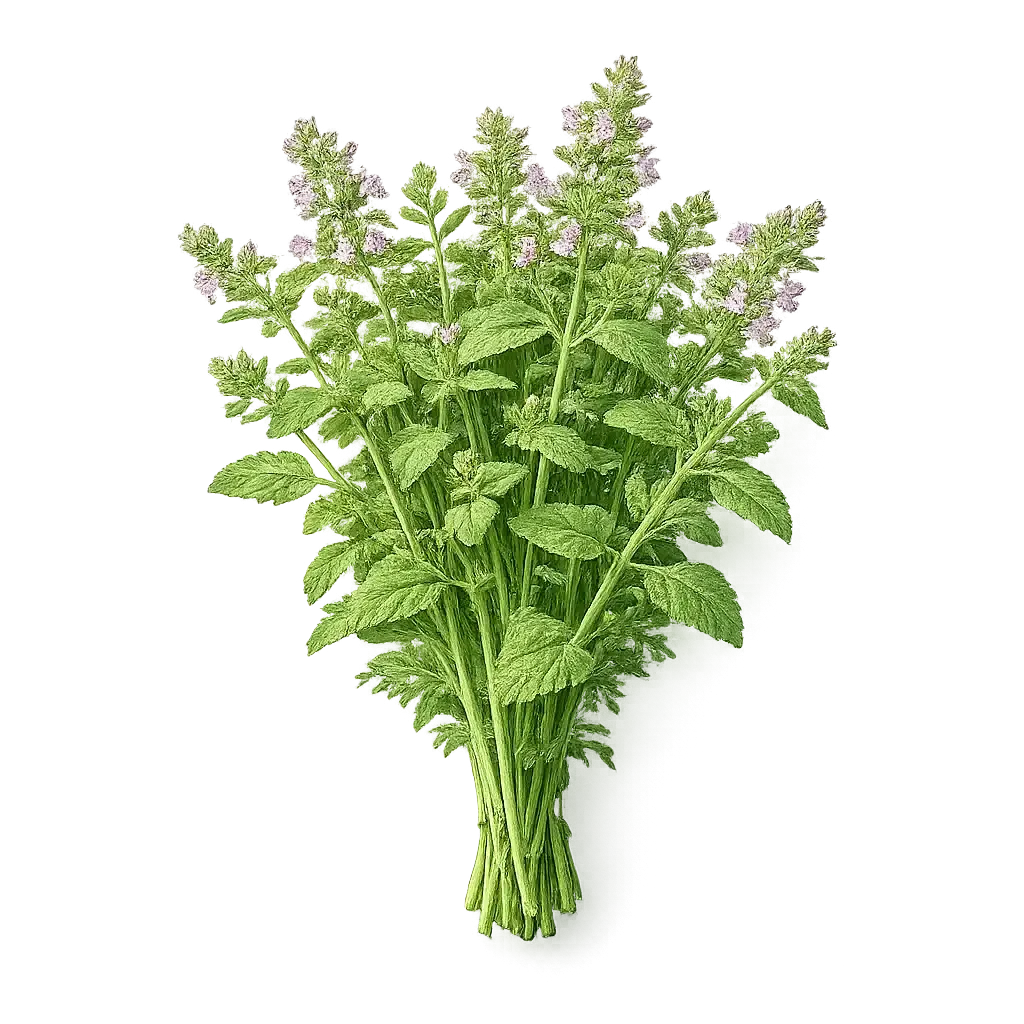
Ornamental value is genuine; the grey-green softly downy foliage and white to pale lavender flower spikes over a long summer season make it a legitimate landscaping plant beyond its herbal value; the related ornamental nepetas were bred from this species and the original has a comparable garden presence at a larger scale
Limitations
The cat protection problem during establishment is the primary management challenge; in gardens with cat access, protecting young transplants and seedlings requires a season of physical barrier management that is more tedious than most herb establishment requires
The clinical evidence base for human medicinal use is substantially weaker than for chamomile; the sedative and digestive applications rest on traditional use and mechanistic plausibility rather than on randomized controlled trials, meaning growers who value evidence-based herbal medicine will appropriately rank catnip below chamomile for those specific indications
The mosquito repellent activity, while real in laboratory conditions, does not translate directly to the hours-long field protection that formulated DEET or picaridin products provide; growers who rely on catnip as a primary mosquito repellent in high-pressure conditions will find it insufficient without more frequent reapplication than is practical
Can spread vigorously by self-seeding in favorable conditions and requires management to prevent it from overwhelming adjacent plantings; while not invasive in the ecological sense, it is assertive enough in good growing conditions to require regular attention at the edges of the planting
Roughly one third of domestic cats show no response to nepetalactone, a hereditary trait; growers who plant catnip primarily for their cats and find they belong to the non-responsive fraction have planted for a benefit that does not apply to their specific animals
Final Thoughts
Catnip is the herb that asks almost nothing from the grower after the first season and provides something genuinely useful to both the human and feline members of the household. The low management requirement of an established perennial, the three-directional usefulness as tea herb, casual insect repellent, and cat enrichment source, and the reliable annual return from a cold-hardy rootstock make it one of the better arguments for a permanent garden position among the herbs covered in this series.
Establish it in a sunny, well-drained spot, protect it from cats in year one, cut it back after flowering in midsummer, and harvest the leafy tips as the first flower buds form each season. The dried supply keeps the herb available through the winter months for bedtime tea and for the cats, and the established clump requires nothing else until division becomes necessary several years later.