
Chervil
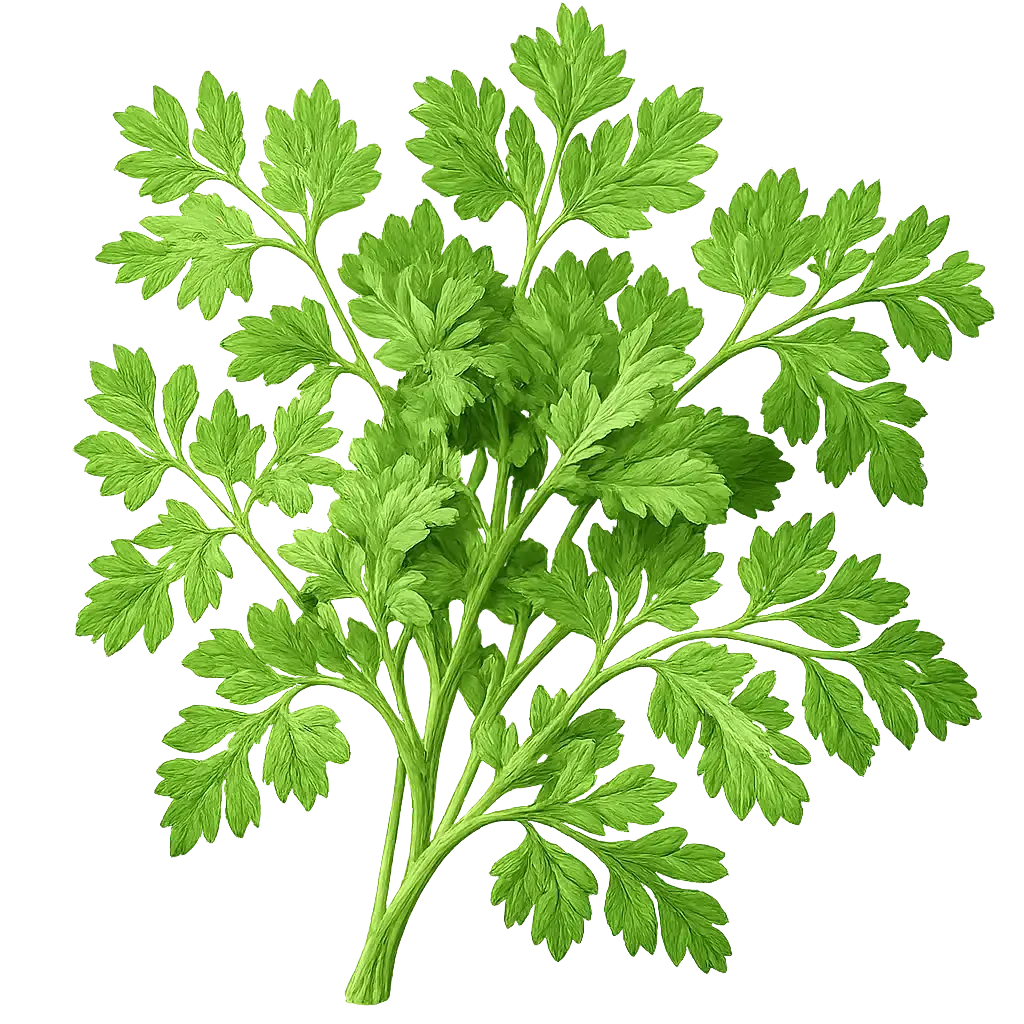
Written By Arthur Simitian
QUICK FACTS
Common Name
Chervil, Garden Chervil, French Parsley, Gourmet Parsley; not to be confused with Sweet Cicely (Myrrhis odorata), which has a similar appearance and anise flavor but is a different, larger, perennial plant sometimes also called wild chervil
Scientific Name
Anthriscus cerefolium; in the Apiaceae family; native to southeastern Europe and western Asia; cultivated across Europe for at least two thousand years
Plant Type
Cool-season annual; completes its lifecycle in approximately 90 days; bolts quickly in heat and long days; best grown as a spring or autumn annual in most climates, or as a winter annual in mild-climate zones 8 and above
Hardiness Zones
Annual in zones 3 to 11; tolerates light frost and performs best in cool temperatures of 50 to 65 degrees Fahrenheit; survives short periods below freezing without damage in established plantings
Sun Requirements
Partial shade strongly preferred; one of the most shade-tolerant culinary annuals; full sun in cool seasons is tolerated but accelerates bolting; dappled shade under deciduous trees or on the east side of structures produces the best leaf quality and longest harvest
Soil Type
Moist, humus-rich, well-drained; pH 6.0 to 7.0; dislikes dry or compacted soil; direct sow preferred as the taproot is sensitive to disturbance, though careful transplanting of young seedlings is possible before the taproot establishes
Days to Harvest
40 to 60 days from germination to first leaf harvest; one of the faster-maturing cool-season herbs
Flavor Profile
Mild parsley with a distinct sweet anise overlay; more delicate than either tarragon or fennel; the anise quality is lighter and more fleeting than star anise; overall a subtle, complex, cool-green flavor that enhances without dominating; loses flavor rapidly with heat
Primary Active Compounds
Estragole (methyl chavicol; the primary volatile compound responsible for the anise character; same compound present in tarragon and basil); apiin and related flavone apiosides; coumarins; vitamin C and carotenoids; iron and magnesium at notable levels for a fresh herb
Uses
Fundamental component of fines herbes, the classic French fresh herb blend; spring soups and egg dishes; béarnaise sauce; raw garnish; traditional digestive herb and diuretic in European folk medicine; one of the first fresh herbs of the spring garden and a significant component of Easter and spring cooking traditions in France and Belgium
Chervil is the herb that occupies a very specific and irreplaceable position in the French kitchen tradition and is essentially absent from every other culinary tradition, which makes it simultaneously one of the most important herbs for cooks in that tradition and one of the most overlooked herbs for cooks outside it. The combination of mild parsley and sweet anise in a single leaf, at an intensity that enhances without asserting, is a flavor profile that has no direct substitute among the more commonly available herbs. Tarragon has similar anise notes but is stronger and less green; parsley has the fresh green character but no anise; fennel fronds have both but with more intensity and a coarser texture. Chervil sits in a gap between these familiar flavors and fills it with particular elegance in applications where subtlety is the point. Growing it well requires understanding two things: it needs cool temperatures and it needs shade, the same combination that makes it the natural early spring and late autumn herb, arriving when the heat-loving herbs are not yet ready or have already gone over, and performing best in the partially shaded positions of the garden where other culinary herbs struggle.
Introduction
Anthriscus cerefolium is native to the Caucasus and western Asia and has been cultivated in European kitchen gardens since Roman times. The Romans introduced it to northwestern Europe, where it became particularly embedded in the French culinary tradition as one of the four canonical herbs of fines herbes alongside tarragon, chives, and parsley. This specific blend, which requires fresh herbs and does not translate well to dried or substituted versions, represents chervil's most important cultural role and explains why it is so frequently referenced in French recipes and so rarely grown by cooks unfamiliar with that tradition.
The species name cerefolium derives from the Latin cera (wax) and folium (leaf), a reference to the slightly waxy surface of the fresh leaf. The plant is closely related to cow parsley (Anthriscus sylvestris), which is a common hedgerow weed in Europe, and shares the family's characteristic hollow stems, compound umbel flowers, and the important safety caution regarding misidentification that applies to all wild-harvested Apiaceae plants. Cultivated garden chervil in a kitchen garden presents no identification risk; the caution about Apiaceae family misidentification applies to wild foraging rather than to cultivated plantings.
Chervil has associations with Easter and spring renewal in French and Belgian folk tradition that go beyond its culinary value; it was one of the herbs consumed on Holy Thursday as a symbol of the renewal of life and was used in the spring herb soups that marked the transition from winter preserved foods to fresh garden produce. This cultural role explains the strong seasonal association that makes chervil most appropriate and most valued in the early spring kitchen.
How to Grow
Direct Sow in Cool Conditions
Chervil germinates best at cool soil temperatures between 50 and 65 degrees Fahrenheit and germinates poorly or not at all in warm soil above 70 degrees. This means spring sowing must happen early, before the soil warms, and summer sowing for autumn harvest must wait until the late summer heat has passed. In zones 4 through 7, sow in early to mid-spring as soon as the soil is workable, then again in late August or early September for the autumn crop. In zones 8 and above, autumn sowing for winter and spring harvest is more reliable than spring sowing, as the cool-season window is longer in the direction of autumn and winter than in the direction of spring and summer.
Surface sow or cover shallowly with no more than one-quarter inch of fine soil; the seeds need light to germinate reliably. Keep the seed bed consistently moist through the seven-to-fourteen-day germination period; drying out during germination is the most common cause of failed sowings. Thin to six to eight inches apart once seedlings are established, using the thinnings as the first harvest.
Unlike dill and cilantro, chervil can be carefully transplanted as a very young seedling before the taproot has fully established, making indoor sowing under lights a practical option for an earlier spring start in cold climates. Transplant at the two-true-leaf stage or earlier, handling the root with extreme care to avoid disturbance, and transplant into the final outdoor position in cool conditions.
Shade Is the Growing Priority
Shade management is the single most productive management decision for chervil. A planting in full sun in warm conditions bolts within four to six weeks of germination, collapsing the harvest window before a meaningful supply has accumulated. The same planting in dappled shade under a deciduous tree, on the east side of a building with morning sun and afternoon shade, or alongside taller plants that provide afternoon protection, often produces twice as long a harvest window and noticeably better leaf quality and flavor intensity.
The shade preference also makes chervil a practical understory herb in food forest design, where it can be sown beneath fruit trees or in the partially shaded edges of taller plantings and harvested through the spring before the canopy leafs out enough to exclude it entirely. The timing of shade increase from a deciduous canopy through late spring roughly coincides with the heat increase that would bolt the chervil anyway, making the plant's natural cycle well-matched to the understory environment.
Succession Sowing
A single sowing produces a cohort of plants that all bolt simultaneously when the temperature trigger is reached. Sowing every three to four weeks from the earliest viable spring date through mid-spring, and again from late summer through early autumn, maintains a rotation of plants at different stages and extends the fresh leaf supply considerably beyond what a single sowing provides. Because chervil is relatively fast to harvest and the individual plants are not large, a short row every few weeks requires little space and provides a continuous kitchen supply through the cool-season windows.
Harvesting
Begin harvesting outer leaves when the plant has five or six healthy stems and is about eight inches tall. Cut stems at the base rather than snipping individual leaflets; this promotes denser regrowth from the center. Harvest in the morning before the volatile estragole compounds are driven off by heat. Use the harvest immediately or within a few hours at most; chervil wilts within an hour at room temperature after cutting and loses its delicate anise character rapidly once separated from the plant.
Chervil does not dry well; drying eliminates the volatile anise character that defines the herb, leaving a bland green powder with little culinary value. Freezing is marginally better but still loses the fresh character. The correct approach is to grow enough plants through succession sowing that fresh material is always available, and to harvest immediately before use. The refrigerator life of cut chervil is no more than two to three days even stored carefully with stems in water.
When the plant begins to bolt, the leaf quality decreases and the flavor shifts. At the early bolt stage, the leaves are still usable but stronger and less delicate. Allow one or two plants to bolt fully for seed saving; the seeds remain viable for one to two years when stored cool and dry, providing seed for future sowings without purchasing new stock each season.
Culinary Uses
Fines Herbes
Fines herbes is the classic French fresh herb blend requiring equal parts chervil, tarragon, chives, and flat-leaf parsley, all finely chopped and combined fresh, never dried. The blend is used in omelettes, in compound butters, in cream sauces, in vinaigrettes, and scattered over soft-cooked eggs, poached fish, and delicate spring vegetables. The specific balance of the four herbs, each contributing a distinct flavor dimension at an intensity that allows the others to remain present rather than dominating, produces a complexity that no single herb achieves alone and that no substitution of available herbs fully replicates.
Chervil's contribution to fines herbes is the anise overlay and the soft texture that bridges the stronger flavors of tarragon and the sharper edge of chives. Without it, the blend becomes less coherent; the herbs' flavors are present but they no longer compose a unified whole in the same way. For cooks who want to work within the fines herbes tradition authentically, growing chervil is not optional.
Spring Soups
Potage au cerfeuil, chervil soup, is one of the simplest and most characteristically French spring preparations: a light chicken or vegetable broth with butter, a little potato or cream for body, and an abundance of fresh chervil added at the very last moment and barely heated before serving. The soup captures the flavor of fresh spring chervil in a form that emphasizes rather than masks it, and it can only be made with fresh chervil; no dried or substituted version produces the same result. Making this soup once from a garden harvest is the fastest way to understand why chervil has maintained its specific place in the French kitchen tradition for two thousand years.
Béarnaise and Egg Dishes
Béarnaise sauce traditionally incorporates chervil in the reduction alongside tarragon and shallots, providing the anise background that distinguishes béarnaise from hollandaise. The chervil is also scattered fresh over the finished sauce as a garnish. In egg preparations, chervil is used more extensively than any other fresh herb in the French tradition; omelettes, soft-scrambled eggs, and oeuf en cocotte all appear with chervil garnish in the classical repertoire in a way that reflects the herb's particular affinity for egg yolk flavor.
Chervil butter for spring fish and vegetables
Chervil butter is among the most practical ways to preserve and deploy a spring harvest of chervil, capturing the delicate anise-parsley flavor in a form that keeps frozen for three months and delivers it to any dish that benefits from a finishing butter: poached fish, steamed asparagus, new potatoes, spring peas, and soft-cooked eggs.
Allow two tablespoons of finely chopped fresh chervil per fifty grams of softened unsalted butter. Work the chervil into the butter thoroughly with a fork or in a small food processor, adding a pinch of fine salt and a few drops of lemon juice. Taste and adjust. Roll into a log in plastic wrap, twist the ends to seal, and refrigerate for up to one week or freeze for three months. Cut coins of chervil butter directly from frozen and place on hot food; the butter melts and releases the herb flavor without any other preparation.
For a more elaborate compound butter, add one teaspoon of finely chopped shallot and one teaspoon of finely chopped tarragon alongside the chervil for a fines herbes butter that places chervil in its proper compositional context. This combination over a piece of pan-seared sole or a grilled spring chicken breast is the fastest route to understanding why the French built a culinary tradition around these specific four herbs together.
Medicinal Uses
Chervil's traditional medicinal use in European folk medicine includes applications as a digestive herb for bloating and stomach discomfort, a diuretic, and a topical preparation for eczema, gout, and joint pain. The evidence base for these traditional uses at a clinical trial level is essentially absent; chervil has not been the subject of significant pharmacological research compared to other herbs in this series. The flavonoid content, particularly apiin, provides an anti-inflammatory activity consistent with the topical use tradition, and the diuretic activity is plausible from the coumarins and flavonoids present.
The primary value of chervil at the homestead level is culinary rather than medicinal. The nutritional contribution of regular consumption as a fresh herb includes meaningful vitamin C and iron at the quantities used in fines herbes applications, supporting the traditional reputation as a spring tonic herb that followed the nutritional depletion of winter preserved-food diets.
Cautions: Cultivated garden chervil (Anthriscus cerefolium) at normal culinary doses is among the safest herbs in this series with a clean two-thousand-year food use record. The following points apply. The estragole content, the same compound present in tarragon and basil, has generated regulatory discussion in Europe about theoretical carcinogenicity at very high doses in animal models; at culinary use quantities as a fresh herb this does not represent a meaningful health risk, and the regulatory concern applies specifically to concentrated essential oil preparations rather than to normal herb consumption. The most important caution for chervil involves wild foraging rather than garden cultivation: Anthriscus sylvestris (cow parsley), Conium maculatum (poison hemlock), and Aethusa cynapium (fool's parsley) all resemble garden chervil and share the Apiaceae family's white umbel flowers and hollow stems. Poison hemlock is fatally toxic. Never harvest chervil-like plants from the wild without absolute confident identification from multiple characters including smell, stem markings, and leaf texture; the musty or mouse-like smell of fool's parsley and the purple-spotted stems of hemlock are reliable distinguishing features, but the safest rule is to harvest only from cultivated garden plantings of known-identity stock. Apiaceae family allergy cross-reactivity applies; people with carrot, celery, or parsley allergy should approach chervil with the same caution.
Pros and Cons
Advantages
Occupies a flavor position with no direct substitute among common herbs; the specific combination of mild parsley and delicate anise at the intensity chervil delivers is irreplaceable in fines herbes and in the French spring cooking tradition that requires it
Thrives in partial shade and cool temperatures; fills the productive gap in the herb garden during early spring and late autumn when heat-loving culinary herbs are unavailable, providing fresh material at the seasonal moments when the kitchen most needs a delicate fresh herb
Fast to harvest at forty to sixty days; one of the quickest returns from seed in the cool-season herb garden; a March sowing provides April harvests ahead of most other culinary herbs
Useful in the partial shade positions and understory situations where most culinary herbs perform poorly; expands the productive herb area of gardens with significant shade rather than requiring the sunny prime real estate that Mediterranean herbs compete for
Seed saving is easy and reliable; self-sown plants frequently appear near established plantings, effectively maintaining a population with no management input once the first generation has set seed; the volunteer seedlings in autumn are often the most productive plants of the season
Limitations
The shortest post-harvest window of any herb in this series; wilts within an hour at room temperature, holds only two to three days refrigerated, does not dry usefully, and freezes poorly; requires harvest immediately before use and continuous growing rather than stockpiling in any preserved form
Essentially unfamiliar outside the French culinary tradition; cooks who do not cook in the French style may grow it, be impressed by the flavor, and find themselves without a repertoire of recipes that use it regularly enough to justify the dedicated bed space and succession sowing management
Bolts rapidly in heat and long days, producing a very short harvest window in warm climates without shade management and succession sowing; the cool-season constraint is more severe than for any other culinary annual in this series except possibly chervil's sister herb cilantro
Seed viability declines quickly; chervil seed older than one to two years has significantly reduced germination rates; fresh seed must be sourced each season if not saving from the garden, unlike most culinary herbs whose seed keeps well for three to five years
The wild foraging lookalike risk involving poison hemlock is the most serious safety consideration in this series; while not relevant to garden cultivation of known stock, it means chervil-type plants encountered in the wild should never be harvested casually
Final Thoughts
Chervil is the herb that reveals something about the French approach to cooking: the willingness to use a delicate, short-lived, shade-requiring, quickly bolting annual as a culinary cornerstone because its specific flavor contribution is worth the management effort required to have it fresh. No other herb in this series is as insistent on its own terms: cool, shaded, harvested immediately before use, used fresh and in combinations that allow its particular character to remain audible within the blend.
For cooks who want to understand the fines herbes tradition from the garden rather than from a dried herb jar, chervil is where the growing starts. Sow it early, give it shade, harvest it immediately, use it the same morning. The first chervil omelette from a spring garden harvest, with the fresh anise-parsley flavor that no dried or substitute version delivers, makes the case more clearly than any description can.