
Chickweed
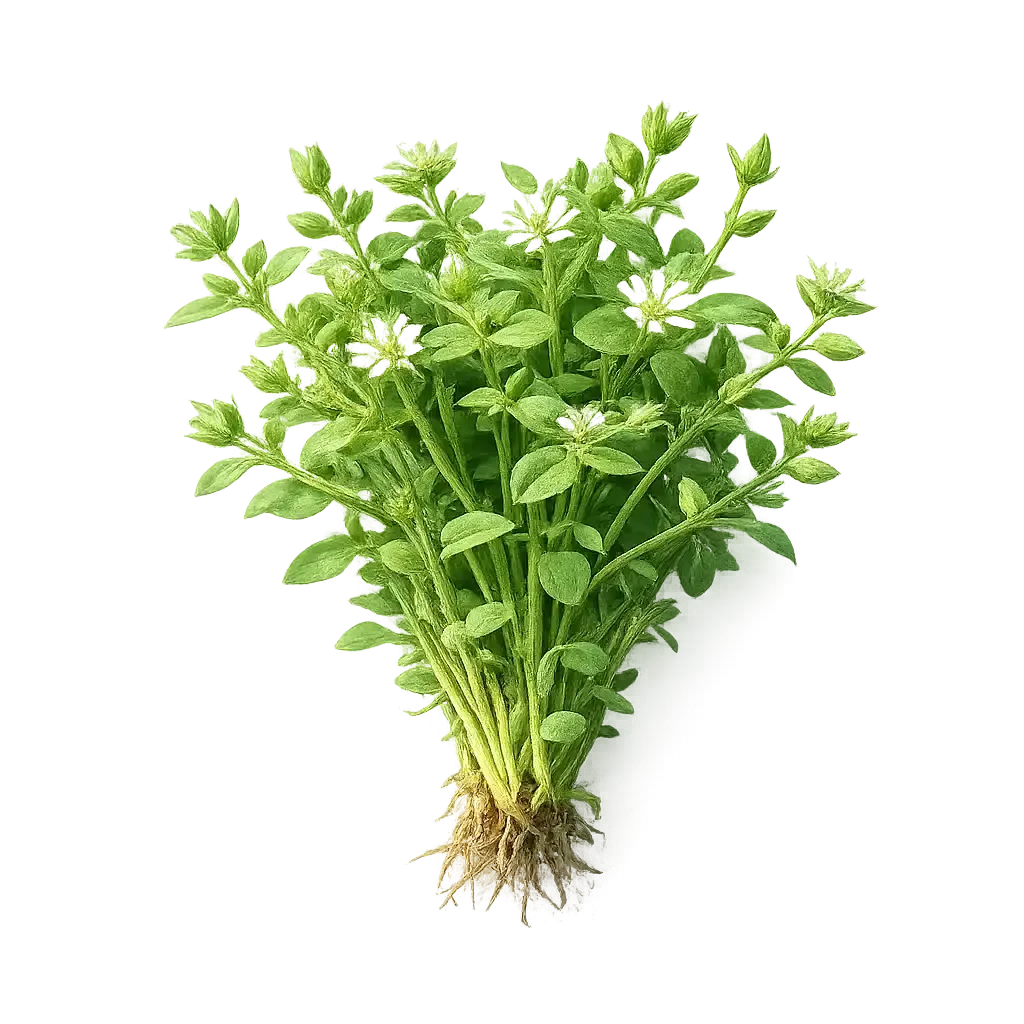
Written By Arthur Simitian
QUICK FACTS
Common Name
Chickweed, Common Chickweed, Starweed, Stitchwort (sometimes; though this name more correctly belongs to related Stellaria species); Stellaria is the genus that encompasses approximately 90 species worldwide, with S. media the most common edible and medicinal species
Scientific Name
Stellaria media (common chickweed; the primary edible and medicinal species); the genus name Stellaria derives from the Latin stella, star, referring to the star-shaped appearance of the deeply notched five-petaled flowers
Plant Type
Cool-season annual or overwintering annual; germinates in autumn, grows through winter in mild climates, flowers and sets seed in early spring before dying back in summer heat; may complete several generations per year in cool climates
Hardiness
Survives temperatures to approximately 20 degrees Fahrenheit (-7 degrees Celsius); grows actively through mild winters in zones 6 and above; in colder zones germinates in early spring and again in late summer for autumn and early winter harvest
Identification Feature
Single line of fine white hairs running along one side of the stem only, rotating ninety degrees at each node so the hair line switches sides as it moves up the plant; this characteristic is unique to Stellaria media among similar-looking plants and is the most reliable field identification marker
Harvest Parts
Entire above-ground plant: stems, leaves, and flowers; all parts are edible and of similar flavor; harvest the growing tips for the most tender material
Flavor
Mild, fresh, slightly sweet, faintly green; often compared to mild spinach or corn salad; no bitterness, no strong flavor; one of the most palatable raw wild greens available in the cool-season garden
Primary Active Compounds
Saponins (including gypsogenin and oleanolic acid derivatives; mucilaginous; contribute to topical soothing activity); coumarins; flavonoids including rutin and vitexin; vitamin C, A, and B-complex vitamins; iron, calcium, potassium, and magnesium; chlorophyll; gamma-linolenic acid (GLA) in the seed oil
Uses
Edible raw salad green and cooked vegetable; topical anti-itch and anti-inflammatory for eczema, psoriasis, minor rashes, and insect bites; traditional respiratory demulcent; poultry feed (the common name derives from the plant's use as chicken forage)
Season
Autumn through spring in mild climates; early spring and late autumn in cold climates; unavailable in summer heat; the winter and early spring harvest window when little else is growing is the defining characteristic of chickweed's homestead value
Chickweed is the herb that the winter and early spring garden produces without being asked. While most of the herb garden is dormant, covered, or waiting for the last frost date, Stellaria media is growing in every bed, every path edge, and every undisturbed corner of cool moist ground, producing the most nutritious and palatable raw green available in the cool-season garden at the exact moment when fresh greens from the garden are most welcome. The homesteader who stops treating it as a weed to pull and starts treating it as a crop to harvest has gained a free, self-seeding, highly nutritious salad green that requires no cultivation, no watering, no fertilizing, and no succession sowing. It is already there, growing in the conditions that shut down most other vegetables, waiting to be eaten. The identification is straightforward, the flavor is mild and pleasant, the nutritional profile is genuinely impressive for a plant that asks nothing in return, and the topical applications for itchy skin conditions have a plausible mechanistic basis and a long traditional use record. The main obstacle is the mental reframe from weed to food, which is the same obstacle dandelion presented and which chickweed resolves even more easily given its mild flavor.
Introduction
Stellaria media is native to Eurasia and is now naturalized on every inhabited continent as one of the most widely distributed plants on earth, following human cultivation and soil disturbance wherever it occurs. It has been used as a food plant in Europe since at least the medieval period; the sixteenth-century herbalist John Gerard described it as a food for pigs and poultry but also noted its use as a salad green by people in times of scarcity. The common name chickweed reflects its historical importance as supplemental feed for chickens and other poultry, for whom the soft, digestible green provides a valuable winter nutrition source when other forage is unavailable.
The genus name Stellaria, from the Latin for star, is an apt description of the flower's appearance: five white petals each so deeply notched at the tip that they appear to be ten separate petals, creating a star-like impression disproportionate to the flower's small size. This deeply bifid petal is a reliable identification feature, distinguishing Stellaria from several superficially similar small-flowered plants.
The plant's ability to grow and flower at temperatures close to freezing, to complete its reproductive cycle in the brief window between winter cold and summer heat, and to set an enormous number of seeds that remain viable in the soil seed bank for decades, explains both its universal presence in cultivated ground and its importance as a winter food source in European folk tradition. Where other plants struggle, chickweed thrives.
Identification: The Single Line of Hairs
Reliable identification of Stellaria media requires attention to one diagnostic feature that is unique to this species among its look-alikes: a single line of fine white hairs runs along one side of the stem only, not uniformly around the stem as in hairy plants generally, and this line rotates ninety degrees at each node so that the hair line switches sides as it progresses up the plant. This single-line-of-hairs-switching-at-nodes is the character that appears in every reliable foraging reference for chickweed, and for good reason; it is visible to the naked eye in good light, it is consistent across the species wherever it grows, and no similar-looking plant in the same habitat shares this specific feature.
Additional supporting characters for confident identification are the ovate pointed opposite leaves, the lower ones with short petioles and the upper sessile ones clasping the stem; the tiny white deeply notched flowers that appear star-shaped; the smooth, slightly succulent feel of the fresh stem; and the habit of forming soft sprawling mats close to the ground rather than erect stems. All of these together, plus the single rotating hair line, give a confident identification in the field.
The most commonly confused plant is scarlet pimpernel (Anagallis arvensis), which shares a similar low mat-forming habit in cool-season gardens but has orange-red flowers rather than white, and lacks the hair line on the stem. Scarlet pimpernel is mildly toxic and should not be eaten; confirming the white flowers and the single hair line before harvesting chickweed prevents any confusion between the two.
Harvest
Harvest the growing tips of chickweed stems, the top three to five inches of each branch, which contain the youngest leaves and the flowers. These tips are the most tender, most flavorful, and easiest to clean part of the plant. Avoid stems that are thick, tough, or yellowing at the base; the lower portions of older stems are less palatable. Take scissors or snips to the patch and cut the tips into a bowl or bag rather than pulling the stems, which brings soil and root debris into the harvest.
Clean the harvested tips by submerging in cold water, swishing to release any soil or debris, and draining. A salad spinner removes the excess water effectively. Chickweed harvested in clean garden beds away from paths, roads, or treated ground requires less washing than foraged chickweed from less controlled environments.
The harvest window is determined by temperature. Chickweed grows actively and is at peak flavor and tenderness from about 35 to 60 degrees Fahrenheit; above 65 to 70 degrees it becomes stringy and bitter as the plant rushes to flower and set seed before summer heat kills it. In cold climates the early spring window before temperatures rise is two to four weeks; in mild climates the winter harvest runs continuously from October or November through April.
Edible Uses
Raw Salad Green
Chickweed's most straightforward culinary use is as a raw salad green. The mild, fresh, slightly sweet flavor requires no dressing to be pleasant and combines well with stronger-flavored salad components including bitter greens, radish, and mustard that benefit from a neutral base. The texture is soft and succulent rather than crisp, which some people find pleasant and others find less appealing than conventional salad greens; this is a matter of personal preference rather than a quality defect.
In Japan, chickweed is one of the seven spring herbs of the traditional nanakusa festival, consumed in a rice porridge called nanakusa-gayu on January seventh as a symbol of hope and health for the new year. This traditional use places chickweed within a specific cultural context that recognizes it as a seasonal food rather than a weed, and the nanakusa tradition has been practiced continuously for over a thousand years. The seven herbs include chickweed alongside Japanese parsley, shepherd's purse, henbit, Japanese turnip, and two other spring plants, all harvested in late December or early January when they are at their most tender.
Cooked Green
Brief wilting in a hot pan with oil or butter reduces chickweed's volume dramatically and produces a mild cooked green similar in character to cooked watercress or mache. The cooking time is very short, thirty to sixty seconds of tossing in a hot pan, because the tender stems and leaves collapse quickly and become mushy if overcooked. Season with salt, lemon, and a little garlic and serve as a side dish or add to eggs, pasta, or soup at the very last moment of cooking.
Chickweed pesto
Chickweed's mild flavor and the abundance of fresh material available in late winter make it an ideal pesto base, either alone or blended with other available early-season greens including garlic mustard, young dandelion leaf, or wood sorrel. The result is a bright, fresh pesto with a milder, greener flavor than basil pesto and a seasonal character that makes it a genuinely spring-specific product.
Combine in a food processor: two packed cups of fresh chickweed tips, half a cup of toasted walnuts or pine nuts, two garlic cloves, half a cup of good olive oil, a generous squeeze of lemon juice, salt to taste, and three tablespoons of finely grated hard cheese. Blend until roughly smooth, adjusting oil for consistency. The pesto is bright green immediately after making and deepens to a darker green within a few hours as the chlorophyll oxidizes; a squeeze of additional lemon juice at serving time refreshes the color and flavor.
Use on pasta, spread on grilled bread, stirred into soup, or as a sauce for poached fish. The pesto keeps refrigerated for five days with a layer of olive oil pressed over the surface to prevent oxidation, or freezes for three months in ice cube trays.
Topical Medicinal Uses
Chickweed's traditional medicinal reputation rests primarily on its topical application for itchy skin conditions including eczema, psoriasis, contact dermatitis, insect bites, and minor rashes. The saponins and mucilaginous compounds in the fresh plant are proposed to provide a soothing, anti-inflammatory effect on irritated skin through their demulcent and anti-inflammatory activity. The traditional preparation is a fresh plant poultice: bruise or blend a handful of fresh chickweed with a small amount of water to produce a green paste, apply directly to the affected area, and cover with a clean cloth to hold in place for thirty to sixty minutes.
A chickweed-infused oil, made by cold infusion of fresh wilted chickweed in a carrier oil such as olive or sunflower oil for four to six weeks, provides a more stable topical preparation that can be blended with beeswax to produce a salve for ongoing use. The infused oil retains the saponins and fat-soluble compounds including gamma-linolenic acid from the plant material, and the resulting salve has a mild, soothing character appropriate for chronic dry and itchy skin conditions.
Clinical trial evidence for chickweed as a topical anti-inflammatory is limited; the traditional use record is extensive across European and Japanese folk medicine, and the saponin and GLA content provides a plausible mechanistic basis for the soothing activity, but rigorous controlled trials of chickweed-specific topical preparations are lacking in the current literature. The safety profile for topical use is excellent, with no meaningful toxicity or sensitization risk at normal application levels.
Cautions: Chickweed at normal culinary quantities is among the safest plants in this series with a long and clean food use record. The following specific points apply. Harvest only from ground confirmed free of herbicide and pesticide application; chickweed growing in treated lawns and gardens absorbs these compounds and should not be eaten. Harvest away from roadsides, paths with heavy foot or dog traffic, and any ground with potential heavy metal contamination. The saponin content at high concentrated doses has the theoretical potential to cause gastric irritation; at salad quantities and casual culinary use this is not a concern. Large quantities consumed daily over extended periods are not well-studied in humans; moderate consumption as one of several greens in the diet is the sensible approach rather than treating chickweed as a primary staple. Confirm identification carefully in any location with scarlet pimpernel present; the single hair line and white flowers are the key confirmation markers. Chickweed's saponins cause mild hemolysis in laboratory tests of isolated red blood cells, a finding that led to precautionary concerns about very high-dose or prolonged consumption; at dietary quantities in food this finding has not translated to clinical harm in the centuries of recorded use, but it argues against treating chickweed as a daily therapeutic supplement at concentrated doses.
Chickweed in the Garden: Weed or Crop
The management question for chickweed on the homestead is not whether it will be present but how to relate to its presence. In cultivated ground with regular soil disturbance and adequate moisture through winter and early spring, chickweed will grow. Treating it entirely as a weed to be eliminated requires repeated effort against a plant that is well-adapted to the garden conditions and produces an enormous seed bank from each season's plants. Treating it entirely as a welcome crop that can grow wherever it finds space produces an untidy garden and a plant that competes with deliberate plantings for space and light.
The practical homestead approach is selective tolerance: allow chickweed to grow freely in areas designated for harvest, paths, and fallow beds through winter and early spring, harvesting regularly from these areas; remove it promptly from beds where it is competing with spring plantings before it sets seed. This selective management both provides the winter and early spring fresh green harvest and limits the seed bank contribution from untolerated areas.
The seed bank management consideration is genuine. Each chickweed plant produces thousands of seeds that remain viable in the soil for at least five to ten years. Allowing plants to set seed in beds that will need to be managed weed-free in subsequent seasons adds to a seed bank that takes years to exhaust. Harvesting chickweed before it sets seed, or removing it from managed beds at flowering before seeds develop, is the seed bank management approach that makes the plant easier to control in future seasons.
Pros and Cons
Advantages
Zero cultivation input required; already present in any garden with soil disturbance and cool moist conditions; produces a harvestable crop through the winter and early spring window when no other fresh garden greens are available without protection or heated structures
Nutritional profile is genuinely impressive for a freely available weed; vitamin C, A, B-complex, iron, calcium, potassium, and magnesium at meaningful levels; GLA in the seed oil; among the most nutritionally dense cool-season greens available
Mild, pleasant flavor with no bitterness; one of the most palatable raw wild greens available, requiring no preparation, dressing, or cooking to be enjoyable; suitable for children and people with sensitivity to the bitterness of other wild greens
Topical anti-itch and soothing applications for eczema, psoriasis, and insect bites have a plausible mechanism and long traditional use record; a fresh poultice is a genuinely useful first aid response to minor skin irritation that is available from the garden at any time the plant is growing
The pesto, salad, and cooked green applications provide real culinary versatility for a plant that costs nothing and grows without effort; chickweed pesto in February from garden material harvested that morning is a seasonal product with a character unavailable in any other month
Limitations
The harvest window is strictly seasonal; chickweed is unavailable in summer heat; growers wanting fresh garden greens through the warm season need different plants for that purpose
The weed management question requires deliberate policy rather than neglect; allowing unlimited seeding adds to a persistent seed bank that complicates weed management in subsequent seasons
The fresh plant wilts rapidly after harvest; chickweed does not store or dry usefully, limiting it to same-day or next-day use after cutting; the fresh poultice application requires fresh plant material and cannot be prepared in advance
Identification requires attention and confirmation for first-time harvesters; the single hair line is distinctive but requires close examination; foragers who do not confirm identification carefully in areas with scarlet pimpernel present face a real though minor risk of confusion
The cooked green has a soft, slightly slimy texture at full wilt that some people find unpleasant; brief cooking and generous seasoning help, but this is a textural limitation inherent to the plant's succulent character that no preparation technique fully eliminates
Final Thoughts
Chickweed is the herb that makes the winter garden productive without any deliberate action from the grower. The decision required is simply to recognize what is already growing, confirm the identification, and harvest it. For a plant that is already present, requires no cultivation, provides fresh greens through the window when they are most valued, carries genuine nutritional density, and offers a practical topical preparation for skin irritation from nothing more than whatever is growing underfoot, the case for changing the framing from weed to resource is straightforward.
Cut it regularly before it sets seed. Eat it while it is fresh and tender. Put a handful on whatever you are cooking if the texture of raw greens is not your preference. Keep some for the chickens, as the common name has always suggested. That is chickweed's complete instruction set.