
Chives
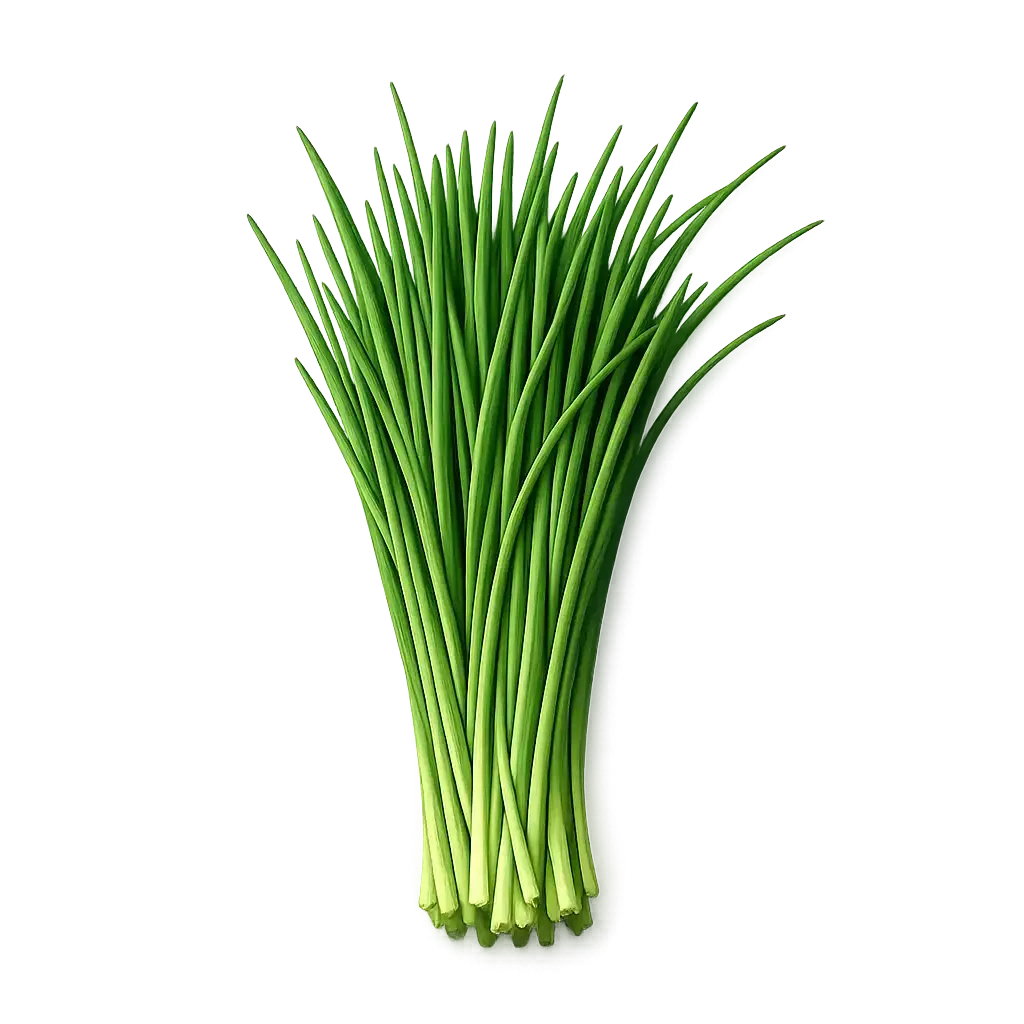
Written By Arthur Simitian
QUICK FACTS
Common Name
Chives (Allium schoenoprasum); Garlic Chives (Allium tuberosum); the two species share the common name chives but differ in leaf shape, flavor, flower color, and growing habits
Scientific Name
Allium schoenoprasum (common chives); Allium tuberosum (garlic chives, also called Chinese chives or nira); both in the Amaryllidaceae family alongside onion, garlic, and leek
Plant Type
Hardy bulbous perennials; both species die back to the ground in winter in cold climates and return vigorously from the bulb cluster each spring; effectively permanent in the garden once established
Hardiness Zones
Common chives zones 3 to 9; garlic chives zones 3 to 9; among the most cold-hardy perennial herbs in this series
Sun Requirements
Full sun preferred; tolerates partial shade; flavor intensity is highest in full sun; partial shade reduces but does not eliminate productivity
Soil Type
Well-drained, moderately fertile; pH 6.0 to 7.0; tolerant of average garden soils; performs well in containers with regular watering
Harvest Parts
Leaves (primary harvest; hollow cylindrical in common chives; flat and solid in garlic chives); flowers (edible; both species; garnish and infused vinegar); bulbs (rarely harvested but technically edible)
Flavor Profile
Common chives: mild onion; delicate compared to other alliums; flavor dissipates quickly with heat; best used raw or added at the very end of cooking. Garlic chives: mild garlic with grassy freshness; holds up somewhat better to brief cooking than common chives
Primary Active Compounds
Allicin and related organosulfur compounds including alliin, methyl cysteine sulfoxide, and propyl cysteine sulfoxide; quercetin and kaempferol (flavonoids); vitamin C and K; beta-carotene; the allicin content is lower than garlic but the same antimicrobial and cardiovascular-supportive chemistry is present
Seed vs. Division
Common chives are easily started from seed; garlic chives also set viable seed abundantly and can become weedy from self-seeding; division of established clumps every two to three years maintains productivity in both species
Chives are the allium that asks almost nothing and returns almost every time the kitchen needs something fresh, green, and mildly onion-flavored. No other perennial herb in the temperate garden delivers edible material this early in spring, this reliably over such a long season, or with this little management input. The clump that goes dormant in November reappears in February or March, sometimes pushing through the last of the snow, and is harvestable before most annual herbs have been sown. It divides itself into more plants when it gets crowded, provides ornamental pompom flowers that are themselves edible and attractive to pollinators, and tolerates neglect at a level that most culinary herbs would not survive. The garlic chives variation adds a distinct flavor profile and a different seasonal habit to the same essentially zero-effort framework. Between the two species, there is a fresh allium flavor available from a permanent planting through most of the growing year with negligible maintenance.
Introduction
Allium schoenoprasum is the smallest of the cultivated alliums, native to a broad circumpolar range spanning Europe, Asia, and North America, making it one of the few culinary herbs in this series with genuinely native status in multiple continents simultaneously. Its long history in European, Chinese, and Central Asian kitchens reflects its widespread natural distribution; it was used before it was cultivated. The hollow cylindrical leaves, the characteristic that most clearly distinguishes it from garlic chives at a glance, reflect an adaptation that allows the leaf to flex in wind and recover without breaking, a useful trait for a plant evolved in alpine and coastal conditions.
Allium tuberosum, garlic chives, is native to Southeast Asia and China and has a different growth habit, producing flat solid leaves rather than hollow cylindrical ones, white rather than purple flowers, and a distinct mild garlic flavor in contrast to common chives' mild onion character. It is a more substantial plant with larger leaves and more aggressive self-seeding than common chives, and in mild climates can become invasive through seed dispersal if the flower heads are not removed before they open and shed.
The two species complement each other well in a kitchen garden: common chives for the delicate fresh garnish application where their mild onion flavor and visual appeal from the thin green tubes is appropriate, garlic chives for applications where a mild garlic character is wanted in a fresh herb that will not overwhelm or linger the way raw garlic does.
How to Grow
Starting and Establishing
Common chives are one of the most reliable herbs to start from seed, germinating in seven to fourteen days in warm soil and reaching harvestable size within sixty to ninety days from sowing. Direct sow in early spring as soon as the soil can be worked; chives tolerate light frost at the seedling stage. Alternatively, sow six to eight weeks before the last frost indoors and transplant after frost danger passes. Because chives form clumps rather than individual plants, sow seeds in small clusters of five to eight seeds per position rather than thinning to one plant; the cluster establishes as a single multi-stem clump that is more productive from the start than a single seedling.
Garlic chives establish from seed with similar ease and timing, or from divisions of established clumps, which is the fastest route to a productive planting if an established source is available. Both species are also commonly available as nursery transplants in the spring herb section, making purchase and planting the fastest practical route if the goal is immediate harvest rather than growing from seed.
Container growing works very well for both species. A six-to-eight-inch pot on a kitchen windowsill or balcony provides a continuous harvest through the growing season and, with a south-facing window and supplemental grow light, through winter. Pot-grown chives dry out faster than ground-grown plants and require more frequent watering; the penalty for letting container chives wilt from dryness repeatedly is reduced flavor intensity and slower regrowth.
Division
Established chive clumps expand steadily, producing more bulbs and more leaf stems each season. After two to three years, the center of a mature clump sometimes becomes overcrowded and less productive, with thin, crowded leaves and reduced flowering. Division in early spring or autumn rejuvenates the planting: dig the entire clump, separate it into smaller sections of five to ten bulbs each with a sharp knife or spade, and replant the divisions at the original spacing. Divisions establish quickly and produce the season's full leaf harvest within four to six weeks of planting.
Division is also the mechanism for propagating a productive chive planting across the homestead, establishing new clumps near additional vegetable beds for companion planting use without requiring additional seed purchases.
Harvesting
Cut chive leaves with scissors two to three inches above the soil, removing the entire leaf height rather than snipping individual tips. This cut-to-the-base approach removes the toughening lower portion of old leaves and stimulates a flush of fresh new growth within one to two weeks. Never remove more than half the leaf mass at one harvest; the remaining leaves continue photosynthesis and support rapid regrowth.
Chives are most flavorful when harvested in the morning before heat begins to volatilize the organosulfur compounds. Use immediately after cutting for maximum flavor intensity; the cut leaves lose their peak flavor within a few hours at room temperature but hold well refrigerated in a sealed container for three to five days.
The Edible Flowers
Both species of chives produce flowers that are fully edible, mildly flavored with the same character as the leaves, and visually distinctive enough to be genuinely useful as garnishes in a way that most edible flowers are not. The round pompom heads of common chives in rosy purple are among the most attractive edible flowers available from a kitchen garden; the flat white umbels of garlic chives are somewhat more subtle but still usable as a garnish and more intensely garlic-flavored than the leaves.
Individual florets separated from the flower head can be scattered over salads, cold soups, devilled eggs, and compound butters where their color and mild onion flavor adds both visual and flavor interest. The whole flower heads, halved or quartered, work as garnishes on plated food. Neither species flower is unpleasantly strong; the flavor is a mild version of the leaf rather than a concentrated one.
Chive blossom vinegar
Chive blossom vinegar is among the most visually striking infused vinegars in the kitchen herb repertoire, turning from clear white wine vinegar to a deep rose-pink within twenty-four hours of the flowers being added, and continuing to deepen to a vivid magenta over the following week. The flavor is mild, onion-scented, and pleasant as a salad dressing base or a drizzle over vegetables.
Harvest the flower heads just as they are fully open, when the color is at its peak and before any browning begins. Rinse briefly and allow to dry on a clean cloth for two hours to remove surface moisture. Pack the flower heads loosely into a clean glass jar, enough to fill the jar about two-thirds. Cover completely with white wine vinegar or champagne vinegar; these light vinegars allow the pink color to show clearly. Use apple cider vinegar for a more complex flavor at the cost of some color clarity. Seal and leave at room temperature for one week. Strain out the flowers, which will have faded to pale green. The vinegar keeps for a year in a sealed jar. Use in salad dressings, drizzled over roasted vegetables, or mixed with olive oil and dijon mustard as a sauce for grilled fish.
Garlic Chives: The Differences That Matter
Garlic chives deserve separate attention for the ways they differ from common chives in growing habit and use. The flat solid leaves, which can reach twelve to eighteen inches in length, are considerably more substantial than common chives and are used as a cooked vegetable rather than just a garnish in Chinese, Korean, and Japanese cuisines. Stir-fried garlic chives with eggs, pork, or tofu is a household staple across large parts of East Asia; the leaves are treated as a green vegetable in these applications, added in large quantities to the hot pan rather than in the small garnish quantities appropriate for common chives.
Blanched garlic chives, grown by covering an established clump with an opaque pot or covering for two to three weeks in spring, produce pale yellow tender shoots with a milder flavor and more delicate texture. This blanched yellow chive, huang jiu cai in Chinese, is a specific ingredient in some Chinese dishes and dumplings, appreciated for its sweetness and tenderness compared to the green leaf. The blanching technique is straightforward and produces a distinct product that is genuinely unavailable commercially in most markets outside major Chinese food neighborhoods.
The self-seeding of garlic chives is the primary management consideration that distinguishes it from common chives. The white flower heads produce abundant viable seed that falls readily when ripe and establishes new plants wherever it lands. In a managed garden bed this is a weed problem; removal of the flower heads before seed set is necessary in positions where garlic chives are meant to stay in one place. In a food forest or wildflower-friendly setting, the self-seeding is a feature rather than a problem.
Culinary Uses
Common chives belong to the category of fresh herbs used as a final garnish rather than a cooking ingredient, alongside fresh parsley and fresh basil. The mild flavor dissipates rapidly with heat, making them appropriate as a last-addition or cold-application herb: on baked potatoes, in cream cheese, in cold sauces like tzatziki and cold cucumber soup, in omelettes added at the fold rather than during cooking, and as a garnish over soups, roasted vegetables, and egg dishes where the green speckling adds visual appeal alongside the flavor contribution.
Chive butter, made by working finely chopped fresh chives into softened unsalted butter with a pinch of salt, is among the most useful prepared herb condiments in the seasonal kitchen, melting over grilled fish, roasted chicken, new potatoes, and steamed vegetables. It freezes well shaped into a log in plastic wrap, allowing a summer harvest to be preserved and used through the year. The butter moderates the volatility of the organosulfur compounds enough to provide chive flavor through brief cooking where adding cut chives directly would not survive.
Medicinal Uses
Chives share the organosulfur chemistry of the broader allium family, including allicin and related compounds with demonstrated antimicrobial and cardiovascular activity, but at considerably lower concentrations than garlic or onion. The medicinal evidence base that applies specifically to chives as a therapeutic agent is limited; most of the relevant pharmacology research has been conducted on garlic and onion, with the assumption that chives' lower-concentration version of the same chemistry provides proportionally lower effects.
The flavonoids quercetin and kaempferol present in chives at meaningful concentrations have anti-inflammatory and antioxidant activity supported by extensive research, though again the concentrations consumed in typical culinary quantities are lower than those used in research settings. The nutritional contribution of chives to the diet, including vitamin K content at levels meaningful for bone metabolism when consumed regularly as a garnish, is the most practically significant health consideration for regular culinary use.
Cautions: Chives are among the safest plants in this entire series at culinary use levels, with no meaningful toxicity to humans at any reasonable consumption level. The essential caution applies to pets: allium species including chives and garlic chives are toxic to dogs and cats through the N-propyl disulfide compound that damages red blood cells and causes hemolytic anemia. The toxicity is cumulative; a cat or dog that regularly consumes garden chives, gets into fresh herb preparations, or eats food seasoned with alliums over time is at risk even if no single exposure is large enough to cause obvious acute symptoms. Keep fresh chives and preparations containing them away from pets, and note that garlic chives, with their flat leaves lying close to the ground, are easier for pets to graze on inadvertently than tall cylindrical common chives. Allium allergy causing oral allergy syndrome affects a small proportion of people and may cause tingling and mild swelling of the mouth; people with known onion or garlic allergy should approach chives with the same caution. The latex from freshly cut leaves causes contact dermatitis in occasional individuals with allium sensitivity.
Companion Planting
Chives are among the most recommended companion plants in kitchen garden literature, with claims ranging from repelling aphids and carrot fly through organosulfur volatile emission to improving the growth and flavor of neighboring plants. The evidence for specific pest deterrence from chive volatiles in field conditions is inconsistent; laboratory studies show organosulfur compounds inhibit aphid feeding behavior, but translating this to meaningful pest reduction in an open garden setting is not reliably demonstrated.
What is reliably demonstrated is that chive flowers, which appear early in the growing season and produce abundant nectar, attract beneficial insects including hoverflies, parasitic wasps, and predatory beetles that prey on the same pests the chives are supposedly repelling by other means. The beneficial insect attraction from flowering chives is probably the more significant companion planting contribution, and allowing some clumps to flower rather than removing all flower scapes to maintain leaf production is the management approach that maximizes this benefit.
The traditional association of chives with roses as a deterrent to black spot and aphids has some support in organic rose growing literature; planting chive clumps around the base of rose bushes is widely practiced and widely reported to produce healthier rose foliage. The mechanism is not clearly established, but the practice is low-cost and the chives do no harm to the roses in any case.
Pros and Cons
Advantages
Among the earliest and latest fresh herbs of the growing season; pushing through the last of the snow in late winter and continuing until hard frost in autumn, the harvest window exceeds that of most other fresh herbs in this series by several months
Genuinely permanent and self-maintaining once established; the division cycle every two to three years is a productive task rather than a replacement requirement, generating additional plants from the existing clump rather than requiring new purchases
Both leaf and flower are edible and useful; the ornamental pompom flowers of common chives in particular are among the most visually distinctive edible garnishes available from a kitchen garden, and the blossom vinegar they produce is a genuinely special seasonal product
Container-friendly for indoor growing year-round; the only allium in this series that performs reliably on a kitchen windowsill, providing the fresh onion flavor in winter that would otherwise require purchasing scallions
The two species complement each other and together cover a wider flavor range: common chives for mild onion garnish, garlic chives for mild garlic cooked applications and the blanched yellow chive specialty product that is essentially unavailable in commercial markets
Companion planting benefits, particularly the pollinator and beneficial insect attraction from the early-season flowers, provide a direct service to neighboring vegetables that makes chive placement in and around the vegetable garden sensible beyond their own production value
Limitations
Common chives do not hold their flavor through cooking; the mild organosulfur volatiles dissipate rapidly with heat, limiting them to raw applications, cold dishes, and very last-minute additions; they cannot substitute for cooked onion or shallot in any application where allium flavor needs to survive the cooking process
Garlic chives self-seed aggressively and can become weedy in managed beds if flower head removal is not practiced consistently; this is a real management task in tidy gardens and not merely a theoretical concern
Division is necessary every two to three years for maintained productivity; unlike truly set-and-forget perennials, chives require this periodic intervention to prevent the center-die-out of overcrowded mature clumps
Container plants dry out faster than ground plants and require attentive watering; the penalty of inconsistent watering in containers is not plant death but reduced flavor intensity and leaf quality, which is self-defeating in a herb grown primarily for its fresh flavor
Pet toxicity is a meaningful practical constraint on homesteads with dogs and cats; positioning chive plantings and herb preparations away from pet access requires deliberate planning rather than casual placement
Final Thoughts
Chives are the herb that earns its permanent position in the kitchen garden through sheer reliability rather than any dramatic culinary or medicinal claim. They are there before the season starts and after it ends. They require division occasionally, watering regularly, and harvesting frequently, all of which produce more plants, more growth, and more use respectively. The flowers are beautiful, the blossom vinegar is one of the most striking seasonal preserves available from a kitchen herb garden, and the garlic chives add a genuinely different flavor in a different direction from the same essentially zero-input permanent planting framework.
Plant a clump of each near the kitchen door. Divide them when they get crowded. Harvest early and often. That is the complete instruction.