
Dill
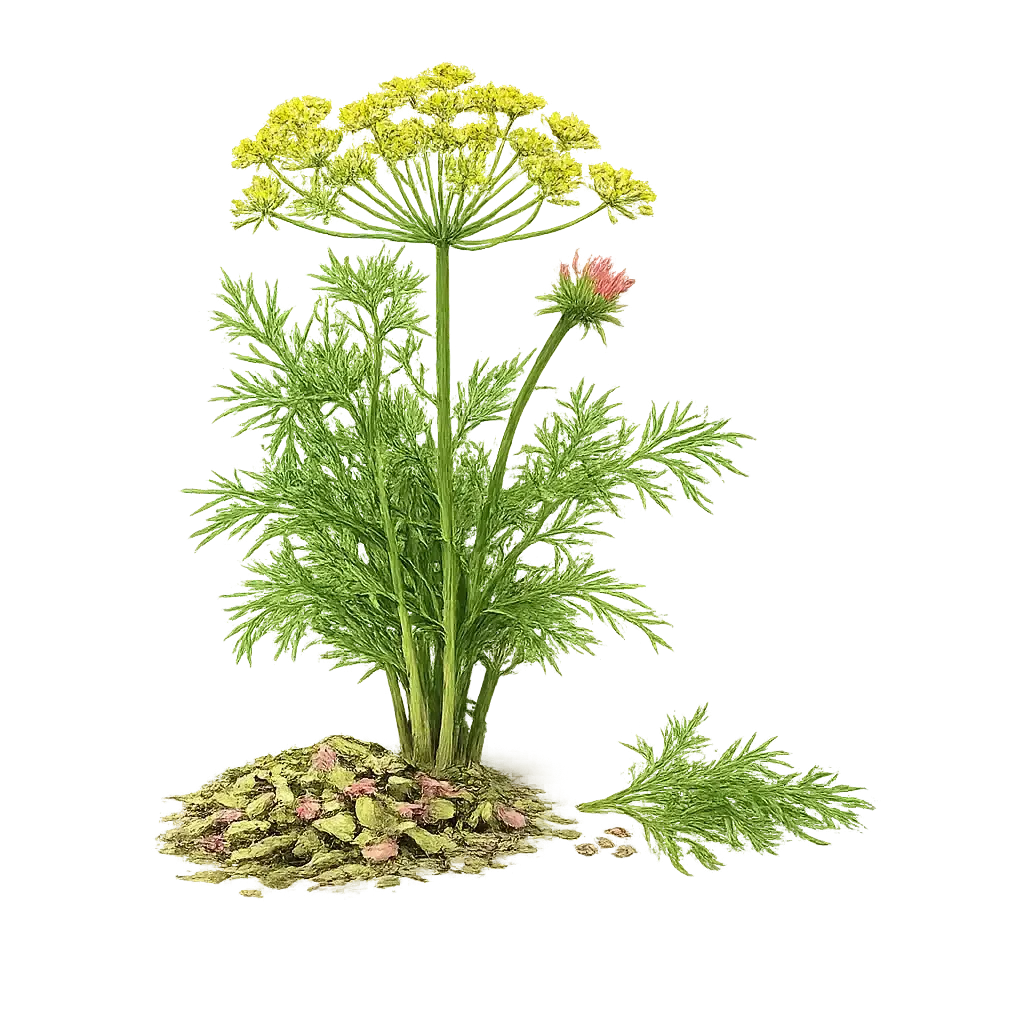
Written By Arthur Simitian
QUICK FACTS
Common Name
Dill, Dillweed
Scientific Name
Anethum graveolens
Plant Type
Annual; completes its cycle from germination to seed set in one season; self-seeds reliably under the right conditions
Hardiness Zones
Annual grown in zones 2 to 11; direct sow after last frost in spring, or in autumn in mild-winter climates (zones 9 to 11) for a cool-season crop
Sun Requirements
Full sun; at least six hours required; less sun delays bolting but reduces fragrance intensity and seed production
Soil Type
Well-drained, moderately fertile; pH 5.8 to 6.5; tolerates lean soils well; dislikes waterlogging and heavy clay
Plant Height
Standard varieties 3 to 4 feet; compact varieties including Fernleaf and Bouquet 18 to 24 inches; tall varieties including Mammoth are selected for seed production
Days to Foliage Harvest
40 to 60 days from germination depending on variety and conditions
Days to Seed Harvest
90 to 120 days from germination
Do Not Transplant
Direct sow only; dill has a taproot that does not tolerate root disturbance; transplanting causes immediate bolting
Primary Active Compounds
Carvone (monoterpene; primary volatile in dill seed; carminative, antimicrobial; also the primary compound in caraway and spearmint but in different ratios); limonene; alpha-phellandrene; dill ether (apiol ether; primary compound in fresh leaf volatile); myristicin; dillapiole; flavonoids including kaempferol and quercetin; coumarins
Uses
Culinary herb fundamental to Scandinavian, Eastern European, and Middle Eastern cuisines; pickling (dill seed and flower heads); carminative digestive; galactagogue (modest evidence); antispasmodic; antimicrobial; traditional colic remedy for infants
Dill is the herb that homestead growers reliably underestimate at the planning stage. It is fast, prolific, and straightforward to grow, but it has a specific relationship with time: the window between harvestable fresh weed and bolt is shorter than most annual herbs, succession sowing is not optional if continuous fresh foliage is the goal, and the plant that has been allowed to bolt and set seed is in the process of becoming something entirely different in flavor and use from the fresh herb that preceded it. Managing those two versions of dill, the feathery fresh leaf and the ripe seed, as distinct harvests from deliberate plantings rather than treating one as a failure mode of the other is the central skill of dill cultivation. Get the succession timing right and the homestead has fresh dill leaf through most of the growing season and a generous seed harvest for pickling. Miss it and the bed bolts collectively in a heat wave and the fresh leaf is gone before the kitchen caught up.
Introduction
Anethum graveolens is native to southwest Asia and the eastern Mediterranean, where it has been in continuous cultivation for at least five thousand years based on the archaeological record. Dill seeds have been found in Egyptian tombs, and the plant is mentioned in the Ebers Papyrus of approximately 1550 BCE as a digestive medicine. The Romans used it extensively as a condiment and as a medicinal plant for digestive complaints and as a breath freshener for gladiators. It spread through Europe with Roman expansion and has been cultivated in northern European kitchen gardens continuously since at least the medieval period, where it became fundamental to the pickled fish, potato, and cucumber preparations that define Scandinavian and German culinary traditions.
The genus name Anethum derives from the Greek for strong smell; graveolens means heavy-scented in Latin. Both names reflect the plant's most immediately obvious characteristic: the volatile oil content of fresh dill is high enough that the smell is present from several feet away in a warm garden, and the seed when crushed is arrestingly aromatic. The aroma of the fresh leaf and the mature seed are distinctly different: the leaf contains primarily dill ether and alpha-phellandrene, which together produce the fresh, slightly grassy, anise-adjacent scent of dillweed; the seed contains primarily carvone and limonene, which together produce the warmer, more complex, slightly citrus-touched aroma of dill seed used in pickling and bread-making.
How to Grow
Direct Sow Only
Dill has a taproot that does not tolerate disturbance, and transplanting invariably causes the plant to bolt immediately, producing a flower stem before usable leaf quantity has developed. Direct sowing into the permanent position is the only practical approach. Sow seed shallowly, no more than a quarter inch deep, directly onto the prepared surface and water in; the seed needs light to germinate well and deep covering delays or prevents emergence. Germination occurs in seven to fourteen days in warm soil above 60 degrees Fahrenheit.
Succession Sowing
A single sowing of dill produces a cohort of plants that all bolt within a few weeks of each other when day length or temperature triggers the bolting response, ending the fresh leaf harvest from that planting simultaneously. To maintain a continuous fresh leaf supply through the season, sow a new short row or small patch every three to four weeks from the last frost date through midsummer. Three or four successive sowings of a dozen plants each provide a continuous fresh harvest rotating through the plantings as earlier ones bolt and later ones reach harvestable size.
Autumn sowing in zones 9 and above, or in mild-winter coastal climates, produces a cool-season dill crop that grows slowly and does not bolt in cool weather, providing fresh leaf through late autumn and winter from a single sowing without the rapid succession needed in warmer seasons.
Bolt Management and the Weed-to-Seed Decision
Dill bolts in response to long days and heat; in most temperate climates this means midsummer plantings bolt faster than spring plantings regardless of management. Once the central flower stalk begins to elongate, the fresh leaf quality declines rapidly and the plant's energy redirects entirely to flower and seed production. There is no practical way to prevent bolting indefinitely in long-day summer conditions.
The correct response to bolting is to make a deliberate decision: if fresh leaf is still needed, harvest the remaining foliage from bolting plants and start the next succession. If seed is the goal, stop harvesting the foliage and allow the plant to flower and set seed fully. Attempting to continue harvesting fresh leaf from a bolting plant produces small quantities of progressively coarser, less flavorful foliage while interfering with seed development; committing to one outcome or the other from each planting produces better results in both directions.
Compact varieties selected for slower bolting including Fernleaf, which won an All-America Selections award and is widely available, extend the fresh leaf season meaningfully compared to standard tall varieties. Fernleaf reaches eighteen to twenty-four inches, branches more freely than standard dill, and holds its foliage quality for two to three weeks longer before bolting in midsummer conditions. For container growing and small gardens where the full-sized three-to-four-foot plant is awkward, Fernleaf is the practical choice.
Companion Planting: The Fennel Problem
Dill and fennel must not be planted near each other. Both are Apiaceae family members with overlapping flowering periods, and they cross-pollinate freely if grown within insect flight range of each other, typically considered fifty feet as a minimum separation for seed saving, and practically problematic even within garden-scale distances. The resulting seed from cross-pollinated plants produces offspring with unpredictable flavor profiles combining characteristics of both parents, degrading both the dill seed harvest and any fennel seed harvest in the same garden. Grow one or the other in any given season if seed quality matters; if both are grown, separate them by as much distance as the garden allows.
Dill has an ambiguous companion planting relationship with brassicas and carrots that the traditional garden literature describes inconsistently. The general principle is that dill in the vegetative stage is reported to deter some aphids and cabbage pests through volatile emission, and the open umbel flowers are strongly attractive to beneficial insects including parasitic wasps and hoverflies that prey on pest insects. Once dill bolts and flowers it is a net positive for beneficial insect habitat in the garden. The carrot family cross-pollination concern applies broadly to Apiaceae; dill growing near carrots in seed-saving gardens risks influencing carrot flavor in subsequent generations.
Self-Seeding
Dill allowed to set seed self-sows freely, and a garden with one or two seed-setting plants each year typically self-maintains without replanting, producing volunteer seedlings in the immediate vicinity of the parent plants the following spring. Volunteers germinate when soil temperature is right, often producing earlier plants than deliberate spring sowing would. The self-seeding population shifts slightly in position each year and requires some thinning to prevent overcrowding, but provides a useful no-effort fresh leaf supply to supplement deliberate succession plantings.
Harvesting
Fresh Weed (Dillweed)
Begin harvesting outer stems and leafy tips once the plant has reached eight to ten inches and has developed at least four or five stems. Take no more than a third of the plant at once to allow continued growth; harvest in the morning before heat drives off the volatile oils. The fresh leaf is at peak flavor just before the flower stalk begins to elongate; once bolting begins, harvest everything remaining from that plant.
Fresh dill does not store well: the volatile compounds that carry its flavor begin dissipating within hours of cutting. Wrapping cut stems in a damp paper towel and storing in the refrigerator extends usability to three to five days. For longer preservation, freeze chopped fresh dill in a single layer on a tray, then transfer to a sealed container; frozen dill retains more flavor than dried and is the practical winter form for a homestead with surplus. Drying concentrates some compounds but loses most of the fresh grassy volatile character; dried dillweed is a much reduced version of the fresh herb and should be used at roughly twice the volume called for in a fresh-herb recipe.
Dill Flower Heads for Pickling
The flower heads of dill at the stage when the umbel is open but before the seeds have fully formed are the classic addition to pickling brine for dill pickles, dilly beans, and pickled cucumbers. This stage is brief, typically ten to fourteen days per planting, reinforcing the case for succession sowings that stagger the flower head availability through the cucumber and bean harvest season rather than producing all the pickling dill simultaneously with the first cucumber flush.
The flower head stage has a flavor profile intermediate between fresh leaf and ripe seed: more complex and warmer than the leaf, with the seed flavor compounds beginning to develop but without the full intensity of ripe seed. This intermediate quality is specifically what traditional dill pickle recipes call for, and substituting either fresh leaf or dried seed alone does not produce quite the same result in a fermented or vinegar brine.
Dill Seed
Allow selected plants to go fully to seed and wait until the seed heads have dried to tan-brown on the plant before harvesting. Cut the seed heads into a paper bag and allow to dry further indoors for one to two weeks before threshing by rubbing the heads between the palms over a clean surface. Winnow away the chaff. Store in a sealed glass jar away from light and heat; properly dried and stored dill seed retains flavor for two to three years.
Dill pickles: the homestead brine approach
The dill pickle is the application that justifies maintaining a serious dill planting on any homestead that also grows cucumbers. The flavor of a home-fermented or home-brined dill pickle made with fresh dill flower heads from the garden is categorically different from commercial products, and the process is straightforward.
For a simple refrigerator dill pickle that requires no canning equipment: pack sliced or whole pickling cucumbers tightly into clean jars. Add two to three fresh dill flower heads per quart jar, two to three garlic cloves, and a pinch of black peppercorns and red pepper flakes if desired. Make a brine of one tablespoon kosher salt per cup of water, heated briefly to dissolve, then cooled to room temperature. Pour brine over cucumbers to cover completely. Seal and refrigerate; the pickles are ready in forty-eight hours and continue improving in flavor for up to two weeks. Keep refrigerated; they are not shelf-stable by this method.
For shelf-stable canned dill pickles using a water bath canner, follow tested recipes from established canning authorities including the USDA Complete Guide or the Ball Blue Book; the brine acidity ratios in tested recipes are calibrated for safety and should not be altered.
Dill seed used in place of fresh flower heads in pickling brine produces a stronger, somewhat different flavor; use one teaspoon of dried seed per quart jar as a substitute when fresh flower heads are unavailable.
Medicinal Uses
Carminative
Dill seed tea is among the oldest carminative preparations in the Western herbal tradition, used to relieve bloating, intestinal gas, and digestive cramping across European, Middle Eastern, and South Asian traditions from ancient times to the present. The carminative activity is attributed primarily to carvone and limonene, which relax smooth muscle in the gastrointestinal tract, reducing spasm and facilitating the passage of gas. This mechanism is well-established in in vitro smooth muscle studies and is consistent with the traditional use pattern.
Dill water, a dilute infusion of dill seed, was the original gripe water used for infant colic in the European folk medicine tradition and remains in use today in modified commercial forms. The efficacy of carminative preparations for infant colic specifically is debated in the pediatric literature; the most rigorous systematic reviews find inconsistent evidence across trials, partly because colic itself has multiple possible causes that respond differently to carminative treatment. The traditional use is long-established and the safety at culinary concentrations is well-documented, making dill water a reasonable first approach to infant colic within normal feeding quantities.
Galactagogue
Dill, along with fenugreek, fennel, and several other Apiaceae family herbs, is traditionally used as a galactagogue to support milk production in breastfeeding women. The proposed mechanism involves phytoestrogenic compounds and potentially direct prolactin-stimulating effects. The clinical evidence base is limited; most galactagogue research focuses on fenugreek and the evidence for dill specifically is drawn primarily from traditional use patterns across multiple independent cultural traditions rather than controlled trials. The consistent cross-cultural traditional use of Apiaceae family herbs including dill as galactagogues suggests a real effect, but the magnitude relative to well-established galactagogue approaches is uncertain.
Cautions: Dill at normal culinary doses is one of the safest herbs in this series, with a multi-thousand-year record of use as a food and medicine across all age groups. The following cautions apply to concentrated preparations rather than to culinary use. Dill seed essential oil and concentrated seed extracts contain dillapiole and myristicin at higher concentrations than the whole herb; these compounds can cause photosensitivity reactions, and concentrated oil on sun-exposed skin should be avoided. Apiaceae family allergy cross-reactivity is possible in people sensitized to celery, carrot, fennel, or related plants, though dill allergy is less commonly reported than celery allergy in the clinical literature. The cross-pollination interaction with fennel in the garden is practical rather than safety-related but worth restating: dill and fennel grown near each other in seed-saving gardens will cross-pollinate and degrade both seed harvests. Dill seed at very high doses has historical use as an emmenagogue and abortifacient; normal culinary and medicinal tea use is not a concern in pregnancy, but concentrated seed oil and large medicinal doses are contraindicated.
Pros and Cons
Advantages
One of the fastest and most productive annual herbs from seed; fresh foliage available within six weeks of direct sowing; requires no special soil preparation or fertility inputs beyond a basic well-drained bed
Produces two categorically distinct harvests from a single annual cycle: fresh weed for culinary use and mature seed for pickling, baking, and medicinal tea, both of which have well-established applications in the homestead kitchen
The dill pickle application alone justifies serious cultivation on any homestead growing cucumbers; no commercial product reliably replicates the flavor of home-fermented dill pickles made with fresh garden flower heads
Open umbel flowers are among the best beneficial insect attractors in the kitchen garden, drawing parasitic wasps, hoverflies, and other predatory and parasitoid insects that provide ongoing pest management service through the season
Self-seeds reliably once established, providing a volunteer population each spring without replanting effort; a garden with an established dill self-seeding colony rarely needs deliberate replanting beyond the succession sowings
Extremely cold-hardy as a seed; can be direct-sown before the last frost date in many climates and germinates reliably in cool soil, making it one of the earliest annual herbs to establish each season
Limitations
Bolts rapidly in heat and long days; without succession sowing, a single planting provides a fresh leaf window of only three to five weeks before bolting redirects all energy to seed; the succession sowing discipline is non-optional for continuous fresh supply
Does not transplant; the taproot is disturbed fatally by transplanting, causing immediate bolt; direct sow only, which requires planning ahead rather than filling gaps in the garden with nursery transplants
Cross-pollinates with fennel freely; the two most popular Apiaceae kitchen herbs cannot coexist at close range in seed-saving gardens without degrading each other's seed quality
Fresh leaf quality declines rapidly after cutting and does not dry well; the fresh herb is essentially a same-day ingredient in its best form, and the dried version is a significant step down in flavor intensity and character
Medicinal applications beyond the well-established carminative use have limited clinical evidence; the galactagogue use is supported by traditional practice but not by controlled trials, and the colic evidence is inconsistent
Common Problems
Aphids, particularly the willow-carrot aphid that specializes on Apiaceae family plants, can colonize dill stems in large numbers in warm dry periods. Dill's rapid growth usually outpaces moderate aphid pressure, but heavy infestations on young plants can stunt development significantly. A strong water spray dislodges colonies; allowing the beneficial insect populations that the dill flowers themselves attract to establish before intervening is the most ecologically sound approach, and ladybug and lacewing larvae typically reduce aphid populations on dill significantly within a week to ten days of colonization.
Parsley worm, the larva of the black swallowtail butterfly, feeds on dill and other Apiaceae family plants. It is large, distinctively striped in green, black, and yellow, and easy to spot. Homestead growers who value butterfly populations, which is most of them, typically relocate rather than kill these larvae; they cause cosmetic damage to individual plants but are not a serious production threat, and the adult butterfly is a beneficial pollinator. If the population is large enough to threaten a planting, moving larvae to a less critical plant in the Apiaceae family handles the situation without destruction.
Final Thoughts
Dill earns its place in the homestead herb garden through straightforward productivity and culinary indispensability rather than through rarity or complexity. It grows fast, seeds itself, attracts beneficial insects, produces a genuine pickling harvest, and provides one of the most recognizable and versatile fresh herb flavors in the Northern European and Middle Eastern culinary traditions.
Sow it in succession. Know when to stop harvesting leaf and commit to seed on each planting. Keep it away from the fennel. Those three practices, combined with accepting the taproot constraint of direct sowing, are the complete skill set for a homestead dill bed that provides generously through the season.