
Elderflower
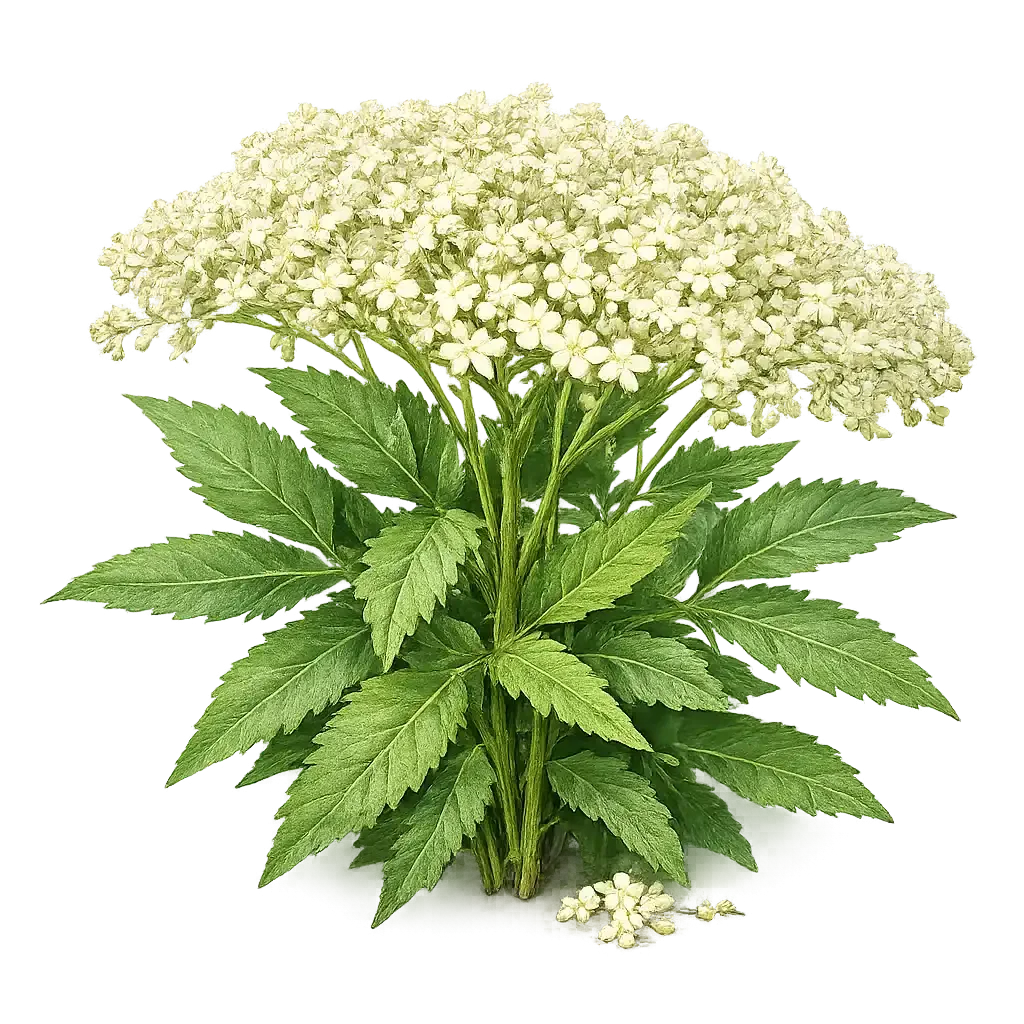
Written By Arthur Simitian
Two elderberry posts: This post covers the flower harvest and its medicinal and culinary uses. The companion post in the shrubs and bushes series covers the full growing guide for Sambucus canadensis, including planting, pruning, berry harvest, and the shrub's role in the homestead landscape. If you are deciding whether and where to plant elderberry, start there. This post assumes the shrub is already established or accessible and focuses on what to do with the flowers when they arrive in early summer.
QUICK FACTS
Common Name
Elderflower; flowers of European Elder (Sambucus nigra) and American Elder (Sambucus canadensis)
Scientific Name
Sambucus nigra (European); Sambucus canadensis (American); both produce usable flowers; S. nigra is the European culinary and medicinal standard
Harvest Window
Narrow: approximately two to three weeks in late spring to early summer when flower heads are fully open and fragrant but before individual flowers begin to brown at the edges; timing varies by latitude and year
Flower Head Size
15 to 25 cm across; flat-topped corymb composed of hundreds of individual tiny five-petalled flowers
Fragrance
Intensely sweet, floral, muscat-grape-adjacent; one of the most distinctive and complex floral fragrances of the temperate garden; the fragrance is at its peak on warm dry mornings
Primary Active Compounds
Flavonoids including rutin, quercetin, kaempferol, and isoquercitrin; chlorogenic acids; triterpenes including alpha- and beta-amyrin; mucilage; tannins; volatile compounds including linalool, hotrienol, and rose oxide responsible for the characteristic fragrance
Medicinal Uses
Diaphoretic (promotes sweating in fever); anti-inflammatory; antiviral activity in laboratory studies; upper respiratory support; traditional cold and flu preparation; immune modulation
Culinary Uses
Elderflower cordial; elderflower champagne; elderflower fritters (battered and fried flower heads); elderflower vinegar; infused into cream, sugar, honey, or butter; flavoring for sorbet, panna cotta, and baked goods
Elderflower arrives once a year, stays for two to three weeks, and during that window produces one of the most useful, most versatile, and most distinctively flavored harvests in the temperate homestead calendar. The flat cream-white flower heads of Sambucus nigra and its American counterpart S. canadensis carry a fragrance that is simultaneously floral, fruity, honey-like, and green in a combination that cannot be replicated by any other plant in this series. Cordial made from fresh elderflowers captures that fragrance in a form that keeps for months, and the window for making it is short enough that the grower who hesitates misses it entirely. The medicinal case for elderflower is older and broader than the elderberry immune supplement that has dominated commercial interest in recent years; the flower was the primary medicinal part of the elder plant in the European herbal tradition for centuries before the berry's antiviral properties were isolated and commercialized. Both parts of the plant reward attention, but the flower rewards it for a brief, specific, unrepeatable window each year that makes timing the central skill of the elderflower harvest.
Introduction
The elder tree or shrub has occupied a central place in European folk medicine, folklore, and rural food culture for so long that separating its practical uses from the mythology surrounding it requires some care. The folklore is substantial: elder was considered both protective and dangerous, the home of tree spirits in several northern European traditions, requiring respectful address before harvesting, and associated with death, transformation, and the boundary between the living and the dead in others. The practical uses are equally substantial and considerably better documented: the flowers, berries, bark, and leaves have all been used medicinally across the European and later American herbal traditions, with the flowers and berries remaining the primary medicinal and culinary parts in current use.
Sambucus nigra is native to Europe, northwest Africa, and western Asia, naturalized widely throughout the temperate world, and closely related to the North American Sambucus canadensis, which produces essentially identical flowers with the same fragrance and culinary quality and very similar medicinal chemistry. The two species are treated interchangeably for flower purposes in most practical herb guides, and the grower with S. canadensis established on the homestead, as covered in the shrubs series, has access to the same elderflower harvest as the grower working with the European species.
Harvest Timing: The Critical Skill
The elderflower harvest window is the most unforgiving timing constraint in the homestead herb calendar. The flower heads open over a period of about two weeks in late spring or early summer, reach peak fragrance and quality for approximately one week when the florets are fully open but have not yet begun to brown, and then rapidly decline as the individual flowers start to drop, brown at the edges, and develop the sour, slightly unpleasant quality of over-mature elder. Missing the peak by a week in either direction produces a harvest of significantly inferior quality: too early and the flowers are still partially closed with less developed fragrance; too late and the off-notes from declining flowers carry into any preparation made with them.
The markers for peak harvest are specific and reliable. The flower heads should be fully open and flat across the corymb, with every individual floret in the head open and white. The fragrance test is the most important: hold a flower head close and the scent should be intensely sweet, floral, and complex with no sour, fishy, or fermented notes. Individual florets should have visible yellow stamens and no browning at the petal edges. Harvest in the morning of a warm dry day after the dew has dried; the volatile fragrance compounds are most concentrated in the morning warmth and dissipate in rain.
In most temperate climates elderflower comes in late May to mid-June, varying by a week or two depending on the season's warmth. Watching the bush from when the buds begin to open and harvesting at the moment of peak fragrance rather than at a calendar date is the approach that produces the best preparations year after year.
How to Harvest
Cut whole flower heads with several inches of stem using sharp scissors or secateurs. Harvest into a large open basket or bag that allows air circulation rather than a sealed container that traps heat and accelerates quality decline. Work quickly and process the harvest the same day; elderflowers begin losing volatile fragrance compounds within hours of cutting and should not be left overnight before processing.
Do not wash flower heads before use; washing removes the pollen and the volatile surface compounds that carry much of the fragrance, and most of the fragrance is lost immediately on contact with water. Any insects in the flower heads can be removed by gently shaking the heads over a clean surface before use; full immersion washing is counterproductive.
Leave a proportion of flowers on each harvested shrub for berry development; flowers that are not harvested become the berries in late summer. Harvesting selectively from across the shrub rather than stripping it entirely ensures both a meaningful flower harvest and a good berry crop from the same plant in the same year.
Culinary Uses
Elderflower Cordial
Elderflower cordial is the most practical preservation of the flower harvest and the form that extends the intense fragrance of fresh elderflower through the year in the kitchen. The method is straightforward: bring water and sugar to a boil to dissolve, add citric acid, remove from heat, add flower heads and sliced citrus, and allow to infuse at room temperature for twenty-four to forty-eight hours before straining. The resulting cordial is diluted four to five parts water to one part cordial for drinking, used undiluted as a flavoring in baking and desserts, or added to sparkling wine as an aperitif.
Elderflower cordial: working recipe for a homestead batch
This makes approximately 1.5 litres of cordial from a standard mid-season harvest of twenty to twenty-five flower heads. Scale directly by head count.
Bring 1 litre of water and 800g of white sugar to a boil, stirring until fully dissolved. Remove from heat immediately. Add 75g of citric acid and stir to dissolve; citric acid acts as a preservative, extends shelf life significantly, and brightens the flavor. Add 20 to 25 fresh elderflower heads, gently shaken free of insects, and 2 unwaxed lemons sliced into rounds. Stir once to submerge all the flowers. Cover with a clean cloth and leave at room temperature for 24 hours, or up to 48 hours for a more intensely flavored cordial. Strain through a fine-mesh sieve lined with muslin or cheesecloth into sterilized bottles. Stored in the refrigerator, the cordial keeps for 4 to 6 weeks. Frozen in small containers, it keeps for a year and provides elderflower flavoring through the winter months. Citric acid is available from homebrew suppliers, online, and from some health food stores; it is not optional for shelf stability.
Elderflower Champagne
Elderflower champagne is a lightly fermented sparkling drink made by allowing the natural wild yeasts on the flower surface to begin fermenting a sugar-water solution over two to three days before bottling, producing a gently carbonated drink with low alcohol content of around one to two percent. The result is one of the most distinctive and celebratory homestead beverages, genuinely effervescent, intensely floral, and ready to drink within a week of making.
The method uses the same basic ratio as cordial but without the heat that kills the wild yeast: dissolve sugar in water that is warm but not hot enough to sterilize, add lemon juice, white wine vinegar, and flower heads, cover loosely, and allow to ferment at room temperature for two days, stirring daily. Strain and bottle in swing-top or crown-cap bottles strong enough to contain the carbonation pressure that builds during secondary fermentation; plastic bottles are sometimes recommended because they give tactilely when pressure builds, allowing the grower to gauge readiness without opening. Open carefully over a sink and refrigerate before drinking to slow further fermentation. Elderflower champagne should be consumed within a week or two; it continues fermenting slowly and becomes progressively less sweet and more alcoholic over time.
Fritters and Other Culinary Uses
Elderflower fritters, whole flower heads dipped in a light batter and fried briefly in oil until golden, are one of the oldest elder preparations in the European culinary record and one of the most impressive uses of the fresh flower for a guest who has never encountered it. The batter should be thin enough to coat without masking the flower, and the frying brief enough to set the batter without wilting the petals entirely. Dusted with powdered sugar and served immediately, elderflower fritters have the floral fragrance of the fresh flower concentrated by the brief heat.
Fresh elderflower heads infused into warmed cream or milk for thirty minutes before straining produce an elderflower cream suitable for panna cotta, ice cream base, or pastry cream with a delicate floral flavor that carries the elder character without the intensity of cordial. The same infusion principle works for sugar, honey, and butter. Elderflower vinegar, made by infusing flower heads in white wine vinegar for two weeks before straining, produces a floral, fruity vinegar that works well in salad dressings and as a finishing acid in cooked dishes.
Medicinal Uses
Diaphoretic and Fever Support
Elderflower tea is one of the classic diaphoretic preparations in the European herbal tradition, used to promote sweating in the early stages of colds and febrile illness as part of the traditional management strategy of supporting the body's fever response rather than suppressing it pharmacologically. The diaphoretic activity is attributed to the flavonoids and volatile compounds that stimulate peripheral circulation and promote perspiration; dried elderflower brewed as a hot infusion, drunk in bed under covers, produces noticeably increased sweating in most people within thirty to sixty minutes.
The traditional preparation for a cold or flu in the British herbal tradition combines dried elderflower with peppermint leaf and yarrow in equal parts as a diaphoretic tea, a combination that has been used consistently across several centuries and reflects the overlapping but complementary actions of all three plants. A teaspoon of each per cup of boiling water, steeped for ten minutes and drunk hot at the onset of symptoms, is the standard preparation.
Anti-inflammatory and Upper Respiratory Uses
The quercetin, rutin, and chlorogenic acid content of elderflower provides anti-inflammatory activity through inhibition of inflammatory mediator production, supporting the use of elderflower tea and tincture for the upper respiratory catarrh, sinus congestion, and hay fever symptoms that the European herbal tradition has applied it to consistently. Commission E in Germany has approved elderflower for use in the treatment of colds and feverish conditions, representing a regulatory acknowledgment of the evidence base.
In vitro studies have demonstrated antiviral activity from elderflower extracts against several respiratory viruses, extending the antiviral interest in Sambucus from the berry extract that has dominated recent research to the flower. The clinical evidence for elderflower as an antiviral in humans is less developed than for the berry, primarily because elderberry standardized extract attracted commercial research funding first, but the flavonoid profile of the flower overlaps significantly with the berry and the plausibility of antiviral activity is supported by the laboratory data.
Hay Fever and Allergic Rhinitis
Elderflower has a specific traditional reputation for reducing hay fever and seasonal allergic rhinitis symptoms, and the quercetin content provides a plausible mechanism: quercetin inhibits histamine release from mast cells and reduces the Th2 immune response that drives allergic inflammation. Daily elderflower tea or tincture starting two to three weeks before the anticipated pollen season and continued through it is the traditional preventive protocol. The anti-inflammatory activity of the flavonoids provides the most likely mechanistic basis for the effect, and the consistent traditional use across multiple European herbal traditions suggests genuine activity.
Drying Elderflower for Winter Use
Dried elderflower loses most of its fresh fragrance but retains the flavonoids and medicinal compounds that make it useful as a tea and tincture base through the year. Spread freshly harvested flower heads on clean drying racks or screens in a single layer in a warm, well-ventilated, shaded space. The flowers dry quickly, in three to five days in good conditions, and the dried material can be stripped from the stems by running a finger along the small branches to release the tiny dried florets. Store in airtight glass away from light; dried elderflower retains its medicinal activity for twelve to eighteen months.
For tincture, use fresh flowers packed loosely into a jar and covered with eighty-proof vodka or a fifty percent alcohol and water mixture, left for four to six weeks before straining. Fresh-flower tincture captures more of the volatile fragrance compounds than dried-flower tincture and is the preferred preparation when fresh flowers are available in sufficient quantity.
Raw flower toxicity and preparation note: Fresh elderflowers contain sambunigrin, a cyanogenic glycoside present throughout the raw elder plant, in small amounts that can cause nausea, vomiting, and digestive discomfort when raw flowers are consumed in significant quantity. The levels in the flower are lower than in the raw berry, bark, or leaf, and minor accidental exposure during harvest and preparation is not a concern, but eating raw flower heads directly and in quantity is not advisable. Heat destroys sambunigrin; cooked preparations including fritters, cordial made with hot syrup, and dried flower tea are safe. Cold-infused preparations including elderflower champagne, cold cordial, and raw flower fritters eaten cold carry more residual glycoside than heat-processed preparations; the quantities in a small cold preparation are unlikely to cause problems but explain why some people experience mild nausea from large amounts of elderflower champagne that is distinct from alcohol content. Elderflower pollen can cause allergic reactions in people with cross-reactive sensitization; people with known sensitivity to other Caprifoliaceae or Adoxaceae family plants should approach elderflower cautiously. Do not confuse elder with toxic lookalikes; Sambucus ebulus (dwarf elder or danewort) produces similar flower heads but is toxic throughout and should not be used; it is distinguished from S. nigra by its non-woody stem, unpleasant smell, and the fact that it does not grow as a shrub or tree. Water hemlock and poison hemlock are sometimes confused with elder by inexperienced foragers; positive species identification before harvesting any elderflower from a wild or unfamiliar source is essential.
Pros and Cons
Advantages
One of the most distinctive and versatile floral harvests in the temperate herb calendar; the fragrance of fresh elderflower is irreplaceable and the range of preparations it enables, from cordial to champagne to fritters to medicinal tea, is broader than almost any other single harvest in this series
Comes from an established shrub that requires no annual replanting and provides a berry harvest in the same year from unharvested flowers; the elderberry shrub is among the most productive multipurpose plants covered across both series on this site
Cordial made from a single good harvest lasts four to six weeks refrigerated and up to a year frozen, preserving the fresh-flower character through the year from a two-to-three-week harvest window
Commission E approved for colds and feverish conditions; the diaphoretic and anti-inflammatory evidence base is established within the European regulatory framework for herbal medicines
The hay fever application is one of the more specifically targeted traditional uses in this series, with quercetin providing a direct mechanistic basis for the mast cell stabilizing and anti-inflammatory effects that the traditional use claims
Dried flower retains medicinal activity for a year and a half; a good harvest dried properly covers the full annual cycle of diaphoretic and anti-inflammatory use from a single collection
Limitations
The harvest window of two to three weeks at peak quality is the most unforgiving timing constraint in this series; missing it by a week in either direction produces significantly inferior preparations and there is no second chance until the following year
Raw flowers contain sambunigrin; significant raw consumption causes nausea; heat-processed preparations are safe but the toxicity of the raw plant requires awareness, particularly regarding identification of Sambucus ebulus as a toxic lookalike
The flower cannot be grown as a standalone herb; it requires an established elder shrub as its source, representing a three-to-five-year investment before first productive harvest from a new planting
Fragrance and culinary quality decline within hours of cutting; same-day processing is essentially mandatory for the best preparations; this is not a harvest that can be collected one day and processed the next at comparable quality
Species identification is safety-critical for wild harvesting; the toxic Sambucus ebulus can grow in similar habitats to S. nigra, and other toxic plants are sometimes confused with elder in the field by inexperienced foragers
Final Thoughts
Elderflower is the annual reminder that the homestead herb calendar has a rhythm that does not accommodate postponement. There is a day, or perhaps a handful of days, when the flower heads are open and fragrant and the morning is warm and dry, and the person who goes out to harvest on that day gets the cordial, the champagne, the fritters, the dried medicine for winter, and the tincture for hay fever season. The person who plans to do it next weekend gets flowers that have browned at the edges and lost half their fragrance.
Watch the shrub from the moment the buds begin to open. Learn what peak elderflower smells like. Go out with a basket on the right morning. The rest follows naturally from that single correctly timed decision.