
Elecampane
Written By Arthur Simitian
QUICK FACTS
Common Name
Elecampane, Horse-Heal, Scabwort, Elf Dock, Wild Sunflower
Scientific Name
Inula helenium
Plant Type
Hardy herbaceous perennial; long-lived once established; dies back to the ground each winter and returns reliably each spring
Hardiness Zones
3 to 8; among the most cold-hardy large medicinal perennials in cultivation
Sun Requirements
Full sun to partial shade; tolerates more shade than most large perennials without significant loss of medicinal root quality
Soil Type
Moist, deep, rich, well-drained; tolerates heavier soils better than most herbs; pH 5.5 to 7.0; consistent moisture through summer produces the largest roots
Plant Height
4 to 6 feet in flower; basal leaves alone can reach 2 to 3 feet across the base
Spacing
3 to 4 feet; the plant needs space proportional to its eventual size
Root Harvest Timing
Autumn of the second or third year, after the first hard frost has killed back the tops; root inulin content peaks in the second and third year
Harvest Parts
Root (primary medicinal; harvested autumn year 2 or 3); leaves (minor topical use); flowers (minor culinary decoration)
Primary Active Compounds
Inulin (polysaccharide; 20 to 44% of dried root; prebiotic, immune-modulating); alantolactone and isoalantolactone (sesquiterpene lactones; antimicrobial, antifungal, anti-inflammatory, anthelmintic); azulene; camphor; sitosterol; chlorogenic acid
Uses
Respiratory expectorant and demulcent for deep, chronic, productive coughs; antimicrobial including documented activity against Mycobacterium tuberculosis; digestive bitter and prebiotic; anthelmintic (historical); topical anti-inflammatory; oxymel base for respiratory preparations
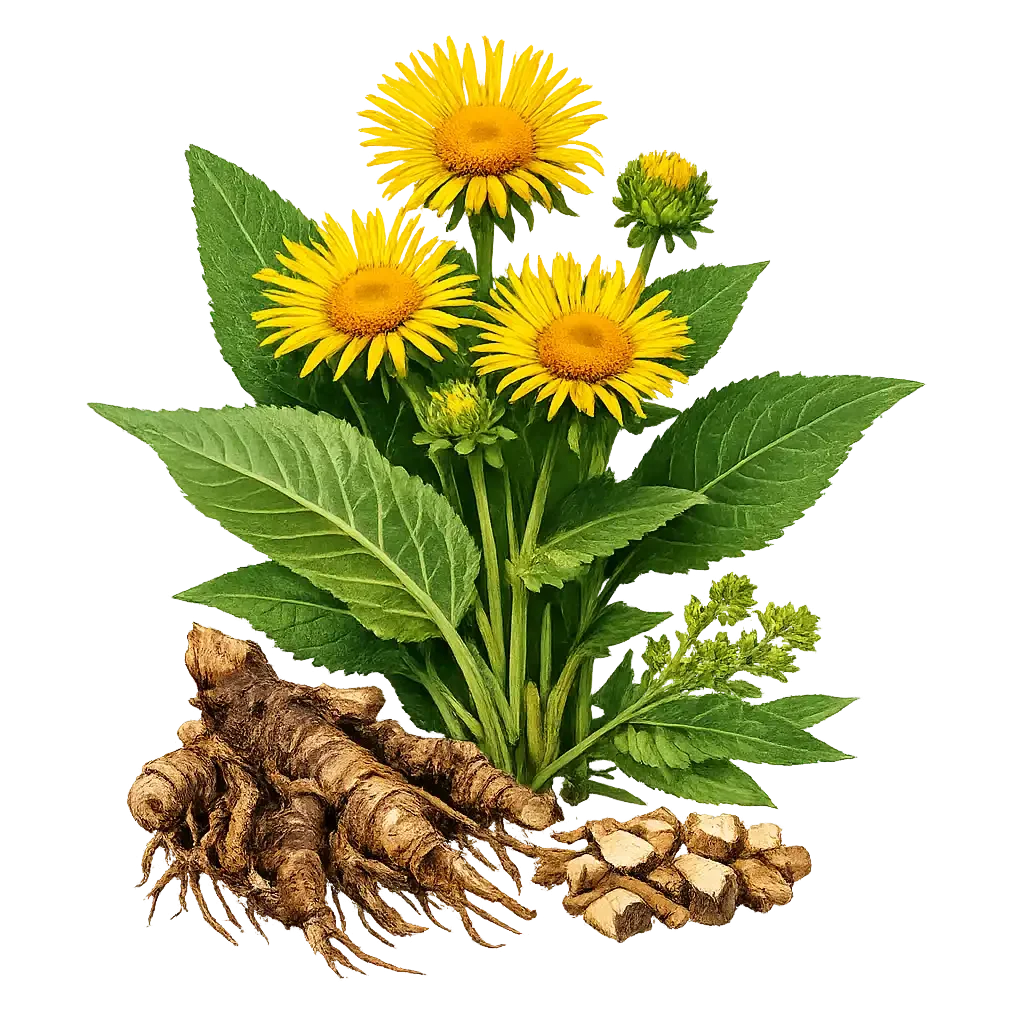
Elecampane is one of the oldest continuously used medicinal plants in the Western herbal tradition, documented in Greek and Roman sources, carried through the medieval European pharmacopoeia, and remaining in active use in American and European clinical herbalism today. The plant earns its longevity in the tradition. The root contains inulin at concentrations of up to forty-four percent of dry weight, making it one of the richest plant sources of this prebiotic polysaccharide, along with sesquiterpene lactones that have demonstrated antimicrobial activity against Mycobacterium tuberculosis in laboratory studies at the concentrations achievable through therapeutic dosing. The primary application in the herbal tradition is deep, chronic respiratory complaints, particularly the wet, productive, persistent coughs that are associated with bronchitis, bronchiectasis, and the residual respiratory damage that follows respiratory illness. This is a specific application for a specific kind of cough, not a general-purpose cold herb, and understanding that specificity determines whether elecampane is the right tool for a given situation or whether a different plant serves better.
Introduction
Inula helenium belongs to the Asteraceae family and takes its species name from the Greek legend of Helen of Troy, whose tears, shed at her abduction, were said to have caused elecampane to spring from the ground where they fell. This mythological association reflects the plant's deep roots in classical Mediterranean medicine; it was used extensively in Greek and Roman practice for digestive disorders, respiratory conditions, and as a general tonic, and was likely introduced to Britain and northern Europe by the Romans, accounting for its presence as a naturalized plant across much of temperate Europe and North America today.
The plant's common name horse-heal points to its extensive use in veterinary medicine for horses and livestock with respiratory and digestive complaints, a use that parallels its human applications and that reflects the plant's practical reputation in pre-pharmaceutical rural medicine. The name scabwort connects to its topical use for skin conditions, particularly the antimicrobial and anti-inflammatory activity of the sesquiterpene lactones in the root applied externally.
On the homestead, elecampane occupies the back of the herb border or a dedicated medicinal garden position where its substantial size is an asset rather than a problem. At four to six feet in flower, with enormous soft leaves at the base and bright golden daisy flowers in midsummer, it is genuinely ornamental as well as medicinal. A plant established in good soil returns for decades, growing larger each year as the root system develops, and provides an increasingly abundant medicinal harvest from the second or third year onward without any replanting effort.
How to Grow
Establishment
Elecampane is established from seed sown in spring, from root divisions taken in autumn or spring, or from nursery transplants. Seed germination is reliable but slow, requiring stratification in cold, moist conditions for four to six weeks before spring sowing, or direct autumn sowing that provides natural stratification through winter. First-year plants produce only the large basal rosette of leaves without flowering, channeling all energy into root development; this is normal and desirable, as root development in the first year determines the quality and size of the medicinal harvest in subsequent years.
Root division is the faster establishment method: a mature elecampane plant can be divided in early spring before new growth emerges, with each division containing a section of the fleshy root with at least one visible growing point. Divisions establish quickly and often flower in their first season, unlike seed-grown plants.
Soil and Siting
Elecampane performs differently from most aromatic medicinal herbs in its soil preference: where sage, thyme, lavender, and rosemary prefer lean, dry, well-drained soils, elecampane wants deep, rich, consistently moist soil that supports the large root mass and the extensive transpiration demand of its enormous leaves. A deeply dug bed with generous compost incorporation, in a position that retains some moisture without waterlogging, produces the largest, most inulin-rich roots. Summer drought significantly reduces root size and quality; where rainfall is insufficient, supplemental irrigation through the growing season is worthwhile for the medicinal root crop.
Partial shade is tolerated well; elecampane growing under the canopy of deciduous trees or on the north side of a structure produces somewhat smaller plants but perfectly adequate medicinal root quality. The shade tolerance makes it one of the more versatile large medicinal perennials for placing in the difficult partially shaded positions that most sun-loving herbs cannot occupy.
Size Management
The plant's eventual size is the primary site planning consideration. At four to six feet in flower with a base spread of three to four feet and enormous basal leaves that shade the ground around the plant completely, elecampane requires a position where its size is appropriate. It is not a suitable plant for tight herb borders or small raised beds. Given appropriate space, its size becomes an asset: the bold architectural leaves and tall flowering stems are genuinely beautiful, the flowers attract pollinators throughout midsummer, and the plant's vigorous presence in a dedicated medicinal garden signals clearly that this is a serious herb garden rather than a decorative one.
Root Harvest
The medicinal root harvest is the central event in elecampane cultivation and requires patience relative to most annual herbs. The root reaches its peak inulin and sesquiterpene lactone content in the second and third years of growth; harvesting in the first year produces a small root with lower active compound concentration. The optimal harvest time is late autumn of the second or third year, after the first hard frost has killed back the above-ground growth, when the plant has drawn down its photosynthetic resources into the root and the inulin content is at its annual peak.
Dig the root carefully using a garden fork rather than a spade, working out from the drip line of the previous season's foliage to avoid severing lateral roots. The root system is substantial, with a central carrot-like taproot surrounded by lateral roots, all of which are medicinally useful. Wash the harvested root thoroughly and cut into sections before drying; the root is too dense to dry whole without risking mold in the center. Slice into rounds or split the taproot lengthwise, arrange on drying racks in a single layer in a warm, well-ventilated space, and dry for two to three weeks until fully hard and brittle. The fragrance of drying elecampane root is distinctive: warm, sweet, slightly camphoraceous, with a violet-like undertone that has made it an ingredient in perfumery and the legendary ancient confection oris root mixtures.
Save a portion of the root when harvesting; replant the root ends with growing points to continue the stand without replanting from seed or division. A well-managed elecampane bed can produce harvests indefinitely by this replant-a-portion approach.
Elecampane oxymel: the traditional respiratory preparation
An oxymel is a preparation of honey and vinegar used as a medicine base in the Western herbal tradition going back to ancient Greek medicine; the name derives from the Greek for sour and honey. Elecampane oxymel is among the oldest and most consistently documented preparations in the European herbal record for chronic, deep, productive coughs associated with bronchitis and respiratory mucus congestion.
To prepare: combine equal parts raw apple cider vinegar and raw honey in a jar, stirring until the honey dissolves. Add one part dried, finely chopped elecampane root. Seal the jar and leave at room temperature, shaking daily, for four to six weeks. Strain through muslin, pressing the marc firmly to extract all the liquid. Bottle in dark glass; the oxymel keeps for one year at room temperature, longer refrigerated.
The vinegar extracts the water-soluble and partially soluble compounds including the sesquiterpene lactones; the honey provides demulcent action, palatability, and additional antimicrobial activity from its peroxide content and phytochemicals. The combination produces a preparation with a bitter-sweet, complex, warming quality taken a teaspoon at a time, up to three times daily. The dose for a chronic productive cough is consistent and patient; this is not a preparation that produces dramatic immediate relief but one that supports the respiratory tissue through a period of weeks and months of consistent use.
Medicinal Uses
Respiratory Expectorant and Demulcent
The primary clinical application of elecampane root in the herbal tradition is the deep, chronic, productive cough with abundant mucus that characterizes bronchitis, bronchiectasis, and the lingering respiratory aftermath of serious respiratory infections. Elecampane works through two complementary mechanisms: the inulin polysaccharide provides demulcent, soothing action to irritated bronchial mucosa, moderating the hypersensitivity that drives persistent coughing, and the sesquiterpene lactones provide antimicrobial activity against the bacterial pathogens that frequently colonize chronically inflamed respiratory tissue.
This dual action distinguishes elecampane from purely expectorant herbs like mullein or horehound. Where those herbs primarily help move mucus, elecampane simultaneously soothes the mucous membranes and acts against the microbial component of chronic respiratory infection. The traditional indication is specifically the cough that has persisted for weeks, that produces significant mucus, and that has an infectious or post-infectious component; elecampane is less indicated for dry, irritant coughs or for the acute early stages of a cold or flu.
Antimicrobial Activity
Alantolactone and isoalantolactone, the primary sesquiterpene lactones in elecampane root, have demonstrated in vitro antimicrobial activity against Mycobacterium tuberculosis, the bacterium responsible for tuberculosis, at concentrations that are achievable through therapeutic dosing of root preparations. This finding, replicated across several laboratory studies, provides a specific mechanistic basis for elecampane's historical use in the treatment of tuberculosis and other chronic respiratory infections in the pre-antibiotic era and explains why it remained in use for this purpose in European herbal practice into the twentieth century.
The antimicrobial activity extends beyond Mycobacterium to include Staphylococcus aureus and various fungal pathogens, supporting the traditional use of elecampane root preparations both internally for respiratory infection and topically for skin infections and wounds. The sesquiterpene lactone mechanism involves disruption of bacterial cell wall synthesis and mitochondrial function, the same general target class as several important pharmaceutical antibiotics.
Prebiotic and Digestive
The inulin content of elecampane root, at twenty to forty-four percent of dried root weight, makes it one of the most concentrated plant sources of this prebiotic fiber outside chicory root. Inulin is a fructooligosaccharide that the human digestive system cannot break down; it passes intact to the large intestine where it selectively feeds beneficial Bifidobacterium and Lactobacillus species, supporting the composition and diversity of the gut microbiome. This prebiotic function is distinct from the respiratory applications but represents a genuine secondary benefit of elecampane root preparations taken orally.
The bitter compounds in the root stimulate gastric acid and bile secretion in the manner of digestive bitters generally, supporting digestion and fat metabolism, and the traditional use of elecampane root for digestive disorders including bloating, sluggish digestion, and intestinal parasites reflects these combined actions.
Anthelmintic Use
The sesquiterpene lactones have documented anthelmintic activity, disrupting the motility and reproduction of intestinal worms, and elecampane was used as a traditional deworming preparation for both humans and livestock across the European herbal tradition. This use has been largely displaced by pharmaceutical anthelmintics but retains relevance in livestock contexts where pharmaceutical resistance is emerging and in the historical record of pre-pharmaceutical farm medicine.
Cautions and interactions: Elecampane at therapeutic doses is generally well-tolerated with a long history of use. The most significant caution is contact sensitization: alantolactone and isoalantolactone are potent contact allergens and among the more common causes of plant-derived allergic contact dermatitis in the clinical dermatology literature. People who develop skin redness, itching, or rash after handling the fresh root should use gloves for all subsequent handling and consider whether internal use is appropriate; sesquiterpene lactone sensitization can produce systemic reactions in sensitized individuals. Cross-reactivity with other Asteraceae family sesquiterpene lactones is possible, affecting people sensitized to feverfew, arnica, chamomile, or chrysanthemums. Elecampane is contraindicated in pregnancy; the sesquiterpene lactones have documented uterine-stimulating activity at significant doses. The high inulin content causes significant bloating and gas in people with inulin sensitivity or irritable bowel syndrome, particularly in the first weeks of use; starting with smaller doses and increasing gradually prevents the most uncomfortable effects. People with known fructose malabsorption should use elecampane root preparations cautiously or avoid them, as inulin is a fructan. No significant drug interactions are established in the current literature, though the CYP450 effects of sesquiterpene lactones as a class warrant caution with narrow therapeutic index medications in people taking therapeutic doses over extended periods.
Pros and Cons
Advantages
Specific and well-matched to its primary application; for the deep, chronic, productive cough with an infectious component, elecampane is one of the most specifically indicated plants in the Western herbal tradition with a documented active compound mechanism
Documented in vitro antimicrobial activity against Mycobacterium tuberculosis at therapeutically achievable concentrations; this is among the more specific and notable antimicrobial findings in this herb series
Among the richest plant sources of inulin prebiotic fiber outside chicory; provides significant gut microbiome support as a secondary benefit of respiratory preparations
Extremely cold-hardy perennial to zone 3; among the most cold-tolerant large medicinal perennials in this series; viable for growers in climates that exclude many other herbs
Architecturally dramatic ornamental value; the enormous leaves and tall golden flowers earn their place in any garden where space allows, independent of medicinal use
Long-lived and self-perpetuating through the replant-a-portion root harvest method; established plants provide decades of harvest without replanting from seed
Limitations
Requires a two-to-three-year wait before the first quality medicinal root harvest; not a plant for growers who want an immediate return from the first season
Size demands dedicated space; at four to six feet with a three-to-four-foot spread, it is unsuitable for small herb borders, raised beds, or container growing at any practical scale
Alantolactone is a documented contact allergen; sensitization from handling the fresh root occurs in a meaningful proportion of users and can preclude continued use in affected individuals
High inulin content causes significant gas and bloating in the early weeks of use, particularly in people with IBS or inulin sensitivity; requires gradual dose escalation
Pregnancy contraindication from uterine-stimulating sesquiterpene lactone activity
Wants consistently moist, deep, rich soil unlike most other aromatic medicinal herbs; the site and soil preparation requirements are more demanding than the lean-soil herbs that dominate this series
Common Problems
Leaf miners, which create distinctive pale winding trails visible through the large leaves, are the most common pest problem with elecampane and are largely cosmetic. The leaf damage does not meaningfully affect root development or medicinal quality; affected leaves are unsightly but the plant is not threatened. Removing heavily mined leaves and disposing of them breaks the lifecycle of the leaf miner population over several seasons.
Powdery mildew affects the foliage in humid conditions, particularly toward the end of the growing season when the plant is beginning its annual decline. Again, this is cosmetic and does not affect root quality; the root is harvested after frost kill anyway, by which time the leaves have already died back regardless of mildew. Adequate spacing for air circulation prevents the most severe early-season mildew pressure.
Root rot from waterlogging is the most serious failure mode, particularly in heavy clay soils that hold moisture excessively. Unlike most of the dry-soil herbs in this series, elecampane wants moisture but not standing water; good drainage with consistent moisture availability is the target condition. Raised beds or deeply dug beds with improved drainage structure the soil appropriately in heavy clay gardens.
Final Thoughts
Elecampane is a plant that asks for space and time and returns something specific and valuable in exchange. The two-to-three-year wait before the first quality harvest is the price of admission; what comes back after that wait is a root with one of the most thoroughly documented antimicrobial profiles in the Western herbal tradition and a compound profile matched specifically to the respiratory condition it has been used for across two millennia of continuous practice.
Plant it at the back of the medicinal garden, in good deep soil, with enough room. Leave it alone for two years. Harvest in the third autumn. Make an oxymel and put it away for winter. That is the complete instruction set for a plant that has been earning its keep on farms and in physic gardens since before most of the other herbs in this series had their first European names.