
Ginseng
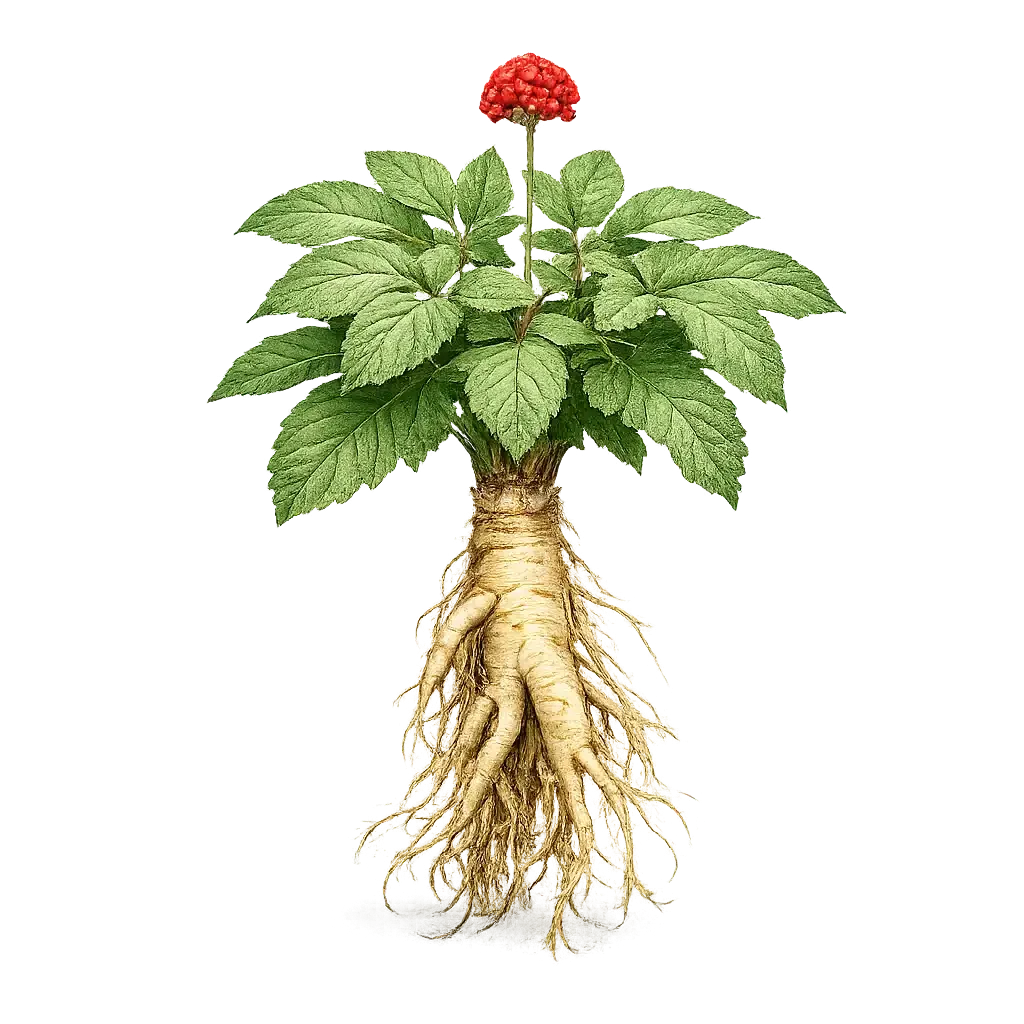
Written By Arthur Simitian
QUICK FACTS
Common Name
Ginseng; American Ginseng, Asian Ginseng (see Species section)
Scientific Name
Panax quinquefolius (American ginseng); Panax ginseng (Asian/Korean ginseng)
Plant Type
Hardy deciduous woodland perennial
Hardiness Zones
P. quinquefolius: zones 3 to 7; P. ginseng: zones 4 to 8
Sun Requirements
Deep shade to dappled woodland shade; 70 to 90 percent shade; direct sun damages leaves and kills plants
Soil Type
Rich, deep, moist, well-drained, humus-rich woodland soil; pH 5.5 to 6.5; mimics deciduous forest floor conditions
Plant Height
8 to 24 inches; small and unassuming above ground relative to the root's value below
Time to Harvest
Minimum 5 to 6 years from seed; 7 to 10 years preferred for mature root with full ginsenoside profile; wild-simulated cultivation requires 10 or more years
Harvest Part
Root (primary), harvested in autumn; leaves (occasional secondary use)
Primary Active Compounds
Ginsenosides (triterpenoid saponins; over 30 identified, grouped as Rb and Rg types with opposing effects); panaxans (polysaccharides); polyacetylenes; peptides; the ginsenoside profile varies significantly between species and increases in complexity with root age
Uses
Adaptogen for physical and cognitive performance under stress; fatigue and energy support with clinical trial evidence; immune modulation; blood sugar regulation; erectile dysfunction (Panax ginseng); memory and cognitive function
No herb in this series asks more patience from the grower than ginseng. The root that herbalists and traditional Chinese medicine practitioners have valued for two thousand years as the supreme tonic herb requires a minimum of five to six years of growth before it is worth harvesting, and a decade or more to develop the full ginsenoside complexity that makes the highest-quality roots worth the extraordinary prices they command in Asian markets. Wild American ginseng roots over fifty years old have been found in the Appalachian woodlands; a root of that age, if it could be reliably authenticated, would sell for thousands of dollars per pound. The homestead grower is not going to match those numbers or those ages. What the homestead grower can do is establish a long-lived woodland planting in appropriate shade conditions, tend it with minimal interference, and harvest a rotation of roots from years six onward that provides genuine, high-quality ginseng of a provenance and freshness that no commercial product can replicate. That is not a modest return. It simply requires accepting that ginseng operates on a timescale that most garden plants do not.
Introduction
The genus Panax, whose name derives from the Greek for panacea or cure-all, contains approximately thirteen species of slow-growing woodland perennials distributed across the deciduous forests of eastern North America and eastern Asia. The two species of practical importance for homestead cultivation are Panax quinquefolius, American ginseng, native to the deciduous forest understory from Quebec to Georgia and westward to Minnesota, and Panax ginseng, Asian or Korean ginseng, native to the mountain forests of Manchuria and Korea and now commercially cultivated extensively across China, Korea, and Japan.
Both species are classified as adaptogens under the criteria established by Soviet pharmacologist Nikolai Lazarev and refined through decades of subsequent research: they increase nonspecific resistance to physical, chemical, and biological stressors without producing physiological dependence or causing significant side effects at normal doses. The ginsenosides, a family of triterpenoid saponins unique to the Panax genus, are the primary active compounds responsible for this adaptogenic activity, with different ginsenosides producing stimulating effects through the Rg-type group and calming or balancing effects through the Rb-type group. The overall effect of a whole root containing both types is modulating rather than simply stimulating, which is what distinguishes true adaptogens from straightforward stimulants.
The two species differ meaningfully in their ginsenoside profiles and in the traditional use frameworks that have developed around them over centuries. Asian ginseng (P. ginseng) is generally considered more stimulating, warming, and tonifying in the traditional Chinese medicine framework; American ginseng (P. quinquefolius) is considered cooler, more moistening, and more suited to heat conditions or to individuals described as constitutionally hot. For homestead cultivation in North America, American ginseng has the practical advantage of being native to the local woodland ecosystem, adapted to local conditions, and legal to grow without the regulatory complications that attend wild-harvested Asian ginseng in import markets. For growing in the natural habitat in which it evolved, P. quinquefolius is the more logical choice for most North American homesteaders.
How to Grow
Shade is Non-Negotiable
Ginseng is one of the most shade-requiring plants in this series and among the most shade-requiring of any cultivated herb in temperate horticulture. In its native habitat, American ginseng grows beneath a dense deciduous canopy that filters seventy to ninety percent of available light, on north and east-facing slopes where the soil remains cool and moist through summer, in the company of bloodroot, trillium, mayapple, and other woodland wildflowers that share its preference for exactly those conditions. Replicating those conditions, or finding them already present in an existing woodland, is the foundation of successful ginseng cultivation.
Direct sunlight, even for brief periods on sunny summer afternoons, scorches ginseng leaves and stresses plants that will then be susceptible to disease. North and east-facing slopes under mature deciduous trees are the classic American ginseng habitat. Where a suitable woodland already exists on the property, establishing ginseng within it under natural canopy is the simplest approach and produces the most appropriate growing conditions. Where woodland shade does not exist, a shade structure providing seventy to eighty percent shade can substitute, though artificial structures are a concession that produces less ideal conditions than natural woodland canopy.
Soil Requirements
The deep, humus-rich, moist but well-drained woodland soil of the deciduous forest floor is the ideal growing medium for ginseng. This soil profile, built from decades of deciduous leaf litter decomposing under the canopy, has a characteristic structure: a loose, dark, spongy surface layer of partially decomposed organic matter transitioning into deep, fertile loam with excellent moisture retention but no tendency to waterlog. The pH of 5.5 to 6.5, slightly acidic in the manner of most deciduous woodland soils, is essential; ginseng does not tolerate alkaline conditions.
In a natural woodland setting, ginseng can be planted with minimal soil preparation if the existing conditions match the profile. Where soil preparation is needed, incorporating generous amounts of leaf compost, rotted hardwood leaf mold, and aged wood chip mulch throughout the planting area builds the woodland soil profile that ginseng requires. Avoid adding lime or alkaline amendments; the natural acidity of the leaf-litter-amended soil is appropriate. Avoid fresh manure or high-nitrogen fertilizers, which promote the lush vegetative growth that makes ginseng susceptible to fungal disease.
Water Needs
Consistent soil moisture through the growing season, without any waterlogging, is the water management standard for ginseng. The plant requires the even moisture that a deep woodland humus soil naturally provides under a canopy that moderates both rainfall intensity and evaporation. In cultivation outside natural woodland, supplemental irrigation during dry spells maintains the moisture levels the plant requires, but the irrigation must be gentle and not directed at the foliage; wet leaves in warm weather are an invitation to the fungal diseases that are the primary threat to ginseng plantings.
Planting from Seed
Ginseng seed requires a complex stratification process before it will germinate, reflecting the natural process by which seeds overwinter in the forest floor. Fresh seeds harvested in autumn contain an immature embryo that must complete development during warm stratification before cold stratification triggers dormancy break; the entire process from fresh seed to germination takes eighteen to twenty-two months. This means that seed planted in autumn will not emerge until the second spring after sowing, not the first.
Stratified seed, which has already been through the warm-cold stratification cycle by the supplier, is available from specialist ginseng nurseries and can be planted directly in autumn for spring germination, bypassing the eighteen-month wait. This is the most practical starting approach for most homestead growers. Alternatively, one or two-year-old rootlets can be purchased and transplanted directly, providing a meaningful head start on the five-plus-year wait to harvest maturity.
Plant seeds or rootlets in autumn, spacing plants twelve to eighteen inches apart in a grid or a natural scatter pattern that mimics wild colony spacing. Cover seeds with half an inch of soil and top-dress with two to three inches of leaf mulch. Mark planting positions carefully; the small emerging seedlings in spring are easily overlooked and accidentally disturbed. A dense mulch covering through winter protects the roots from freeze-thaw damage and mimics the natural leaf litter layer.
Annual Care
A ginseng planting requires little active management beyond mulch renewal, monitoring for disease, and protecting the plants from deer and other wildlife that find the berries and leaves attractive. Renew the leaf mulch layer each autumn by adding a fresh two-inch layer of shredded hardwood leaves or leaf compost, maintaining the woodland floor conditions through the growing season. Remove any encroaching vegetation that would shade the ginseng beyond its already deep shade requirement or compete for the woodland soil moisture it needs.
The small cluster of bright red berries that appear on mature plants in late summer each year is both a wildlife attractant and the seed source for natural colony expansion. Leaving some berries for wildlife supports the ecosystem relationships that American ginseng evolved within; collecting berries from four-year-and-older plants provides seeds for expanding the planting or for sharing with other growers.
Harvesting
Aging the Root
The age of a ginseng root is readable from the root itself, which is one of the most practically useful features of the plant for the homestead grower deciding when to harvest. Each year of growth adds a bud scar, a small indentation, to the rhizome neck where the previous year's stem attached. Counting the bud scars on the neck of an excavated root gives a reliable indication of its age. A root with five bud scars is at minimum five years old; a root with ten scars is ten years old. The ginsenoside complexity and total saponin content of the root increases with each additional year of growth, with the most pharmacologically complete roots being those of seven years or more.
The shape, weight, and texture of the root also reflect its age and quality. Young roots are relatively smooth-skinned and uniform; older roots develop the pronounced transverse wrinkles, forking, and complexity of form that traditional graders use to assess quality. A large, heavy, well-wrinkled root with a long rhizome neck carrying multiple bud scars is the product of years of patient growing and represents the highest quality category.
Harvest Method
Harvest in autumn after the berries have ripened and the above-ground portion of the plant has begun to die back, when the plant is directing its last energy reserves into the root. Dig carefully with a hand fork or narrow transplanting trowel, working well away from the plant to avoid cutting the lateral roots that contribute significantly to the total root mass. The root is brittle and breaks easily; patient, slow excavation working inward from a wide perimeter preserves the complete root structure that determines the root's market quality and medicinal value.
Wash the harvested root gently in cool water, handling it carefully to preserve the delicate skin and the lateral roots. Dry at low temperature, no higher than 95 degrees Fahrenheit, in a warm, well-ventilated space for several weeks until the root is completely dry throughout. Dried roots keep for years in airtight glass containers; the drying process concentrates the ginsenosides and is the standard preservation method both commercially and in traditional use.
Using ginseng root from the homestead harvest: The simplest preparation that delivers the full ginsenoside profile of a dried root is a decoction: simmer a small slice of dried root, approximately two to three grams, in two cups of water for twenty to thirty minutes in a covered vessel, then strain and drink. The flavor is earthy, slightly bitter, and complex, with a characteristic aftertaste that is warm and slightly sweet in quality. Traditional Chinese medicine recommends cycling use in six-week periods with two-week breaks rather than continuous daily consumption, which prevents the desensitization to the adaptogenic effect that continuous use may produce. A common traditional practice is to take a thin slice of dried root, approximately one to two grams, and chew it slowly before swallowing; this simple method requires no preparation equipment and delivers the full range of ginsenosides through direct contact with the oral and gastric mucosa. For a milder preparation suited to regular use, steep a thin slice in a cup of hot water for fifteen minutes rather than simmering; the infusion extracts the more water-soluble ginsenosides without the full concentration of a decoction. The homestead grower with a crop of roots of varying ages has the luxury of choosing which roots to use and which to continue aging, reserving the oldest and best-developed roots for the most significant preparations.
How to Use
Adaptogen and Energy Uses
Ginseng's adaptogenic activity is among the most extensively researched of any herb in the world. The ginsenosides modulate the HPA axis, reducing cortisol hyperactivation under stress while supporting the baseline energy production that stress and fatigue deplete, through mechanisms that include nitric oxide modulation, antioxidant enzyme upregulation, and direct effects on adrenal steroidogenesis. This is a distinct mechanism from both stimulants, which accelerate depletion, and sedatives, which suppress the stress response; ginseng genuinely normalizes the stress-response system rather than overriding it in either direction.
A 2010 systematic review of randomized controlled trials of Panax ginseng for physical performance found consistent evidence of reduced fatigue, improved reaction time, and enhanced physical endurance in healthy adults, with the strongest effects seen in studies using standardized root extracts with known ginsenoside content over periods of eight to twelve weeks. A 2018 Cochrane review of ginseng for cognitive function found consistent improvements in memory, attention, and processing speed across multiple trials, though the authors noted that methodological limitations of many included studies made firm conclusions difficult.
The practical implication is that ginseng is most effective for the sustained demands of ongoing mental and physical load rather than for acute performance demands; it is a preparation for the person carrying a heavy cognitive or physical burden over weeks and months, not for the person who needs to perform in the next hour.
Blood Sugar Support
Both Panax species have demonstrated blood sugar modulating activity in clinical trials, with American ginseng showing particularly consistent results for postprandial blood glucose reduction. A series of trials by David Vuksan and colleagues at the University of Toronto found that three grams of American ginseng taken forty minutes before a meal significantly reduced the postprandial glucose spike in both diabetic and healthy participants. The mechanism involves ginsenoside modulation of GLUT4 transporter activity and insulin secretion from pancreatic beta cells. These are among the most methodologically careful ginseng clinical trials published and represent a robust evidence base for this specific application.
Immune Modulation
The polysaccharide panaxans and ginsenosides both influence immune function, stimulating macrophage and natural killer cell activity while modulating cytokine balance in ways that support immune competence without the risk of immune overactivation. Clinical trials have found reduced duration and severity of upper respiratory infections in adults taking Panax ginseng preparations through the cold season, a finding consistent with the traditional use of ginseng as a tonic that supports general vitality and resistance to illness.
Panax Ginseng and Erectile Function
Asian ginseng (P. ginseng) has a reasonably supported evidence base for erectile dysfunction, with a 2008 systematic review finding significant improvements in erectile function scores in men taking standardized P. ginseng extract compared to placebo across multiple trials. The mechanism involves ginsenoside-stimulated nitric oxide release in penile endothelial cells, increasing vasodilation and blood flow through the same pathway as pharmaceutical PDE5 inhibitors, though at lower potency. This application is specific to P. ginseng rather than P. quinquefolius and is noted here for completeness in the species comparison.
American vs. Asian Ginseng
The practical differences between P. quinquefolius and P. ginseng for the North American homestead grower are as follows. American ginseng is native to North American woodland conditions and is the more naturally adapted species for cultivation in the eastern North American deciduous forest zone; it requires no special sourcing, is legal to grow without restriction in most jurisdictions, and its wild-simulated cultivation is supported by an established tradition of forest farming in Appalachia and the upper Midwest. Asian ginseng can also be grown in North American conditions in zones 4 through 8 but is not native and may require more careful attention to matching the specific conditions of its Korean and Chinese native habitat.
Medicinally, American ginseng is considered cooler and less stimulating, more appropriate for sustained daily tonic use and for individuals who find Asian ginseng's stimulating quality too intense. Asian ginseng's higher Rg-type ginsenoside content produces a more strongly stimulating effect that some find preferable for energy applications but that can cause the headache, insomnia, or blood pressure elevation at high doses that gives ginseng its contraindications. For a homestead planting primarily for personal use, American ginseng's milder profile and native-adapted growing habit make it the sensible first choice for most North American growers.
Wild-Simulated Cultivation
Wild-simulated ginseng, grown in natural woodland conditions without the raised beds or shade structures used in commercial cultivation, commands the highest prices in the ginseng market because it most closely resembles the wild roots that traditional medicine values most highly. The wild-simulated approach involves seeding directly into the leaf litter of a suitable woodland, with minimal soil preparation and no artificial inputs, and harvesting after ten to fifteen years when the roots have developed the complexity of form and ginsenoside profile that approaches wild quality. This approach requires appropriate woodland on the property and considerable patience, but it also requires the least active management of any cultivation method and produces a product that represents the highest expression of what the plant is capable of becoming.
Cautions, interactions, and legal status: Asian ginseng (P. ginseng) in particular can cause headache, insomnia, hypertension, and palpitations at high doses or in constitutionally unsuitable individuals; these effects are dose-dependent and resolve with dose reduction. Ginseng is contraindicated with warfarin due to documented pharmacokinetic interactions that reduce warfarin's anticoagulant effect; the interaction is clinically significant and well-documented. Interactions with other medications metabolized by CYP3A4 and CYP2C9 enzymes are possible; people on multiple medications should review interactions before beginning regular use. The hypoglycemic activity warrants monitoring for people on diabetes medications. Avoid medicinal-dose ginseng in pregnancy due to ginsenoside teratogenicity in animal studies and the lack of safety data in human pregnancy. The traditional recommendation of cycling use with breaks is appropriate: six weeks on, two weeks off, prevents tolerance development. American ginseng (P. quinquefolius) is listed under CITES Appendix II as a species requiring trade monitoring to prevent overharvesting from wild populations; this does not restrict cultivation, but wild-harvesting of American ginseng is regulated in many US states and requires permits. Home cultivation for personal use is legal in all US states without restriction. Keep records of any plants grown and harvested; the ability to demonstrate cultivated rather than wild origin is important if any commercial transaction is ever contemplated.
Pros and Cons
Advantages
The most extensively researched adaptogenic herb in the world, with a clinical evidence base for fatigue, cognitive function, blood sugar modulation, and immune support that is among the strongest for any plant in this series
Home-grown roots of known age and provenance represent a quality category that the commercial ginseng market, dominated by young-root mass cultivation, cannot match
American ginseng fills an ecological niche in woodland that nothing else in this series occupies: a valuable medicinal plant that thrives precisely where garden conditions are worst for most herbs
Extremely long-lived; a well-established wild-simulated planting produces a self-seeding colony that perpetuates itself for decades with minimal intervention
Among the most financially valuable medicinal plants per pound that a homestead can produce, with prices for quality older roots substantially above any other herb in this series
Wild-simulated cultivation in existing woodland has essentially zero ongoing input cost after establishment
Limitations
The longest time-to-harvest of any plant in this series; five to six years minimum, seven to ten preferred; requires accepting a decade-scale investment before meaningful return
Absolutely requires deep shade conditions; impossible to grow productively in a typical sunny garden without substantial artificial shade infrastructure
Slow-growing, small, and visually unimpressive above ground for most of its life; requires careful marking and protection from accidental disturbance over the entire growth period
Susceptible to Alternaria blight, Phytophthora root rot, and other fungal diseases in humid conditions; disease management is the primary ongoing growing challenge
Deer, squirrels, and other wildlife are strongly attracted to the berries and the root; effective fencing or deterrence is usually required in areas with significant deer pressure
Significant drug interactions including warfarin; requires careful consideration for people on medications
Complex seed stratification; sourcing pre-stratified seed or rootlets simplifies establishment but adds cost
Common Problems
Alternaria blight (Alternaria panax) is the most common foliar disease of cultivated ginseng, producing dark brown spots with yellow halos on leaves and rapid defoliation in warm, humid conditions. It spreads readily through water splash from rain or overhead irrigation; keeping foliage dry and maintaining good air circulation through the planting are the primary prevention strategies. Removing and disposing of affected leaves promptly prevents the spread of spores to unaffected plants. Copper-based fungicides applied preventively during humid periods provide some control; resistant cultural practices are more reliable than reactive chemical intervention.
Phytophthora root rot follows from waterlogged soil and is essentially irreversible once established; the crown rots and the plant collapses. Prevention through well-drained soil with the deep humus structure that provides moisture retention without waterlogging is the only reliable approach.
Deer are the most serious wildlife threat in most North American growing areas, browsing the leaves and berries with particular enthusiasm in late summer and early autumn. Fencing the planting area to deer exclusion height, or applying repellents consistently through the growing season, is necessary in most woodland settings where deer populations are present. Squirrels dig for the roots, particularly in autumn; wire mesh laid flat over the planting area at soil level, held down with stakes, prevents digging without interfering with plant growth.
Slug damage on young seedlings is common in moist woodland conditions. Diatomaceous earth sprinkled around emerging seedlings provides control without chemicals; removing the thick mulch layer temporarily in spring if slug pressure is high allows the soil to dry slightly, reducing the habitat that slugs require.
Final Thoughts
Ginseng is the herb in this series that most directly challenges the expectation of annual or even biennial return on effort. It demands a different relationship with time than any other plant discussed here. The grower who plants ginseng seed this autumn will not harvest a meaningful root until the early part of the next decade. That is not an argument against growing it; it is simply the nature of what ginseng is and what it requires.
The grower who understands this and plants anyway is investing in something specific: a product of known origin and verified age, grown in conditions chosen for quality rather than yield, in a woodland niche that produces nothing else of comparable value. The patience it requires is exactly the quality that the market rewards most generously when the time eventually comes to harvest. Plant it, mark it, protect it from deer, and forget about it for five years. That is the entire practice.