
Holy Basil (Tulsi)
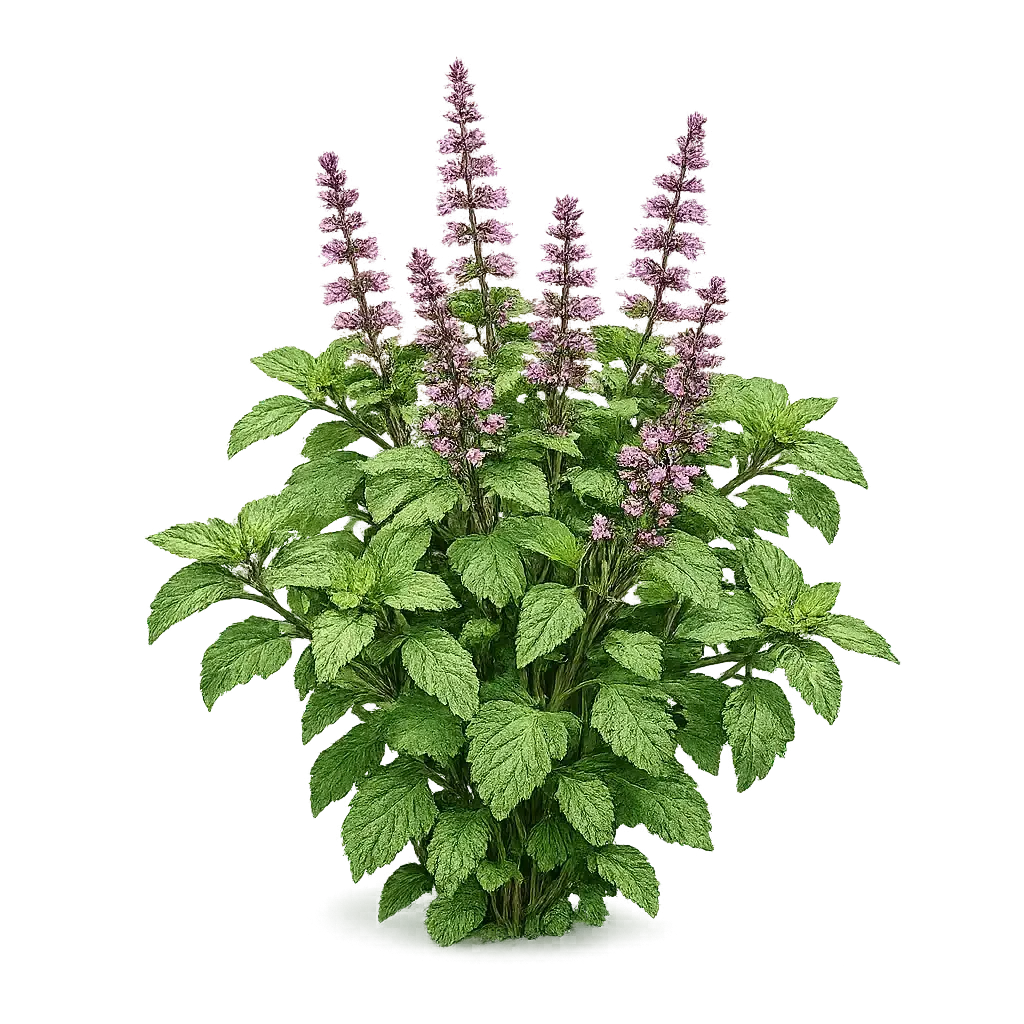
Written By Arthur Simitian
QUICK FACTS
Common Name
Holy Basil, Tulsi
Scientific Name
Ocimum tenuiflorum (syn. Ocimum sanctum)
Plant Type
Tender perennial subshrub grown as an annual in most temperate climates; true perennial only in zones 10 to 11
Hardiness Zones
Annual in zones 2 to 9; perennial in zones 10 to 11
Sun Requirements
Full sun; minimum 6 hours, 8 preferred
Soil Type
Well-drained, moderately fertile, warm; pH 6.0 to 7.5; does not tolerate cold soil
Plant Height
18 to 24 inches; to 36 inches in warm climates
Spacing
18 inches
Harvest Part
Leaves and flowering tops (primary); flowers
Primary Active Compounds
Eugenol (primary volatile; highest in Vana type), methyl eugenol, beta-caryophyllene, ocimumosides A and B (adaptogenic), ursolic acid, rosmarinic acid, orientin, vicenin; essential oil profile varies significantly by variety
Uses
Adaptogen for stress, anxiety, and cortisol modulation; daily tea; blood sugar support; antimicrobial and immunomodulatory; sacred plant in Hindu tradition with continuous outdoor household planting across South Asia; mild COX inhibitor for inflammation
Tulsi is the most revered plant in the Ayurvedic tradition and one of the most broadly used medicinal herbs in the world, cultivated in nearly every Hindu household in South Asia, where a living tulsi plant in the courtyard carries spiritual significance that predates any pharmaceutical framing of the herb. In the modern Western herb repertoire it has gained a different kind of recognition: as an adaptogen with a body of clinical research supporting its ability to moderate the cortisol response to chronic stress, improve cognitive function under load, and reduce the physiological markers of anxiety without the sedative effect of herbs like valerian and hops. It is not a calming herb in the conventional sense; it is a normalizing one. The distinction matters: tulsi tea consumed daily does not make the drinker drowsy or pharmacologically relaxed. It modulates the stress response at a systemic level over time, reducing the cortisol dysregulation that chronic modern stress produces, supporting the HPA axis function that determines how the body responds to ongoing demands. The clinical evidence is not as robust as for the more extensively studied Western adaptogens like ashwagandha, but it is growing, and the three-thousand-year tradition of daily use in Ayurvedic medicine as Rasayana, a rejuvenating tonic herb for overall vitality, represents a different kind of evidence that carries its own weight.
Introduction
Ocimum tenuiflorum is native to the Indian subcontinent and tropical regions of Southeast Asia, a member of the Lamiaceae mint family in the same genus as culinary sweet basil (O. basilicum) but with a dramatically different essential oil profile, flavor character, and medicinal application. Where sweet basil's essential oil is dominated by linalool and methyl chavicol and produces the familiar fresh-sweet culinary flavor, tulsi's oil is dominated by eugenol, the compound also primary in cloves and cinnamon bark, with the addition of beta-caryophyllene, methyl eugenol, and other compounds that produce the complex spicy-clove-camphor character that distinguishes tulsi from every other basil.
The name tulsi comes from the Sanskrit word meaning incomparable, and the plant occupies a unique position in Hindu cosmology as sacred to Vishnu, with the daily care of a tulsi plant considered a spiritual practice rather than merely a gardening task. Tulsi mala, garlands of dried tulsi stems, are used in religious ceremony; the wood from mature plants is carved into prayer beads; and the tradition of growing tulsi in an elevated vessel called a tulsi vrindavan in the household courtyard has been continuous across India for at least three thousand years. This depth of cultural relationship with the plant has produced an unusually thorough traditional record of its applications, varieties, and growing requirements that preceded scientific documentation by millennia.
Three main varieties are recognized in cultivation and in the Ayurvedic record. Rama tulsi (O. tenuiflorum var. tenuiflorum) has bright green leaves with a mild, sweet-spicy character and is the most commonly grown variety in North India. Krishna tulsi (O. tenuiflorum var. tenuiflorum 'Krishna') has dark purple-green leaves and stems with a more intense, peppery-clove flavor and higher eugenol content; it is the variety most associated with Lord Krishna in the religious tradition and the most pungently aromatic. Vana tulsi (O. gratissimum), sometimes classified as a separate species, is the wild forest tulsi with very large leaves, very high eugenol content approaching clove-like intensity, and greater cold tolerance than the other two, growing as a taller, more robust plant. Commercial tulsi tea products frequently blend all three varieties, and the combined aroma and flavor of the blend is more complex and balanced than any single variety alone.
How to Grow
Temperature is the Primary Constraint
Tulsi is a tropical plant with a fundamental sensitivity to cold that overrides all other growing considerations. Cold soil below 50 degrees Fahrenheit stresses tulsi immediately; temperatures below 40 degrees Fahrenheit damage leaves; frost kills the plant entirely. This is not a plant to harden off gradually and plant out early; it must go into warm soil after all frost risk has passed and after night temperatures have settled consistently above 50 degrees. In most temperate climates this means planting no earlier than two to three weeks after the average last frost date, when the soil has had time to warm. Cold-stunted tulsi planted too early in cool soil never fully recovers and produces a weak, unproductive plant through the entire season.
In the opposite direction, tulsi thrives in genuine summer heat. It grows more vigorously, produces more aromatic leaves, and develops the full complex eugenol character of the essential oil in hot conditions that stress most of the herbs in this series. A hot summer with consistent temperatures above 80 degrees Fahrenheit is ideal rather than stressful for tulsi, which reflects its tropical origin directly.
Sun Requirements
Full sun with a minimum of six hours and a preference for eight or more produces the most productive, most aromatic tulsi plants. In partial shade, tulsi grows taller and more open, produces fewer leaves per stem, and develops a less intense essential oil profile. This is a sun-maximizing plant in every aspect of its growth, consistent with its origin in the high-light-intensity environment of the Indian subcontinent.
Soil Requirements
Tulsi performs best in moderately fertile, well-drained, warm soil and is far less demanding of soil amendment than the root crops and heavy feeders in the homestead garden. It does not need or benefit from extremely rich soil and performs well in ordinary garden loam that drains adequately. The critical soil properties are warmth and drainage: a south-facing bed that warms early, or a raised bed that heats up faster than the surrounding soil, provides the warm root zone that tulsi requires for vigorous establishment. Poor drainage leading to root saturation is the primary soil-related failure cause; the same waterlogging sensitivity that affects most Lamiaceae family herbs applies here.
Starting from Seed
Tulsi seed germinates best in warm conditions of 70 to 85 degrees Fahrenheit, in six to ten days when temperatures are optimal. Start seeds indoors six to eight weeks before the planned outdoor planting date, sowing on the surface of warm, moist seed-starting mix as the seeds require light for germination. Bottom heat from a propagation mat significantly improves germination rate and consistency. Transplant after the soil has warmed and all frost risk is past, handling the seedlings carefully as they resent root disturbance.
Direct outdoor sowing is possible in climates with long, warm summers, but the delayed start from outdoor sowing reduces the productive season compared to transplanting well-established seedlings. For maximum harvest from a short warm season, starting indoors six to eight weeks early and transplanting established seedlings is the most productive approach.
Harvesting
Harvest leaves and stem tips beginning as soon as the plant has established and is growing vigorously, typically four to six weeks after transplanting. Regular harvesting of the top four to six inches of each stem, cutting just above a leaf node, encourages bushy branching and delays the flowering that marks the transition from vegetative growth to seed production. A tulsi plant that is allowed to flower and set seed without regular pinching becomes progressively more woody, produces fewer new leaves, and declines in essential oil concentration in the remaining foliage as the plant shifts its energy to seed production.
Pinch out all flower spikes as soon as they appear through the main growing season if the priority is leaf harvest for tea and medicine. This is the same management approach used for sweet basil and all the aromatic Lamiaceae herbs: the plant is kept in productive vegetative growth by preventing reproductive investment. When seeds are wanted for the following season, allow a portion of the plant to flower and set seed in late summer, collecting seed heads when the small black seeds are visible and fully formed inside the dried calyces.
For drying, harvest stem tips in the morning after dew has dried, bundle loosely, and hang in a warm, well-ventilated space away from direct light. Tulsi dries more slowly than the Mediterranean herbs due to its higher moisture content; four to seven days is typical. Dried tulsi keeps its aromatic quality for one year in airtight sealed glass containers.
Daily tulsi tea: The most important preparation in the tulsi tradition is the simplest: fresh or dried leaf steeped in hot water and drunk daily. This is precisely the Rasayana use that defines tulsi's role in Ayurvedic medicine, and it is the preparation that the clinical adaptogen research most closely models. For fresh leaf tea, steep eight to ten fresh leaves per cup of just-boiled water, covered, for five to eight minutes. For dried leaf tea, use one heaped teaspoon per cup and steep for ten minutes. The flavor is distinctive, complex, and genuinely pleasant: a warm spicy-clove note from the eugenol, a cooling herbal undertone, a slight sweetness in the Rama variety and a more peppery heat in the Krishna. Honey works well as a sweetener; milk in the manner of a chai produces a rich, warming preparation that is traditional in parts of India. The adaptogenic benefit from tulsi accumulates over consistent daily use of two to four weeks rather than from a single therapeutic dose, which distinguishes it from the more immediately acting herbs in this series. Brewing a pot each morning and drinking it as a daily ritual is both the most traditional and the most pharmacologically appropriate way to use this herb.
How to Use
Adaptogenic and Stress Uses
Tulsi is classified as an adaptogen in both the Ayurvedic and modern Western systems, meaning it supports the body's resilience to stress of multiple types, physical, chemical, metabolic, and psychological, without producing a specific pharmacological effect in a single direction. The adaptogenic activity is attributed primarily to the ocimumosides A and B, ursolic acid, and rosmarinic acid, compounds that modulate cortisol secretion from the adrenal cortex, reduce the oxidative damage that chronic stress produces, and support normal HPA axis function without suppressing the stress response entirely.
Clinical trials of tulsi for stress and anxiety have produced consistently positive results, though the trial sizes are modest by pharmaceutical standards. A 2012 randomized double-blind trial published in the Journal of Ayurveda and Integrative Medicine found significant reductions in stress symptom scores, forgetfulness, and sexual problems in adults taking 300 milligrams of standardized tulsi extract twice daily for six weeks compared to placebo. A separate trial found improvements in cognitive function scores including attention, working memory, and reaction time in healthy adults after 30 days of supplementation, supporting the traditional use of tulsi as a Medhya Rasayana, a herb specifically for mental clarity and cognitive function.
The practical point for homestead use is that tulsi's stress-modulating action accumulates with regular daily consumption over weeks rather than providing immediate relief from an acute stress episode. It is a tonic herb in the classical sense: one that builds resilience and adaptive capacity over time rather than intervening in a single acute moment. Growing enough tulsi to support a daily tea habit through the growing season and into winter from dried stock is the appropriate production goal.
Blood Sugar Support
Tulsi has a relatively robust evidence base for blood sugar modulation compared to many herbs in this series, with multiple clinical trials demonstrating reductions in fasting blood glucose and postprandial blood glucose in people with type 2 diabetes consuming tulsi leaf preparations daily. A meta-analysis of randomized controlled trials published in 2019 found statistically significant reductions in fasting blood glucose and HbA1c in diabetic patients consuming tulsi compared to control groups, with effect sizes considered clinically relevant.
The mechanism involves multiple pathways: eugenol and other phenolic compounds inhibit alpha-glucosidase and alpha-amylase enzymes that break down dietary carbohydrates into absorbable glucose, slowing the rate of post-meal glucose rise; ursolic acid improves insulin sensitivity; and the anti-inflammatory activity of beta-caryophyllene reduces the chronic low-grade inflammation that drives insulin resistance. This multi-mechanism approach to blood sugar modulation is characteristic of adaptogenic herbs generally and reflects the pharmacological complexity of a whole-plant preparation compared to a single-compound drug.
For people managing blood sugar through diet and lifestyle rather than pharmaceutical intervention, regular tulsi consumption as part of a comprehensive approach has a plausible and evidenced supporting role. People taking pharmaceutical diabetes medications should monitor blood glucose carefully when adding regular tulsi consumption, as the additive effect on glucose lowering could require medication adjustment.
Antimicrobial and Immune Uses
Eugenol's broad-spectrum antimicrobial activity against bacteria, fungi, and viruses is well documented in laboratory research and is the pharmacological foundation for tulsi's traditional use in respiratory infections, wound care, and fever management in Ayurvedic practice. The essential oil of tulsi demonstrates inhibitory activity against a range of human pathogens including Staphylococcus aureus, E. coli, and various Candida species, consistent with the traditional use of the plant for infections of the respiratory tract and skin.
Immunomodulatory activity, influencing the balance and responsiveness of the immune system rather than simply stimulating it, has been documented in tulsi research through effects on natural killer cell activity, macrophage function, and cytokine profiles. This immunomodulation combined with direct antimicrobial activity and the anti-inflammatory effect of rosmarinic acid and beta-caryophyllene produces the broad-spectrum protective profile that Ayurvedic medicine has always attributed to the herb.
Anti-inflammatory Uses
Ursolic acid and rosmarinic acid in tulsi are both COX-1 and COX-2 inhibitors, producing an anti-inflammatory action through the same enzymatic pathway as NSAIDs, though at a lower potency than pharmaceutical COX inhibitors. The practical implication is that regular consumption of tulsi supports a mild anti-inflammatory baseline that complements the adaptogenic and immunomodulatory actions, contributing to the overall protective effect on chronic stress-related inflammatory pathways that underlies much of the adaptogen concept.
Tulsi and Sweet Basil
Holy basil and sweet basil are members of the same genus and share the square stems, opposite leaves, and terminal flower spikes of the Lamiaceae family, but they are not interchangeable in any application, culinary or medicinal. Sweet basil's linalool-methyl chavicol essential oil produces a fresh, sweet, anise-inflected flavor appropriate for Italian and Southeast Asian cooking; tulsi's eugenol-beta-caryophyllene oil produces a warm, spicy, clove-inflected flavor suited to Indian cooking and the complex character of tulsi tea but completely different in any application where sweet basil's flavor is expected. Substituting one for the other in cooking or in tea produces results that are wrong for both purposes. They are distinct plants that happen to be related, not interchangeable varieties of the same thing.
Storage
Fresh tulsi leaves keep for three to five days refrigerated, wrapped loosely in a damp cloth or stored in a container with a small amount of water, similar to fresh basil. Unlike sweet basil, which blackens quickly in the refrigerator, tulsi is slightly more cold-tolerant in storage but still deteriorates faster than most of the perennial herbs in this series. Drying is the primary preservation method for the home harvest: dried leaves in airtight glass containers retain aromatic quality for one year.
Tulsi-infused honey is an excellent preservation preparation that maintains aromatic quality for a year or more: pack fresh or lightly dried leaves into a jar, cover completely with raw honey, seal, and allow to infuse for two weeks before use. The resulting honey carries the eugenol-spice character of the herb in a preparation that can be added to tea, spread on bread, or stirred into warm drinks through the winter season.
Lifespan and Overwintering
In temperate climates where tulsi is grown as an annual, it completes its life cycle from seed to seed in a single growing season and must be replanted from seed each spring. In zones 10 and 11, the plant persists as a perennial subshrub and can grow for several years, eventually becoming quite woody at the base before vigor declines and replanting from cuttings or seed is warranted. In zone 9, tulsi sometimes overwinters successfully in mild years with protection from frost, but relying on this outcome is not practical; treating it as an annual and replanting from seed each season is more reliable.
A tulsi plant brought indoors before the first autumn frost and kept in a very warm, very sunny south-facing window can be overwintered as a houseplant, though the reduced light and humidity of a typical indoor winter environment produces a progressively weakened plant. More productive is collecting seed from outdoor plants in late summer and replanting from fresh seed the following spring, ensuring full genetic vigor from the start of each season.
Cautions and interactions: Tulsi has documented anticoagulant activity through eugenol's platelet aggregation inhibition; people taking warfarin or other anticoagulant medications should not add regular medicinal tulsi consumption without monitoring, as the additive effect on clotting time could be clinically significant. For the same reason, avoid large medicinal doses in the two weeks before any scheduled surgery. The blood glucose lowering effect warrants monitoring for anyone on diabetes medications. Tulsi has mild emmenagogue activity in the traditional record and should be avoided in pregnancy at medicinal doses; culinary use of small amounts presents no documented concern. Methyl eugenol, present in tulsi essential oil, has raised genotoxicity concerns in high-dose rodent studies, but the concentrations in normal leaf tea preparations are far below any threshold of concern. The essential oil should not be taken internally. Contact dermatitis from handling the fresh plant occasionally occurs in sensitive individuals; this is an uncommon reaction that affects a small minority of people.
Pros and Cons
Advantages
One of the most extensively documented adaptogenic herbs in the world, with three thousand years of continuous Ayurvedic use and a growing clinical trial base supporting stress modulation, cognitive function, and blood sugar support
Daily tea use is both the most traditional and the most pharmacologically appropriate application; the herb is genuinely pleasant to consume regularly in a way that some medicinal herbs are not
Grows vigorously in summer heat conditions that challenge many other herbs in this series; thrives in the hottest part of a summer garden
Three varieties offer distinct aromatic profiles that can be grown for different flavor preferences or blended for a more complex tea
Ornamentally attractive with dark purple stems and foliage in Krishna variety and the distinctive flower spikes throughout summer
Multiple evidence-based medicinal applications from a single plant: adaptogen, blood sugar support, antimicrobial, anti-inflammatory, and immunomodulator
Limitations
Tender annual in most temperate climates; requires indoor starting and must be replanted each season, unlike the perennial herbs that dominate this series
Absolutely cold-intolerant; cannot be planted early or in cool soil; shortens the productive season in climates with late springs
Adaptogenic benefits accumulate over weeks of consistent use rather than providing immediate therapeutic effect; requires patience and habit rather than occasional dosing
Anticoagulant activity warrants caution for people on blood thinners; blood glucose lowering requires monitoring for people on diabetes medications
Completely different from sweet basil despite the family resemblance; not interchangeable in any culinary or medicinal application
Dried herb quality varies significantly by source; home-grown and dried from a fresh harvest is reliably superior to most commercial dried tulsi
Common Problems
Aphids are the primary insect pest on tulsi, colonizing new growth and flower buds particularly in warm spring weather before predatory insect populations have built up. The same management approach as for sweet basil applies: strong water spray to dislodge early colonies, encouraging predatory insect habitat around the planting, and removing heavily infested growing tips. Established healthy plants in full sun outgrow moderate aphid pressure without significant yield reduction.
Fusarium wilt, the same fungal pathogen that devastates sweet basil crops, can affect tulsi in warm, wet soil conditions, producing sudden wilting and brown vascular discoloration in the stem. There is no recovery from fusarium wilt; remove affected plants and do not replant tulsi or sweet basil in the same soil position for at least two years. Resistant varieties are under development commercially but are not yet widely available to home growers; maintaining good soil drainage is the primary prevention strategy.
Leggy growth with widely spaced leaves and reduced aromatic intensity follows from insufficient light or from planting before the soil has warmed sufficiently. The remedy is position rather than any management intervention; a tulsi plant in inadequate sun or cold soil cannot be rescued by fertilizing or watering more carefully. Choose the hottest, sunniest position available and wait for truly warm conditions before planting.
Final Thoughts
Tulsi asks for a specific thing from the gardener: warmth. Not elaborate soil preparation, not containment structures, not multi-year patience for a root to develop. Just genuine summer heat, full sun, and the willingness to start seeds indoors six weeks before the outdoor planting date so the growing season is as long as the climate allows. Everything else, the extraordinary aromatic complexity of the fresh leaf, the adaptogenic support that builds quietly over weeks of daily tea, the connection to one of the oldest and most deeply documented medicinal traditions in the world, follows from meeting that single requirement.
Grow it in the hottest spot in the garden. Pinch the flowers until late summer. Drink it every morning. Collect seed before frost. That is the entire practice, and it is one worth keeping.