
Horehound
Written By Arthur Simitian
QUICK FACTS
Common Name
Horehound, White Horehound
Scientific Name
Marrubium vulgare
Plant Type
Hardy semi-evergreen perennial subshrub
Hardiness Zones
3 to 9
Sun Requirements
Full sun; tolerates light partial shade
Soil Type
Well-drained to very well-drained, lean, alkaline-tolerant; pH 6.0 to 8.0; extremely drought-tolerant once established
Plant Height
18 to 24 inches in bloom; compact rounded mound at 12 to 18 inches outside flowering season
Spacing
18 to 24 inches
Harvest Part
Leaves and flowering tops (primary), harvested just as flowering begins
Primary Active Compound
Marrubiin (a labdane diterpene lactone); also acteoside, marrubic acid, volatile oils including sabinene and beta-pinene, alkaloid betonicine, and abundant tannins
Uses
Respiratory expectorant and antispasmodic for productive cough; digestive bitter and cholagogue; the original cough candy; topical wound healing; mild antiarrhythmic in traditional use
Before there were commercial cough drops, there was horehound candy. The hard candy made from horehound tea boiled with sugar and poured into molds was one of the most widely produced home remedies in eighteenth and nineteenth century America and Europe, sold from general stores and made in farmhouse kitchens across the temperate world. The tradition is old enough that horehound candy has become something of an antique curiosity in the modern health food market, sold as a nostalgic confection that few buyers understand was once a serious respiratory remedy. The active compound marrubiin, a labdane diterpene lactone that forms from its precursor premarrubiin when the plant is processed in hot water, is a genuine expectorant with a well-supported mechanism that the traditional cough candy application delivers competently, if not with the concentration or standardization of a modern pharmaceutical product. Horehound is also one of the oldest digestive bitters in the European tradition, used alongside gentian, wormwood, and hyssop in the bitter preparations that stimulate digestion through bitter receptor activation. It grows in the harshest, driest, most neglected corner of the garden with no complaint. The slightly woolly, silvery-grey appearance of the plant is handsome in a quiet, old-fashioned way that suits the herb's character. Horehound asks very little and offers more than most people expect from a plant they know mainly from an old-fashioned hard candy.
Introduction
Marrubium vulgare is native to the Mediterranean region, western Asia, and central Asia, naturalized across much of the temperate world including large portions of North America, South America, and Australia, where it escaped from cultivation or was deliberately spread as a medicinal plant by colonizing populations who regarded it as too important to leave behind. It is a member of the Lamiaceae mint family, identifiable by its square stems, opposite leaves, and whorled axillary flowers, but distinctly different in character from the aromatic Mediterranean herbs like thyme and lavender that share the family: where those plants are fragrant and culinary, horehound is intensely bitter, woolly-textured, and decidedly medicinal in its primary applications.
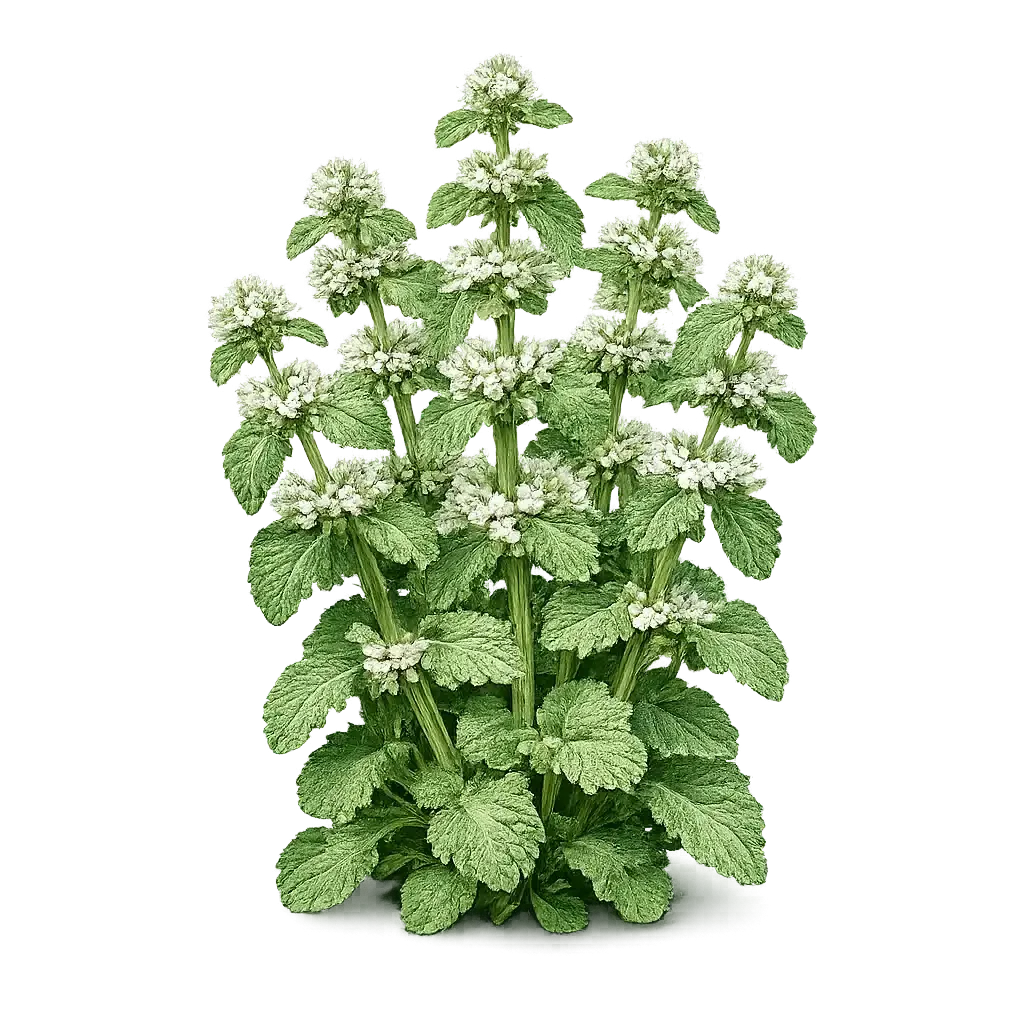
The plant's most striking visual characteristic is the dense covering of soft white woolly hairs, called trichomes, that covers the entire plant from stem to leaf surface and gives it the dusty grey-white appearance that makes it recognizable at a distance in the garden. These trichomes serve the same function they serve on many Mediterranean plants: reducing water loss through the leaf surface in the arid, high-evaporation conditions of the plant's native habitat. They also give fresh horehound leaves an unusual texture when handled and contribute to the visual appeal of the plant as a silvery accent in a herb bed.
The genus name Marrubium derives from the Hebrew marrob, meaning bitter juice, and the plant has been documented as a medicinal herb since ancient Egypt, appearing in the Ebers Papyrus and in the writings of the Roman agricultural writer Columella as both a cough medicine and a digestive herb. It was among the herbs brought to the Americas by European settlers and was adopted into Native American medicine by multiple peoples after its naturalization in the continent, an indication of the herb's accessibility and usefulness to any culture that encountered it and had a cough to treat.
How to Grow
Sun Requirements
Horehound is a full-sun plant that performs best in the hottest, most exposed position available and becomes progressively less compact and less medicinally potent as shade increases. In partial shade it grows taller and looser, producing leaves with lower marrubiin content and a less intensely bitter character. The trichome density that gives the plant its characteristic silvery appearance also decreases in shade, producing a greener, less visually distinctive plant. For the most compact, productive, and aromatic plant, full sun in a position with good air movement is the ideal.
Soil Requirements
Horehound is native to the dry, rocky, often disturbed soils of roadsides, waste ground, and overgrazed pastures across its native range, and it grows best in precisely those conditions in the garden: lean, poor, sharply drained soil that most herbs would find marginal. It is among the most alkaline-tolerant herbs in this series, performing well up to pH 8.0 on limestone and chalk soils. Fertile, amended soil produces lush, soft, over-watered-looking growth with reduced bitter compound concentration; lean soil produces the dense, compact, intensely bitter plant that is the useful one.
The drainage requirement is absolute in the same way it is for lavender and hyssop: waterlogged soil through winter or spring kills horehound reliably. In heavy clay, growing in a raised bed or on a slope ensures the drainage the plant requires. Beyond that, soil preparation for horehound is minimal; no amendment, no fertilization, no particular pH adjustment unless the soil is highly acidic, in which case a light limestone application brings conditions toward the alkaline preference.
Water Needs
Established horehound is one of the most drought-tolerant plants in this series, native to conditions that approximate the near-desert margins where few other useful herbs grow. Once established through its first growing season, it requires no supplemental irrigation in any climate with normal temperate rainfall distribution and manages in surprisingly arid conditions without visible stress. The woolly trichome covering is not merely decorative: it is a functional adaptation for water retention and heat reflection that allows the plant to maintain turgor under drought conditions that would wilt most other herbs.
Planting
Horehound grows readily from seed sown on the soil surface or barely covered, as the seeds require light for germination. Sow indoors six to eight weeks before the last frost date or directly outdoors in spring after frost risk has passed. Germination takes one to three weeks at room temperature and is somewhat erratic; thin to the strongest seedlings at twelve to eighteen inches. The plant can also be established from division of established clumps in spring, or from stem cuttings taken in late spring, both of which produce plants faster than seed.
Horehound self-seeds freely when allowed to set seed, and an established planting will spread gently through the garden without the aggressive territorial behaviour of mint. In most garden contexts this is welcome rather than problematic; the seedlings are easy to remove where they are not wanted and easy to relocate where they are. In regions where horehound has naturalized and is considered an invasive weed, deadheading before seed set is appropriate management.
Harvesting
Harvest leaves and flowering tops when the plant is just coming into bloom, at the stage when the lower whorls of flowers have opened but the upper whorls are still developing. This is the moment of peak marrubiin content and the highest concentration of the bitter compounds that make the herb medicinally useful. For the fresh-herb applications, young leaves harvested before flowering have a milder, less intensely bitter character appropriate for the digestive preparations where some moderation of bitterness is welcome. For the most potent respiratory preparations and the traditional cough candy, the flowering-top harvest at or just after early bloom is the correct stage.
Cut stems to four to six inches from the base, leaving sufficient growth to support regrowth through the remainder of the season. A midsummer harvest followed by a second harvest in early autumn as the plant reblooms provides two productive harvests per season from an established plant. Dry harvested material promptly in small bundles or stripped onto drying racks in a warm, ventilated space; the woolly leaves dry quickly in three to four days. Dried horehound keeps its bitter compound content well in airtight glass storage for one to two years.
Horehound cough candy and syrup: The traditional cough candy is one of the more satisfying home preparations in this series: it produces a real product with genuine shelf life, requires simple equipment, and the resulting candy is demonstrably effective for the persistent dry or productive cough it was designed to address. To make the candy, prepare a strong horehound tea by simmering two ounces of dried horehound herb in one quart of water for twenty minutes, then strain thoroughly through cheesecloth, pressing the herb firmly to extract all liquid. Measure the strained liquid and combine with twice its volume of sugar in a heavy saucepan. Cook without stirring to the hard crack stage, approximately 300 to 310 degrees Fahrenheit on a candy thermometer. Pour immediately into greased molds or onto a greased marble slab and score into pieces before it fully sets. The candy keeps for months in a sealed tin and delivers marrubiin in the exact same way the Victorian confections did. For a simpler preparation without the candy-making, prepare horehound syrup by dissolving one cup of sugar into one cup of strong horehound tea over low heat without boiling, then cool and bottle. Two teaspoons of the syrup in warm water or taken directly provides a more immediately practical cough remedy for daily use during respiratory illness. Adding honey in place of part of the sugar produces a preparation closer to the traditional medicinal syrups of the European apothecary tradition.
How to Use
Respiratory Uses
Horehound's primary medicinal application is the respiratory one that produced the cough candy tradition: it is an expectorant and antispasmodic for cough and bronchial congestion, with a specific mechanism centered on marrubiin. The compound forms from its precursor premarrubiin during water extraction of the herb, meaning that the hot water infusion or decoction produces the active form more effectively than tincturing in cold alcohol. Marrubiin stimulates the secretory activity of the bronchial mucosa, reducing mucus viscosity and making productive cough more efficient, while the antispasmodic activity of the volatile oil components reduces the bronchospasm that drives the most distressing cough episodes.
The preparation matters for horehound's respiratory use more than for most herbs in this series. A cold infusion or alcohol tincture delivers the precursor premarrubiin rather than the active marrubiin; a hot water infusion or a decoction performs the extraction that converts precursor to active compound during preparation. For the most effective respiratory preparation, a ten to fifteen minute covered hot infusion using one to two teaspoons of dried herb per cup of boiling water, drunk two to three times daily during acute respiratory illness, is the preparation the traditional use supports and the chemistry justifies.
Horehound is documented in the German Commission E monographs, the benchmark pharmacological assessment of traditional European plant medicines, with an approved use for catarrh of the upper respiratory tract and as a supportive treatment for acute bronchitis. This regulatory recognition reflects the consistent traditional use across multiple European medical traditions and the mechanistic plausibility of marrubiin's expectorant activity.
Digestive Uses
Horehound is one of the classic European digestive bitters, producing the bitter receptor stimulation that increases secretion of saliva, gastric acid, bile, and digestive enzymes through the cephalic phase of digestion. The bitter quality of marrubiin and the related bitter compounds in the herb is intense and genuine, ranking among the most bitter plants in common use and well above the threshold for effective bitter receptor activation. A small amount of horehound tea before a meal, or horehound included in a bitters preparation alongside gentian or wormwood, prepares the digestive system for efficient processing of a rich meal.
The cholagogue activity of horehound, stimulating bile flow from the gallbladder into the small intestine, supports the digestion of fat and is the traditional basis for its use in the hepatic and digestive preparations of the European herbal tradition. This bile-stimulating activity is relevant for people who experience difficulty digesting fatty foods, bloating after rich meals, or the sluggish digestion that follows excessive consumption, and it overlaps mechanistically with the digestive bitters tradition in which horehound has historically appeared.
Traditional Cardiac Use
Horehound appears in the traditional European and Middle Eastern herbal record as a mild antiarrhythmic, used for the irregular heartbeat and palpitations associated with functional cardiac irregularities rather than structural heart disease. Marrubiin has demonstrated negative chronotropic activity in pharmacological research, meaning it slows and regularizes heart rate in laboratory models, providing a mechanistic basis for the traditional use that is not merely anecdotal. This application is noted here for completeness in the traditional record rather than as a primary homestead use; anyone with a diagnosed cardiac arrhythmia requires medical evaluation rather than herbal self-treatment. The traditional use is relevant context for understanding why horehound was valued so broadly across such a long period.
Storage
Dried horehound in airtight glass containers keeps its marrubiin content well for one to two years. The bitter compound is relatively stable compared to the volatile aromatic compounds that degrade more quickly in other herbs. Horehound candy prepared by the method above keeps for several months in a sealed tin at room temperature, making it one of the most durable processed herb preparations in this series. Horehound syrup keeps refrigerated for two to three months, or longer with a higher sugar concentration that inhibits microbial growth.
Lifespan of the Plant
Horehound is a long-lived perennial in well-drained soil, maintaining productive growth for five to eight years before the center of the plant becomes excessively woody and productivity declines. Annual cutback to several inches after the main flowering period in late summer encourages fresh basal growth and extends the productive life of the plant. Division every three to four years, separating the plant into sections each with healthy crown growth and roots, rejuvenates an aging planting and provides additional plants. The freely self-seeding habit means that a horehound planting in a suitable position tends to perpetuate itself from seedlings even as individual parent plants age, creating an informal but self-maintaining patch.
Cautions: Horehound is contraindicated in pregnancy due to the traditional emmenagogue and abortifacient use recorded across multiple historical traditions; the uterine-stimulating activity attributed to the herb warrants avoidance during pregnancy at medicinal doses. The cholagogue activity contraindicates use in people with gallstones, where stimulated bile flow could trigger biliary colic. People with cardiac arrhythmias who are under medical treatment should avoid medicinal horehound preparations due to potential additive effects with antiarrhythmic medications; culinary-level use presents no documented concern. The bitterness of horehound tea is intense and genuinely unpleasant to most palates unaccustomed to strong bitter herbs; the cough candy and syrup preparations are far more palatable and equally effective for respiratory use. Do not confuse with black horehound (Ballota nigra), a related plant with an extremely unpleasant odor and different chemical profile that does not share the medicinal applications of white horehound. In regions where horehound has naturalized and is classified as an invasive weed, particularly parts of Australia and western North America, check local regulations before establishing an outdoor planting; container growing provides an alternative that eliminates any spread concern.
Pros and Cons
Advantages
Genuine expectorant and antispasmodic for productive cough with a well-characterized active compound and Commission E regulatory recognition in Germany
The cough candy and syrup preparations are practical, durable, effective products that can be prepared and stored for use through the entire cough season
One of the most drought-tolerant and cold-hardy herbs in this series; thrives in the lean, dry, neglected corners of the garden where other plants fail
Effective digestive bitter for stimulating digestion before or after a rich meal, with a mechanistically supported cholagogue action
Silvery-grey woolly foliage provides genuine ornamental value as a textural accent in a herb bed or at the edge of a dry garden planting
Self-seeding without being invasive in most climates; the planting perpetuates itself with minimal management
Among the oldest continuously documented medicinal herbs in Western use; the depth of the traditional record for respiratory and digestive application is exceptional
Limitations
Intensely bitter flavor limits fresh-herb applications; most effective through the processed forms of candy, syrup, and infusion rather than as a culinary herb
Contraindicated in pregnancy and in gallstone disease; caution with cardiac medications
Cholagogue activity requires caution for anyone with known gallbladder issues
Self-seeds freely; requires attention to prevent unwanted spread, and may be regulated as invasive in some regions
Hot water extraction is required to convert premarrubiin to the active marrubiin; cold alcohol tinctures produce a different and less effective preparation for respiratory use
The bitter tea preparation is challenging to consume without the sweetened candy or syrup form; palatability is a genuine management consideration
Common Problems
Horehound is among the most pest and disease resistant plants in this entire series, consistent with its origin in harsh, disturbed habitats where it evolved without the protection of a benign growing environment. Established plants in appropriate conditions are rarely troubled by insects, fungi, or bacterial disease in any significant way.
Powdery mildew occasionally appears on the leaves during humid late-summer conditions, producing the white powdery coating characteristic of this fungal disease. It is cosmetic rather than serious in an established plant and is most effectively managed by improving air circulation through spacing and by cutting back the affected growth. In the dry, well-ventilated conditions that horehound prefers, mildew rarely develops at all.
Root rot from winter waterlogging is the primary growing failure, following the same pattern as lavender, hyssop, and the other Mediterranean herbs in this series. The solution is drainage improvement before planting; by the time symptoms are visible in spring, the root damage is usually irreversible.
Excessive growth and loss of compact form follows from overly fertile soil or excessive moisture. The remedy is not pruning or feeding but moving the plant to leaner, drier conditions. Horehound performs in inverse proportion to the generosity of its growing conditions: the harsher the position, the better the plant.
Final Thoughts
Horehound is one of the herbs in this series with the clearest alignment between what it is, where it grows, what it contains, and what it does. A bitter, drought-tough, woolly plant from dry disturbed ground contains an intensely bitter compound that becomes an expectorant in hot water, is used for the cough and the sluggish digestion that cold, heavy food and poor conditions produce, and asks for nothing more than poor soil and no water. The alignment is complete. There is nothing in the horehound story that requires apology or explanation; the traditional use makes sense from the chemistry, the chemistry makes sense from the plant, and the plant makes sense from where it grows.
Make the candy in autumn before cough season. Keep a jar on the shelf. Use it when the chest congestion arrives. It worked four thousand years ago for the same reason it works now.