
Hyssop
Written By Arthur Simitian
QUICK FACTS
Common Name
Hyssop
Scientific Name
Hyssopus officinalis
Plant Type
Hardy semi-evergreen aromatic subshrub
Hardiness Zones
3 to 9
Sun Requirements
Full sun
Soil Type
Well-drained, lean, alkaline-tolerant; pH 6.5 to 8.5; drought-tolerant once established
Plant Height
18 to 24 inches
Spacing
18 to 24 inches
Harvest Part
Flowering tips and leaves (primary); flowers
Primary Active Compounds
Pinocamphone, isopinocamphone, beta-pinene, 1,8-cineole, pinocarvone; essential oil 0.3 to 1.0% of fresh herb weight
Uses
Respiratory expectorant and antispasmodic for cough; digestive bitter and carminative; culinary herb in liqueurs, stuffings, and bean dishes; companion plant deterring cabbage white butterflies; pollinator plant
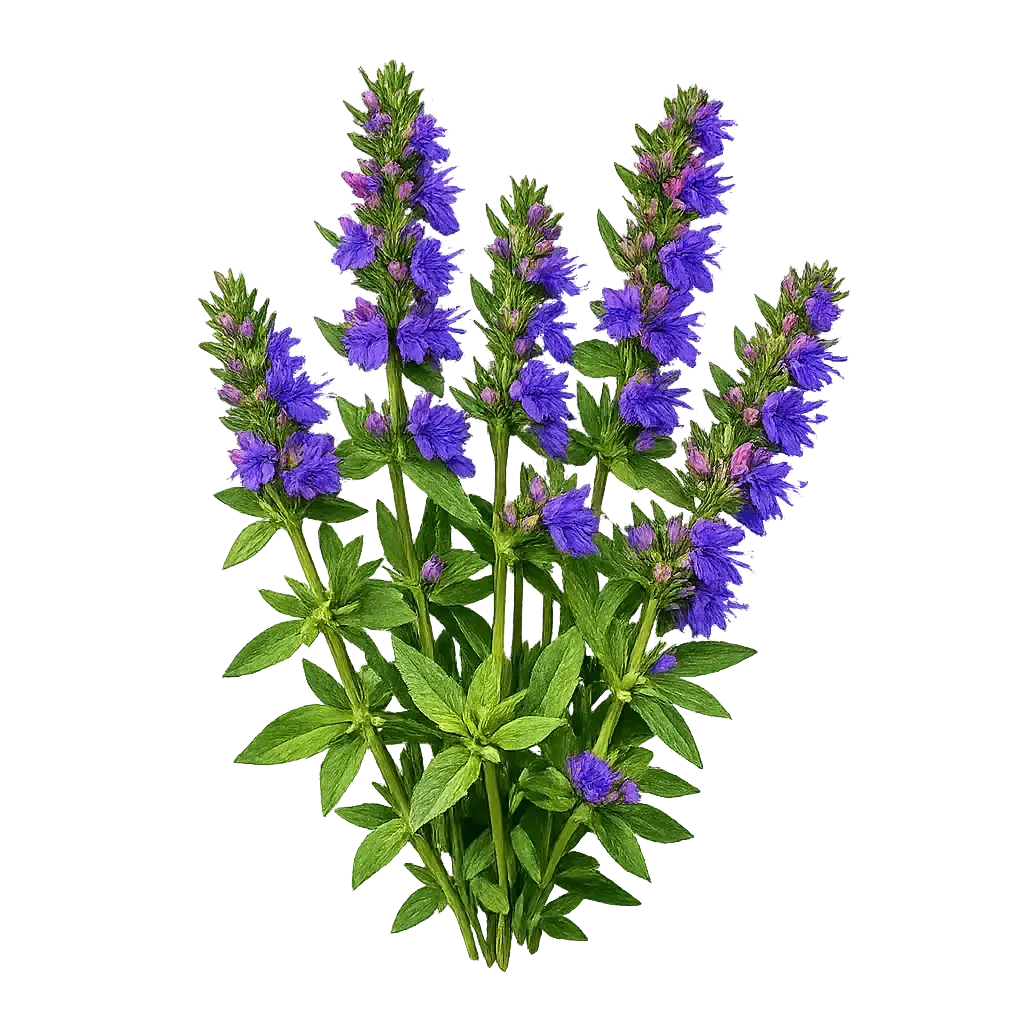
Hyssop is a herb that most modern cooks have not used, most modern gardeners grow primarily as an ornamental, and most traditional herbalists consider essential. It occupies that particular category of old-world plants whose value was once common knowledge and has since been partially obscured by the narrowing of the culinary and medicinal herb repertoire over the past century. The plant is compact and attractive, with dense spikes of deep blue-violet flowers that bloom prolifically from midsummer through early autumn above dark, intensely aromatic foliage. It requires almost nothing in the way of care once established in well-drained lean soil. Its medicinal applications for respiratory congestion and cough are among the better-supported in the traditional European herbal record. Its culinary tradition is narrow but genuine, centred on the liqueur and digestif industry where it has been a component of Chartreuse for centuries, and on the French and Italian cooking where its bitter, minty, slightly camphorous note works as a counterpoint to fatty meats and rich bean preparations. Hyssop belongs in the serious herb garden. It is simply a matter of understanding what it does and how to use it.
Introduction
Hyssopus officinalis is native to southern Europe, the Middle East, and central Asia, growing on dry, rocky, calcareous hillsides in the same Mediterranean habitat occupied by rosemary, thyme, and lavender. It is a member of the Lamiaceae family, and the family resemblance is clear in the square stems, the opposite leaves, the two-lipped tubular flowers arranged in whorled spikes, and the intensely aromatic essential oil concentrated throughout the plant. The name hyssop has ancient origins in the Greek hyssopos and the Hebrew ezov, and the plant is mentioned in the Old Testament in several contexts including purification rituals, though considerable scholarly debate exists about whether the biblical ezov refers specifically to Hyssopus officinalis or to one of several other strongly aromatic plants used in the same cultural context.
The essential oil of hyssop is dominated by pinocamphone and isopinocamphone, two ketone compounds that give the herb its characteristic sharp, camphorous, slightly bitter and minty aromatic note, distinct from the thymol-dominated character of thyme or the linalool-dominated character of lavender despite belonging to the same plant family and growing in the same habitat. These pinocamphone ketones are also responsible for the plant's most significant medicinal and safety consideration: in high concentrations, as in the pure essential oil, pinocamphone has convulsant activity. This makes hyssop essential oil one of the small number in this series that carries a genuine toxicity risk at incorrect doses, while the dried herb and standard infusion preparations used at traditional doses are safe for normal use.
Hyssop is an outstanding pollinator plant, particularly attractive to bumblebees and honeybees during its extended bloom period. The combination of nectar-rich flowers over a long summer season and the compact habit that concentrates flower density makes it one of the most productive bee plants per square foot in the herb garden. Traditional beekeeping literature, particularly from France and central Europe, consistently cites hyssop as a valued apiary plant, and the character of hyssop honey from apiaries near large hyssop plantings is considered distinctively fine.
How to Grow
Sun Requirements
Hyssop is a full-sun plant from an unambiguously Mediterranean habitat and performs best in the hottest, most exposed position available. In partial shade it grows taller and looser, flowers less prolifically, and produces leaves with noticeably reduced essential oil content. The same principle that applies to thyme and lavender applies here: lean soil, full sun, and good drainage produce a compact, densely aromatic plant. Rich soil and shade produce a larger but less useful one.
Soil Requirements
Hyssop shares the Mediterranean herb preference for lean, sharply drained soil and is not only tolerant of but genuinely favors alkaline conditions, performing well on chalk and limestone soils where many herbs struggle. The pH tolerance range of 6.5 to 8.5 is one of the widest in this series. In heavy clay or consistently moist soil, hyssop develops root rot through winter and is prone to the center-die-out that afflicts poorly drained subshrubs in wet temperate climates. Well-drained, lean soil requires no amendment and no fertilization; adding organic matter or fertilizer to a hyssop bed reduces the essential oil concentration in the resulting growth.
Water Needs
Established hyssop is highly drought-tolerant and one of the lowest-water herbs in this series after juniper. It manages on natural rainfall in most temperate climates once established through its first season, requiring supplemental irrigation only during extended drought. Overwatering is a significantly greater risk than underwatering, and the instinct to water a wilting hyssop plant in summer heat should be tempered by checking whether the soil is actually dry before adding water; in well-drained soil it usually is, and watering is appropriate. In poorly drained soil the same wilting may indicate waterlogging rather than drought, and adding more water worsens the problem.
Planting
Hyssop grows readily from seed sown indoors six to eight weeks before the last frost date or directly outdoors after frost risk has passed. Seeds germinate in one to two weeks at room temperature and produce vigorous seedlings that establish quickly in well-prepared soil. Division of established plants in spring or autumn is equally practical and provides larger plants more quickly than seed. Softwood cuttings taken in late spring root readily in free-draining cutting compost.
Spacing at eighteen to twenty-four inches allows the plants to develop their natural rounded form without overcrowding and provides the air circulation that prevents the fungal disease that humidity encourages in dense plantings. Hyssop can also be used as a low edging plant or a low informal hedge if planted at twelve-inch spacing and lightly trimmed after flowering; the dense, dark foliage and reliable bloom period make it an attractive structural element as well as a productive herb.
Harvesting
Harvest flowering tips and leaves from the moment the plant shows first flower buds through the bloom period, cutting stems of four to six inches from the branch tips. The aromatic intensity of the essential oil is highest at the bud-to-early-flower stage, as in most aromatic herbs in the Lamiaceae family. For medicinal preparations and drying, harvest at this moment. For culinary fresh use, young tip growth before flowering has the most delicate flavor; the more mature flowering-stage growth is appropriate for the stronger applications where hyssop's characteristic bitterness and camphor note are wanted.
Dry harvested material promptly in bundles hung in a warm, ventilated space away from direct light, or strip leaves onto mesh drying racks. Hyssop dries quickly in three to four days and retains its essential oil well in dried form when sealed immediately in airtight glass containers. Dried hyssop keeps its aromatic character for one year; beyond that, the pinocamphone content decreases and the dried herb becomes progressively less useful for either culinary or medicinal applications.
A hard cutback by one-third to one-half of the plant's growth after the main flowering period in late summer or early autumn, similar to the pruning approach for lavender and sage, maintains a compact, productive form and prevents the excessive woodiness that reduces leaf production in the lower portions of the plant. In cold climates, leaving the cutback until early spring rather than autumn provides the top growth as winter protection for the crown.
Hyssop in the kitchen: The culinary tradition for hyssop in European cooking is built on the herb's ability to cut through fat and richness rather than to harmonize with delicate flavors. The three strongest traditional pairings are: bean dishes, particularly the slow-cooked white bean and sausage preparations of southern France and northern Italy, where a sprig of hyssop added to the pot in the last thirty minutes provides a bitter, aromatic counterpoint to the richness of the fat and beans; stuffings for fatty birds including duck, goose, and guinea fowl, where fresh or dried hyssop mixed with the bread, herbs, and aromatics in the stuffing cuts the rendering fat; and the liqueur and digestif tradition, where hyssop has been a component of Chartreuse for centuries and appears in a range of European bitter liqueurs valued precisely for the pinocamphone-derived bitter, camphorous character. For cooks new to hyssop, the bean preparation is the most forgiving entry point: add a single small sprig to a cassoulet or a pot of braised white beans alongside the usual herbs and taste the difference. The note hyssop contributes is subtle, aromatic, slightly medicinal, and entirely its own.
How to Use
Respiratory Uses
Hyssop is primarily a respiratory herb in the European medicinal tradition, used for coughs, bronchial congestion, asthma, and the productive cough that follows respiratory infection. The essential oil compounds, particularly 1,8-cineole and beta-pinene, have demonstrated expectorant activity, reducing mucus viscosity and stimulating the ciliary clearance that moves mucus out of the airways. The antispasmodic activity of the pinocamphone compounds on bronchial smooth muscle supports the traditional use for spasmodic cough and the bronchospasm component of asthma.
The standard preparation for respiratory use is hyssop tea made from dried flowering tips: steep one to two teaspoons of dried herb per cup of boiling water, covered, for ten minutes before straining. Two to three cups daily during acute respiratory illness is the traditional dosage. The tea has a pronounced bitter, camphorous, slightly minty character that is unfamiliar to most modern palates but becomes recognizable as the taste of the herb working. Adding honey softens the bitterness and adds its own soothing properties for throat irritation.
Steam inhalation with fresh or dried hyssop, adding a handful to a bowl of very hot water and inhaling the steam with a towel over the head for ten minutes, delivers the volatile oil compounds directly to the bronchial mucosa and is particularly effective for deep congestion that oral tea preparations reach less efficiently. This is the most direct application of the expectorant compounds and provides faster symptomatic relief than the tea in the context of acute bronchial congestion.
Digestive Uses
Hyssop functions as a digestive bitter, stimulating the secretion of digestive enzymes and bile through the bitter receptor activation that is the mechanism underlying the entire European aperitif and digestif tradition. The pinocamphone and related bitter compounds trigger increased digestive secretion when encountered by the taste receptors and the upper digestive mucosa, preparing the digestive system for the efficient processing of a meal or supporting the digestion of a rich one already consumed.
As a carminative, hyssop reduces intestinal gas and bloating through the antispasmodic activity of its essential oil on intestinal smooth muscle. The combination of bitter stimulation and carminative antispasmodic action makes hyssop tea an effective after-meal preparation for heavy or fatty meals where both digestive stimulation and antispasmodic gas relief are wanted. This is the same dual mechanism that makes hyssop a component of so many traditional European digestif liqueurs, where the bitter aromatics perform a genuine digestive function alongside their social and culinary roles.
Companion Planting Uses
Hyssop has well-documented companion planting value as a deterrent to the cabbage white butterfly (Pieris brassicae and P. rapae), whose caterpillars are among the most damaging pests of brassica crops. Planting hyssop at the perimeter of brassica beds or interspersed within them reduces the egg-laying activity of the adult butterflies, which appear to avoid the strongly aromatic zone the plant creates. This companion planting effect is noted specifically for hyssop rather than for aromatic herbs generally, and has been sufficiently consistent in observation to be widely cited across the traditional gardening literature of France, England, and Germany.
The same aromatic deterrent effect that reduces cabbage butterfly pressure also attracts beneficial insects including hoverflies and parasitic wasps that prey on aphids and caterpillars, adding a second layer of pest management benefit alongside the butterfly deterrence. Combined with its value as a bee plant, hyssop planted at the edges of the vegetable garden serves the pollinator, pest management, and medicinal herb functions simultaneously from a plant that requires almost no space or care.
Hyssop and Anise Hyssop
Hyssop (Hyssopus officinalis) and anise hyssop (Agastache foeniculum) share a common name, membership in the Lamiaceae family, and aromatic foliage, but they are distinct plants with different essential oil profiles, flavors, and uses. Anise hyssop has a sweet, anise-like flavor from its estragole-dominated essential oil, is used primarily as a culinary and tea herb with a gentle, pleasant character, and has none of the bitter camphorous quality that defines the medicinal and culinary identity of true hyssop. Anise hyssop is significantly more palatable as a fresh herb and a more approachable tea plant; true hyssop is the bitter, medicinally serious member of the pair.
Both are excellent pollinator plants and both deserve a place in the herb garden, but they are not interchangeable. Recipes calling for hyssop in a bean or stuffing preparation specifically want the pinocamphone bitterness and camphor note of H. officinalis. Recipes calling for anise hyssop as a tea or fresh garnish want the sweet anise character of Agastache. Substituting one for the other produces results that are appropriate to neither application.
Storage
Dried hyssop in airtight sealed glass containers keeps its essential oil content for approximately one year before noticeable quality decline. The bitter pinocamphone compounds are relatively stable in dried material compared to the more volatile monoterpenes that degrade quickly in other herbs, meaning dried hyssop maintains its medicinal character longer than dried basil or lemon balm but not as long as dried lavender or dried juniper berries. Replace the stock annually from the fresh harvest for the most reliable medicinal and culinary quality.
Lifespan of the Plant
Hyssop is a long-lived subshrub in well-drained soil, capable of persisting in the same position for a decade or more with annual post-flowering cutbacks that prevent excessive woodiness. The plant does not die back completely in winter in most climates where it is hardy but reduces to a semi-evergreen low mound of dark foliage that re-grows vigorously in spring. In very cold winters at the edge of its zone 3 hardiness, the above-ground portion may be killed back but the crown survives and re-sprouts reliably. Division every three to four years, splitting congested clumps in spring, maintains vigorous productive growth and provides additional plants from an established parent.
Essential oil toxicity and cautions: Hyssop essential oil contains pinocamphone at concentrations sufficient to cause convulsions in susceptible individuals at overdose. The pure essential oil should never be taken internally and should be used with extreme caution topically, particularly in people with epilepsy or seizure disorders, in young children, and in pregnancy. These risks apply specifically to the concentrated essential oil; dried herb preparations and standard teas made from dried flowering tips at traditional doses are safe for general adult use. Hyssop is contraindicated in pregnancy in concentrated medicinal preparations due to traditional emmenagogue use and the potential for the pinocamphone ketones to stimulate uterine activity at high doses. Culinary use at cooking quantities presents no concern. People with epilepsy should avoid hyssop entirely, including the dried herb preparations, as the pinocamphone content in even normal-dose tea could theoretically lower the seizure threshold. Do not confuse Hyssopus officinalis with anise hyssop (Agastache foeniculum) or with hedge hyssop (Gratiola officinalis), which is a distinct and genuinely toxic plant.
Pros and Cons
Advantages
Excellent respiratory herb with well-supported traditional use and plausible expectorant and antispasmodic mechanisms for cough and bronchial congestion
Outstanding pollinator plant with an extended midsummer-to-early-autumn bloom period particularly attractive to bumblebees and honeybees
Documented companion planting value as a cabbage white butterfly deterrent; serves pest management, pollinator support, and medicinal functions simultaneously
Among the most cold-hardy and drought-tolerant herbs in this series; hardy to zone 3, low water demand once established
Alkaline soil tolerance makes it valuable in gardens on chalk or limestone where many herbs perform poorly
Compact, attractive, long-lived; genuinely ornamental with dark foliage and prolific violet-blue flowers as well as medicinally productive
A component of Chartreuse and traditional European digestif liqueurs; the culinary tradition, while narrow, is deep and genuinely interesting
Limitations
Bitter, camphorous flavor profile limits culinary applications to specific contexts; not a broadly versatile kitchen herb like thyme or parsley
Pure essential oil is convulsant at overdose; requires more careful handling than most herbs in this series
Contraindicated in epilepsy and pregnancy in medicinal preparations
Requires annual pruning discipline to prevent excessive woodiness; skipped seasons produce a sprawling plant that is harder to cut back productively
Relatively unfamiliar to modern palates; the bitter, medicinal character is an acquired taste that some find off-putting before they understand the applications where it excels
Commercially uncommon; plants and dried herb may require sourcing from a specialist herb nursery rather than a standard garden center
Common Problems
Root rot from winter waterlogging is the primary cause of hyssop loss in temperate gardens with heavy or poorly drained soil. The solution is invariably soil preparation before planting: incorporating sharp grit, planting on a raised area, or growing in a raised bed eliminates the problem before it begins. Once root rot has established in an otherwise healthy planting, lifting and replanting in a better-drained position is the only effective response.
Legginess and loss of the compact mounded form follows from skipped annual pruning. A hyssop plant left unpruned for two or three seasons develops long, sprawling stems with foliage only at the tips and a woody, open centre that is neither attractive nor productive. Hard cutting back into old brown wood does not reliably regenerate new growth in hyssop, as in lavender; the correction for a neglected plant is replacement from fresh cuttings or divisions rather than renovation pruning of the woody framework.
Few insect or disease problems trouble established hyssop in appropriate growing conditions. Aphids occasionally colonize the soft spring growth tips and are managed by the same predatory insect populations that develop in a diverse herb garden. Spittlebug (froghoppers) appear as white foam masses on stems in summer and can be removed by hand or dislodged with a water spray; the damage to an otherwise healthy plant is cosmetic rather than serious.
Final Thoughts
Hyssop rewards the grower who takes the trouble to understand it on its own terms rather than expecting it to behave like a milder version of thyme or a more medicinal version of lavender. It is a distinct herb with a distinct character, a distinct set of applications, and a distinct place in the European herb tradition that centuries of continuous use in monastery gardens, apothecaries, and professional kitchens confirms. The bitterness is a feature, not a flaw. The camphorous note is the mechanism of its respiratory action, the source of its culinary identity in the liqueur and bean traditions, and the reason it repels cabbage butterflies. None of those properties come without the character that produces them.
Plant it in the sunniest, leanest, best-drained position available. Cut it back after flowering every year. Respect the essential oil toxicity limits. Use it for the cough that has settled into the chest, in the bean pot on a cold evening, and alongside the vegetable beds in summer. It asks for little and provides something genuinely irreplaceable.