
Juniper
Written By Arthur Simitian
QUICK FACTS
Common Name
Juniper Berry, Common Juniper
Scientific Name
Juniperus communis (primary culinary and medicinal species)
Plant Type
Hardy evergreen coniferous shrub or small tree
Hardiness Zones
2 to 7; one of the most cold-hardy woody plants in the Northern Hemisphere
Sun Requirements
Full sun to light partial shade
Soil Type
Very well-drained, lean, tolerates alkaline and acidic; pH 5.0 to 8.0; drought-tolerant once established
Plant Height
Highly variable by form: prostrate groundcover to 20 feet; most shrub forms 3 to 8 feet
Berry Maturation
Two to three years from pollination to ripe berry; green and ripe berries present simultaneously on the same plant
Harvest Part
Ripe berries (seed cones), harvested when fully blue-black with a waxy bloom; leaves and wood for smoke flavoring
Primary Active Compounds
Alpha-pinene, sabinene, terpinen-4-ol, limonene, myrcene, borneol; essential oil 0.5 to 2% of fresh berry weight
Uses
Essential botanical in gin distillation; culinary spice for game, pork, sauerkraut, and northern European cooking; diuretic and urinary antiseptic; digestive carminative; smoking wood for meat; traditional respiratory herb
Juniper is one of the oldest plants in human use. The berries have been found in Egyptian tombs, documented in ancient Greek and Roman medicine, and harvested from wild stands across the Northern Hemisphere for thousands of years for food, medicine, and ceremony. In the modern kitchen, juniper's most visible role is as the botanical that defines gin, a spirit whose name derives directly from the Dutch word for juniper. But the culinary tradition behind that distillation is older and broader than the gin bottle suggests: juniper berry is the essential spice of northern European game cooking, the aromatic backbone of sauerkraut preparations from Alsace to Poland, the key element in charcuterie seasonings from France through Scandinavia, and a spice with a resinous, piney, complex character that no other ingredient in the pantry replicates. On the homestead, a well-established juniper plant of a known berry-bearing variety provides a harvest that connects the kitchen directly to one of the oldest spice traditions in the world.
Introduction
Juniperus communis is the most widely distributed conifer in the world and one of the most widely distributed woody plants of any kind, with a native range spanning the entire Northern Hemisphere from the Arctic Circle south through Europe, Asia, and North America, occupying habitats from coastal cliffs and chalk downlands to subalpine slopes and boreal forest edges. This extraordinary range reflects an equally extraordinary adaptability: juniper tolerates drought, wind, poor soil, intense cold, and salt spray that would eliminate most other woody plants, and it occupies ecological niches that few other species successfully contest.
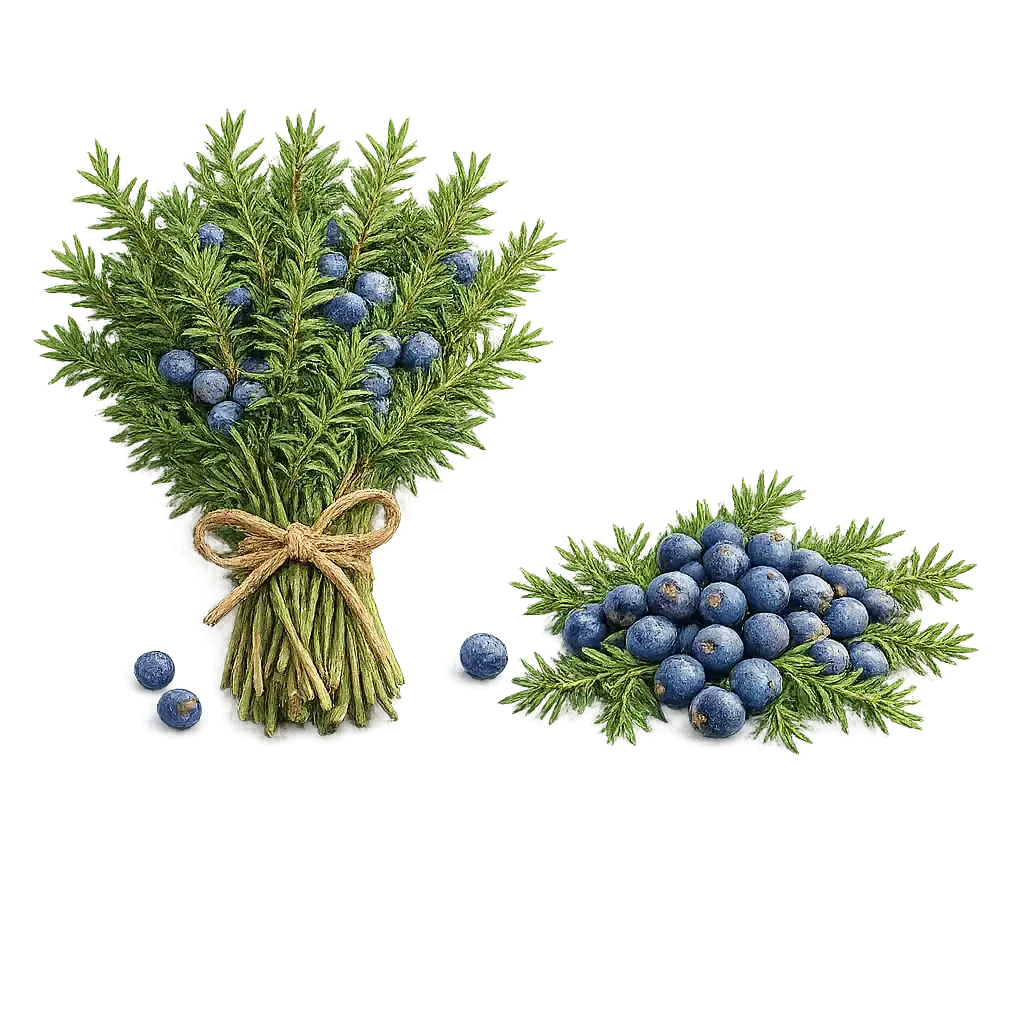
What are commonly called juniper berries are not true berries in the botanical sense. They are fleshy seed cones, in which the scales that would form the open cone of a pine or spruce have fused together and become succulent and aromatic, enclosing two or three seeds within a resinous, oil-rich flesh. The maturation of these cones takes two to three years from pollination, which produces the characteristic appearance of a fruiting juniper: green first-year cones and fully ripe second-year or third-year blue-black cones present simultaneously on the same branches, producing an ornamental combination of green and deep indigo-black that is one of the plant's most distinctive visual features.
Juniperus communis is dioecious: male and female reproductive structures occur on separate plants. Only female plants produce berries. A planting intended for harvest therefore requires at least one male plant within reasonable proximity for pollination, with one male able to pollinate multiple females over a considerable distance. When purchasing plants for berry production, confirming that the variety is female-bearing rather than a non-fruiting male or ornamental selection is important; many juniper cultivars sold for landscape use are male plants selected for ornamental foliage without regard for berry production.
How to Grow
Sun Requirements
Common juniper grows best in full sun and produces the most resinous, aromatic berries with maximum essential oil content in a position receiving at least six to eight hours of direct daily sun. It tolerates light partial shade and will grow in shadier conditions than most herbs in this series, but berry production decreases markedly in shade and the plant's natural tendency toward an open, sparse form is exaggerated. For a productive berry harvest from a compact, well-shaped plant, full sun is strongly preferred.
Soil Requirements
Juniper is among the most soil-tolerant plants in this series, growing in conditions from pure chalk to acidic peat, from sandy coastal soil to rocky mountain scree, across a pH range of 5.0 to 8.0. The single consistent requirement is drainage: juniper roots are intolerant of waterlogged conditions, and prolonged saturation causes the root rot that is the primary cause of established juniper decline in garden settings. In any soil with adequate drainage, juniper requires no amendment, no fertilizer, and no particular soil preparation beyond ensuring the root zone drains freely.
Lean, poor soil is entirely appropriate and in fact preferable to rich, fertile soil. Juniper grown in rich, heavily amended garden soil produces lush but relatively soft, open growth with lower essential oil concentration in the berries than plants growing lean and dry. The harshest conditions of its native habitat produce the most intensely aromatic berries.
Water Needs
Established juniper is highly drought-tolerant and one of the lowest-maintenance plants in the herb garden once its root system has developed through the first two growing seasons. Regular watering during establishment in the first year supports the deep root development that makes the plant self-sufficient thereafter; once established, supplemental irrigation is needed only during the most extreme drought conditions and is never required in climates with reasonable annual rainfall distribution.
Planting
Juniper is most reliably established from container-grown nursery plants in spring, allowing the full growing season for root establishment before the first winter. Bare-root transplanting is possible but less reliable with established plants, as juniper resents root disturbance; container-grown plants with an intact root ball establish with minimal stress. Plant at the same depth as in the container and water in well; mulching around but not against the stem base retains moisture and moderates soil temperature through the establishment period.
For a berry-producing planting, source specifically female-designated plants from a specialist nursery rather than generic landscape junipers of unspecified sex. Common female selections for berry production in garden settings include Juniperus communis var. communis (the standard upright form), Juniperus communis 'Hibernica' (Irish juniper, narrow columnar form), and Juniperus communis 'Compressa' (very compact dwarf form). Confirm a male pollinator plant is within the planting area if no wild junipers are present in the surrounding landscape.
Harvesting
Identifying Ripe Berries
Ripe juniper berries are fully blue-black with a characteristic dusty blue-grey waxy bloom on the surface, soft enough to yield slightly under thumb pressure, and aromatic when crushed. They are found on second and third year growth. Green berries on the same plant are first-year cones still developing and not yet ready for harvest; picking them prematurely produces an inferior product with sharp, unpleasant resin rather than the complex aromatic character of fully ripe berries. The presence of both green and ripe berries simultaneously on the same branch is normal and should not be confused with disease or poor ripening.
The three-pointed star scar visible at the base of a ripe juniper berry, where the cone scales meet, is a useful identification marker for confirming the correct species: in J. communis this scar is distinctly three-pointed. This feature, combined with the characteristic sharp, single-needled leaves in whorls of three each bearing a single white stomatal band, distinguishes J. communis from the potentially toxic ornamental junipers discussed in the safety section below.
Harvest Method
Harvest ripe berries in autumn by spreading a cloth or tray beneath the plant and gently shaking or combing the branches; ripe berries fall freely while unripe green berries hold. Wearing gloves protects against the sharp needle tips. Hand-picking individual ripe berries from among the sharp needles is painstaking but produces the cleanest harvest without green berries or needle material mixed in. In wild-harvesting contexts, the traditional method of spreading a cloth and shaking is faster for large quantities.
Use berries fresh immediately after harvest or dry them on mesh racks in a warm, ventilated space for one to two weeks until fully dry and slightly wrinkled but not shriveled to dust. Dried berries store for one to two years in airtight glass containers in a cool, dark location. For culinary use, lightly crack the dried berry with the flat of a knife or briefly in a mortar before using, which releases the essential oil into the preparation far more effectively than using the berry whole.
Juniper in the northern kitchen: The essential culinary applications of juniper berry in the European tradition group around two primary contexts. The first is game: venison, wild boar, hare, and duck are the meats that most benefit from juniper's resinous, slightly camphoraceous note, which cuts through the mineral richness of wild meat in a way that no other spice does as cleanly. The standard preparation is a dry rub or marinade combining cracked juniper berries with black pepper, bay, thyme, and garlic, applied to the meat twelve to twenty-four hours before cooking. For a simple venison stew, two to three lightly cracked berries per portion added to the braising liquid at the start of cooking is enough to transform the dish. The second is fermented and cured preparations: sauerkraut made in the Alsatian tradition includes juniper berries as a standard ingredient alongside caraway, the combination producing the characteristic aromatic complexity of choucroute garnie. German charcuterie, particularly smoked pork products and the cured meat preparations of the Black Forest, uses juniper as a primary seasoning. Scandinavia extends the tradition into aquavit, cured salmon, and smoked fish, where juniper smoke, from burning branches over a hardwood base, contributes a distinctive resinous note. Start with two to three cracked berries per dish and adjust; the flavor is concentrated and the threshold between enough and too much is narrow.
How to Use
Culinary Uses
Juniper berry's culinary character is defined by the combination of alpha-pinene's sharp, resinous pine note with terpinen-4-ol's warm, slightly peppery quality and the sweet, woody undertones of bornyl acetate and other sesquiterpenes. The overall effect is simultaneously piney, spicy, resinous, and slightly sweet, with a complexity that changes through cooking: the volatile top notes that announce themselves when the cracked berry first hits heat mellow and deepen over a long braise into something earthier and more integrated.
Gin is the most widely consumed juniper preparation in the modern world, and understanding how gin is made clarifies how to use juniper as a cooking spice. Gin distillers macerate juniper berries, typically sourced from southern European wild-harvested J. communis, alongside other botanicals in neutral spirit and then redistill; the essential oil compounds that carry the characteristic juniper note are what the distiller is extracting and concentrating. The same compounds are what the cook seeks when adding cracked juniper to a braise or rub, and the analogy between gin-making and culinary use is not merely metaphorical: a small splash of gin added to a sauce for venison or duck functions as a reduced, concentrated form of the same juniper flavor that cracked berries in the braise provide over longer cooking.
Beyond game and fermented preparations, juniper works with red cabbage braised with apple and vinegar, where two or three berries added with the other spices provide a resinous depth that transforms the dish from sweet-sour to genuinely complex. Pork preparations across northern Europe regularly include juniper alongside caraway and bay. Smoked salmon can be cured with a rub that includes crushed juniper, brown sugar, and dill, the juniper complementing the dill's anise note rather than competing with it. Butter infused with crushed juniper, thyme, and black pepper and refrigerated is an excellent compound butter for venison steaks, game birds, and robust root vegetable preparations.
Diuretic and Urinary Uses
Juniper berry has a well-documented traditional and pharmacologically plausible use as a diuretic and urinary antiseptic. The essential oil compounds, particularly terpinen-4-ol, are excreted through the kidneys and impart their characteristic aroma to the urine in a manner reminiscent of asparagus, confirming that the active compounds are reaching the urinary system in active form. This urinary excretion pathway is the basis for the traditional use of juniper berry preparations for urinary tract infections, urinary gravel, and general kidney flushing.
The antimicrobial activity of juniper essential oil against common urinary tract pathogens including E. coli has been demonstrated in laboratory research, lending pharmacological plausibility to the traditional urinary antiseptic application. The diuretic effect increases urine flow, which mechanically reduces bacterial concentration in the bladder and urethra while the antimicrobial compounds in the excreted oil provide direct antimicrobial action at the site of infection.
The standard traditional preparation for urinary support is juniper berry tea: lightly crush six to eight dried berries per cup and steep covered in boiling water for ten to fifteen minutes before straining. Two cups daily for up to four weeks is the traditional dosage; the dosage and duration limits are important, as discussed in the safety section.
Digestive Uses
Juniper has traditional use as a digestive carminative and stimulant, increasing digestive secretion and reducing the gas and bloating that follow difficult digestion. The essential oil's antispasmodic activity on gastrointestinal smooth muscle provides the carminative mechanism, and the bitters-like stimulation of digestive secretion from the aromatic compounds supports more efficient digestion of fatty, protein-rich foods. This digestive application explains part of the logic behind juniper's traditional pairing with game and rich pork preparations: the herb assists in the digestion of the heavy meat it seasons.
Respiratory and Traditional Uses
In European folk medicine traditions, juniper has been used for respiratory complaints including cough, bronchial congestion, and the general clearing of the airways that the volatile oil's mild expectorant action supports. The alpha-pinene component has demonstrated bronchodilatory activity in research and is the primary active compound in the expectorant preparations used across Scandinavian and central European traditional medicine for chest congestion. Juniper smoke, inhaled from smoldering branches, was used as a traditional fumigant and respiratory treatment across multiple Northern Hemisphere cultures, a practice that has obvious limitations from a modern pulmonary health perspective but reflects the long recognition of the plant's respiratory activity.
Many indigenous cultures of the Northern Hemisphere used juniper extensively in ceremony, for building, for preserving food, and for medicinal applications across a wider range than the European tradition. The berry's nutritional content, modest amounts of vitamin C and B vitamins, made it a significant wild food resource in northern climates where other sources of these nutrients were seasonally unavailable, and its role in traditional indigenous diets across North America is as an important wild food as a medicine.
Storage
Dried juniper berries store for one to two years in airtight glass containers. The essential oil content is relatively stable in whole dried berries compared to the ground material: whole berries should be cracked or lightly crushed only immediately before use rather than pre-ground, since the volatile oil dissipates quickly from the broken berry once exposed to air. For the most aromatic product from a home harvest, dry fully, store whole in sealed glass, and crack just before adding to cooking.
Lifespan of the Plant
Common juniper is an exceptionally long-lived plant in appropriate conditions. Wild specimens in northern Europe and North America have been documented at several hundred years old, and garden-grown plants in good positions regularly reach fifty years or more of productive life. Once established in well-drained soil, a juniper planting requires almost no ongoing maintenance: no annual pruning, no fertilizing, no watering once the root system is established, and no protection from cold. The multi-year berry maturation cycle means that productivity builds gradually over the first several years as the plant develops the branch framework that carries successive generations of developing and ripening berries simultaneously, with a mature, well-established plant providing substantially more harvest than a young one.
Critical species identification and dosage cautions:The safety of juniper berry use depends entirely on correct species identification. Juniperus communis is the only species with a well-established safety record for culinary and medicinal use. Several ornamental junipers commonly grown in gardens, including Juniperus sabina (savin juniper), Juniperus oxycedrus, and various hybrid landscape junipers, contain toxic compounds including sabinyl acetate and are not safe for consumption. Never harvest berries from an unidentified juniper without confirming the species. J. communis is reliably identified by its sharp, single needles in whorls of three, each bearing a single continuous white stomatal band along the upper surface, and by the three-pointed star scar at the base of the ripe berry. Ornamental junipers often have scale-like or different needle arrangements and lack these identifying features. For extended medicinal use, juniper berry preparations should not be used for more than four to six weeks continuously due to the irritant effect of the essential oil on kidney tubule epithelium at prolonged high doses. Juniper is contraindicated in pregnancy due to historically documented emmenagogue and abortifacient activity. It is contraindicated in active kidney inflammation or kidney disease, where the essential oil's renal passage would be irritating rather than therapeutic. People with diabetes should monitor blood glucose with extended use, as some compounds in the berry have demonstrated hypoglycemic activity. At normal culinary cooking quantities, these concerns do not apply.
Pros and Cons
Advantages
Provides an irreplaceable culinary spice with a resinous, piney complexity that no other garden plant duplicates, essential for authentic northern European game and charcuterie traditions
Among the most cold-hardy and drought-tolerant plants in this entire series; hardy to zone 2, extremely low maintenance once established
Exceptionally long-lived plant; a well-sited juniper can provide harvests for decades with essentially no annual management
Tolerates the widest pH range of any herb in this series and grows in soils too lean and hostile for most other garden plants
Ornamentally valuable year-round with the attractive simultaneous display of green and ripe blue-black berries on evergreen foliage
Provides wildlife habitat and food: berries are a significant food source for many bird species including thrushes and waxwings
Documented urinary antiseptic and diuretic activity with plausible pharmacological mechanisms
Limitations
Two to three year berry maturation cycle means the plant requires patience before a meaningful harvest; young plants produce very few ripe berries in the first few years
Dioecious species requiring both male and female plants for berry production; unspecified sex landscape junipers are often male and non-fruiting
Species identification is safety-critical; toxic ornamental junipers can resemble J. communis and must not be confused with it
Sharp needles make harvest and handling uncomfortable without gloves
Contraindicated in pregnancy and kidney disease; duration limits apply to medicinal preparations
Culinary use requires restraint in quantity; the flavor is powerful and the threshold between complexity and resinous overwhelm is relatively narrow
Not fast-growing; establishing a productive plant takes several years compared to the annual herbs in this series
Common Problems
Juniper tip blight, caused by the fungal pathogen Phomopsis juniperovora, appears as browning of the current season's tips from spring onward. It is most prevalent in humid conditions with poor air circulation and in stressed plants weakened by waterlogging or drought. Removing infected tips promptly reduces spread, and improving drainage and spacing to increase air movement prevents recurrence. Established, healthy plants in good growing conditions rarely suffer serious tip blight damage.
Juniper-apple rust (Gymnosporangium juniperi-virginianae) affects North American junipers in regions where both junipers and apple or hawthorn trees are present, producing distinctive orange gelatinous growths on branches in wet spring weather. The rust alternates between juniper and Rosaceae hosts; removing infected galls on the juniper in winter reduces the inoculum available to complete the alternate host stage. The condition is rarely life-threatening to an established juniper and primarily represents a management concern for growers with both junipers and apple trees in close proximity.
Scale insects occasionally colonize juniper stems, appearing as small brown or grey bumps along the bark. Severe infestations cause yellowing and dieback of affected branches. Horticultural oil applied in late winter before new growth emerges controls most scale populations. In garden conditions with good predator populations, scale rarely reaches damaging levels on otherwise healthy plants.
Waterlogging remains the most serious management risk: a juniper that has been sitting in saturated soil through a wet winter will typically not show symptoms until spring, when the failing root system can no longer support the evergreen canopy and branch dieback begins. By the time above-ground symptoms appear, the root damage is usually irreversible. Prevention through well-drained planting is the only reliable approach.
Final Thoughts
Juniper berry occupies a category of its own in the homestead herb garden: a traditional spice herb that comes from a woody plant requiring years of establishment rather than an annual or soft-stemmed perennial, producing a harvest that connects the kitchen to the oldest documented spice tradition in the Northern Hemisphere, grown on a plant so cold-hardy and drought-tolerant that it asks almost nothing of the gardener once it is established in the right position.
The patience required for the berry harvest is the main investment. The species identification homework is non-negotiable. Everything else, the growing, the maintenance, the decades of productive life that follow, is largely the plant's work rather than the gardener's. Few additions to the homestead landscape offer that return on so little sustained effort.