
Lavender
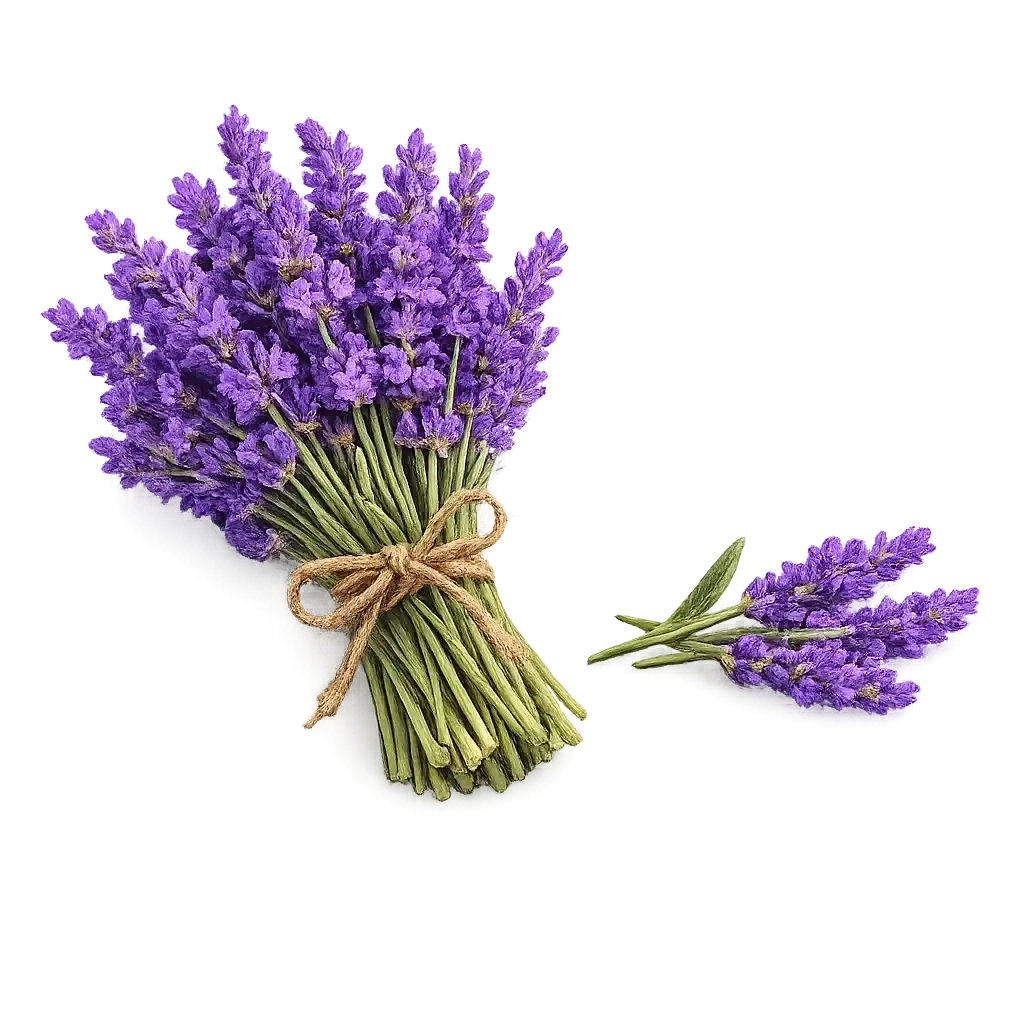
Written By Arthur Simitian
QUICK FACTS
Common Name
Lavender; English Lavender, True Lavender, French Lavender (see Varieties)
Scientific Name
Lavandula angustifolia (English lavender); L. x intermedia (lavandin); L. stoechas (French/Spanish lavender)
Plant Type
Hardy evergreen subshrub
Hardiness Zones
L. angustifolia: zones 5 to 8; L. x intermedia: zones 6 to 9; L. stoechas: zones 7 to 9
Sun Requirements
Full sun; minimum 6 hours, 8 hours preferred
Soil Type
Well-drained to very well-drained, lean, alkaline-tolerant; pH 6.5 to 8.0; absolutely intolerant of wet roots
Plant Height
12 to 36 inches depending on variety
Spacing
18 to 36 inches depending on variety
Harvest Part
Flower spikes (primary); leaves
Primary Active Compounds
Linalool (25 to 45%), linalyl acetate (25 to 45%), camphor (higher in lavandin), 1,8-cineole, ocimene; proportions vary significantly by species and variety
Uses
Culinary herb for baked goods, beverages, and savory preparations; nervine for anxiety and sleep; wound care antiseptic; antimicrobial; insect repellent; herbes de Provence; essential oil production; pollinator plant
Few plants carry as much accumulated meaning as lavender. Four thousand years of documented cultivation for fragrance, medicine, and cleaning have produced a herb so embedded in the Western consciousness that the word lavender now names a color, and a smell, and a feeling, before it names a plant. This accumulated meaning creates a particular problem for the gardener and homesteader who wants to grow lavender usefully rather than sentimentally: the commercial lavender industry, the beauty industry, the aromatherapy industry, and the cottage garden aesthetic have all wrapped the plant in associations that obscure what actually matters about growing and using it. What matters is this: lavender's value comes almost entirely from the linalool and linalyl acetate content of its essential oil, compounds that are genuinely anxiolytic and antimicrobial and culinary in well-documented ways, and that vary enormously between species, between varieties within species, and between plants grown in different soil and light conditions. Growing the right lavender correctly, harvesting at the right moment, and choosing the right preparation for each use produces results that justify the reputation. Growing the wrong lavender in the wrong conditions, or harvesting at the wrong time, produces an attractive garden plant with limited utility.
Introduction
The genus Lavandula contains approximately 47 species native to the Mediterranean region, the Canary Islands, Macaronesia, and into India and Somalia, with the core of the genus centered on the dry, rocky, alkaline hillsides of the western Mediterranean. The name derives from the Latin lavare, to wash, reflecting the herb's ancient use in bathing water and laundry in Rome and medieval Europe. The three species most relevant to homestead cultivation are Lavandula angustifolia, the true English or common lavender that provides the highest quality essential oil with the best linalool-to-camphor ratio; Lavandula x intermedia or lavandin, a fertile hybrid of L. angustifolia and L. latifolia that produces larger plants, more oil per plant, and higher camphor content; and Lavandula stoechas, the French or Spanish lavender with its distinctive tuft of sterile petals above the flower head, which is the least cold-hardy and least medicinal of the three.
The distinction between L. angustifolia and lavandin matters practically. English lavender produces an essential oil dominated by linalool and linalyl acetate with relatively low camphor content, producing the sweet, floral, gently medicinal fragrance associated with the highest quality lavender products. Lavandin produces more oil per plant but with significantly higher camphor, producing a sharper, more medicinal, more penetrating fragrance. Commercially, lavandin is the species grown for bulk essential oil production and for many lower-priced fragrance products labeled simply as lavender; English lavender commands a premium for the superior oil quality. For medicinal and culinary use, L. angustifolia or its selected high-linalool varieties are the appropriate choice. For essential oil production where volume matters more than subtle quality distinctions, lavandin's higher oil yield is relevant.
Lavender is an exceptional pollinator plant, particularly valuable to bumblebees, honeybees, and a range of solitary bees that are attracted to the flower spikes through the full bloom period. A mature lavender planting in full bloom represents one of the most productive pollinator resources available in the summer garden, and the homesteader keeping bees will find that lavender in the apiary vicinity is a meaningful contribution to summer nectar flow.
How to Grow
Sun Requirements
Lavender requires full sun with a minimum of six hours of direct daily exposure and performs best with eight or more. It is not a plant that tolerates compromise on this requirement: in partial shade it grows open and leggy, produces fewer flower spikes with reduced essential oil content, and becomes progressively more susceptible to the fungal diseases that poor air circulation and reduced light promote. The south-facing slope in full sun that produces the highest-quality Provencal lavender is the ideal to approximate in any garden planting.
Soil Requirements
Drainage is the single most important growing requirement for lavender, and it is non-negotiable. Lavender roots sitting in wet soil for any extended period, whether from heavy rainfall, high water tables, or poor drainage in clay soil, develop root rot that kills the plant, usually without recovery. This is the primary cause of lavender loss in temperate climates where summer rainfall is higher than the Mediterranean habitat from which the plant comes, and the solution is always drainage improvement before planting rather than management after the fact.
In heavy clay or compacted soils, raise the planting area by eight to twelve inches with a mixture of sharp grit and lean topsoil, or plant in raised beds or on slopes where water naturally drains away from the root zone. Incorporating sharp grit or coarse sand at a ratio of one part grit to two parts existing soil throughout the planting area improves drainage in moderately heavy soils. The soil does not need to be fertile; lavender in lean, poor soil develops more intensely aromatic essential oil than lavender in rich, amended soil. Adding compost to lavender beds is counterproductive.
Lavender tolerates alkaline soil well and performs adequately across the pH range of 6.5 to 8.0, the alkaline end of which suits it better than the acidic soils that stress many Mediterranean plants. In naturally acidic soils, a light application of ground limestone raises pH toward the preferred range without requiring significant amendment quantities.
Water Needs
Established lavender is among the most drought-tolerant plants in this series, consistent with its origin in the near-arid summer conditions of the western Mediterranean. Once established through its first season, lavender in well-drained soil requires supplemental irrigation only during extended summer drought in the first two years; after the third year, a healthy, well-established plant manages entirely on natural rainfall in most temperate climates. Overwatering is far more dangerous to lavender than underwatering, and the instinct to water a stressed or drought-wilted lavender should be tempered by checking the soil moisture before adding water.
Planting and Spacing
Lavender is most reliably established from rooted cuttings rather than seed, which produces variable plants with inconsistent essential oil profiles. Softwood cuttings taken in late spring or early summer, or semi-hardwood cuttings taken in late summer, root readily in free-draining grit-based cutting compost and provide plants with the known aromatic character of the parent. Named variety plants from a specialist herb nursery ensure that the specific aromatic and cold-hardiness qualities of the variety are present in the resulting planting.
Spacing for most L. angustifolia varieties is eighteen to twenty-four inches; for lavandin and larger varieties, twenty-four to thirty-six inches. Adequate spacing is not primarily about plant development space: it is about air circulation. Lavender planted too closely develops the humid stagnant air conditions that promote the Phytophthora root rot and Botrytis gray mold that are the primary disease threats to the planting.
Harvesting
Harvest Timing
The harvest timing for lavender is one of the most practically important pieces of information for anyone using the plant beyond ornamentation, and most lavender guides do not address it with enough precision. The essential oil content of lavender flower spikes peaks when approximately one-quarter to one-half of the flowers on the spike are open, before full bloom. At this stage the linalool and linalyl acetate content is at its seasonal maximum; fully open flowers have begun converting these compounds into their degradation products and the oil is already declining in quality. For the best dried lavender bundles, the most aromatic sachets, the highest quality culinary lavender, and any use where essential oil content matters, harvest at the early-to-mid bloom stage.
For cutting and drying, harvest in the morning after the dew has dried but before the midday heat begins volatilizing the surface oils. Cut the stems as long as possible, which means cutting into the green growth just above the woody base; leaving very short stems reduces the next season's flowering capacity. Bundle loosely and hang upside down in a warm, ventilated space away from direct light. Dried flower spikes are ready in two to three weeks and retain good aromatic quality for one to two years in sealed containers.
Culinary lavender: quantity and variety matter: Two points determine whether culinary lavender enhances a dish or ruins it. First, the variety: only L. angustifolia and its culinary-selected cultivars such as Hidcote, Munstead, and Vera provide the floral-sweet linalool-dominant flavor appropriate for food. Lavandin, with its higher camphor content, tastes medicinal and soapy in culinary applications; French lavender (L. stoechas) is too resinous. If the variety on the label is not specified, taste a dried flower before using in food: it should be floral and sweet, not sharp or soapy. Second, quantity: lavender is among the most potent culinary herbs by weight, and the difference between the amount that elevates a preparation and the amount that dominates it entirely is small. Start with one-quarter of the quantity that seems appropriate, taste, and adjust upward slowly. For a lavender shortbread, one teaspoon of dried buds per two cups of flour is a starting point, not a floor. For lavender lemonade, three or four fresh or dried spikes steeped in the simple syrup for ten minutes is enough. The goal is a floral fragrance that the taster notices as pleasant complexity rather than lavender as a flavor competing with everything else.
How to Use
Culinary Uses
Lavender in cooking belongs to a small category of herbs where less is unambiguously more, where the line between elegant and overpowering is crossed at quantities most novice cooks would consider conservative. Used with restraint, culinary lavender contributes a floral complexity to baked goods, desserts, and some savory preparations that is genuinely beautiful and impossible to replicate with any other herb. Used without restraint it produces the soapy, perfume-like result that gives lavender cookery its polarized reputation.
The strongest culinary tradition for lavender is in the Provence region of southern France, where it appears in herbes de Provence blends alongside thyme, rosemary, marjoram, and savory, and contributes a floral note to the lamb, chicken, and vegetable preparations of the regional cooking. The proportions in authentic herbes de Provence assign lavender a minor role relative to thyme and savory; it is a modifier and a subtlety in the blend, not a dominant presence. Recipes that invert this proportion and use lavender as the primary herb are a distinctly modern invention and not what the Provencal tradition supports.
Lavender pairs with honey in one of the herb garden's clearest natural flavor relationships: the floral complexity of the lavender and the floral sweetness of good honey reinforce each other in a combination that works in tea, in simple glazes for roasted poultry, in vinaigrettes, and in the lavender honey shortbread that is probably the single best entry point for cooks new to lavender. With chocolate, particularly dark chocolate, lavender works as a sophisticating note that adds dimension without announcing itself as floral when used correctly. With stone fruits including peach, apricot, and plum, lavender in the poaching liquid or in a tart filling provides a fragrant affinity that the fruits do not have with most other herbs.
Nervine and Sleep Uses
Lavender is among the most extensively clinically studied herbs for anxiety and sleep, with a body of research that makes it one of the few aromatherapy herbs with genuine evidence beyond traditional use. The primary mechanism is through inhalation of linalool and linalyl acetate, which interact with GABA receptors in the central nervous system through olfactory pathways, producing mild sedative and anxiolytic effects at concentrations achievable by normal aromatherapy use.
Silexan, an oral lavender essential oil preparation standardized for L. angustifolia oil, has been evaluated in multiple double-blind, placebo-controlled trials for generalized anxiety disorder and mixed anxiety-depression, with results showing significant reduction in Hamilton Anxiety Scale scores versus placebo and comparable efficacy to low-dose lorazepam in one direct comparison trial. The mechanism for oral linalool is through modulation of voltage-gated calcium channels and GABA-A receptor potentiation, a pathway distinct from benzodiazepines and without the dependency potential of that drug class.
For sleep applications, lavender aromatherapy through a pillow sachet, a diffuser, or a few drops of diluted essential oil applied to the temples or wrists before sleep has demonstrated measurable improvements in sleep quality, sleep duration, and morning refreshment scores in multiple small clinical trials, with consistent results across studies in healthy adults and in populations with mild sleep disturbance. This is one of the most evidence-supported aromatherapy applications in the herbal literature.
Lavender tea from dried flowers, while it contains some linalool in the infusion, delivers far lower concentrations of active compounds than either essential oil aromatherapy or oral preparations like Silexan. It provides mild relaxation support consistent with the traditional use and appropriate for daily evening use, without the potency of the concentrated preparations.
Wound Care and Antimicrobial Uses
Lavender essential oil has documented broad-spectrum antimicrobial activity against a range of bacteria and fungi in laboratory research, with linalool and linalyl acetate among the primary active compounds. The traditional use of lavender for wound cleaning and infection prevention, recorded from ancient Rome through World War One field hospitals where lavender oil was reportedly used as a surgical antiseptic when conventional antiseptics ran short, has plausible support in the demonstrated antimicrobial activity.
For minor wound care, diluted lavender essential oil (two to three drops in a teaspoon of carrier oil) applied topically provides mild antimicrobial action alongside the analgesic activity that linalool demonstrates in pain research, and the anti-inflammatory effect of the flavonoid compounds in the plant that reduce the inflammatory response at wound sites. This is an appropriate first-aid application for minor cuts, abrasions, and insect stings where the gentle antiseptic action supports healing without the harshness of alcohol-based antiseptics.
Lavender essential oil neat (undiluted) has traditionally been applied directly to minor burns for pain relief. Linalool's local analgesic activity and the cooling effect of the volatile oil provide genuine symptomatic relief. However, neat essential oil application to broken or damaged skin can cause sensitization in some individuals; dilution in a carrier oil is the more conservative approach for most applications.
Annual Pruning
Annual pruning is the management practice that determines whether lavender remains a productive, well-shaped plant for ten or more years or becomes a sprawling, unproductive woody mound within three to four years. The tendency of lavender to become progressively more woody at the base with each passing year, with the productive green growth moving further and further out toward the stem tips, is managed by cutting back into green growth once each season after flowering. The critical rule is never to cut back into the old, brown woody stems below the green growth zone: lavender does not regenerate from truly old wood, and cutting into it produces dead sections that do not recover.
The correct technique is to cut back by one-third to one-half of the current season's green growth immediately after the main flowering period in midsummer, or alternatively in early spring as the new growth buds begin to swell. Cutting to within an inch of the woody base while there is still green growth present is too aggressive; leaving three to four inches of green material above the wood is the correct cut depth. Regular annual pruning at this depth keeps the plant compact and productive for a decade or more; skipping pruning for two or three seasons produces a plant that cannot be recovered without replacement.
Storage
Dried lavender flower spikes store for one to two years in sealed glass containers or in tightly tied linen sachets. The aromatic quality from well-timed harvest and prompt drying is substantially better than commercial products, which are often lavandin rather than L. angustifolia and frequently old stock with degraded essential oil content. For culinary use, seal dried buds in small glass jars immediately after drying to preserve the linalool content that diminishes rapidly with air exposure.
Fresh lavender deteriorates quickly off the plant and is best used within two to three days of harvest, or dried immediately for longer preservation. Unlike lemon verbena, the fresh form is not significantly superior to well-dried material for most culinary and medicinal applications; dried lavender is a genuinely high-quality product rather than a compromise.
Lifespan and Replacement
Well-managed lavender with annual pruning and appropriate drainage lives for ten to fifteen years in suitable conditions before declining productivity warrants replacement. Plants that have been allowed to become excessively woody or that have suffered crown rot cannot be reliably recovered; taking cuttings from healthy peripheral growth before a declining plant dies entirely provides free replacement material that maintains the variety's specific aromatic character.
In warm-climate permanent plantings in zones 7 to 9, established lavender can develop into substantial, long-lived mounds that provide reliable annual harvests for fifteen years or more with consistent management. The oldest lavender plantings in the historical gardens of Provence contain individual plants of twenty years or more that continue flowering well, a demonstration of the longevity achievable with appropriate soil and consistent pruning.
Variety selection and cautions: Confirm that any lavender intended for culinary or medicinal use is L. angustifolia or a selected variety of it rather than lavandin or L. stoechas. The camphor content of lavandin makes it unsuitable for culinary use and reduces the quality of the linalool-dominant essential oil that drives the nervine and wound care applications. Essential oil applied neat to skin can cause sensitization in susceptible individuals; always dilute in a carrier oil for topical application. Lavender essential oil is not appropriate for internal use during pregnancy at therapeutic doses, though culinary use presents no concern. The herb is generally safe with no significant drug interactions at culinary and normal tea doses, but high-dose oral essential oil preparations like Silexan may interact with sedative medications through additive CNS depression. People with known allergy to Lamiaceae family plants should approach lavender cautiously, though cross-reactivity is uncommon. Lavender essential oil is toxic to cats through topical exposure or inhalation; keep essential oil preparations away from feline household members.
Pros and Cons
Advantages
Among the most extensively clinically researched herbs for anxiety and sleep, with multiple controlled trials supporting linalool's anxiolytic and sleep-improving activity beyond traditional use
Genuinely multi-use plant: ornamental, culinary, nervine, wound care, insect repellent, pollinator support, and essential oil production from a single planting
Hardy perennial that persists for a decade or more with appropriate pruning and drainage
Extreme drought tolerance once established; one of the lowest-water plants in the herb garden
Exceptional pollinator plant, particularly for bumblebees and honeybees through the full summer bloom period
Dried material retains aromatic quality for one to two years; one summer harvest provides material through the full winter season
Broad variety selection allows matching plant size, cold hardiness, and oil profile to specific regional and use requirements
Limitations
Absolute drainage requirement makes it unsuitable for heavy clay or wet soils without significant preparation or raised bed construction
Annual pruning discipline is non-negotiable for longevity; skipped seasons produce irreversibly woody plants that cannot be cut back without killing them
Culinary applications require significant restraint in quantity and correct variety selection; easy to overuse and produce soapy rather than floral results
Variety confusion in the commercial market means plants and products labeled as lavender may be lavandin, with a different and less suitable aromatic profile for medicinal and culinary use
Not the most cold-hardy herb in this series; most varieties marginal at zone 5 without winter protection
Essential oil toxic to cats; a relevant concern for cat-owning homesteads using topical preparations
Varieties
Within L. angustifolia, the most practically useful selections for homestead growing include Hidcote, a compact variety to eighteen inches with deep violet flowers and high linalool content suited to both ornamental and culinary use; Munstead, similarly compact with lavender-blue flowers and good cold hardiness to zone 5; Vera, a larger variety traditionally grown for essential oil production with good aromatic intensity; and Folgate, an early-blooming compact variety with good disease resistance and strong fragrance suited to wetter climates.
Among lavandins, Grosso is the primary commercial essential oil production variety, yielding two to three times more oil per plant than L. angustifolia with the higher camphor profile characteristic of the hybrid. It is appropriate for high-volume dried flower production and insect repellent applications where the camphor content is useful, but not for culinary or premium medicinal applications.
Phenomenal, a cold-hardy lavandin selection that survives to zone 5 with better reliability than most L. angustifolia, offers a reasonable compromise for gardeners in marginally cold climates where the lack of hardiness of true English lavender is a consistent problem, accepting the tradeoff of higher camphor in exchange for winter survival.
Final Thoughts
Lavender rewards precision more than most herbs in this series. Precise variety selection for the intended use, precise soil preparation for drainage, precise harvest timing for peak oil content, precise pruning timing and depth for longevity, and precise restraint in culinary application all determine whether the plant delivers on its genuine potential or simply provides another attractive garden ornamental that smells pleasant without contributing much.
Get the drainage right before planting. Choose L. angustifolia rather than lavandin for medicinal and culinary purposes. Prune every year without fail. Harvest at one-quarter to one-half bloom. Use less than you think you need in the kitchen. These are not complicated requirements, but they are specific ones, and meeting them consistently is the difference between growing lavender well and growing lavender.