
Lemon Balm
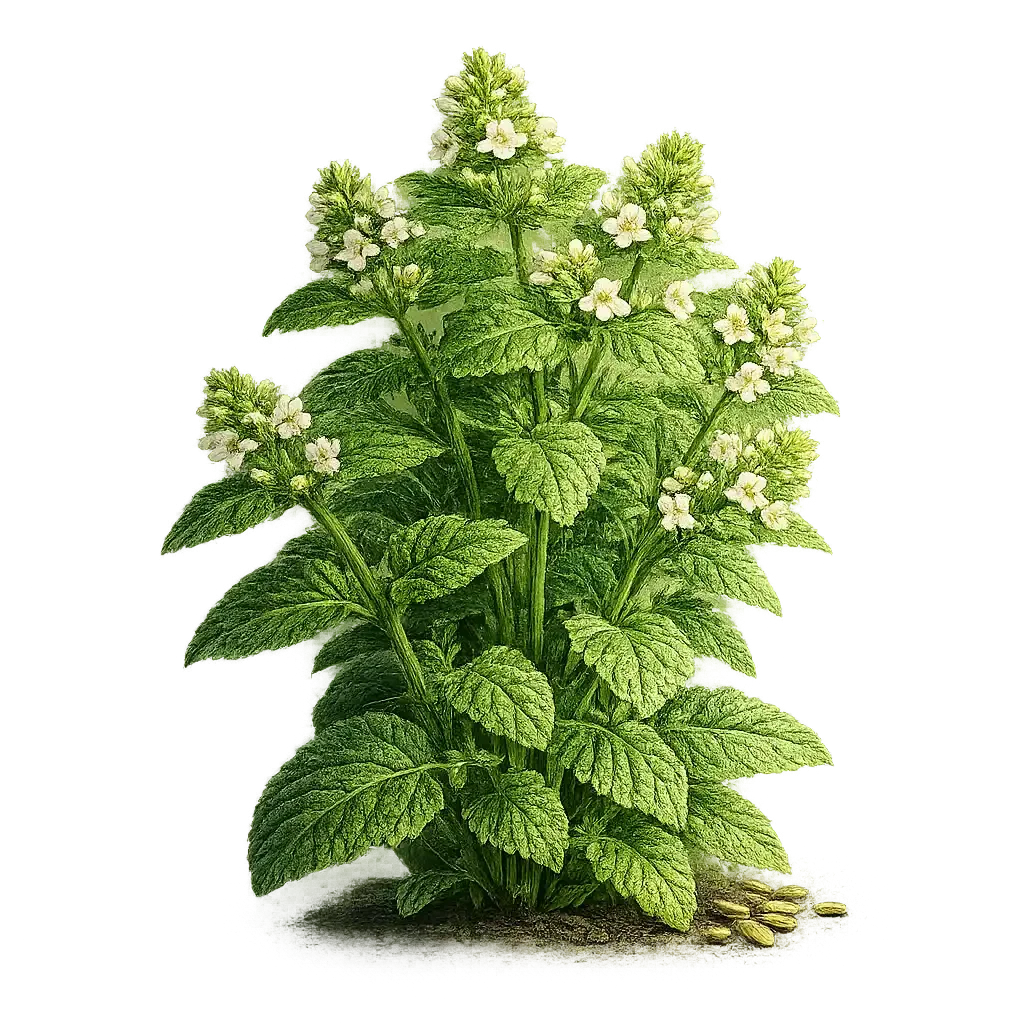
QUICK FACTS
Common Name
Lemon Balm, Melissa, Bee Balm (a name shared with Monarda species, which appear separately in this series and are unrelated), Sweet Balm, Garden Balm; the name melissa derives from the Greek word for honeybee, a direct reference to the plant's extraordinary attractiveness to bees that has been documented since antiquity; beekeepers have rubbed hives with fresh lemon balm to attract swarms since at least the time of Virgil, who described the practice in the Georgics, and the relationship between this plant and honeybees is one of the most ancient documented plant-insect partnerships in Western agriculture
Scientific Name
Melissa officinalis; Lamiaceae family (mint family); native to southern Europe, the Mediterranean region, and central Asia, extending through Iran and into the western Himalayan foothills; naturalized throughout temperate regions worldwide through centuries of cultivation; the species name officinalis, shared with many herbs in this series including sage, rosemary, and thyme, indicates historical recognition as an official medicinal herb of commerce; a member of the mint family and sharing the family's square stems, opposite leaves, two-lipped flowers, and the tendency toward vigorous, sometimes aggressive, spreading growth that characterizes many Lamiaceae members
Plant Type
Hardy herbaceous perennial; dies back to the ground in winter in all but the mildest climates and re-emerges reliably in spring from a persistent root crown; forms a clump that expands steadily each season by spreading rhizomes and prolific self-seeding; does not spread as invasively as true mints but can become a significant presence in a garden bed within two to three seasons if not managed; the clump-forming rather than runner-spreading habit makes it somewhat more manageable than spearmint or peppermint while still requiring periodic division and deadheading to prevent excessive spreading
Hardiness Zones
Zones 3 to 7 as a reliably hardy perennial; zones 8 to 11 as a perennial with reduced vigor in prolonged summer heat; lemon balm is one of the cold-hardiest herbs in this series, surviving zone 3 winters without protection when the root crown is established; it prefers cool to moderate temperatures and often goes dormant or declines in quality during the hottest weeks of summer in zone 7 and warmer, producing a flush of fresh growth in late summer and autumn when temperatures moderate; in very hot climates it is most productive as a cool-season annual or biennial
Height
Eighteen to thirty inches in full summer growth; the upright branching habit creates a bushy rounded mound when grown in good conditions; cutting the plant back hard in midsummer after the first flowering encourages a fresh flush of young, high-quality growth that is preferable for harvest over the older, tougher leaves of the established midsummer plant
Fragrance and Flavor
Bright, clean lemon fragrance with a slightly sweet herbal undertone; the scent is immediately perceptible when any leaf is brushed or bruised, released from the volatile oil glands on the leaf surface; the flavor in fresh leaves is lemony and pleasantly mild with none of the medicinal bitterness common in other Lamiaceae members; the fragrance and flavor come primarily from citral (geranial and neral), citronellal, and linalool in the essential oil fraction; the volatile oil content is highest in leaves harvested just before flowering and declines rapidly after harvest and drying, which is why fresh lemon balm has a noticeably stronger fragrance than commercially dried product
Primary Active Compounds
Rosmarinic acid (the primary pharmacologically active phenolic compound; inhibits the enzyme that breaks down gamma-aminobutyric acid (GABA) in the brain, increasing GABA availability and producing anxiolytic and sedative effects; also potently antiviral against herpes simplex virus; anti-inflammatory; antioxidant; shared with rosemary, sage, and several other Lamiaceae members but present at particularly high concentrations in lemon balm leaf); flavonoids including luteolin and apigenin (anti-inflammatory, antispasmodic, GABA-enhancing); volatile oil containing citral, citronellal, linalool, and beta-caryophyllene (contribute to fragrance and to antiviral and anxiolytic effects); caffeic acid derivatives; tannins (astringent, antiviral)
Varieties
Melissa officinalis species is the standard form; the variegated cultivar Aurea has gold-splashed leaves with high ornamental value and full medicinal potency; Quedlinburger Niederliegende is a German commercial variety selected for high rosmarinic acid content; All Gold is a full golden-leaved variety primarily ornamental; for medicinal use the standard species is the most reliable choice as the commercial varieties selected for ornamental leaf color may have lower essential oil content
Lemon balm is the herb most people have brushed against in a garden and registered as something pleasant before they knew its name. The lemon fragrance from the bruised leaf is one of the freshest, cleanest scents in the herb garden, and it belongs to a plant that has been grown continuously in European gardens for at least two thousand years as both a kitchen herb and a medicine for anxiety and sleeplessness. The rosmarinic acid chemistry that makes lemon balm a genuinely effective nervine and antiviral herb is now well-characterized, the randomized trial evidence for its anxiolytic and sleep-supporting effects is solid, and the cold sore application backed by topical rosmarinic acid research represents one of the most evidence-grounded antiviral herb uses in the Western tradition. It is also, in the kitchen, one of the most versatile fresh herbs available: in tea, in salad dressings, in desserts, infused into honey, tucked into a pitcher of cold water. The case for growing it needs very little argument. The more relevant question is where in the garden to plant it so that its vigorous nature is an asset rather than a management problem.
Introduction
Melissa officinalis appears in the works of Dioscorides, Pliny the Elder, and Paracelsus, and in the medieval monastery garden tradition as a plant grown primarily for two applications: as a calming tea for anxiety and insomnia, and as a topical application for wounds and skin complaints. The Arab physician Avicenna, writing in the eleventh century, described it as a herb that gladdened the heart and drove away melancholy. The Carmelite monks of Paris produced Carmelite Water, a distilled spirit of lemon balm with other aromatic herbs, which was sold throughout Europe from the seventeenth century onward as a tonic for nervous conditions and digestive complaints; it remained in production for over three hundred years and is still manufactured today.
The Lamiaceae family membership puts lemon balm in immediate company with mint, sage, thyme, rosemary, basil, oregano, lavender, catnip, and holy basil, all of which appear in this series. The family characteristics are immediately visible: the square stems that can be felt by rolling the stem between the fingers, the opposite leaf pairs, the small two-lipped flowers arranged in axillary whorls, the aromatic foliage. The tendency toward vigorous growth shared by many Lamiaceae members is present in lemon balm but in a more manageable form than the true running mints; lemon balm spreads primarily by clump expansion and self-seeding rather than by underground stolons, and a firm boundary, a mowing edge, or periodic division controls it reliably.
The distinction between lemon balm and the two Monarda species called Bee Balm that appear elsewhere in this series is worth establishing clearly: Melissa officinalis and Monarda species are unrelated plants from different genera in the same family, sharing only the common bee-attracting name and the Lamiaceae membership. They have different chemistry, different medicinal applications, and entirely different growing requirements.
How to Grow
Starting and Establishing
Lemon balm grows readily from seed, from division of established clumps, or from stem cuttings. Seed-starting indoors six to eight weeks before the last frost gives a head start; the seeds are small and need light for germination, so press them onto the surface of moist seed-starting mix without covering. Germination takes seven to fourteen days at 65 to 70 degrees Fahrenheit. Transplant outdoors after the last frost.
Division of established clumps in spring or autumn is the fastest way to multiply a planting; mature clumps can be dug and divided into multiple sections, each with roots attached, and replanted immediately. Stem cuttings of four to six inches taken from non-flowering shoots in summer root readily in moist potting mix within two to three weeks.
Plant in full sun to partial shade; lemon balm tolerates more shade than most culinary herbs and actually performs well with afternoon shade in zones 6 and warmer, which reduces heat stress and maintains better leaf quality through summer. Moderately fertile, well-drained soil; not fussy about soil quality or pH within a reasonable range; it grows in almost any garden soil that is not waterlogged. Space plants eighteen to twenty-four inches apart to allow the clump to develop.
Managing the Spread
The two pathways by which lemon balm spreads require different management strategies. Clump expansion by rhizome is controlled by division every two to three years, which simultaneously manages the plant's spread and rejuvenates the clump, which can become woody and less productive at the center if left undivided for many seasons. Self-seeding is managed by deadheading the flower spikes before the seeds mature; this is the more important management step because lemon balm produces prodigious quantities of seed that germinate freely, and a plant allowed to set seed for one season can produce dozens of seedlings the following year in a radius around the parent plant.
For growers who want to prevent any spreading, container cultivation is effective; lemon balm grows well in large containers of twelve inches or more in diameter and produces abundant harvestable foliage in a confined root space. The container also makes bringing the plant indoors feasible for a winter windowsill herb, though indoor growth is less vigorous than outdoor.
Cutting the entire plant back by half in midsummer, immediately after the first flowering, encourages a fresh flush of young growth that is both more flavorful and more medicinally potent than the older growth. This hard mid-season cut also prevents the plant from setting seed if the timing is right and reduces the self-seeding problem significantly. The second flush of growth through late summer and into autumn is often the most productive harvest period of the year.
Harvest and Drying
Harvest leaves in the morning after dew has dried, just before or during early flowering when the essential oil content is at its peak. The volatile oil that carries the lemon fragrance and most of the medicinal activity is at its highest concentration at this stage and declines after full flowering. For fresh use, harvest individual leaves or cut stems as needed throughout the growing season. For drying, cut entire stems at six to eight inches in length and bundle them loosely for hanging in a shaded, well-ventilated location, or strip leaves from stems and dry on screens.
Lemon balm is one of the most volatile-oil-sensitive herbs in this series to dry; the lemon fragrance that is so vivid in fresh leaves diminishes substantially during drying because the volatile monoterpenes that carry it are heat-sensitive and evaporate during the drying process. Dry at the lowest possible temperature, ideally below 95 degrees Fahrenheit, in a well-ventilated shaded space rather than in a dehydrator at elevated heat. Even carefully dried lemon balm loses much of its fresh fragrance; the dried herb is still medicinally valuable due to its rosmarinic acid and flavonoid content, which are less volatile, but it lacks the bright lemon character of the fresh herb. For culinary applications that depend on the lemon flavor, fresh leaves are always preferable to dried.
Medicinal Uses and Preparations
Anxiety and Stress
The anxiolytic activity of lemon balm is its most studied medicinal application and the one with the most robust human clinical evidence. Multiple randomized controlled trials have found that lemon balm extract, at doses of three hundred to six hundred milligrams of standardized extract, reduces self-reported anxiety, improves mood, and reduces physiological stress markers in healthy volunteers exposed to experimental stressors. The mechanism centers on rosmarinic acid's inhibition of GABA transaminase, the enzyme that degrades GABA in the brain; by slowing GABA breakdown, rosmarinic acid increases GABA availability at synapses, producing the same general anxiolytic effect as benzodiazepine drugs through a gentler, non-receptor-binding mechanism that does not carry the sedation, dependence, or cognitive impairment risks of pharmaceutical GABA-system drugs.
The effect at tea doses is milder than the standardized extract doses used in clinical trials but is perceptible and consistent; a strong cup of fresh or dried lemon balm tea taken in the evening produces a noticeable easing of mental tension and physical restlessness without sedation. The combination of lemon balm with valerian, which appears in this series, has been studied in several trials specifically for sleep quality, with the combination producing better results than either herb alone; the mechanistic complementarity of lemon balm's GABA-preserving rosmarinic acid activity and valerian's GABA-receptor-modulating valerenic acid supports this synergy logically.
Sleep Support
The traditional use of lemon balm as a sleep herb, documented across European herbal traditions from the medieval period through the nineteenth century, is supported by the same GABA mechanism and by direct sleep quality trials. Studies in menopausal women with disturbed sleep, in children with restlessness and sleep-onset difficulties, and in healthy adults with mild insomnia have all found improvements in sleep onset latency and sleep quality with lemon balm preparations. The effect is most pronounced when lemon balm is combined with valerian or passionflower, but the single-herb effect in mild sleep disturbance is clinically meaningful and appropriate for regular use as part of an evening wind-down routine.
Cold Sore Treatment
The antiviral application of lemon balm against herpes simplex virus, the causative agent of cold sores, is one of the most specific and well-evidenced antiviral herb applications in Western herbal medicine. Rosmarinic acid and the tannin fraction of lemon balm leaf inhibit herpes simplex virus attachment to host cell receptors, preventing viral entry and replication at concentrations achievable in topical preparations. Multiple clinical trials have found that topical lemon balm cream applied to cold sores at the onset of prodromal symptoms reduces the duration of the outbreak, reduces healing time, and reduces the frequency of recurrence with regular preventive use. Commission E approves lemon balm for topical use in herpes labialis specifically. A strong concentrated lemon balm tea or tincture applied topically to the site of a cold sore at the first tingle, before the blister forms, is the most effective application timing.
Digestive Applications
As a carminative and antispasmodic, lemon balm relieves the intestinal cramping and bloating associated with nervous digestive disturbance, the functional gastrointestinal pattern where anxiety and stress directly produce gut symptoms. The spasmolytic activity of the flavonoid fraction relaxes intestinal smooth muscle while the anxiolytic rosmarinic acid activity addresses the central nervous system component of the gut-brain axis disturbance. This dual action makes lemon balm particularly well-suited for the functional dyspepsia and irritable bowel patterns where emotional stress is a recognized trigger. Commission E approves lemon balm for nervous disturbances of sleep and functional gastrointestinal complaints.
Lemon balm tea: fresh and dried preparations
The simplest and most direct medicinal preparation is a strong infusion of fresh or dried lemon balm leaf. For medicinal effect rather than merely pleasant flavor, the infusion must be made strong: two to three tablespoons of fresh leaves or one to two teaspoons of dried herb per cup, steeped covered for ten to fifteen minutes. Covering the cup is important with lemon balm specifically because the volatile oils that contribute to both flavor and anxiolytic activity will escape with the steam from an uncovered cup.
Fresh leaf tea: bruise a generous handful of fresh leaves by rolling them between the palms to release the oils, place in a teapot or cup, pour just-off-the-boil water over them, cover, and steep for twelve minutes. Strain and drink warm. The flavor of a well-made fresh lemon balm infusion is bright, lemony, and slightly sweet; it is one of the most pleasant-tasting medicinal herb teas in this series and requires no sweetening for most palates. For an evening calming tea, combine with one teaspoon of dried valerian root or one teaspoon of dried passionflower leaf for a synergistic sleep-supporting blend.
Cold infusion for hot days: lemon balm makes an excellent cold infusion; pack a quart jar loosely with fresh leaves, fill with cold filtered water, cover, and refrigerate overnight; the resulting cold-infused water is refreshing and mildly anxiolytic, suitable for drinking through a warm day. This cold infusion preserves more of the volatile lemon fragrance than hot infusion and is the most pleasant culinary application of the herb beyond pure fresh leaf use.
Lemon balm honey: pack fresh lemon balm leaves into a jar, bruising them as you pack, cover completely with raw honey, seal, and infuse at room temperature for four to six weeks. The resulting honey carries the lemon balm flavor and a portion of the rosmarinic acid content. Use by the teaspoon stirred into hot water as a throat-soothing tea during respiratory illness, or as a spread that incorporates the herb's antiviral and calming properties into daily food. Keeps indefinitely.
Topical cold sore application: brew a very strong infusion of two tablespoons of dried lemon balm in one quarter cup of just-boiled water, cover and steep for twenty minutes, allow to cool to room temperature. Apply to the cold sore site with a cotton pad or clean finger at the first sign of the prodromal tingle; repeat four to six times daily. The tannin and rosmarinic acid concentration in this strong preparation is substantially higher than in a drinking-strength tea and is appropriate for the topical antiviral application.
Cautions: Lemon balm at normal culinary and tea-dose quantities has an excellent safety record and a favorable adverse-effect profile in clinical trials. The following points require specific attention. Thyroid interaction: lemon balm constituents, particularly rosmarinic acid and certain flavonoids, have been shown to inhibit TSH (thyroid-stimulating hormone) binding to thyroid receptors and to reduce the conversion of T4 to T3 in laboratory studies; this suggests a potential thyroid-suppressing effect that is relevant for people with hypothyroidism or those taking thyroid medication; the clinical significance of this effect at tea-dose quantities is debated and the evidence is primarily laboratory-based rather than from human trials, but people with hypothyroidism or Hashimoto's thyroiditis should discuss regular lemon balm consumption with their medical provider and monitor thyroid function if using it regularly; this same thyroid interaction was noted for ashwagandha but in the opposite direction, making lemon balm a potential concern for hypothyroid people where ashwagandha was a potential concern for hyperthyroid ones. Sedative medications: the GABA-modulating activity creates a potential additive interaction with benzodiazepines, barbiturates, prescription sleep medications, and other sedative drugs; people taking these medications should discuss lemon balm use with their prescriber before starting regular consumption. Glaucoma: there is a theoretical concern that lemon balm's effect on intraocular pressure may be relevant for people with glaucoma; the evidence is weak but the concern has been raised in some reviews; people with glaucoma should discuss regular use with their ophthalmologist. Pregnancy: lemon balm has a long history of use as a culinary and tea herb during pregnancy without documented harm at food quantities; concentrated extracts and medicinal-dose supplements are a different matter and are best avoided during pregnancy without medical supervision given the thyroid interaction potential. Allergy: Lamiaceae family allergy is less common than Asteraceae allergy but exists; people with documented sensitivity to other mint family herbs including sage, thyme, or oregano should test lemon balm cautiously.
Lemon Balm in the Kitchen
Beyond its medicinal applications, lemon balm is one of the most versatile fresh culinary herbs for a homestead kitchen. The bright lemon flavor without citrus acidity makes it a natural addition to dishes where lemon juice would be too sharp: in fresh green salads, in vinaigrette dressings, in grain salads with cucumber and feta, in herb butter, in fresh cream cheese, alongside fish and seafood, and in desserts where a clean citrus note is wanted without the acidity of citrus fruit. Chopped fresh lemon balm stirred into a bowl of fresh strawberries with a small amount of honey is one of the simplest and most effective flavor combinations in the summer kitchen.
For cold drinks, a few sprigs of fresh lemon balm in a pitcher of cold water or iced tea transform an ordinary drink into something genuinely refreshing. The herb's affinity for honey, both in flavor and in the traditional practice of infusing them together, makes lemon balm honey a practical homestead pantry item that captures the summer harvest in a shelf-stable form used through winter. The herb also dries acceptably for winter tea use, and fresh leaves can be frozen in ice cube trays with water for use in cold drinks through the off-season.
Pros and Cons
Advantages
The anxiolytic and sleep-supporting clinical evidence is among the most solid for any nervine herb in this series; multiple randomized controlled trials have confirmed effects on anxiety measures, mood, and sleep quality; the GABA-transaminase inhibition mechanism of rosmarinic acid is well-characterized and provides a clear pharmacological explanation for the observed effects; Commission E approval for both nervous sleep disturbance and functional gastrointestinal complaints reflects this evidence base
The cold sore antiviral application is one of the most specific and well-supported antiviral herb uses in Western herbal medicine; multiple clinical trials confirm reduced outbreak duration and healing time with topical lemon balm preparations; Commission E approval for herpes labialis reflects the strength of this evidence; the mechanism of rosmarinic acid-mediated inhibition of viral attachment is clearly characterized
Cold hardiness through zone 3 makes lemon balm one of the most widely growable perennial medicinal herbs in North America; most homesteaders in all but the very mildest and very coldest climates can maintain a productive perennial lemon balm planting without any special accommodation or winter protection
The culinary versatility of fresh lemon balm is exceptional among medicinal herbs in this series; few herbs that are primarily medicinal also function as broadly useful kitchen ingredients across savory dishes, desserts, drinks, and preserves; the fresh herb's flavor is genuinely pleasant and accessible, making it easy to incorporate into daily cooking in ways that deliver medicinal doses incidentally through regular culinary use
The plant's extraordinary attractiveness to bees makes it a meaningful contribution to pollinator habitat in the homestead garden; a well-established lemon balm clump in flower is among the most consistently bee-visited plants in any temperate herb garden, and its value to honeybee foragers and native pollinators alike justifies its garden space on ecological grounds independent of medicinal or culinary considerations
Limitations
The thyroid interaction, while primarily laboratory-evidence-based rather than confirmed in human clinical trials at tea doses, represents a meaningful consideration for a significant subset of the population most likely to be drawn to a calming, sleep-supporting herb; hypothyroidism and Hashimoto's thyroiditis are common conditions, and the same people most likely to seek a natural anxiety and sleep remedy are disproportionately likely to have thyroid conditions that require careful attention to this interaction
The rapid loss of volatile oil on drying significantly reduces the culinary and partially reduces the medicinal value of the dried herb compared to fresh; commercially dried lemon balm is notably inferior in flavor to fresh, and the bright lemon quality that makes the herb so appealing in the kitchen is largely absent from dried product; growers who depend on dried herbs through the winter lose the herb's most distinctive quality in the drying process
The self-seeding tendency, while not as aggressive as true mints, requires consistent deadheading management to prevent the herb from naturalizing across more of the garden than intended; a single season of neglected seed-set can produce dozens of seedlings in a radius around the parent plant that require removal the following spring; this is a manageable task but not a negligible one in a tightly managed kitchen garden
The medicinal dose gap between pleasant culinary and tea use and the standardized extract doses used in clinical trials is larger for lemon balm than for many other herbs in this series; the three hundred to six hundred milligram extract doses in anxiety trials represent a substantially higher rosmarinic acid delivery than a typical cup of tea, meaning that the effect observable in trials may be stronger than what most people experience from casual tea use; the herb is still effective at tea doses, but expectation management matters
Lemon balm declines in quality in prolonged summer heat, going somewhat dormant or producing smaller, less flavorful leaves in zones 7 and warmer during the hottest weeks; the hard midsummer cutback helps but does not fully resolve this seasonal decline; growers in the hottest climates may find lemon balm most useful as a cool-season herb rather than a reliable midsummer one
Final Thoughts
Lemon balm asks for a garden position that can accommodate a gradually expanding clump, the discipline of deadheading before seed set, and a willingness to divide it every few seasons to keep it vigorous. In return it provides a fresh lemon fragrance on any morning the leaves are brushed, a calming evening tea backed by real clinical evidence, a topical cold sore remedy that Commission E has approved, and a kitchen herb with more culinary versatility than almost anything else in the medicinal garden.
Plant it where you will walk past it. Brush the leaves on the way by. Steep a cup in the evening when the day has been difficult. The two thousand years of European gardens growing this plant for exactly that purpose were not wrong about what it does.