
Lemongrass
Written By Arthur Simitian
QUICK FACTS
Common Name
Lemongrass, West Indian Lemongrass, Fever Grass
Scientific Name
Cymbopogon citratus (West Indian); C. flexuosus (East Indian / Cochin lemongrass)
Plant Type
Tender perennial grass; grown as annual or overwintered indoors in zones below 9
Hardiness Zones
Perennial in zones 9 to 11; grown as annual or container plant elsewhere
Sun Requirements
Full sun
Soil Type
Well-drained, moderately fertile; tolerates a range; pH 5.5 to 7.0
Plant Height
3 to 5 feet
Spacing
24 to 36 inches; spreads into a large clump over one to two seasons
Harvest Parts
Stalks (primary culinary harvest, inner pale portion); leaves (tea, flavoring); divided clumps (propagation)
Primary Aroma Compounds
Citral (a mixture of geranial and neral), 65 to 85 percent of the essential oil; also myrcene, linalool
Uses
Essential culinary herb across Southeast Asian cooking; aromatic tea; digestive carminative; antimicrobial; insect repellent; mild anxiolytic; essential oil production
Lemongrass is to Southeast Asian cooking what thyme is to French: not a flavoring added to food, but a structural element that defines what a category of food is. Tom kha, tom yum, laksa, rendang, amok, and dozens of other dishes across Thailand, Vietnam, Cambodia, Indonesia, and Malaysia are built around the combination of lemongrass, galangal, and kaffir lime leaf. Remove lemongrass from any of them and you have a different dish. The flavor is irreplaceable: intensely citral, simultaneously lemon and floral and slightly resinous, without any of the bitterness that lemon zest brings or the acidity that lemon juice introduces. It is pure aromatic lemon, concentrated in the pale inner stalks of a grass that grows four feet tall, spreads generously in warm climates, and overwintered on a bright windowsill in cold ones. Growing it is straightforward. Using it correctly, particularly understanding the distinction between the stalk prepared as a vegetable and the outer leaves used only for flavoring broth, is the part that most instructions skip.
Introduction
Cymbopogon citratus is native to tropical South and Southeast Asia, belonging to the Poaceae grass family and the Cymbopogon genus that also includes citronella grass, palmarosa, and several other economically important aromatic grasses. It is a clump-forming perennial grass that does not set viable seed in cultivation outside its native tropical climate, making vegetative propagation through clump division the universal method of establishment. In tropical and subtropical climates it grows as a permanent large clump that expands steadily from the center outward, providing a continuous harvest of mature stalks from the outer edges of the clump while new stalks develop at the center.
The aromatic character of lemongrass is produced almost entirely by citral, a terpene aldehyde present at 65 to 85 percent of the essential oil content, that is itself a mixture of two geometric isomers: geranial and neral. Citral is the compound responsible for the characteristic lemon scent in lemon myrtle, lemon verbena, lemon balm, and several other culinary and aromatic plants, but the concentration in lemongrass essential oil is higher than in any of these alternatives, which is why lemongrass provides a more intense and more purely citrus-aromatic note than any of its culinary substitutes. The compound is highly volatile at cooking temperatures, which is why the techniques for using lemongrass in Southeast Asian cooking involve physical bruising of the stalk to release the essential oil rather than relying on heat extraction alone.
Beyond the culinary applications that have given lemongrass its global recognition, the essential oil and its citral content have been studied for antimicrobial activity against a range of bacteria and fungi, for mild anxiolytic and sedative effects in animal and some human research, and for the insect-repellent properties that make lemongrass oil a common component of natural mosquito and insect deterrent preparations. The traditional use of lemongrass as a fever herb across tropical Asia, earning it the common name fever grass in some regions, reflects a documented antipyretic activity alongside the antimicrobial properties that would be relevant in managing febrile illnesses.
How to Grow
Sun Requirements
Lemongrass is a full-sun tropical grass that requires the maximum available light to produce the stalk size and essential oil concentration that make it culinarily and medicinally valuable. In partial shade it grows tall and thin with small-diameter stalks and reduced citral content. In containers moved indoors for winter in cold climates, placing the plant in the sunniest available south-facing window and supplementing with grow lighting if available through the low-light winter months maintains the plant through dormancy more successfully than inadequate light.
Soil Requirements
Lemongrass is less particular about soil than most herbs in this series and tolerates a wide range of soil types provided drainage is adequate. It grows well in moderately fertile, well-drained soil across a pH range from mildly acid to near neutral. Rich, heavily fertilized soil encourages abundant leafy growth but can reduce the essential oil concentration in the stalks; moderately fertile conditions balanced between the lean extremes that suit Mediterranean herbs and the rich moist conditions that suit lovage produce the best combination of stalk size and aromatic intensity.
In containers, a quality potting mix amended with perlite for additional drainage supports healthy growth. Lemongrass is a vigorous, fast-growing plant and fills a container quickly; repotting into progressively larger containers or dividing the clump each spring maintains productive growth in container culture.
Water Needs
Lemongrass requires consistent moisture during active growth and is not particularly drought-tolerant compared to the Mediterranean herbs in this series, reflecting its tropical origin in high-rainfall environments. Regular watering that keeps the soil evenly moist but not waterlogged through the growing season supports the rapid vegetative growth and stalk development that provide an abundant harvest. In container culture, consistent watering is especially important as containers dry out faster than garden beds and lemongrass responds to drought stress with yellowing and browning leaf tips before any other symptom appears.
During winter dormancy in cold climates, whether the plant is kept indoors or in a cool frost-free space, watering should be significantly reduced to prevent root rot during the period of minimal growth. The plant can tolerate quite dry conditions in winter as long as the roots do not completely desiccate; monthly watering is adequate for a dormant indoor plant in a cool bright location.
Planting
Lemongrass does not produce viable seed in temperate climates and is established exclusively from divisions or from fresh stalks purchased from a grocery store or herb nursery. The grocery store establishment method is one of the most reliably successful plant propagations available: purchase a bunch of fresh lemongrass with the roots still attached, trim the upper leaves to about six inches, and place the stalks in a glass of water on a bright windowsill. Within two to three weeks, new roots and small green shoots emerge from the base of each stalk. Once the roots reach two to three inches, pot the rooted stalks into a small container of well-drained potting mix and grow on before transplanting outdoors after all frost risk has passed and the soil is thoroughly warm.
For gardeners in cold climates, starting the water-rooting process in late winter, six to eight weeks before the last frost date, provides well-established plants ready for outdoor transplanting at the appropriate time. The warm soil requirement is significant: lemongrass transplanted into cold soil sulks and may die back entirely before recovering, while the same plant transplanted into genuinely warm soil establishes quickly and begins growing vigorously within days.
In zones 9 to 11 where lemongrass grows as a permanent perennial, established clumps can be divided in spring by cutting through the clump with a sharp spade and replanting divisions directly in their permanent positions. This is also the method for managing the expansion of an established clump that has grown beyond its intended space.
Harvesting
Harvesting Stalks
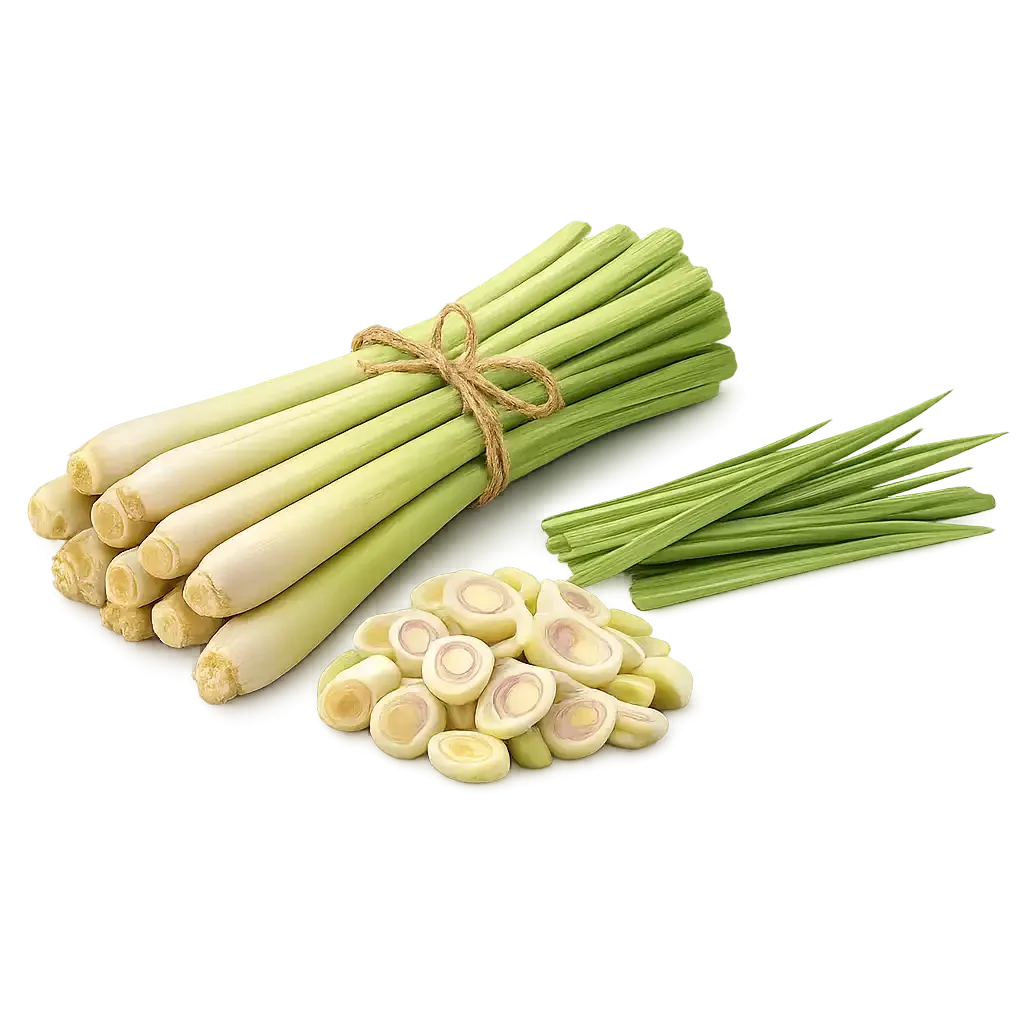
Lemongrass stalks are ready to harvest when they reach roughly half an inch in diameter at the base, typically from midsummer onward in the first year and earlier in subsequent years from established clumps. Harvest the outermost stalks of the clump by cutting or twisting them free at the base, as close to the ground as possible, to recover the maximum length of the pale, aromatic inner stalk. The outer leaves are tough and fibrous and primarily useful for flavoring broth; the inner pale layers from roughly the bottom third of the stalk are the edible and most intensely aromatic portion used as a cooked vegetable.
To prepare a harvested stalk: remove and discard the tough outer leaf sheaths until the pale, almost cream-colored inner core is reached. Trim the dry tip and the root base. The remaining pale inner stalk can be sliced into thin rounds for curry pastes, pounded into a paste with other aromatics, or bruised with the flat of a knife and left whole for adding to broths and soups where it will be removed before serving. The bruising step is important: lemongrass releases its citral oil most effectively when the cell structure is physically ruptured, and an unbruised stalk added to a liquid contributes less than a stalk that has been pressed firmly with the back of a knife before going into the pot.
Harvesting Leaves
The long upper leaves, while too fibrous and sharp-edged to eat directly, are excellent for tea and for flavoring infusions, stocks, and poaching liquids. Harvest a handful of leaves by cutting them near the base with scissors or shears. For tea, cut the leaves into short sections and steep in boiling water covered for eight to ten minutes; the citral-rich flavor extracts readily from the leaf and produces a genuinely aromatic and soothing tea. The leaves can also be dried in bundles for use through the winter months when the outdoor plant is dormant.
Regular leaf harvesting through the season, taking the oldest outer leaves while leaving the central growth, maintains the plant in productive condition and prevents the buildup of dead leaf material at the clump base that can create conditions for fungal disease in humid climates.
Lemongrass paste for Southeast Asian cooking: The foundation of most Thai and Vietnamese curry pastes begins with lemongrass prepared correctly. Take two to three fresh stalks, remove all outer sheaths until the pale inner core is exposed, trim both ends, and slice into thin rounds. Add the rounds to a mortar with a pinch of salt and pound to a fibrous paste before adding the remaining paste ingredients in sequence: galangal or ginger, shallots, garlic, chilies, and whatever additional aromatics the recipe requires. The salt helps break down the fibrous lemongrass tissue and the pounding releases the citral oil completely in a way that a food processor does not replicate. The resulting paste, whether used immediately or frozen in tablespoon portions in an ice cube tray, provides the authentic aromatic foundation that makes the difference between a Thai curry that tastes like the dish and one that merely approximates it. Frozen lemongrass paste keeps for three months with minimal aromatic loss and represents one of the most useful prepared ingredients a Southeast Asian cooking household can keep on hand.
How to Use
Culinary Uses
Lemongrass appears in two distinct culinary roles that require different preparation techniques. In the first role, it is used as an aromatic flavoring for broths, soups, and braising liquids where the whole or halved bruised stalk infuses the liquid with citral and is removed before serving. Tom yum soup, the classic Thai hot and sour broth, uses lemongrass in this infusion role alongside galangal and kaffir lime leaves; the stalk is never meant to be eaten and is left in large sections or tied in a knot that makes removal easy. Pho and other long-simmered Vietnamese broths often include lemongrass in this infusion role, as does the coconut milk base of laksa.
In the second role, lemongrass is a textural ingredient pounded into a curry paste or finely minced into a filling, where it is consumed as part of the dish rather than removed. This role requires the inner stalk preparation described above and a thorough pounding or very fine mincing that breaks down the fibrous cell structure enough to make it palatable in the final dish. Satay marinades, rendang, and the stuffed lemongrass preparations of Vietnamese cooking (where minced pork seasoned with lemongrass is wrapped around the stalk before grilling) all use lemongrass in this integrated role.
Beyond Southeast Asian cooking, lemongrass works in any context where a clean lemon-aromatic note is wanted without acid or bitterness. It infuses beautifully into simple syrup for cocktails and desserts: simmer two bruised stalks in equal parts sugar and water for five minutes, steep off heat for twenty minutes, strain. The resulting syrup has a clean citral flavor unlike anything achievable with lemon juice or zest and keeps refrigerated for two weeks. It pairs particularly well with coconut, ginger, mango, and fish.
Tea
Lemongrass tea, made from fresh or dried leaves steeped in boiling water, is one of the most pleasant and most widely drunk herbal teas in tropical Asia, consumed both for its flavor and for its traditional digestive and calming properties. The fresh leaf tea is bright, clean, and intensely lemony without any of the slight bitterness that dried lemon verbena or lemon balm can develop. Adding a small slice of fresh ginger and a strip of kaffir lime leaf to the steep produces a Thai-influenced tea preparation that represents lemongrass at its aromatic best.
For cold-brew lemongrass tea, slice two to three fresh stalks and the attached leaves into sections and combine with four cups of cold water in a sealed jar. Refrigerate overnight. The resulting infusion is delicate, aromatic, and excellent served over ice with a little honey and lime juice as a summer drink.
Digestive Uses
Lemongrass has traditional use across tropical Asia as a digestive herb, used for bloating, gas, cramping, and the general discomfort of difficult digestion. The carminative activity of the citral and myrcene compounds reduces intestinal gas through mild antispasmodic activity on gastrointestinal smooth muscle, and the antimicrobial properties of the essential oil may contribute to digestive comfort through suppression of gas-producing intestinal bacteria in the upper digestive tract.
A cup of fresh lemongrass tea after meals is a traditional and mechanistically plausible digestive support that is gentle enough for daily use without any of the drug-interaction concerns that apply to more potent digestive herbs in this series. The combination of pleasant flavor, genuine carminative activity, and low risk profile makes it one of the most accessible daily digestive herbs in the series.
Antimicrobial and Fever Uses
Citral, the primary essential oil compound, has demonstrated broad antimicrobial activity against a range of bacteria and fungi in laboratory research, with documented inhibitory activity against Staphylococcus aureus, E. coli, Candida species, and several other common pathogens. The minimum inhibitory concentrations required for this activity are generally achievable in essential oil preparations rather than tea concentrations, which limits the direct clinical applicability of this research to topical applications and to the use of concentrated essential oil rather than the herb itself.
The traditional use of lemongrass as a fever herb is supported by documented antipyretic activity in animal research, with citral's effect on prostaglandin synthesis pathways providing a plausible mechanism. Lemongrass tea consumed during febrile illness represents a traditional practice with mechanistic support and the practical advantage of maintaining fluid intake while providing mild antipyretic and possibly antimicrobial support simultaneously.
Insect Repellent Uses
Lemongrass essential oil is a well-documented insect repellent, with citral providing deterrent activity against mosquitoes, flies, and other insects at concentrations achievable by crushing fresh leaves and applying them to skin or by using the essential oil diluted in a carrier oil. The activity is shorter-lasting than synthetic repellents and requires reapplication every one to two hours for reliable protection, but represents a genuinely effective natural option for casual outdoor use.
Bunches of fresh lemongrass leaves placed in poultry housing deter flies through the same volatile oil mechanism, and the plant grown near outdoor seating areas provides a passive ambient deterrent effect when leaves are occasionally brushed or bruised. This is the same application that makes citronella candles popular, though the citral in lemongrass is distinct from the citronellal in true citronella grass (Cymbopogon nardus), and lemongrass provides a more pleasant aromatic profile for use in living spaces.
Overwintering in Cold Climates
Lemongrass is killed by hard frost and cannot overwinter outdoors in zones below 9. In colder climates, the plant must either be brought indoors before the first frost or treated as an annual and replanted from grocery store stalks each spring. Both approaches are practical; the overwintering method preserves a known plant and allows earlier establishment of a larger clump in the following season.
To overwinter: before the first frost, cut the foliage back to six to eight inches, dig the clump (or lift the container), divide it if it has become very large, and pot into a manageable container in fresh, well-drained potting mix. Move to the brightest available indoor position, ideally a south-facing window with supplemental light if available. Water sparingly through the winter, allowing the soil to dry somewhat between waterings. The plant may yellow and lose some leaves through the winter period; this is normal. As days lengthen in late winter, growth resumes and the plant can be moved back outdoors after the last frost when soil is warm.
For growers who prefer the annual approach, the grocery store rooting method described under Planting provides a fully functional lemongrass plant within six to eight weeks of initiating the water rooting process, making early spring startup straightforward and eliminating the need for indoor winter space.
Storage
Fresh lemongrass stalks keep for two to three weeks refrigerated, wrapped loosely in a slightly damp paper towel in a sealed container or bag. The aromatic intensity is best within the first week of harvest; older stalks become progressively less aromatic and tougher in texture.
Freezing is the best long-term preservation method. Prepared stalks with outer leaves removed can be frozen whole or sliced into rounds and stored in sealed bags for up to six months with good aromatic retention. Frozen lemongrass can be used directly from frozen in cooked preparations without thawing. For paste applications, pounding from frozen is more difficult; brief thawing at room temperature for thirty minutes makes the texture workable.
Dried lemongrass leaves for tea retain good aromatic quality for one year in airtight glass containers. The dried stalk rounds retain less aromatic intensity than frozen preparations and are better suited to tea or long-infused preparations than to fresh paste applications where full citral intensity is required.
Lifespan of the Plant
In tropical and subtropical climates where lemongrass grows as a permanent perennial, established clumps expand steadily and can persist in the same position for many years, providing increasingly large harvests as the clump grows. Division every two to three years prevents the clump from becoming overcrowded at the center, which reduces productive stalk development, and provides division material for expanding the planting or sharing with other growers.
In cold climates, overwintered plants that are brought back outside each spring develop into progressively larger and more productive clumps with each passing season, with third and fourth year overwintered plants producing substantially more stalks per season than first-year plants. The annual approach using grocery store cuttings produces a functional but relatively small single-season plant; the overwintering investment pays back in meaningfully larger harvest from the second season onward.
Handling and cautions: Lemongrass leaf blades have sharply serrated edges that can cut skin with minimal contact; gloves are advisable when harvesting leaves in quantity or trimming clumps. The essential oil in its concentrated form is a potential skin sensitizer and should not be applied undiluted; always dilute in a carrier oil for any topical application. Lemongrass has mild emmenagogue activity in concentrated preparations; avoid medicinal-dose concentrated preparations during pregnancy, though culinary use and normal tea consumption present no concern. People with grass allergies may occasionally experience cross-reactive sensitivity, though this is uncommon with lemongrass specifically. No significant drug interactions have been identified at culinary and tea use levels.
Pros and Cons
Advantages
Provides an irreplaceable flavor compound (citral) that no other commonly grown herb duplicates at the same concentration; essential for authentic Southeast Asian cooking
Extremely easy to establish from grocery store stalks in water, requiring no special equipment or sourcing
Highly productive once established; a single overwintered clump provides more stalks and leaves than most households can use through a growing season
Pleasant aromatic tea from the leaves that is mild, daily-use appropriate, and genuinely enjoyable as a beverage
Documented antimicrobial, carminative, and insect-repellent activity alongside the culinary uses
Striking ornamental appearance; the tall arching clump provides strong structural character in the garden or on a patio
No significant drug interactions or toxicity concerns at culinary and tea use levels
Limitations
Tender tropical plant killed by hard frost; requires annual replanting or indoor overwintering in zones below 9
Full sun requirement is non-negotiable for productive stalk development and aromatic intensity
Requires consistent moisture; less forgiving of drought than Mediterranean herbs in this series
Large plant requiring significant space; not suitable for small herb beds or windowsill container growing
Sharp leaf edges require care during harvest and management
Outer stalk fibrous and inedible; requires correct preparation technique to access the usable inner stalk
Common Problems
Rust fungus appears as orange-brown streaks or pustules on lemongrass leaves in warm, humid conditions with poor air circulation. Remove affected leaves promptly and improve spacing and air movement around the clump. The condition rarely threatens the plant's survival and does not affect the stalk harvest, but heavy infections reduce the leaf quality available for tea use.
Yellowing leaf tips are the first stress indicator in lemongrass and typically indicate either drought stress from insufficient watering, nutrient deficiency in depleted container soil, or cold stress from temperatures below 50 degrees Fahrenheit. Identifying which condition applies by checking soil moisture, the time since last repotting or fertilizing, and the recent temperature history usually makes the cause clear. Prompt correction prevents the yellowing from progressing to broader leaf dieback.
Overcrowded clump centers that stop producing new stalks are managed by division. Lift the entire clump in spring, cut through it with a sharp spade or pruning saw, and replant only the vigorous outer sections that contain the most productive growth. Discard the woody, unproductive center or compost it. Replanted divisions re-establish quickly in warm soil with consistent moisture.
In container culture, the fast growth of lemongrass means it becomes root-bound quickly, restricting water uptake and nutrient access and leading to the yellowing and stalled growth that indicates the plant needs repotting. Repotting into the next container size up with fresh potting mix each spring, or root-pruning the outer root mass and returning to the same container with fresh mix, resolves the problem and restores vigorous growth.
Varieties
Cymbopogon citratus, West Indian lemongrass, is the culinary standard used across Southeast Asian cooking and the species most commonly available in grocery stores and herb nurseries. It is the appropriate choice for culinary use, producing the thick, well-developed stalks that are the primary harvest target.
Cymbopogon flexuosus, East Indian lemongrass or Cochin lemongrass, is the species grown primarily for essential oil production rather than culinary use. It produces finer stalks with higher citral concentration in the essential oil but is less suited to the stalk vegetable applications of C. citratus. Growers interested in lemongrass essential oil production should note that C. flexuosus is the industry standard for this application.
Cymbopogon nardus and C. winterianus are the citronella grasses, distinct from lemongrass and not appropriate as culinary substitutes. Their essential oil is dominated by citronellal rather than citral, producing the characteristic citronella candle odor rather than the lemon-citral character of culinary lemongrass.
Final Thoughts
Lemongrass is the most straightforward argument in this series for growing a herb that most temperate-climate gardeners have not tried: it is easy to start from ingredients already in the kitchen, it provides a flavor that cannot be sourced from any other garden plant, and it delivers that flavor in a quantity from a single overwintered clump that makes the effort of bringing it inside each winter a reasonable trade. The Southeast Asian cooking traditions that built entire cuisine categories around it had access to something that the temperate homestead garden can now also have, starting from a grocery store bunch placed in a glass of water on the windowsill.
Give it the hottest, sunniest position available. Water it consistently. Learn the preparation technique that distinguishes the usable inner stalk from the fibrous outer sheaths. Freeze the surplus in sliced rounds or pounded paste. Bring it inside before the first frost and put it back outside when the soil is genuinely warm. Everything else the plant requires, it largely manages itself.