
Licorice Root
Written By Arthur Simitian
QUICK FACTS
Common Name
Licorice Root, Liquorice, Sweet Root
Scientific Name
Glycyrrhiza glabra (common licorice); also G. uralensis (Chinese licorice) and G. inflata
Plant Type
Hardy herbaceous perennial
Hardiness Zones
6 to 11 for G. glabra; G. uralensis to zone 5
Sun Requirements
Full sun
Soil Type
Deep, fertile, well-drained sandy loam; pH 6.0 to 8.0; cannot tolerate waterlogging
Plant Height
3 to 5 feet above ground
Spacing
18 to 24 inches; spreads laterally by rhizome
Harvest Part
Roots and rhizomes, harvested in autumn of year three or four
Primary Active Compound
Glycyrrhizin (glycyrrhizinic acid), approximately 2 to 9 percent of dry root weight; 50 times sweeter than sucrose by weight
Uses
Demulcent for digestive and respiratory mucous membranes, peptic ulcer support, adrenal support and HPA axis modulation, expectorant for productive cough, anti-inflammatory, culinary flavoring
Licorice root is one of the most widely used medicinal plants on earth, appearing in traditional medicine systems across China, India, Egypt, Greece, Rome, and medieval Europe in an unbroken record of use stretching back four thousand years. The active compound glycyrrhizin, a triterpenoid saponin that is fifty times sweeter than sucrose by weight, is responsible for the characteristic flavor that most people recognize from licorice candy, and it is also responsible for the plant's most documented medicinal actions: the anti-inflammatory and demulcent activity that soothes irritated mucous membranes throughout the digestive and respiratory tracts, the adrenal-supporting effect that makes it one of the primary herbs in protocols for chronic stress and adrenal fatigue, and the antiviral and antimicrobial activity documented in laboratory and early clinical research. It is also responsible for the plant's most significant contraindications: glycyrrhizin in large doses causes pseudohyperaldosteronism, a condition of sodium retention, potassium loss, hypertension, and fluid accumulation that makes extended high-dose use genuinely dangerous for susceptible individuals. Licorice root rewards careful use at appropriate doses. It is not a casual, use-freely herb.
Introduction
Glycyrrhiza glabra is native to the Mediterranean region and southwestern and central Asia, growing in deep, well-drained alluvial soils along riverbanks and at the margins of cultivated ground from Spain through Turkey, Iran, and into the steppes of Central Asia. The genus name Glycyrrhiza combines the Greek words for sweet and root, a description of the quality that made the plant valuable across every civilization that encountered it. Archaeological evidence of licorice root use has been found in Egyptian tombs, in the supplies of Chinese armies and traders moving along the Silk Road, and in the dispensaries and apothecaries of every major European medical tradition from antiquity forward.
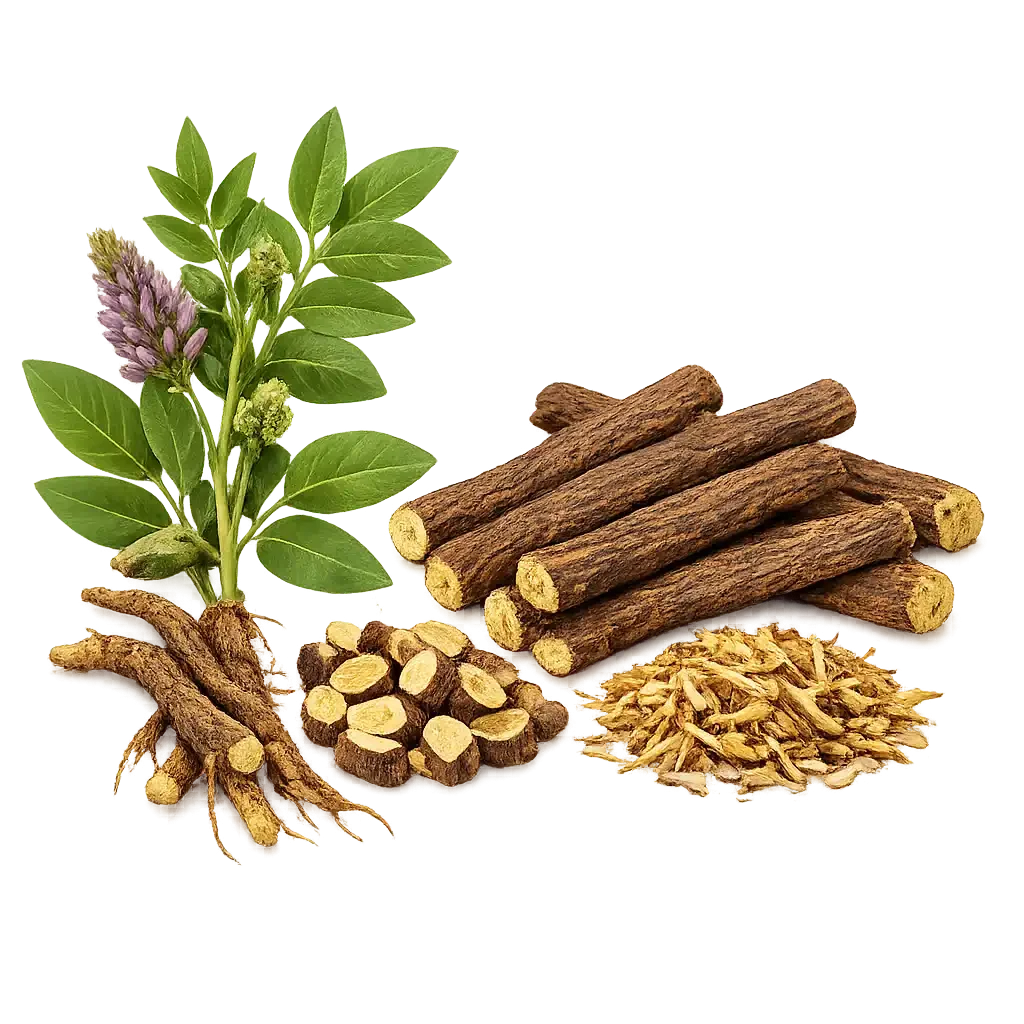
The plant is a spreading shrubby perennial with arching stems and pinnate compound leaves made up of pairs of small, slightly sticky oval leaflets. In midsummer it produces short upright spikes of pale violet pea-like flowers, a reminder that Glycyrrhiza is a member of the Fabaceae legume family and therefore a nitrogen fixer, improving the soil it occupies while it grows. The part that matters medicinally and culinarily is entirely underground: a spreading system of horizontal rhizomes and deep vertical taproots that develop over three to four years before reaching the size that makes harvest worthwhile.
Glycyrrhizin, the primary active compound, works through several mechanisms simultaneously. Its anti-inflammatory activity operates through inhibition of the enzyme 11-beta-hydroxysteroid dehydrogenase, which normally converts the potent glucocorticoid cortisol into its inactive form cortisone. By inhibiting this enzyme, glycyrrhizin prolongs the local activity of cortisol, producing an anti-inflammatory effect similar in kind to synthetic corticosteroids but much milder in degree. This same mechanism is responsible for the adrenal-supporting and cortisol-sparing effects that underlie licorice root's traditional and contemporary use in chronic stress protocols, and it is also the mechanism behind the dose-dependent mineralocorticoid-like side effects that make high-dose extended use problematic.
How to Grow
Sun Requirements
Licorice requires full sun and performs poorly in partial shade. In its native habitat it occupies the most sun-exposed positions in the landscape, along river terraces and open disturbed ground where it receives maximum light through the full growing season. The glycyrrhizin concentration in the root is related to the plant's total photosynthetic capacity over its three to four year development period, and any reduction in available light reduces the yield and quality of the eventual harvest.
Soil Requirements
Soil preparation is the most important single investment in a licorice planting, and it matters more here than for almost any other herb in this series. Licorice develops a deep, wide-spreading root system over three to four years before harvest, and the quality and harvestability of that root depends entirely on the soil it grows in. In deep, loose, well-drained sandy loam the roots develop long, clean, easy-to-harvest horizontal rhizomes and straight taproots. In compacted, heavy clay, or shallow soil the roots become stunted, contorted, and difficult to extract without breaking into fragments that are impractical to harvest and process.
Prepare the planting bed by deep-digging to at least twenty-four inches, breaking up all compaction and incorporating generous sharp sand and compost to produce a deeply loosened, well-drained growing medium. In heavy clay soils, a deep raised bed filled with prepared growing medium is the practical alternative to attempting to amend native clay to the required depth. This preparation effort is made once, before planting, for a crop that will not be harvested for three to four years; it is worth doing properly.
Water Needs
Established licorice is moderately drought-tolerant, consistent with its origin in the seasonally dry alluvial habitats of the Mediterranean and Central Asia. During the first and second year of establishment, regular deep watering supports the root development that determines the final harvest quality. Once the root system is established in its third and fourth year, the plant manages on natural rainfall in most temperate climates without supplemental irrigation, though deep occasional watering during extended dry periods maintains the soil moisture that supports continued root development.
Waterlogging at any season is damaging and often fatal to licorice roots. The combination of moisture retention and poor drainage produces root rot that can eliminate a multi-year planting before it reaches harvest. Drainage must be absolute; this requirement is non-negotiable regardless of how fertile or well-prepared the soil otherwise is.
Planting
Licorice is most reliably established from root divisions or crown sections with viable growth buds, which develop more quickly and more predictably than seed-grown plants. In spring, before new growth emerges, cut sections of healthy rhizome four to six inches long, each containing at least one growth bud, and plant horizontally at a depth of two to four inches in the deeply prepared bed. Space the sections eighteen to twenty-four inches apart; the plant spreads laterally by rhizome and will fill the available space within two to three growing seasons.
Seed starting is possible but slower. Scarify the seeds lightly and soak in warm water for twelve to twenty-four hours before sowing at half-inch depth. Germination occurs in two to three weeks at warm soil temperatures. Seed-grown plants require an additional year to develop to the same root mass as rhizome-established plants and are therefore harvested in year four or five rather than year three.
Harvesting
Root harvest takes place in autumn of the third or fourth year, after the above-ground growth has died back and the plant's energy has fully returned to the root. This timing is not arbitrary: glycyrrhizin concentration in the root increases significantly through the growing seasons as the plant matures, and roots harvested before year three have substantially lower active compound content than properly aged roots. The patience required is a genuine feature of licorice cultivation, not a limitation to work around.
To harvest, work outward from the crown with a garden fork, loosening the deep soil in a wide circle around the plant before attempting to lift. The horizontal rhizomes can extend two to three feet from the crown and are easily broken by impatient digging. Lift the entire root mass where possible, shaking off loose soil, and lay the roots on a clean surface to assess the harvest. Retain sections of rhizome with growth buds to replant immediately for the next multi-year cycle.
Wash the harvested roots thoroughly, scrubbing to remove soil from the rough outer bark. The roots can be used fresh, or sliced into rounds and dried at 100 degrees Fahrenheit in a food dehydrator, or air-dried in warm ventilated conditions. Dried root pieces are hard, woody, and cream to yellow inside with a fibrous texture and intensely sweet aroma. Store dried root in airtight glass containers for two to three years.
Licorice root decoction: Unlike most aromatic herbs where hot water infusion is sufficient, licorice root requires a true decoction to extract the glycyrrhizin and other active compounds from the dense woody root tissue. Combine one to two teaspoons of dried, coarsely chopped or broken root pieces with two cups of cold water in a small saucepan. Bring slowly to a gentle simmer, cover, and maintain at a low simmer for twenty minutes. Remove from heat and steep covered for a further ten minutes before straining. The resulting liquid is noticeably sweet and slightly thick, with the characteristic licorice flavor and a pale amber color. For respiratory applications, add a small piece of ginger root and a strip of dried orange peel to the decoction water. For digestive applications, drink one cup thirty minutes before meals. A standard preparation for short-term use is one to two cups daily for up to four to six weeks, followed by a break; this is not a daily indefinitely herb at therapeutic doses.
How to Use
Digestive Uses
Licorice root is one of the most well-studied herbs for peptic ulcer disease and gastric mucosal protection, with research spanning from the isolation of carbenoxolone (a semi-synthetic glycyrrhizin derivative used as a pharmaceutical treatment for peptic ulcers in the mid-twentieth century) to modern clinical trials of deglycyrrhizinated licorice (DGL) preparations that remove the blood pressure-raising glycyrrhizin while retaining the mucosal-protective flavonoids and saponins. DGL preparations have demonstrated efficacy for peptic ulcer healing comparable to antacids in several controlled trials, working through stimulation of the mucin and prostaglandin production that maintains the stomach's protective mucosal lining rather than through acid suppression.
For gastric irritation, reflux, and the general soothing of inflamed upper digestive mucous membranes, whole licorice root decoction provides the combined activity of glycyrrhizin's anti-inflammatory effect alongside the demulcent coating of the saponin-rich liquid. The taste itself, intensely sweet and distinctly licorice-flavored, is part of the preparation's character as a traditional medicine: it signals that the active compounds are present and active in the preparation.
For lower digestive complaints including intestinal inflammation and the cramping associated with irritable bowel, licorice root's antispasmodic activity on intestinal smooth muscle, mediated through flavonoid compounds distinct from glycyrrhizin, provides mild relief alongside the anti-inflammatory effect. The compound liquiritigenin, one of the principal flavonoids in the root, has demonstrated intestinal smooth muscle relaxant activity in laboratory research.
Respiratory Uses
Licorice root is a classical expectorant and respiratory demulcent, used across Chinese, Ayurvedic, and European herbal traditions for productive cough, bronchial congestion, sore throat, and the inflamed airways of upper respiratory infections. The saponin glycyrrhizin stimulates respiratory mucus secretion and reduces its viscosity, making it easier to expectorate, while simultaneously providing anti-inflammatory activity to the irritated bronchial and pharyngeal mucosa. This combination of expectorant and anti-inflammatory action makes licorice root a more complete respiratory herb than simple demulcents or simple expectorants used alone.
For sore throat and pharyngeal inflammation, licorice root decoction used as a gargle before swallowing coats the pharyngeal mucosa directly and provides immediate symptomatic relief through the combined demulcent and anti-inflammatory mechanism. The naturally sweet taste makes this preparation genuinely palatable, which is not an incidental advantage: a preparation that is pleasant to take is taken consistently, and consistency matters for mucosal healing.
In Chinese herbal medicine, licorice root (gan cao) functions as one of the most universally included herbs in compound formulas, serving a harmonizing and synergistic role alongside the primary therapeutic herbs. This use reflects the observed property of glycyrrhizin to potentiate and modify the effects of other compounds, a property that has been partially validated in pharmacokinetic research showing that glycyrrhizin affects the absorption and metabolism of several classes of drugs and herbal compounds.
Adrenal and Stress Support
The cortisol-sparing activity of glycyrrhizin, through inhibition of 11-beta-hydroxysteroid dehydrogenase, produces the adrenal-supportive effect that makes licorice root a central herb in contemporary protocols for chronic stress, adrenal fatigue, and the HPA axis dysregulation that follows extended periods of high physiological or psychological stress. By slowing the conversion of active cortisol to inactive cortisone, licorice root effectively amplifies the available cortisol signal without requiring the adrenal glands to produce more cortisol, providing a form of adrenal support that is distinct from the adaptogenic herbs that work by normalizing the HPA axis response.
This application requires the same dosage caution that applies to all extended licorice root use: the same mechanism that supports depleted cortisol availability also produces the blood pressure and fluid retention effects at higher doses or in susceptible individuals. In contemporary integrative medicine practice, licorice root for adrenal support is typically used at moderate doses for defined periods of four to eight weeks, with monitoring for blood pressure changes, rather than as an indefinitely continued daily supplement.
Antiviral and Antimicrobial Activity
Glycyrrhizin has demonstrated antiviral activity against a range of viruses in laboratory research, including influenza, herpes simplex, and several other enveloped viruses, through a mechanism involving disruption of viral membrane integrity and inhibition of viral replication pathways. The research is primarily in vitro and animal-model, with limited human clinical trial evidence for specific antiviral applications, but the consistency of the laboratory findings across multiple virus types has sustained interest in licorice root as a component of immune support protocols during respiratory illness season.
The antimicrobial activity against Helicobacter pylori, the bacterium responsible for the majority of peptic ulcers, has received specific attention given licorice root's established role as a gastroprotective herb. Several in vitro studies have demonstrated inhibitory activity against H. pylori, providing a second mechanism alongside the mucosal protection action that may contribute to the clinical benefit observed in peptic ulcer treatment studies.
Storage
Dried whole licorice root pieces store for two to three years in airtight glass containers in a cool, dark location. The glycyrrhizin is stable in dry root form and does not degrade significantly over this storage period. Ground or powdered licorice root has a shorter shelf life, with noticeable flavor and potency loss within six to twelve months of grinding; buying or grinding in small quantities and using promptly is preferable to storing pre-ground material.
Lifespan of the Plant
Licorice is a long-lived perennial that can remain productive in the same position for decades in appropriate conditions. After the initial three to four year development period and first harvest, the replanted crown sections regenerate new root systems that reach harvestable size again in two to three additional years, providing a rolling harvest cycle from an established planting. The above-ground growth dies back completely each winter and re-emerges from the crown each spring, with the underground rhizome system persisting and expanding through the winter months.
The lateral rhizome spread means that an established planting expands beyond its original boundaries over successive years. Physical root barriers sunk to eighteen to twenty-four inches depth around the designated planting area contain this spread in gardens where free expansion is undesirable.
Dosage and contraindication summary: Glycyrrhizin in large doses or extended use causes pseudohyperaldosteronism: sodium and water retention, potassium loss, elevated blood pressure, edema, and in severe cases cardiac arrhythmia. This is a dose-dependent and duration-dependent effect. Short-term use at standard herbal doses for defined therapeutic purposes is well-tolerated by most healthy adults. Extended daily use beyond four to eight weeks without a break, very high doses, or use by people with pre-existing hypertension, kidney disease, liver disease, or low potassium requires medical supervision or avoidance. Licorice root is contraindicated in pregnancy due to documented effects on fetal cortisol metabolism associated with premature delivery risk in epidemiological studies. It interacts with corticosteroid medications, diuretics, cardiac glycosides (digoxin), antihypertensives, and hormonal contraceptives. People on any of these medications should not use licorice root medicinally without practitioner guidance. DGL (deglycyrrhizinated licorice) preparations have the glycyrrhizin removed and avoid the blood pressure effects while retaining much of the mucosal-protective benefit; DGL is the appropriate form for people with hypertension or those requiring extended digestive use.
Pros and Cons
Advantages
Among the most extensively researched medicinal plants on earth, with a four-thousand-year continuous use record and a substantial body of modern pharmacological and clinical research supporting its primary applications
Glycyrrhizin's mechanism of action is specific, well-understood, and clinically relevant across digestive, respiratory, and adrenal applications simultaneously
The naturally sweet flavor makes preparations genuinely palatable without added sweeteners, which is practically important for preparations taken consistently over days or weeks
Nitrogen-fixing legume that improves the soil it occupies while developing its root harvest over multiple years
Dried whole root stores for two to three years without significant potency loss
DGL preparations provide the mucosal-protective benefit with the blood pressure risk substantially reduced, expanding the range of people who can use it safely
Long-lived perennial that establishes permanently and provides a renewable rolling harvest from replanted crown sections
Limitations
Three to four year wait before first harvest; the longest development period of any herb in this series
Requires deep soil preparation to at least twenty-four inches for productive root development; not suitable for shallow beds or heavy clay without major amendment
Significant contraindications and drug interactions requiring genuine caution; not a casual use-freely herb
Extended high-dose use causes dose-dependent pseudohyperaldosteronism with real cardiovascular consequences
Contraindicated in pregnancy with epidemiological evidence of fetal harm at habitual use levels
Spreads laterally by rhizome and requires containment if the planting area must remain defined
Limited hardiness; G. glabra reliably winter-hardy only to zone 6, requiring cold climate growers to use G. uralensis or provide winter protection
Common Problems
Root rot from poor drainage is the most common cause of planting failure and can eliminate a multi-year investment before the first harvest. The critical preventive measure is absolute drainage in the planting bed; once crown and root rot has established in a planting, there is no effective treatment and the planting must be abandoned and re-established in a better-drained position.
In cold climates near the edge of G. glabra's hardiness range, late autumn frosts before the crown has fully hardened can damage the overwintering buds that produce the following year's growth. A thick mulch of straw or dry leaves applied after the above-ground growth has died back provides the insulation that allows the crown to overwinter successfully in zone 6 and marginal zone 5 conditions.
Aphid infestations on the young spring growth are common but rarely serious in established plantings. The natural predator population that builds in response manages the infestation through the season without intervention. A water spray dislodges heavy early-season colonies before predator populations have established.
Patience with the harvest timeline is the management challenge that most first-time licorice growers underestimate. Harvesting at year two produces small, glycyrrhizin-poor roots that do not justify the disruption to the planting; the correct response to the urge to check on root development is to mulch, water if needed, and wait.
Varieties
Glycyrrhiza glabra is the Mediterranean species and the source of the majority of commercial licorice root in Western herbal commerce. It is the standard species for temperate gardens in zones 6 and warmer.
Glycyrrhiza uralensis, Chinese licorice or gan cao, is the primary species used in Chinese herbal medicine and is marginally hardier than G. glabra, surviving to zone 5 with protection. Its glycyrrhizin content is comparable to G. glabra and it is the appropriate choice for colder climate gardens.
Glycyrrhiza inflata is a third species used in Chinese herbal medicine with a somewhat different flavonoid profile. It is less commonly available in Western herb commerce but worth noting for gardeners interested in the full range of the genus.
Final Thoughts
Licorice root demands more from the grower than most herbs in this series: deeper soil preparation, a longer wait for harvest, and more careful attention to dosage and contraindications than applies to the majority of the garden's medicinal plants. What it provides in return is access to one of the most pharmacologically rich and best-documented roots in the herbal pharmacopoeia, grown from seed or division in the garden to a quality that home cultivation consistently provides over commercial material of unknown age and provenance.
Use it with the respect its active compound demands. Respect the four-thousand-year use record enough to read the cautions. And prepare the soil deeply enough that the roots have the room to become what three or four years of patient cultivation makes possible.