
Milk Thistle
Written By Arthur Simitian
QUICK FACTS
Common Name
Milk Thistle, Blessed Thistle, St. Mary's Thistle, Holy Thistle
Scientific Name
Silybum marianum
Plant Type
Annual or biennial depending on climate and sowing time
Hardiness Zones
5 to 10 as biennial; grown as annual in all zones
Sun Requirements
Full sun
Soil Type
Well-drained, poor to moderately fertile; tolerates dry, rocky, and disturbed ground
Plant Height
First-year rosette to 2 feet; second-year flowering plant to 5 feet
Spacing
24 to 36 inches
Harvest Parts
Seeds (primary medicinal harvest); young leaves, leaf midribs, stems, roots (culinary)
Primary Active Compound
Silymarin flavonoid complex in the seed pericarp (70 to 80 percent concentration in standardized extracts)
Uses
Liver protection and support, hepatoprotective for toxic exposures, digestive bitter, culinary thistle, wildlife habitat
Milk thistle is the liver herb. Among the hundreds of plants claimed over centuries to support liver health, Silybum marianum stands apart because it has been tested to a standard that almost no herbal medicine achieves: randomized controlled trials, meta-analyses, inclusion in clinical guidelines, and an Amanita phalloides poisoning protocol used in European hospitals. The active compound silymarin, concentrated in the seed pericarp, has a documented mechanism of action at the hepatocyte membrane that is specific, well-understood, and not shared by any other plant. Growing milk thistle on the homestead provides access to that compound from fresh, home-harvested seed at a quality and freshness that no commercial preparation can match, alongside a plant that is large, dramatic, ornamentally striking, and productive of a culinary vegetable that the gardener who does not know it is missing.
Introduction
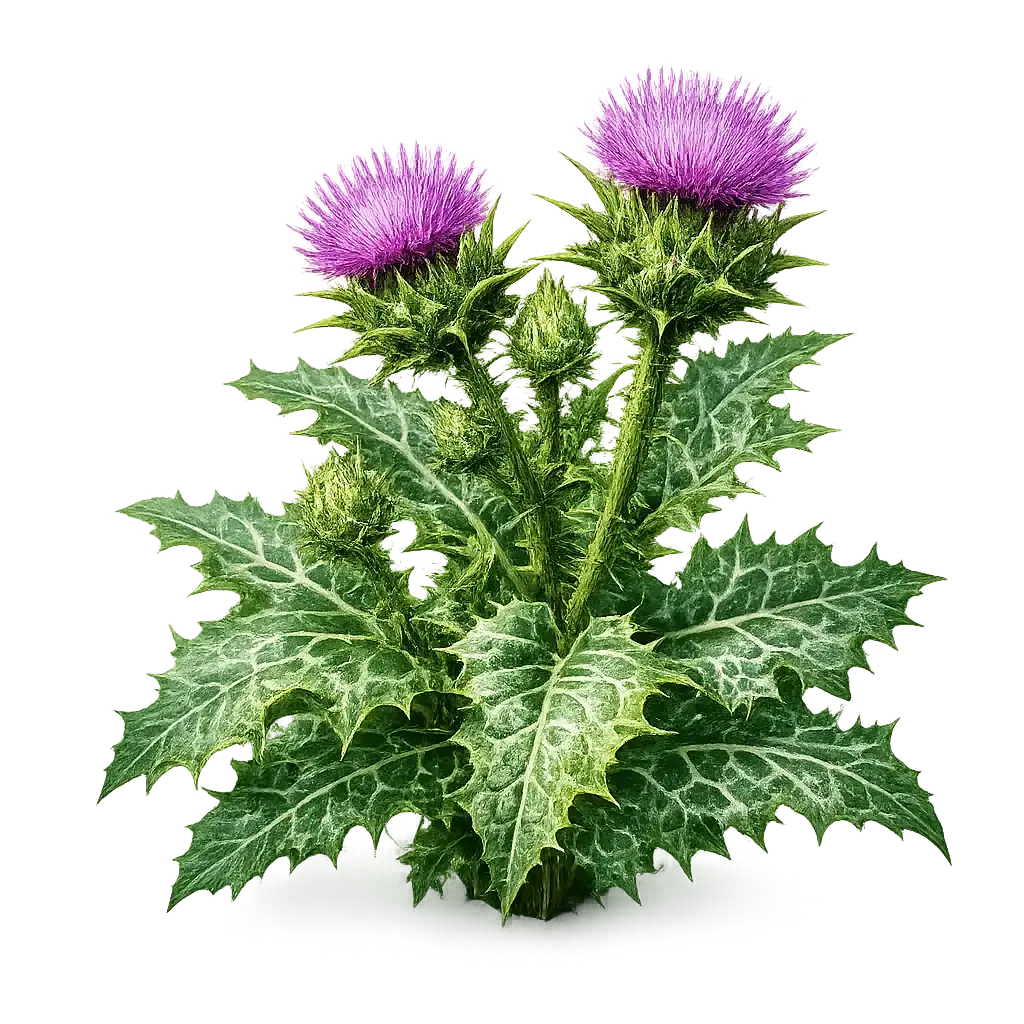
Silybum marianum is native to the Mediterranean region and southwestern Europe, naturalized across North America, Australia, and temperate regions worldwide as a common disturbed-ground and waste-place colonizer. It is a member of the Asteraceae family, closely related to the artichoke and cardoon and more distantly to other true thistles, with the large, deeply lobed, spiny-margined leaves marked by distinctive white marbling along the veins that makes it one of the most immediately identifiable plants in the herb garden or the wild. The white marbling is explained in Christian folk tradition as drops of the Virgin Mary's milk falling on the leaves, which accounts for both the common name and the alternate botanical names referencing Mary.
The plant has been used medicinally for liver and gallbladder conditions for at least two thousand years, with records of its use in these applications stretching from ancient Greek physicians through the medieval European herbalists to the first rigorous phytochemical work of the twentieth century that identified and characterized the silymarin complex. Modern research has confirmed and extended the traditional use with a clinical evidence base that, while imperfect, is stronger and more specific than the evidence supporting most plant-based liver preparations.
Silymarin is not a single compound but a complex of flavonolignans, primarily silybin (also called silibinin), silydianin, and silychristin, concentrated in the hard outer layer of the seed. The mechanism of hepatoprotection operates at several levels: silymarin stabilizes the hepatocyte cell membrane against toxic penetration, reducing the uptake of hepatotoxic compounds including the amatoxins of the death cap mushroom; it acts as an antioxidant within hepatocytes, reducing oxidative damage from metabolic and toxic stressors; it promotes hepatocyte protein synthesis and regeneration, supporting the liver's recovery from damage; and it has anti-inflammatory activity in hepatic stellate cells that reduces the fibrotic progression seen in chronic liver disease.
How to Grow
Sun Requirements
Milk thistle requires full sun and is uncompromising about it. In partial shade the plant becomes elongated and weak, produces fewer and smaller flower heads, and sets significantly less seed than plants in maximum available light. Its native habitat is exposed, sun-drenched disturbed ground across the Mediterranean, and replicating those conditions as closely as possible produces the most vigorous, most seed-productive plants. A position in the sunniest, most open part of the garden is the appropriate choice.
Soil Requirements
Milk thistle thrives in poor, dry, well-drained soil and performs poorly in the rich, moist, heavily fertilized beds suited to food vegetables. In fertile soil it produces enormous, rank vegetative growth with a reduced proportion of seed-to-leaf biomass, meaning that the medicinal harvest from each plant is proportionally lower relative to the plant's total size. In lean, well-drained soil it grows with more compact vigor and produces the proportionally heavy seed crop that makes it medicinally productive.
Drainage is non-negotiable. Milk thistle does not tolerate waterlogged or consistently wet conditions at any season, and root rot in poorly drained soil is the primary cause of failure in otherwise adequate growing situations. Rocky ground, gravelly slopes, dry raised beds, and the hot, dry edges of garden paths are all appropriate positions.
Water Needs
Established milk thistle is highly drought-tolerant, reflecting its Mediterranean origin in seasonally dry climates with wet winters and dry summers. Young plants during establishment benefit from moderate watering, but once the root system is developed the plant manages on natural rainfall in most temperate climates without supplemental irrigation. In genuinely dry summers, occasional deep watering that encourages deep root development is preferable to frequent shallow watering that keeps the surface moist.
Planting
Milk thistle is grown from seed direct-sown in spring after the last frost or in autumn for overwintering rosettes that flower the following summer. The large seeds germinate readily at soil temperatures above 50 degrees Fahrenheit and do not require stratification or special treatment. Sow seeds half an inch deep, one per position at the final spacing, or sow in clusters and thin to the strongest seedling.
In mild climates with warm winters, autumn sowing produces overwintered rosettes that bolt to flower earlier in the summer than spring-sown plants, providing an earlier seed harvest. In cold climates where the rosette would be killed by hard frost, spring sowing after the last frost date is the appropriate timing.
Direct sowing in the final position is preferable to transplanting. Milk thistle develops a deep taproot quickly, and disturbing it during transplanting produces a significant check to growth and recovery. Where starting indoors is necessary due to short growing season constraints, using deep individual cells or biodegradable pots that can be planted without root disturbance minimizes transplant shock.
Plant Spacing
Space plants twenty-four to thirty-six inches apart in all directions. A well-grown milk thistle plant in full sun and lean soil is large: the first-year rosette spreads to two feet across, and the second-year flowering plant reaches four to five feet in height with a substantial branching spread. Crowded plants compete for light and produce fewer flower heads and less seed than adequately spaced individuals. The generous spacing also reduces the humidity around the plant that invites the powdery mildew that affects milk thistle in poorly ventilated positions.
Harvesting
Harvesting Seeds
The seed harvest is the primary medicinal harvest from milk thistle and requires careful timing. The flower heads ripen progressively over a period of four to six weeks in late summer, with each head developing from the vivid purple-pink flower to a brown, dried receptacle topped with a fluffy white pappus (the silky seed parachute structure) as the seeds mature. The seeds are ripe when the pappus is fully developed and begins to separate from the seed head, and this is the moment to harvest before the seeds disperse on the wind.
The most practical harvesting method is to place a paper bag over individual flower heads as they begin to brown and dry, securing loosely around the stem, and checking every few days. When the seeds inside the bag begin to rattle and shed freely, cut the stem and bring the bagged head indoors to finish drying completely before threshing. Harvesting entire dried heads into a large paper bag and threshing by shaking or rubbing the heads against the bag interior releases the seeds for collection.
Wear gloves and long sleeves during all seed harvest operations. The bracts encircling the flower head are sharply spined, and handling unprotected is unpleasant. The seeds themselves are smooth and easy to work with once separated from the spiny receptacle. Winnow the threshed seeds by pouring slowly between containers in a light breeze to separate the lighter pappus fluff from the heavier seeds.
Harvesting Leaves and Stems
The young leaves of first-year rosettes and the leaf midribs of larger leaves are edible and historically used as a spring vegetable in Mediterranean cooking. The spines must be removed before use: run a sharp knife along the leaf margin to strip the spiny edges, leaving the smooth leaf blade and the fleshy midrib. The midrib is the primary culinary target, with a texture and flavor somewhat similar to celery or cardoon, tasting clean and mildly bitter. Young first-year leaves with spines removed can be blanched briefly and used in cooked preparations.
The peeled young stems of the second-year plant, before they become too fibrous, can be eaten raw or cooked in the same way as cardoon stems, with a similar slightly bitter, artichoke-adjacent flavor. This is a traditional use in the Mediterranean regions where milk thistle grows abundantly as a semi-wild vegetable, and it provides a culinary return from the plant in the months before the seed harvest.
Grinding milk thistle seed: For daily liver support use, the most practical home preparation is freshly ground seed. Place dry, fully mature milk thistle seeds in a coffee or spice grinder and pulse to a coarse powder. The hard seed coat requires a full grinding cycle rather than a brief pulse; the resulting powder should be uniformly grey-brown with no intact seeds visible. Use one to two tablespoons daily stirred into yogurt, blended into a smoothie, or mixed into oatmeal. Grinding fresh as needed preserves the silymarin complex at its highest activity; pre-ground seed oxidizes and loses potency within two to three weeks even in sealed storage. The flavor of ground milk thistle seed is mild, slightly nutty, and genuinely pleasant enough that incorporating it into a daily food preparation is not an exercise in willpower.
How to Use
Liver Protection and Hepatoprotective Uses
Silymarin's hepatoprotective activity is the most clinically documented application of any herb in this series, with a body of research spanning fifty years and multiple clinical contexts. The mechanism is specific and well-understood: silybin, the most active component of the silymarin complex, binds to the hepatocyte membrane and competitively displaces toxins that would otherwise enter the cell through bile acid transport proteins. This membrane-stabilizing action is the basis of the most dramatic clinical application of milk thistle extract: the intravenous silymarin protocol used in European hospitals for Amanita phalloides (death cap mushroom) poisoning, where early administration of concentrated silymarin has been documented to prevent the hepatic necrosis that makes untreated amatoxin poisoning frequently fatal.
For the homestead context, the relevant applications are less dramatic but genuinely practical. Regular consumption of ground milk thistle seed or silymarin-standardized extract provides ongoing hepatoprotective support during periods of elevated liver load: pharmaceutical drug use, alcohol consumption, environmental chemical exposure, and the chronic metabolic burden of conditions like non-alcoholic fatty liver disease. Several randomized controlled trials have examined silymarin supplementation in non-alcoholic fatty liver disease, with meta-analyses finding consistent improvements in liver enzyme markers including ALT and AST alongside imaging evidence of reduced hepatic fat in some studies.
Clinical trials in chronic hepatitis B and C have produced mixed results, with some studies showing modest improvements in liver enzyme markers and quality of life measures but without the antiviral activity that would be required for primary antiviral treatment. Milk thistle is not a substitute for conventional antiviral treatment in active hepatitis infections, but the hepatoprotective and anti-fibrotic activity it provides may be useful as adjunctive support under the guidance of a practitioner managing the condition.
The anti-fibrotic activity of silymarin in hepatic stellate cells, reducing the collagen deposition that produces hepatic fibrosis in chronic liver disease, represents perhaps the most clinically important long-term application of the herb for people with chronic liver conditions. This is an area of active research and the evidence, while not yet at the level that would support clinical guideline inclusion in most countries, is consistent in direction across multiple study types.
Digestive Uses
Milk thistle has traditional use as a bitter digestive herb, with the silymarin complex providing mild bile-stimulating activity that improves fat digestion and relieves the sluggishness and bloating that follow heavy or fatty meals. This application is less specific and less well-evidenced than the liver protection uses but is consistent with the traditional use of the plant across Mediterranean folk medicine as a general digestive and liver tonic.
Ground seed incorporated into the daily diet, as described in the preparation note above, provides this gentle digestive support as an incidental benefit alongside the hepatoprotective activity. A tea from crushed seed, steeped in hot water for fifteen minutes and strained, provides the silymarin in a more dilute form with less certainty about the absorbed dose but with a pleasant mild flavor appropriate for daily use.
Culinary Uses
Milk thistle is an underutilized culinary plant that the majority of herb gardeners in temperate climates do not know is edible at multiple growth stages. The artichoke connection is real: milk thistle and the globe artichoke are close botanical relatives, and the young milk thistle plant before it becomes too large and spiny provides several distinct edible parts that have been used in Mediterranean cooking for centuries.
The young first-year leaves with spines removed can be blanched and eaten as a vegetable in any preparation that suits cooked greens, with a mild bitterness that pairs well with olive oil, garlic, and lemon in the manner of other Mediterranean cooked greens. The leaf midribs, stripped of their spines and peeled to remove the fibrous outer layer, can be braised, grilled, or eaten raw in salad, with a flavor and texture genuinely comparable to cardoon or celery.
The young peeled stems of the second-year plant provide the most substantial culinary return, with enough volume to make a serving of braised thistle stem a worthwhile dish rather than a garnish. Peel the stems to remove the fibrous outer layer and the spiny leaf bases, cut into sections, and braise in olive oil with garlic and white wine until tender. The flavor is mildly bitter and pleasantly artichoke-adjacent.
Ground milk thistle seed can be used as a nutritional addition to baked goods, cereals, and smoothies in the same way that other seed powders are used, with a neutral to mildly nutty flavor that does not disrupt the preparations into which it is incorporated.
Storage
Whole dried milk thistle seeds store exceptionally well, with the hard seed coat protecting the silymarin complex from oxidation and degradation for two to three years in airtight glass containers in a cool, dark location. This is significantly longer than most herb preparations and reflects the physical protection the intact seed coat provides to the active compounds inside.
Ground seed begins to oxidize and lose silymarin potency within two to three weeks, even in sealed storage. For this reason, grinding fresh as needed from whole stored seed is strongly preferable to grinding in advance and storing the powder. A coffee grinder designated for this use provides the freshest preparation with minimal effort.
Lifespan of the Plant
Milk thistle behaves as an annual or biennial depending on the climate and the sowing time. In mild winter climates, autumn-sown plants overwinter as rosettes and flower in their second calendar year, behaving as true biennials. In cold climates with harsh winters, spring-sown plants complete their entire cycle from seed to seed set within a single growing season if sown early enough, behaving as annuals.
Self-seeding is prolific and reliable in any position that suits the plant, with shed seeds germinating the following season to maintain a continuous presence in the garden without deliberate replanting. Managing this self-seeding requires either deadheading spent flower heads before they shed their seeds, which eliminates the medicinal harvest, or accepting and managing the seedling population that appears the following spring. In a designated permanent bed for milk thistle production, allowing self-seeding and thinning the resulting seedlings to the appropriate spacing each spring is the most practical long-term management approach.
Allergy and drug interaction notes: Milk thistle belongs to the Asteraceae family, and people with Asteraceae allergies including ragweed, chrysanthemum, and daisy sensitivities may experience cross-reactive allergic responses. Silymarin has mild CYP2C9 and CYP3A4 enzyme inhibiting activity, which may affect the metabolism of drugs processed by these pathways including warfarin, certain statins, and some antiviral medications. People on these medications should consult a practitioner before using milk thistle medicinally in concentrated forms. Silymarin may also have mild blood sugar-lowering activity; people with diabetes on medication should monitor accordingly. Pregnancy safety has not been established for concentrated silymarin preparations beyond culinary seed consumption.
Pros and Cons
Advantages
The most clinically validated liver herb available, with documented hepatoprotective activity at the cellular level and an evidence base that includes the most dramatic herbal medicine application in the series: the Amanita poisoning protocol
Silymarin's mechanism of action is specific, well-understood, and not duplicated by any other plant
Whole seeds store for two to three years without significant potency loss, making it one of the most storage-stable medicinal herb crops available
Produces a culinary vegetable at multiple growth stages, providing returns from the plant beyond the seed harvest
Highly drought-tolerant once established; productive in dry, poor-soil positions where food crops fail
Dramatically ornamental: the white-marbled leaves and vivid purple flower heads make it one of the most visually striking plants in the herb garden
Self-seeds reliably, establishing a near-permanent productive presence with minimal replanting effort
Excellent wildlife value: the flower heads are among the most heavily visited by goldfinches and other seed-eating birds in autumn
Limitations
Sharply spined throughout: gloves and long sleeves required for all harvest and management operations
Self-seeds aggressively if seed heads are not managed; can become a persistent weed in adjacent areas
Large plant requiring generous spacing; not appropriate for small or intensively managed beds
Silymarin is poorly water-soluble, meaning that tea preparations provide limited bioavailability of the active compounds compared to seed consumption or standardized extracts in an appropriate carrier
Potential drug interactions with CYP enzyme-metabolized medications require attention for medicated individuals
Cross-reactivity with Asteraceae family allergies in sensitive individuals
Common Problems
Milk thistle is largely problem-free in appropriate dry, sunny, well-drained conditions, with its chemical defenses and drought tolerance making it resistant to most of the pests and diseases that affect more cultivated garden plants. The management challenges are primarily the self-seeding spread and the handling difficulties from the spines.
Powdery mildew affects milk thistle in humid, poorly ventilated conditions, producing the characteristic white surface coating on the large leaves. Adequate spacing at twenty-four to thirty-six inches, an exposed, well-ventilated position, and avoiding overhead irrigation manage the problem in most cases. Affected leaves in the late season are unsuitable for culinary use but do not significantly reduce the seed harvest from the plant, which is the primary medicinal product.
Aphid colonies establish on the stems and developing flower heads in spring, with dense populations capable of reducing seed set in heavy infestations. A strong water spray from a hose dislodges aphids effectively from the tough milk thistle stems without the need for insecticide application on a medicinal crop. The same aphid populations attract ladybirds, lacewing larvae, and parasitic wasps that progressively reduce the infestation through the season if given time to establish.
Premature seed dispersal from flower heads that are not monitored closely during the ripening period results in seed loss before harvest and establishment of unwanted seedlings beyond the designated area. The paper bag harvesting method described above eliminates both problems simultaneously by containing the ripe seeds at the moment of dispersal.
Varieties
Silybum marianum is the only species of the Silybum genus in common cultivation, and named varieties are uncommon in seed commerce. Most available seed is sold simply as milk thistle without varietal designation. Selecting the largest, heaviest seeds from the home harvest and saving them for replanting provides informal selection toward more productive plants over successive generations, which is a reasonable approach to improving the home seed crop without access to named breeding lines.
Commercial silymarin extracts are standardized to 70 to 80 percent silymarin content by weight, a concentration significantly higher than the approximately 1.5 to 3 percent silymarin content of whole dried seed. For the daily liver support application where consistent dosing of a specific silymarin quantity is desired, a standardized commercial extract provides more reliable dosing precision than home-ground seed. For the general hepatoprotective and digestive support application where exact dosing is less critical, home-ground fresh seed provides excellent quality and freshness that commercial preparations cannot match.
Final Thoughts
Milk thistle has been called the most important liver herb in Western herbalism, and the clinical evidence accumulated over the last fifty years provides a more specific justification for that description than most herbal superlatives receive. The mechanism is known. The trials have been run. The most extreme application, halting the liver destruction of death cap mushroom poisoning with intravenous silymarin, is practiced in hospitals. This is an herb that has graduated from traditional use to documented pharmacology, and growing your own provides the freshest and most active form of the primary medicinal compound at a quality that outperforms commercial preparations made from older, stored material.
It also grows in the worst soil on the property, requires almost no attention once established, fills the dry gravelly corner that nothing else will occupy with one of the most dramatically beautiful plants in the herb garden, feeds the goldfinches in autumn, and provides a culinary vegetable that most homestead cooks have never tried. The spines are a nuisance. The self-seeding requires management. These are the costs of a plant that delivers more practical value from a square yard of poor, dry ground than almost anything else in this series.