
Nettle (Stinging Nettle)
Written By Arthur Simitian
QUICK FACTS
Common Name
Stinging Nettle, Common Nettle
Scientific Name
Urtica dioica
Plant Type
Hardy perennial
Hardiness Zones
3 to 10
Sun Requirements
Full sun to partial shade
Soil Type
Moist, fertile, nitrogen-rich; tolerates a wide range but thrives in rich disturbed ground
Plant Height
2 to 5 feet
Spacing
12 to 18 inches; spreads freely by rhizome
Harvest Parts
Young shoot tips and leaves (spring), dried leaf, root (autumn)
Uses
Culinary cooked green, nutritive tonic, anti-inflammatory and anti-allergic medicinal herb, prostate herb, livestock fodder, compost activator, liquid plant feed, textile fiber
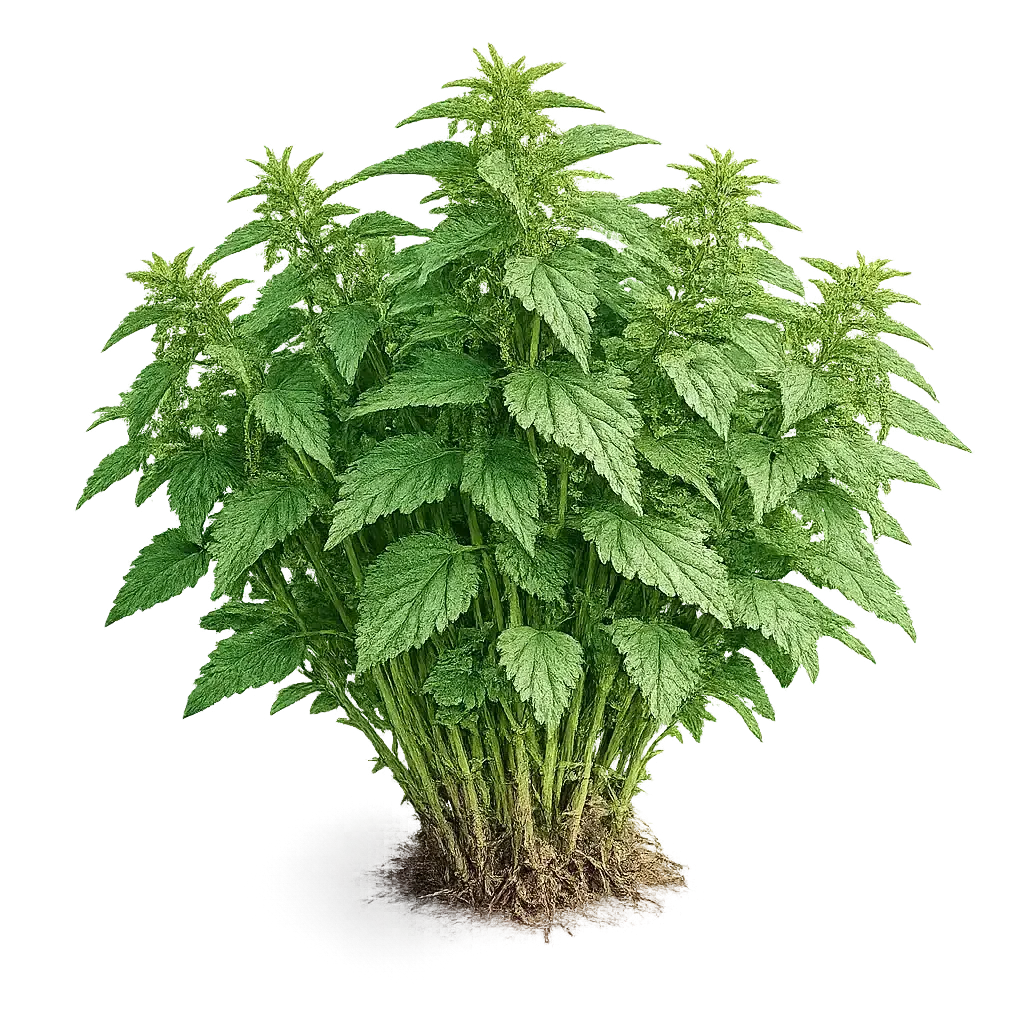
Stinging nettle is the herb that earned its reputation through direct and immediate physical persuasion. Everyone who has ever brushed against a patch of it in a hedgerow or garden corner understands in the clearest possible terms that the plant takes its own defense seriously. That sting is also the most reliable indicator of the plant's general character: nettle does nothing halfway. It accumulates nutrients from the soil with extraordinary efficiency, producing leaves with some of the highest iron, calcium, and protein concentrations of any common plant. It grows with determination in any moist, fertile spot it finds. And when it is cooked and eaten, fermented into a liquid feed, dried for livestock supplementation, or prepared as medicine, it delivers with the same intensity it applies to its own defense.
Introduction
Urtica dioica is one of the most widely distributed plants in the world, native to Europe, western Asia, and North America and naturalized across every other temperate continent where human settlement has created the disturbed, nutrient-rich ground that the plant colonizes with extraordinary efficiency. It is one of the oldest cultivated plants on record, with evidence of nettle use as food, medicine, and textile fiber stretching back at least three thousand years in Europe, and a continuous tradition of culinary and medicinal use in every culture that has encountered it in the Northern Hemisphere.
The plant is dioecious, as the species name indicates, with separate male and female plants producing the drooping catkin-like flower clusters that appear on the upper stems in summer. The female plants are the primary culinary and medicinal harvest, though both produce equally useful leaves for most applications. The plant spreads aggressively by underground rhizome, forming dense colonies in appropriate conditions, and by seed, which is produced in abundance by female plants and disperses readily.
The sting is produced by hollow silica-tipped trichomes on the leaves and stems that function as hypodermic needles, breaking at the tip on contact with skin and injecting a mixture of formic acid, histamine, acetylcholine, and serotonin into the skin. It is this same histamine-rich chemistry, paradoxically, that underlies several of nettle's most important medicinal applications: the plant that causes allergic-type inflammation topically is also, when processed into tea or freeze-dried supplement form, one of the most clinically supported natural antihistamines available.
How to Grow
A Note on Siting
Nettle is not a plant to place casually in a shared garden space. The sting is genuinely painful and memorable for the people who encounter it unexpectedly, and a nettle bed in a location where children play, pets roam, or visitors walk without forewarning is an antisocial planting decision regardless of the plant's merits. The appropriate homestead location is a contained, designated nettle bed in a corner or along a fence line that is accessed deliberately rather than walked through accidentally, ideally with some physical barrier or clear signage that communicates the plant's presence.
With that siting principle established, nettle is one of the most productive and multipurpose plants on a working homestead, and the managed nettle bed pays for the inconvenience of its defense in food, medicine, livestock supplement, and garden fertility inputs many times over.
Sun Requirements
Nettle grows in full sun to partial shade, performing best in full sun to dappled shade with consistent moisture. In deep shade it becomes leggy and pale, with reduced leaf mass and lower nutrient concentration. In full sun with adequate moisture it reaches its maximum height and leaf production. The plant's natural habitat at woodland edges and stream banks reflects its preference for good light combined with the consistent moisture that those transitional environments provide.
Soil Requirements
Nettle is a strong indicator plant for fertile, nitrogen-rich soil, and where it grows abundantly in the wild it reliably signals the presence of high organic matter, elevated phosphorus, and good soil fertility. For deliberate cultivation, it performs best in moist, fertile loam with high organic content, thriving in the rich soil around compost heaps, manure piles, and the accumulated fertility of areas that have been heavily amended over many seasons.
The plant extracts minerals from the soil with exceptional efficiency, accumulating iron, calcium, magnesium, potassium, and nitrogen in concentrations that far exceed most other leafy plants, which is what makes both the leaf and the fermented liquid feed so nutritionally valuable. This mineral accumulation capacity means that nettles grown in mineral-rich soil are more nutritious than those grown in depleted ground, and siting the nettle bed where organic matter and fertility are concentrated maximizes the value of the harvest.
Water Needs
Nettle requires consistent moisture and does not tolerate drought well, producing stressed, tough, and less nutritious leaves in dry conditions. The natural riparian and woodland-edge habitats where it grows most vigorously reflect this moisture requirement. In the garden, siting the nettle bed where it receives consistent moisture, whether from natural rainfall, irrigation, or proximity to a water source, produces the most abundant and highest quality harvest. A thick mulch of compost or wood chip conserves soil moisture and feeds the fertility that the plant thrives on simultaneously.
Planting
Nettle can be established from seed, divisions of existing clumps, or from rhizome sections transplanted to a new location. Seed germinates readily at room temperature within two to three weeks when surface-sown on moist growing medium without covering. Seedlings grow quickly in fertile, moist conditions.
Division of an existing clump in early spring or autumn is the most practical establishment method for most homesteaders, either from a wild population in a clean, uncontaminated location or from a garden clump that has spread beyond its intended boundary. Wear thick gloves and long sleeves for all nettle handling; the sting penetrates thin garden gloves with ease and the trichomes on even young plants are fully functional.
Containment is the primary cultivation consideration. Nettle spreads by rhizome in all directions from the parent clump, and without physical containment a nettle bed will gradually colonize adjacent garden space. Burying a physical rhizome barrier to a depth of twelve inches around the designated bed, or installing the bed in a raised container with solid sides, provides effective containment. Alternatively, surrounding the bed with mown grass or path that is regularly cut prevents rhizome spread by depriving the advancing roots of the undisturbed soil they need to establish beyond the bed boundary.
Harvesting Safely
Thick rubber or leather gloves are the minimum hand protection for nettle harvest. Standard thin garden gloves allow the trichomes to penetrate the fabric and deliver the sting through the glove material, which is both painful and surprising. Purpose-made nettle-picking gloves, or heavy rubber kitchen gloves used solely for this purpose, provide reliable protection. Long sleeves and close-fitting cuffs prevent the stems from contacting forearm skin during harvest.
Alternatively, confident and practiced nettle pickers harvest bare-handed by grasping the stem firmly and quickly in a single decisive motion that rolls the trichomes flat rather than allowing them to penetrate the skin. This technique works and is used traditionally by experienced foragers, but it requires confidence and a specific motion that takes practice to execute reliably. Gloves are the more practical starting point.
Harvesting
Harvest Time
The prime culinary and medicinal leaf harvest is taken in early spring, from the moment the first shoots emerge from the ground until the plant begins to flower, typically from March through May in most temperate North American climates. Spring nettle shoots are the most tender, most nutritious, and most palatable for culinary use, with the fresh growth of the young plant carrying the highest concentration of vitamins, minerals, and the medicinal compounds that make nettle valuable.
Once the plant flowers, the leaves develop cystoliths, calcium carbonate crystals, that accumulate in the older foliage and have been associated with kidney irritation in high doses. Flowering marks the transition from the prime culinary harvest to a secondary medicinal harvest; for food use, harvesting before and up to the beginning of flowering is the appropriate window. For medicinal tea and dried herb preparation, the pre-flowering and early-flowering leaf is equally appropriate, and cutting the plant back hard after flowering encourages a fresh flush of young growth that restores the pre-flowering harvest quality for a second seasonal window in late summer.
Harvest Method
Cut the top four to six inches of young shoots, taking the growing tip and the uppermost two to four leaf pairs. These young tips are the most tender, most nutritious, and most useful for culinary applications. Leave the lower stem and older leaves on the plant to continue photosynthesizing and supporting root development. Taking no more than one third of the plant's total foliage in any single harvest maintains productivity and allows rapid regrowth.
For drying, cut whole stems and hang in loose bundles in a warm, well-ventilated space, or strip leaves onto mesh drying racks. Dried nettle loses its sting completely and can be handled safely. Properly dried nettle stores for one to two years in airtight dark glass containers.
The root is harvested in autumn from second-year or older plants, when the root has developed sufficient size and the medicinal compounds relevant to prostate and urinary applications have accumulated at their peak concentration. Dig carefully around the plant, extract the root mass, wash thoroughly, and dry at low temperature before storing.
Nettle soup: Bring a large pot of well-salted water to a rolling boil. Drop in two large handfuls of fresh spring nettle tips directly from the plant, gloves on until the moment they hit the water. Boil for two minutes; the sting is completely destroyed by heat within seconds of contact with boiling water. Drain, squeeze dry, and chop roughly. Sweat a diced onion and two cloves of garlic in butter until soft, add a diced potato and enough stock to cover, simmer until the potato is tender, add the cooked nettles, blend until smooth, and finish with cream and a grating of nutmeg. The flavor is deep, earthy, and intensely green in a way that spinach soup approaches but never quite achieves. It is among the best things a spring garden produces, from a plant that most people have spent their lives trying to avoid.
How to Use
Culinary Uses
Cooked nettle is an outstanding vegetable. The sting is completely and immediately neutralized by any form of heat processing or by thorough drying, and what remains after cooking is a dark, intensely flavored green with a taste that sits somewhere between spinach and chard but earthier and more complex than either. Any recipe that calls for spinach can use blanched nettle as a direct substitute, and in many preparations the nettle is superior: it holds its structure better than spinach under prolonged heat, has a more assertive flavor that stands up to strong seasonings, and carries a mineral depth that reflects its exceptional nutrient density.
Nettle soup is the canonical preparation across European and British traditional cooking, appearing in Irish, Scottish, Italian, and Central European folk food traditions as a spring tonic food consumed at the beginning of the foraging season when the young shoots first emerge. The preparation is simple and good and the fact that it is made from a plant most people regard as a nuisance weed is part of its considerable charm.
Nettle pesto, prepared by blanching young nettle tips and blending with olive oil, garlic, Parmesan, and pine nuts in the proportions of standard basil pesto, produces a deeply flavored, richly green sauce that keeps for several days refrigerated and freezes well for a useful pantry preserve from the spring harvest.
Nettle tea from dried leaf is one of the most nutritionally significant herbal teas available, providing a meaningful contribution of iron, calcium, magnesium, and potassium in a bioavailable form, with a pleasant, mild, grassy flavor that makes it one of the more palatable nutritive tonic teas. One to two teaspoons of dried leaf per cup, steeped for ten minutes, provides a daily nutritive tonic suitable for extended regular use.
Nettle beer is a traditional British country brewing tradition, fermenting a strong nettle infusion with sugar, ginger, lemon, and cream of tartar to produce a lightly carbonated, refreshing drink with a pleasant herbal character and minimal alcohol content. The tradition is old enough to appear in eighteenth-century brewing texts and still practiced in rural British communities.
Medicinal Uses
Nettle leaf has a broad and well-documented medicinal profile with several applications supported by clinical trial evidence rather than solely by traditional use.
For allergic rhinitis, freeze-dried nettle leaf capsules have been studied in a randomized double-blind trial and found to provide meaningful symptom relief compared to placebo in patients with seasonal allergies, with approximately half of participants rating the freeze-dried nettle moderately to highly effective for their symptoms. The mechanism involves nettle's inhibition of several inflammatory pathways simultaneously: histamine release from mast cells, the enzyme histidine decarboxylase that produces histamine, and the cyclooxygenase and lipoxygenase enzymes involved in prostaglandin and leukotriene production. This multi-pathway anti-inflammatory activity distinguishes nettle from single-mechanism pharmaceutical antihistamines and may account for its clinical effectiveness in some patients who respond inadequately to conventional antihistamine treatment.
For benign prostatic hyperplasia, nettle root extract has been studied in several clinical trials, primarily in German-language literature reflecting the significant integration of botanical medicine into German urological practice, with results showing improvements in urinary flow, reductions in post-void residual volume, and reductions in prostate-specific antigen levels compared to placebo. Nettle root is now included in standard German phytotherapy guidelines for early-stage benign prostatic hyperplasia, often in combination with saw palmetto, and represents one of the better-evidenced botanical approaches to this extremely common condition in older men.
As a nutritive tonic, nettle provides iron, calcium, magnesium, potassium, silica, and vitamins A, C, and K in concentrations that are genuinely clinically relevant, making it particularly valuable for people with increased mineral requirements including pregnant and nursing women, those with iron-deficiency anemia, and individuals on restricted diets with limited mineral-rich food sources. The combination of iron and vitamin C in the same plant enhances the bioavailability of the iron in a way that iron supplements without vitamin C do not achieve.
Urtication, the ancient practice of deliberately striking arthritic or painful joints with fresh nettle to induce local inflammation and pain relief, has been investigated in clinical studies with genuinely positive results in osteoarthritis of the knee, outperforming placebo and providing relief comparable in some comparisons to conventional topical NSAID preparations. The mechanism is thought to involve the serotonin, acetylcholine, and histamine in the nettle sting producing counter-irritant effects and stimulating local anti-inflammatory mediators. This is among the stranger clinical vindications of a traditional practice in this entire series and is included here as a genuine item of medical curiosity rather than a homestead recommendation.
Garden and Soil Uses
Nettle compost tea, prepared by stuffing a bucket with fresh nettle leaves, filling with water, weighting the nettles below the surface, and allowing to ferment for two to four weeks, produces one of the most potent and most broadly useful liquid plant feeds available from any garden plant. The resulting dark, pungent liquid, diluted ten to one with water before application, provides a high-nitrogen, high-mineral foliar and root feed that is particularly valuable for leafy green crops, brassicas, and any plant showing signs of nutrient deficiency. The smell of fermenting nettle tea is aggressively unpleasant and the fermentation should be conducted well away from living areas, but the resulting feed is genuinely effective and costs nothing beyond the labor of collection.
Fresh nettles added to a compost heap provide a high-nitrogen activator that accelerates decomposition of carbon-rich brown materials and inoculates the heap with the microbial diversity that builds in dense nettle colonies. A layer of fresh nettles between carbon-rich layers in the compost heap is a traditional and effective composting practice.
Livestock Uses
Dried nettle is a nutritional supplement of genuine value for most homestead livestock species. The sting is completely neutralized by drying, and dried nettle can be fed freely to cattle, sheep, goats, horses, pigs, and poultry without the handling risk of the fresh plant. The iron and calcium content supports bone health and blood production; the protein content, which at twenty percent of dry weight is unusually high for a leafy plant, supplements low-protein forages; and the general mineral density provides a broad micronutrient contribution that improves coat condition, milk production, and overall livestock health when added to the regular diet.
Fresh nettles wilted for twenty-four hours before feeding, which neutralizes the sting, are grazed voluntarily by cattle and horses in pastures where the plant is present, and including nettle in pasture seed mixes is practiced in some regenerative grazing systems as a mineral-dense, self-managing forage component.
Storage
Dried nettle leaf stores for one to two years in airtight dark glass containers with good retention of the medicinal and nutritive compound profile. Dried nettle is safe to handle without protection and is the most practical form for regular medicinal tea use, nutritive tonic supplementation, and livestock feeding.
Blanched fresh nettle, squeezed dry and packed into freezer bags, stores for one year in the freezer and is appropriate for all culinary cooked applications. Frozen nettle loses the fresh character of the spring shoots but retains the flavor and nutritional density relevant to cooked use.
Dried nettle root stores for two to three years in appropriate conditions and is the relevant form for the prostate and urinary medicinal applications of the root.
Lifespan of the Plant
Stinging nettle is a vigorous, long-lived perennial that persists indefinitely in appropriate conditions through the combination of its deep rhizome network and its prolific seed production. Individual plants do not have a meaningful lifespan in the garden context; the nettle bed as a whole is essentially permanent once established, spreading and renewing itself continuously without any intervention beyond the management of its boundaries.
Cutting the entire bed to ground level two to three times per season stimulates vigorous fresh growth, maintains the harvest in the pre-flowering prime quality window, and prevents the plant from setting seed and spreading beyond the designated area. This cut-and-regrow management cycle is the most practical approach for a productive, contained nettle bed and the one that provides the most harvests of peak-quality spring-tip material through the season.
Handling note: Thick rubber or leather gloves are essential for all handling of fresh nettle, including harvest, transplanting, and weeding. Standard thin garden gloves do not reliably prevent the sting. The sting of fresh nettle is completely neutralized by cooking, drying, or blending, and processed nettle in any of these forms requires no special handling precaution. The root, which carries fewer trichomes than the leaf and stem, can be handled with standard thick garden gloves for harvest.
Pros and Cons
Advantages
Exceptional nutritional density: among the highest iron, calcium, and protein of any common plant, with meaningful vitamin A, C, and K content
Clinically supported anti-allergic activity for seasonal allergic rhinitis via multiple anti-inflammatory mechanisms
Clinically supported nettle root activity for benign prostatic hyperplasia, included in German phytotherapy guidelines
Produces outstanding liquid plant feed through fermentation at zero cost beyond the labor of collection
Valuable livestock supplement providing high protein, iron, and calcium in a form that costs nothing to produce beyond establishing the bed
Long-lived, essentially permanent perennial requiring minimal establishment effort and no replanting
Provides one of the best cooked greens of the early spring garden when managed for the prime young shoot harvest
Hardy to zone 3; grows in virtually any temperate climate
Limitations
The sting requires consistent protective equipment for all handling of fresh material; an unanticipated brush with the plant is genuinely painful
Spreads aggressively by rhizome and requires physical containment or regular boundary management to prevent colonization of adjacent garden space
Not appropriate in locations where children, pets, or unsuspecting visitors may encounter it
Fermented nettle tea is extremely malodorous during the two to four week fermentation period
Prime culinary harvest window is short, concentrated in the few weeks of spring before flowering
Requires moist, fertile soil and consistent moisture; does not tolerate drought
Common Problems
Nettle is among the most problem-free plants in the herb garden, with essentially no serious pest or disease issues under appropriate growing conditions. The most significant management challenges are containment and harvest timing rather than plant health.
Aphids colonize the growing tips of nettle in early spring, often in dense populations, but these aphid colonies serve an important ecological function as the food source that attracts and sustains the first generation of beneficial predatory insects including ladybirds, lacewing larvae, and hoverfly larvae that subsequently control aphid populations across the broader garden. A corner of the nettle bed hosting an aphid colony is functioning as a beneficial insect nursery rather than as a pest problem, and intervention with any pesticide or strong spray is counterproductive to the broader garden ecology.
Several butterfly species including Small Tortoiseshell, Red Admiral, Comma, and Painted Lady use nettle as a host plant for their larvae, and a nettle bed that shows caterpillar feeding damage is providing genuine ecological value as butterfly habitat. These are gardener-friendly species whose populations are under pressure from habitat loss, and the nettle bed's role as a host plant is one of its most ecologically significant contributions to the homestead beyond its direct culinary and medicinal value.
Overcrowding and center-die in long-established beds, where the oldest, most woody rhizomes at the center of the clump become unproductive while the vigorous growth concentrates on the expanding perimeter, is managed by lifting and dividing the bed every three to five years in early spring, replanting vigorous divisions from the perimeter and composting the spent center material.
Varieties
Urtica dioica is the standard stinging nettle of culinary and medicinal use and is the appropriate species for all the applications described in this guide. Within the species, the subspecies dioica is the most common form in North American gardens, naturalized from European introductions, with the large, strongly stinging leaves that represent the culinary standard.
Urtica dioica subsp. gracilis is the native North American subspecies, somewhat smaller and less robust than the European form but with equivalent culinary and medicinal properties. Where it occurs naturally on the homestead, it is appropriate for all the same applications.
Urtica urens, the annual or dwarf stinging nettle, is a smaller annual species with an equally potent sting and equivalent culinary uses, found in similar disturbed-ground habitats. It is less productive than the perennial Urtica dioica for homestead purposes and is typically managed as a weed rather than cultivated, but its young tips are edible and medicinally equivalent to the larger species.
Final Thoughts
Nettle is the plant that rewards the homesteader who chooses to work with it rather than against it more generously than almost any other species on this list. It asks for little: a corner of moist, fertile ground, a physical boundary to contain its ambitions, and the protective equipment to harvest it safely. In return it provides spring greens with genuine culinary distinction, a medicinal herb with a clinical evidence base that stands among the most robust of any plant in this series, a liquid plant feed of real quality, a livestock supplement of genuine nutritional value, and a habitat for butterflies and beneficial insects that contributes to the ecological health of the homestead far beyond the boundaries of the nettle bed itself.
The sting is the price of admission. It is, on reflection, a reasonable price.