
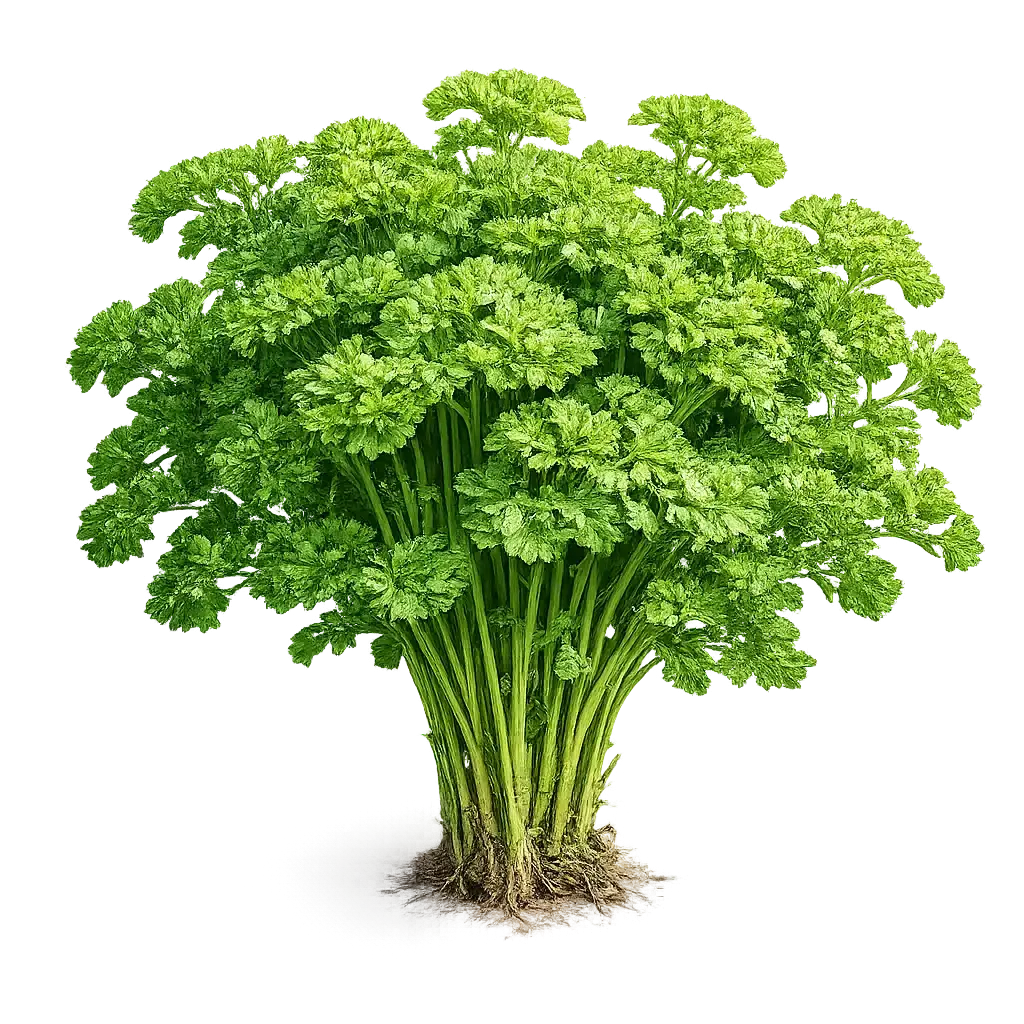
Parsley
Written By Arthur Simitian
QUICK FACTS
Common Name
Parsley, Flat-Leaf Parsley, Italian Parsley, Curly Parsley, Hamburg Parsley
Scientific Name
Petroselinum crispum
Plant Type
Biennial grown as an annual
Hardiness Zones
2 to 11 as annual; overwinters in zones 7 and warmer
Sun Requirements
Full sun to partial shade
Soil Type
Fertile, well-drained loam; pH 6.0 to 7.0
Plant Height
8 to 18 inches in the first year; to 36 inches in flower in year two
Spacing
6 to 9 inches
Uses
Culinary finishing herb, fines herbes, tabbouleh, gremolata, chimichurri, parsley sauce, stock base, medicinal diuretic and breath freshener, nutritive tonic high in vitamins C and K
Parsley suffers from the indignity of being taken for granted. It is so consistently available, so reliably present in every grocery store and on every restaurant plate, that the cook who actually grows it and uses it generously from fresh plants rather than from a wilting supermarket bunch may be surprised to discover that what they thought they knew about parsley is substantially underselling it. Fresh parsley from the garden, cut that morning and used in quantities that reflect what the herb actually costs to grow rather than what it costs to buy, tastes of green brightness and a clean, faintly peppery depth that transforms a dish rather than merely garnishing it. It is the difference between parsley as decoration and parsley as an ingredient, and growing your own is the straightest path between those two understandings.
Introduction
Petroselinum crispum is native to the central Mediterranean region, particularly the rocky hillsides and scrubland of Sardinia and the central Mediterranean islands, where it grows as a biennial producing a leafy rosette in its first year and a tall flowering stem in its second. In cultivation it is almost universally grown as an annual, with fresh plants started from seed each spring to provide the generous first-year leaf harvest that represents the herb at its best. The second-year flowering plant, while edible, produces leaves of reduced quality and flavor compared to the vigorous first-year growth, and most kitchen gardeners pull spent second-year plants and resow rather than waiting for the decline.
The plant is a member of the Apiaceae family, sharing its carrot-top appearance and umbel flowers with dill, cilantro, fennel, and lovage, and producing the deeply divided, pinnate to tripinnate bright green leaves that are among the most recognizable of any culinary herb. The genus name Petroselinum derives from the Greek for rock celery, reflecting the plant's native rocky habitat and its botanical proximity to celery in flavor and growth habit.
Two types dominate culinary use. Flat-leaf or Italian parsley, Petroselinum crispum var. neapolitanum, has flat, smooth, deeply divided leaves with a strong, clean, bright flavor that is significantly more intense than curly parsley and that survives cooking better. Curly parsley, Petroselinum crispum var. crispum, has the tightly ruffled, dark green foliage that most people recognize from garnishing applications, with a milder, less complex flavor and a texture that makes it more suitable for fresh garnish than for cooked preparations. The third type, Hamburg or root parsley, Petroselinum crispum var. tuberosum, is grown for its thick, edible root rather than the leaf and is a distinct crop more appropriately covered in a root vegetable context.
How to Grow
Sun Requirements
Parsley grows in full sun to partial shade, adapting to a wider light range than most of the strongly Mediterranean herbs in this series. In hot summer climates, partial shade of two to three hours in the afternoon extends the productive season by reducing the heat stress that accelerates bolting in midsummer. In cooler climates, full sun produces the most vigorous growth and the most flavorful leaves.
The minimum for productive cultivation is approximately four hours of direct daily sunlight. Below this threshold, parsley becomes weak, leggy, and pale, with diluted flavor and reduced vigor. It is one of the better performers among culinary herbs in partial shade positions that would be inadequate for Mediterranean herbs like thyme and rosemary, making it a practical choice for spots that receive good morning sun but afternoon shade.
Soil Requirements
Parsley is one of the more fertility-responsive herbs in the kitchen garden, rewarding good soil preparation with the vigorous, lush growth that provides the abundant leaf harvest the herb is capable of. Fertile, moist, well-drained loam with a pH of 6.0 to 7.0 produces the most productive plants. Incorporating compost generously before planting and maintaining soil moisture through regular irrigation or mulching meets the fertility and moisture needs of an herb that, unlike the lean-soil Mediterranean herbs, produces its best growth in well-amended garden soil.
Drainage remains important: parsley does not tolerate waterlogged soil and is susceptible to crown rot when the soil stays wet around the base of the plant. The ideal soil holds moisture but drains freely, a condition that composted garden loam achieves well and that heavy clay or very sandy soil does not without amendment.
Water Needs
Parsley requires consistent moisture throughout the growing season, more so than the drought-tolerant Mediterranean herbs but less demandingly than moisture-hungry annuals like basil. The broad, shallow root system does not access deep soil moisture effectively, and periods of significant drought without irrigation cause the plant to bolt prematurely and produce leaves of reduced quality and flavor.
Consistent, moderate irrigation during dry periods, combined with a thick mulch of compost or straw to conserve soil moisture between waterings, maintains the growing conditions that parsley performs best in. In climates with regular summer rainfall, supplemental irrigation is often unnecessary for established plants.
Planting
Parsley's most significant cultivation challenge is its notoriously slow and erratic seed germination, which takes two to four weeks under optimal conditions and can extend to six weeks in cool soil. The thick, waxy seed coat inhibits water absorption, and the enzyme inhibitors present in fresh seed add to the germination delay. Soaking seed in warm water for twelve to twenty-four hours before sowing softens the seed coat and removes inhibitors, meaningfully improving both germination speed and uniformity.
Direct sowing outdoors in early spring, as soon as the soil can be worked, is appropriate in zones 5 and warmer where the growing season is long enough for the direct-sown plants to establish fully before summer heat arrives. In zones 4 and colder, starting indoors under lights six to eight weeks before the last frost date and transplanting after frost risk has passed provides the head start that cold-climate growing seasons require.
Transplanting parsley is possible but requires care: the deep taproot that develops even in young seedlings resents disturbance, and transplanted seedlings should be moved with as much root ball intact as possible, into their final position rather than through intermediate potting, to minimize root disruption. Starting in deep cell packs or paper pots that can be planted out intact reduces transplant shock significantly.
A second sowing in midsummer provides a fresh planting of young, vigorous first-year plants for autumn and early winter harvest in mild climates, extending the season when the spring-sown plants are aging and declining in quality. In zones 7 and warmer, parsley overwinters reliably and provides a fresh harvest through the winter months before bolting in its second spring.
Plant Spacing
Space plants six to nine inches apart for a productive planting that allows adequate air circulation while filling the bed efficiently. At six-inch spacing, plants merge into a dense, productive stand by midsummer that provides a generous harvest surface. The closer spacing is appropriate for flat-leaf parsley harvested primarily as cut-and-come-again stems; the wider nine-inch spacing allows the fuller, rounded plant habit to develop for plants that will be harvested by taking individual outer stems rather than cutting the whole plant back.
Companion Planting
Parsley has several well-documented companion planting relationships that are among the more consistently reported and practically useful in the kitchen garden.
Tomatoes, alongside which parsley is one of the most traditionally recommended companions in European kitchen garden practice, with reports of improved tomato vigor and reduced aphid pressure on tomato plants grown in proximity to parsley; the Swallowtail butterfly and its larvae, which use parsley as a host plant, are also natural predators of several tomato pests
Asparagus, with which parsley has a particularly consistent traditional companion relationship, with reports of mutual benefit when the two are grown in adjacent beds; parsley reportedly deters asparagus beetle while asparagus roots may produce a compound beneficial to parsley growth
Roses, alongside which parsley is traditionally planted to deter aphids through the aromatic volatile compounds in the foliage
Chives and other alliums, with which parsley grows well in shared beds and whose pest-deterrent aromatic compounds complement parsley's own
Parsley does not grow well alongside alliums of the strong-scented bulb type including garlic and onions when planted in direct contact, and it is reported to perform poorly alongside lettuce if crowded. Adequate spacing resolves both issues.
Harvesting
Harvest Time
Parsley is harvested from the time the plant has established a full rosette of leaves, typically eight to ten weeks after germination for spring-sown plants, through the entire growing season until the plant bolts in its second year. The leaf quality is at its peak during the vigorous first-year growth from spring through midsummer, before the heat of late summer reduces the tenderness and brightness of the foliage. A second flush of prime quality growth often occurs in autumn after the heat breaks, making autumn-harvested parsley from spring-sown plants particularly good for fresh use and drying.
Harvest Method
Cut outer stems at the base of the plant, taking the most mature outer growth and leaving the central growing point and young inner stems intact to continue development. This cut-and-come-again approach allows repeated harvests from the same plant through the season, with new stems continuously replacing harvested ones from the central growing point.
Taking no more than one third of the plant's total foliage at any one harvest maintains vigor and ensures rapid regrowth. The most flavorful material is consistently the younger, recently expanded leaves near the top of each stem rather than the oldest, most mature leaves at the base.
For drying, cut whole stems and dry in loose bundles hung in a warm, well-ventilated location, or strip individual leaves onto drying racks. Parsley dries within one to two weeks and retains reasonable flavor for one year in airtight dark glass storage, though the dried herb loses the brightness and fresh green character that makes fresh parsley so valuable. Freezing whole stems in sealed bags maintains flavor better than drying and is the preferable preservation method for applications where the fresh character of parsley is important.
Gremolata: Finely chop a generous handful of fresh flat-leaf parsley leaves with two cloves of garlic and the finely grated zest of one lemon until everything is combined into a rough, fragrant green mixture. Scatter over osso buco, braised lamb shanks, or any long-braised meat dish in the final minute before serving, or stir into finished risotto just before plating. Gremolata is the simplest and most direct demonstration of what fresh parsley actually does in a dish: the sharp clean brightness of the leaf cuts through the richness of the braised meat, the lemon zest amplifies the effect, and the whole preparation is transformed in a way that no dried herb and no parsley-as-garnish ever achieves.
How to Use
Culinary Uses
The distinction between flat-leaf and curly parsley is not merely aesthetic and is worth understanding before deciding which to grow. Flat-leaf parsley has a significantly stronger, more complex flavor with a clean, bright, faintly peppery and slightly mineral quality that survives and improves through cooking. Curly parsley has a milder, more neutral flavor that works well as a fresh garnish but contributes less in cooked preparations. For the homestead kitchen garden where parsley is used as an ingredient rather than a decoration, flat-leaf parsley is the overwhelmingly practical choice.
In fines herbes, the classic French quartet of fresh herbs used for egg dishes, cream sauces, and delicate fish preparations, parsley is the base component alongside chervil, chives, and tarragon, present in the largest proportion and providing the green brightness against which the more distinctive flavors of the other herbs are set. The blend requires the freshest possible parsley used in genuine quantity rather than as a token addition, and growing your own is the only reliable way to have it available at the standard the preparation requires.
Tabbouleh, the Lebanese grain salad built around an abundance of fresh parsley rather than the token garnish that simplified Western versions often produce, uses flat-leaf parsley as the primary ingredient in volumes that make purchasing it impractical and growing it the obvious solution. A genuine tabbouleh is predominantly parsley by volume, with the bulgur wheat a background element rather than the base, and the herb's bright, clean flavor is the defining character of the dish.
Chimichurri, the Argentine condiment for grilled beef, uses flat-leaf parsley as the primary green component in a herb sauce with olive oil, garlic, red wine vinegar, and dried chili that is as dependent on the quality and freshness of the parsley as any preparation in this series. Home-grown flat-leaf parsley cut the day of making produces a chimichurri of noticeably superior freshness and flavor compared to one made with grocery store bunches.
As a stock and cooking base, parsley stems rather than the leaves provide a significant portion of the green, slightly earthy depth that characterizes good vegetable and chicken stocks. The stems are more intensely flavored than the leaves for this application, more aromatic when simmered, and represent a valuable use for material that would otherwise be composted when the leaves are harvested. Keeping a bag of parsley stems in the freezer to add to every stock pot is one of the simplest improvements available to a kitchen garden cook.
British parsley sauce, a butter and milk sauce thickened with flour and finished with an abundance of chopped parsley, is a traditional accompaniment to boiled gammon and white fish that is almost never made well from grocery store parsley and is transformed by home-grown flat-leaf parsley used in twice the quantity most recipes suggest.
Medicinal Uses
Parsley has genuine medicinal activity, though it occupies a different position in the medicinal herb hierarchy than the primary medicinal herbs elsewhere in this series. Its value is primarily as a nutritive tonic and as a gentle diuretic and digestive bitter rather than as a targeted therapeutic agent for specific conditions.
As a nutritional herb, parsley is one of the most nutrient-dense culinary plants available, with fresh leaves providing exceptional concentrations of vitamin K, vitamin C, vitamin A, folate, iron, and potassium. The vitamin K content of parsley is among the highest of any food plant, relevant to bone health and blood clotting regulation. The vitamin C content exceeds that of citrus fruits by weight, making generously used fresh parsley a meaningful dietary source of the vitamin in seasons and regions where fresh fruit is less available. These are functional nutritional contributions rather than pharmacological effects, but they are genuinely significant and represent one of the most direct ways that kitchen garden growing translates into nutritional benefit.
As a diuretic, parsley tea prepared from fresh or dried leaves and roots has documented mild diuretic activity relevant to mild fluid retention, urinary tract support, and the management of mild hypertension where reduced fluid volume is beneficial. The apiol and myristicin in parsley's volatile oil are the compounds primarily responsible for this activity. Parsley tea is a pleasant, mildly flavored preparation that provides this activity without the side effects associated with pharmaceutical diuretics.
As a breath freshener, the chlorophyll in parsley provides genuine deodorizing activity against the volatile sulfur compounds produced by garlic and onion metabolism, which is why the pairing of parsley with garlic-heavy dishes represents both culinary sense and practical medicinal application. Chewing fresh parsley after a garlic-rich meal is not folk medicine but a biochemically grounded intervention that genuinely reduces breath odor through chlorophyll's binding of sulfur compounds.
Pregnancy note: Parsley at normal culinary use quantities is entirely safe in pregnancy and is a valuable nutritional contributor. The traditional caution about parsley in pregnancy refers specifically to large medicinal doses of parsley seed oil or concentrated parsley extract, which contain apiol at levels that historically were used as an abortifacient. Using fresh parsley generously in cooking, as described throughout this guide, involves no risk whatsoever. The distinction between culinary use and concentrated medicinal use of the seed oil is important and the two should not be conflated.
Storage
Fresh parsley stores for one to two weeks refrigerated, stood upright in a small amount of water and loosely covered with a bag, or wrapped in a damp paper towel in a sealed container. The upright-in-water method consistently outperforms the wrapped method for maintaining the crispness and bright color that fresh parsley requires for culinary applications where the herb's appearance matters.
Freezing is the superior preservation method for most culinary applications: whole stems frozen in sealed bags, or chopped parsley frozen in ice cube trays with a small amount of water and then transferred to bags, provide a preserved herb that retains far more of the fresh character than dried parsley and is adequate for all cooked applications. Frozen parsley is not appropriate for fresh garnishing and raw use, but for any application where the parsley is cooked or incorporated into a sauce, frozen is preferable to dried.
Dried parsley stores for one year in airtight dark glass containers, though the quality decline between fresh and dried is more pronounced with parsley than with most herbs. Parsley's flavor compounds are particularly volatile and heat-sensitive, and even carefully dried parsley loses much of the brightness that makes the fresh herb distinctive.
Lifespan of the Plant
Parsley is a biennial that completes its lifecycle over two years: a leafy, productive first year followed by a flowering and seed-setting second year before dying. In the kitchen garden it is managed almost universally as an annual, with fresh plants started from seed each spring and pulled at the end of the season or when they bolt in their second spring, before the leaf quality declines and the plant commits its energy to flowering.
In zones 7 and warmer, parsley overwintered from a spring sowing provides fresh leaves through the winter months and into early spring, at which point second-year bolting begins and the plant should be replaced with a fresh sowing. Allowing one or two second-year plants to complete their lifecycle and set seed provides seed for the following season's planting, with the self-sown seedlings that appear in the garden from the shed seed reducing the need for deliberate annual sowing once the cycle is established.
Parsley that is allowed to flower provides an important late-season nectar source for beneficial insects including parasitic wasps and predatory flies that are valuable natural pest control agents in the kitchen garden. Leaving one or two plants to flower rather than removing all bolting plants is a worthwhile ecological contribution that costs nothing in terms of the culinary harvest from the remaining plants.
Pros and Cons
Advantages
Essential culinary herb for fines herbes, gremolata, tabbouleh, chimichurri, and virtually every European and Middle Eastern culinary tradition
Exceptional nutritional density: among the highest food-plant sources of vitamin K, vitamin C, vitamin A, folate, and iron
More versatile light tolerance than most culinary herbs; productive in partial shade positions unsuitable for Mediterranean herbs
Overwinters in zones 7 and warmer, providing fresh herb through the cold months
Tolerates moderate cold; survives light frost and extends the productive season into late autumn
Parsley stems are as valuable as leaves for stock making, providing a use for material otherwise composted
Flowers provide late-season beneficial insect habitat for parasitic wasps and hoverflies
Genuinely improved flavor when grown at home and used fresh versus commercial supply
Limitations
Slow, erratic germination requiring patience and pre-soaking management
Biennial lifecycle means replanting each year; not the low-maintenance permanent planting of perennial herbs
Deep taproot resents transplanting; direct sowing or careful transplant management required
Dries poorly compared to most culinary herbs; freezing is the superior preservation method
Prone to carrot fly and parsley worm (swallowtail butterfly larvae) feeding that can defoliate plants rapidly
Requires consistent moisture; more irrigation-dependent than drought-tolerant Mediterranean herbs
Common Problems
Carrot fly is the most consistently damaging pest of parsley in temperate gardens, with the larvae tunneling through the roots and causing the yellowing, wilting, and eventual death of affected plants. The adult flies are attracted to the smell of bruised parsley foliage, which makes harvesting and thinning operations the primary trigger for infestation. Fine mesh row covers installed over the planting immediately after sowing and maintained through the season exclude the adult flies without any chemical intervention. Companion planting with strong-scented herbs including rosemary and sage can also reduce carrot fly pressure by masking the foliage volatile compounds that guide the adult flies.
Parsley worm, the caterpillar of the Black Swallowtail butterfly in North America, feeds on parsley foliage and can defoliate a plant rapidly when caterpillars are numerous. The caterpillars are strikingly beautiful, banded in green, black, and yellow, and represent a genuine ethical consideration for the kitchen gardener: the Black Swallowtail butterfly is a beneficial and increasingly pressured pollinator, and the decision to remove caterpillars or tolerate their feeding is a legitimate garden management choice with arguments on both sides. Growing enough parsley to share with the caterpillars while still maintaining a useful harvest is the most ecologically generous approach and is entirely practical with a modestly sized planting.
Leaf spot diseases including Septoria leaf spot cause tan to brown circular spots on parsley leaves in humid conditions with poor air circulation. The damage reduces leaf quality and harvest area but is rarely plant-threatening. Appropriate plant spacing, removal of heavily affected lower leaves, and avoiding overhead watering manage the disease adequately in most garden situations.
Bolting in the second year is not a problem but a natural lifecycle event. The distinction is worth making clearly: first-year plants that bolt prematurely due to heat stress, drought, or root disturbance are a management response to poor growing conditions, while second-year plants that bolt are completing their natural biennial lifecycle as intended. Managing growing conditions to reduce first-year bolting, and managing the planting cycle to ensure fresh first-year plants are always available, are the relevant responses to each situation respectively.
Varieties
Italian Large Leaf, also sold as Catalogno or Giant of Italy, is the flat-leaf variety most consistently recommended by culinary herb growers for kitchen use, producing very large, deeply divided, intensely flavored leaves on vigorous plants that provide an abundant harvest over a long season. It is the appropriate default choice for any grower who has not grown flat-leaf parsley before and wants to start with the best available variety.
Titan is a flat-leaf variety with excellent vigor, disease resistance, and flavor comparable to Italian Large Leaf. It is a reliable commercial standard for the type and widely available from herb seed suppliers.
Forest Green and Extra Curled Dwarf are both curly parsley varieties producing the dense, tightly ruffled foliage appropriate for fresh garnishing applications. Forest Green has particularly dark, vivid green coloration and is considered one of the most attractive curly varieties for presentation. Both have significantly less flavor than flat-leaf varieties and are grown primarily for ornamental and garnishing purposes.
Petra and Moss Curled are standard curly varieties widely available and appropriate for the same garnishing applications, with good vigor and disease resistance.
Final Thoughts
The case for growing your own parsley is not complicated. It is one of the most important culinary herbs in the Western kitchen, it grows readily in a wide range of conditions including the partial shade that limits most other herbs, it provides exceptional nutritional value as a daily kitchen ingredient rather than a garnish, and the quality difference between home-grown flat-leaf parsley used generously and the commercial product is as clear as any quality difference in this entire series.
The slow germination requires patience. The biennial nature requires annual replanting. The taproot requires care at transplanting. These are minor management demands for a herb that returns compound interest on every small inconvenience they represent.
Sow it in early spring. Soak the seeds the night before. Give it good soil and consistent water. Use it as an ingredient, not as a garnish. Make the gremolata, the tabbouleh, the chimichurri. Discover what parsley actually is when it is used the way it deserves to be used.