
Roselle (Hibiscus)
Written By Arthur Simitian
QUICK FACTS
Common Name
Roselle, Jamaican Sorrel, Florida Cranberry, Hibiscus, Flor de Jamaica
Scientific Name
Hibiscus sabdariffa
Plant Type
Tender annual (perennial in zones 10 to 11)
Hardiness Zones
Annual in zones 8 and below; perennial in zones 10 to 11
Sun Requirements
Full sun
Soil Type
Well-drained, fertile loam; tolerates moderately poor soils
Plant Height
4 to 8 feet in a single season
Spacing
24 to 36 inches
Harvest Part
Calyces (the fleshy red structures surrounding the seed pod after flowering)
Uses
Culinary teas and beverages, jams, syrups, sauces, medicinal antihypertensive and antioxidant, natural dye, ornamental
Roselle is the plant behind hibiscus tea, the deep crimson, bracingly tart drink known as agua de Jamaica in Mexico and Central America, karkade across the Middle East and North Africa, bissap in West Africa, and sorrel in the Caribbean, where it is the defining flavor of Christmas. It is one of the most globally consumed herbal beverages in existence, produced from a single plant that grows from seed to eight feet in a single warm season, produces some of the most visually spectacular foliage and flowers available to the annual herb garden, and provides a harvest of vivid crimson calyces with enough tartaric and citric acid to rival cranberries for the title of most intensely flavored herb in this series. It is not widely grown in temperate North American gardens, and that is an oversight worth correcting.
Introduction
Hibiscus sabdariffa is native to tropical West Africa and has been cultivated across the tropics and subtropics for several thousand years, spreading from its African origin through Arab trade routes to the Middle East, across the Indian Ocean to South and Southeast Asia, and westward with the slave trade to the Caribbean and the Americas, where it took root in the cooking traditions of every culture that encountered it and developed independently into the regional beverages and preparations that now make it one of the most culturally diverse of all food plants.
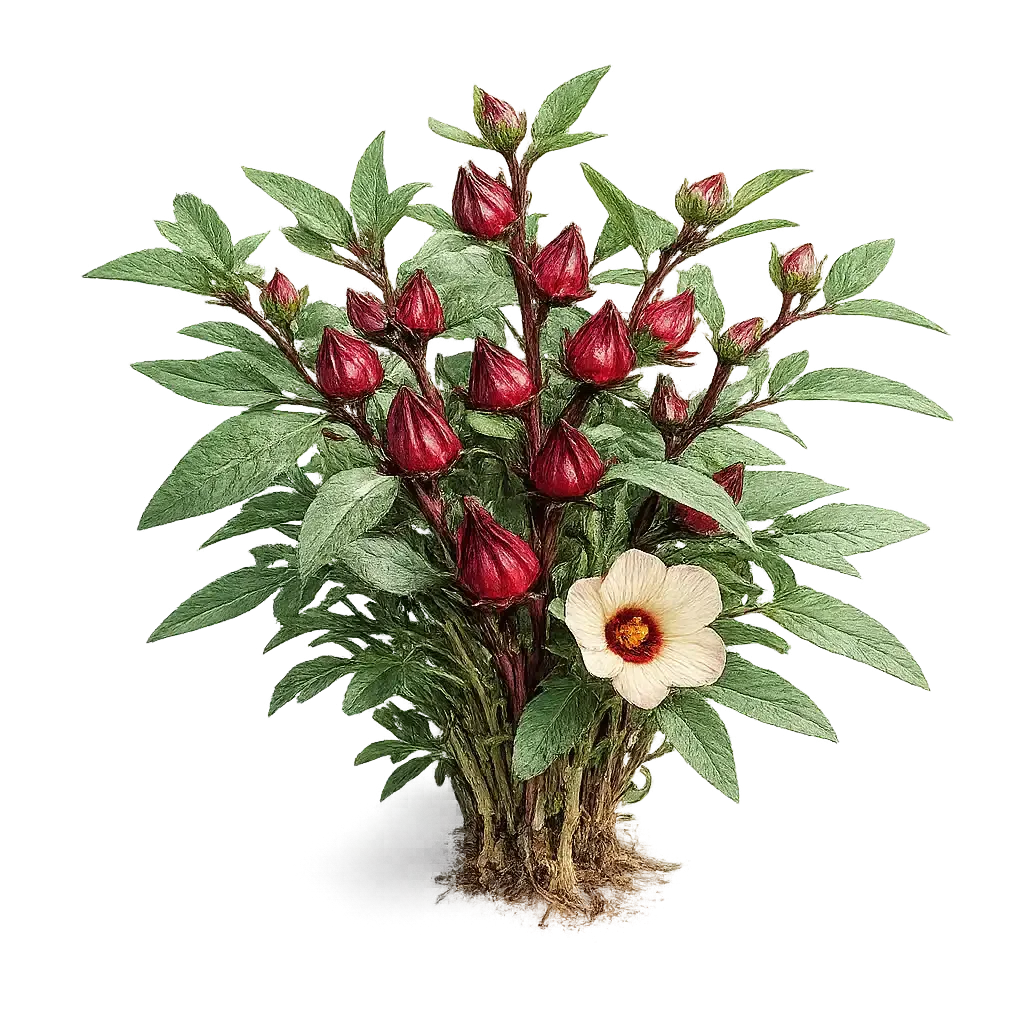
The plant is a fast-growing, branched annual reaching four to eight feet in a single growing season in warm climates, with upright reddish stems, large deeply lobed leaves often flushed with deep red, and the large pale yellow flowers with dark crimson centers that are characteristic of the hibiscus family. The flowers themselves are short-lived, lasting one day, but they are followed by the structure that makes roselle remarkable: the calyx, the fleshy, deeply pigmented, bright crimson sepals that swell and thicken after the petals fall, surrounding the developing seed pod in a plump, juicy, deeply tart structure that is the edible harvest.
The calyces are packed with hibiscus acid, citric acid, tartaric acid, and the anthocyanin pigments that produce their vivid crimson color and much of their medicinal activity. They contain more vitamin C than most citrus fruits by weight, significant quantities of flavonoids and polyphenols with documented antioxidant and antihypertensive activity, and the sour, intensely fruity flavor that has made hibiscus tea one of the most widely consumed herbal beverages on the planet for centuries.
How to Grow
Sun Requirements
Roselle demands full sun and is one of the most light-hungry annual herbs in this series, reflecting its tropical origin in the high-intensity sun of equatorial West Africa. Eight or more hours of direct daily sunlight is the minimum for productive calyx development, and the most abundant harvests come from plants in the maximum available light. In partial shade roselle grows tall and leggy, produces fewer flowers and therefore fewer calyces, and the calyx quality in terms of size, color intensity, and flavor concentration is noticeably reduced compared to plants in full sun.
Soil Requirements
Roselle is less demanding about soil quality than most of the Mediterranean herbs in this series, tolerating moderately poor and slightly acidic soils and adapting well to average garden loam without the lean, alkaline conditions that Mediterranean herbs require. What it does need is reasonable drainage: like most annual crops that invest heavily in above-ground growth and fruit production, roselle performs poorly in waterlogged conditions where anaerobic root stress limits the nutrient uptake that supports its rapid growth.
Fertile, well-drained loam with a pH of 5.5 to 7.0 produces the most vigorous plants and the most abundant calyx harvest. Incorporating compost at planting time supports the fast, heavy growth that characterizes productive roselle, and a balanced fertilizer application at planting and again at mid-season maintains the nutrient availability that a plant growing to six feet in a single season requires. Unlike the lean-growing Mediterranean herbs where fertilizing reduces essential oil concentration, roselle responds positively to adequate fertility with more and larger calyces.
Water Needs
Roselle has moderate water needs during the growing season, with consistent moisture supporting the rapid vegetative growth of the early and mid season and the calyx swell that determines harvest size. It is more drought tolerant than many annual crops once established, and the water stress of a genuinely dry late summer actually promotes calyx development in some growing conditions, as the plant accelerates its reproductive effort in response to environmental stress.
Consistent irrigation during the establishment period of the first four to six weeks after transplanting or germination, followed by deep, infrequent watering once the plant is well-rooted, produces the best combination of vigorous growth and productive calyx development. Overwatering on poorly drained soils encourages foliar disease and root problems that reduce productivity.
Planting
Roselle requires a long, warm growing season to produce a substantial calyx harvest, with the optimal window being at least 150 to 180 frost-free days. In most of North America outside the deep South and Southwest, this means starting seeds indoors six to eight weeks before the last frost date and transplanting to the garden only after soil temperatures have settled above 65 degrees Fahrenheit.
Seeds germinate readily at warm temperatures, typically within five to seven days at 75 to 85 degrees Fahrenheit, and the seedlings grow quickly once established. Soak seeds in warm water for four to six hours before sowing to soften the seed coat and improve germination speed. Transplant outdoors only when night temperatures are consistently above 55 degrees and all frost risk has passed; roselle is genuinely cold-sensitive and chilling injury at temperatures below 50 degrees stunts growth and delays the entire season's development.
Direct sowing outdoors is appropriate in zones 9 and warmer where the growing season is long enough without the indoor head start. In cooler climates, the indoor starting is not optional: without it the season ends before the calyx harvest matures.
Plant Spacing
Space plants 24 to 36 inches apart to accommodate the large, bushy form that a well-grown roselle develops by midsummer. Crowded plants compete for light and air circulation, increasing disease pressure on the dense foliage and reducing calyx production per plant. The generous spacing that seems extravagant in early summer is entirely justified by August, when each plant has typically reached four to six feet and spread nearly as wide.
Companion Planting
Roselle's height and dense canopy make it a useful companion for lower-growing crops that benefit from light afternoon shade in hot climates. Lettuce, spinach, and other cool-season crops extending into early summer under roselle's canopy tolerate the moderate shade that the tall annual provides, effectively doubling the use of the bed space through the season transition.
Basil, which grows well in the same hot, humid conditions that roselle prefers and benefits from the microclimate moderation that roselle's canopy provides in peak summer heat
Okra, which shares roselle's tropical origin, identical growing requirements, and mutual tolerance of the heat and humidity that both crops prefer, making them natural companions in the warm-climate kitchen garden
Sweet potatoes, whose sprawling ground-level habit complements roselle's upright, tall structure in a layered planting that uses both vertical and horizontal space efficiently
Marigolds at the border, which deter nematodes and various pest insects from the roselle bed while providing a visual contrast to the tall, dramatic roselle canopy above
Harvesting
Harvest Time
The calyx harvest begins when the petals fall from the flowers, typically seven to ten days after flowering, when the calyces have swelled to full size and developed their maximum color and tartness. The harvest window for each calyx is relatively short: calyces that are harvested too early are small and underdeveloped, while those left too long on the plant begin to dry and toughen as the seed pod matures. The ideal harvest moment is when the calyx is plump, fully crimson, and the seed pod inside is still soft and green.
The harvest period runs from late summer through the first frost, typically from August through October in most temperate North American gardens, with the heaviest production in the weeks before frost. In warm climates with a longer season, production can continue for four to six months with successive flushes of flowers and calyces from the same plants.
Harvest Method
Snap or cut the calyx from the stem at the base of the fleshy structure. The calyx comes away cleanly from the stem with a firm downward twist, leaving the remaining plant to continue producing new flowers and calyces from the upper growth. Each calyx must then be separated from the seed pod inside: hold the calyx in one hand and push the seed pod out through the base with your thumb. The seed pod is not typically used in culinary preparations; the fleshy calyx is the edible harvest. Both can be composted except for seeds saved for next year's planting.
Harvesting every two to three days during the peak production period maintains a continuous supply of fresh calyces at optimal quality and prevents any calyces from becoming overripe and hardening on the plant. A productive roselle plant in a good season can yield several pounds of fresh calyces over the harvest period.
Agua de Jamaica: Rinse two cups of fresh or one cup of dried roselle calyces and place in a large pot with eight cups of water. Bring to a boil, reduce heat, and simmer for ten minutes. Remove from heat, add sugar to taste while the liquid is still hot, and allow to steep for another twenty minutes. Strain, pressing the calyces gently to extract the remaining liquid. Serve over ice. The result is the most vivid, most intensely colored beverage in the herb garden, bracingly tart, deeply floral, and entirely unlike anything produced by any other plant in this series. A squeeze of lime is traditional and improves it further.
How to Use
Culinary Uses
Fresh roselle calyces have a flavor that sits between cranberry and rhubarb with a floral hibiscus note that neither of those fruits provides. They are intensely tart due to their high organic acid content and vivid crimson due to the anthocyanin pigments that make them one of the most visually dramatic ingredients available from the herb garden. This tartness and color are the two primary characteristics around which all culinary applications of roselle are built.
Hibiscus tea, prepared by simmering fresh or dried calyces in water and sweetening to taste, is the most widely consumed application globally and the one most likely to be familiar to growers who have not yet grown the plant themselves. Prepared from home-grown, fresh-dried calyces rather than from commercial dried hibiscus of uncertain age and origin, the quality difference is dramatic: the flavor is brighter, the color more vivid, and the aroma more complex than anything available in a commercial product.
Roselle jam and jelly, prepared by cooking fresh calyces with sugar and water in the proportions used for any high-acid fruit jam, produces a deeply colored, intensely flavored preserve with natural pectin levels sufficient for setting without added pectin in many preparations. The flavor profile is similar to cranberry jam but with the distinctive floral hibiscus character that makes it recognizably itself.
Roselle syrup, made by simmering calyces in a concentrated sugar solution and straining, provides a versatile pantry ingredient for cocktails, sparkling water, lemonade, salad dressings, glazes for pork and duck, and ice cream toppings. The vivid crimson color of roselle syrup is one of its most practically useful characteristics, providing a natural food colorant of exceptional intensity for applications where visual impact is part of the purpose.
In Caribbean cooking, roselle sorrel is a traditional Christmas drink prepared with ginger, cloves, and rum alongside the hibiscus, producing a deeply spiced, festive beverage that is as culturally specific to the Caribbean holiday season as eggnog is to the Anglo-American one. Growing roselle for this single application alone is justification for including it in the kitchen garden.
Fresh young roselle leaves are edible and used as a vegetable in West African, Southeast Asian, and parts of Caribbean cooking, with a pleasant, mild tartness when raw and a spinach-like quality when cooked briefly. They are less commonly used in North American kitchens but represent an additional harvest from a plant that is already being grown for its calyces.
Medicinal Uses
Roselle has one of the more clinically investigated medicinal profiles of any culinary herb beverage plant, with multiple randomized controlled trials examining its antihypertensive effects and producing consistently positive results.
For blood pressure management, several clinical trials comparing hibiscus tea to placebo and to standard antihypertensive medications have found meaningful reductions in both systolic and diastolic blood pressure in hypertensive adults following regular consumption of hibiscus tea. The active compounds are the anthocyanins and hibiscus acid, which appear to inhibit angiotensin-converting enzyme (ACE) through a mechanism similar to pharmaceutical ACE inhibitors, the drug class that includes lisinopril and enalapril. The effect size in trials has been modest to moderate but consistent across multiple studies in different populations, and hibiscus tea is listed as a dietary approach to blood pressure management in several evidence-based clinical guidelines.
The antioxidant activity of roselle calyces, driven by the anthocyanin content that is among the highest of any food plant by weight, provides documented protection against lipid oxidation and inflammatory markers in clinical studies, consistent with the general evidence base for anthocyanin-rich foods in cardiovascular health.
As a source of vitamin C, fresh roselle calyces provide a significant contribution to daily intake, with dried calyces retaining substantial vitamin C content even after drying. The traditional use of hibiscus preparations in tropical medicine as a treatment for scurvy and vitamin deficiency reflects this genuine nutritional density.
People taking antihypertensive medications should be aware that regular consumption of hibiscus tea may produce additive blood pressure-lowering effects that require monitoring and potential medication adjustment. This is a practical consideration rather than a contraindication, and it should prompt a conversation with a prescribing physician rather than avoidance of the plant.
Natural Dye Uses
The anthocyanin pigments in roselle calyces produce vivid pink to deep red dyes on natural protein fibers including wool and silk, with the color shifting from pink in neutral conditions toward purple in alkaline mordant baths. Roselle is one of the most accessible natural dye sources available to the homestead dyer, providing abundant material from a single season's harvest and producing colors of genuine intensity without the mordanting complexity required by some other natural dye plants.
Storage
Fresh roselle calyces store for one week refrigerated in a single layer on a tray, or up to two weeks in an airtight container. For longer storage, drying is the most appropriate method: spread the calyces in a single layer on drying racks or mesh screens in a warm, well-ventilated location, or use a food dehydrator at 95 to 115 degrees Fahrenheit until completely dry and leathery, typically six to twelve hours depending on the size of the calyces and the ambient humidity.
Properly dried roselle calyces store for two years in airtight dark glass containers with good color and flavor retention. The dried calyces are lighter, more concentrated, and more convenient than fresh material for most culinary applications, and preparing a substantial dried stock from the season's harvest is the most practical way to extend the roselle season through the winter months.
Roselle syrup and jam store as standard preserves: processed jars at room temperature for one year, refrigerated jars for three months. Frozen fresh calyces in sealed bags maintain quality for one year.
Lifespan of the Plant
Roselle is an annual in all climates below zone 10, completing its full lifecycle from germination to seed set in a single growing season and dying with the first frost. In zones 10 and 11 it behaves as a short-lived perennial, persisting through mild winters and producing successive seasons of growth from the same woody base, though it typically declines after two to three seasons even in frost-free climates and produces best in its first year.
The annual nature means that roselle must be re-grown from seed each spring in temperate climates. Seed saving is straightforward: allow a small number of calyces on each plant to fully mature and dry on the plant at the end of the season, then harvest the seed pods, dry completely in a paper bag, and store in a cool, dry, dark location through winter. Roselle seeds remain viable for three to four years under appropriate storage conditions.
Pros and Cons
Advantages
Produces the basis of hibiscus tea, one of the most widely consumed herbal beverages in the world, from home-grown material of far superior freshness and quality than commercial dried product
Exceptional ornamental value: tall, dramatic, deeply colored stems and foliage make it one of the most visually striking plants available to the annual herb garden
Clinically documented antihypertensive activity from regular tea consumption
Among the highest anthocyanin content of any food plant, providing exceptional antioxidant activity
Multiple culinary applications: tea, jam, syrup, fresh leaves, natural dye
Rapid growth from seed to harvestable plant in a single warm season
Seed saving is simple and reliable; viable seed stores for three to four years
Cultural and culinary significance across dozens of global food traditions
Limitations
Requires a long warm season of 150 or more days; indoor starting is essential in most temperate North American climates
Cold-sensitive; damaged by temperatures below 50 degrees Fahrenheit and killed by any frost
Annual requiring re-growing from seed each year
Grows very large, to six feet or more, requiring substantial garden space
Calyx harvest processing is labor-intensive, requiring individual separation of calyx from seed pod
May interact with antihypertensive medications; monitoring recommended for those on blood pressure drugs
Less familiar to many temperate gardeners than European culinary herbs, requiring some discovery to integrate into cooking habits
Common Problems
Roselle is a vigorous, fast-growing annual with relatively few serious pest or disease problems when grown in appropriate warm, well-drained conditions with adequate spacing for air circulation.
Flea beetles cause small round holes in the leaves, particularly on young transplants in the weeks after planting out. The damage is cosmetic rather than plant-threatening on established plants, and the plants typically outgrow flea beetle pressure as they increase in size. Row covers over transplants for the first two to three weeks after planting protect the most vulnerable establishment stage.
Aphids occasionally colonize the growing tips, particularly in the early season when the soft new growth is most accessible. Natural predator populations typically manage the infestation adequately as the season progresses, and a strong water spray to dislodge aphids from the tips is effective for acute infestations without chemical intervention.
Cercospora leaf spot, a fungal disease producing circular brown spots with yellow halos on the foliage, occurs in conditions of high humidity with poor air circulation. Appropriate spacing, removal of heavily affected lower leaves, and avoiding overhead watering that keeps foliage wet are the management measures. The disease is rarely severe enough to threaten the harvest in adequately spaced, well-ventilated plantings.
Root-knot nematodes are a significant problem in sandy soils in warm climates where nematode populations are established. Marigold companions, crop rotation with non-host crops, and the selection of nematode-resistant companion plants reduce nematode pressure over successive seasons.
Varieties
Hibiscus sabdariffa var. sabdariffa is the culinary roselle described throughout this guide, grown for its fleshy crimson calyces. It is the standard type available from most seed suppliers offering roselle seed, and it is appropriate for all the culinary and medicinal applications described here.
Victor is a compact selection growing to three to four feet rather than the standard four to eight feet, more appropriate for smaller gardens and container growing while retaining good calyx production. It is the most practical variety for gardeners with limited space who want roselle production without the full-size plant.
Thai Red is a selection with particularly deep crimson coloration in both the stems, leaves, and calyces, maximizing the ornamental impact of the plant while producing calyces with the highest anthocyanin content and most intense flavor of common named varieties.
Hibiscus sabdariffa var. altissima is a separate botanical variety grown for fiber production rather than calyx harvest, reaching twelve feet or more and producing calyces of lower culinary quality. This variety should be avoided when purchasing seed for kitchen garden use; seed should be sourced from suppliers specifically offering the var. sabdariffa culinary type.
Final Thoughts
Roselle rewards the gardener who grows it with a harvest unlike anything else in the annual herb garden: an ingredient that produces the most intensely colored, most bracingly tart, most distinctively flavored beverage in the kitchen from plants that are simultaneously among the most ornamental tall annuals available. Every culture that has encountered this plant has incorporated it into its food tradition as something essential. That consensus across dozens of independent culinary traditions is not coincidence.
The growing requirements are straightforward: a long warm season, full sun, adequate space, and the indoor starting discipline that most of the best heat-loving annuals require in temperate climates. Meet those requirements and the plant does the rest, growing rapidly to an impressive size and producing a harvest of vivid crimson calyces from late summer through frost that can be dried and stored for a year's supply of hibiscus tea, made into jam and syrup, and used to bring one of the most globally significant culinary traditions into the homestead kitchen.
Start the seeds in March. By October you will have more hibiscus than you can easily process, and you will understand why the rest of the world never stopped growing it.