
Sage
Written By Arthur Simitian
QUICK FACTS
Common Name
Sage, Common Sage, Garden Sage, Culinary Sage
Scientific Name
Salvia officinalis
Plant Type
Hardy semi-evergreen perennial subshrub
Hardiness Zones
4 to 8
Sun Requirements
Full sun
Soil Type
Well-drained, lean to average; dislikes heavy, wet soils
Plant Height
18 to 30 inches
Spacing
18 to 24 inches
Uses
Culinary, medicinal antimicrobial and digestive, menopausal symptom support, poultry stuffing, sage butter, smudging, companion plant, pollinator support
Sage has been considered one of the most important medicinal and culinary plants in the Western tradition for at least two thousand years, and the medieval Latin maxim that asks why anyone should die when sage grows in the garden reflects not botanical hyperbole but a genuine and widely held conviction that the herb's properties were broad enough and important enough to justify the claim. The modern kitchen knows sage primarily as the herb for brown butter and pork stuffing, and those applications are real and excellent. But the full scope of what sage offers the homestead herb garden, from its genuine antimicrobial and antispasmodic activity through its increasingly well-documented support for menopausal symptoms and cognitive function, makes it one of the most complete and most permanently useful herbs a gardener can establish on a well-drained, sunny site.
Introduction
Salvia officinalis is native to the dry, rocky hillsides and coastal scrubland of the northern Mediterranean, particularly the Dalmatian coast and the limestone karst regions of what is now Croatia and the surrounding Adriatic coast, where it grows naturally as a compact, woody subshrub on thin, alkaline, freely draining soils in full sun exposure. The species name officinalis designates it as an official medicinal plant in the European pharmacopoeial tradition, a designation it shares with only a handful of herbs whose medicinal reputation was strong enough to warrant formal recognition.
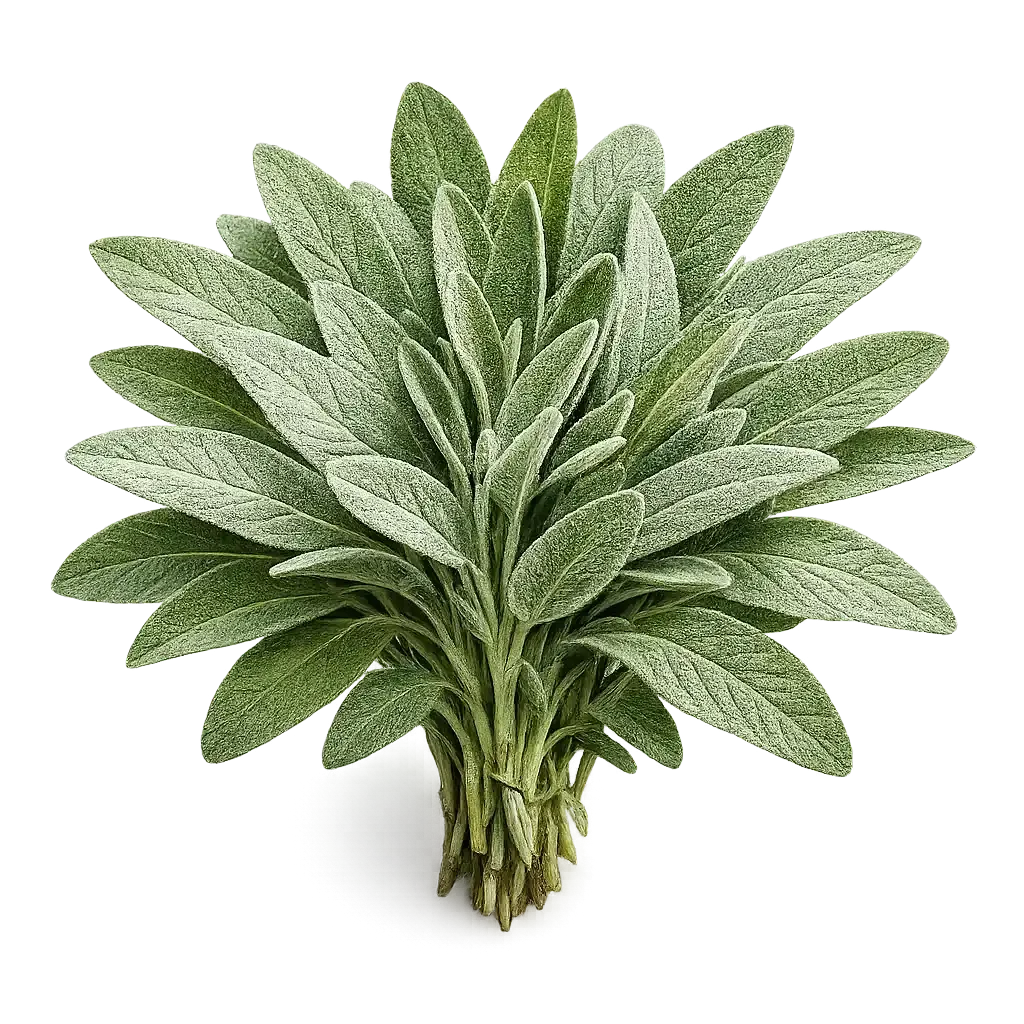
The plant is a member of the Lamiaceae mint family, with the square stems and opposite leaves of the family, and produces the broad, pebbly, silver-green leaves and tall spikes of violet-blue flowers that make it one of the more visually distinctive herbs in the garden. The pebbled texture of the leaves is produced by dense glandular hairs covering the leaf surface, and these same hairs are the structures that produce and store the volatile oils, primarily thujone, camphor, cineole, and borneol, that give sage its characteristic strong, slightly medicinal, resinous aroma.
On the homestead, sage earns its place as an essential culinary herb with an irreplaceable role in several classic preparations, as a medicinally active plant with genuine and well-documented effects across several body systems, and as a structurally beautiful semi-evergreen perennial that provides year-round garden interest and pollinator support during its spectacular early summer flowering season. It is, alongside thyme and rosemary, one of the three foundational perennial Mediterranean culinary herbs that no serious herb garden should be without.
How to Grow
Sun Requirements
Sage requires full sun as absolutely as any herb in this series. Six or more hours of direct daily sunlight is the minimum, and eight to ten hours produces the most compact, most intensely aromatic plants with the highest thujone and cineole concentration. In partial shade sage becomes open and leggy, produces diluted flavor and medicinal activity, and is significantly more susceptible to the powdery mildew and root problems that affect plants in insufficient light. The sunniest available well-drained position is always the right position for sage, without compromise.
Soil Requirements
Sage's origin on the thin limestone soils of the Dalmatian coast translates directly into a preference for lean, well-drained, alkaline-tolerant soil that performs best when not overfed or over-watered. The volatile oil concentration that defines both the culinary and medicinal value of sage is highest on lean soils where vegetative growth is restrained, and the most intensely flavored garden sage is always grown on poor, dry, well-drained ground rather than on rich, moisture-retentive garden soil.
Well-drained soil is the critical requirement above all others. Sage on waterlogged or persistently moist soil develops root rot that kills the plant reliably, and this is especially problematic in winter when cold, wet soil conditions are most damaging to the woody root system. Raised beds, naturally free-draining sandy or gritty soils, and sloped or elevated positions all provide appropriate drainage. On heavy clay, incorporating grit and raising the planting area are both necessary rather than optional.
Soil pH from 6.0 to 8.0 is tolerated, with a preference for the near-neutral to mildly alkaline conditions of its native limestone habitat. No supplemental fertilizing is needed or beneficial once the plant is established; a thin annual topdressing of compost in spring provides adequate nutrition without the excessive nitrogen that encourages the lush, watery, weakly flavored growth that defeats the purpose of growing sage for its culinary and medicinal properties.
Water Needs
Established sage is highly drought tolerant and one of the most water-independent perennial herbs available. The deep woody root system of a second-year or older plant accesses subsoil moisture effectively through extended dry periods, and supplemental irrigation in established plants is typically only needed during the most severe and prolonged summer droughts in the driest climates.
In the first growing season, moderate and consistent watering supports root establishment without the excessive moisture that promotes the root rot sage is susceptible to in poorly drained soils. From the second year, the plant manages its own moisture requirements in most temperate climates, and the greater risk is overwatering rather than underwatering in all but the most arid conditions.
Planting
Sage is most reliably established from nursery transplants or from stem cuttings taken from established plants. Starting from seed is viable but slower, with seed germination requiring two to three weeks at warm temperatures and the resulting seedlings growing slowly enough that transplants or cuttings are more practical for most gardeners.
Stem cuttings from softwood tip growth in early summer root readily in well-drained gritty medium within three to four weeks, and this is both the most reliable propagation method and the most appropriate way to take rejuvenating divisions from older plants that have become woody and less productive. The cuttings can be rooted directly in the garden in a sheltered spot with free-draining soil, or rooted in pots and transplanted in autumn or the following spring.
Spring planting after the last frost date, into warm soil, gives the best establishment results. Sage planted in autumn in zones 5 and 6 may not establish its root system sufficiently before winter and is more vulnerable to cold damage than well-established plants. In zones 7 and warmer, autumn planting works well and allows the plant to establish through the mild winter before the heat of summer arrives.
Plant Spacing
Plants should be spaced 18 to 24 inches apart to allow the broad, spreading subshrub to develop its full form and to ensure the air circulation that reduces powdery mildew pressure on the dense, persistent foliage. At the 18 inch spacing, plants typically merge into a continuous aromatic border by their third year. At 24 inches, individual plant form is maintained more clearly, which is preferable in ornamental herb garden designs where the architectural quality of mature sage plants is part of the visual composition.
Companion Planting
Sage is one of the most consistently recommended companion plants in the traditional kitchen garden, with a well-established reputation for deterring a range of insect pests through its strongly aromatic volatile oils.
Brassicas including cabbage, broccoli, and kale, where sage is one of the most traditional companion plants for deterring cabbage white butterfly, cabbage moth, and the root fly that affects brassica family crops, with some experimental support for aromatic deterrence alongside the consistent traditional record
Carrots, where sage is traditionally interplanted to deter carrot root fly, with the aromatic volatile oils masking the volatile compounds that guide the female fly to carrot foliage for egg laying
Strawberries, alongside which sage is a traditional companion in European kitchen gardens, with traditional reports of improved strawberry flavor and health in the vicinity of established sage plants
Tomatoes, where aromatic herbs including sage in the border are used to deter aphids, whitefly, and the range of volatile-compound-guided pests that affect the crop
Rosemary, thyme, and lavender, with which sage shares identical soil, light, and water requirements, making it a natural grouping companion in the Mediterranean herb bed where all four can be managed as a unified, low-maintenance aromatic planting
Sage is not a good companion for alliums including onions and chives, with traditional reports of mutual inhibition when these plants are grown in close proximity, and they are best separated in the kitchen garden layout.
Harvesting
Harvest Time
Sage leaves are harvested throughout the growing season from late spring through autumn, with the essential oil concentration and flavor intensity highest just before and during the early flowering period in late spring and early summer. This pre-flowering and early-flowering harvest window produces the most intensely aromatic material for both culinary and medicinal use, and the main drying harvest for winter stock is most productively taken during this period.
Fresh sage is available year-round in zones 7 and warmer, where the semi-evergreen foliage persists through mild winters without significant quality loss. In zones 5 and 6, the plant retains its leaves through most winters but the foliage quality declines in the coldest months, and the reliable fresh harvest season runs from early spring through late autumn.
Harvest Method
Cut stem tips four to six inches long, harvesting from the outer growth of the plant and leaving the woody center structure intact. For fresh culinary use, harvesting the newest, softest growth from actively growing stem tips provides the most tender leaves with the best texture for raw and lightly cooked applications. Older, more mature leaves lower on the stem have more concentrated flavor and are better suited to long-cooked preparations where the texture of the leaf is less critical.
An annual pruning in early spring, cutting the plant back by one third to remove the previous season's woody growth while leaving the lower woody structure intact, maintains the compact, productive habit and prevents the open, sprawling form that develops in unpruned older plants. Never cut back into truly old, hard wood from which sage does not reliably regenerate; the pruning should always leave some of the previous season's growth to provide the growing points from which new growth emerges.
For drying, bundle cut stems loosely and hang in a warm, well-ventilated space away from direct light. Sage dries readily within one to two weeks and retains good flavor for two years in airtight dark glass storage, among the longest-keeping dried herbs available from the kitchen garden.
Sage brown butter: Melt unsalted butter over medium heat and continue cooking, swirling occasionally, until the milk solids turn golden brown and the butter smells of toasted nuts, about four to five minutes. Add a generous handful of whole fresh sage leaves and cook for thirty seconds more until the leaves crisp and darken slightly. Remove from heat immediately. Pour over pasta, gnocchi, ravioli, roasted squash, or fried eggs. The combination of brown butter and crisped sage is one of the most immediate, most satisfying, and most technically simple culinary applications of any herb in this series, and it produces a result that justifies growing sage for this single purpose regardless of everything else the plant offers.
How to Use
Culinary Uses
Sage's culinary identity in the Anglo-American kitchen is dominated by its role in poultry stuffing and as a seasoning for pork, where the herb's strong, slightly resinous flavor cuts the richness of fatty meats in a way that lighter herbs cannot achieve. Sage and onion stuffing, the classic British preparation for roast chicken and turkey, is one of the most enduring flavor combinations in the northern European culinary tradition, and the herb's ability to survive and improve through the long roasting process that baking inside a bird requires makes it ideally suited to the application.
The Italian tradition uses sage more broadly and more subtly than the Anglo-American one. Saltimbocca alla romana, veal escalopes with sage and prosciutto, is one of the most elegant demonstrations of sage's capacity for refinement alongside its more familiar role in robust, hearty preparations. Sage in olive oil as a finishing element for white beans, pasta e fagioli, and bean soups reflects the herb's deep Italian affinity for legumes that parallels the savory-bean pairing of central European cooking. And fried sage leaves in brown butter or olive oil as a garnish and seasoning for everything from pumpkin soup to liver represents the Italian culinary understanding that sage, properly handled, is as useful for finished dishes as for the long-cooked preparations where British cooking uses it.
Sage-infused olive oil prepared by gently warming good olive oil with fresh sage leaves until the oil just begins to bubble around the leaves, then cooling and straining, produces an intensely flavored cooking and finishing oil that captures the herb's full aromatic complexity in a form convenient for everyday use. Used for sauteing vegetables, dressing white beans, and finishing soups, it represents the most practical daily kitchen application of a productive sage plant.
Sage pairs particularly well with brown butter, pork, poultry, veal, liver, pumpkin and winter squash, white beans, dried pasta, and aged hard cheeses. It is less suited to preparations with delicate flavors that its strong character would overwhelm, and the culinary skill with sage lies as much in knowing when not to use it as in knowing the preparations where it excels.
Medicinal Uses
Sage has one of the broadest and most consistently documented medicinal profiles of any culinary herb, reflecting its two thousand year history as a primary medicine plant in the European tradition and the growing research base that is progressively confirming specific traditional claims with clinical and laboratory evidence.
As an antimicrobial herb, sage tea and gargle preparations have long-documented effectiveness for sore throat, mouth ulcers, gum infections, and the early stages of upper respiratory infections. The thujone, camphor, cineole, and rosmarinic acid in sage provide genuine antimicrobial activity against a wide range of bacterial and fungal pathogens relevant to oral and upper respiratory infections. Sage is licensed as a treatment for sore throat and mouth inflammation in Germany, reflecting the strength of the evidence base for these applications.
For menopausal symptoms, particularly hot flashes and night sweats, sage has been the subject of several clinical trials producing encouraging results. The estrogenic activity of sage flavonoids, alongside the herb's antispasmodic and nervous system effects, appears to reduce the frequency and intensity of vasomotor symptoms in a meaningful proportion of women who use it regularly, and several European clinical trials have produced statistically significant results for this indication. This is one of the more practically important emerging evidence bases in contemporary herbal medicine, and sage is now a mainstream recommendation for menopausal symptom management in European integrative medicine practice.
For cognitive function and memory, both traditional use and a growing body of clinical research suggest that sage extracts improve memory performance and attention in healthy adults and may have relevance to cognitive decline in older populations. The rosmarinic acid and other polyphenols in sage inhibit acetylcholinesterase, the enzyme that breaks down the neurotransmitter acetylcholine, through a mechanism shared with pharmaceutical cholinesterase inhibitors used for Alzheimer's disease. Several clinical trials have demonstrated improved word recall and attention in healthy volunteers and in older adults with mild cognitive impairment following sage extract supplementation.
As a digestive bitter and carminative, sage tea after meals stimulates digestive secretions, reduces bloating and gas, and provides the mild antispasmodic effect on smooth muscle that eases cramping and digestive discomfort. This is a gentler and more tonifying application than the acute antimicrobial uses, appropriate for regular daily use as a digestive support rather than as acute treatment.
Tea Uses
Sage tea prepared from fresh or dried leaves is one of the most medicinally complete and most practically useful single-herb teas available. One teaspoon of dried sage or two to three fresh leaves per cup of just-boiled water, steeped covered for five to ten minutes, produces a strongly aromatic, slightly bitter tea that is effective for sore throat and mouth inflammation as a gargle, for digestive support after heavy meals, and as a daily tonic for menopausal symptom management when used consistently.
The flavor is strong enough that many people prefer to blend sage tea with milder herbs: rosemary and sage together make a warming, cognitive-supporting tea; sage, thyme, and lemon in hot water makes an effective respiratory support preparation; sage with honey makes a soothing throat treatment that is easier to take repeatedly than plain sage tea.
Livestock and Poultry Uses
Sage has a traditional use as a digestive and health-supporting supplement for poultry, where the antimicrobial volatile oils provide activity against digestive pathogens and the bitter compounds stimulate digestive secretions. Adding dried sage to poultry feed or providing fresh sage as a free-choice supplement is a traditional practice in European poultry keeping and is consistent with the general evidence for aromatic herb supplements supporting poultry gut health.
Storage
Fresh sage stores for seven to ten days refrigerated, wrapped in a slightly damp paper towel inside a sealed bag, or stood upright in a small amount of water and loosely covered. The robust, thick leaves retain moisture better than most herbs and hold quality longer than delicate-leaved herbs like basil and chervil.
Dried sage stores for two years in airtight dark glass containers, among the longest-keeping culinary herbs available from the kitchen garden, reflecting the high starting concentration of the volatile oils that carry flavor through the drying and extended storage process. The dried leaf retains enough flavor intensity to be genuinely useful in cooking through two full years of appropriate storage.
Sage-infused olive oil stores for one month at room temperature and three months refrigerated in sealed dark glass. Sage tincture in 60 percent alcohol stores for three to five years with good potency retention and is the most appropriate long-term storage form for medicinal use beyond the dried leaf preparations.
Lifespan of the Plant
Common sage is a semi-evergreen perennial subshrub that persists for many years on appropriate well-drained sites in zones 4 through 8, with individual plants living for ten to fifteen years or more when given the annual pruning that maintains productive, non-woody growth. The plant becomes increasingly woody with age and without management, and the oldest, most woody plants produce progressively less flavorful material from their declining productive stems.
Annual pruning by one third in early spring is the single most important management practice for sage longevity and productivity. This annual renewal removes old woody growth, stimulates vigorous new shoots from the lower stem structure, and maintains the compact, productive form that provides the most accessible and most flavorful harvest surface year after year.
Propagating replacement plants from stem cuttings every five to seven years, while the parent plants are still healthy enough to provide good cutting material, ensures continuity of the planting as older specimens become too woody to be productively managed. Keeping one or two young plants in reserve alongside the established planting is the most practical approach to managing the natural decline of older sage plants without gap in the harvest.
Pros and Cons
Advantages
One of the most medicinally complete culinary herbs available, with documented activity across antimicrobial, digestive, menopausal, and cognitive applications
Essential culinary herb for poultry stuffing, pork seasoning, sage brown butter, and Italian legume and pasta preparations
Semi-evergreen foliage provides year-round garden structure and near-year-round fresh harvest in zones 7 and warmer
Spectacular early summer flowering spikes of violet-blue flowers with exceptional pollinator value for bees
Hardy to zone 4 with appropriate drainage and sun
Highly drought tolerant once established; among the most self-sufficient perennial herbs for dry climates
Dried herb stores for two years with good quality retention
Strong companion planting deterrence against brassica pests and carrot root fly
Limitations
Requires annual pruning to prevent the woody, open habit that reduces productivity in unpruned older plants
Demands full sun and well-drained soil without compromise; unsuitable for shaded or wet positions
Thujone content means prolonged internal use of sage essential oil or very large quantities of tea are not appropriate; culinary and moderate medicinal use is safe
Not appropriate alongside alliums, which are reported to inhibit each other when grown in close proximity
Needs replacement from cuttings every five to seven years as older plants become increasingly woody
Strong flavor limits versatility; not a background herb suited to all preparations
Common Problems
Sage on appropriate well-drained soil in full sun is a robust, largely trouble-free perennial. The most consistent problems are related to inappropriate site conditions, insufficient pruning, and the natural decline of aging plants rather than to significant pest or disease pressure.
Powdery mildew is the most common foliar disease, appearing on the dense leaf surface in humid, still-air conditions and in overcrowded plantings where air circulation is inadequate. Appropriate spacing of 18 to 24 inches, full sun positioning, and the annual pruning that removes dense old growth and opens the plant structure are the primary preventive measures. Powdery mildew on sage is rarely severe enough to threaten the plant's health or productivity, but it reduces the visual quality of the foliage and the flavor concentration of affected leaves.
Root rot in waterlogged or poorly drained soil is the primary cause of sudden plant death and is entirely preventable by appropriate site selection. Sage that wilts and fails to recover despite adequate moisture, or that collapses after a wet winter period, has almost certainly experienced root rot rather than cold damage. Correct drainage is more important than any other single site factor for sage survival and longevity.
Spittlebugs, the nymphal stage of froghoppers protected in a mass of foamy white liquid, appear on sage stems in late spring and early summer. They are unsightly but rarely cause significant plant damage. Removing them by hand or dislodging with a strong water spray controls infestations adequately without the need for chemical intervention.
Leafhoppers cause pale stippling and speckling on sage foliage in midsummer. The damage is cosmetic rather than serious, and natural predator populations manage leafhopper pressure effectively in gardens with diverse planting that supports beneficial insect populations.
Varieties
Salvia officinalis in the standard species form, with its characteristic silver-green, pebbly leaves and violet-blue flowers, is the most medicinally potent and most appropriate choice for all the culinary and medicinal applications described in this guide. It is also the hardiest variety, reliable to zone 4 with good drainage.
Purpurascens, purple sage, has leaves flushed with deep burgundy-purple that fade to grey-green as they mature. The flavor is equivalent to common sage and it is fully hardy. The purple coloration makes it one of the most ornamentally striking herb garden plants available and it performs identically to common sage in all culinary and medicinal applications.
Icterina, golden sage, has attractive gold-variegated leaves with similar flavor to common sage and slightly lower cold hardiness, reliable to zone 6. It provides strong visual contrast in the herb garden alongside the silver-green of common sage and the deep purple of the Purpurascens variety.
Tricolor, tricolor sage, has leaves variegated with pink, white, and green and a mild, less intensely flavored character than common sage. It is the least cold-hardy of the named varieties and is best treated as a zone 7 and warmer plant or overwintered under cover. It is primarily an ornamental variety with secondary culinary usefulness.
Berggarten, a compact, broad-leaved selection with very large, rounded, intensely aromatic leaves and a non-flowering or rarely flowering habit, is considered by many culinary herb growers to be the finest sage variety for pure kitchen use, producing the most leaf material per plant without the energy diversion of flowering. It is somewhat less hardy than common sage, reliably perennial from zone 6.
Thujone note: The thujone content of common sage is safe at normal culinary use levels and at the moderate quantities used in herbal tea preparations for sore throat and digestive support. Sage essential oil used internally is a different matter and is not appropriate for consumption due to concentrated thujone levels that are toxic at the doses present in the oil. Pregnant women should avoid large medicinal quantities of sage, as thujone has documented uterine-stimulating activity at high doses. Culinary use in cooking and moderate herbal tea use are safe for most adults.
Final Thoughts
The medieval maxim about sage and death was not botanical poetry. It reflected a genuine understanding, accumulated over centuries of practical use, that this particular plant offered something unusually broad and unusually reliable. The antimicrobial properties that made it a treatment for infection, the digestive properties that made it a daily tonic, the effects on the aging brain and the menopausal body that are now being confirmed by clinical research: all of these were observed and recorded and passed forward through the herbal tradition long before the mechanisms were understood.
Contemporary herb gardening sometimes reduces sage to the stuffing herb, the brown butter herb, the thing you grow for Thanksgiving. That is a reasonable starting point, and the brown butter is genuinely excellent. But the full picture of what sage is and what it does rewards the gardener who takes the time to explore it, and the plant that provides the brown butter also provides the gargle for the sore throat, the daily cup for the hot flashes, and the long-term cognitive tonic for the aging gardener who has been growing it for thirty years.
Plant it in full sun on well-drained soil. Prune it each spring. Harvest it generously. It will be there for a very long time.