
Winter Savory
Written By Arthur Simitian
QUICK FACTS
Common Name
Winter Savory, Mountain Savory
Scientific Name
Satureja montana
Plant Type
Hardy semi-evergreen perennial subshrub
Hardiness Zones
5 to 9
Sun Requirements
Full sun
Soil Type
Well-drained, lean to average; thrives on poor, rocky soils
Plant Height
12 to 18 inches
Spacing
12 to 18 inches
Uses
Culinary, bean and legume cooking, robust meat seasoning, medicinal antimicrobial and digestive, herbes de Provence, pollinator support, edging herb
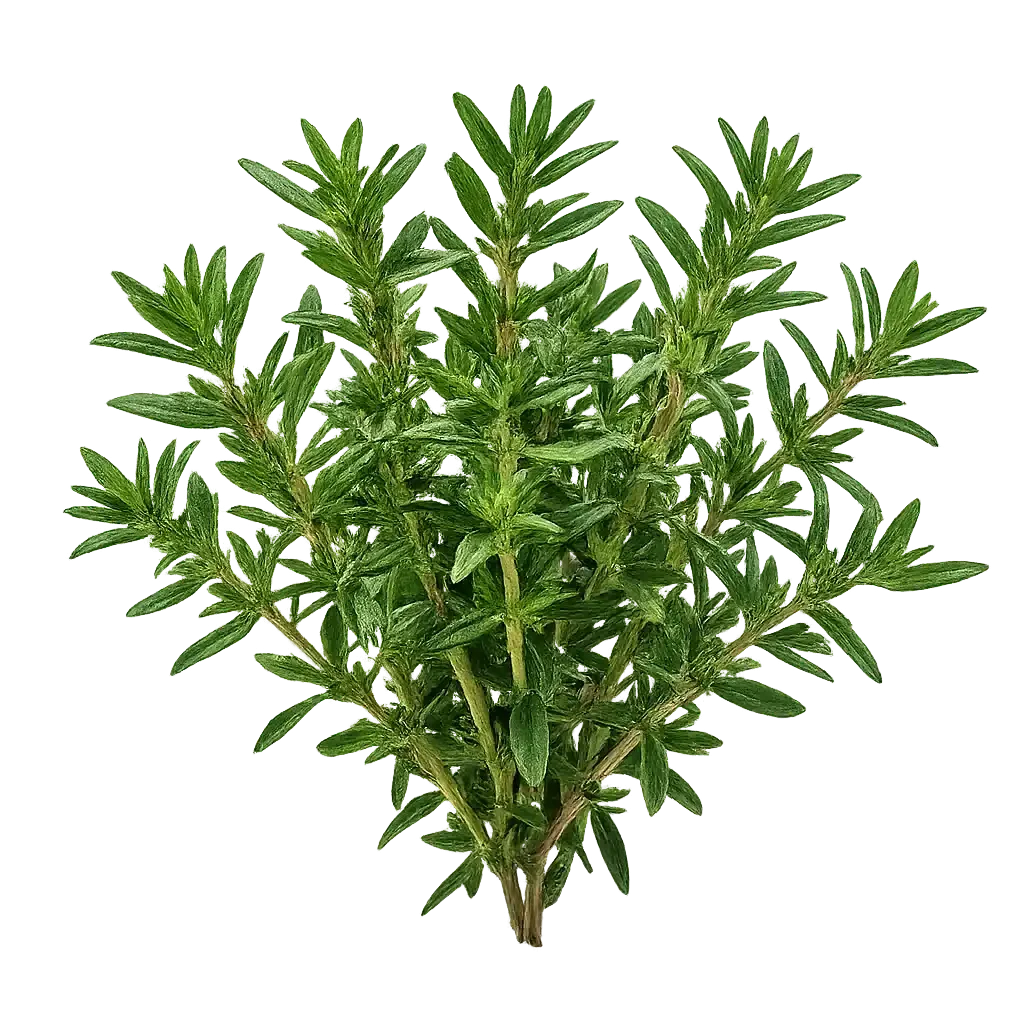
Winter savory is the perennial version of the savory story: the same bold peppery warmth as summer savory, the same deep affinity for beans and legumes, the same antimicrobial carvacrol and thymol that make both savories effective digestive and respiratory herbs, but delivered from a woody, semi-evergreen subshrub that does not need replanting each spring and that provides fresh leaves from the garden in every month the ground is not frozen hard. The flavor is stronger and more assertive than summer savory's, better suited to slow braises and robust meats than to delicate preparations, and the plant itself is tougher, more structured, and more permanently useful in the herb garden as both a culinary resource and a low-growing, aromatic border plant.
Introduction
Satureja montana is native to the dry, rocky limestone hills and mountain scrubland of southern Europe, particularly the Balkans, the Apennines, and the coastal Mediterranean regions where the thin, well-drained soils and intense sun of the hillside habitat have shaped a plant of exceptional aromatic intensity and structural toughness. It grows naturally as a compact, densely branched subshrub reaching twelve to eighteen inches, with woody stems at the base and narrow, dark green, glossy leaves that persist through mild winters in its native range and in zones 6 and warmer in cultivation.
The culinary and medicinal use of winter savory parallels that of summer savory in most respects, with both species providing carvacrol and thymol as the primary aromatic compounds, both being traditional bean and legume herbs, and both featuring in the Mediterranean herb blends that define the cooking of southern France and the Balkans. The practical distinction is one of degree and habit: winter savory's flavor is more concentrated, more camphoraceous, and more persistent under heat than summer savory's, making it the better choice for long-cooked preparations while summer savory is preferred for more delicate applications. And winter savory's perennial woody habit makes it a permanent garden feature rather than a seasonal crop.
In the herb garden, winter savory occupies a useful structural role beyond its culinary and medicinal value: the compact, woody mound of dark evergreen foliage provides year-round visual structure as an edging plant, a low border herb, or a component of the classic Mediterranean herb garden alongside thyme, rosemary, and lavender. Its flowers, small white to pale pink blooms that appear from July through September, attract bees reliably and provide late-summer pollinator support that extends the useful season of the herb garden beyond the high-summer flush of other flowering herbs.
How to Grow
Sun Requirements
Winter savory demands full sun as unconditionally as thyme and lavender, reflecting its origin on exposed Mediterranean hillsides where shade is absent and sun intensity is maximized by the reflective pale limestone soils of its native habitat. Six or more hours of direct daily sunlight is the minimum for productive cultivation, and eight to ten hours produces the most compact, most intensely aromatic plants with the highest carvacrol concentration. In partial shade the plant becomes open and weakly flavored, loses much of the aromatic intensity that makes it worth growing, and is more susceptible to the fungal disease that affects dense, poorly lit foliage.
Soil Requirements
Winter savory is one of the most clearly lean-soil Mediterranean herbs in this series, performing at its authentic best on the kind of thin, rocky, alkaline soils that would limit the productivity of most other garden plants. The essential oil concentration that defines the herb's culinary and medicinal value is highest on poor, dry, well-drained soils where the plant is not overfed with nitrogen and where water stress encourages compact growth and volatile oil accumulation.
Well-drained soil is the non-negotiable requirement. Winter savory on waterlogged or persistently moist soil declines and dies from root rot reliably, and the combination of heavy clay, inadequate drainage, and winter moisture is the primary cause of plant loss in cultivation. Raised beds, free-draining sandy or gritty soils, and naturally sloped or rocky sites all provide the conditions that allow winter savory to perform as its native habitat shaped it to perform.
Soil pH from 6.0 to 8.0 is tolerated, with the plant's native limestone habitat suggesting genuine tolerance of alkaline conditions that many herbs cannot handle. No fertilizing is needed or beneficial; annual topdressing with a thin layer of grit rather than compost maintains the lean conditions that favor essential oil concentration over vegetative bulk.
Water Needs
Established winter savory is highly drought tolerant and one of the most reliably self-sufficient perennial herbs available for dry-summer climates. The deep, woody root system that develops in established plants accesses subsoil moisture through extended dry periods, and supplemental irrigation is needed only during the most severe and prolonged droughts in climates with occasional summer rainfall.
In the establishment year, moderate watering supports root development without the consistent moisture management required by more demanding herbs. From the second year, winter savory manages its own moisture requirements in most temperate and Mediterranean climates with minimal intervention. The greater risk is overwatering in humid climates rather than underwatering in dry ones, and erring toward less rather than more irrigation is the appropriate management approach for this herb.
Planting
Winter savory is most reliably established from nursery transplants or from stem cuttings taken from established plants in early summer. Seed is viable but germination is slower and less uniform than summer savory seed, typically taking two to four weeks at warm temperatures, and the seedlings grow slowly enough that transplants or cuttings are more practical starting points for most growers.
Stem cuttings taken from the soft growth tips of established plants in June, stripped of lower leaves, and rooted in well-drained gritty medium under gentle moisture maintain root readily within three to four weeks. The rooted cuttings are potted on and grown through summer before transplanting to their permanent position in early autumn or the following spring, by which time they have developed adequate root systems for reliable establishment.
Spring planting into warm, prepared soil gives the best establishment results for both transplants and rooted cuttings. Winter savory planted in autumn in zones 5 and 6 may not establish its root system adequately before winter sets in, and spring establishment is significantly more reliable in colder zones. In zones 7 and warmer, autumn planting works well and takes advantage of the mild winters that allow root development to continue through the cooler months.
Plant Spacing
Plants should be spaced 12 to 18 inches apart to allow the compact woody mound to develop fully and to maintain the air circulation that reduces fungal disease pressure on the dense, persistent foliage. Winter savory at the 12 inch spacing creates an effective low aromatic hedge or edging that is visually attractive year-round, while the 18 inch spacing allows individual plants to develop their natural rounded form without competition.
Companion Planting
Winter savory's companion planting applications closely parallel those of summer savory, with the added benefit of a permanent, year-round aromatic presence in the garden that provides continuous rather than seasonal deterrence and habitat value.
Beans and legumes, where winter savory shares the same ancient and consistent traditional pairing as summer savory, and the perennial plant's early spring availability means it can be harvested alongside the earliest bean sowings before summer savory has germinated
Thyme, lavender, and rosemary, with which winter savory shares identical soil, sun, and water requirements, making it a natural companion in the Mediterranean herb garden where all four can be grouped in a single lean, well-drained, sunny bed without competition
Roses, where aromatic herbs planted nearby are traditionally used to deter aphids and the insect pests that affect the base of rose plants, and where winter savory's dense, low mound provides weed-suppressing ground cover under the rose canopy
Brassicas, where the volatile carvacrol and thymol released from the foliage may deter cabbage white butterfly in proximity to the planting, consistent with the general companion planting value of strongly aromatic Mediterranean herbs in the brassica bed
Harvesting
Harvest Time
Winter savory is harvested through the entire growing season from early spring through late autumn, with the essential oil concentration and flavor intensity highest during and just before the flowering period from July through September. Unlike summer savory, which must be harvested before frost ends its season, winter savory provides fresh leaves year-round in zones 7 and warmer and through the milder months of winter in zone 6, filling the gap between the last autumn harvest of summer savory and the following spring's new growth.
This year-round or near-year-round availability is winter savory's most practically significant advantage over its annual relative, and it is particularly valuable in the kitchen between November and April when fresh herb availability from the garden is most limited. The mature leaves harvested in winter, while somewhat less aromatic than the peak summer growth, retain enough carvacrol to be useful in cooking and provide fresh herb character that dried savory cannot replicate.
Harvest Method
Cut stem tips three to five inches long with sharp scissors or secateurs, harvesting from the outer growth and leaving the woody center structure intact. Taking no more than one third of the current season's growth in any single harvest maintains plant vigor and the dense, compact form that makes winter savory attractive as an edging plant alongside its culinary usefulness.
An annual pruning in early spring, cutting the plant back by about one third to remove the previous season's woody growth and stimulate vigorous new growth from the base, maintains the plant's compact habit and prevents the open, leggy form that develops in unpruned older plants. This pruning is the single most important maintenance practice for winter savory and the one that most affects the plant's long-term productivity and appearance.
For drying, harvest during the flowering period when essential oil content is highest, bundle loosely, and hang in a well-ventilated space away from direct light. Winter savory dries readily within one to two weeks and retains good flavor for two years in airtight dark glass storage, somewhat longer than summer savory due to the higher starting concentration of volatile oils in the more intensely aromatic winter savory foliage.
Winter savory with robust meats: Winter savory's stronger, more assertive flavor makes it particularly well suited to preparations where summer savory's more delicate character would be overwhelmed: braised lamb with garlic and winter savory, slow-cooked pork with white beans and savory, venison stew seasoned with a bundle of winter savory stems removed before serving. The herb holds up to long cooking times and high heat without becoming bitter, and the flavor integrates into the braising liquid in a way that brightens and focuses the overall dish. A sprig added to the cooking liquid for any slow-cooked legume preparation and removed before serving is the simplest and most immediately useful application.
How to Use
Culinary Uses
Winter savory's culinary profile is a more assertive version of summer savory's: the same carvacrol-forward peppery warmth and resinous depth, but with a camphoraceous edge that makes it better suited to robust preparations than to delicate ones. This character is what makes it valuable in slow-cooked dishes, hearty soups and stews, braised meats, and dried bean preparations that benefit from bold seasoning rather than subtle flavoring.
Dried beans and lentils cooked with winter savory represent the herb's oldest and most consistently useful application. A sprig of fresh winter savory or a generous pinch of dried added to any cooking legume provides the same carminative benefit and flavor enhancement as summer savory, with the stronger flavor of the perennial species holding up better through the long cooking times that dried legumes require. The traditional German understanding of savory as Bohnenkraut, bean herb, applies as fully to the winter as to the summer species.
In the herbes de Provence blend, winter savory can substitute for or supplement summer savory, and many regional variants of the blend use the perennial species specifically. The stronger flavor of winter savory means it is used at somewhat lower proportions in the blend, but its year-round availability makes it the practical choice when summer savory is out of season and dried stocks are depleted.
Grilled and roasted meats are where winter savory shows its distinction from summer savory most clearly. Lamb chops rubbed with olive oil, winter savory, and garlic before grilling, pork shoulder slow-roasted over a bed of winter savory branches, and venison or rabbit braised with the herb are preparations where the bold aromatic character of the perennial species is an asset rather than a limitation. The resinous depth of winter savory integrates with the fat and proteins of rich meats in a way that the lighter summer savory cannot fully achieve.
Winter savory-infused olive oil, prepared by warming good olive oil gently with fresh winter savory sprigs and allowing to cool and infuse for two to three days before straining, provides a versatile cooking and finishing oil with the herb's characteristic warmth concentrated into a convenient liquid form. Used for sauteing vegetables, dressing bean salads, and finishing soups, it extends the herb's kitchen usefulness beyond the direct application of fresh or dried material.
Medicinal Uses
Winter savory's medicinal applications directly parallel those of summer savory, with the shared carvacrol and thymol content providing carminative, antimicrobial, and expectorant activity through the same mechanisms. The stronger volatile oil concentration of winter savory means that smaller quantities are needed for equivalent medicinal effect, and the year-round availability of fresh material provides consistent access to the herb's medicinal properties through seasons when summer savory is not available.
As a carminative digestive herb, winter savory tea or the direct culinary use of the herb with legume preparations provides the same gas-reducing, digestive-stimulating activity as summer savory. The standard tea preparation of one teaspoon of dried herb or a small fresh sprig per cup of just-boiled water steeped for five to eight minutes produces an aromatic, warming digestive tea appropriate after meals when bloating or sluggish digestion is the concern.
For respiratory applications, the thymol and carvacrol shared with thyme make winter savory a reasonable substitute for thyme in steam inhalations for congestion and in gargle preparations for sore throat. A strong infusion of fresh or dried winter savory prepared as a steam inhalation provides antimicrobial and mucolytic activity through the volatile oil vapors, and the same preparation cooled and used as a gargle provides topical antimicrobial and anti-inflammatory relief for mild throat infections.
Topically, the same anti-inflammatory and antimicrobial properties that make winter savory useful in internal preparations apply to external use, and a poultice of bruised fresh leaves applied to insect stings and minor skin infections provides rapid cooling and antimicrobial activity. This is a practical field application available whenever the plant is growing nearby, requiring no preparation beyond the harvest of a few fresh stems.
Pollinator and Wildlife Uses
The late summer and autumn flowering of winter savory from July through September provides an important pollinator resource during the period when many earlier-flowering herbs have completed their bloom. Bumblebees, honeybees, and several beneficial hoverfly species visit the small white to pale pink flowers consistently through the extended bloom period, and a well-established planting of several winter savory plants provides meaningful pollinator support at a time of year when alternative flowering resources are becoming scarcer in most temperate gardens.
Storage
Fresh winter savory stems store for seven to ten days refrigerated, somewhat longer than summer savory due to the woody stem structure and the higher volatile oil content that reduces the rate of aromatic degradation. Standing stems upright in a small amount of water, loosely covered with a plastic bag, extends this further to two weeks without significant quality loss.
Dried winter savory stores for two years in airtight dark glass containers, longer than most annual herbs due to the higher starting concentration of the volatile oils that carry flavor through the drying and storage process. The dried herb is noticeably more concentrated than dried summer savory and should be used at somewhat lower quantities in recipes that specify dried savory without distinguishing between the two species.
Winter savory-infused olive oil stores for one month at room temperature and three months refrigerated. Winter savory vinegar stores for twelve months at room temperature in sealed glass. Both preparations capture the herb's bold aromatic character in convenient forms for kitchen use through the seasons when fresh harvest is limited.
Lifespan of the Plant
Winter savory is a long-lived perennial subshrub that persists for ten to fifteen years or more on appropriate well-drained sites in zones 5 through 9. The woody base structure that develops over successive seasons provides increasing resilience to cold and drought, and established plants that have survived several winters in a given site are more reliable than newly planted specimens in the same conditions.
Annual pruning in early spring, cutting back by one third to remove old woody growth and stimulate fresh productive growth from the base, is the most important ongoing maintenance practice and the one that most directly extends the plant's productive life. Without this annual pruning, winter savory becomes increasingly woody, open in habit, and less productive over successive seasons, eventually reaching a state where replacement is more practical than continued management of a severely woody, low-productivity plant.
Division and stem cutting propagation from established plants provides the material for replacement or expansion of the planting as older central plants become too woody. Keeping one or two younger plants established from cuttings alongside the older main planting ensures continuity of production if a severe winter or other event damages the established plants.
Pros and Cons
Advantages
Perennial requiring no annual replanting, providing fresh leaves year-round in zones 7 and warmer and through the growing season in zones 5 and 6
Stronger, more concentrated flavor than summer savory, better suited to robust long-cooked preparations and hearty meats
Semi-evergreen foliage provides year-round garden structure as a compact, aromatic edging and border plant
Highly drought tolerant once established; one of the most self-sufficient perennial herbs for dry-summer climates
Hardy to zone 5, suitable for most temperate homestead gardens
Extended late-summer to autumn flowering season provides pollinator support when competing floral resources are declining
Dried herb stores for two years with good quality retention
Thrives on lean, rocky, alkaline soils where more demanding plants struggle
Limitations
Stronger flavor than summer savory makes it less appropriate for delicate preparations where summer savory's lighter character is preferred
Requires annual pruning to maintain compact, productive habit; unpruned plants become woody and open over time
Slower to establish from seed than summer savory; transplants or cuttings give more reliable results
Not reliably hardy below zone 5 without protection; severe winters can kill plants in marginal zones
Demands well-drained soil without compromise; declines in heavy or wet garden beds
Less visually dramatic than lavender or rosemary in the Mediterranean herb garden, where its structural role can be overlooked in favor of showier companions
Common Problems
Winter savory on appropriate lean, well-drained soil in full sun is one of the most reliable and trouble-free perennial herbs in the temperate garden. The primary problems are related to inappropriate site conditions and insufficient pruning rather than to pest or disease pressure.
Root rot from waterlogged or poorly drained soil is the most consistent cause of plant loss and is entirely preventable by appropriate site selection. Winter savory that wilts and fails to recover after watering, or that collapses after a wet winter period despite appearing healthy before, has almost certainly experienced root rot from soil conditions rather than cold damage. Correct siting on well-drained ground eliminates this problem entirely.
Woody, open, unproductive habit in older unpruned plants is the most consistent management problem. Annual spring pruning by one third, cutting back into the previous season's growth but not into truly old hard wood from which the plant cannot regenerate, maintains the dense, productive form through many years. Plants that have been allowed to become severely woody can sometimes be rejuvenated by harder pruning into two-year-old wood, but propagating fresh plants from cuttings and replacing the oldest specimens is a more reliable approach than attempting hard renewal pruning on very woody plants.
Spider mite pressure in hot, dry conditions during midsummer, particularly on plants grown against reflective surfaces or walls that amplify heat, causes stippling and bronzing of the foliage. Improving air circulation, occasional water sprays to raise humidity around the affected plants, and the natural predator populations that typically develop as summer progresses manage mite pressure adequately in most garden situations.
Varieties
Satureja montana in the standard species form is the culinary winter savory described throughout this guide and the most widely available variety. It is the appropriate choice for all culinary and medicinal applications and is sold by most specialist herb and perennial plant nurseries.
Satureja montana subsp. illyrica is a Balkan subspecies with a more strongly aromatic character than the standard species and somewhat more compact growth habit, occasionally available from specialist Mediterranean herb suppliers. It is the form most closely resembling the wild hillside savory of its native Balkan range and produces the most intensely flavored material of any cultivated winter savory.
Satureja montana Prostrata, creeping winter savory, is a low-growing selection that spreads along the ground rather than forming an upright mound. It is primarily an ornamental selection for rock gardens and wall planting, retaining the aromatic character of the species but with a different structural habit more appropriate for cascading over edges and filling gaps in stone or gravel gardens than for the upright border and edging applications where standard winter savory excels.
Final Thoughts
The comparison between winter and summer savory is less a competition than a description of two distinct tools for the same general purpose. If you grow beans and prefer to use a fresh annual herb from the garden, summer savory is the right choice. If you want a perennial that provides fresh savory through November and again from March, that anchors a section of the Mediterranean herb garden with year-round structure, and that makes the best slow-braised lamb and venison stew you have ever produced, winter savory is the right choice.
Most serious herb gardens benefit from having both. They occupy the same lean, well-drained, sunny conditions without competing for resources, they complement each other across the seasonal calendar, and the different flavor registers they provide cover a broader range of culinary applications together than either does alone.
Winter savory is the quieter of the two, less discussed and less celebrated in contemporary herb writing than thyme or rosemary. That relative obscurity is undeserved. On the right site, with annual pruning and the occasional robust braise to justify its presence, it is one of the most consistently useful perennial herbs the homestead garden can grow.