
Skullcap
Written By Arthur Simitian
QUICK FACTS
Common Name
Skullcap, American Skullcap, Blue Skullcap, Helmet Flower, Mad Dog Skullcap
Scientific Name
Scutellaria lateriflora
Plant Type
Hardy perennial
Hardiness Zones
4 to 8
Sun Requirements
Partial shade to full sun
Soil Type
Moist, well-drained, humus-rich; woodland edge conditions preferred
Plant Height
18 to 36 inches
Spacing
12 to 18 inches
Uses
Nervine tincture, anxiety and insomnia, muscle tension, nervous system support, antispasmodic, companion plant, pollinator support
Skullcap is among the most respected nervine herbs in North American herbal medicine, and it has earned that reputation through consistent performance in a specific and clearly defined role: calming the overactive, overtaxed nervous system without sedating it into uselessness. The distinction matters. Most calming herbs work by adding sedation. Skullcap works by reducing nervous system excitability and muscle tension while leaving cognitive function largely intact, making it appropriate for daytime use in anxious, tense, or stressed conditions where sedation would be counterproductive. Growing and making a fresh plant tincture from this native woodland perennial gives the homestead medicine cabinet access to one of the most practically useful nervine preparations available from any cultivated herb.
Introduction
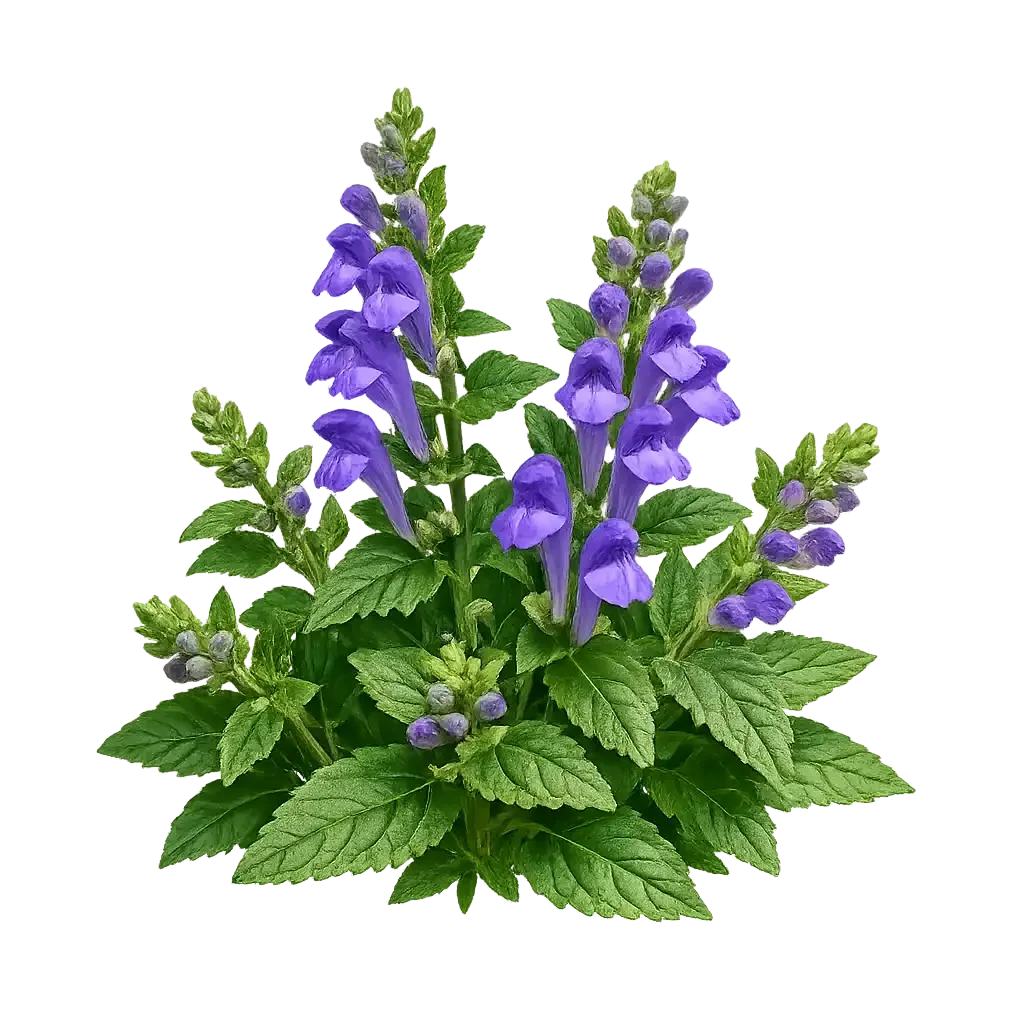
Scutellaria lateriflora is native to the moist woodland edges, stream banks, and rich bottomland forests of eastern North America, growing naturally from Nova Scotia to British Columbia and south through most of the eastern and central United States. It is a member of the mint family Lamiaceae, with the characteristic square stems and opposite leaves of the family, and produces small tubular blue-violet flowers in pairs along the upper stems from June through September. The common name skullcap, shared with several other Scutellaria species, refers to the distinctive helmet-shaped protuberance on the upper sepal of the flower calyx that resembles a medieval skullcap helmet, and this same feature is the origin of the genus name Scutellaria from the Latin scutella, meaning little dish or helmet.
The plant's traditional use in North American herbal medicine was extensive among both indigenous peoples and early European settlers, who valued it for nervous system conditions including anxiety, nervous exhaustion, insomnia, seizure disorders, and the muscle spasms and twitching associated with nervous system stress. The nineteenth century American Eclectic physicians, who developed much of the foundational herbalism that informs contemporary North American practice, considered skullcap one of their most important nervous system remedies and used it specifically for conditions characterized by nervous irritability and tension rather than for simple sedation.
Modern research has identified several active compounds in skullcap including the flavonoid baicalin and its aglycone baicalein, along with scutellarein and other flavonoids that have demonstrated anxiolytic, GABAergic, and antioxidant activity in laboratory and clinical research. The GABAergic activity, meaning interaction with the GABA receptor system that is the primary inhibitory neurotransmitter system in the brain, provides a partial mechanistic explanation for the calming effects that traditional use and contemporary clinical experience consistently describe.
An important sourcing and quality consideration applies to skullcap that does not apply to most other herbs in this series. Commercial dried skullcap has historically been subject to significant adulteration with germander species, particularly Teucrium canadense and Teucrium chamaedrys, which are cheaper, more abundant, and morphologically similar in dried form but lack skullcap's active compounds and carry their own hepatotoxicity risks. Growing your own skullcap from a known source and making fresh plant tincture directly from the harvest is the most reliable way to obtain a quality preparation, and one of the stronger practical arguments for homestead cultivation of this specific herb.
How to Grow
Sun Requirements
Skullcap grows naturally in the dappled light of woodland edges and moist clearings, and it performs best in partial shade of three to five hours of direct sun daily, or in the broken shade of a high canopy. In partial shade it produces the lush, moist growth that yields the most medicinally complete leaf and stem material for tincture preparations. In full sun on well-moistened soil it grows adequately and flowers productively, but requires more consistent irrigation to prevent the moisture stress that reduces both plant vigor and active compound concentration.
In zones 7 and warmer, partial shade is particularly important, as skullcap's woodland origin does not equip it for the combination of high summer temperatures and intense sun that characterizes humid subtropical gardens. A north-facing border, the east side of a building or fence, or the canopy shade of a deciduous tree all provide appropriate light conditions while maintaining the airflow that prevents fungal disease in humid climates.
Soil Requirements
Skullcap's natural habitat of moist woodland edges and stream-adjacent forest clearings translates directly into a preference for humus-rich, consistently moist, well-aerated soil that differs markedly from the lean, dry conditions preferred by most of the Mediterranean herbs in this series. Incorporating generous amounts of compost or aged leaf mold into the planting area before establishment creates the rich, moisture-retentive but well-aerated conditions that most closely resemble the forest floor environment where skullcap grows most productively in the wild.
Soil pH from 6.0 to 7.0 is appropriate, with a slight preference for the mildly acidic conditions of its woodland habitat. Heavy clay soils that hold water and compact easily are problematic, as skullcap requires moisture retention but not waterlogging, and the distinction between consistently moist and periodically waterlogged is critical for root health. On heavy clay, raising the bed and incorporating coarse organic matter to improve aeration provides acceptable growing conditions.
Water Needs
Skullcap requires more consistent soil moisture than most herbs in this series and is among the least drought tolerant plants covered here, reflecting its origin in moist woodland environments where consistent moisture is a fundamental site characteristic rather than a seasonal variable. Allowing the soil to dry out significantly between waterings reduces growth, delays flowering, and diminishes the baicalin and related flavonoid content that represents the plant's medicinal value.
A mulch of shredded leaves or wood chips two to three inches deep around established plants significantly reduces evaporative moisture loss, moderates soil temperature, and maintains the consistently moist but not waterlogged conditions that support the best growth and highest active compound production. In dry summer climates, supplemental irrigation two to three times per week is typically necessary to maintain appropriate soil moisture through the peak growing season.
Planting
Skullcap is established from seed, nursery transplants, or division of established plants. Seed requires cold stratification for reliable germination: mix seed with moist sand or peat in a sealed bag and refrigerate for thirty days before sowing, then sow on the surface of a moist seed-starting medium at room temperature. Germination occurs within two to three weeks after the cold stratification period. This cold requirement reflects the plant's native habitat, where seeds overwinter on the forest floor and germinate in spring after the natural cold period.
Division of established clumps in early spring is the most reliable propagation method and produces transplant-ready divisions that establish quickly and flower in their first season. Stem cuttings taken in early summer from actively growing, non-flowering stem tips root readily in moist medium within three to four weeks and are an effective method for multiplying a single established plant without disturbing the parent.
Nursery transplants from specialist medicinal herb nurseries that can confirm the species identity are the most practical starting point for most growers. Given the adulteration issues that affect the commercial dried herb, purchasing live plants from a reputable source that identifies the material as Scutellaria lateriflora specifically, rather than a generic Scutellaria or unnamed skullcap, is a worthwhile investment at the establishment stage.
Plant Spacing
Plants should be spaced 12 to 18 inches apart to allow the upright, branching stems to develop fully and to maintain the air circulation that reduces fungal disease pressure in the moist, partially shaded positions the plant prefers. The rhizomatous spreading habit of established skullcap means that adjacent plants will gradually fill the spacing gaps over two to three seasons, creating a productive, dense colony in appropriate conditions.
Companion Planting
Skullcap's woodland edge habitat preferences make it a natural companion for other partial-shade, moisture-loving medicinal herbs, and its pollinator value from the long summer flowering season adds broader garden benefit beyond its direct medicinal application.
Valerian, which shares the moist, partially shaded growing conditions and complements skullcap as a calming nervine herb in the homestead medicine garden, the two plants together covering overlapping and complementary aspects of nervous system support
Lemon balm, which tolerates partial shade and consistent moisture and together with skullcap provides a pair of accessible, easily processed nervine herbs for the same growing conditions
Wood betony, which shares the woodland edge habitat, the nervine medicinal focus, and the preference for moist, humus-rich soil in partial shade, creating a complementary nervine trio with lemon balm in a single woodland-edge herb bed
Echinacea, which can be sited on the sunnier edge of the same moist, rich bed where skullcap occupies the more shaded positions, making productive use of the full light gradient available in a partially shaded garden area
Native ferns and woodland perennials, with which skullcap grows naturally and in whose company it performs most consistently, making it an appropriate and ecologically coherent addition to native plant gardens and woodland edge plantings
Harvesting
Harvest Time
The aerial parts of skullcap, meaning the leaves and stems with the flowers attached, are harvested for medicinal use during the flowering period from June through September. The flavonoid content, particularly baicalin, is highest during active flowering when the plant's metabolic activity is at its peak, and material harvested during this period produces the most potent and most medicinally complete preparations.
Fresh plant tincture made immediately after harvest captures the full spectrum of active compounds including some that are partially lost during drying, and the fresh plant preparation is consistently considered superior to preparations made from dried skullcap by experienced practitioners of North American herbal medicine. The emphasis on fresh plant tincture for skullcap is stronger than for most other herbs in this series and is one of the clearest practical arguments for growing rather than purchasing this herb.
Harvesting in the morning after the dew has dried maintains the moisture content appropriate for fresh plant tincture while maximizing the essential oil and flavonoid content that is highest before afternoon heat volatilizes the most sensitive compounds.
Harvest Method
Cut stems four to six inches below the uppermost flower clusters, collecting the flowers, buds, and upper leaf-bearing stem sections. Taking no more than one third of the plant's total growth in a single harvest maintains vigor and allows the plant to continue flowering through the season. A well-established skullcap clump can be harvested two to three times through the summer flowering period, providing material for multiple tincture batches from a modest planting.
Process the harvested material into tincture immediately after harvest or refrigerate and process within twenty-four hours. The fresh plant flavonoids that give skullcap its medicinal character begin degrading after harvest, and the difference between tincture made from freshly harvested material and tincture made from material left to wilt for several days is meaningful in terms of the preparation's final potency.
Making fresh skullcap tincture: Chop or roughly tear freshly harvested flowering stems and pack firmly into a clean glass jar until about three quarters full. Fill completely with 60 percent alcohol, ensuring all plant material is submerged. Seal tightly and steep in a cool, dark location for four to six weeks, shaking the jar every few days. Strain through cheesecloth, pressing the plant material firmly to recover all the tincture. The finished tincture will be a deep golden-amber color and has a distinctive, slightly bitter, faintly earthy flavor. Standard dose is two to four milliliters up to four times daily for acute nervous system support, or one to two milliliters as needed for situational anxiety and tension.
How to Use
Nervine and Anxiety Uses
Skullcap's primary and most consistently supported medicinal application is as a nervine tonic for anxiety, nervous tension, and the general state of nervous system over-excitability that manifests as racing thoughts, muscle tension, irritability, and the inability to relax that characterizes chronic stress. The GABAergic flavonoids in skullcap, particularly baicalin, reduce the excitability of nervous tissue without producing the full sedation associated with pharmaceutical anxiolytics or with more heavily sedating herbs such as valerian and hops.
This non-sedating quality is skullcap's most clinically distinctive characteristic and the one that defines its appropriate use context. A person taking skullcap tincture for anxiety during the working day typically experiences a reduction in the physical tension and mental over-activity of anxiety without a sedation that would impair function. The effect is subtle enough that first-time users sometimes question whether it is working at all, and the herb rewards patient, consistent use over days and weeks rather than providing the immediately obvious sedation that some users expect.
A small but well-designed clinical trial published in 2014 found that skullcap significantly enhanced global mood without reducing energy or cognition, providing some direct human evidence for the clinical profile that traditional use describes. Larger trials are needed but the available evidence is directionally consistent with the traditional and contemporary clinical experience.
For performance anxiety, exam stress, and situational anxiety where function must be maintained alongside calming, skullcap is particularly well suited because of this non-sedating profile. Taking a dose of tincture thirty to sixty minutes before a stressful event provides the edge-smoothing without the cognitive impairment that sedating preparations would produce.
Sleep and Insomnia Uses
For insomnia rooted in an overactive, racing mind that prevents sleep onset rather than in the deeper sedation deficit that valerian and hops address most directly, skullcap taken in the hour before bed is often more appropriate than the more heavily sedating herbs. The reduction in nervous system excitability that skullcap provides makes it easier for the mind to downshift into the lower arousal state that allows sleep to begin naturally, without the morning grogginess that heavier sedatives can produce.
Combining skullcap with lemon balm and passionflower in a tincture blend addresses both the nervous excitability that skullcap targets and the mild sedation that supports sleep maintenance, and this combination is one of the most commonly used and most clinically reasonable herbal sleep formulas available. Adding valerian to this combination for more pronounced sedative support creates a complete nervine sleep preparation appropriate for more significant insomnia.
Antispasmodic Uses
Skullcap has a traditional and pharmacologically supported application as an antispasmodic for the muscle tension and twitching that accompanies nervous system stress, and for conditions including tension headaches, muscle spasms, and the generalized physical tension that accompanies chronic anxiety. The same flavonoids that reduce central nervous system excitability also reduce peripheral muscle tension, making skullcap effective for the physical as well as the psychological manifestations of stress.
For tension headaches specifically, where the underlying mechanism is sustained muscle contraction in the neck, shoulders, and scalp rather than the vascular changes of migraine, skullcap tincture taken at headache onset provides genuine relief through muscle relaxation, and regular use during high-stress periods that are prone to tension headache reduces the frequency of episodes.
Tea Uses
Dried skullcap tea is a milder preparation than tincture and appropriate for daily nervine tonic use where consistent moderate support is the goal rather than acute intervention. One teaspoon of dried herb per cup of hot water, steeped covered for ten minutes to preserve the volatile compounds, produces a mildly bitter, earthy tea that is more functional than delicious. Blending with lemon balm and chamomile improves flavor while complementing skullcap's nervous system effects with the additional anxiolytic and digestive calming properties of those herbs.
The important caveat for tea preparations is the adulteration issue mentioned in the introduction: commercially purchased dried skullcap has a high likelihood of adulteration with germander species, making tea prepared from purchased dried herb an unreliable preparation in terms of both efficacy and safety. Home-grown dried skullcap from a verified plant, or fresh plant tincture, are the preparations that reliably deliver what the label promises.
Storage
Fresh skullcap for tincture should be processed within twenty-four hours of harvest for maximum potency. Refrigeration in a sealed bag extends this window to forty-eight hours if immediate processing is not possible, but same-day processing is strongly preferred.
Dried skullcap leaf and stem stores for one year in airtight dark glass containers, with potency declining gradually through the storage period. Given the adulteration issues with commercially purchased dried herb, home-dried material from verified plants is substantially more reliable than purchased dried herb regardless of storage quality.
Fresh plant tincture made in 60 percent alcohol stores for three to five years in sealed dark glass without significant potency loss and is the most practical long-term storage form for home-produced skullcap medicine. Making a year's supply of tincture from the summer harvest provides consistent access to a reliable preparation through the dormant season and into the following growing year.
Lifespan of the Plant
Skullcap is a reliably long-lived perennial in zones 4 through 8 that returns each spring from its spreading rhizome system and gradually expands its planting footprint over successive seasons. Individual plants persist for many years on appropriate moist, shaded sites, and established colonies are essentially self-perpetuating, spreading slowly by rhizome and occasionally by self-seeding into adjacent moist, shaded areas.
Division every three to four years maintains vigor, prevents the overcrowding of older clumps, and provides divisions for expanding the planting or sharing. The divided sections re-establish quickly and typically flower in their first season after division, restoring full harvest capacity within a single growing year.
The plant enters complete dormancy in winter with no above-ground growth, re-emerging in mid-spring as temperatures warm and day length increases. The late spring emergence, after many other garden plants have leafed out, can cause unnecessary concern in the first winter or two after establishment, and marking the dormant plant's position prevents accidental disturbance during spring cleaning.
Pros and Cons
Advantages
One of the most respected nervine herbs in North American herbalism with consistent traditional and emerging clinical support
Non-sedating anxiolytic action suitable for daytime use without impairing cognitive function
Fresh plant tincture from home-grown material bypasses the significant adulteration problem affecting commercial dried skullcap
Native North American plant adapted to eastern temperate woodland conditions, supporting local ecological integrity
Long summer flowering season provides extended pollinator support for native bees and beneficial insects
Hardy to zone 4 and essentially self-maintaining once established in appropriate conditions
Combines effectively with lemon balm, valerian, and passionflower for comprehensive nervine formulations
Antispasmodic action addresses both the psychological and physical manifestations of nervous tension
Limitations
Requires consistently moist, humus-rich soil in partial shade, conditions that differ substantially from most Mediterranean culinary herbs and require deliberate site selection
Subtle effects that reward patient use rather than providing the immediately obvious sedation some users expect from a calming herb
Commercial dried herb is frequently adulterated; home cultivation and fresh plant tincture are the most reliable quality assurance
Seed requires cold stratification, adding complexity to propagation from seed
Not appropriate during pregnancy without medical guidance
Less widely available from general herb nurseries than more common culinary herbs; specialist sourcing is typically required
Relatively limited culinary applications compared to the dual-use herbs in this series
Common Problems
Skullcap on appropriately moist, humus-rich, partially shaded soil is a largely trouble-free perennial. Most problems encountered in cultivation are related to inappropriate site conditions rather than pest or pathogen pressure.
Wilting and poor growth in dry conditions is the most consistent cultivation problem and is entirely preventable through appropriate site selection and mulching. Skullcap planted in full sun on dry soil without irrigation does not thrive regardless of other favorable conditions, and the first-season wilting response to drought stress signals a site or management mismatch rather than a plant health problem. Relocating drought-stressed plants to a more appropriate site, or improving irrigation and mulching in the existing position, resolves the problem effectively.
Powdery mildew affects the foliage in late summer in humid climates, particularly in crowded plantings and still-air positions. The partial shade and moist conditions that skullcap prefers can promote the humid microclimate that favors mildew development, and appropriate spacing of 12 to 18 inches between plants to maintain air circulation is the primary preventive measure. The annual die-back of dormancy removes overwintered spore material and limits the accumulation of mildew pressure over successive seasons.
Slug and snail feeding on young growth in spring and on low-growing stems is the most consistent pest problem, particularly in the moist, shaded positions where skullcap performs best. Iron phosphate slug bait applied around new growth in early spring provides protection during the period of most active slug activity without the broader environmental impacts of other slug management approaches.
Varieties
Scutellaria lateriflora, American skullcap, is the species described throughout this guide and the primary medicinal skullcap of North American herbal medicine. It is the species with the most developed research base and the most consistent clinical use record, and it is the appropriate choice for all the medicinal applications described here.
Scutellaria baicalensis, Chinese or Baikal skullcap, is a related species used extensively in Traditional Chinese Medicine, with a different but related flavonoid profile centered on baicalin and baicalein that has been extensively studied for anti-inflammatory, antioxidant, and neuroprotective activity. It grows in drier, more open conditions than American skullcap and is appropriate for sites where the moisture requirements of Scutellaria lateriflora cannot be met. The two species are not interchangeable in traditional use context but share significant chemical overlap.
Scutellaria galericulata, marsh skullcap, and Scutellaria incana, downy or hoary skullcap, are North American native species with similar but less studied medicinal profiles and similar growing requirements to Scutellaria lateriflora. They are worth knowing as ecologically appropriate alternatives for specific native plant garden contexts.
Safety and quality notes: Skullcap is generally considered safe at recommended doses for non-pregnant adults. It is not appropriate for use during pregnancy due to traditional contraindications and insufficient safety data. Commercial dried skullcap products are frequently adulterated with Teucrium species, some of which carry hepatotoxicity risks, making home cultivation and fresh plant preparation the most reliable approach to ensuring product quality and safety. People taking pharmaceutical sedatives, anxiolytics, or anticonvulsant medications should consult their prescribing physician before use, as additive effects on the central nervous system are possible.
Final Thoughts
Skullcap asks for more from the gardener than most herbs in terms of site conditions. It wants moisture, it wants shade, it wants the rich, leafy soil of a woodland edge. In return it offers one of the most genuinely useful nervine preparations available from any cultivated herb, in a form that is more reliably quality-controlled when home-grown than almost anything purchasable from a commercial supplier.
The adulteration problem with commercial dried skullcap is real and well-documented, and it means that a gardener who grows Scutellaria lateriflora from a verified source and makes fresh plant tincture from the summer harvest has access to a superior preparation in a way that is not true for most other herbs, where commercial products are generally adequate. That inversion of the usual relationship between growing your own and buying is itself a compelling argument for finding the right moist, shaded corner of the homestead and establishing this plant there.
For the overtaxed, over-stimulated, tension-carrying nervous system that is the characteristic condition of a lot of working homesteaders, skullcap is precisely the herb that fits: not sedating, not overwhelming, just quieter. That is exactly what it is supposed to do.