
Spilanthes (Toothache Plant)
Written By Arthur Simitian
QUICK FACTS
Common Name
Spilanthes, Toothache Plant, Electric Daisy, Buzz Buttons, Paracress
Scientific Name
Acmella oleracea (syn. Spilanthes acmella, Spilanthes oleracea)
Plant Type
Tender perennial; grown as annual in most of North America
Hardiness Zones
9 to 11 as perennial; zones 3 to 8 as annual
Sun Requirements
Full sun to partial shade
Soil Type
Well-drained, moderately fertile; tolerates a range of soils
Plant Height
12 to 18 inches
Spacing
12 to 18 inches
Uses
Medicinal immune support, toothache and mouth pain relief, culinary novelty, saliva stimulant, anti-fungal, edible flower, container herb
Spilanthes earns its common name honestly. Place a single flower head on your tongue and within seconds a remarkable wave of tingling, buzzing numbness spreads across the mouth, accompanied by a flood of saliva and a sensation that is difficult to describe to anyone who has not experienced it. This effect, produced by the compound spilanthol, is not unpleasant once you know to expect it, and it is the most immediate and unmistakable demonstration of why this unpretentious annual has been used across multiple traditional medicine systems as a toothache remedy, immune stimulant, and mouth infection treatment for several centuries. Growing spilanthes is a genuinely interesting horticultural experience that produces a plant unlike most others in the herb garden in both its sensory effects and its practical medicinal applications.
Introduction
Acmella oleracea is native to the tropical and subtropical regions of South America, particularly Brazil, where it grows as a sprawling, spreading perennial on moist, disturbed ground and is used in traditional medicine and as a leafy vegetable, giving rise to one of its common names, paracress. The plant was distributed through Portuguese and Spanish trade networks to tropical Africa, India, and Southeast Asia, where it became integrated into traditional medicine systems in each region under different common names and with overlapping medicinal applications centered on its analgesic and antimicrobial properties in the mouth and throat.
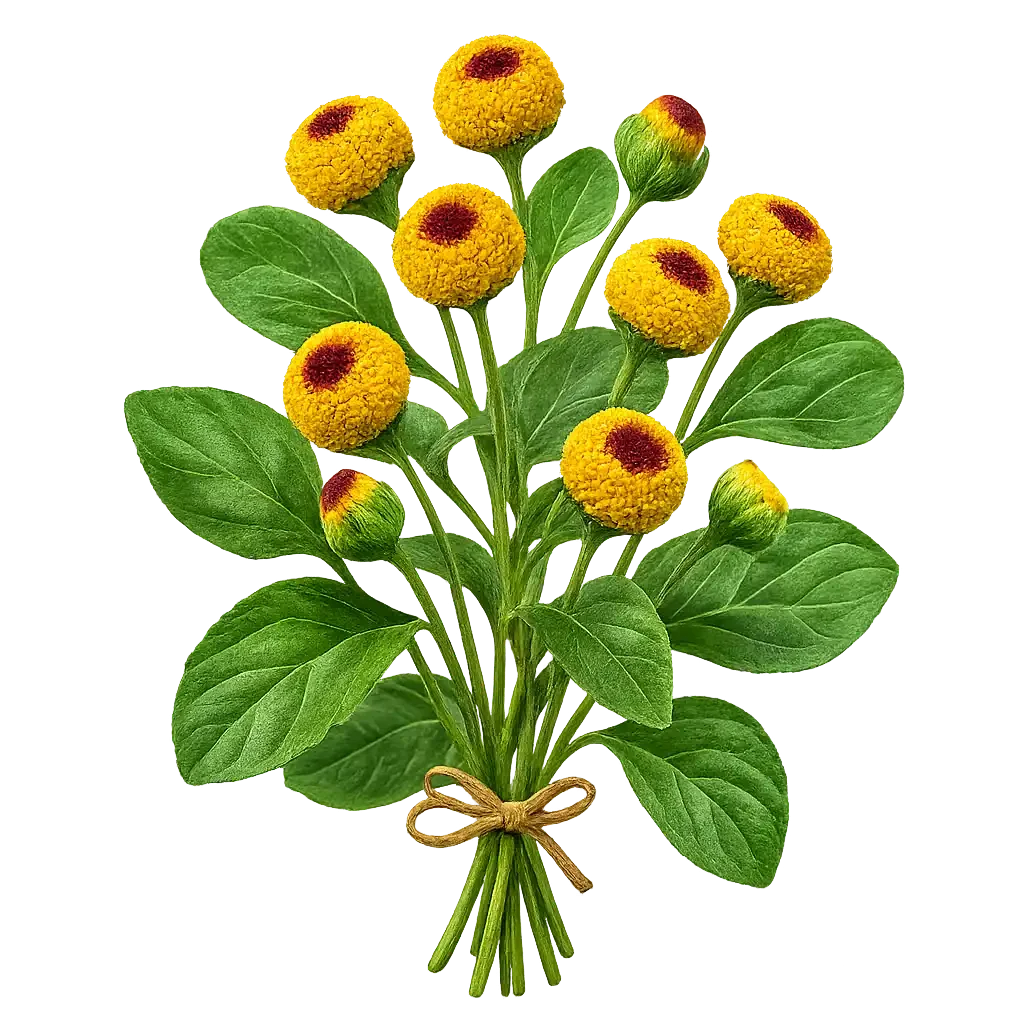
The plant itself is visually modest: a spreading, somewhat sprawling annual growing twelve to eighteen inches tall with dark green, oval, finely toothed leaves on branching stems and small cone-shaped flower heads that are the most botanically distinctive feature of the plant. The flowers are unlike those of most herbs, consisting of a rounded, bullet-shaped yellow and red-orange cone that lacks the ray petals of most daisy-family flowers, giving them an unusual appearance that has prompted the common names buzz buttons and electric daisy, both of which accurately anticipate the sensory experience of eating them.
Spilanthol, the alkamide compound responsible for the tingling, numbing sensation, is concentrated in the flowers but present throughout the plant including the leaves and stems. It acts on the trigeminal nerve endings in the mouth and gums, producing local analgesia and stimulating salivation, and has demonstrated antimicrobial activity against a range of oral bacterial and fungal pathogens in laboratory studies. This combination of local analgesia and antimicrobial action explains the traditional use of the plant for toothache, gum infections, oral thrush, and sore throat.
How to Grow
Sun Requirements
Spilanthes grows well in full sun to partial shade, with a broader light tolerance than many of the Mediterranean herbs in this series. Full sun produces the most compact, most productive plants with the heaviest flowering. Partial shade of four to five hours of direct sun daily produces somewhat more open, slightly taller growth that flowers adequately and remains medicinally productive, though with somewhat lower spilanthol concentration than full-sun plants.
In the hottest climates of zones 9 and 10, afternoon shade prevents the heat and moisture stress that can cause flower abort and leaf scorch on the most exposed plants during peak summer heat, and a position with morning sun and afternoon shade produces the best combination of productivity and plant health in these regions. In temperate zones 5 through 7, full sun is preferred to maximize the relatively short growing season.
Soil Requirements
Spilanthes is more tolerant of a range of soil conditions than most of the herbs in this series, reflecting its origin as a disturbed-ground colonizer adaptable to the variable tropical soils of its native range. It grows productively in moderately fertile, well-drained garden soils and performs adequately on both sandy soils that dry quickly and heavier loams that retain more moisture, provided drainage is not so poor as to cause root waterlogging.
Unlike the Mediterranean aromatic herbs that demand lean, dry soils, spilanthes actually benefits from moderate soil fertility and adequate moisture, and it performs poorly on the truly impoverished, dry soils where thyme and lavender excel. Incorporating compost into the planting area improves both moisture retention on sandy soils and aeration on heavy soils, and is the single most broadly applicable soil preparation for spilanthes in diverse garden conditions.
Soil pH from 6.0 to 7.5 is appropriate. Spilanthes is not particularly sensitive to moderate pH variation within this range and adapts to most typical garden soils without amendment beyond the compost incorporation that improves overall growing conditions.
Water Needs
Spilanthes requires more consistent moisture than the drought-tolerant Mediterranean and dry-prairie herbs in this series, reflecting its tropical origin in the seasonally moist disturbed habitats of South America. Consistent moderate moisture supports continuous vigorous growth and flowering, and drought stress causes premature flowering, reduced leaf and flower production, and diminished spilanthol concentration in the harvested material.
In practice, watering deeply twice a week during dry weather on well-drained soils maintains the soil moisture the plant needs without creating the waterlogged conditions it dislikes. A straw or wood chip mulch around the base of plants significantly reduces irrigation needs and moderates the soil temperature that spilanthes, as a tropical plant, appreciates during cool early-summer establishment.
Planting
Spilanthes is established from seed or from nursery transplants. Seed germinates readily at warm temperatures of 70 to 75 degrees Fahrenheit without any pretreatment, typically within seven to fourteen days, and is surface-sown or barely covered as the small seeds require light for reliable germination. Starting indoors four to six weeks before the last frost date and transplanting to the garden after all frost risk has passed and soil temperatures have warmed produces the most reliable establishment in temperate climates.
Direct sowing outdoors after the last frost date on warm, prepared soil is also effective in zones 6 and warmer where the growing season is long enough for direct-sown plants to reach flowering size and produce a useful harvest. In zones 5 and cooler, indoor starting gives the plant enough growing season lead time to produce a satisfying harvest before frost ends the season.
Spilanthes is a fast grower once established in warm conditions, and plants started indoors typically reach transplant size within four to five weeks. They are sensitive to root disturbance at transplanting, and handling the roots carefully during transplant, or using biodegradable seedling pots that are transplanted whole, reduces transplant shock and accelerates re-establishment.
Plant Spacing
Plants should be spaced 12 to 18 inches apart to allow the spreading, somewhat prostrate habit to develop without overcrowding and to ensure adequate air circulation that reduces the fungal disease pressure that can affect dense plantings in humid conditions. The spreading stems of established plants fill their allotted space effectively by midsummer, creating a productive, ground-covering mass of foliage and flowers that makes spilanthes an effective edging and border-filling plant as well as a productive medicinal herb.
Companion Planting
Spilanthes has a modest companion planting profile focused primarily on the pollinator support its continuous summer flowering provides and on practical growing condition compatibility with other warm-season herbs.
Basil, which shares the warm, moist, full-sun growing requirements and together produces a productive tropical herb bed suited to the same growing conditions and the same seasonal management as annual crops
Echinacea, with which spilanthes shares an immune-stimulating medicinal focus and complementary growing conditions, the two plants together providing a comprehensive immune support herb harvest from a single well-tended bed
Calendula, which provides similar pollinator support through continuous summer flowering and complements spilanthes in a medicinal herb border that provides both topical and internal preparations from the same growing area
Container herb combinations, where spilanthes is an excellent container companion for other warm-season herbs including basil, lemon verbena, and lemongrass, all sharing the warm growing requirements and benefiting from the same consistent moisture management
Harvesting
Harvest Time
Flowers are harvested through the entire flowering season from midsummer through the first frost, with spilanthol concentration highest in fully developed flower heads with the characteristic well-formed cone and vivid yellow-and-red coloration. Half-open buds and fully mature brown flower heads are both less potent than flowers harvested at the peak of their development, and the most visually striking, most firmly formed flowers represent the highest quality harvest material.
Leaves and tender stem tips are harvested through the growing season for culinary and medicinal uses, with the youngest leaves and growing tips having the most pronounced tingling effect and the most complete spilanthol content. Older, tougher leaves lower on the stem have lower spilanthol concentration and a more fibrous texture that limits their culinary usefulness while retaining some medicinal activity for tincture and infusion preparations.
Regular harvest of flower heads as they reach peak development stimulates continued flower production through the season, and a well-harvested spilanthes plant produces flowers continuously from midsummer through frost rather than setting seed and declining after a single flush of bloom. This makes consistent harvesting both the most productive medicinal approach and the most effective management for continuous flowering.
Harvest Method
Pinch or cut individual flower heads at the base of the stem just below the flower, collecting into a clean basket or bag. The flowers bruise easily and should be handled gently if intended for fresh use or for preparations that depend on whole, intact flower heads. For tincture or infused oil preparations where the flowers will be processed immediately after harvest, gentle handling is less critical than for culinary or display applications.
Leaves and stem tips are harvested by pinching or cutting the top two to four inches of actively growing stem tips, which encourages lateral branching and bushier growth while providing the most potent leaf material. Harvesting no more than one third of the plant's growth in any single session maintains vigor through the season and prevents the stress response that can reduce spilanthol production in over-harvested plants.
Making spilanthes tincture: Pack fresh flowers and tender leaf tips loosely into a clean glass jar to about two thirds full, then fill completely with 60 to 70 percent alcohol. Seal tightly and steep in a cool, dark location for four to six weeks, shaking the jar gently every few days. Strain through cheesecloth, pressing the plant material firmly to recover all the tincture. The finished tincture produces a strong tingling and numbing sensation on the tongue when a few drops are applied, confirming adequate spilanthol extraction. Store in dark glass for up to three years.
How to Use
Toothache and Oral Pain Uses
The most immediate and most practically useful application of spilanthes on the homestead is topical local analgesia for toothache, gum pain, mouth ulcers, and the discomfort of teething in infants. Placing a fresh or dried flower head directly against the painful area and holding it there for one to two minutes produces progressive numbing of the gum and surrounding tissue through spilanthol's action on trigeminal nerve endings, providing temporary but genuine pain relief while proper dental care is arranged.
Spilanthes tincture applied directly to the affected area with a cotton swab or fingertip delivers spilanthol in a more concentrated and more convenient form than whole flower application, particularly for the repeated applications that may be needed through a period of acute dental pain. The tingling and numbing onset is rapid, typically within thirty seconds of application, and relief lasts fifteen to thirty minutes per application.
For oral thrush and other fungal mouth infections, spilanthes tincture diluted in warm water as a mouth rinse held in the mouth for one to two minutes before spitting provides both antimicrobial activity against Candida species and local soothing of inflamed tissue. This application has traditional use support and some laboratory evidence for antifungal activity, and is appropriate as a supportive measure alongside conventional antifungal treatment for established infections.
Immune Support Uses
Spilanthes tincture taken internally has a traditional reputation as an immune stimulant and has been studied for immunomodulatory activity alongside echinacea, with which it is sometimes combined in preparations targeting cold and flu season immune support. The alkamides in spilanthes, including spilanthol, are structurally related to the alkamides in echinacea that are understood to contribute to that herb's immune effects, and the two herbs are considered complementary immune support tools in herbal practice.
The standard approach is short-course use at the onset of illness or during high-exposure periods rather than continuous daily supplementation, consistent with the way immune-stimulating herbs are generally used rather than the ongoing tonic supplementation approach more appropriate for adaptogenic herbs. A typical protocol involves taking the tincture three to four times daily at the first signs of illness for five to seven days, then pausing for an equivalent period before repeating if needed.
For sore throat and upper respiratory infections, the combined local anti-inflammatory and antimicrobial action of spilanthes tincture makes it useful both as a gargle for throat pain and as an internal preparation for the systemic immune response. The same preparation serves both applications, making spilanthes one of the more versatile single-herb preparations for respiratory illness management available from the homestead medicine cabinet.
Culinary Uses
Fresh spilanthes flowers and young leaves are edible and have a culinary novelty value that goes beyond simple flavor, as the tingling electrifying sensation they produce makes them interesting additions to salads, cocktails, and dishes where an unexpected sensory element is the point. The flavor itself, before the tingling takes over, is pleasantly earthy and slightly bitter, similar to watercress, and the young leaves work well in salads alongside other mildly peppery greens.
As a cocktail ingredient, a single flower head dropped into a cocktail or placed on the rim of a glass produces a memorable tingling effect that has made spilanthes a favorite of experimental bartenders and food experience enthusiasts under the name buzz buttons. It is the kind of ingredient that produces an immediate, unambiguous reaction from anyone encountering it for the first time and that generates genuine interest in the plant behind the sensation.
Spilanthes-infused vinegar, prepared by packing fresh flowers into good apple cider vinegar for two to four weeks before straining, produces a mildly tingly, pleasantly complex vinegar useful for salad dressings and as a tonic vinegar taken by the tablespoon. It preserves the plant's spilanthol and antimicrobial activity in a shelf-stable preparation that extends the harvest season through the winter months.
Storage
Fresh spilanthes flowers and leaves are best used immediately after harvest or refrigerated for up to three days in a sealed container. Beyond this window, the spilanthol content and the fresh sensory intensity both decline, and processing the harvest into tincture, infused vinegar, or dried preparations immediately after harvest preserves the maximum active compound content.
Dried spilanthes flowers and leaves store for one year in airtight dark glass containers. Drying reduces spilanthol concentration compared to fresh or tincture preparations but produces a shelf-stable product that retains adequate activity for less intensive applications. The dried flowers retain some tingling sensation when chewed, confirming residual spilanthol content, though at lower intensity than fresh material.
Spilanthes tincture is the most potent and longest-lasting storage form, retaining full spilanthol activity for three to five years in sealed dark glass at room temperature. For households that grow spilanthes annually as part of a homestead medicine cabinet approach, the tincture made from each summer's harvest bridges the gap through the following growing season with consistent potency.
Lifespan of the Plant
In zones 9 through 11, spilanthes is a perennial that returns from its root system each spring and lives for several years with appropriate management. In temperate zones 3 through 8, where winter frost kills the plant to the ground, it is grown as an annual with new plants established each spring from transplants or seed.
Spilanthes self-seeds moderately in warm climates and in sheltered positions in zones 7 and 8, and self-sown seedlings appearing in the same bed the following spring can reduce or eliminate the need for annual replanting. In cooler zones, self-seeding is less reliable and deliberate annual replanting from seed or purchased transplants is the standard approach.
Container-grown spilanthes can be overwintered indoors in zones 5 through 8 by bringing the plants inside before the first frost, cutting back to six inches, reducing watering to minimum, and maintaining in a warm bright indoor location through winter. The overwintered plants re-sprout vigorously in spring and can be transitioned outdoors after the last frost date, giving a useful head start on the growing season compared to freshly started seedlings.
Pros and Cons
Advantages
Provides genuinely effective immediate topical analgesia for toothache and mouth pain with rapid onset
Immune-stimulating alkamides complement echinacea for cold and flu season support
Antimicrobial activity against oral bacterial and fungal pathogens including Candida
Fast-growing annual that flowers heavily from midsummer through first frost with continuous harvest
Highly distinctive edible flowers with a striking sensory effect that makes them uniquely memorable as a culinary ingredient
Broad light tolerance from full sun to partial shade
Excellent container herb suitable for small gardens, patios, and indoor growing
No significant pest or disease problems under normal growing conditions
Limitations
Annual in most of North America, requiring replanting each spring
Requires warm soil and consistently warm temperatures for best performance; slow in cool springs
More moisture-dependent than drought-tolerant herbs; requires irrigation management in dry periods
Tingling sensation, while pleasant and medicinal, makes the culinary applications an acquired taste with limited everyday cooking uses
Not appropriate in large quantities during pregnancy due to traditional contraindication and uterine stimulant activity at high doses
Less widely available from general nurseries than more common herbs; may require specialist sourcing
Short shelf life of fresh material requires prompt processing into tincture or other preparations to preserve potency
Common Problems
Spilanthes is a relatively trouble-free annual under appropriate growing conditions. The most consistent problems are related to cold soil at planting and insufficient warmth through the growing season rather than to pest or pathogen pressure.
Slow establishment and poor growth in cool spring soil is the most common early-season problem. Spilanthes is a genuinely tropical plant that does not thrive in soil temperatures below 60 degrees Fahrenheit, and transplanting too early into cold soil produces slow, stunted growth that delays flowering and reduces the available harvest season. Waiting until soil temperatures are consistently warm and covering transplants with row fabric on cool nights in the first two weeks after transplanting addresses this effectively.
Aphids colonize the growing tips in spring, particularly on young transplants before the plant is established and before natural predator populations are active. A strong water spray or diluted insecticidal soap application manages spring aphid pressure without affecting the medicinal quality of the developing plant. Aphid pressure typically diminishes naturally as the season progresses and beneficial insect populations increase.
Powdery mildew appears on the foliage in crowded plantings in humid, still-air conditions in late summer. Appropriate 12 to 18 inch spacing and the regular harvesting that keeps the plant open and well-ventilated prevent most powdery mildew problems before they develop. The annual lifecycle of spilanthes naturally terminates the mildew cycle with the first frost, preventing overwintered spore reservoirs from compounding the problem in subsequent seasons.
Slug and snail pressure on young seedlings and newly transplanted plants can cause significant damage in moist garden conditions, as the tender, low-growing foliage of young spilanthes is highly attractive to these common pests. Iron phosphate slug bait applied around new transplants provides effective protection without the broader environmental concerns associated with metaldehyde products.
Varieties
Acmella oleracea in the standard cultivated form is the medicinal and culinary plant described throughout this guide and the appropriate choice for homestead use. It is the most widely available variety and the one with the most established medicinal and culinary use record.
Lemon Drop is a selected variety with yellow and cream flower heads that lack the characteristic red-orange cone of the standard species, producing a softer visual effect while retaining the spilanthol content and tingling sensation of the species. It is somewhat less visually dramatic than the standard red-coned form but performs identically in medicinal applications.
Acmella oleracea is the currently accepted botanical name for the cultivated culinary and medicinal plant, with Spilanthes oleracea and Spilanthes acmella listed as synonyms. The genus name Spilanthes persists widely in common use and in older herbal literature, and both names refer to the same plant with the same chemistry and the same applications.
Safety notes: Spilanthes is not appropriate for use in pregnancy, as spilanthol has documented uterine-stimulating activity at higher doses and the plant is traditionally contraindicated during pregnancy. It is generally considered safe for topical use, culinary use in normal food quantities, and short-course internal use at standard tincture doses in non-pregnant adults. People with allergies to other Asteraceae family plants including echinacea, ragweed, chamomile, and chrysanthemums may also react to spilanthes and should exercise appropriate caution on first use.
Final Thoughts
Spilanthes is one of the most immediately experiential herbs in the garden. You grow most herbs and taste or smell them. You grow spilanthes and feel it, in a way that is genuinely distinctive from any other plant in temperate cultivation. That sensory immediacy is not a gimmick. It is the plant's chemistry expressing itself directly, and the same chemistry that produces the tingling on the tongue is what numbs the aching tooth, stimulates the immune response, and inhibits the oral pathogens.
As an annual that demands warmth, consistent moisture, and a longer growing season than most temperate climates provide without a head start indoors, it asks for slightly more deliberate management than the established perennial herbs. What it provides in return is a growing season's worth of immune-support material, a reliable toothache remedy that works, and the most memorably unusual edible flower in the herb garden.
That is a fair trade for one packet of seeds and a warm spot in the border.